

P3190 on 2018-2025 Toyota Camry Hybrid: 'Poor Engine Power' Causes and Fixes
Code P3190 on a 2018-2025 Camry Hybrid means the gasoline engine failed to start or is running with very low power. The most common cause is simply running out of fuel. Before major repairs, add at least two gallons of gas. If that doesn't work, check for a disconnected air intake hose or a dirty Mass Air Flow (MAF) sensor. Some 2018-2019 models were also subject to a recall for a faulty low-pressure fuel pump which can cause this code.
- P3190 means your gasoline engine has a problem, NOT your hybrid battery.
- First, add at least two gallons of fuel to the tank. This is the most common fix.
- DO NOT repeatedly try to start the engine, as this will drain the expensive high-voltage battery and lead to a much more complicated repair.
- If fuel isn't the issue, check for disconnected air intake hoses and consider cleaning the Mass Air Flow (MAF) sensor.
- Only after checking these simple items should you suspect a more complex issue like a failed fuel pump.
What's Unique About the 2018-2025 Toyota Camry Hybrid
On the Camry Hybrid, the engine is started by a high-voltage motor-generator, not a traditional starter. When a P3190 fault occurs, the system may repeatedly try to crank the engine, drawing significant power from the high-voltage hybrid battery without the engine running to recharge it. This can quickly drain the HV battery, leading to additional codes like P0A0F ('Engine Failed to Start') and a common, costly misdiagnosis of a failed hybrid battery. The actual problem is almost always with the gasoline engine's basic needs: fuel, air, or spark.
Symptoms You May Notice
- Check Engine Light is on
- "Check Hybrid System" message on the dash
- Engine fails to start or cranks but won't turn over
- Engine starts and then immediately stalls
- Vehicle has no power/will not accelerate
- Vehicle will only move a short distance on battery power and then stop
- Rough or unstable idle before stalling
- Replacing the high-voltage hybrid battery. The P3190 code is for the gasoline engine. Repeatedly trying to start the car with this fault will drain the HV battery, causing secondary battery codes and leading to a costly and incorrect diagnosis. The HV battery's low state of charge is a symptom, not the cause.
Most Likely Causes
- Out of Fuel 🔴 High Probability The fuel gauge may not be perfectly accurate, leading owners to believe they have gas when the tank is effectively empty for the fuel pump pickup. This is the most common cause of P3190 across all Toyota hybrids.
How to confirm: Add 2-3 gallons of gasoline to the tank and attempt to start the vehicle. This is the simplest and most important first step before any other diagnosis.
Typical fix: Refill the fuel tank.
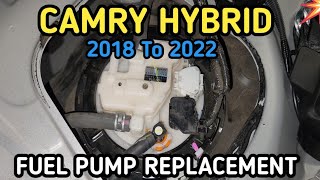
Est. part cost: $10-$15 - Failing Low-Pressure Fuel Pump (Recall Item) 🔴 High Probability → Shop Fuel Pump A significant number of 2018-2019 Toyota and Lexus models, including the Camry Hybrid, were recalled for a faulty low-pressure fuel pump (Denso-made) that could stop operating. The impeller inside the pump could absorb excessive fuel, deform, and cause the pump to fail, leading to stalling.
How to confirm: Check if your vehicle's VIN is part of Toyota's safety recall campaigns (e.g., 20TA03, 20TE02). A dealer can verify this. A technician can also perform a fuel pressure test to see if pressure is below specification.
Typical fix: If covered by the recall, a Toyota dealer will replace the low-pressure fuel pump assembly free of charge. If not covered, the pump must be replaced at the owner's expense.
Est. part cost: $0 (if recall applies), $200-$400 (if not) - Air Induction System Leak 🟡 Medium Probability The large flexible air intake hose between the air filter box and the throttle body can be knocked loose or improperly reconnected during routine service, such as an air filter change. This creates a massive unmetered air leak.
How to confirm: Visually inspect all air intake components from the air filter box to the engine. Ensure all clamps are tight and all hoses are securely connected. A Reddit user with a Prius confirmed this exact issue after an oil change service where the air filter was inspected.
Typical fix: Reconnect the loose hose and tighten the clamp.
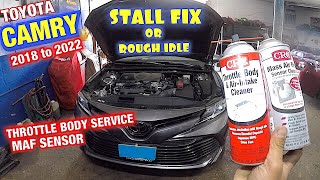
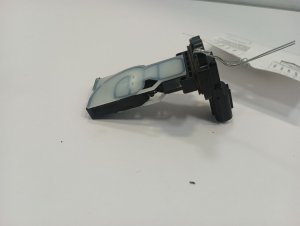
Est. part cost: $0 - Dirty Mass Air Flow (MAF) Sensor 🟡 Medium Probability → Shop Fuel Injection Air Flow Meter Oil and fine dust from the air filter can accumulate on the sensor's delicate wires over time, causing it to incorrectly measure the amount of air entering the engine, leading to an improper air-fuel mixture.
How to confirm: Locate the MAF sensor in the air intake tube after the air filter box. Unplug it, remove the two screws, and inspect the sensor wires. If they appear dirty, cleaning them is a common fix.
Typical fix: Clean the sensor with a dedicated MAF sensor cleaner spray. Do not touch the wires. If cleaning does not resolve the issue, the sensor must be replaced.
Est. part cost: $10-$20 for cleaner, $70-$150 for a new sensor.
Rare But Worth Checking
- Dirty Throttle Body: → Shop Fuel Injection Throttle Body Carbon can build up around the throttle plate, restricting the small amount of air needed to start the engine. Cleaning it with throttle body cleaner can resolve stalling issues.
- Clogged Fuel Injectors: If one or more injectors are clogged, the engine won't get enough fuel to run, causing a stall and setting P3190. Using quality fuel can help prevent this.
- Clogged Catalytic Converter: A severely clogged exhaust can prevent the engine from 'breathing' out, causing it to stall under load or fail to start. This was a confirmed fix on an older Camry Hybrid where oil consumption had plugged the converter.
- Faulty Engine Coolant Temperature (ECT) Sensor: If the sensor incorrectly tells the computer the engine is warm, it won't provide the proper cold-start fuel enrichment, leading to a stall.
- Corroded/Leaking EGR Cooler: On early Dynamic Force engines (pre-2022), the EGR cooler was prone to corrosion, which could leak coolant into the engine, causing white smoke, hesitation, and codes including P3190.
Diagnosis Steps
- Check the fuel gauge. As a first step, add 2-3 gallons of gasoline to the tank, even if the gauge does not show empty.
- Attempt to start the vehicle. If it starts and runs, the issue was an empty fuel tank.
- If the vehicle still won't start, DO NOT repeatedly crank the engine. This will drain the hybrid battery and complicate diagnosis.
- Check your vehicle's VIN for eligibility in Toyota's fuel pump safety recalls (e.g., 20TA03, 20TE02). Contact a dealer or use Toyota's online lookup tool.
- Visually inspect the entire air intake system between the air filter and the engine. Ensure the large rubber/plastic intake tube is securely connected at both ends and has no visible cracks. This is a common oversight after air filter service.
- Locate the Mass Air Flow (MAF) sensor on the air intake tube. Disconnect the electrical connector, remove the two screws, and carefully lift the sensor out.
- Inspect the MAF sensor's internal wires. If they look coated in dust or grime, clean them using only dedicated MAF sensor cleaner spray. Do not touch the wires. Reinstall the sensor and attempt to start the engine.
- If the problem persists, the next steps involve more advanced diagnostics, such as checking for fuel pressure to diagnose a weak fuel pump, inspecting the throttle body for carbon buildup, or checking for an ECM software update with a professional scan tool.
Parts You'll Likely Need
- Mass Air Flow (MAF) Sensor
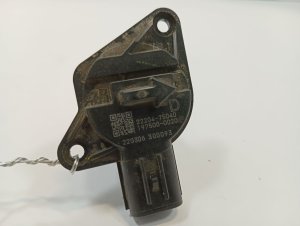
(OEM #22204-75040)— This sensor gets dirty over time and provides incorrect airflow readings to the computer, leading to a no-start or stall condition. Cleaning is often sufficient, but replacement may be necessary.
Trusted brands: Denso, Hitachi
OEM price range: $120-$180
Aftermarket price range: $50-$100 - Fuel Pump Assembly (Low Pressure)
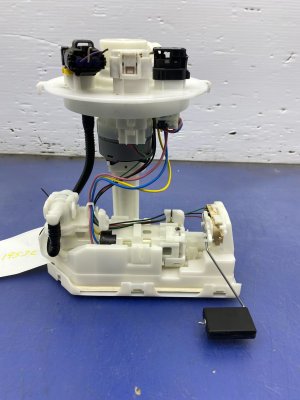
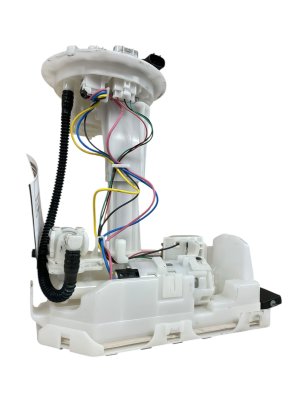
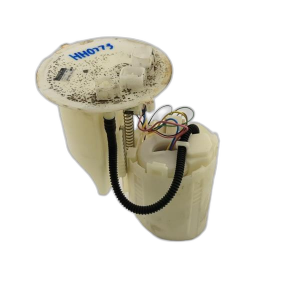
(OEM #77020-06660 (check with dealer, part numbers may vary by production date))— A weak or failed fuel pump is a common cause for P3190 if the vehicle is confirmed to have fuel. A recall for this part affected many 2018-2019 models. It fails to deliver the required fuel pressure for the engine to run.
Trusted brands: Denso, Aisin
OEM price range: $300-$450
Aftermarket price range: $150-$250
Related Codes That Often Appear With This One
- P0A0F — This code means 'Engine Failed to Start' and is often set by the Hybrid Control ECU at the same time the Engine ECU sets P3190. They describe the same event from the perspective of two different control modules.
- P3191 — A more specific code for 'Engine Does Not Start'. It indicates a complete failure to start, whereas P3190 can mean it started but ran poorly.
- P0171 — This code for 'System Too Lean' can accompany P3190 if the root cause is a dirty MAF sensor or a vacuum leak, both of which cause an incorrect air-fuel mixture.
- P3193 — This specific code for 'Fuel Run Out' confirms the system believes the car is out of gas.
Technical Service Bulletins (TSBs) & Recalls
- 20TA03 / 20TE02 - Safety recall and customer support program for failing low-pressure fuel pump
Platform-Specific Known Issues
- While no TSB is specific to the 2018-2025 Camry for P3190, a similar model (2017-2018 Highlander Hybrid) had a TSB (T-SB-0056-18) for P3190 occurring in high altitude/high temperature conditions, which was resolved with an ECM software update.
- A widespread safety recall (e.g., 20TA03) was issued for the low-pressure fuel pump on 2018-2019 Camry Hybrids. A failure of this pump is a direct cause of a no-start condition that will set code P3190.
Mechanic-Grade Diagnostic Values
- Engine Torque Output vs. Expected — expected: The engine should produce the torque requested by the Hybrid Vehicle ECU.. Failure: P3190 is set when the ECM detects the engine is producing less than one-fifth (20%) of the expected torque.
- High-Pressure Fuel System (D-4S) — expected: 2.4 - 20 MPa (348 - 2900 PSI). Failure: Pressure significantly below the lower end of the range, especially under load, indicates a failing high-pressure or low-pressure fuel pump.
- Engine Oil Specification — expected: SAE 0W-16. Failure: Using significantly heavier oil could potentially affect VVT-iE system performance on cold starts, though it's not a primary cause for P3190.
- Hybrid Battery Cell Voltage (via Techstream) — expected: Approximately 7.5V - 7.7V per cell (or ~15V per block of two cells).. Failure: While diagnosing a resulting P0A80, seeing a block voltage drop to 12-13V (or a single cell to ~6V) indicates a bad cell. This is a symptom of being drained by P3190, not the cause.
Hidden / Shadow Codes Worth Checking
- P3191: Engine Does Not Start. This is a more specific information code indicating a complete failure of the engine to fire, whereas P3190 can also mean it started but ran poorly. (see via Toyota Techstream or other professional-grade scan tools. A basic OBD-II reader may only show the general P3190 code.)
- P3193: Fuel Run Out. This information code is set when the criteria for P3190/P3191 are met and the fuel level sensor data confirms an empty tank. (see via Toyota Techstream or other professional-grade scan tools.)
- C1310: Hybrid System Malfunction. This code is set by the brake control ECU simply to indicate that a fault exists in the hybrid system. It's a downstream code triggered by P0A0F, which is in turn triggered by P3190. (see via Scan tool capable of reading ABS/VSC/TRAC system codes.)
Scan Tool Commands That Help
- Toyota Techstream: Active Test: Control the Fuel Pump / Speed — Use this command to manually activate the low-pressure fuel pump without starting the engine. This allows a technician to confirm if the pump is functional and to measure fuel pressure at the rail to diagnose a weak or failed pump. The menu path is typically: DIAGNOSIS / ENHANCED OBD II / ACTIVE TEST / FUEL PUMP / SPD.
Wiring & Ground Locations
- Engine Control Module (ECM) — Located at the driver's side firewall, under the hood.. This is the primary computer that sets the P3190 code. All engine sensor inputs (MAF, ECT, Crank/Cam sensors) terminate here. Checking for corrosion or damage at its connectors is a key step in advanced diagnosis.
- Main Engine Harness Grounds — While not explicitly for the A25A-FXS, typical Toyota practice is to have primary engine harness grounds bolted from the valve cover(s) to the body, often near the strut towers.. A loose or corroded engine ground can cause erratic sensor readings, leading to incorrect fuel and spark calculations that can trigger a P3190.
- Fuel Pump Connector — Under the rear seat, on top of the fuel tank assembly. The low-pressure pump is accessed via a panel under the seat cushion.. This connector provides power to the low-pressure fuel pump. Checking for voltage here during a Techstream active test can quickly determine if the pump is receiving power, separating a wiring issue from a failed pump.
Real Owner Repair Stories
- Reddit user 'Republicans_R_Liars' on r/prius (2010 Toyota Prius (similar hybrid system and failure logic)) — P3190 code and 'Check Hybrid System' warning light immediately after an oil change service.
❌ Tried (didn't work) None reported, owner went directly to visual inspection.
✅ What actually fixed it The air intake hose between the air filter box and the throttle body was not properly reconnected during the service. Re-attaching the hose securely and clearing the codes resolved the issue completely.
OEM Part Supersession History
N/A→N/A— Incompatibility Warning
Heads up: Be extremely cautious when buying MAF sensors (22204-75040) from non-reputable online sources like eBay, even if the seller claims it is a 'Genuine Denso' part. Owners have reported receiving sensors with the correct part number but different internal construction, leading to persistent lean codes (P0171) and running issues that mimic the original P3190 fault.
Model Year Variations Within This Range
- 2018-2021: Early production A25A-FXS engines had a higher reported incidence of EGR cooler corrosion and internal leaks, which could cause a P3190. This issue appears to have been addressed in later model years (2022+).
- 2018-2019: These model years were subject to a major safety recall (e.g., 20TA03) for a faulty low-pressure fuel pump that could fail and directly cause a P3190 code.
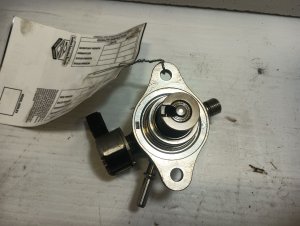
- 2023: Some 2023 models were part of a recall for issues related to the high-pressure fuel pump, which could also lead to stalling and P3190.
Diagnostic Flowchart
Other Known Issues on This Vehicle
Issues unrelated to this code that are worth knowing about as an owner of this generation:
- Harsh Shifting / Hesitation (8-Speed Automatic) 🟠 Medium — Common on 2018-2019 non-hybrid models, but some hybrid owners report similar feel from the eCVT. For the 8-speed, it's most noticeable at low speeds. (Ref: T-SB-0330-17 (for 8-speed auto, not hybrid eCVT) instructs dealers to reprogram the PCM to improve shift logic.)
- Low-Pressure Fuel Pump Failure 🔴 High → Shop Fuel Pump — Affects a specific range of 2018-2019 models. Failure can cause the engine to stall while driving. (Ref: Safety Recalls 20TA03, 20TE02)
- Engine Oil Emulsion in Cold Weather 🟡 Low — Can occur on vehicles used for frequent short trips in freezing temperatures. Moisture from blow-by gases condenses and mixes with the oil, creating a milky substance under the oil cap. (Ref: T-SB-0104-21)
- EGR Cooler Corrosion/Leak (Early Models) 🟠 Medium — Reported on Dynamic Force engines built before ~2022. Can lead to coolant loss, white smoke, and engine hesitation. (Ref: TSB EG-00691T-TME (European market))
- Fuel Filler Pipe Connection Issue 🔴 High — Very rare, affected a small batch of 205 vehicles from the 2019 model year. Could cause a fuel leak. (Ref: Recall K0I (NHTSA 19V098000))
Used vs. New Parts: Buying Guide for This Vehicle
When a used part is the smart pick: Used parts can be a cost-effective choice for major mechanical or structural components that are not prone to electronic failure or wear, such as an intake manifold, throttle body housing (not the electronics), or engine covers.
Donor-vehicle mileage cap: roughly under 80000 miles for the part to have meaningful remaining life.
What to inspect on the donor part:
- Check for physical damage, cracks, or signs of extreme heat.
- For electronic components, try to source from a vehicle with the lowest possible mileage.
- Ensure the part number on the donor part is an exact match, not just 'compatible'.
OEM-only on this vehicle (don't cheap out):
- Mass Air Flow (MAF) Sensor: Aftermarket MAF sensors, especially cheap online versions, are a very common cause of persistent, hard-to-diagnose running issues even if they are new.
- Fuel Injectors (Direct and Port): The D-4S system is complex; using OEM injectors ensures correct flow rates and spray patterns.
- Engine Sensors (Crankshaft, Camshaft, ECT): The cost savings of aftermarket sensors are not worth the risk of potential stalling or no-start conditions they can introduce.
Aftermarket brands forum-validated for this vehicle:
- Denso (Often the OEM supplier; ensure it's from a reputable vendor to avoid counterfeits)
- Aisin (Often an OEM supplier for fuel and water pumps)
- NTK (Well-regarded for engine management sensors)
Brands owners have reported issues with on this vehicle:
- Unbranded or 'white-box' parts from online marketplaces like eBay and Amazon.
- Any brand that offers a price that seems 'too good to be true' for a critical sensor.
Real Owner Stories
Aggregated from forums and TSBs cited above. Mileages and costs reflect what owners reported in those sources.
2018-2019 Toyota Camry Hybrid
Symptoms: Engine stalls while driving or fails to start; Check Engine Light and 'Check Hybrid System' message displayed.
What fixed it: Replacement of the low-pressure fuel pump assembly under safety recall 20TA03 / 20TE02.
Cost: $0-$0
Source hint: Safety recall 20TA03 / 20TE02 - Safety recall and customer support program for failing low-pressure fuel pump
Toyota Prius (Platform Mate)
Symptoms: P3190 code and 'Check Hybrid System' message appeared immediately after an oil change service where the air filter was inspected.
What fixed it: Reconnecting a massive unmetered air leak caused by a disconnected air intake hose.
Source hint: https://www.reddit.com/r/prius/comments/18qj50z/p3190_code_and_check_hybrid_system/
Lexus ES300h (A25A-FXS 2.5L)
Symptoms: Vehicle experienced a stall and no-start condition with codes P3190 and P0A0F.
What fixed it: Diagnostic troubleshooting of the fuel and air systems, mirroring Camry Hybrid procedures due to the shared A25A-FXS platform.
Source hint: https://clublexus.com/forums/es-6th-gen-2013-2018/981504-p0a0f-204-p3190.html
Toyota Camry Hybrid
Symptoms: Engine stalling and P3190 code; investigation into rare causes for the no-start condition.
What fixed it: Cleaning a clogged catalytic converter (noted as a rare cause resulting from oil consumption).
Source hint: https://www.youtube.com/watch?v=kr2raO2ZYxk
Related OBD-II Codes
Frequently Asked Questions
Is my 2018-2019 Camry Hybrid eligible for a free fuel pump replacement related to code P3190?
I just had my air filter changed and now I have a 'Check Hybrid System' message and P3190. What happened?
Can a dirty MAF sensor cause P3190 on my A25A-FXS engine?
Why does my Camry Hybrid show P3190 even though the gas gauge says I have a little fuel left?
Is there a TSB for P3190 if I drive my Camry Hybrid in high-altitude or high-temperature areas?
Will repeatedly trying to start my Camry with P3190 damage the hybrid battery?
Helpful Videos
We Have This Part in Stock

The information in this article is provided for general reference and educational purposes only. Vehicle specifications, procedures, and part compatibility can vary by production date, trim level, and region. Always consult your vehicle's factory service manual and verify part numbers before purchasing or performing repairs. Safety-critical components such as airbags, seat belts, and braking systems should be installed by a qualified professional.
- Toyota Camry Hybrid:
- 🧭 Diagnostic Flowchart
- 🎬 Helpful Videos
- 🛍️ Shop This Part
- What's Unique About the 2018-2025 Toyota Camry Hybrid
- Symptoms You May Notice
- Most Likely Causes
- Rare But Worth Checking
- Diagnosis Steps
- Parts You'll Likely Need
- Related Codes That Often Appear With This One
- Technical Service Bulletins (TSBs) & Recalls
- Platform-Specific Known Issues
- Mechanic-Grade Diagnostic Values
- Hidden / Shadow Codes Worth Checking
- Scan Tool Commands That Help
- Wiring & Ground Locations
- Real Owner Repair Stories
- OEM Part Supersession History
- Model Year Variations Within This Range
- Other Known Issues on This Vehicle
- Used vs. New Parts: Buying Guide for This Vehicle
- Real Owner Stories
- 2018-2019 Toyota Camry Hybrid
- Toyota Prius (Platform Mate)
- Lexus ES300h (A25A-FXS 2.5L)
- Toyota Camry Hybrid
- Related OBD-II Codes
- Frequently Asked Questions
- 🎟️ Get 5% Off