

P3190 on 2023-2024 Toyota Corolla Hybrid: 'Poor Engine Power' Causes and Fixes
On a 2023-2024 Toyota Corolla Hybrid, code P3190 means the gasoline engine has failed to start or run properly. The most common causes are simply running out of fuel or a dirty Mass Air Flow (MAF) sensor. Before major repairs, add 2-3 gallons of gas and clean the MAF sensor. Do not repeatedly try to start the car, as this will drain the high-voltage battery and complicate the diagnosis.
- P3190 means the gasoline engine is not running correctly; it is NOT a hybrid battery failure.
- DO NOT repeatedly try to start the car, as this will drain the high-voltage battery and lead to a costly misdiagnosis.
- The first and easiest step is to add 2-3 gallons of fuel, even if the gauge indicates it has fuel.
- The second step is to inspect the air intake for loose hoses and clean the Mass Air Flow (MAF) sensor with a dedicated cleaner.
- Only after these simple checks are performed should you consider more complex issues like a faulty fuel pump or other sensors.
What's Unique About the 2023-2024 Toyota Corolla
The 2023-2024 Corolla Hybrid uses the same reliable 1.8L 2ZR-FXE engine found in the Prius. For this reason, it shares the same common causes for a P3190 code. The most frequent issue is not a major component failure, but simple problems like an empty fuel tank or a contaminated Mass Air Flow (MAF) sensor. Because the hybrid system can move the car silently on battery power, drivers sometimes don't realize the gas engine isn't running until the 'Check Hybrid System' light appears, making 'out of gas' a surprisingly common cause. A unique aspect of this hybrid system is that the engine is started by a high-voltage motor-generator (MG1), not a conventional starter. Repeated failed start attempts will drain the high-voltage battery without the engine running to recharge it, which can lead to additional, misleading battery-related fault codes.
Symptoms You May Notice
- Check Engine Light and/or Master Warning Light (often with a "Check Hybrid System" message)
- Engine fails to start or stalls immediately after starting (e.g., runs for 10 seconds then shuts off).
- Vehicle enters a low-power 'limp mode'
- Vehicle will only drive on electric power until the hybrid battery is depleted
- Engine misfires or runs very rough.
- No throttle response.
- Replacing the high-voltage hybrid battery. This is the most common and expensive misdiagnosis. The P3190 code is an engine problem, not a battery problem. Repeatedly trying to start the car will drain the HV battery, which can then set battery-related codes (like P0A80) and mislead the diagnosis.
Most Likely Causes
- Out of Fuel 🔴 High Probability The hybrid system can continue to operate on battery power for a short time, masking the fact that the gasoline engine is not running due to lack of fuel. The fuel gauge may also be inaccurate in some situations. Running the fuel pump dry can also introduce air into the fuel lines, requiring several start attempts to re-prime the system, which drains the HV battery.
How to confirm: Add at least 2-3 gallons of fresh gasoline to the tank. This is the simplest and most important first step.
Typical fix: Refill the fuel tank and clear the codes. It may take a few start cycles for the fuel system to prime and the engine to run smoothly.
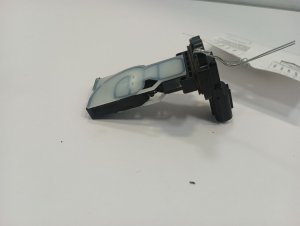
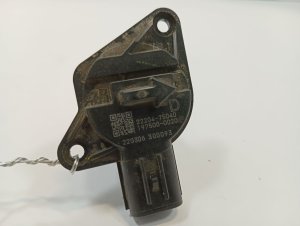
Est. part cost: $10-$20 - Dirty Mass Air Flow (MAF) Sensor 🔴 High Probability → Shop Fuel Injection Air Flow Meter Oil from aftermarket air filters or fine debris (like insects, dust, or leaves) can contaminate the sensor's delicate wires, causing it to report incorrect airflow to the ECM. This leads to an improper air-fuel mixture and a stall. A real-world example on a 2019 Corolla Hybrid involved a dead wasp found inside the MAF sensor housing, which was enough to trigger the P3190 code.
How to confirm: Visually inspect the MAF sensor wires for contamination. A scan tool can also show erratic or out-of-spec readings. A quick diagnostic test is to disconnect the MAF sensor's electrical connector and try to start the engine; if it starts and runs (albeit poorly), the MAF sensor is highly suspect.
Typical fix: Carefully clean the sensor with a dedicated MAF sensor cleaner spray. Do not touch the wires. Allow it to dry completely before reinstalling. If cleaning doesn't work, the sensor must be replaced.
Est. part cost: $15-$25 (cleaner), $80-$200 (new sensor) - Air Induction System Leak 🟡 Medium Probability A loose air filter housing clamp, a disconnected PCV hose, or a cracked intake boot, often occurring after an air filter change, can allow unmetered air to enter the engine. This leans out the air-fuel mixture and causes a stall. On the related 2ZR-FXE engine, a disconnected Purge VSV vacuum line at the throttle body is a known cause.
How to confirm: Visually inspect all intake components between the MAF sensor and the engine for loose clamps, cracks, or disconnected hoses. A smoke test is the most effective way to pinpoint hard-to-see leaks.
Typical fix: Tighten clamps, re-seat the intake boot, or replace the cracked/damaged hose.
Est. part cost: $5-$150 - Failing Fuel Pump ⚪ Low Probability → Shop Fuel Pump While the pump itself is generally reliable, it can fail or weaken, providing insufficient fuel pressure for the engine to run. Running the tank empty can stress the pump and contribute to premature failure. A failing fuel pump relay can also present the same symptoms. NHTSA ODI #11425043 describes a situation where a Toyota vehicle was towed to a dealership and confirmed to have fuel pressure codes P0087 and P3190.
How to confirm: Connect a fuel pressure gauge to the fuel line and verify the pressure is within the manufacturer's specifications. Listening for the pump to prime when the car is turned on can be an initial check, but a pressure test is definitive.
Typical fix: Replace the fuel pump assembly, which is located inside the fuel tank. This often requires a special tool to remove the locking ring.
Est. part cost: $200-$400
Rare But Worth Checking
- Clogged Fuel Injectors: If the car has been sitting for a long time or has been run on poor-quality fuel, injectors can become clogged, preventing proper fuel delivery.
- Faulty Crankshaft Position Sensor: A failing crankshaft position sensor can prevent the ECM from knowing the engine's speed and position, leading to a no-start or stall condition. The sensor's resistance can be checked to confirm failure.
- Dirty Throttle Body: → Shop Fuel Injection Throttle Body Carbon buildup can restrict airflow, especially at idle, causing the engine to stall. Cleaning the throttle body can resolve this.
- Failed Engine Coolant Temperature (ECT) Sensor: An ECT sensor providing incorrect readings can confuse the ECM's fueling calculations, leading to a stall, especially during warm-up.
Diagnosis Steps
- CRITICAL FIRST STEP: Do NOT repeatedly try to start the car. This will drain the high-voltage battery, complicating diagnosis and potentially requiring specialized equipment to recover.
- Check the fuel gauge. Even if it shows fuel, add 2-3 gallons of fresh gasoline to rule out an empty tank or faulty sending unit. A brand new 2024 Corolla with only 10km on the dash threw a P3190 after a fuel run-out scenario, highlighting how critical this step is.
- Visually inspect the entire air intake system. Check for loose air filter box clips, disconnected hoses (especially the PCV and Purge VSV lines), or cracks in the intake boot, particularly if the air filter was recently serviced.
- Locate the Mass Air Flow (MAF) sensor on the intake tube. Disconnect it and remove it (typically two screws). Visually inspect the sensor wires for any debris or oily film. A forum user found a dead bee in theirs, which was enough to cause the fault.
- If the MAF sensor appears dirty, or as a proactive step, clean it using only dedicated MAF Sensor Cleaner spray. Do not touch the wires. Allow it to dry completely before reinstalling.
- If the code persists, check for other stored DTCs that could point to a more specific issue (e.g., P0087 for low fuel pressure).
- If equipped with a capable scan tool like Toyota Techstream, check the freeze frame data for P3190. This will show the engine conditions when the fault occurred, which can provide valuable clues.
- If simple checks do not resolve the issue, more advanced diagnostics like a fuel pressure test or an intake smoke test will be needed to check for a weak fuel pump or hidden vacuum leaks.
Parts You'll Likely Need
- Mass Air Flow (MAF) Sensor Cleaner — Cleaning a contaminated MAF sensor is a very common, low-cost first step that frequently resolves the issue.
Trusted brands: CRC, Liqui Moly, WD-40 Specialist
Aftermarket price range: $15-$25 - Mass Air Flow (MAF) Sensor
(OEM #22204-75030)— If cleaning does not fix the problem, or if the sensor has failed electronically, it will need to be replaced. This is a common failure point.
Trusted brands: Denso, Genuine Toyota
OEM price range: $115-$170
Aftermarket price range: $50-$120
Related Codes That Often Appear With This One
- P0A0F — This code means 'Engine Failed to Start' and is set by the Hybrid Control ECU. It's very common to see it with P3190, as they describe the same event from the perspective of two different computers.
- P3191 — A more specific version of P3190, meaning 'Engine Does Not Start'. It indicates a complete failure to start rather than just low power.
- P3193 — This code means 'Fuel Run Out' and will be present if the primary cause is an empty fuel tank.
- P0171 — This code for 'System Too Lean' can be triggered by the same root causes as P3190, such as a dirty MAF sensor or a vacuum leak.
- P0087 — This code for 'Fuel Rail/System Pressure - Too Low' may appear alongside P3190 if a weak fuel pump or clogged filter is the root cause.
Technical Service Bulletins (TSBs) & Recalls
- L-SB-0019-15 (for Lexus CT200h): While for a Lexus, this TSB is highly relevant as it addresses the same 2ZR-FXE engine. It covers DTCs P3190, P3191, and P0A0F caused by a Purge VSV vacuum line separating from the throttle body. The fix involves replacing the valve and reprogramming the ECM.
- T-SB-0205-11 (for 2010-2011 Prius): Also relevant due to the shared engine, this TSB addresses P3190, P3191, and P0A0F caused by PCV/Purge VSV line separation. The repair is to secure the lines, replace the Purge VSV, and update the ECM calibration.
- T-SB-0056-18 (for 2017-2018 Highlander Hybrid): While a different vehicle, this TSB for P3190 shows that Toyota has modified ECM logic in other hybrids to prevent this code from setting under specific conditions (high altitude and high temperature), indicating the sensitivity of the monitoring system.
- Bulletin #T-SB-0041-15: This manufacturer bulletin notes that P3190, P3191, and P0171 may be caused by Purge VSV/PCV line separation from the throttle body housing, requiring replacement of the Vacuum Switching Valve Assembly.
Platform-Specific Known Issues
- MHH AUTO Forum — A 2019 Corolla Hybrid with a 1.8L engine was towed to a shop with a P3190 code. The engine would start, run smoothly for about 10 seconds, and then stall. The technician found a dead, dried bee blocking the hole in the Mass Air Flow sensor. After cleaning the sensor, the car started and ran perfectly. This highlights how even minor debris can cause this fault.
- MHH AUTO Forum — A user on a mechanic forum reported a brand new 2024 Corolla Hybrid with only 10km on the odometer threw a P3190 code. The cause was a simple fuel run-out scenario that depleted the hybrid battery during start attempts. After refueling and charging the HV battery, the code appeared because the engine RPM was erratic on startup before stalling. This shows the issue can affect even brand new vehicles and how running out of gas can cascade into other problems.
Mechanic-Grade Diagnostic Values
- Low-Side Fuel Pressure — expected: 304 to 343 kPa (44 to 50 psi) at idle. Failure: Pressure below this range indicates a failing fuel pump or clogged filter.
- Crankshaft Position Sensor Resistance (Cold Engine) — expected: 985 to 1,600 Ω. Failure: A reading outside this range indicates a sensor failure, which will cause a no-start.
- Crankshaft Position Sensor Resistance (Hot Engine) — expected: 1,265 to 1,890 Ω. Failure: A reading outside this range when the engine is at operating temperature points to a heat-related sensor failure.
- Engine Coolant Temperature (ECT) Sensor Resistance — expected: 2.0 to 3.0 kΩ at 20°C (68°F); 0.2 to 0.4 kΩ at 80°C (176°F). Failure: Incorrect resistance at a given temperature will cause the ECM to calculate the wrong fuel mixture for starting.
- Mass Air Flow (MAF) Sensor Live Data (Scan Tool) — expected: 2 to 7 grams/second (g/s) at idle; 15 to 25 g/s at 2500 RPM. Failure: Readings that are stuck, erratic, or do not rise linearly with RPM suggest a faulty sensor.
- Total Fuel Trim (Short Term + Long Term) — expected: Ideally between -5% and +5%. Failure: Consistently high positive trims (e.g., > +15%) suggest an unmetered air leak or a dirty MAF sensor, while high negative trims suggest leaking injectors.
Hidden / Shadow Codes Worth Checking
- Freeze Frame Data for P3190: While not a separate code, the freeze frame data stored with P3190 is critical. It captures a snapshot of all sensor values (engine speed, coolant temp, fuel trims, etc.) at the exact moment the fault was triggered. A technician can analyze this to see if the engine was cold, if fuel pressure was low, or if an air/fuel ratio was lean, pointing directly to the root cause. (see via Requires a capable scan tool like Toyota Techstream or equivalent to access the 'Freeze Frame Data' or 'DTC Info' section.)
Scan Tool Commands That Help
- Toyota Techstream: Active Test: Control the Fuel Pump / Speed — This command is essential for diagnosis. It allows a technician to manually activate the fuel pump without trying to start the engine. This can be used to confirm the pump is working, listen for its operation, build pressure for a fuel pressure test, or prime the system after running out of fuel. It is found under the 'Powertrain / Engine and ECT' menu.
Wiring & Ground Locations
- Engine Harness Ground Cluster — On the 2ZR-FXE engine, there are several key ground wires that cluster together and bolt to the engine block or cylinder head, often near the transmission housing or intake manifold area.. A loose or corroded main engine ground can cause a wide range of intermittent electrical issues, including erratic sensor readings for the crankshaft sensor, MAF, and others that directly lead to a P3190. A video for the Prius 2ZR-FXE shows a key ground point on the driver's side of the engine, near the coolant reservoir.
- Chassis Ground Points — Key chassis grounds are located on the frame rail in the engine bay, often near the battery or fuse box. On the E210 Corolla, a primary ground point from the negative battery terminal connects directly to the chassis.. While less common to cause this specific code, a poor chassis ground can affect the ECM's and other modules' stability, contributing to unpredictable electrical faults.
Documented NHTSA Reports
- NHTSA ODI #11051617 — An owner reported that diagnostics detected error codes P0A0F and P3190, stating they did not feel safe driving on the freeway.
Real Owner Repair Stories
- PriusChat Forum User 'viciousthinker' (2012 Toyota Prius (Gen 3 with 2ZR-FXE engine), 212k miles) — Vehicle set a P3190 code and would not start.
❌ Tried (didn't work) Replacing the 12V auxiliary battery
✅ What actually fixed it A Toyota dealer diagnosed a bad fuel pump. The owner had the car towed home, purchased a used fuel pump assembly from a 2014 Prius on eBay for under $100, and replaced it themselves. This resolved the issue completely. - YouTube user 'saneauto' (2013 Toyota Prius (Gen 3 with 2ZR-FXE engine)) — P3190 and P0171 codes, engine would run for about 10 seconds and then stall.
❌ Tried (didn't work) Cleaning the MAF sensor, Checking for vacuum leaks
✅ What actually fixed it The issue was a completely clogged fuel filter sock on the fuel pump assembly, caused by very dirty fuel. The owner replaced the entire fuel pump assembly with a used one, which resolved the stalling and codes.
OEM Part Supersession History
22204-75030→22204-0F030— Standard part revision and consolidation by Toyota for various models.
Heads up: The new part number (22204-0F030) is a direct replacement and fully compatible with vehicles that used the original part.
Diagnostic Flowchart
Other Known Issues on This Vehicle
Issues unrelated to this code that are worth knowing about as an owner of this generation:
- Premature 12V Battery Failure 🟠 Medium — Commonly reported, especially on vehicles driven for frequent short trips. The battery may fail within 1-3 years. Owners report needing to use a jump starter on relatively new cars.
- Clogged EGR (Exhaust Gas Recirculation) System 🟠 Medium — Can occur at higher mileage (around 100,000+ miles), leading to rough idling and reduced power. It's a known issue on the 2ZR-FXE engine family.
- Minor Oil Consumption 🟡 Low — Some 2ZR-FXE engines may begin to consume a small amount of oil after 80,000-100,000 miles, though it is far less severe than on older Toyota engines. The issue was largely improved in post-2015 engine revisions.
- Infotainment System Glitches 🟡 Low — Owners report minor software bugs, such as inability to remove expired satellite radio presets and speaker rattles at medium volume on the driver's side.
- Steering Shaft Recall (Specific 2023-2024 models) 🔴 High — A recall was issued for specific production lots (July-Sept 2023) due to a risk of cracks in the upper universal joint of the steering shaft, which could lead to a loss of steering. (Ref: Transport Canada Recall 2024-123 / Toyota Australia REC-006009)
Used vs. New Parts: Buying Guide for This Vehicle
When a used part is the smart pick: For this repair, used parts can be a smart choice for mechanical and simple electronic components. A complete used fuel pump assembly from a low-mileage donor car is a well-documented, cost-effective fix. Similarly, intake components like the air box or intake boot are excellent candidates for used parts.
Donor-vehicle mileage cap: roughly under 100000 miles for the part to have meaningful remaining life.
What to inspect on the donor part:
- For a fuel pump, verify the donor vehicle's mileage if possible. Aim for a donor with under 100,000 miles.
- Inspect plastic intake parts for any hairline cracks or brittleness before purchasing.
- For electronic sensors like a MAF, ensure the connector pins are clean, straight, and free of corrosion.
OEM-only on this vehicle (don't cheap out):
- Crankshaft Position Sensor: While aftermarket versions exist, the critical nature of this sensor for engine operation makes using a Genuine Toyota or Denso (the OEM supplier) part a wise investment to avoid future no-start issues.
Aftermarket brands forum-validated for this vehicle:
- Denso (for MAF Sensor, Fuel Pump, Sensors - often the original OEM supplier)
- CRC (for MAF Sensor Cleaner)
Brands owners have reported issues with on this vehicle:
- Unnamed, no-brand MAF sensors and fuel pumps from online marketplaces are very high-risk. They often have high failure rates, incorrect calibration, or are dead on arrival. Stick to known brands or tested used OEM parts.
Real Owner Stories
Aggregated from forums and TSBs cited above. Mileages and costs reflect what owners reported in those sources.
2019 Toyota Corolla Hybrid 1.8L
Symptoms: The engine would start and run smoothly for about 10 seconds, then stall. A P3190 code was stored.
What fixed it: The technician found a dead, dried bee blocking the hole in the Mass Air Flow (MAF) sensor. Cleaning the sensor resolved the issue.
Source hint: MHH AUTO Forum thread titled '[SOLVED] Corolla Hybrid P3190 problem'
2024 Toyota Corolla Hybrid — ~6 miles
Symptoms: The vehicle threw a P3190 code and the engine RPM was erratic on startup before stalling. The hybrid battery was depleted during start attempts.
What fixed it: Refueling the vehicle and charging the high-voltage (HV) battery.
Source hint: MHH AUTO Forum thread 'P3190-toyota-corolla-hybrid-2024'
2010-2011 Toyota Prius 1.8L 2ZR-FXE
Symptoms: Engine failed to start or had poor power, throwing codes P3190 and P0A0F.
What fixed it: Securing the PCV/Purge VSV lines that had separated, replacing the Purge VSV, and updating the ECM calibration.
Source hint: T-SB-0205-11
Related OBD-II Codes
Frequently Asked Questions
Can a brand new 2024 Corolla Hybrid with almost no miles on it really trigger a P3190 code?
I have a 2023 Corolla with the 2ZR-FXE engine; does the Lexus TSB L-SB-0019-15 apply to my car?
What happens if I keep trying to restart my Corolla Hybrid after it stalls with this code?
Could a simple air filter change on my 2023 Corolla cause a P3190 code?
Is it true that an insect can cause my hybrid system to fail?
How much fuel should I add to rule out a 'run-out' condition on my Corolla?
Helpful Videos
We Have This Part in Stock

The information in this article is provided for general reference and educational purposes only. Vehicle specifications, procedures, and part compatibility can vary by production date, trim level, and region. Always consult your vehicle's factory service manual and verify part numbers before purchasing or performing repairs. Safety-critical components such as airbags, seat belts, and braking systems should be installed by a qualified professional.
- Toyota Corolla:
- 🧭 Diagnostic Flowchart
- 🎬 Helpful Videos
- 🛍️ Shop This Part
- What's Unique About the 2023-2024 Toyota Corolla
- Symptoms You May Notice
- Most Likely Causes
- Rare But Worth Checking
- Diagnosis Steps
- Parts You'll Likely Need
- Related Codes That Often Appear With This One
- Technical Service Bulletins (TSBs) & Recalls
- Platform-Specific Known Issues
- Mechanic-Grade Diagnostic Values
- Hidden / Shadow Codes Worth Checking
- Scan Tool Commands That Help
- Wiring & Ground Locations
- Documented NHTSA Reports
- Real Owner Repair Stories
- OEM Part Supersession History
- Other Known Issues on This Vehicle
- Used vs. New Parts: Buying Guide for This Vehicle
- Real Owner Stories
- 2019 Toyota Corolla Hybrid 1.8L
- 2024 Toyota Corolla Hybrid — ~6 miles
- 2010-2011 Toyota Prius 1.8L 2ZR-FXE
- Related OBD-II Codes
- Frequently Asked Questions
- 🎟️ Get 5% Off