

P3190 on 2019-2022 Toyota Corolla Hybrid: 'Poor Engine Power' Causes and Fixes
On a 2019-2022 Corolla Hybrid, P3190 means the gasoline engine is failing to run. The most common cause is simply running out of fuel. Before any repairs, add 2-3 gallons of gas. If that doesn't work, the next most likely cause is a dirty Mass Airflow (MAF) sensor, which is a simple and inexpensive cleaning job. Do not repeatedly try to start the car, as this will drain the high-voltage battery and complicate the repair.
- P3190 is an engine performance code, NOT a hybrid battery code.
- First, add 2-3 gallons of gas. This is the most common fix.
- Second, inspect the air intake hose for leaks and clean the MAF sensor with dedicated cleaner.
- DO NOT repeatedly attempt to start the engine, as this will drain the high-voltage battery and lead to a much more expensive and incorrect diagnosis.
- If these simple steps don't work, the problem is likely a failed fuel pump, and a professional diagnosis is recommended.
What's Unique About the 2019-2022 Toyota Corolla Hybrid
The Corolla Hybrid uses the same 1.8L 2ZR-FXE engine found in the incredibly popular Toyota Prius. For this reason, the causes of P3190 are well-documented across multiple Toyota and Lexus platforms. The most critical issue for this platform is that the engine's failure to start can quickly drain the high-voltage hybrid battery. This often leads to secondary battery codes (like P0A80), causing owners to mistakenly believe they need a very expensive hybrid battery replacement when the original problem was a simple fuel or air issue.
Symptoms You May Notice
- Check Engine Light is on
- Master Warning Light (red or yellow triangle) is on
- "Check Hybrid System" message on the dash
- Engine fails to start
- Engine starts briefly then stalls, often after about 10 seconds
- Vehicle has no power or very limited power (limp mode)
- Vehicle will only move a short distance on battery power before stopping
- Replacing the high-voltage hybrid battery. This is the most common and expensive misdiagnosis. The P3190 code is for the gasoline engine; the battery is almost always drained as a *symptom* of the engine's failure to start, not the cause.
- Replacing the 12V auxiliary battery. While a weak 12V battery can cause various electrical issues and prevent the car from entering 'Ready' mode, it is not a primary cause for the P3190 code itself, which relates to engine performance once a start is attempted.
Most Likely Causes
- Out of Fuel 🔴 High Probability The fuel gauge on some Toyota hybrids can be inaccurate, especially when low. The car can run briefly on battery power, masking the fact that the engine has no fuel, which can be confusing. It is recommended to add at least 3 gallons of fuel to ensure the pump is primed.
How to confirm: Add 2-3 gallons of fresh gasoline to the tank. This is the simplest and most common fix. Do not rely solely on the fuel gauge, as it can be misleading.
Typical fix: Refill the fuel tank.
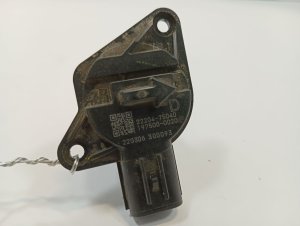
Est. part cost: $10-$15 - Dirty or Faulty Mass Airflow (MAF) Sensor 🔴 High Probability → Shop Fuel Injection Air Flow Meter The MAF sensor measures the air entering the engine. If it's dirty from dust, oil, or even debris, it will send incorrect information to the computer, causing a lean fuel mixture and stalling. A documented case on a 2019 Corolla Hybrid involved a dead bee blocking the sensor's opening.
How to confirm: Unplug the MAF sensor's electrical connector and try to start the engine. If the engine starts and idles (even if it runs rough), the MAF sensor is almost certainly the problem. Visually inspect the sensor for debris.
Typical fix: Clean the sensor with a dedicated MAF sensor cleaner spray. If cleaning doesn't work, replace the sensor. Denso is the original equipment manufacturer (OEM).
Est. part cost: $10-$15 for cleaner, $70-$150 for a new sensor - Air Induction System Leak 🟡 Medium Probability The large flexible air hose between the air filter box and the throttle body can be knocked loose or improperly seated, often after an air filter replacement. A known issue on the related Lexus CT200h is the Purge VSV vacuum line separating from the throttle body, which is covered by Lexus TSB L-SB-0019-15. This allows unmetered air into the engine, disrupting the air-fuel ratio. Manufacturer TSB #T-SB-0205-11 Rev also notes that P3190 can be triggered by purge VSV/PCV line separation from the throttle body housing.
How to confirm: Visually inspect the entire air intake path. Ensure the intake boot is fully seated on the throttle body and the air filter housing, and that all clamps are tight. Check all small vacuum hoses connected to the intake for cracks or disconnection, paying special attention to the Purge VSV line.
Typical fix: Reseat the intake hose and tighten the clamps. Reconnect any disconnected vacuum lines.
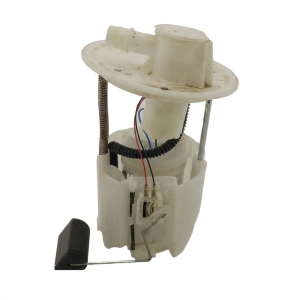
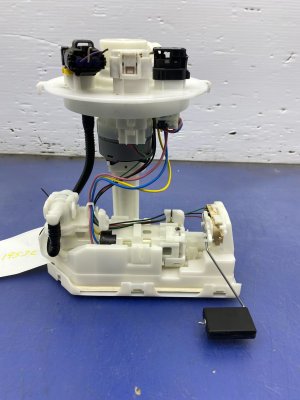
Est. part cost: $0-$5 - Failed Fuel Pump 🟡 Medium Probability → Shop Fuel Pump Running the vehicle completely out of fuel can cause the fuel pump to run dry, overheat, and fail. Additionally, many 2019-2020 Toyota models, including the Corolla, were subject to a major recall for faulty Denso fuel pumps that could fail unexpectedly. An owner reported in NHTSA ODI #11425043 that a dealership confirmed fuel pressure code P0087 alongside P3190, indicating a critical fuel delivery failure.
How to confirm: A fuel pressure test is required. This involves connecting a special gauge to the fuel line to measure the pressure while the pump is activated. This is often best left to a professional.
Typical fix: Replace the in-tank fuel pump assembly. Check if your vehicle is covered under Toyota's fuel pump recall (NHTSA campaign 20V-012 and its expansions).
Est. part cost: $150-$400
Rare But Worth Checking
- Clogged EGR System: The 2ZR-FXE engine is known for carbon buildup in the Exhaust Gas Recirculation (EGR) valve, cooler, and intake manifold passages. While this usually causes issues over 100,000 miles, a severe clog can restrict airflow enough to cause a stall and trigger P3190. Cleaning is a common maintenance item on high-mileage Prius models.
- Dirty Throttle Body: → Shop Fuel Injection Throttle Body Heavy carbon buildup around the throttle plate can prevent it from closing properly or restrict airflow at idle, leading to a stall. Cleaning the throttle body can resolve this.
- Engine Mechanical Failure: In rare cases, this code can be a symptom of a more serious internal engine problem like a failed head gasket (a known issue on some high-mileage 2ZR-FXE engines, particularly 2010-2015 Prius models) or low compression from worn piston rings. This is usually accompanied by other symptoms like a rough/shaky cold start, overheating, coolant loss, or excessive oil consumption.
- Environmental Factors: According to TSB #T-SB-0056-18, some Toyota hybrid vehicles may exhibit P3190 when operating in high altitude and high temperature conditions, which may require an ECM software update.
Diagnosis Steps
- CRITICAL: Do NOT repeatedly try to start the car. You will drain the high-voltage battery, which can turn a simple repair into a complex and expensive one.
- Add 2-3 gallons of fresh gasoline to the tank, even if the gauge shows fuel is present.
- Try to start the vehicle. If it runs, the problem is solved.
- If it does not run, inspect the entire air intake system from the air filter box to the engine. Ensure the main hose is securely clamped at both ends and has no cracks. Check all smaller vacuum lines, especially the Purge VSV hose at the throttle body.
- Locate the Mass Airflow (MAF) sensor on the intake tube. Disconnect its electrical plug. Try to start the engine. If it starts and idles, the MAF sensor needs to be cleaned or replaced.
- If the engine still does not start, remove the MAF sensor and visually inspect it for debris (like leaves, insects, or dirt). Clean it with dedicated MAF sensor cleaner spray and reinstall.
- If the problem persists, check if your vehicle is part of the Denso fuel pump recall (NHTSA campaign 20V-012).
Parts You'll Likely Need
- Mass Airflow Sensor Cleaner — This is the cheapest and most effective fix for the second most common cause of P3190: a dirty MAF sensor.
Trusted brands: CRC, Liqui Moly
Aftermarket price range: $10-$15 - Mass Airflow (MAF) Sensor
(OEM #22204-37010)— If cleaning the MAF sensor doesn't work, it may have failed electronically. Replacing it is the next step. Denso is the OEM manufacturer, but the part may also be made by Hitachi.
Trusted brands: Denso (OEM), Hitachi
OEM price range: $120-$180
Aftermarket price range: $70-$110 - Fuel Pump Assembly
(OEM #77020-02890)— If the car ran out of fuel or is part of the recall, the fuel pump may have failed. This part number supersedes 77020-12A00. Another related part number for the hybrid model is 77020-02C21.
Trusted brands: Toyota (OEM), Denso (OEM supplier)
OEM price range: $395-$570
Aftermarket price range: $150-$300
Related Codes That Often Appear With This One
- P0A0F — This code means 'Engine Failed to Start'. It is set by the hybrid control unit and is the direct companion to P3190, which is set by the engine control unit. They describe the same event from two different modules. NHTSA ODI #11051617 describes an owner's vehicle where diagnostics detected both P0A0F and P3190, leading the driver to feel unsafe on the freeway.
- P0171 — This code means 'System Too Lean'. It often appears with P3190 because the most common causes, like a dirty MAF sensor or a vacuum leak, result in a lean air-fuel mixture.
- P3191 — This code means 'Engine Does Not Start'. It is a more specific version of P3190 and is often set at the same time, particularly if the engine fails to even turn over.
- P3193 — This code specifically means 'Fuel Run Out'. If you see this with P3190, it's a very strong confirmation that the problem is an empty gas tank.
- P0087 — This code means 'Fuel Rail/System Pressure - Too Low'. It points directly to a failing fuel pump or clogged fuel filter as the cause of the P3190.
- C1259 — This code indicates an issue with the HV system regenerative braking, but in this context, it often appears alongside P3190 because the hybrid system has been disabled due to the engine fault. A user on CarTechnology forums noted this code appeared with P3190 on a 2019 Corolla Hybrid.
Technical Service Bulletins (TSBs) & Recalls
- L-SB-0019-15 (for Lexus CT200h with same 2ZR-FXE engine): Cites P3190 and P3191 being caused by a Purge VSV vacuum line separating from the throttle body, a relevant possibility for the Corolla Hybrid.
- T-SB-0041-15: Notes that P3190 (Poor Engine Power) and P0A0F (Engine Failed to Start) can be caused by Purge VSV/PCV line separation from the throttle body housing, and recommends replacing the Vacuum Switching Valve Assembly.
- T-SB-0056-18: Identifies that P3190 may occur when operating in high altitude and high temperature conditions, potentially requiring an ECM update.
Mechanic-Grade Diagnostic Values
- Low-Side Fuel Pressure — expected: 304 to 343 kPa (44 to 50 psi) at idle. Failure: Pressure below this range indicates a failing fuel pump or clogged filter/sock.
- Fuel Pump Motor Resistance — expected: 0.3 to 3.0 Ω. Failure: A reading outside this range indicates an electrical failure. However, a reading within spec does not rule out a mechanical pump failure.
- Fuel Injector Resistance — expected: 11.6 to 12.4 Ω at 20°C (68°F). Failure: Resistance outside this range indicates a failed injector coil.
- Mass Air Flow (MAF) Rate (Scan Tool PID) — expected: 2 to 7 g/s at idle. Failure: Readings that are erratic or do not increase smoothly with RPM suggest a faulty sensor.
- Crankshaft Position Sensor Resistance — expected: 985 to 1,600 Ω (Cold); 1,265 to 1,890 Ω (Hot). Failure: Resistance outside these ranges can cause a no-start condition.
- Freeze Frame Data Analysis — expected: When P3190 is set, the ratio of 'Estimated Engine Torque' to 'Target Engine Torque' will be less than 20% for 6 seconds or more.. Failure: High positive fuel trims (+8% or more) in the freeze frame data point towards a lean condition (vacuum leak, dirty MAF, or fuel starvation).
Hidden / Shadow Codes Worth Checking
- P3190 with INF Code: Toyota's Techstream software can display an additional 'INF' or detail code along with the main DTC. While specific INF codes for P3190 are not publicly documented in detail, they provide the dealer with more granular information about the failure condition (e.g., distinguishing between a stall during idle vs. a failure to reach target RPM). (see via Toyota Techstream diagnostic software.)
Scan Tool Commands That Help
- Toyota Techstream: Active Test: Control the Fuel Pump / Speed — This is a critical diagnostic step. It allows a technician to manually activate the fuel pump without starting the engine. It's used to verify the pump runs, to prime the system after running out of gas, and to perform a fuel pressure test. It is found under the 'Powertrain / Engine and ECT' or 'DIAGNOSIS / ENHANCED OBD II' menu.
Wiring & Ground Locations
- Engine Harness Ground Points — On the 2ZR-FXE, there are several key ground wire clusters for the engine harness. One is located on the engine block itself, and two others are bolted to the chassis on the driver's side of the engine bay, near the coolant reservoir.. A loose or corroded ground can cause erratic sensor readings (especially for the MAF, crank, and cam sensors) leading to a stall and P3190. These should be checked for tightness and corrosion if electrical issues are suspected.
- MAF Sensor Connector (D5) — The 5-pin connector on the MAF sensor, located on the air intake tube after the air filter box.. Pin 3 (+B) should have 11-14V with the power switch on (IG). Pin 4 (E2G) is the sensor ground. Pin 5 (VG) is the signal wire to the ECM. Probing these pins can confirm power, ground, and signal integrity, ruling out wiring issues.
Real Owner Repair Stories
- YouTube video by 'David Jad' (Toyota Prius (year not specified, but similar 2ZR-FXE engine)) — Engine would run for about 10 seconds and then die. Codes P3190 and P0A0F were present. No power on the road.
❌ Tried (didn't work) Cleaning the MAF sensor, Checking for air leaks, Replacing the fuel in the tank
✅ What actually fixed it The fuel pump was weak and the fuel filter sock inside the tank was extremely dirty. Replacing the fuel pump assembly with a used unit resolved the issue. - Reddit user 'Republicans_R_Liars' (2010 Toyota Prius) — P3190 and "Check Hybrid System" message immediately after an oil change service.
✅ What actually fixed it The air intake hose between the air filter box and the throttle body was not properly re-connected by the service technician. Reseating the hose and clearing the codes fixed the problem completely.
OEM Part Supersession History
22204-37010→This part number is the primary one for the 2ZR-FXE MAF sensor and has several interchangeable numbers from Denso, including 22204-0V010, 22204-0T020, and 22204-28010.— Standard part consolidation and minor revisions by the OEM (Denso).23220-0T201→N/A— This is the fuel pump assembly part number listed for the 2018-2019 Corolla in the Denso recall documentation. Always verify the correct part number with a Toyota dealer using your VIN before ordering.
Heads up: Due to the extensive fuel pump recall, it is critical to ensure any replacement pump is not part of the recalled batch.23209-39145→23209-39146, 23250-37010— Standard part updates for the 2ZR-FXE fuel injectors.
Heads up: These part numbers are generally interchangeable for the 2ZR-FXE engine.
Diagnostic Flowchart
Other Known Issues on This Vehicle
Issues unrelated to this code that are worth knowing about as an owner of this generation:
- EGR System Clogging 🟠 Medium — Common on engines over 100,000 miles. The EGR valve, cooler, and intake manifold passages get clogged with carbon, leading to rough idle, reduced efficiency, and potential head gasket failure if ignored.
- Head Gasket Failure 🔴 High — A well-documented issue on higher mileage (typically 150,000+ miles) 2ZR-FXE engines, especially in the 2010-2015 Prius. Often preceded by a clogged EGR system. Symptoms include a cold-start rattle/misfire as coolant leaks into a cylinder overnight.
- Weak 12V Auxiliary Battery 🟡 Low — A common complaint is the 12V battery failing prematurely. This is often due to the battery's small capacity and charging logic (only charges in 'READY' mode), making it vulnerable to drainage from short trips or accessories.
- Faulty Low-Pressure Fuel Pump 🔴 High → Shop Fuel Pump — Certain 2019-2020 models were equipped with faulty Denso fuel pumps that could suddenly fail, causing the engine to stall. This was widespread enough to trigger a massive safety recall. (Ref: NHTSA Campaign: 20V012 (and subsequent expansions like 20TA02).)
Used vs. New Parts: Buying Guide for This Vehicle
When a used part is the smart pick: For this code, obtaining a used fuel pump assembly from a low-mileage donor vehicle (e.g., from a rear-ended car) can be a cost-effective solution, as demonstrated in several owner forums. Intake components like the air box or intake boot are also excellent candidates for used parts.
Donor-vehicle mileage cap: roughly under 80000 miles for the part to have meaningful remaining life.
What to inspect on the donor part:
- For a fuel pump assembly, ask the dismantler for the VIN of the donor car to check its mileage and ensure it wasn't part of the Denso fuel pump recall.
- Visually inspect the fuel filter sock if possible; if it's dark brown or black, the pump may have been strained.
- For electronic sensors like the MAF, avoid parts from vehicles with front-end damage or signs of water intrusion in the engine bay.
OEM-only on this vehicle (don't cheap out):
- Mass Airflow (MAF) Sensor: While used OEM (Denso) is acceptable, avoid new aftermarket MAF sensors. Many forum posts report that non-Denso MAF sensors cause persistent performance issues or fail quickly.
- Fuel Pump: If buying new, stick with an OEM Denso pump to avoid premature failure. The fuel system is critical and labor-intensive to access, making a quality part essential.
Aftermarket brands forum-validated for this vehicle:
- Denso (for MAF sensor, fuel pump, injectors - this is the Original Equipment Manufacturer)
Brands owners have reported issues with on this vehicle:
- Generic, unbranded MAF sensors and fuel pumps sold on marketplaces like eBay and Amazon are frequently cited as causing issues.
Real Owner Stories
Aggregated from forums and TSBs cited above. Mileages and costs reflect what owners reported in those sources.
2019 Corolla Hybrid 1.8L 2ZR-FXE
Symptoms: The engine would start and run smoothly for approximately 10 seconds before stalling, triggering code P3190.
What fixed it: The owner found a dead, dried bee blocking the hole in the Mass Airflow (MAF) sensor. Cleaning the sensor resolved the issue.
Source hint: CarTechnoloGY Forum: [SOLVED] Corolla Hybrid P3190 problem
2012 Prius 1.8L 2ZR-FXE
Symptoms: The car ran out of gas and triggered P3190. After adding fuel, the vehicle would start but immediately shut off again.
What fixed it: Adding fuel and priming the fuel system. The community noted that running out of gas can also deplete the HV battery.
Source hint: PriusChat Forum: Car Ran Out of Gas, now code P3190 and won't run
2010 Prius 1.8L 2ZR-FXE
Symptoms: The vehicle experienced a stall and threw code P3190. The owner initially suspected the 12V battery.
What fixed it: A Toyota dealer diagnosed a failed fuel pump. The owner replaced the in-tank fuel pump assembly with a used unit.
Source hint: PriusChat Forum: P3190 Code - Failed Fuel Pump (Resolved)
Documented NHTSA Reports
NHTSA ODI #11425043
Symptoms: An owner reported being stuck on the side of the road after the vehicle exhibited fuel pressure codes P0087 and P3190.
What fixed it: The dealership confirmed the codes but noted that no specific updates had been issued for the problem at that time.
NHTSA ODI #11051617
Symptoms: A driver reported that diagnostics detected error codes P0A0F and P3190, causing them to feel unsafe driving on the freeway.
Related OBD-II Codes
Frequently Asked Questions
My 2019 Corolla Hybrid is stalling after 10 seconds; could a dirty sensor be the cause?
Is there a recall for the fuel pump on my 2019-2020 Corolla Hybrid?
Does the Lexus TSB L-SB-0019-15 apply to my Corolla Hybrid's 1.8L engine?
My fuel gauge says I have gas, but could I still be out of fuel?
Can I keep trying to restart my Corolla Hybrid if it stalls with a 'Check Hybrid System' message?
What specific brand of MAF sensor should I use if cleaning doesn't work?
Helpful Videos
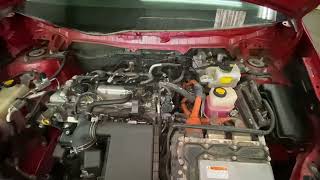

Used OEM Parts in Stock
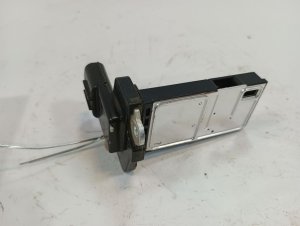
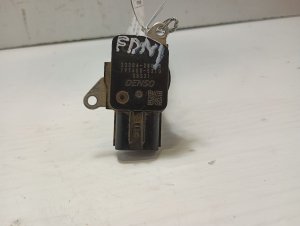
New Aftermarket Parts Available


The information in this article is provided for general reference and educational purposes only. Vehicle specifications, procedures, and part compatibility can vary by production date, trim level, and region. Always consult your vehicle's factory service manual and verify part numbers before purchasing or performing repairs. Safety-critical components such as airbags, seat belts, and braking systems should be installed by a qualified professional.
- Toyota Corolla Hybrid:
- 🧭 Diagnostic Flowchart
- 🎬 Helpful Videos
- 🛍️ Shop This Part
- What's Unique About the 2019-2022 Toyota Corolla Hybrid
- Symptoms You May Notice
- Most Likely Causes
- Rare But Worth Checking
- Diagnosis Steps
- Parts You'll Likely Need
- Related Codes That Often Appear With This One
- Technical Service Bulletins (TSBs) & Recalls
- Mechanic-Grade Diagnostic Values
- Hidden / Shadow Codes Worth Checking
- Scan Tool Commands That Help
- Wiring & Ground Locations
- Real Owner Repair Stories
- OEM Part Supersession History
- Other Known Issues on This Vehicle
- Used vs. New Parts: Buying Guide for This Vehicle
- Real Owner Stories
- 2019 Corolla Hybrid 1.8L 2ZR-FXE
- 2012 Prius 1.8L 2ZR-FXE
- 2010 Prius 1.8L 2ZR-FXE
- Documented NHTSA Reports
- NHTSA ODI #11425043
- NHTSA ODI #11051617
- Related OBD-II Codes
- Frequently Asked Questions
- 🎟️ Get 5% Off