

P3190 on 2011-2013 Toyota Highlander Hybrid: Poor Engine Power Causes and Fixes
On a 2011-2013 Highlander Hybrid, P3190 means the gasoline engine isn't running right. The most common cause is simply running out of fuel, as the hybrid system can mask the problem. Before anything else, add 3-5 gallons of gas. If that doesn't work, the next likely culprit is a dirty Mass Airflow (MAF) sensor, which is an easy and inexpensive part to clean.
- P3190 means the gas engine has failed. Do not assume it's a hybrid battery problem.
- First, add 3-5 gallons of fuel. This is the most common and cheapest fix.
- NEVER repeatedly try to start the engine. You will drain the expensive high-voltage battery and make the repair more complicated and costly.
- If fuel isn't the issue, the next step is to clean the Mass Airflow (MAF) sensor with a dedicated cleaner.
- This code indicates the vehicle is unreliable and should not be driven until the root cause is found and fixed.
What's Unique About the 2011-2013 Toyota Highlander Hybrid
The hybrid system is what makes this code unique on the Highlander Hybrid. The vehicle can run silently on electric power alone for short distances, which can mask the fact that the gasoline engine has a problem (like being out of fuel). A driver might continue their trip on battery power until the high-voltage (HV) battery is depleted. Only then, when the car tries and fails to start the gas engine to recharge, does the P3190 code appear, leaving the driver stranded. This sequence makes 'running out of fuel' a far more common cause for this code on hybrids than on conventional vehicles.
Symptoms You May Notice
- Vehicle fails to start or starts and immediately stalls
- "Check Hybrid System" message on the dashboard
- Engine runs roughly, misfires, or lacks acceleration
- Vehicle runs on battery power only until the battery is depleted
- Flashing 'Ready' light
- Loss of power when accelerating hard on the highway
- Replacing the high-voltage (HV) hybrid battery. P3190 is an engine performance code. Repeatedly trying to start the car with this fault will drain the HV battery, which can trigger secondary battery codes like P0A80. The drained battery is a symptom, not the cause, of P3190.
Most Likely Causes
- Out of Fuel 🔴 High Probability The hybrid system can continue to propel the vehicle after the fuel tank is empty, draining the HV battery and masking the root cause. The fuel gauge can also be misleading. This is the first thing to check, no matter what the gauge says.
How to confirm: Add at least 3-5 gallons of fresh gasoline to the tank before attempting any other diagnosis. This resolves the issue in a majority of cases.
Typical fix: Refill the fuel tank.
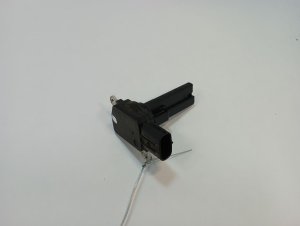
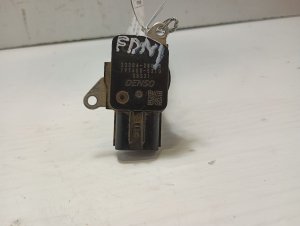
Est. part cost: $15-$25 - Dirty or Faulty Mass Airflow (MAF) Sensor 🟡 Medium Probability → Shop Fuel Injection Air Flow Meter The MAF sensor measures the air entering the engine. If it's dirty from dust or oil vapor, it provides incorrect data to the ECM, leading to a poor air/fuel mixture and low power. This is a very common secondary cause after ruling out fuel.
How to confirm: Disconnect the MAF sensor electrical connector. If the engine starts and idles (though poorly), the MAF is likely the issue. The definitive test is to remove and inspect the sensor wires for contamination. Cleaning is the first step. A scan tool should show 2-7 g/s at idle and 15-25 g/s at 2500 RPM, depending on engine load.
Typical fix: Clean the sensor with dedicated MAF sensor cleaner spray. Let it dry completely before reinstalling. If cleaning doesn't work, replace the sensor. Do not touch the sensor wires.
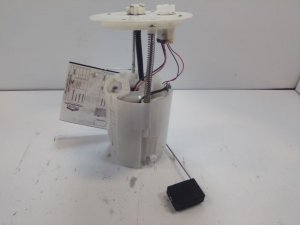
Est. part cost: $10 (cleaner) - $180 (new sensor) - Weak or Failing Fuel Pump 🟡 Medium Probability → Shop Fuel Pump If the vehicle has been run out of fuel, the fuel pump can be damaged from running dry. Even without running dry, the pump can fail over time. A TSB for the related Lexus RX 450h (L-SB-0004-12) points to a faulty fuel pump as a cause for P3190. Additionally, NHTSA ODI #11425043 notes that a dealership confirmed fuel pressure code P0087 alongside P3190.
How to confirm: A fuel pressure test at the fuel rail is the definitive method. A symptom is the engine starting for a moment and then sputtering out as the initial fuel pressure from priming is used up. Using Toyota Techstream, the 'Control the Fuel Pump / Speed' active test can be used to command the pump on to check for noise and build pressure.
Typical fix: Replace the fuel pump assembly, which is located in the fuel tank.
Est. part cost: $350-$500 - Air Induction System Leak ⚪ Low Probability A vacuum hose that is cracked, loose, or was disconnected during a previous repair (like an air filter change) allows unmetered air into the engine, causing a lean condition and triggering the code. Manufacturer service bulletin T-SB-0041-15 notes that P3190 can be caused by Purge VSV/PCV line separation from the throttle body housing.
How to confirm: Visually inspect all vacuum hoses connected to the intake manifold, air box, and throttle body for cracks or disconnection. Listen for a hissing sound at idle. A smoke test is the most effective way to find a small leak.
Typical fix: Replace the cracked hose or re-secure the disconnected line.
Est. part cost: $5-$50 - Dirty Throttle Body ⚪ Low Probability → Shop Fuel Injection Throttle Body Carbon and oil vapor buildup can restrict the throttle plate, limiting airflow and causing stalling or low power, especially at idle.
How to confirm: Remove the air intake hose from the throttle body and visually inspect for a thick ring of black carbon buildup around the throttle plate and bore.
Typical fix: Clean the throttle body with a dedicated throttle body cleaner and a soft cloth or brush. Do not spray directly into the throttle body while it's on the vehicle. A throttle body relearn procedure may be needed after cleaning.
Est. part cost: $10 (cleaner)
Rare But Worth Checking
- Faulty Crankshaft or Camshaft Position Sensor: These sensors tell the ECM the engine's speed and position. If one fails, the engine may not start or will run erratically. This is less common but should be considered if the basic fuel and air checks are inconclusive.
- Clogged Fuel Injectors: If injectors are clogged or stuck open, the engine will be starved for fuel or run excessively rich, leading to misfires and low power. This can sometimes be identified by analyzing fuel trim data with an advanced scan tool.
Diagnosis Steps
- CRITICAL FIRST STEP: Do NOT repeatedly try to start the engine. This will drain the high-voltage battery and complicate diagnosis.
- Add 3-5 gallons of fresh gasoline to the fuel tank, even if the gauge shows fuel. Clear the codes and attempt to start the vehicle.
- If the code returns, locate the Mass Airflow (MAF) sensor on the engine air intake. Disconnect it and try to start the engine. If it starts and runs (even poorly), the MAF sensor is the likely culprit.
- Remove the MAF sensor and clean it using only dedicated MAF sensor cleaner. Let it dry completely before reinstalling. Do not touch the sensor wires. 🎬 Watch: How to clean your MAF sensor and throttle body
- Inspect the entire air intake system, from the air filter box to the throttle body, for any loose clamps, disconnected hoses, or cracks. Manufacturer bulletin T-SB-0205-11 Rev suggests specifically checking for purge VSV/PCV line separation from the throttle body housing.
- Inspect the throttle body for heavy carbon buildup that could be restricting airflow.
- If the above steps do not resolve the issue, a more advanced diagnosis is needed. Check fuel pressure to test the fuel pump. This may require a specialized gauge. The Lexus TSB for the related RX 450h suggests this as a key step.
- If fuel pressure is good, consider testing the crankshaft and camshaft position sensors for proper operation.
Parts You'll Likely Need
- Mass Air Flow (MAF) Sensor
(OEM #22204-31020)— After running out of fuel, a dirty or failed MAF sensor is the most common hardware failure causing P3190. Cleaning is often sufficient, but replacement may be necessary.
Trusted brands: Denso (OEM), Hitachi
OEM price range: $150-$200
Aftermarket price range: $60-$150 - Fuel Pump Assembly
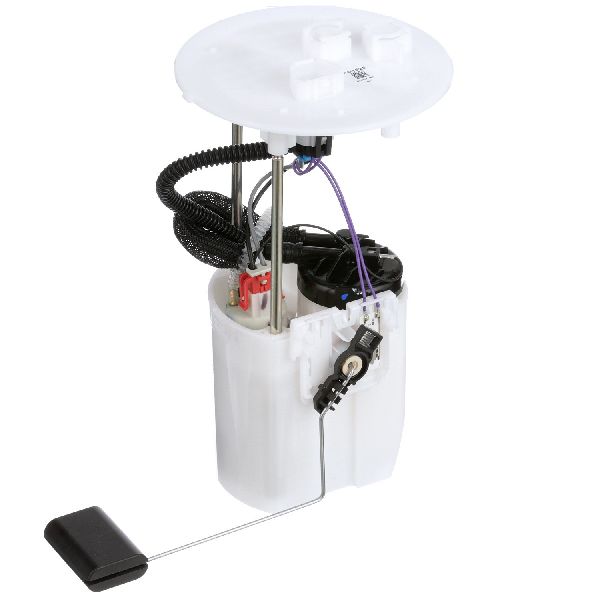
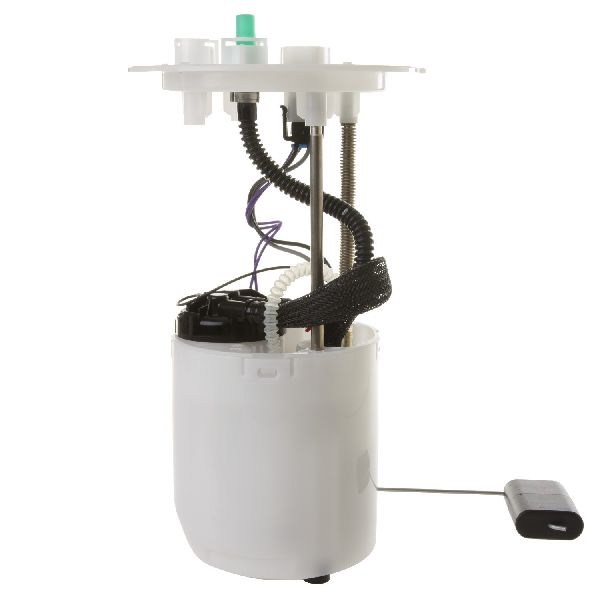
(OEM #77020-0E060)— If the vehicle has fuel but pressure is low, the pump is the likely cause. Running the vehicle out of fuel can cause premature failure of the pump.
Trusted brands: Denso (OEM), Aisin
OEM price range: $490-$530
Aftermarket price range: $200-$400
Related Codes That Often Appear With This One
- P0A0F — This code means 'Engine Failed to Start' and is often set by the hybrid control module at the same time the ECM sets P3190. NHTSA ODI #11051617 describes an owner whose vehicle reported both P0A0F and P3190 simultaneously.
- P3191 — A more specific version of P3190 that means 'Engine Does Not Start'. It indicates a complete failure to start rather than just poor performance.
- P3193 — This code means 'Fuel Run Out' and, if present, confirms that the system detected an empty fuel tank as the cause of the problem.
- P0171 — 'System Too Lean' can appear if the root cause is a vacuum leak or a faulty MAF sensor, as both cause an incorrect air-fuel mixture.
Technical Service Bulletins (TSBs) & Recalls
- L-SB-0004-12 — MIL 'ON' DTC P3190 and POAOF — This TSB for the 2010-2011 Lexus RX 450h (which shares the 2GR-FXE engine) addresses a P3190 code caused by a lean condition. The fix involves inspecting the fuel pump resistor connector and potentially replacing the fuel pump, filter, and suction plate. This confirms the fuel pump can be a specific factory-identified weak point for this code.
- T-SB-0056-18 — MIL 'ON' DTC P3190 - (Poor Engine Power) at High Altitude With High Temperatures — This TSB notes that some vehicles may exhibit a MIL "ON" condition with DTC P3190 when operating in high altitude and high temperature conditions, requiring an ECM software update.
- T-SB-0041-15 — MIL 'ON' DTC P0A0F and P3190 — This bulletin identifies that P3190 can be caused by Purge VSV/PCV line separation from the throttle body housing and recommends replacing the Purge Vacuum Switching Valve Assembly.
- T-SB-0205-11 Rev — This manufacturer service bulletin notes that vehicles may exhibit a MIL "ON" condition with DTCs P3190, P3191, and P0A0F due to purge VSV/PCV line separation.
Platform-Specific Known Issues
- Owner Experience: The 'Out of Gas' Scenario: Numerous owner accounts confirm that the most frequent cause of P3190 is running out of fuel. An owner on a forum might describe driving for several miles with the fuel light on, then the car suddenly loses power, displays 'Check Hybrid System,' and won't restart. After being towed to a shop, the simple fix is adding a few gallons of gas. This highlights the importance of the first, simplest diagnostic step.
- Repair Story: MAF Sensor Cleaning: → Shop Fuel Injection Air Flow Meter A common repair story involves a Highlander Hybrid owner who gets P3190 after confirming they have fuel. Following online advice, they purchase a can of MAF sensor cleaner for $10, carefully remove the sensor, spray it clean, let it dry, and reinstall it. In many cases, this simple procedure completely resolves the code and restores engine power, saving a trip to the mechanic.
- High Altitude / High Temperature TSB: For later model years (2017-2018), Toyota issued a Technical Service Bulletin (T-SB-0056-18) for P3190 occurring in high altitude and high temperature conditions. The fix was a software update to the Engine Control Module (ECM) logic. While this TSB doesn't apply to the 2011-2013 models, it shows that environmental conditions can be a factor in triggering this code.
Mechanic-Grade Diagnostic Values
- Crankshaft Position Sensor Resistance — expected: 985 to 1,600 Ω (Cold); 1,265 to 1,890 Ω (Hot). Failure: A resistance reading outside of the specified range indicates a faulty sensor.
- Camshaft Position Sensor Resistance — expected: 1,630 to 2,740 Ω (Cold); 2,065 to 3,225 Ω (Hot). Failure: A resistance reading outside of the specified range indicates a faulty sensor.
- Mass Air Flow (MAF) Sensor Scan Tool PID — expected: 2 to 7 g/s at idle; 15 to 25 g/s at 2500 RPM. Failure: Values significantly lower than expected can indicate a vacuum leak or faulty sensor. Values should increase linearly with RPM.
- Scan Tool Live Data: Engine Torque Ratio — expected: Estimated torque should closely follow target torque.. Failure: P3190 is set when the ratio of estimated torque to target torque is less than 20% for a set period.
Hidden / Shadow Codes Worth Checking
- P0A0F Information Code 204: On the related Lexus RX 450h, a Technical Service Bulletin (L-SB-0004-12) specifies looking for info code 204 alongside P0A0F and P3190. This info code points towards a lean condition and directs technicians to inspect the fuel pump pressure port O-ring. (see via Toyota Techstream, under the Hybrid Control module DTCs.)
Scan Tool Commands That Help
- Toyota Techstream: Active Test: Control the Fuel Pump / Speed — This command manually activates the fuel pump without starting the engine. It is essential for diagnosing a weak or failed fuel pump by allowing a technician to hear if the pump runs and to build pressure for a fuel pressure gauge test. It's found under Powertrain -> Engine and ECT -> Active Test.
- Toyota Techstream: Data List: MAF — To monitor the Mass Air Flow sensor's output in grams/second (g/s). This allows a technician to verify if the sensor is providing a plausible reading at idle and under load, helping to distinguish between a dirty sensor, a vacuum leak, or a completely failed sensor.
Wiring & Ground Locations
- Fuel Pump Ground — For the similar 2006 model, the fuel pump ground point (Bc) is located at the left side of the rear crossmember.. A poor ground connection to the fuel pump can cause intermittent or low fuel pressure, mimicking the symptoms of a failing pump and triggering a P3190 code.
- ECM Pin FC (Fuel Pump Control) — On the 2GR-FE ECM, the 'FC' pin is the fuel pump control circuit.. When diagnosing a no-start condition where the fuel pump is suspected, a technician can check for a signal at this pin to determine if the ECM is commanding the fuel pump to turn on. A lack of signal could point to an ECM or wiring issue rather than a bad pump.
Real Owner Repair Stories
- ClubLexus user (2010 Lexus RX 450h (same 2GR-FXE engine)) — Car lost power on the highway when accelerating hard, 'Check Hybrid System' light came on, code P3190 was stored. Car would restart but would 'die' again under acceleration.
❌ Tried (didn't work) Erasing the code.
✅ What actually fixed it The owner found the engine oil was overfilled by 3/4 to 1 quart from a recent oil change at a Toyota dealer. After having the excess oil drained, the problem did not recur. The theory was that excess oil was being pulled into the intake, fouling the air/fuel mixture under high-load conditions. - YouTube video by 'gils auto' (Toyota Prius (similar hybrid logic)) — P3190 and P0A0F codes, engine would start and run for about 10 seconds then stall, no power on the road.
❌ Tried (didn't work) Pumping out the old fuel and adding fresh fuel.
✅ What actually fixed it The fuel pump was weak and not providing enough pressure, even though it could be heard running. The fuel filter sock was also noted to be extremely dirty. Replacing the fuel pump assembly with a used unit from eBay resolved the issue immediately.
OEM Part Supersession History
22204-31010, 22204-0P010, 22204-0H010→22204-31020— Standard part consolidation and minor revisions by the manufacturer.
Diagnostic Flowchart
Other Known Issues on This Vehicle
Issues unrelated to this code that are worth knowing about as an owner of this generation:
- Ruptured VVT-i Oil Line (Rubber Portion) 🔴 High — Common on 2007-2011 models. The original rubber hose section degrades and can burst, leading to rapid oil loss and catastrophic engine failure if not addressed immediately. (Ref: Toyota issued Limited Service Campaign (LSC) 90K, later extended, to replace the rubber line with an all-metal line. Many vehicles have had this done, but it's critical to verify.)
- Water Pump Failure / Leak 🟠 Medium — The water pump on the 2GR-FE/FXE engine is a known failure point, typically between 80,000 and 150,000 miles. It often starts as a slow leak of pink, dried coolant crust on the passenger side of the engine before becoming more severe.
- Timing Cover Oil Leak 🟡 Low — A slow oil seep from the timing chain cover is a very common issue on higher-mileage 2GR engines. It is often not severe enough to warrant the expensive repair, which requires removing the engine, but it should be monitored.
- Inverter Failure 🔴 High — While more common on the first-generation Highlander Hybrid (pre-2008), inverter failures can still occur on second-generation models. Symptoms include the 'Check Hybrid System' light and the vehicle refusing to enter 'Ready' mode. This is an expensive repair. (Ref: A recall was issued for 2006-2010 models for inverter issues, but the 2011-2013 models were not included.)
Used vs. New Parts: Buying Guide for This Vehicle
When a used part is the smart pick: For a complex and expensive part like the Fuel Pump Assembly, a used OEM part from a reputable salvage yard or online seller can be a cost-effective alternative to a new aftermarket part, which may have questionable quality. This was demonstrated in a real repair story where a used eBay pump fixed the issue.
Donor-vehicle mileage cap: roughly under 100000 miles for the part to have meaningful remaining life.
What to inspect on the donor part:
- For a fuel pump, look for a donor vehicle with lower mileage and no signs of sitting for years with old fuel.
- For electronic sensors like the MAF, ensure the connector pins are clean, straight, and free of corrosion.
- Always check the seller's return policy and warranty, even for used parts.
OEM-only on this vehicle (don't cheap out):
- Mass Airflow (MAF) Sensor
Aftermarket brands forum-validated for this vehicle:
- Denso (often the OEM supplier)
- Aisin
Brands owners have reported issues with on this vehicle:
- Unbranded, 'white-box' electronic sensors and fuel pumps from online marketplaces are highly likely to be out of specification or fail prematurely.
Real Owner Stories
Aggregated from forums and TSBs cited above. Mileages and costs reflect what owners reported in those sources.
2010 Lexus RX 450h 2GR-FXE
Symptoms: The car would bog down and stall after accelerating hard on the highway. The 'Check Hybrid System' light appeared and the vehicle lost power.
What fixed it: The owner suspected engine oil overfilled by a dealer had entered the intake system; the related TSB L-SB-0004-12 suggests the fuel pump assembly (pump, filter, and suction plate) may need replacement.
Source hint: ClubLexus Forum: 2010 RX450h P3190
2011-2013 Toyota Highlander Hybrid 2GR-FXE
Symptoms: Driving for several miles with the fuel light on, then the car suddenly loses power, displays 'Check Hybrid System,' and won't restart.
What fixed it: Adding 3-5 gallons of fresh gasoline to the tank.
Source hint: Owner Experience: The 'Out of Gas' Scenario
2011-2013 Toyota Highlander Hybrid 2GR-FXE
Symptoms: P3190 code triggered and engine lacking power, but the owner confirmed the tank was not empty.
What fixed it: Purchased a $10 can of MAF sensor cleaner, removed the sensor, sprayed it clean, and reinstalled it after drying.
Cost: $10-$10
Source hint: Repair Story: MAF Sensor Cleaning
Documented NHTSA Reports
Symptoms: An owner reported in NHTSA ODI #11051617 that diagnostics detected error codes P0A0F and P3190, leading to a feeling of being unsafe while driving on the freeway. Another report, NHTSA ODI #11425043, describes a vehicle that lost power on the side of the road with confirmed fuel pressure codes P0087 and P107B alongside P3190.
Related OBD-II Codes
Frequently Asked Questions
Does TSB T-SB-0056-18 for P3190 apply to my 2011-2013 Toyota Highlander Hybrid?
Is there a TSB for the 2GR-FXE engine that addresses P3190 and fuel pump issues?
Can I use any cleaner to fix the P3190 code on my Highlander's intake system?
Why does my Highlander Hybrid keep driving on battery power when the P3190 code is active?
What are the specific MAF sensor readings I should look for on a scan tool for my 3.5L V6?
Helpful Videos

Used OEM Parts in Stock
New Aftermarket Parts Available


The information in this article is provided for general reference and educational purposes only. Vehicle specifications, procedures, and part compatibility can vary by production date, trim level, and region. Always consult your vehicle's factory service manual and verify part numbers before purchasing or performing repairs. Safety-critical components such as airbags, seat belts, and braking systems should be installed by a qualified professional.
- Toyota Highlander Hybrid:
- 🧭 Diagnostic Flowchart
- 🎬 Helpful Videos
- 🛍️ Shop This Part
- What's Unique About the 2011-2013 Toyota Highlander Hybrid
- Symptoms You May Notice
- Most Likely Causes
- Rare But Worth Checking
- Diagnosis Steps
- Parts You'll Likely Need
- Related Codes That Often Appear With This One
- Technical Service Bulletins (TSBs) & Recalls
- Platform-Specific Known Issues
- Mechanic-Grade Diagnostic Values
- Hidden / Shadow Codes Worth Checking
- Scan Tool Commands That Help
- Wiring & Ground Locations
- Real Owner Repair Stories
- OEM Part Supersession History
- Other Known Issues on This Vehicle
- Used vs. New Parts: Buying Guide for This Vehicle
- Real Owner Stories
- 2010 Lexus RX 450h 2GR-FXE
- 2011-2013 Toyota Highlander Hybrid 2GR-FXE
- 2011-2013 Toyota Highlander Hybrid 2GR-FXE
- Documented NHTSA Reports
- Related OBD-II Codes
- Frequently Asked Questions
- 🎟️ Get 5% Off