

P3190 on 2012-2013 Toyota Prius V: Poor Engine Power Causes and Fixes
P3190 on a 2012-2013 Prius V most often means the engine has failed to start or is running with very low power. Before major repairs, add 2-3 gallons of fuel (as the gauge can be inaccurate) and inspect for a disconnected Purge VSV/PCV vacuum hose near the throttle body, a known issue documented in Toyota TSB T-SB-0041-15.
- P3190 means the gasoline engine has a power problem; it is NOT a hybrid battery code.
- The most common and easiest thing to check first is the fuel level. Add 2-3 gallons of gas even if the gauge shows fuel.
- Inspect the vacuum hoses at the throttle body for a disconnected line, as this is a known issue covered by a Toyota TSB (T-SB-0041-15).
- Avoid repeatedly trying to start the car. This will drain the high-voltage battery and can lead to a much more complicated and expensive situation.
- Cleaning the Mass Airflow (MAF) sensor and throttle body are common, low-cost diagnostic steps.
What's Unique About the 2012-2013 Toyota PRIUS V

On a Prius, the P3190 code has unique implications. Unlike a conventional car, the engine doesn't run constantly, so an owner might not realize they are out of fuel until the car tries and fails to start the engine, triggering the code. Repeatedly trying to start the car doesn't drain a small 12V battery; it depletes the large high-voltage hybrid battery, at a rate of about 1% per attempt. This can complicate diagnosis, lead to additional battery-related codes, and create the mistaken belief that the expensive hybrid battery has failed when the root cause was simple.
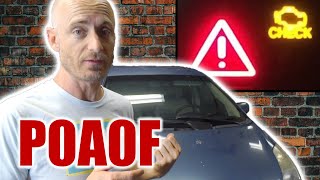
🎬 Watch: A detailed explanation of how these codes interact.Diagnostic Flowchart

Tap your situation to follow the diagnostic path that matches what you're seeing on this vehicle.
Symptoms You May Notice

- Check Engine Light is on
- Hybrid system warning lights on the dashboard (red triangle of death)
- Message on display: "Check Hybrid System"
- Engine fails to start (you may hear it crank via the electric motor, but it won't fire)
- Engine starts but runs roughly or stalls after a few seconds
- Noticeable loss of power while driving
- Vehicle enters a limp mode with reduced speed, often running only on electric power until the HV battery is low
- Failed Hybrid Battery: P3190 indicates an issue with the gasoline engine, not the hybrid battery. However, repeated failed start attempts will drain the hybrid battery, which can lead to additional battery-related codes (like P0A0F) and a misdiagnosis of a bad battery. The battery issue is almost always a symptom, not the cause.
Most Likely Causes

- Out of Fuel 🔴 High Probability The Prius engine doesn't run continuously, which can make it hard to notice the fuel is empty. The fuel gauge is notoriously inaccurate and often called a 'guess gauge' by owners; the car can run out of fuel even with one or two bars showing. This is a very frequent cause for P3190.
How to confirm: Add at least 2-3 gallons of fresh gasoline to the tank, even if the fuel gauge indicates there is fuel. After refueling, the system may need to be primed by attempting to start the car a few times.
Typical fix: Refuel the vehicle. Clear the codes. It may take a few start attempts to get fuel flowing through the lines again.
Est. part cost: $10-$20 (for fuel) - Purge VSV / PCV Line Separation 🔴 High Probability → Shop Vapor Canister Toyota issued Technical Service Bulletin T-SB-0041-15 specifically for this issue on 2010-2013 Prius models. An intake backfire can cause the vacuum hose to separate from the throttle body housing, creating a massive vacuum leak that prevents the engine from running properly.
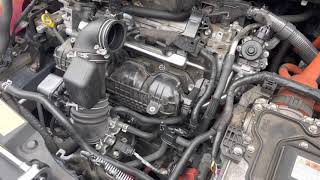
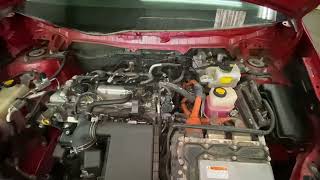
How to confirm: Visually inspect the vacuum hoses connected to the throttle body housing, right behind the air filter box. Look for any disconnected or cracked hoses, specifically the Purge VSV and PCV lines. 🎬 See this video for a walkthrough of the vacuum leak fix.
Typical fix: Reconnect the separated hose. Per TSB T-SB-0041-15, the Purge VSV assembly should be replaced with an updated part and the ECM should be reprogrammed to prevent recurrence.
Est. part cost: $90-$140 (for a new Purge VSV) - Dirty or Faulty Mass Airflow (MAF) Sensor 🟡 Medium Probability → Shop Fuel Injection Air Flow Meter A dirty MAF sensor provides incorrect airflow data to the ECM, leading to an improper air-fuel mixture and low power. Oil vapor from the PCV system or debris from air filter changes can contaminate the sensor's delicate wires.
How to confirm: Remove the MAF sensor (two Phillips screws) and inspect the small internal wires for dirt, debris, or an oily film. Cleaning it with a dedicated MAF sensor cleaner is a common and easy diagnostic step.
Typical fix: Clean the MAF sensor with a specialized cleaner and allow it to dry completely. If cleaning does not resolve the issue, the sensor may need to be replaced.
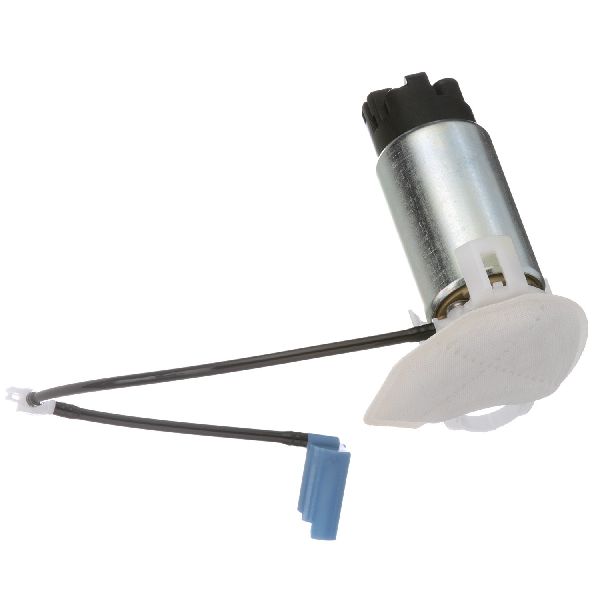
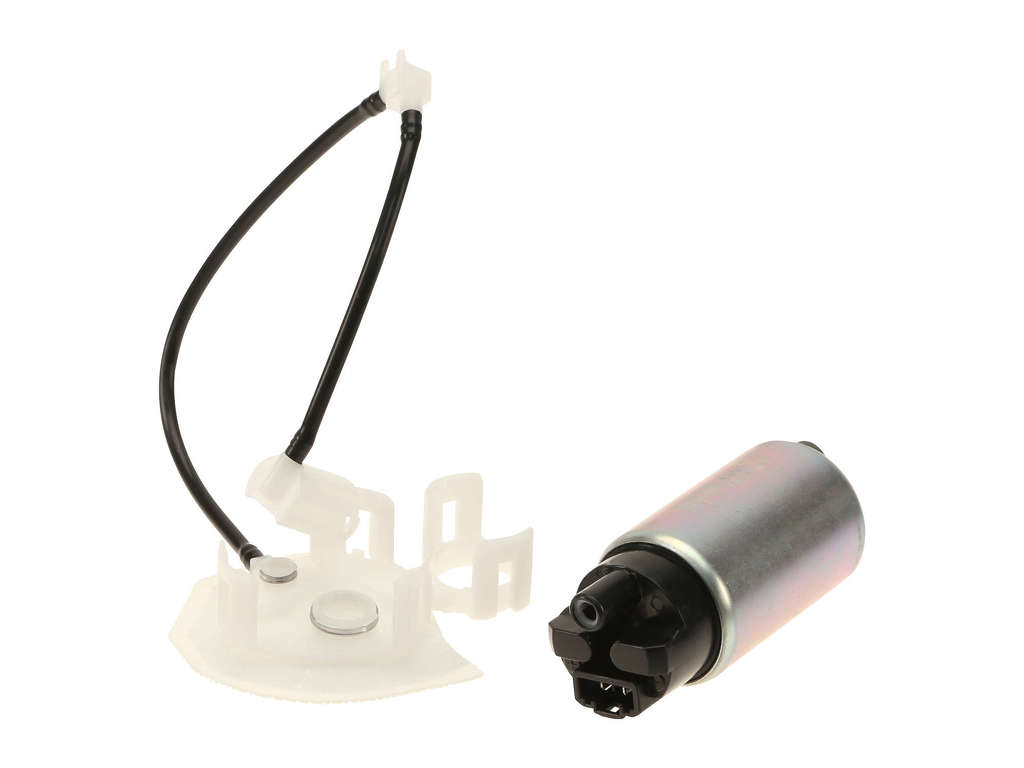
Est. part cost: $10 (cleaner) - $180 (new OEM sensor) - Failing Fuel Pump 🟡 Medium Probability → Shop Fuel Pump
How to confirm: A fuel pressure test is the definitive way to confirm if the pump is weak. Without a gauge, symptoms include the engine starting for a few seconds then sputtering out, or having no power on the road. Often, a failed pump is accompanied by a very dirty fuel filter sock inside the tank assembly.
Typical fix: Replace the fuel pump assembly, which is located inside the fuel tank under the rear seat. Owners have successfully performed this repair with used parts to save money.
Est. part cost: $100 (used) - $670 (new OEM) - Dirty Throttle Body ⚪ Low Probability → Shop Fuel Injection Throttle Body
How to confirm: Visually inspect the throttle plate for heavy carbon buildup, which can restrict airflow at idle and cause stalling or low power, especially after an EGR/intake cleaning.
Typical fix: Clean the throttle body and plate with throttle body cleaner and a soft cloth. Be careful not to force the electronic throttle plate open.
Est. part cost: $10-$15 (for cleaner)
Rare But Worth Checking
- Vacuum Leak from EGR System Service: The 2ZR-FXE engine is known for its EGR system clogging with carbon. P3190 often appears immediately after an owner performs an EGR cleaning. This is typically not due to the clean EGR, but rather a vacuum hose that was left disconnected or a gasket that was not seated properly during reassembly, causing a lean condition.
- Faulty Engine Coolant Temperature (ECT) Sensor: An incorrect reading from the ECT sensor can cause the ECM to deliver the wrong fuel mixture for starting, leading to poor performance. This is one of the potential causes listed in the official repair manual troubleshooting steps.
- Internal Engine Mechanical Issues: Though less common, issues like low compression from a failing head gasket (a known issue on this engine generation), jumped timing, or a clogged catalytic converter can cause a severe loss of power and trigger P3190.
Diagnosis Steps
- Check the fuel level and add 2-3 gallons of fresh fuel, regardless of the gauge reading. This is the easiest and most common fix.
- Scan for other DTCs. A P0171 code strongly suggests a vacuum leak. P3193 confirms a run-out-of-fuel event.
- Visually inspect the engine bay for the disconnected Purge VSV/PCV vacuum line at the throttle body, as detailed in TSB T-SB-0041-15. This is the second most common fix.
- Inspect the entire air intake system for any other cracks, loose clamps, or blockages from the air filter to the throttle body.
- Remove and inspect the Mass Airflow (MAF) sensor. Clean it with dedicated MAF sensor cleaner if it appears dirty and let it dry completely before reinstalling.
- Using a capable scanner (like Techstream), check the freeze frame data for the P3190 code. Look at short-term and long-term fuel trims. High positive numbers (>25%) indicate a lean condition, pointing towards a vacuum leak or fuel delivery problem.
- Inspect the throttle body for heavy carbon buildup and clean if necessary.
- If the above steps do not resolve the issue, a fuel pressure test is the next logical step to check the health of the fuel pump.
- If fuel pressure is good, further diagnostics may be needed to check the crankshaft position sensor, engine coolant temperature sensor, or for engine mechanical problems.
Parts You'll Likely Need
- Purge VSV (Vacuum Switching Valve)
(OEM #25860-37020)— Toyota TSB T-SB-0041-15 identifies a problem with the vacuum line separating and recommends replacing the valve assembly with this updated part to fix it permanently.
Trusted brands: Toyota (OEM)
OEM price range: $90-$130
Aftermarket price range: $40-$80 - Fuel Pump Assembly
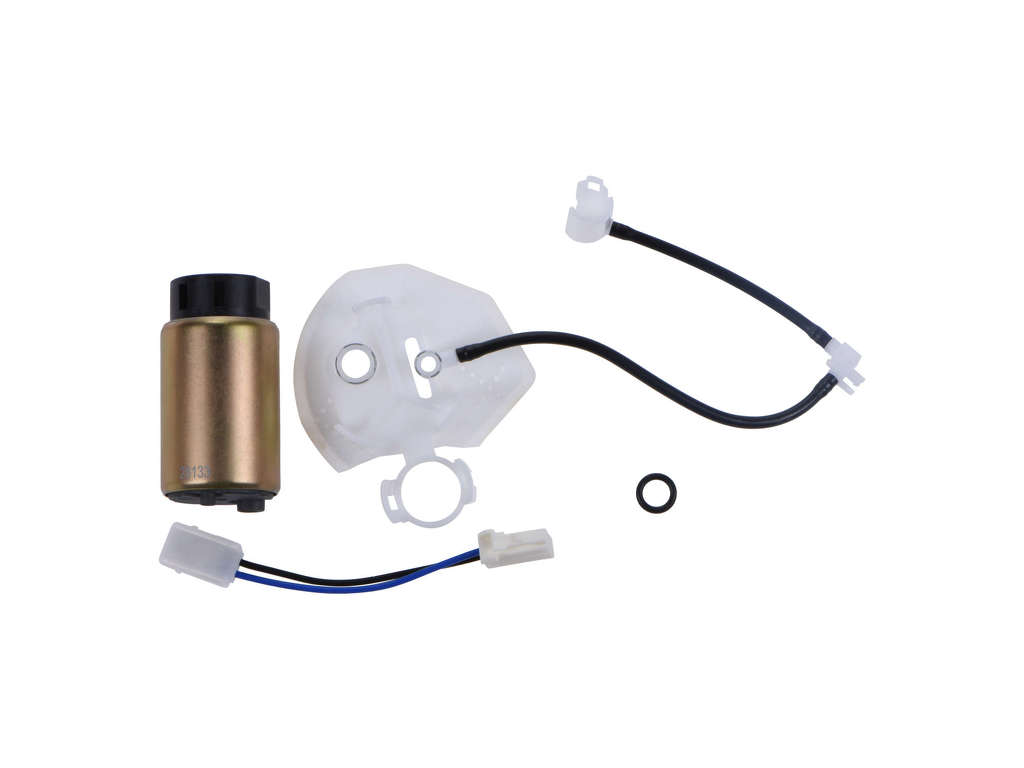
(OEM #77020-47111)— A weak or failed fuel pump is a common cause of insufficient fuel pressure, leading to a no-start or low power condition that triggers P3190. The assembly includes the pump, filter sock, and sending unit.
Trusted brands: Toyota (OEM), Denso
OEM price range: $460-$670
Aftermarket price range: $150-$300
Related Codes That Often Appear With This One
- P0A0F — This code for 'Engine Failed to Start' is set by the hybrid control unit and is almost always triggered along with P3190, as they describe the same event from the perspective of two different control modules.
- P3191 — This code for 'Engine Does NOT Start' is a more specific version of P3190 and often appears alongside it when the engine fails to crank over at all.
- P0171 — This code for 'System Too Lean' is a major clue. It is frequently caused by a vacuum leak, such as the hose separation described in TSB T-SB-0041-15, which also causes P3190.
- P3193 — This code specifically means 'Fuel Run Out' and will be stored if the system detects the engine failure was due to an empty fuel tank.
Technical Service Bulletins (TSBs) & Recalls
- T-SB-0041-15: MIL "ON" DTC P0A0F, P3190, P3191, P0171 Due to Purge VSV Vacuum Line Separation.
- L-SB-0019-15: The equivalent TSB for the Lexus CT200h, confirming the issue is shared across platforms with the 2ZR-FXE engine.
Platform-Specific Known Issues
- TSB T-SB-0041-15: Toyota issued a specific bulletin for 2010-2013 Prius and 2012-2013 Prius V models where a Purge VSV/PCV vacuum line can be blown off the throttle body by a small intake backfire. This creates a severe vacuum leak, causing the engine to stall or fail to start, logging P3190 and often P0171 (System Too Lean). The official fix is to replace the Purge VSV with an updated part and reprogram the ECM.
- Inaccurate Fuel Gauge: A widely reported issue is the fuel gauge showing 1-2 bars of fuel remaining when the tank is actually empty. This leads many owners to mistakenly rule out 'out of fuel' as a cause, chase more complex issues, and drain their HV battery in the process.
Mechanic-Grade Diagnostic Values
- Total Fuel Trim (Short Term + Long Term) — expected: Ideally 0% +/- 5%. Up to 10% is acceptable.. Failure: A sustained total fuel trim of +20% or higher indicates a significant lean condition (too much air or not enough fuel) and will likely set a code.
- MAF Sensor Air Flow Rate at Idle — expected: Approximately 1.5 - 2.5 g/s with the engine warmed up and idling (AC off).. Failure: Significantly lower readings can indicate a blockage or faulty sensor. Significantly higher readings can indicate a vacuum leak downstream of the sensor.
- ECM Terminal Voltage - IGT Signal (Igniter) — expected: Pulsing waveform between approximately 0V and 5V when the engine is cranking or running. The wavelength becomes shorter as engine RPM increases.. Failure: No waveform or a flat line indicates a problem with the ECM or the wiring to the igniter.
Hidden / Shadow Codes Worth Checking
- P0A0F-204: This is an Information Code (INF) associated with the main P0A0F 'Engine Failed to Start' code. While the specific meaning of '204' can vary, it provides dealer-level technicians with more granular detail about the failure condition. (see via Toyota Techstream software or other professional-grade scan tools that can read manufacturer-specific detail codes.)
Scan Tool Commands That Help
- Techstream: Active Test: 'Control the Fuel Pump / Speed' — This command is located in the 'Engine and ECT' module. It allows a technician to manually turn on the fuel pump without starting the engine. This is critical for diagnosing a no-start condition to confirm the pump is functional, to prime the fuel system after a repair or running out of fuel, and to perform a fuel pressure test.
Wiring & Ground Locations
- ECM (Engine Control Module) — Located in the engine compartment on the driver's side (left side).. The ECM is the central computer that receives all sensor data and controls the fuel and ignition systems. All diagnostic paths for engine performance codes like P3190 ultimately lead to or from the ECM and its connectors.
- Instrument Panel J/B (Junction Block) — Located behind the driver's side (left end) of the dashboard.. This junction block contains critical relays and fuses, including potentially the IG2 relay and other circuits that power up the ECM and related engine sensors.
- Ground Point 'EA' (example) — Prius wiring diagrams show multiple key ground points in the engine bay, often designated with codes like 'EA' or 'EB' located on the fender aprons or engine block.. A poor engine ground can cause erratic sensor readings and insufficient power to actuators, leading to a wide range of performance issues including P3190. Verifying clean, tight ground connections is a key step when electrical causes are suspected.
Real Owner Repair Stories
- YouTube video by 'Fix It Angel' (2012 Toyota Prius) — Car would start and run for about 10 seconds then die, or have no power on the road. Codes P3190 and P0A0F-204 were present.
❌ Tried (didn't work) Checking the air intake system, Cleaning/checking the Mass Airflow sensor
✅ What actually fixed it The fuel pump was weak and the attached fuel filter sock was extremely dirty. Replacing the fuel pump assembly with a used unit from eBay resolved all issues. The video creator recommends checking fuel pressure after checking the air system. - PriusChat user 'viciousthinker' (2012 Prius with 212,000 miles) — Sudden no-start with engine hunting for idle then quitting, flashing 'Check Hybrid System'. Codes P3190, P0A0F, P0172 (System Too Lean), and P0101 (MAF Circuit Range/Performance) were present. HV battery was depleted to 1 bar from start attempts.
❌ Tried (didn't work) Replacing the 12V auxiliary battery, Inspecting spark plugs and ignition coils
✅ What actually fixed it Using Techstream software, the owner activated the fuel pump utility under the 'Engine & ECT' section several times to prime the system. After this, they cleared the DTCs and the car started and ran normally, suggesting the issue was related to a loss of fuel pressure or a software state that was cleared by the active test and reset. - PriusChat user 'jasonsv' (2012 Prius V (totaled and rebuilt)) — Codes P3190 and P3191, car enters limp mode. The engine would only start and run if the Mass Airflow (MAF) sensor was disconnected.
❌ Tried (didn't work) Replacing the MAF sensor with a new one
✅ What actually fixed it Diagnosis pointed to a massive vacuum leak. The user's scan tool showed extremely high short and long term fuel trims (+20% and +27%), indicating the ECM was desperately trying to add fuel to compensate for unmetered air. The user found another case where these exact symptoms were caused by a cracked intake manifold, a likely culprit after a collision.
"I Checked Everything" — The Actual Cause
- A common diagnostic dead-end for P3190 occurs when a smoke test for vacuum leaks comes back negative. Multiple owner-confirmed repairs show that the root cause can still be a weak fuel pump. In these cases, the pump's electrical resistance may test as normal, but its mechanical ability to generate sufficient pressure has failed. Technicians may incorrectly rule out the fuel system because the air-side diagnostics (like a smoke test) show no faults.
OEM Part Supersession History
Varies (original Purge VSV)→25860-37020— The original Purge VSV design was prone to having its vacuum line separate from the throttle body after an intake backfire. Part number 25860-37020 is the updated replacement part recommended by Toyota in TSB T-SB-0041-15 to permanently resolve the issue.
Model Year Variations Within This Range
- 2012-2013: There are no significant mechanical or electrical differences in the engine, fuel, or emissions systems between the 2012 and 2013 Toyota Prius V that would alter the diagnosis or common causes for code P3190. The engine and transmission are identical.
Helpful Videos

We Have This Part in Stock


The information in this article is provided for general reference and educational purposes only. Vehicle specifications, procedures, and part compatibility can vary by production date, trim level, and region. Always consult your vehicle's factory service manual and verify part numbers before purchasing or performing repairs. Safety-critical components such as airbags, seat belts, and braking systems should be installed by a qualified professional.
- Toyota PRIUS V:
- 🧭 Diagnostic Flowchart
- 🎬 Helpful Videos
- 🛍️ Shop This Part
- What's Unique About the 2012-2013 Toyota PRIUS V
- Symptoms You May Notice
- Most Likely Causes
- Rare But Worth Checking
- Diagnosis Steps
- Parts You'll Likely Need
- Related Codes That Often Appear With This One
- Technical Service Bulletins (TSBs) & Recalls
- Platform-Specific Known Issues
- Mechanic-Grade Diagnostic Values
- Hidden / Shadow Codes Worth Checking
- Scan Tool Commands That Help
- Wiring & Ground Locations
- Real Owner Repair Stories
- "I Checked Everything" — The Actual Cause
- OEM Part Supersession History
- Model Year Variations Within This Range
- 🎟️ Get 5% Off