

P3190 on 2016-2018 Toyota RAV4 Hybrid: 'Poor Engine Power' Causes and Fixes
On a 2016-2018 RAV4 Hybrid, code P3190 almost always means the gasoline engine can't start or run due to a fuel or air issue. The most likely causes are running out of gas, a dirty Mass Air Flow (MAF) sensor, or a failing fuel pump. Always check the fuel level by adding 2-3 gallons of gas and clean the MAF sensor before attempting more complex repairs. Do not repeatedly try to start the engine, as this will drain the high-voltage battery.
- P3190 is an engine performance issue, NOT a hybrid battery failure. Do not replace the hybrid battery.
- Do not repeatedly try to start the car, as this will drain the high-voltage battery and complicate the repair.
- The simplest and most common fixes are to add fuel and clean the Mass Air Flow (MAF) sensor.
- If simple fixes don't work, suspect a failing low-pressure fuel pump, which is a known issue on similar Toyota models.
- A basic diagnosis (checking fuel, cleaning MAF/throttle body) is DIY-friendly, but fuel pressure testing and pump replacement may require a professional.
What's Unique About the 2016-2018 Toyota RAV4 Hybrid
The 2AR-FXE engine in the RAV4 Hybrid is highly dependent on precise fuel and air delivery to work seamlessly with the hybrid system. When this code appears, it's crucial to understand that it's an engine problem, not a hybrid battery problem. Because the vehicle can operate silently on electric power for short distances, an owner might not realize the gasoline engine has failed to start until the hybrid battery is nearly depleted. Repeatedly trying to start the engine can drain the high-voltage battery, leading to additional fault codes (like P0A0F) and a much more expensive, incorrect diagnosis of hybrid battery failure. While there are no recalls for this specific model year, the subsequent 2019-2020 RAV4 models were recalled for faulty low-pressure fuel pumps (a known cause of P3190), making fuel delivery a primary area of suspicion.
Symptoms You May Notice
- Engine fails to start or cranks but won't fire
- Engine starts and then immediately stalls
- Vehicle has no power or very sluggish acceleration
- Check Engine Light and other warning lights (e.g., 'Check Hybrid System', Master Warning Triangle) are illuminated
- Engine misfires or runs very rough
- Vehicle may enter a limp mode, relying only on the electric motors until the battery is depleted
- A complete loss of power while driving
- Replacing the 12V auxiliary battery. While a weak 12V battery can cause various electrical issues, it's not a primary cause for P3190 if the car is able to go into 'Ready' mode. A dead 12V will prevent startup entirely, but won't typically set this specific code.
- Replacing the high-voltage hybrid battery. This is the most expensive and incorrect misdiagnosis. P3190 is an engine code, not a hybrid system code. A drained HV battery is a symptom of repeated failed engine start attempts, not the cause of them.
Most Likely Causes
- Out of Fuel or Low Fuel Pressure 🔴 High Probability In a hybrid, the engine doesn't run constantly, which can sometimes lead to owners being less aware of the fuel level. The car can run on battery power, masking the empty tank until the battery is depleted. A failing fuel pump is also a common issue in Toyota vehicles of this era, as evidenced by recalls on later models. Running the tank dry can damage the fuel pump.
How to confirm: First, add 2-3 gallons of fresh gasoline to the tank, even if the gauge doesn't read empty; fuel gauges can be inaccurate. If that fails, a fuel pressure test must be performed. A pressure gauge is connected to the fuel line to measure if the pressure is within the specification (typically 44-50 psi for this system). A failing pump is a likely cause if pressure is low.
Typical fix: Refill the fuel tank. If pressure is low, the low-pressure fuel pump assembly, located in the fuel tank, typically needs to be replaced.
Est. part cost: $150-$450 - Dirty Mass Air Flow (MAF) Sensor 🔴 High Probability → Shop Fuel Injection Air Flow Meter The MAF sensor is located in the intake tract and can become contaminated with dirt, oil, and debris over time, especially if an aftermarket oiled air filter is used. This causes incorrect airflow readings, leading to a poor air/fuel mixture that prevents the engine from starting or running properly.
How to confirm: Unplug the MAF sensor's electrical connector. If the engine starts and runs (albeit poorly in a default mode), the MAF is very likely the culprit. A more precise method is to remove the sensor and visually inspect the two small sensor wires for contamination. They should be perfectly clean.
Typical fix: Carefully clean the sensor wires using only dedicated MAF sensor cleaner spray. Do not touch the wires. Allow it to dry completely before reinstalling. If cleaning doesn't work, the sensor must be replaced.
Est. part cost: $10-$15 (cleaner), $70-$150 (sensor) - Dirty or Sticking Throttle Body 🟡 Medium Probability → Shop Fuel Injection Throttle Body Carbon and oil vapor from the PCV system can build up around the throttle plate, restricting the small amount of air needed for the engine to fire up and idle correctly. This is a common issue on many modern engines.
How to confirm: Remove the air intake tube from the throttle body and visually inspect for a ring of black carbon buildup around the throttle plate and bore. The plate should move freely.
Typical fix: Clean the throttle body bore and plate with a dedicated throttle body cleaner and a soft cloth. Manually move the plate to clean all surfaces.
Est. part cost: $10-$15 (cleaner) - Air Intake Leak 🟡 Medium Probability A cracked or disconnected intake boot between the MAF sensor and the throttle body is a very common cause, often occurring after an air filter replacement. A leaking vacuum hose (like a failed PCV valve) also allows unmetered air to enter the engine, leaning out the air/fuel mixture and causing a stall.
How to confirm: Visually inspect all air intake components between the MAF sensor and the engine for cracks or loose clamps. Listen for a hissing sound at idle if the engine will run. A smoke test performed by a technician is the most reliable way to pinpoint hard-to-see leaks.
Typical fix: Replace the cracked intake boot or leaking vacuum hose/PCV valve. Ensure all clamps are properly tightened.
Est. part cost: $20-$150
Rare But Worth Checking
- Clogged Fuel Injectors: If the vehicle has been sitting for a long time or used with poor quality fuel, injectors can become clogged or stuck open/closed. This can cause misfires and a rich or lean condition that triggers P3190. One owner documented this as the final fix after replacing the MAF and fuel pump.
- Faulty Crankshaft or Camshaft Position Sensor: A failure of one of these sensors will prevent the ECM from knowing the engine's position or speed, resulting in a no-start or stalling condition. These are listed as potential causes in the official diagnostic procedure.
- ECM Software Update Needed: A TSB for the 2017-2018 Highlander Hybrid (T-SB-0056-18) shows that under specific conditions (high altitude and high temperature), an ECM software update is required to fix P3190. While not officially issued for the RAV4, it's a possibility under similar environmental conditions and points to the sensitivity of the engine logic.
- Clogged Catalytic Converter: Although rare on a vehicle of this age, a severely clogged catalytic converter can create enough backpressure to prevent the engine from running, triggering a P3190. One owner of a 2009 Camry Hybrid with P3190 found a clogged converter to be the root cause.
Diagnosis Steps
- Check for other DTCs. If codes like P0171 (System Too Lean) or P3193 (Fuel Run Out) are present, they provide strong clues. Diagnose other codes first.
- CRITICAL FIRST STEP: Add 2-3 gallons of fresh fuel to the tank, regardless of the fuel gauge reading. This is the most common fix and rules out an empty tank or faulty gauge.
- Inspect the entire air intake system from the air filter box to the throttle body. Ensure all clamps are tight and there are no visible cracks or disconnections, especially the large intake boot.
- Unplug the MAF sensor electrical connector and attempt to start the engine. If it starts and idles (even roughly), the MAF sensor is the likely problem. Proceed to clean or replace it.
- If the engine still doesn't start, remove and inspect the Mass Air Flow (MAF) sensor. If it appears dirty, clean it with dedicated MAF sensor cleaner and allow it to dry completely before reinstalling.
- Inspect the throttle body for carbon buildup. If dirty, clean it thoroughly with throttle body cleaner and a soft rag.
- If the issue persists, a fuel pressure test is necessary to rule out a weak fuel pump. This may require a special tool and professional assistance.
- If air and fuel systems are confirmed good, investigate less common causes like clogged fuel injectors, or faulty crankshaft/camshaft position sensors.
Parts You'll Likely Need
- Mass Air Flow (MAF) Sensor Cleaner — Cleaning a dirty MAF sensor is a very common, low-cost first step that frequently resolves the issue. It should be attempted before replacing the sensor.
Trusted brands: CRC, WD-40 Specialist
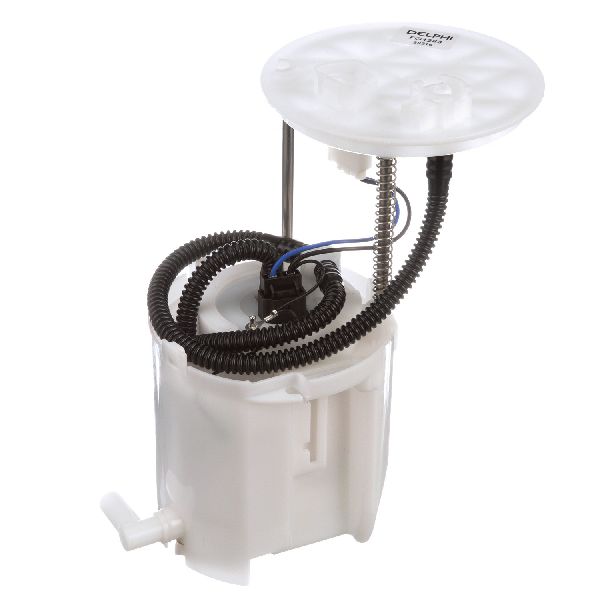
Aftermarket price range: $10-$15 - Low-Pressure Fuel Pump Assembly
(OEM #23220-31411)— A failing fuel pump is a high-probability cause for low fuel pressure that triggers P3190. Recalls on similar models for this part highlight its potential for failure. The OEM manufacturer is typically Denso.
Trusted brands: Denso (OEM), Aisin
OEM price range: $300-$450
Aftermarket price range: $150-$250 - Engine Air Filter
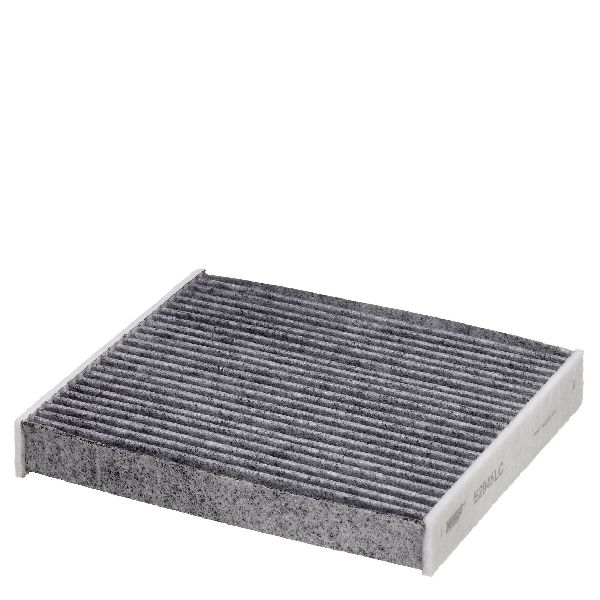
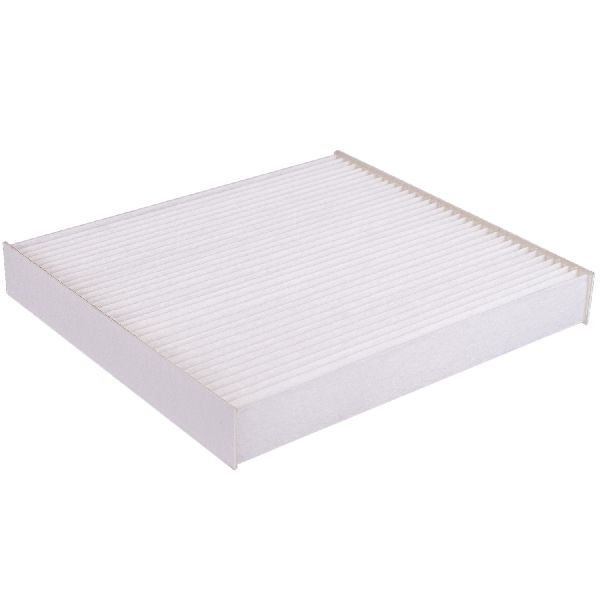
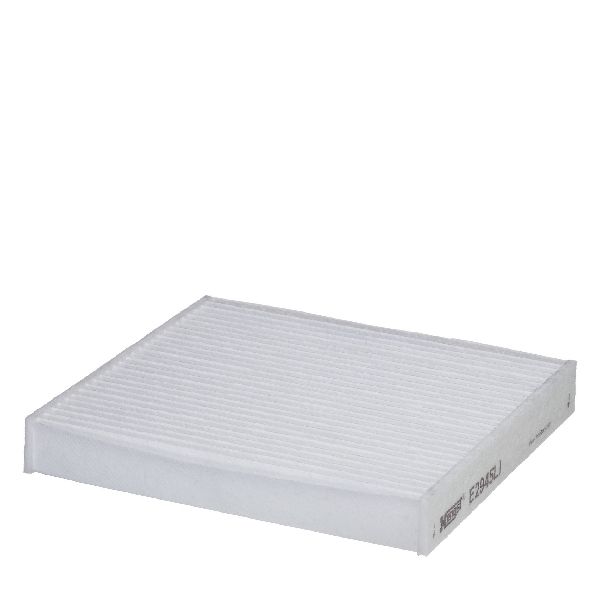
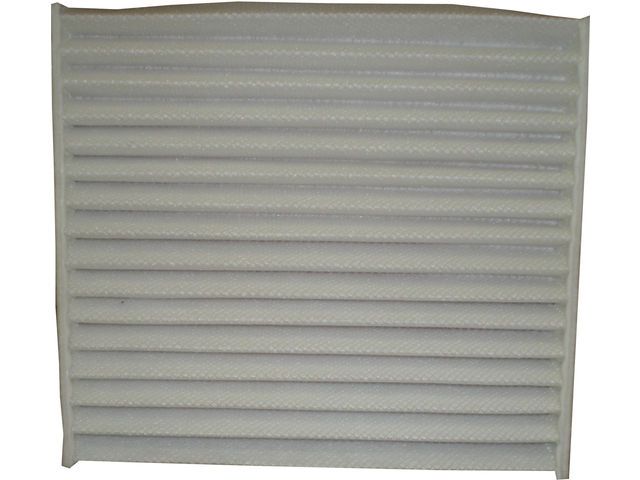
(OEM #17801-F0050)— A severely clogged air filter can restrict airflow enough to contribute to this code. It should be checked and replaced if dirty as part of the initial diagnosis.
Trusted brands: Denso, Purolator, Wix
OEM price range: $20-$35
Aftermarket price range: $15-$25 - Mass Air Flow (MAF) Sensor
(OEM #22204-37010)— If cleaning the MAF sensor does not resolve the issue, the sensor itself may have failed and requires replacement. Denso is the OEM supplier.
Trusted brands: Denso (OEM), Hitachi
OEM price range: $120-$180
Aftermarket price range: $70-$150
Related Codes That Often Appear With This One
- P0A0F — This code means 'Engine Failed to Start'. The Hybrid Control ECU sets this code when it commands the engine to start and the Engine Control Unit (ECU) reports back with P3190, indicating it was unsuccessful. They are often found together.
- P3191 — A more specific code for 'Engine Does Not Start'. It indicates a complete failure to achieve combustion, whereas P3190 can also mean it started but ran with very low power.
- P3193 — This is a specific code for 'Fuel Run Out'. It is set when the conditions for P3190 or P3191 are met AND the fuel level is detected as low, confirming the system believes the car is out of gas.
- P0171 — 'System Too Lean'. This code often accompanies P3190 if the root cause is a vacuum leak or a faulty MAF sensor, as both issues lead to an unmetered, lean air-fuel mixture.
Technical Service Bulletins (TSBs) & Recalls
- {'tsb_number': 'T-SB-0056-18', 'title': 'MIL ON DTC P3190 - (Poor Engine Power) at High Altitude With High Temperatures', 'vehicle': '2017-2018 Highlander Hybrid', 'description': 'Addresses a P3190 code that may set when operating the vehicle in high altitude and high temperature conditions. The fix is an ECM software logic update. While for the Highlander, it shows a precedent for this code being caused by environmental factors and fixed with software.'}
Mechanic-Grade Diagnostic Values
- Low-Side Fuel Pressure — expected: 304 to 343 kPa (44 to 50 psi) at idle.. Failure: Pressure below this range indicates a weak fuel pump or clogged filter. Pressure should also hold above 147 kPa (21 psi) for 5 minutes after the engine is stopped.
- Crankshaft Position Sensor Resistance — expected: 985 to 1,600 Ω (Cold); 1,265 to 1,890 Ω (Hot).. Failure: A reading outside this range can prevent the ECM from knowing the engine's position, causing a no-start.
- Camshaft Position Sensor Resistance — expected: 1,630 to 2,740 Ω (Cold); 2,065 to 3,225 Ω (Hot).. Failure: An incorrect reading will prevent proper valve and ignition timing.
- Engine Coolant Temperature (ECT) Sensor Resistance — expected: 2.0 to 3.0 kΩ at 20°C (68°F); 0.2 to 0.4 kΩ at 80°C (176°F).. Failure: Readings significantly outside these ranges can cause incorrect fuel mixture calculations for cold starts.
Scan Tool Commands That Help
- Toyota Techstream: Active Test: 'Control the Fuel Pump / Speed' — This command manually activates the fuel pump without starting the engine. It's crucial for confirming the pump is functional and for building pressure to perform a fuel pressure test. It can also help prime the system after running out of fuel. In some cases, cycling the pump with this command has reportedly overcome intermittent blockages.
Real Owner Repair Stories
- YouTube user 'David Jad' (Toyota Prius (similar hybrid system and causes)) — P3190 and P0A0F, engine would crank but not reliably start, no power on the road.
❌ Tried (didn't work) Initial diagnosis pointed towards common air/MAF sensor issues.
✅ What actually fixed it The owner skipped a fuel pressure test and replaced the fuel pump with a used unit from eBay, which immediately solved the problem. Upon inspecting the old pump assembly, the fuel filter sock was found to be extremely dirty and clogged. - YouTube user 'FIX IT MYSELF' (2015 Toyota Camry Hybrid (same 2AR-FXE engine)) — P3190 & P0A0F, engine light and 'Check Hybrid System' message, car lost power.
❌ Tried (didn't work) Owner had not replaced fuel filter in two years.
✅ What actually fixed it The video demonstrates the replacement of the in-tank fuel filter (part of the pump assembly). This was the first step taken and it resolved the codes. - YouTube user 'Repairs Made Easy' (Toyota Camry Hybrid (similar 2AR-FXE system)) — P3190, car stalls at high RPM, check hybrid system light illuminates, long-term fuel trims were very negative (rich).
❌ Tried (didn't work) Replaced Mass Air Flow sensor, Replaced fuel pump
✅ What actually fixed it The final diagnosis was clogged/sticking fuel injectors that were causing a rich condition. The owner concluded that after trying the more common fixes, fuel injectors were the next logical step.
Diagnostic Flowchart
Other Known Issues on This Vehicle
Issues unrelated to this code that are worth knowing about as an owner of this generation:
- Engine Water Pump Seepage/Failure 🟠 Medium — Commonly reported between 50,000 and 100,000 miles. A leak is often first noticed as pink crusty residue around the pump's weep hole.
- Brake Booster / Actuator Assembly Failure 🔴 High — Can fail without warning, leading to a hard brake pedal and loss of braking assistance. It is an expensive repair. Some models had recalls or warranty extensions, but not all years may be covered. (Ref: Potential Warranty Enhancement Program (varies by region/VIN))
- HVAC Evaporator Odor 🟡 Low — A common complaint across many Toyota models of this era. A musty or moldy smell can come from the vents upon startup, caused by moisture and microbial growth on the evaporator core. (Ref: T-SB-0038-20 (for later models, but procedure is relevant))
- Soy-Based Wiring Insulation Attracting Rodents 🟠 Medium — Some owners report issues with rodents chewing through wiring harnesses, which use a soy-based insulation. This is not unique to the RAV4 but has been a noted complaint. Repair can be expensive depending on the location of the damage.
Used vs. New Parts: Buying Guide for This Vehicle
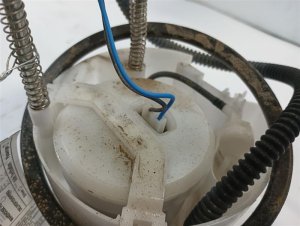
When a used part is the smart pick: For a P3190 diagnosis, sourcing a complete, low-mileage used fuel pump assembly from a reputable salvage yard can be a cost-effective strategy, as demonstrated by owner repairs. This is often cheaper than a new OEM unit and more reliable than a new, unbranded aftermarket pump.
Donor-vehicle mileage cap: roughly under 80000 miles for the part to have meaningful remaining life.
What to inspect on the donor part:
- Verify the donor vehicle's mileage if possible.
- Inspect the electrical connector for any signs of corrosion or heat damage.
- If buying online, choose sellers with clear photos, a good return policy, and documented donor vehicle information.
OEM-only on this vehicle (don't cheap out):
- Mass Air Flow (MAF) Sensor
- Crankshaft Position Sensor
- Engine Coolant Temperature (ECT) Sensor
Aftermarket brands forum-validated for this vehicle:
- Denso (often the Original Equipment Manufacturer for Toyota sensors and fuel components)
- Aisin (a trusted OEM supplier for Toyota fuel and water pumps)
Brands owners have reported issues with on this vehicle:
- Unbranded, 'white-box' MAF sensors and fuel pumps from online auction sites. These are notorious for being out-of-spec or failing prematurely, leading to a repeat of the P3190 code.
Real Owner Stories
Aggregated from forums and TSBs cited above. Mileages and costs reflect what owners reported in those sources.
Toyota Prius Hybrid (2AR-FXE platform relative)
Symptoms: The car ran out of gas, and now the code P3190 is set and the vehicle won't run.
What fixed it: Adding fuel to the tank, though the owner noted the HV battery had depleted in the process, complicating the restart.
Source hint: PriusChat: 'Car Ran Out of Gas, now code P3190 and won't run'
Toyota Camry Hybrid (2AR-FXE 2.5L)
Symptoms: The engine turns off after high revving and displays P3190 Engine Poor Power.
What fixed it: The technician suspected clogged fuel injectors after replacing the MAF sensor and fuel pump failed to resolve the issue.
Source hint: YouTube: 'P3190 ENGINE POOR POWER (HYBRID) | CAR TURNS OFF AFTER HIGH REV'
2016-2018 Toyota RAV4 Hybrid — ~75000 miles
Symptoms: Pink crusty residue found around the engine area.
What fixed it: Replacement of the engine water pump due to seepage/failure.
Source hint: Vehicle Specific Issues: Engine Water Pump Seepage/Failure
Related OBD-II Codes
Frequently Asked Questions
My 2017 RAV4 Hybrid is showing P3190 at high altitude; does TSB-0056-18 apply to me?
Can I just clean the MAF sensor on my 2AR-FXE engine instead of replacing it?
Why did my RAV4 Hybrid stop running even though the battery wasn't empty?
Is the fuel pump a known issue for the 2016-2018 RAV4 Hybrid era?
How can I tell if my P3190 is caused by a dirty throttle body?
Could a recent air filter change on my RAV4 Hybrid cause a P3190 code?
Helpful Videos
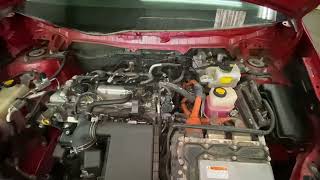

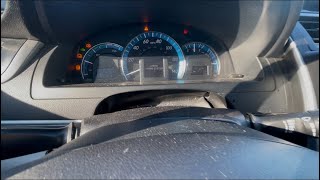
Used OEM Parts in Stock
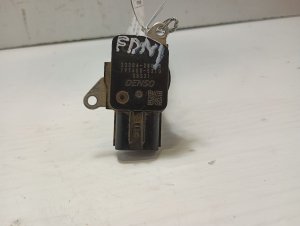
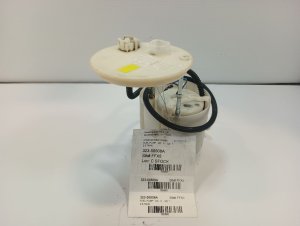
New Aftermarket Parts Available


The information in this article is provided for general reference and educational purposes only. Vehicle specifications, procedures, and part compatibility can vary by production date, trim level, and region. Always consult your vehicle's factory service manual and verify part numbers before purchasing or performing repairs. Safety-critical components such as airbags, seat belts, and braking systems should be installed by a qualified professional.
- Toyota RAV4 Hybrid:
- 🧭 Diagnostic Flowchart
- 🎬 Helpful Videos
- 🛍️ Shop This Part
- What's Unique About the 2016-2018 Toyota RAV4 Hybrid
- Symptoms You May Notice
- Most Likely Causes
- Rare But Worth Checking
- Diagnosis Steps
- Parts You'll Likely Need
- Related Codes That Often Appear With This One
- Technical Service Bulletins (TSBs) & Recalls
- Mechanic-Grade Diagnostic Values
- Scan Tool Commands That Help
- Real Owner Repair Stories
- Other Known Issues on This Vehicle
- Used vs. New Parts: Buying Guide for This Vehicle
- Real Owner Stories
- Toyota Prius Hybrid (2AR-FXE platform relative)
- Toyota Camry Hybrid (2AR-FXE 2.5L)
- 2016-2018 Toyota RAV4 Hybrid — ~75000 miles
- Related OBD-II Codes
- Frequently Asked Questions
- 🎟️ Get 5% Off