

P3190 on 2019-2024 Toyota RAV4 Hybrid: 'Poor Engine Power' Causes and Fixes
On a 2019-2024 RAV4 Hybrid, code P3190 almost always means the gasoline engine failed to run. The most common cause is simply running out of fuel, sometimes due to an inaccurate fuel gauge on 2019-2020 models. Before any repairs, add at least 2-3 gallons of gas. If that doesn't work, a faulty fuel pump (recalled on 2019-2020 models) is the next likely culprit.
- P3190 means your gasoline engine failed to run properly; it is NOT a hybrid battery problem.
- First, add 2-3 gallons of gas. This is the most common and cheapest fix.
- For 2019-2020 models, check if your vehicle is affected by the fuel pump recall (20TA02) or the fuel gauge TSB (20TE04).
- Do NOT repeatedly try to start the engine. This will drain the high-voltage battery and lead to a more complicated and expensive situation.
- If fuel isn't the issue, the next most likely causes are a dirty MAF sensor or a disconnected air intake hose.
What's Unique About the 2019-2024 Toyota RAV4 Hybrid
The 5th generation RAV4 Hybrid uses its high-voltage motor-generator to start the gasoline engine, not a traditional starter. When a P3190 fault occurs, the system may try to crank the engine repeatedly, which can rapidly drain the high-voltage battery. This often leads to a costly misdiagnosis of a failed hybrid battery when the real issue is a basic engine problem. Additionally, 2019-2020 models are subject to both a recall for a failing low-pressure fuel pump and a service campaign for an inaccurate fuel gauge, making fuel-related issues the most probable cause for this code on those specific years.
Symptoms You May Notice
- Engine will not start
- Engine starts and then immediately stalls
- Vehicle has no power or runs very roughly
- "Check Hybrid System" or other warning lights on the dashboard
- Vehicle enters a low-power limp mode
- Inability to switch from EV mode to gasoline engine power
- Engine misfires under load.
- Replacing the high-voltage hybrid battery. The P3190 code is for the gasoline engine. Repeatedly trying to start the car will drain the HV battery, causing secondary battery codes (like P0A0F) and leading to a costly and incorrect diagnosis. The HV battery's low state of charge is almost always a symptom, not the cause.
Most Likely Causes
- Out of Fuel 🔴 High Probability This is the most common cause for P3190 on all Toyota hybrids. 2019-2020 models have a known issue with inaccurate fuel gauges (Customer Support Program 20TE04), making it easy to run out of gas unexpectedly even when the gauge shows fuel remaining.
How to confirm: Add at least two to three gallons of gasoline to the tank. This is the first and most important diagnostic step.
Typical fix: Refill the fuel tank. After refueling, you may need to clear the code with an OBD-II scanner and cycle the ignition several times.
Est. part cost: $10-$20 - Failing Low-Pressure Fuel Pump (Recall Item) 🔴 High Probability → Shop Fuel Pump 2019-2020 RAV4 models were included in a major Toyota safety recall (20TA02 / NHTSA Campaign 20V682) for a Denso-made fuel pump that can fail, causing the engine to stall or not start.
How to confirm: A Toyota dealer can check your VIN to see if the recall applies and has been completed. A technician can also perform a fuel pressure test to verify pump operation.
Typical fix: If the recall applies and has not been performed, a Toyota dealer will replace the fuel pump assembly with an improved part, free of charge. Otherwise, the fuel pump assembly needs to be replaced.
Est. part cost: $250-$500 - Dirty Mass Air Flow (MAF) Sensor 🟡 Medium Probability → Shop Fuel Injection Air Flow Meter Oil and dust from the PCV system and air filter can contaminate the sensor, causing incorrect air-fuel mixture readings that lead to stalling or a no-start condition.
How to confirm: Remove the sensor from the intake tube and visually inspect the small internal wires for contamination. It is located on the air filter housing outlet. 🎬 Watch: How to clean the MAF sensor and replace the air filter
Typical fix: Clean the sensor wires carefully using only dedicated MAF sensor cleaner spray. Do not touch the wires. If cleaning doesn't work, the sensor must be replaced.
Est. part cost: $10-$15 for cleaner, $100-$200 for a new sensor - Air Intake Leak 🟡 Medium Probability The large flexible air intake hose between the air filter box and the throttle body can be knocked loose or improperly reconnected during routine service like an air filter change.
How to confirm: Visually inspect the entire air intake path for loose clamps, disconnected hoses, or cracks. A smoke test is the most definitive way to find small leaks.
Typical fix: Securely reconnect any loose hoses or clamps. Replace any cracked or damaged intake components.
Est. part cost: $0-$150
Rare But Worth Checking
- Dirty or Faulty Throttle Body: → Shop Fuel Injection Throttle Body Carbon buildup can restrict airflow, especially at idle. Cleaning the throttle body is a common maintenance item that can resolve this.
- Stuck Open EGR Valve: A stuck EGR valve allows exhaust gas to flow into the intake manifold at the wrong time, disrupting the air-fuel mixture and preventing the engine from running.
- Failed Crankshaft or Camshaft Position Sensor: These sensors are critical for engine timing. If they fail, the ECM won't know the engine's position and cannot start it.
- Weak 12V Battery: A failing 12-volt auxiliary battery can cause a cascade of seemingly unrelated electronic faults and error codes in a modern hybrid, including issues that may trigger a P3190.
Diagnosis Steps
- Check for any other stored Diagnostic Trouble Codes (DTCs). If other codes are present, diagnose them first.
- Add 2-3 gallons of fuel to the tank, even if the gauge shows fuel. This is the most common fix.
- Visually inspect the entire air intake system from the air filter box to the throttle body. Ensure all hoses are connected securely and there are no cracks or leaks. A common mistake is a loose hose after an air filter change.
- Inspect and clean the Mass Air Flow (MAF) sensor using a dedicated cleaner. Do not touch the delicate sensor wires.
- Check your vehicle's VIN with a Toyota dealer or on the NHTSA website to see if the fuel pump recall (20TA02 / 20V682) or fuel tank Customer Support Program (20TE04) applies to your vehicle.
- Check the health of the 12V auxiliary battery. A weak 12V battery can cause numerous, unpredictable electronic faults on a hybrid vehicle.
- If the simple checks do not resolve the issue, more advanced diagnosis is needed. This includes checking fuel pressure, inspecting the throttle body for carbon buildup, and testing the EGR valve and engine position sensors.
Parts You'll Likely Need
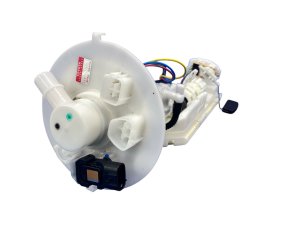
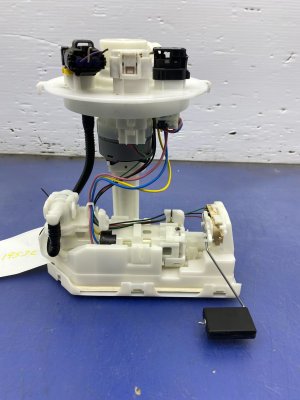
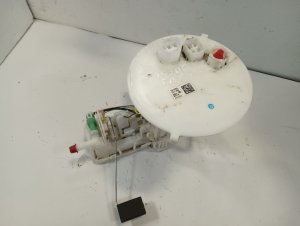
- Low-Pressure Fuel Pump Assembly
(OEM #23220-F0031 (This is the recalled Denso part; the replacement part will have a different number))— A known failure point on 2019-2020 models, subject to a safety recall. A failed pump will not supply fuel to the engine.
Trusted brands: Denso (OEM)
OEM price range: $400-$500
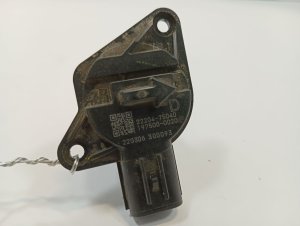
Aftermarket price range: $250-$350 - Mass Air Flow (MAF) Sensor
(OEM #22204-75040 (Denso))— A dirty or failed MAF sensor provides incorrect data to the ECU, leading to an improper air-fuel ratio that prevents the engine from running.
Trusted brands: Denso, Hitachi
OEM price range: $150-$200
Aftermarket price range: $80-$120 - MAF Sensor Cleaner — Often, the MAF sensor is just dirty and does not need to be replaced. This is a cheap and effective first step.
Trusted brands: CRC, WD-40
OEM price range: $10-$15
Aftermarket price range: $10-$15
Related Codes That Often Appear With This One
- P0A0F — This code means 'Engine Failed to Start'. It is often set by the Hybrid Control ECU as a direct result of the condition causing P3190 in the Engine ECU.
- P3191 — This code means 'Engine Does Not Start' and is a more specific version of P3190. They share the same causes and diagnostic procedures. 🎬 Watch: Understanding P3190, P3191, and P0A0F hybrid codes
- P0171/P0172 — These codes indicate a 'System Too Lean' or 'System Too Rich' condition, pointing towards underlying air or fuel mixture problems (like a MAF sensor issue or intake leak) that can also trigger P3190.
- P3193 — This code specifically means 'Fuel Run Out' and is often set in conjunction with P3190 or P3191 when the system determines the engine failed to start because the tank is empty.
Technical Service Bulletins (TSBs) & Recalls
- 20TA02 - Safety Recall for Low-Pressure Fuel Pump Failure.
- 20TE04 - Customer Support Program for Vehicle Refueling Performance (Inaccurate Gauge).
- 22TE05 - Customer Support Program for Roof Rail Water Leaks.
- T-SB-0016-23 - Technical Service Bulletin for Roof Rail Water Leak Repair Procedure.
Platform-Specific Known Issues
- Safety Recall 20TA02 / NHTSA 20V682: Affects some 2019-2020 RAV4 models for a faulty low-pressure fuel pump that can cause the engine to stall.
- Customer Support Program 20TE04 (ZLG): 🎬 See why your RAV4 gas tank won't fill up completely Affects some 2019-2020 RAV4 Hybrid models where the fuel gauge may read inaccurately and the tank may not fill completely, leading to unexpected out-of-fuel situations.
Mechanic-Grade Diagnostic Values
- Low-Pressure Fuel System Pressure — expected: 304 to 343 kPa (44 to 50 psi) at idle.. Failure: Pressure significantly below this range points to a weak fuel pump or a clogged fuel filter.
- Mass Air Flow (MAF) Sensor Reading (Live Data) — expected: Approximately 2.0 - 7.0 grams/second (g/s) at a stable, warmed-up idle. Should rise smoothly with RPM, exceeding 100 g/s at wide-open throttle (2.5L engine x 40).. Failure: Readings that are stuck, erratic, or significantly lower than expected under load suggest a dirty or failing sensor, or a large vacuum leak.
- Crankshaft Position Sensor Resistance — expected: 985 to 1,600 Ω when cold; 1,265 to 1,890 Ω when hot. (Note: These values are for a similar Toyota hybrid system and should be used as a general reference).. Failure: An open circuit (infinite resistance) or a reading far outside the expected range indicates a failed sensor.
- Freeze Frame Data Analysis — expected: Varies by condition.. Failure: Analyzing the data (engine temp, load, RPM, fuel trims) recorded at the moment the P3190 code was set can pinpoint the conditions causing the failure, such as a problem during cold start or under high load.
Hidden / Shadow Codes Worth Checking
- Detail Codes / Information Codes: When a P3190 is set, Toyota's Techstream software can often display more specific 'detail' or 'information' codes that are not visible on standard OBD-II scanners. These codes provide a much more granular reason for the failure, such as 'Fuel Cut' or 'Engine Stall', which helps narrow down the diagnostic path significantly. (see via Toyota Techstream diagnostic software.)
Scan Tool Commands That Help
- Toyota Techstream: Active Test: Control the Fuel Pump / Circuit Relay — This command allows a technician to manually turn the low-pressure fuel pump on without the engine running. It is a critical step to confirm if the pump is functional and to check for fuel pressure. If the pump doesn't activate, it points to a failed pump, relay, or wiring issue.
- Toyota Techstream: Active Test: Activate the EVAP Purge VSV — This test commands the EVAP purge valve to open or close. A purge valve that is stuck open can create a significant vacuum leak, leading to a lean condition and potentially causing a P3190. This test helps verify the valve's mechanical operation.
- Toyota Techstream: Active Test: Control the Injection Mode — For the A25A-FXS engine with D-4S injection, this test allows a technician to switch between port injection, direct injection, or both. It can help diagnose issues with a specific set of injectors if the engine runs poorly in one mode but not another.
Wiring & Ground Locations
- Engine Control Module (ECM) Ground — The ECM is located in the engine bay on the driver's side, near the main fuse panel and brake fluid reservoir. Ground points for the engine control system are typically located on the cylinder head and engine block.. A poor ground connection for the ECM or its critical sensors (like Crank/Cam sensors) can cause erratic signals or a complete loss of data, preventing the engine from starting and potentially triggering a P3190 without a specific sensor code.
- Fuel Pump Connector — The low-pressure fuel pump is located inside the fuel tank, accessible by removing the rear seat bottom cushion and an access panel on the vehicle floor.. This connector is the primary point for testing voltage to the fuel pump. If the pump does not run during the Techstream Active Test, checking for 12V at this connector is the next step to differentiate between a failed pump and a wiring/relay issue.
- Engine Wiring Harness Chafe Points — On modern transverse engines, the main harness can potentially rub against the ECM/TCM brackets, shock towers, or various hose clamps.. A chafed wire in the harness that shorts to ground or another wire can cause intermittent no-start conditions. This can affect signals for the MAF sensor, throttle body, or ignition system, all of which can lead to a P3190. A visual inspection of the harness routing is a valuable, though often overlooked, diagnostic step.
Real Owner Repair Stories
- Reddit user on r/prius (similar Toyota Hybrid system) (2010 Toyota Prius) — P3190 and 'Check Hybrid System' light appeared immediately after an oil change service.
❌ Tried (didn't work) No other steps were tried before the fix.
✅ What actually fixed it The large air intake hose between the air filter box and the throttle body had not been properly reconnected by the service technician. Securing the hose clamp resolved the code and all symptoms. - PriusChat Forum User (Toyota Prius (Gen 3)) — Sudden 'Check Hybrid System' message, engine would not stay running, P3190 code stored.
❌ Tried (didn't work) Initial diagnosis was unclear.
✅ What actually fixed it The PCV hose had disconnected from the intake manifold, creating a massive vacuum leak. Reattaching the hose allowed the engine to run normally. The user noted this can be caused by a clogged PCV valve creating excessive crankcase pressure.
Model Year Variations Within This Range
- 2019-2020: These model years are subject to Safety Recall 20TA02 for a failing low-pressure fuel pump and Customer Support Program 20TE04 for an inaccurate fuel tank/gauge design. Both issues make fuel delivery problems the primary cause of P3190 on these specific years.
- Pre-2022: Some earlier A25A-FXS engines reportedly had issues with corrosion in the EGR cooler, which could lead to coolant leaking into the engine. While this might not directly cause P3190 initially, it can lead to poor running, misfires, and eventual engine failure.
Diagnostic Flowchart
Other Known Issues on This Vehicle
Issues unrelated to this code that are worth knowing about as an owner of this generation:
- High-Voltage Cable Corrosion ('Cablegate') 🔴 High — Common in regions with road salt (Snow Belt). Affects 2019-2022 models most, but warranty extensions now cover up to 2024 models, suggesting the redesigned part may not be a complete fix. (Ref: Customer Support Program (Warranty Extension) LA1/LA2 in Canada, extended to 10 years/unlimited mileage.)
- Roof Rack Water Leak 🟠 Medium — Widespread on 2019-2021 models. Caused by deteriorating roof rail mounting clip seals, leading to water in the headliner, pillars, and potential electrical damage. (Ref: T-SB-0016-23 / Customer Support Program 22TE05 (10-year/unlimited mileage coverage).)
- Inaccurate Fuel Gauge / Incomplete Fueling 🟡 Low — Very common on 2019-2020 Hybrid models. The fuel tank design prevents it from filling completely and causes the gauge and Distance-to-Empty (DTE) to be inaccurate. (Ref: Customer Support Program 20TE04 (ZLG) provides a redesigned fuel tank and sender.)
- Premature 12V Battery Drain 🟡 Low — Reported on various 2019+ models, sometimes linked to the Data Communications Module (DCM) not shutting down correctly. (Ref: Software updates have been issued to address the DCM issue.)
Used vs. New Parts: Buying Guide for This Vehicle
When a used part is the smart pick: For this vehicle and code, using used parts is generally not recommended for the most common failure items. The primary culprits are a recalled fuel pump and a potentially dirty MAF sensor. A used fuel pump carries the risk of being the same faulty design or having significant wear. However, larger mechanical components with no inherent design flaws, like a throttle body or intake manifold components sourced from a low-mileage wreck, could be a cost-effective option if damaged.
Donor-vehicle mileage cap: roughly under 50000 miles for the part to have meaningful remaining life.
What to inspect on the donor part:
- Verify the donor vehicle's VIN to ensure it was not part of the fuel pump recall (20TA02).
- For electronic sensors like a MAF, ensure the connector pins are clean, straight, and free of corrosion.
- Inspect plastic components like the air filter housing for cracks or stripped screw holes.
- Ask for the donor vehicle's mileage; lower is always better for wear items.
OEM-only on this vehicle (don't cheap out):
- Low-Pressure Fuel Pump: Due to the safety recall on the original Denso pump for 2019-2020 models, it is critical to use a new, updated OEM part from a Toyota dealer to ensure the problem is permanently fixed.
- Mass Air Flow (MAF) Sensor: While some aftermarket brands are reputable, the ECM is finely calibrated to the OEM Denso sensor. Using a cheap aftermarket MAF can introduce new driveability problems or incorrect fuel trim readings, even if it resolves the P3190 code.
Aftermarket brands forum-validated for this vehicle:
- Denso (for MAF sensor, as they are the Original Equipment Manufacturer)
Brands owners have reported issues with on this vehicle:
- Unbranded or 'white-box' electronic sensors (like MAF, Cam, Crank sensors) from online marketplaces are frequently out of spec and can cause more problems than they solve.
Real Owner Stories
Aggregated from forums and TSBs cited above. Mileages and costs reflect what owners reported in those sources.
2019 Toyota RAV4 Hybrid 2.5L
Symptoms: The fuel gauge and Distance-to-Empty (DTE) were inaccurate, leading to an unexpected engine stall and P3190 code.
What fixed it: The vehicle was serviced under Customer Support Program 20TE04, which provided a redesigned fuel tank and sender unit.
Source hint: Customer Support Program 20TE04 (ZLG)
2020 Toyota RAV4 Hybrid 2.5L
Symptoms: Engine stalled or would not start due to a faulty low-pressure fuel pump.
What fixed it: Replacement of the fuel pump assembly by a Toyota dealer under Safety Recall 20TA02 / NHTSA Campaign 20V682.
Source hint: Safety Recall 20TA02 / NHTSA 20V682
2019 Toyota RAV4 Hybrid 2.5L
Symptoms: P3190 code appeared immediately after the vehicle was serviced by a mechanic.
What fixed it: Reconnecting or securing the air intake hose that was likely knocked loose during service.
Source hint: PriusChat Forum: P3190 code after leaving mechanic
Related OBD-II Codes
Frequently Asked Questions
My 2019 RAV4 Hybrid stalled and won't restart, but I have a quarter tank of gas. Could it still be out of fuel?
Is there a recall for the fuel pump issue causing P3190 on the 2020 RAV4 Hybrid?
I just changed my air filter and now I have a P3190 code. What should I check?
Can a dirty sensor cause my RAV4 Hybrid to stall and throw P3190?
Does the 'Cablegate' issue or roof rail leaks cause P3190?
Could my 12V battery be the reason for the 'Check Hybrid System' light and P3190?
Helpful Videos

Used OEM Parts in Stock
New Aftermarket Parts Available


The information in this article is provided for general reference and educational purposes only. Vehicle specifications, procedures, and part compatibility can vary by production date, trim level, and region. Always consult your vehicle's factory service manual and verify part numbers before purchasing or performing repairs. Safety-critical components such as airbags, seat belts, and braking systems should be installed by a qualified professional.
- Toyota RAV4 Hybrid:
- 🧭 Diagnostic Flowchart
- 🎬 Helpful Videos
- 🛍️ Shop This Part
- What's Unique About the 2019-2024 Toyota RAV4 Hybrid
- Symptoms You May Notice
- Most Likely Causes
- Rare But Worth Checking
- Diagnosis Steps
- Parts You'll Likely Need
- Related Codes That Often Appear With This One
- Technical Service Bulletins (TSBs) & Recalls
- Platform-Specific Known Issues
- Mechanic-Grade Diagnostic Values
- Hidden / Shadow Codes Worth Checking
- Scan Tool Commands That Help
- Wiring & Ground Locations
- Real Owner Repair Stories
- Model Year Variations Within This Range
- Other Known Issues on This Vehicle
- Used vs. New Parts: Buying Guide for This Vehicle
- Real Owner Stories
- 2019 Toyota RAV4 Hybrid 2.5L
- 2020 Toyota RAV4 Hybrid 2.5L
- 2019 Toyota RAV4 Hybrid 2.5L
- Related OBD-II Codes
- Frequently Asked Questions
- 🎟️ Get 5% Off