

OBD-II Code P3227: Manufacturer-Specific Fault Guide
The ultimate guide to P3227: What it means for BMW, Nissan, and others, why it triggers, and exactly how to fix it.
- P3227 primarily indicates a failed E-Box cooling fan on BMW models, which triggers to protect the main engine computer (DME) from overheating.
- BMW-specific scanners display this exact fault as hexadecimal code 2F71, requiring the same diagnostic steps and repairs.
- Replacing the $100-$250 E-Box fan motor resolves the code in 80% of cases, though blown fuses and corroded wiring are common secondary culprits.
- Ignoring P3227 risks catastrophic heat damage to the DME, turning a $300 fan replacement into a $2,000+ computer replacement.
- On 2011-2012 Nissan Leaf models, P3227 is not a fault code but an administrative identifier for a voluntary software update campaign (NTB13-061).
What Does P3227 Mean?
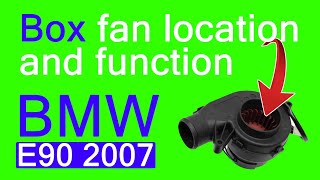
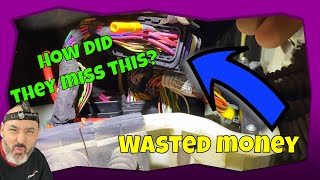
P3227 is a manufacturer-specific code. On most BMWs, it indicates a fault in the control circuit for the small electric fan cooling the electronics box (E-Box) that houses the main engine computer (DME). 🎬 Watch: See the E-Box fan location and how it functions. The DME detects low voltage or a short to ground, meaning the fan is not operating. On 2011-2012 Nissan Leaf models, P3227 is not a fault code but an identifier for a voluntary software update campaign (NTB13-061).
Technical definition: SAE/ISO provides no universal definition for P3227. BMW defines it as 'E-Box Control Circuit Fan Low' or 'E-box Control Fan Low Input', indicating the Engine Control Module (DME) detects a short to ground or insufficient voltage in the cooling fan circuit. The direct BMW-specific hexadecimal equivalent is 2F71 ('E-box fan, activation').
Can I Drive With P3227?
Yes, But With Caution. Driving is possible but strongly discouraged for extended periods, particularly in warm climates. Continued operation risks overheating the main engine computer (DME), causing stalling, erratic performance, and permanent DME failure. The financial risk of destroying a $2,000 DME far outweighs the cost of a timely fan repair.
Common Causes
- Failed or Weak E-Box Cooling Fan (Very Common) — The small electric motor within the fan assembly wears out from heat and continuous use. It either seizes completely or becomes too weak to start under the DME's precise PWM control, even if it spins when bench-tested with direct 12V power.
- Blown E-Box Fan Fuse (Common) — The fuse protecting the E-Box fan circuit (e.g., F16 on E9x models) blows due to a current surge. This is usually a secondary symptom of a seized fan motor or a shorted wire.
- Wiring Harness Damage (Common) — Wires leading to the fan become brittle, frayed, or corroded from engine bay heat and vibration, creating a short to ground or an open circuit.
- Water Ingress and Corrosion (Less Common) — Clogged cowl drains or a poorly sealed E-Box cover allow water to flood the electronics box. This corrodes the fan motor, electrical connectors, and the DME itself.
- Physical Obstruction (Debris or Aftermarket Wiring) (Less Common) — Leaves and dirt can bypass filters to jam the fan blades. Alternatively, incorrectly routed wires for aftermarket tuning modules or accessories physically block the fan or pinch its harness.
- Faulty Engine Control Module (DME) (Rare) — The internal driver circuit within the DME that controls and monitors the fan fails. This causes a false P3227 code and requires expensive module replacement or repair. 🎬 See this walkthrough on how to replace the E-Box fan.
Symptoms
- No Audible Fan Noise After Shutdown — The E-Box fan normally runs for a short period after shutting off a hot engine. The absence of this faint whirring sound from the passenger-side cowl indicates failure.
- Engine Stalling or Limp Mode in Hot Weather — As the DME overheats, it enters self-preservation mode. This causes rough running, drastically reduced power (limp mode), or sudden engine stalling during hot days or heavy traffic.
- Reduced Air Conditioning Performance — An overheating DME shuts down non-critical systems to reduce its computational load and heat output, abruptly deactivating the A/C compressor clutch.
- Unpredictable Electronic Glitches — Extreme heat inside the E-Box causes the DME to misinterpret sensor data or lose communication with other vehicle modules, triggering a cascade of unrelated warning lights.
- Check Engine Light or Service Message (also visible on scanner) — The Check Engine Light illuminates, storing code P3227 or the BMW-specific hex code 2F71.
Diagnostic Flowchart
Tap your situation to follow the diagnostic path that matches what you're seeing on this code.
Common Fixes & Costs
- Replace E-Box Cooling Fan — Parts: $100-$250, Labor: $150-$300, ~1.5 hr book time (Intermediate)
- Replace Blown Fuse — Parts: $1-$5, Labor: $0-$50, ~0.1 hr book time (DIY)
- Repair E-Box Fan Wiring — Parts: $5-$20, Labor: $150-$300, ~1.5 hr book time (Intermediate)
- Repair and Reseal E-Box Assembly — Parts: $10-$30, Labor: $50-$150, ~0.5 hr book time (DIY)
- Replace Engine Control Module (DME) — Parts: $1000-$2500, Labor: $200-$500, ~2.5 hr book time (Professional)
Used vs. New Parts: Buying Guide
When a used part is worth it: Never. The E-Box fan has a known wear-out failure mode. Salvage yard fans often show signs of rust and wear, making them a poor value given the labor required to install them.
Donor-vehicle mileage cap: roughly under 40000 miles for the part to have meaningful remaining life.
Donor quality checklist:
- Verify the exact part number match.
- Inspect the electrical connector for green corrosion.
- Avoid parts with any visible rust on the motor housing, indicating moisture exposure.
Decision logic:
- If A new OEM-supplier fan (VDO, Bosch) costs under $150. → Buy new. The risk of a used part failing shortly after installation is not worth the minimal savings.
- If The vehicle is very old and the budget is extremely tight. → A used part is an absolute last resort; expect a significantly reduced lifespan.
Warranty tradeoff: Used parts carry a 30-day warranty at best. New aftermarket parts offer 1-year to lifetime warranties, protecting you against premature failure.
Worst-case if a used part fails: $300 if a used fan fails immediately, requiring you to pay for the part and labor twice.
What Happens If You Wait — Timeline
- 0-1 month: Fault code P3227/2F71 is stored and the Check Engine Light illuminates. In cool weather, there are no noticeable drivability symptoms. (MPG impact: 0%% · Added cost: $0)
- 1-6 months: On days above 75°F, the DME overheats. The car exhibits intermittent rough running, hesitation, or the A/C compressor shuts off to reduce thermal load. (MPG impact: 0-5%% · Added cost: $0)
- 6-12 months: Chronic overheating causes frequent engine stalling and limp mode. Bizarre electronic glitches and communication faults appear as internal DME components are stressed. (MPG impact: 5-10%% · Added cost: $100-$200 in wasted diagnostic time chasing secondary faults.)
- 12+ months: Catastrophic DME failure. Prolonged heat cycles irreversibly damage the circuit board. The car fails to start entirely. (MPG impact: N/A (vehicle is inoperable)% · Added cost: $1500-$2500 for a replacement DME and programming.)
Cost of Not Fixing It
- 0-3 months: Intermittent performance issues in hot weather. The car exhibits rough running, hesitation, or reduced A/C performance as the DME overheats and enters self-protection mode. (Added cost: $0)
- 3-12 months: Increased frequency of engine stalling and electronic glitches. The DME enters 'limp mode' regularly. Chronic overheating stresses electronic components, risking permanent damage. (Added cost: $0)
- 12+ months: Catastrophic failure of the Engine Control Module (DME). Internal processors melt or short out from prolonged heat exposure. The car will not start or run. (Added cost: $1500-$2500)
Diagnosis Steps
- Verify the Code and Vehicle Application
Use an OBD-II scanner to confirm P3227 or 2F71. Verify the vehicle make. This diagnostic path applies to BMWs. For a 2011-2012 Nissan Leaf, this code refers to service campaign NTB13-061 and requires no mechanical diagnosis.
Tools: OBD-II Scanner (Beginner) - Test the Fan with a Bidirectional Scanner
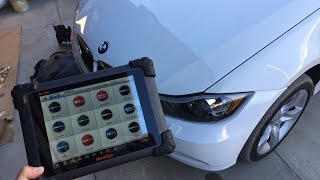
This is the definitive test. Use a BMW-capable diagnostic tool (INPA, ISTA, Foxwell, Autel) to actively command the E-Box fan on. If the fan does not turn on, the fan motor, wiring, or fuse is faulty. If it activates, the fault is intermittent or the DME monitoring circuit is failing.
Tools: Advanced diagnostic scanner with bidirectional control (Advanced) - Check the E-Box Fan Fuse
Locate the fuse box diagram for your model (e.g., main panel for E9x, inside the E-box for E60). Visually inspect the fuse. If a replacement fuse blows instantly upon starting the car, you have a confirmed dead short in the fan or wiring.
Tools: Fuse puller or needle-nose pliers (Beginner) - Visually Inspect the E-Box
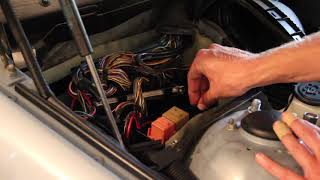
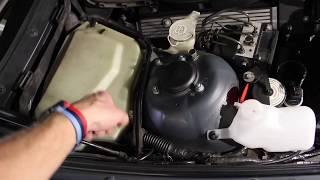
Disconnect the battery. Open the E-Box (typically under the passenger-side cabin air filter). Inspect for water intrusion, corroded pins, pinched wires from aftermarket accessories, or debris physically jamming the fan blades.
Tools: Socket set, screwdrivers, flashlight (Intermediate) - Test the Fan Connector for Power and Ground
With the ignition on, disconnect the fan. Use a multimeter to check the harness connector. You should find a constant ~12V power supply on one pin (e.g., Red/White) and a constant ground on another (e.g., Brown). Missing voltage indicates a wiring or fuse issue. If power and ground are present, the fan motor is dead.
Tools: Multimeter (Advanced) - [ADVANCED] Check Wiring Continuity
If voltage is missing at the connector, check for a broken wire. With the battery disconnected, set a multimeter to ohms. Check for continuity (< 1.0 Ohm) between the power pin at the fan connector and the corresponding pin at the fuse socket. An infinite resistance (O.L.) reading confirms a broken wire.
Tools: Multimeter (Advanced) - [PRO TIP] Check PWM Signal with Oscilloscope
Connect an oscilloscope to the fan's signal wire and ground. When commanding the fan on with a scan tool, look for a ~100Hz square wave signal. A flat line indicates a broken signal wire or a faulty DME driver. A good signal with a dead fan definitively condemns the fan motor.
Tools: Oscilloscope, diagnostic scanner (Professional) - [PRO TIP] Bench Test Fan with PWM Signal Generator
Do not test the fan with straight 12V power, as weak motors will still spin. Connect the fan's power and ground to a 12V battery, and connect a PWM signal generator to the signal wire (set to 100Hz). If the fan fails to run smoothly across different duty cycles, replace it.
Tools: 12V power source, PWM signal generator, jumper wires (Professional)
When This Code Triggers (Freeze-Frame Conditions)
- Engine Coolant Temp: 185-210°F (85-99°C) (The fault logs when the engine is fully warmed up and the DME temperature rises enough to trigger the fan command.)
- Ambient Air Temperature: > 70°F (21°C) (Warmer weather increases the heat load on the DME, forcing more frequent fan operation and exposing weak motors.)
- Engine Load: 20-70% (The code sets under various load conditions, as the DME's internal temperature is the primary trigger, not engine load.)
- Time After Start: 10-20 minutes (The fault appears after the vehicle runs long enough for the E-Box electronics to heat up and request cooling.)
Related Codes
- 2F71 — The BMW-specific hexadecimal code for 'E-box fan, activation'. It is the direct, diagnostically identical equivalent of P3227.
- 2EEF — BMW code for 'electric fan self-diagnosis' relating to the main engine radiator fan. It appears alongside 2F71 if an overheating DME struggles to control multiple components.
- Various DME internal faults — If P3227 is ignored, DME overheating causes a cascade of unrelated codes, including CAN bus faults or incorrect sensor readings.
- P0A81 — A generic code for a hybrid/EV battery pack cooling fan fault. Do not confuse this with P3227, which cools the engine computer, not the high-voltage battery.
Climate & Environmental Factors
- High Ambient Temperature: Hot weather places a higher thermal load on the DME, forcing the E-Box fan to run longer and harder. Symptoms of a failed fan (stalling, limp mode) manifest rapidly in these conditions.
- High Humidity / Heavy Rain: In wet climates, clogged cowl drains or a bad E-Box seal allow water intrusion. This moisture corrodes the fan motor and electrical connectors, causing short circuits.
How to Talk to a Mechanic About This Code
Say this: "I have a BMW with a 2F71 fault code, which points to the E-Box cooling fan. Can you quote me for a diagnostic to confirm the fan has failed, specifically by checking the fuse, wiring, and using a scan tool to attempt bidirectional activation?"
This proves you are an informed owner. It directs the technician to the exact high-probability cause, preventing a costly, open-ended diagnostic fishing expedition.
Avoid saying:
- 'My check engine light is on, can you look at it?'
- 'The car stalls when it's hot, just fix whatever is wrong.'
- 'I'll go with whatever you recommend.'
Questions to ask before authorizing the repair:
- Did you confirm the fan failed to activate when commanded by your scan tool?
- Did you verify 12V power and ground at the fan's electrical connector?
- Is the circuit fuse intact?
- Did you see any signs of water damage or corrosion inside the electronics box?
Where to Take It: Dealer vs Independent vs Chain
- Dealer:
Expensive. Recommended only if you suspect a rare DME failure or have warranty coverage. Otherwise, use an independent specialist.
Best for: Vehicles under an extended warranty or service contract., Complex cases where a faulty DME is suspected after the fan and wiring are ruled out.
Downsides: Significantly higher labor rates and parts costs., Unlikely to use cheaper OEM-supplier parts (like VDO) instead of Genuine BMW parts. (Typical cost: +50% vs. baseline) - Independent Shop:
Best fit. This is a common BMW failure, and a reputable independent specialist will diagnose and repair it quickly and affordably.
Best for: Out-of-warranty BMWs where cost is a factor., Getting experienced, specialized service from dealer-trained technicians.
Downsides: Quality varies; you must find a shop that specifically specializes in European vehicles. (Typical cost: +0% vs. baseline) - Chain Shop:
AVOID. They are not equipped to diagnose or repair BMW-specific electronic faults correctly.
Best for: Simple, non-specialized jobs like tires or oil changes.
Downsides: Technicians lack the specific training and bidirectional diagnostic tools for BMW electronics., High risk of misdiagnosis and unnecessary parts replacement. (Typical cost: -10% vs. baseline)
When to Walk Away From the Repair
If repair costs exceed 50% of the vehicle's value, evaluate selling it as-is.
- Car worth $6000, fix is $400: Fix it. A standard fan replacement is a small fraction of the car's value and prevents a catastrophic DME failure.
- Car worth $4500, fix is $2200: Walk away. The diagnosis revealed a failed DME. The repair cost is 50% of the car's value, making it a poor investment.
- Car worth $2500, fix is $1500: Walk away. A $1500 repair on a $2500 car represents a 60% cost-to-value ratio.
What Scan Tool You Need for This Code
Minimum: A code reader that specifically reads and clears BMW manufacturer codes (like 2F71).
A generic $20 reader shows P3227 but cannot perform bidirectional control (component activation). Activating the fan via scanner is the single best test to confirm a dead motor before buying parts.
Budget: BlueDriver Pro (~$100) — Reads and clears enhanced BMW codes and provides freeze-frame data. It lacks bidirectional control but provides enough specific data to confirm the fault area.
Mid-range: Foxwell NT510 Elite (BMW Version) (~$180) — The ideal tool for a DIYer. It offers full bidirectional control, allowing you to command the E-Box fan to turn on. This definitively confirms if the fan motor is working.
Professional: Autel MaxiCOM MK808S (~$450) — Provides full OEM-level diagnostics, robust bidirectional control to activate the fan, and extensive service functions like battery registration.
Rent vs buy: Rent a basic tool for free from an auto parts store to confirm the code. Buy a mid-range tool like the Foxwell to diagnose and repair the issue yourself, as the bidirectional activation feature is critical.
How to Clear the Code After You Fix It
- Reconnect the battery if disconnected during repair.
- Use an OBD-II scan tool or BMW INPA/ISTA to clear fault code 2F71/P3227 from the DME.
- Perform a BMW drive cycle to set the emissions readiness monitors.
Drive cycle (~30 minutes): Start the engine cold and idle for 3 minutes. Drive at a steady 20-30 mph for 4 minutes. Accelerate to 40-60 mph and maintain for 15 minutes, including coasting periods. Let the engine idle for 5 minutes before shutting down.
Readiness monitors affected: Catalyst Monitor, Evaporative System (EVAP), Oxygen (O2) Sensor, Oxygen Sensor Heater
Before emissions retest: drive at least 100 miles to fully set monitors.
Watch out for:
- Disconnecting the battery clears the code but resets all emissions monitors, causing an automatic smog test failure.
- The code returns immediately if the underlying mechanical or electrical fault is not repaired.
- Failing to complete the exact drive cycle leaves monitors 'Not Ready', preventing emissions testing.
Will This Fail Emissions / State Inspection?
Yes — this code typically fails an OBD-II emissions inspection.
- California: Fails the OBD-II Smog Check if the Check Engine Light is on. Clearing the code resets readiness monitors, requiring a 50-100 mile drive cycle before re-testing.
- New York: An active P3227 fault code causes an automatic failure during the NYS DMV OBD-II emissions inspection.
- Texas: In emissions-testing counties, an active Check Engine Light for P3227 results in a failed test. Readiness monitors must be set prior to inspection.
Most Commonly Affected Vehicles
- BMW 3-Series (E90, E91, E92, E93) (2005-2013) — Extremely common point of failure on this platform. The fault is logged as 2F71 or P3227.
- BMW 1-Series (E82, E88) (2008-2013) — Shares the E9x chassis and electronics architecture, making it equally susceptible to E-Box fan failure.
- BMW 5-Series (E60, E61) (2004-2010) — The fan is located at the bottom of the E-Box, requiring removal of all modules for replacement.
- BMW X5 (E70) (2007-2013) — Utilizes a similar E-Box design and frequently logs the 2F71 fault code when the fan fails.
- BMW Z4 (E85, E86, E89) (2003-2016) — Features a cooled E-Box and experiences fan failures leading to the 2F71/P3227 fault.
- BMW X3 (E83) (2004-2010) — Uses an E-Box with a cooling fan known to fail, triggering overheating symptoms.
- Nissan Leaf (2011-2012) — P3227 is NOT a fault code. It is the ID for Nissan's Voluntary Service Campaign NTB13-061 for a software update.
Manufacturer-Specific Notes
- BMW: The fault code appears as P3227 on generic scanners or 2F71 on BMW tools, but they mean the exact same thing. The fan is commanded on by the DME based on temperature, so it will not run constantly.
- Nissan: P3227 is used as an administrative identifier for service campaigns, not a diagnostic trouble code. For 2011-2012 US Leafs, it refers to software update NTB13-061.
- Axis Communications: P3227 is also the model number for a line of popular network security cameras (P3227-LV / P3227-LVE). Search results for this OBD-II code are heavily contaminated with information about these unrelated devices.
Real Owner Stories
2008 BMW E92 335i with ~100k miles
Check Engine Light illuminated with code 2F71. The owner removed the fan and tested it with a 9V battery; it spun, suggesting the motor wasn't completely dead.
What they tried:
- Checked the fuse, which was intact.
- Bench-tested the fan with direct voltage.
Outcome: Despite the bench test, the owner replaced the fan with a new $100 unit. This permanently resolved the issue.
Lesson: A fan motor can be weak and fail to operate under the DME's specific PWM control, even if it spins with direct battery power. Replacement is the correct fix.
2007 BMW E90 320i
The car exhibited severe drivability issues. The mechanic discovered the DME was sitting in a pool of water inside the E-Box.
What they tried:
- Considered sending the water-damaged DME to a specialized service for cloning, as a new dealer DME was quoted over $2,000.
Outcome: The root cause was clogged cowl drains that flooded the electronics box. The fan fault was merely a symptom of the catastrophic water damage.
Lesson: Always visually inspect the E-Box for water intrusion. Clogged cowl drains are a common BMW issue that destroys expensive electronics.
BMW Z4 E89 with 2F71 code
The E-Box fan ran constantly, even when cold. The owner also experienced unrelated alternator and oil level sensor faults.
What they tried:
- Manually grounded the fan to the chassis, causing it to run at full speed and proving the motor was good.
- Tested continuity on the ground control wire back to the DME, which showed an open circuit.
Outcome: Diagnosis pointed to a rare failure of the driver circuit within the DME itself, rendering it unable to regulate the ground signal.
Lesson: If the fan, fuse, and wiring test perfectly, and other DME codes are present, the DME itself has likely failed. This requires advanced diagnostics to confirm.
BMW 135i (E82) with aftermarket tune
Code 2F71 appeared immediately after installing a piggyback tuning module and routing its USB cable through the E-Box.
What they tried:
- Researched forums and discovered this was a common installation error.
Outcome: The thick aftermarket wiring physically obstructed the fan blades, causing the fault.
Lesson: When routing wires through the E-Box, ensure you do not pinch existing harnesses or block the fan's movement.
How to Prevent This Code From Triggering
- Regularly clean cowl drains and leaf grates. (Every 6 months, or quarterly if parked under trees.) — Prevents rainwater from overflowing into the E-Box, which causes catastrophic corrosion and short circuits to the fan and DME.
- Inspect the E-Box lid seal. (Anytime the E-Box is opened for service.) — A cracked or dislodged rubber gasket allows humidity to enter, leading to slow corrosion of the fan motor and electronics.
- Exercise care when installing aftermarket electronics. (During any aftermarket installation.) — Prevents accidental pinching of the fan's power harness or physical obstruction of the fan blades.
Frequently Asked Questions
What is the E-Box fan and why does it matter?
The E-Box fan is a small cooling fan for the sealed box containing your car's main computer (DME). Without it, the DME overheats, causing engine stalling, performance loss, and eventual permanent failure. Replacing it promptly saves the expensive computer.
My scanner shows 2F71, not P3227. Is it the same thing?
Yes. 2F71 is BMW's internal hexadecimal code, and P3227 is the generic OBD-II equivalent. They point to the exact same E-Box fan circuit fault and require identical diagnostics.
Can I just replace the fuse if it's blown?
You can, but a blown fuse is a symptom of a larger issue. It usually blows because a failing fan motor draws too much current or the wiring has shorted. If a new fuse blows immediately, you have a confirmed short circuit requiring repair.
I tested my fan with a 12V battery and it spins. Is it still bad?
Yes, the fan is likely still bad. A weak motor spins with a direct 12V source but lacks the torque to operate under the DME's specific PWM control signal. The most reliable test is using a bidirectional scan tool to activate it while installed.
My fan doesn't run when the car is on. Is it broken?
Not necessarily, as the E-Box fan does not run constantly. The DME commands it on only when the internal E-Box temperature reaches a specific threshold. The presence of the P3227/2F71 code is the true indicator of failure, not visual observation.
I installed an aftermarket tune and now I have this code. Are they related?
Yes, this code frequently appears after installing aftermarket tuning modules. Routing thick USB cables or wiring harnesses through the E-Box often pinches the fan's wiring or physically obstructs the fan blades. Always verify fan clearance after installing engine bay accessories.
My car is a Nissan Leaf, what does P3227 mean?
For a 2011-2012 Nissan Leaf, P3227 does not indicate a vehicle fault. It is an administrative reference number for a voluntary software update campaign (NTB13-061). Contact a Nissan dealer with your VIN to verify if this update was performed.
Key Takeaways
- P3227 primarily indicates a failed E-Box cooling fan on BMW models, which triggers to protect the main engine computer (DME) from overheating.
- BMW-specific scanners display this exact fault as hexadecimal code 2F71, requiring the same diagnostic steps and repairs.
- Replacing the $100-$250 E-Box fan motor resolves the code in 80% of cases, though blown fuses and corroded wiring are common secondary culprits.
- Ignoring P3227 risks catastrophic heat damage to the DME, turning a $300 fan replacement into a $2,000+ computer replacement.
- On 2011-2012 Nissan Leaf models, P3227 is not a fault code but an administrative identifier for a voluntary software update campaign (NTB13-061).
Helpful Videos
Shop the Parts Behind P3227
Below are the parts most often responsible for code P3227, ranked by how frequently each one is the actual culprit (per the diagnosis above). Tap any to see what we have for your vehicle.



The information in this article is provided for general reference and educational purposes only. Vehicle specifications, procedures, and part compatibility can vary by production date, trim level, and region. Always consult your vehicle's factory service manual and verify part numbers before purchasing or performing repairs. Safety-critical components such as airbags, seat belts, and braking systems should be installed by a qualified professional.
- 🧭 Diagnostic Flowchart
- 🎬 Helpful Videos
- 🛍️ Shop This Part
- What Does P3227 Mean?
- Can I Drive With P3227?
- Common Causes
- Symptoms
- Common Fixes & Costs
- Used vs. New Parts: Buying Guide
- What Happens If You Wait — Timeline
- Cost of Not Fixing It
- Diagnosis Steps
- When This Code Triggers (Freeze-Frame Conditions)
- Related Codes
- Climate & Environmental Factors
- How to Talk to a Mechanic About This Code
- Where to Take It: Dealer vs Independent vs Chain
- When to Walk Away From the Repair
- What Scan Tool You Need for This Code
- How to Clear the Code After You Fix It
- Will This Fail Emissions / State Inspection?
- Most Commonly Affected Vehicles
- Manufacturer-Specific Notes
- Real Owner Stories
- 2008 BMW E92 335i with ~100k miles
- 2007 BMW E90 320i
- BMW Z4 E89 with 2F71 code
- BMW 135i (E82) with aftermarket tune
- How to Prevent This Code From Triggering
- Frequently Asked Questions
- What is the E-Box fan and why does it matter?
- My scanner shows 2F71, not P3227. Is it the same thing?
- Can I just replace the fuse if it's blown?
- I tested my fan with a 12V battery and it spins. Is it still bad?
- My fan doesn't run when the car is on. Is it broken?
- I installed an aftermarket tune and now I have this code. Are they related?
- My car is a Nissan Leaf, what does P3227 mean?
- Key Takeaways
- 🎟️ Get 5% Off