

OBD-II Code P3259: Fuel Supply / Injection System Fault
What P3259 means, why it triggers, and how to fix it
- P3259 is a manufacturer-specific code on European vehicles (Peugeot, BMW, MINI) indicating a severe drop in fuel pressure.
- Do not replace oxygen sensors or spark plugs first; fix the root fuel starvation issue to clear companion codes like P0171 (Lean) and P0300 (Misfire).
- Diagnose the system by comparing 'desired' versus 'actual' fuel rail pressure using a live-data OBD-II scanner before buying parts.
- Inspect the $45 HPFP cam follower on VW/Audi engines or the $50 fuel filter on all models before replacing the $1,000+ high-pressure fuel pump.
What Does P3259 Mean?
Trouble code P3259 means the Engine Control Unit (ECU) detects a critical fault in the fuel supply or injection system. The ECU sees incorrect fuel pressure delivered from the tank to the engine's cylinders. This manufacturer-specific code primarily affects European brands like Peugeot, Citroën, Renault, and BMW with direct-injection engines.
Technical definition: P3259 triggers when the ECU detects an anomaly in the pressure, volume, or electronic control of the fuel delivery system. It specifically flags a mismatch on the high-pressure side of direct-injection systems, where the actual fuel rail pressure measured by the sensor falls significantly below the ECU's target pressure during specific engine loads.
Can I Drive With P3259?
Yes, But With Caution. You can drive short distances, but expect stalling, poor acceleration, and reduced fuel economy. Continuing to drive for hundreds of miles causes expensive secondary damage. The lean fuel mixture overheats the catalytic converter, a repair costing $800 to $2,500. A failing mechanical high-pressure fuel pump (HPFP) can also seize, causing catastrophic timing chain or camshaft damage.
Common Causes
- Failing High-Pressure Fuel Pump (HPFP) (Very Common) — The HPFP boosts fuel pressure to several thousand PSI on direct-injection engines. Mechanical or electrical failure causes a direct loss of rail pressure, making this the most notorious failure point on European engines.
- Clogged Fuel Filter (Common) — The fuel filter traps tank debris. A clogged filter restricts fuel flow, starving both the low-pressure and high-pressure pumps.
- Failing Low-Pressure Fuel Pump (LPFP) (Common) — The in-tank fuel pump sends gas to the high-pressure pump. A weak LPFP cannot provide enough volume, starving the HPFP and triggering the code.
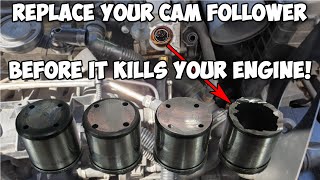
- Worn HPFP Cam Follower (Less Common) — On VW/Audi and select direct-injection engines, a camshaft lobe drives the HPFP via a small follower. This part wears down, reducing the pump's stroke and its ability to build pressure.
- Faulty Fuel Pressure Sensor (Common) — This sensor reports fuel system pressure to the ECU. Incorrect, erratic, or delayed signals force the ECU to set a P3259 code even if mechanical fuel pressure is normal.
- Dirty or Leaking Fuel Injectors (Common) — Carbon-clogged injectors fail to deliver the correct fuel volume, disrupting the air/fuel mixture. Leaking injectors cause immediate pressure drops in the fuel rail.
- Weak Battery or Charging System Issue (Less Common) — Low voltage during engine cranking causes the ECU to glitch and set erroneous codes. Verify battery health before assuming a mechanical fuel system fault.
- Damaged Wiring or Connectors (Rare) — Frayed wires or corroded connectors in the fuel pump or sensor circuits cause signal loss. Corrosion on the fuel pressure sensor connector is the most frequent electrical culprit.
- ECU Software Glitch (Rare) — Software anomalies within the ECU occasionally trigger false codes. A manufacturer-issued software update fixes overly sensitive trigger parameters.
Symptoms
- Lack of Power / Poor Acceleration — The car feels sluggish, hesitates, or bogs down during acceleration because the engine lacks the fuel to match incoming airflow.
- Difficulty Starting (Long Crank) — The engine takes 5 to 10 seconds to start, or fails to start entirely, because the fuel system cannot build initial injection pressure.
- Engine Stalling or Cutting Out — The engine stalls at idle, when coming to a stop, or during initial acceleration due to inconsistent fuel flow.
- Check Engine Light On — The dashboard check engine light illuminates steadily or flashes under heavy acceleration to indicate an active misfire.
- Increased Fuel Consumption — The ECU compensates for inconsistent fuel delivery by increasing injector on-time, drastically reducing fuel efficiency.
- Smell of Gasoline — You notice a raw fuel smell if an injector is stuck open or there is a leak in the high or low-pressure fuel lines.
- Rough Idle or Misfiring (also visible on scanner) — The engine idles unevenly and shakes as it struggles to maintain a stable air-fuel mixture.
Diagnostic Flowchart
Tap your situation to follow the diagnostic path that matches what you're seeing on this code.
Common Fixes & Costs
- Replace High-Pressure Fuel Pump (HPFP)
— Parts: $500-$1,200, Labor: $300-$600, ~4 hr book time
(Professional)
BMW (N54/N55 Engine): OEM
Peugeot/Citroën/MINI (1.6 THP): OEM - Replace Fuel Filter
— Parts: $20-$80, Labor: $50-$150, ~1.5 hr book time
(DIY)
Peugeot/Citroën (General): OEM - Replace Low-Pressure Fuel Pump
— Parts: $200-$500, Labor: $200-$450, ~3 hr book time
(Intermediate)
BMW (N54/N55): OEM
Peugeot/Citroën (General): OEM - Replace HPFP Cam Follower (VW/Audi)
— Parts: $30-$60, Labor: $100-$200, ~1.5 hr book time
(Intermediate)
VW/Audi 2.0T TSI/TFSI: OEM - Replace Fuel Pressure Sensor
— Parts: $50-$250, Labor: $75-$150, ~1.5 hr book time
(Intermediate)
MINI (N14/N18 Engine): OEM
Peugeot/Citroën (1.6 THP): OEM - Clean or Replace Fuel Injectors — Parts: $30-$500, Labor: $150-$700, ~0.1 hr book time (DIY)
Used vs. New Parts: Buying Guide
When a used part is worth it: For a high-pressure fuel pump (HPFP), buying used is generally not recommended due to its high failure rate and critical role. A used HPFP makes sense only as a last resort on a high-mileage, low-value vehicle where the cost of a new pump is prohibitive. A remanufactured unit from a reputable supplier is a better budget-conscious alternative to used.
Donor-vehicle mileage cap: roughly under 50000 miles for the part to have meaningful remaining life.
Donor quality checklist:
- Verify the exact part number, as many revisions exist; a superseded number is often required.
- Obtain the VIN of the donor car to check its history for accidents or related fuel system issues.
- Avoid pumps from vehicles that sat for long periods, as internal seals dry out.
Decision logic:
- If Part is a known high-failure item like an HPFP → Strongly favor new OEM or a high-quality remanufactured unit.
- If Vehicle is over 150K miles and repair budget is extremely tight → A low-mileage used part is a gamble, but serves as a temporary solution.
- If The cost of a new part is less than 2x the cost of a used one → Buy new for the significantly longer lifespan and warranty.
Warranty tradeoff: Used parts typically offer a 30-90 day warranty, which often only covers the part itself, not the labor to replace it if it fails. New aftermarket parts usually come with a 1-year to limited lifetime warranty. New OEM parts carry a 1-2 year warranty.
Worst-case if a used part fails: $600-$1500 if a used HPFP fails shortly after installation, requiring repeat labor costs plus the price of another pump.
What Happens If You Wait — Timeline
- 0-1 month: Check Engine Light appears. Intermittent hesitation during hard acceleration or hill climbing. No other major symptoms. (MPG impact: 0-5%% · Added cost: $0-50 in wasted fuel)
- 1-3 months: Hesitation becomes more frequent. Engine develops a rough idle or takes longer to start ('long crank'). Fuel economy noticeably drops. Lean codes (P0171) appear. (MPG impact: 5-15%% · Added cost: $50-200 in wasted fuel)
- 3-6 months: Engine begins stalling at idle or when coming to a stop. Misfire codes (P0300) trigger a flashing check engine light. The persistent lean condition starts to overheat the catalytic converter's internal substrate. (MPG impact: 15-25%% · Added cost: $1,200-$2,800 (risk of catalytic converter damage))
- 6+ months: Catastrophic failure becomes imminent. The HPFP seizes, potentially damaging the camshaft or timing components. The catalytic converter becomes completely clogged or melted, causing severe power loss. The vehicle fails to start entirely. (MPG impact: 25%+% · Added cost: $3,000-$7,000+ (HPFP seizure leading to engine damage plus catalytic converter replacement))
Cost of Not Fixing It
- 0-1 month: Significant drop in fuel economy (10-25%), poor performance, and risk of stalling in traffic. (Added cost: $50-$150 in wasted fuel)
- 1-6 months: A persistent lean condition overheats and damages the catalytic converter, leading to failure. This is a very expensive secondary repair. (Added cost: $1200-$2800)
- 6+ months: Continued strain causes the high-pressure fuel pump (HPFP) to fail completely or seize. A seized pump causes catastrophic damage to the camshaft or timing components. (Added cost: $3000-$7000+)
Diagnosis Steps
- Read Codes & Live Data
Use a scan tool to confirm P3259 and check for companions like P0087, P0171, or P0300. Monitor live data for 'Actual Fuel Rail Pressure' versus 'Desired Fuel Rail Pressure'. At idle, actual pressure must match desired (e.g., 725 PSI on a BMW N54). If actual pressure drops significantly during acceleration, the HPFP or fuel supply is failing.
Tools: Advanced OBD-II Scanner (Advanced) - Test Low-Pressure Fuel Pressure
Verify the in-tank pump supplies the HPFP properly. Connect a gauge to the low-pressure line. Pressure must hold steady around 72 PSI (5 Bar). Low pressure indicates a failing in-tank pump or clogged filter.
Tools: Fuel Pressure Gauge Kit (Advanced) - Check the Fuel Filter and Low-Pressure System
If the fuel filter has over 30,000 miles, replace it. Listen for the in-tank pump to hum for 3 seconds when turning the key to 'On'. If silent, test the fuel pump fuse and relay.
Tools: Wrenches, Pliers (Intermediate) - Test the Fuel Rail Pressure Sensor
Back-probe the sensor's signal wire with the key on, engine off. Voltage should read ~0.5V, rise to ~1.3V at idle, and spike toward 3.8V+ during snap acceleration. A stuck voltage or infinite resistance indicates a dead sensor.
Tools: Multimeter, T-pins (Advanced) - Inspect the Fuel System Visually
Check for cracked high-pressure lines, fuel leaks, and loose connectors. Inspect the fuel pressure sensor connector for moisture or green corrosion.
Tools: Flashlight (Beginner) - Perform a Battery Check
Test battery voltage with the car off (12.4-12.6V) and running (13.7-14.7V). Low voltage causes spurious electronic fault codes.
Tools: Multimeter (Beginner) - Inspect Fuel Injectors
Listen to each injector while the engine runs. A consistent, rapid clicking is normal. A silent injector indicates an electrical fault, while irregular clicking suggests clogging.
Tools: Mechanic's Stethoscope (Advanced)
When This Code Triggers (Freeze-Frame Conditions)
- Engine Coolant Temp: 185-210°F (85-99°C) (Fully warmed up)
- RPM: 1500-3000 (Acceleration or steady cruise)
- Engine Load: 40-70% (Under moderate to heavy load, such as climbing a hill or accelerating onto a highway.)
- Vehicle Speed: 45-65 mph (Highway driving under load.)
Related Codes
- P0087 — 'Fuel Rail/System Pressure - Too Low'. This is the generic SAE equivalent of P3259. If you see both, it is a confirmed low-pressure condition requiring identical diagnostic steps.
- P0171 — 'System Too Lean (Bank 1)' is a direct consequence, not a separate problem. The P3259 code indicates a lack of fuel, causing the engine to run with too much air. Do not replace oxygen sensors if you see these codes together.
- P2191 — 'System Too Lean at Higher Load (Bank 1)' indicates the fuel system keeps up at idle but fails to deliver enough fuel under heavy load. This points strongly to a flow issue like a clogged filter or weak pump.
- P0300 — 'Random/Multiple Cylinder Misfire Detected' is a symptom of P3259. When fuel pressure is low, multiple cylinders are starved of fuel, causing them to misfire. Fix the fuel delivery problem to resolve the misfires.
Climate & Environmental Factors
- Cold Weather: Direct-injection engines struggle in cold weather. Lower temperatures increase fuel viscosity and reduce battery performance, making it harder for the fuel pumps to build required pressure for a cold start.
- Humidity: High humidity accelerates corrosion on electrical connectors, particularly for exposed sensors like the fuel pressure sensor. Moisture intrusion causes short circuits or high resistance.
- Fuel Quality and Composition: High ethanol content (E10+) in gasoline is corrosive to certain fuel system components and absorbs water, leading to premature wear on pumps and injectors. 'Winter blend' fuels affect atomization and contribute to cold-start issues.
How to Talk to a Mechanic About This Code
Say this: "I have a P3259 fault code, and I'm experiencing symptoms of fuel starvation like hesitation and long cranks. I'd like to book a diagnostic appointment. Can you please check the live data for desired versus actual fuel rail pressure on both the low and high-pressure sides to start?"
This signals you have done your research and guides the technician toward the most important diagnostic step. It prevents them from starting with symptom-based guesswork (like replacing spark plugs for a misfire) and focuses them on the data needed to isolate the fault between the low-pressure pump, high-pressure pump, or a sensor.
Avoid saying:
- 'My check engine light is on, can you look at it?'
- 'My car is running rough, just fix whatever is wrong.'
- 'I think it's the fuel pump, can you give me a price to replace it?'
Questions to ask before authorizing the repair:
- What were the low-pressure and high-pressure fuel readings at idle and under load?
- Did the actual pressure fail to meet the desired pressure? If so, by how much?
- Have you ruled out the fuel filter and the fuel pressure sensor before recommending a pump replacement?
- Is the recommended part a new OEM, remanufactured, or aftermarket part, and what is the warranty on both the part and the labor?
Where to Take It: Dealer vs Independent vs Chain
- Dealer:
Recommended only if the vehicle is under warranty or if a trusted independent specialist is not available. Their expertise is high, but so is the cost.
Best for: Vehicles still under the original powertrain or an extended warranty., Complex, model-specific issues where manufacturer-only software or tools are required., When a recall or service bulletin directly addresses the P3259 code.
Downsides: Significantly higher labor rates (often 1.5-2x an independent shop)., May recommend replacing an entire assembly (like the full fuel pump module) when only a smaller component has failed. (Typical cost: +50% vs. baseline) - Independent Shop:
Best fit. An independent shop specializing in European cars is the ideal choice. They have the necessary diagnostic tools and experience with common P3259 failures (like HPFPs) without the dealership price tag.
Best for: Out-of-warranty European vehicles, as many specialize in brands like BMW, VW, and Peugeot., Cost-effective diagnosis and repair, often with more flexible part options (OEM vs. high-quality aftermarket)., Building a long-term relationship with a mechanic who knows your vehicle's history.
Downsides: Quality and expertise vary widely; it is crucial to find a shop with ASE certification and positive reviews for your specific car brand. (Typical cost: +0% vs. baseline) - Chain Shop:
AVOID. This code requires specialized knowledge of direct-injection fuel systems common on European cars. Chain shops are ill-equipped for this level of diagnosis and are likely to either misdiagnose the problem or replace unnecessary parts.
Best for: Simple, routine maintenance like oil changes or tire rotations.
Downsides: Technicians often lack the specialized training for complex European fuel systems., High pressure to upsell services leads to misdiagnosis (e.g., selling a fuel system cleaning when a pump is failing)., May not have the advanced diagnostic tools required to read manufacturer-specific live data for P3259. (Typical cost: -10% vs. baseline)
When to Walk Away From the Repair
If the estimated repair cost exceeds 50% of the car's current private-party value, you should seriously consider selling or trading it in rather than repairing it.
- Car worth $4000, fix is $2200: Walk away. The repair cost is over 50% of the car's value. It is not a sound financial decision.
- Car worth $12000, fix is $1800: Fix it. The repair is well below the 50% threshold and restores the vehicle's function and value.
- Car worth $3000, fix is $1800: Walk away. With the repair cost at 60% of the vehicle's value, you risk further issues and will never recoup the repair cost.
What Scan Tool You Need for This Code
Minimum: An OBD-II scanner that can read and graph live data, specifically the Parameter IDs (PIDs) for 'Actual Fuel Rail Pressure' and 'Desired Fuel Rail Pressure'.
A basic $20 code reader only shows you the P3259 code. It cannot display the live fuel pressure data, which is essential for diagnosing whether the problem is the low-pressure pump, high-pressure pump, or a sensor. Without this data, you are just guessing.
Budget: BlueDriver Pro (~$99.95) — Connects to your smartphone via Bluetooth. It reads and clears the code, views freeze frame data, and graphs live data streams for fuel pressure, allowing you to compare actual vs. desired values.
Mid-range: Foxwell NT510 Elite (~$180) — A powerful handheld tool that offers brand-specific software (e.g., for BMW, VW). It provides deep, dealer-level diagnostics, including reading manufacturer-specific PIDs for fuel pressure with high accuracy. It also offers bi-directional control to perform active tests, like commanding the fuel pump to run.
Professional: Autel MaxiCOM MK808 / MK808BT (~$450-550) — A professional-grade tablet scanner that provides comprehensive, all-system diagnostics. It features robust live data graphing, advanced bi-directional controls to activate the fuel pump and injectors directly, and access to OE-level functions for European vehicles.
Rent vs buy: For a one-time diagnosis, some auto parts stores rent scanners, but they are often basic models. For P3259, buying a capable scanner like the BlueDriver is a better investment, as proper diagnosis requires multiple tests and road-testing while monitoring live data.
How to Clear the Code After You Fix It
- Use an OBD-II scan tool to clear the P3259 and any related codes.
- Ensure the fuel tank is between 35% and 85% full for the EVAP monitor to run.
- Perform a complete drive cycle to allow all readiness monitors to run.
Drive cycle (~20 minutes): A general drive cycle includes a cold start (engine off for 8+ hours), a few minutes of idling, followed by mixed city (stop-and-go) and highway (steady speed) driving. A typical sequence is: Cold start, idle 2-3 minutes. Drive at a steady speed (e.g., 55 mph) for 5-10 minutes. Let the vehicle coast (decelerate without braking) for at least 20 seconds. Perform several acceleration and deceleration maneuvers.
Readiness monitors affected: Fuel System Monitor, Catalyst (CAT) Monitor, O2 Sensor Monitor, Evaporative (EVAP) System
Before emissions retest: drive at least 50 miles to fully set monitors.
Watch out for:
- Simply clearing the code with a scanner without performing a drive cycle leaves readiness monitors 'Not Ready', causing an emissions test failure.
- Disconnecting the battery clears codes but also resets all monitors and adaptive learning, requiring a longer drive period (50-100 miles) to get the system ready.
- The code returns immediately if the underlying mechanical or electrical fault has not been properly repaired.
Will This Fail Emissions / State Inspection?
Yes — this code typically fails an OBD-II emissions inspection.
- California: An illuminated Check Engine Light results in an automatic smog check failure. After repairs, a full drive cycle must be completed to set all readiness monitors before a retest is possible.
- New York: An illuminated Malfunction Indicator Lamp (MIL) is an automatic failure of the OBD-II emissions inspection. For 2001+ vehicles, only one readiness monitor is allowed to be 'Not Ready' to pass.
- Texas: In counties requiring emissions testing (like Harris, Dallas, Tarrant), an active Check Engine Light is an automatic failure. After clearing codes, you must drive 50-100 miles to reset readiness monitors before re-inspection.
Most Commonly Affected Vehicles
- Peugeot 208, 308, 3008 (with 1.6 THP & 1.2 PureTech engines) (2012-2019) — This code is frequently reported on these models. On 1.6 THP engines, it is almost always the HPFP.
- Citroën C3, C4, DS3, DS4 (with THP engines) (2010-2018) — Commonly affected by P3259, traced back to the high-pressure fuel pump or a clogged filter. Shares the problematic THP engine with Peugeot and MINI.
- BMW 135i, 335i, 535i, X5, X6 (with N54/N55 engines) (2007-2016) — On these models, the code points directly to a failure of the High-Pressure Fuel Pump (HPFP), a well-documented issue.
- MINI Cooper S, JCW (R55, R56, R57 with N14/N18 engines) (2007-2014) — Shares engine architecture with Peugeot/Citroën. HPFP failure is a very common cause for fuel pressure codes, with failures seen as early as 40,000 miles.
- Volkswagen GTI, Jetta, Passat, Tiguan (with TSI/TFSI engines) (2009-2017) — A worn HPFP cam follower is a very common and relatively inexpensive failure point that must be checked before replacing the entire pump.
- Audi A3, A4, Q5 (with TFSI engines) (2009-2017) — Similar to VW, these direct-injection engines suffer from HPFP or cam follower wear. Carbon buildup on intake valves also causes misfires confused with fuel delivery problems.
- Renault Clio IV, Captur, Kadjar (2013-2020) — These models are susceptible to this manufacturer-specific fuel system code, related to their direct-injection petrol engines (TCe).
- Ford (European models) Fiesta, Focus (with EcoBoost engines) (2012-2018) — European versions of these popular Ford models display this code for fuel system faults, typically related to the direct-injection (GDI) system's HPFP or sensors.
Manufacturer-Specific Notes
- Peugeot/Citroën/MINI (THP/N14 Engines): The high-pressure fuel pump (HPFP) is a notoriously common failure point on these engines and a primary cause for P3259.
- BMW (N54/N55 Engines): HPFP failure is so common that BMW issued Service Information Bulletin SI B13 03 12, which led to an extended warranty on the pump for many vehicles to 10 years or 120,000 miles. Associated codes often include 29DC, 29E2, and 2FBF.
- Volkswagen/Audi (TSI/TFSI Engines): A worn cam follower for the HPFP is a frequent cause of the generic equivalent code, P0087. It is a relatively inexpensive part ($30-$60) that requires inspection every 30,000 miles to prevent failure that damages the HPFP or camshaft.
- General: On many direct injection vehicles, a failing PCV (Positive Crankcase Ventilation) valve creates excessive vacuum in the crankcase, leading to rough running that is sometimes misdiagnosed as a fuel system issue.
Real Owner Stories
2013 Peugeot 208 1.6 THP at 75,000 miles
Check Engine Light came on with P3259 and P0087. Car had noticeable hesitation under acceleration and a rough, stumbling idle.
What they tried:
- Initially suspected a clogged fuel filter, but replacement made no difference.
- A mechanic checked live data and saw 'Actual' fuel rail pressure dropping significantly below 'Desired' pressure during acceleration.
- The low-pressure pump was tested and confirmed to be supplying a stable 5 Bar.
Outcome: Diagnosed as a failing High-Pressure Fuel Pump (HPFP). Replaced the HPFP with a new OEM unit (part #9819938480). Total cost was approximately $1,200 ($750 for the part, $450 for labor). The codes were cleared and did not return, and all symptoms were resolved.
Lesson: Don't just guess. Use a scan tool to watch desired vs. actual fuel rail pressure. This is the key test to condemn the HPFP and avoid wasting money on other parts.
2011 VW GTI 2.0T at 95,000 miles
Car suddenly went into limp mode with a flashing check engine light and P0087 (the generic equivalent of P3259). The engine was severely down on power.
What they tried:
- The owner, active on forums, immediately suspected the HPFP cam follower.
- Removed the HPFP to inspect the follower.
- Found the cam follower had a hole worn completely through it, and the tip of the HPFP's plunger was scored.
Outcome: The owner replaced both the HPFP cam follower (OEM part #06L109311) for $45 and, due to the visible damage, the HPFP itself. They opted for an OEM pump for around $400. The repair resolved the issue.
Lesson: On VW/Audi 2.0T engines, always inspect the inexpensive cam follower before replacing the expensive HPFP. It is a known wear item and often the true root cause of low-pressure codes.
2010 BMW 335i (N54) at 110,000 miles
Owner experienced long crank times (engine turning over for 5-10 seconds before starting) and occasional stalling at idle, accompanied by P3259 and lean codes (P0171/P0174).
What they tried:
- Replaced spark plugs and ignition coils, with no improvement.
- Replaced the fuel pressure sensor on the high-pressure rail, which did not fix the problem.
- A smoke test was performed to check for vacuum leaks, but none were found.
Outcome: The issue was ultimately a classic N54 High-Pressure Fuel Pump failure. The owner found their vehicle was covered under BMW's extended warranty (10 years/120,000 miles) for the HPFP and had the part replaced at a dealership at no cost. All symptoms disappeared after the new pump was installed.
Lesson: For notorious high-failure parts like the N54 HPFP, always check for recalls or extended warranty campaigns from the manufacturer, even if the vehicle is older. A long crank is a classic symptom of a failing HPFP on this platform.
2012 MINI Cooper S (N18) at 80,000 miles
Car threw P3259 and felt very sluggish, especially on hills. The owner was also getting random misfire codes (P0300).
What they tried:
- A shop misdiagnosed the issue as a vacuum leak and charged $300 for diagnostics and replacing a hose, but the problem persisted.
- The owner took it to a specialist who immediately suspected the fuel system.
- Live data showed low-pressure was stable, but high-pressure was erratic and could not meet demand.
Outcome: The specialist diagnosed a failed HPFP. The owner, facing a $1,000+ repair bill, sourced a remanufactured HPFP online for about $300 and paid the specialist for labor only. The repair was successful, and the car's performance was restored.
Lesson: Misdiagnosis is common. A lean code (P0171) or misfire code (P0300) with P3259 points to a fuel delivery problem, not a vacuum leak or ignition issue. Going to a specialist familiar with the platform saves time and money.
How to Prevent This Code From Triggering
- Use High-Quality, Top-Tier Gasoline (Every fill-up) — Top-tier fuels contain higher concentrations of detergents that help prevent and clean carbon deposits from fuel injectors. Clogged injectors disrupt spray patterns and lead to pressure fluctuations.
- Replace the Fuel Filter at Regular Intervals (Every 30,000 miles or as per manufacturer recommendation) — A clean filter ensures unrestricted fuel flow to both the low and high-pressure pumps. A clogged filter is a common, inexpensive, and preventable cause of low fuel pressure codes.
- Periodically Use a GDI-Specific Fuel System Cleaner (Every 5,000-10,000 miles) — Cleaners formulated for direct injection (GDI) dissolve carbon deposits on injector tips and within the high-pressure pump, maintaining efficiency and preventing sticking.
- Inspect/Replace HPFP Cam Follower (VW/Audi 2.0T) (Inspect every 20,000-30,000 miles) — This sacrificial part is designed to wear out. Preventative replacement for under $50 avoids a catastrophic failure that destroys the multi-hundred-dollar HPFP and potentially the camshaft.
- Perform Regular Oil Changes with Specified Oil (Every 5,000-7,500 miles) — Clean, correct-spec oil is critical for lubricating moving parts, including the camshaft lobe that drives the HPFP. On VW/Audi engines, this protects the cam follower. On all GDI engines, it reduces oil vapor that contributes to intake valve deposits.
- Avoid Running the Fuel Tank to Empty (Daily habit) — The fuel in the tank cools the low-pressure fuel pump. Consistently running on low fuel causes the pump to overheat, shortening its life and reducing its ability to supply the HPFP.
Frequently Asked Questions
What are common misdiagnosis mistakes for P3259?
The most common mistake is replacing oxygen sensors or spark plugs based on symptom codes like P0171 or P0300. Another pitfall is replacing the expensive High-Pressure Fuel Pump (HPFP) without verifying the low-pressure pump and filter are supplying adequate fuel. Always diagnose the root fuel pressure issue first.
Can a bad battery cause a P3259 code?
Yes. A weak battery causes voltage drops during engine startup, leading to glitches in sensitive electronic modules like the ECU. This triggers incorrect and random fault codes. Always test the battery and charging system before beginning expensive fuel system diagnostics.
What is the difference between code P3259 and P0087?
P0087 is the generic OBD-II code for low fuel rail pressure, while P3259 is a manufacturer-specific code used by brands like Peugeot and BMW for the exact same fault. They point to the identical mechanical problem and follow the exact same diagnostic path.
My car has a high-pressure fuel pump (HPFP). Does that change the diagnosis?
Yes, it requires testing both the low-pressure in-tank system and the engine-mounted high-pressure system. You must use a scan tool to compare live 'desired' versus 'actual' fuel rail pressure. Confirm the low-pressure pump delivers sufficient fuel before condemning the HPFP.
Can I fix a P3259 code myself?
Replacing a fuel filter or HPFP cam follower is DIY-friendly for those with basic tools. However, replacing a high-pressure fuel pump involves working with extremely high-pressure fuel lines (up to 2,000+ PSI) and requires strict safety procedures. Stop DIY and go to a shop if you lack the tools to safely depressurize the fuel system.
Will a fuel additive or injector cleaner clear this code?
A high-quality fuel system cleaner resolves the issue only if mildly dirty fuel injectors caused the code. If a failing pump, worn cam follower, or severely clogged filter triggered the fault, additives have no effect and the code returns immediately.
How much does it cost to diagnose a P3259 code?
Repair shops charge a diagnostic fee ranging from $120 to $180. This covers reading codes, reviewing live data, and performing initial visual inspections. Manual fuel pressure tests or oscilloscope analysis incur additional labor costs.
Why is this code so common on European cars?
Manufacturers like Peugeot, Citroën, and BMW use specific fuel system strategies for their early-generation direct-injection engines. These systems run at extreme pressures and use proprietary monitoring parameters, prompting the creation of specific codes like P3259. North American and Asian manufacturers use different codes for similar issues.
Key Takeaways
- P3259 is a manufacturer-specific code on European vehicles (Peugeot, BMW, MINI) indicating a severe drop in fuel pressure.
- Do not replace oxygen sensors or spark plugs first; fix the root fuel starvation issue to clear companion codes like P0171 (Lean) and P0300 (Misfire).
- Diagnose the system by comparing 'desired' versus 'actual' fuel rail pressure using a live-data OBD-II scanner before buying parts.
- Inspect the $45 HPFP cam follower on VW/Audi engines or the $50 fuel filter on all models before replacing the $1,000+ high-pressure fuel pump.
Helpful Videos
Shop the Parts Behind P3259
Below are the parts most often responsible for code P3259, ranked by how frequently each one is the actual culprit (per the diagnosis above). Tap any to see what we have for your vehicle.



The information in this article is provided for general reference and educational purposes only. Vehicle specifications, procedures, and part compatibility can vary by production date, trim level, and region. Always consult your vehicle's factory service manual and verify part numbers before purchasing or performing repairs. Safety-critical components such as airbags, seat belts, and braking systems should be installed by a qualified professional.
- 🧭 Diagnostic Flowchart
- 🎬 Helpful Videos
- 🛍️ Shop This Part
- What Does P3259 Mean?
- Can I Drive With P3259?
- Common Causes
- Symptoms
- Common Fixes & Costs
- Used vs. New Parts: Buying Guide
- What Happens If You Wait — Timeline
- Cost of Not Fixing It
- Diagnosis Steps
- When This Code Triggers (Freeze-Frame Conditions)
- Related Codes
- Climate & Environmental Factors
- How to Talk to a Mechanic About This Code
- Where to Take It: Dealer vs Independent vs Chain
- When to Walk Away From the Repair
- What Scan Tool You Need for This Code
- How to Clear the Code After You Fix It
- Will This Fail Emissions / State Inspection?
- Most Commonly Affected Vehicles
- Manufacturer-Specific Notes
- Real Owner Stories
- 2013 Peugeot 208 1.6 THP at 75,000 miles
- 2011 VW GTI 2.0T at 95,000 miles
- 2010 BMW 335i (N54) at 110,000 miles
- 2012 MINI Cooper S (N18) at 80,000 miles
- How to Prevent This Code From Triggering
- Frequently Asked Questions
- What are common misdiagnosis mistakes for P3259?
- Can a bad battery cause a P3259 code?
- What is the difference between code P3259 and P0087?
- My car has a high-pressure fuel pump (HPFP). Does that change the diagnosis?
- Can I fix a P3259 code myself?
- Will a fuel additive or injector cleaner clear this code?
- How much does it cost to diagnose a P3259 code?
- Why is this code so common on European cars?
- Key Takeaways
- 🎟️ Get 5% Off