

OBD-II Code P3260: Drive Motor Inverter Over-Temperature
What P3260 means, why it triggers, and how to fix it
- Code P3260 indicates a critical hybrid power inverter overheat or internal fault, requiring immediate vehicle shutdown to prevent catastrophic damage.
- On 2005-2008 Ford and Mercury hybrids, a failed MECS coolant pump is the primary cause, costing $300-$500 to replace.
- For 2016-2018 Chevrolet and Buick hybrids, this code is a known software bug fixed by a 0.4-hour dealer update under TSB #18-NA-016.
- Never ignore a 'Stop Safely Now' warning; driving with an overheating inverter risks a $4,500 replacement of the entire Power Inverter Module.
What Does P3260 Mean?
P3260 indicates the powertrain control module (PCM) detects the power inverter for the electric drive motor is overheating or has an internal performance fault. The inverter converts high-voltage DC power from the battery into three-phase AC power for the motors. If it overheats, the vehicle initiates protective measures, shutting down the hybrid system to prevent expensive damage to the inverter or battery pack.
Technical definition: The official definition for P3260 is manufacturer-specific. For Ford hybrids, it is 'Drive Motor A Inverter Over-Temperature'. For General Motors vehicles, it indicates a 'Drive Motor Control Module 2 Performance' issue, typically a software glitch within the Power Inverter Module (PIM). For Volkswagen and Audi vehicles, it means 'Bank 1/2: O2 sensors before catalytic converter are mixed up', completely unrelated to the hybrid system.
Can I Drive With P3260?
No — Do Not Drive. Do not drive the vehicle. This code indicates a critical overheating issue or a severe internal module fault. The vehicle enters a reduced power mode or shuts down completely and unexpectedly, posing a major safety risk in traffic. Continuing to drive risks catastrophic failure of the inverter assembly, a repair costing over $4,500. Immediate loss of power occurs at low speeds (<3 mph) in GM vehicles and as a complete shutdown after a 'Stop Safely Now' warning in Ford vehicles.
Common Causes
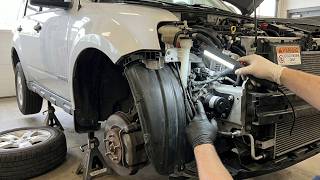
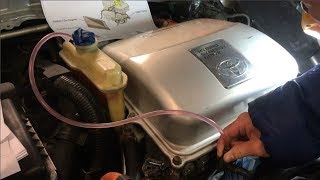
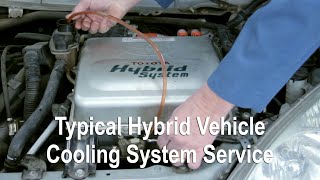
- Failing Inverter Coolant Pump (Very Common) — Hybrid vehicles use a dedicated cooling system for power electronics. 🎬 Watch this overview of typical hybrid vehicle cooling system service. The small electric pump circulating this coolant (the MECS pump on Fords 🎬 Watch: How to replace the Ford Escape hybrid coolant pump.) is a high-failure item. When it fails, coolant stops flowing, rapidly overheating the inverter and triggering the code.
- Outdated Power Inverter Module (PIM) Software (Common) — On 2016-2018 Chevy Volt and Malibu Hybrids, a software glitch incorrectly flags a performance issue. GM TSB #18-NA-016 resolves this with a software update, requiring no physical part replacement.
- Low Coolant Level or Trapped Air (Common) — A leak in the inverter cooling system drops the fluid level, or trapped air from a recent service acts as an insulator. Both prevent proper coolant circulation, creating hot spots that overheat the inverter.
- Faulty Inverter Temperature Sensor (Less Common) — The thermistor reporting the inverter's temperature to the computer fails, sending an incorrect high-temperature reading even when cool. A scan tool shows an illogical temperature, such as 205°C (401°F) for an open circuit, pointing directly to a sensor fault.
- Damaged Wiring Harness or Connectors (Less Common) — Wiring for the temperature sensor or coolant pump suffers damage from road debris, corrosion, or rodents. A single broken wire or corroded pin prevents the component from operating, triggering the code.
- Poor Ground Connections (Rare) — The Power Inverter Module requires clean, tight ground connections to the chassis. A corroded ground strap causes erratic voltage readings, leading the module to misinterpret its own temperature.
- Internal Inverter Hardware Failure (Rare) — If software updates and cooling system repairs fail to resolve the issue, the Power Inverter Module has an internal hardware failure. This requires a complete module replacement.
Symptoms
- "Stop Safely Now" or "Check Hybrid System" Message — The driver information center displays a critical warning requiring the driver to pull over immediately, preceding a complete vehicle shutdown.
- Sudden Loss of Power and Vehicle Shutdown — The vehicle enters a reduced-power "limp mode" or shuts off entirely while driving to protect the hybrid components from catastrophic heat damage.
- Check Engine Light or Wrench Light is On — The primary indicator that the vehicle's computer detects a hybrid system fault.
- Engine Fan Runs Loudly or Constantly — The main cooling fans run at maximum speed as the vehicle attempts to cool the overheating power electronics.
- Vehicle Fails to Start — After an overheating event, the vehicle refuses to restart until the system cools down or the fault clears.
Diagnostic Flowchart
Tap your situation to follow the diagnostic path that matches what you're seeing on this code.
Common Fixes & Costs
- Reprogram Power Inverter Module (GM Vehicles) — Parts: $0, Labor: $150-$250, ~0.4 hr book time (Professional)
- Replace Inverter Coolant Pump (MECS Pump) — Parts: $150-$300, Labor: $150-$250, ~1.5 hr book time (Intermediate)
- Inverter Cooling System Service (Fill and Bleed) — Parts: $30-$60, Labor: $100-$200, ~1.2 hr book time (Intermediate)
- Repair Damaged Wiring or Connectors — Parts: $5-$50, Labor: $100-$500, ~2.5 hr book time (Intermediate)
- Replace Power Inverter Assembly — Parts: $1000-$3500, Labor: $500-$1000, ~4.5 hr book time (Professional)
Used vs. New Parts: Buying Guide
When a used part is worth it: Never buy a used inverter coolant pump; their remaining lifespan is unknown and failure rates are high. Used parts only make sense for replacing the entire Power Inverter Module as a last resort.
Donor-vehicle mileage cap: roughly under 40000 miles for the part to have meaningful remaining life.
Donor quality checklist:
- Source modules only from low-mileage, rear-end collision donor vehicles.
- Ensure exact part number matching.
Decision logic:
- If The required part is an Inverter Coolant Pump. → Buy a new OEM or Aisin part. Do not use cheap aftermarket brands.
- If The required part is the Power Inverter Module. → Purchase a used module from a guaranteed low-mileage donor to save thousands.
- If The vehicle is a 2016-2018 GM hybrid. → Do not buy parts. Request the TSB software update.
Warranty tradeoff: Used modules carry 30-90 day warranties. New OEM pumps carry 1-2 year warranties.
Worst-case if a used part fails: $500 if a cheap aftermarket pump fails prematurely, requiring repeat labor and towing.
What Happens If You Wait — Timeline
- 0-1 week: Intermittent fault. Warning lights appear during high-load driving but clear after cooling down. The pump is beginning to fail. (MPG impact: 0-2%% · Added cost: $0-$50)
- 1 week - 1 month: Consistent fault. The vehicle enters 'limp mode' frequently. The pump has failed completely. (MPG impact: 5-10%% · Added cost: $200-$500)
- 1-3 months: Cumulative thermal stress degrades solder joints and electronics inside the Power Inverter Module. (MPG impact: 10-15%% · Added cost: $1500-$4500)
- 3+ months: Catastrophic inverter short circuit. Complete loss of propulsion, potentially damaging the high-voltage battery. (MPG impact: 100%% · Added cost: $4000-$8000)
Cost of Not Fixing It
- Immediate: Vehicle enters 'limp mode' or shuts down completely while driving, creating a severe safety hazard. (Added cost: $200-$500 (Towing and diagnostics))
- 1-3 Months: Repeated thermal stress permanently damages sensitive electronics inside the Power Inverter Module. (Added cost: $1500-$4500 (Power Inverter Module replacement))
- 3+ Months: Catastrophic inverter failure cascades, destroying the high-voltage battery pack. (Added cost: $4000-$8000 (Inverter and Hybrid Battery Pack replacement))
Diagnosis Steps
- Scan for Manufacturer-Specific TSBs
For GM models, this code is a known software issue. Check if Technical Service Bulletin #18-NA-016 applies to your VIN. Performing this check first saves significant diagnostic time and money.
Tools: OBD-II Scanner, Internet Access (Beginner) - Check for Coolant Flow
With the vehicle ON, look inside the translucent inverter coolant reservoir. You must see a gentle swirling of the coolant, indicating the pump is circulating fluid. If the coolant is completely still, the pump is dead.
Tools: Flashlight (Beginner) - Check Coolant Level and Inspect for Leaks
Verify the inverter coolant level is between the 'MIN' and 'MAX' lines. Visually inspect all hoses, the small front radiator, and the pump housing for pink, blue, or yellow crusty residue indicating a leak.
Tools: Flashlight (Beginner) - Tap Test the Inverter Coolant Pump (Ford/Mercury)
If no coolant flow is observed, locate the MECS pump. With the vehicle ON, firmly tap the pump body with a screwdriver handle. If it suddenly starts running, the internal motor has a dead spot and requires replacement.
Tools: Screwdriver or small mallet (Intermediate) - Perform an Inverter Temperature Sensor Rationality Check
Use an advanced scan tool to view live data for the 'Drive Motor Inverter Temperature'. Before starting a cold vehicle, it must read close to ambient air temperature. Extreme values like -50°C (-58°F) indicate a shorted or open sensor circuit.
Tools: Advanced OBD-II Scan Tool (Intermediate) - Test the Inverter Coolant Pump Circuit
Disconnect the pump's electrical connector and check for 12V power and ground with the ignition on. If power and ground exist but the pump fails to run, the pump is dead. No power indicates a wiring or fuse issue.
Tools: Multimeter (Advanced) - Test Inverter Temperature Sensor Resistance
Disconnect the sensor and measure resistance between its pins. Compare the reading to the manufacturer's chart. A reading near zero ohms indicates a short; infinite resistance indicates a broken sensor or wire.
Tools: Multimeter, Manufacturer's Service Manual (Advanced) - Bleed the Inverter Cooling System
After replacing parts or fixing leaks, use a vacuum-fill tool to purge all air pockets from the system. Follow the manufacturer's specific procedure to cycle the pump and ensure complete bleeding.
Tools: Coolant Vacuum Bleeder, OEM Coolant (Advanced)
When This Code Triggers (Freeze-Frame Conditions)
- Inverter Temperature: 120-140°C (248-284°F) (Exceeds normal operating range, triggering the fault.)
- Engine Load: 40-70% (Occurs under moderate to heavy load, demanding more from the hybrid system and generating excess heat.)
- Ambient Air Temperature: > 85°F (29°C) (Hot weather reduces cooling system efficiency, accelerating the overheat condition.)
Related Codes
- P0A93 — Indicates 'Inverter Cooling System Performance'. P0A93 points directly to a hardware problem (pump, blockage), while P3260 is the resulting overheat. Diagnose cooling hardware first if both are present.
- P0AC4 — A generic code meaning 'Hybrid Powertrain Control Module Requested MIL Illumination'. It is purely informational; P3260 is the root code requiring diagnosis.
- P1A10 — Ford-specific code for 'Battery Disabled'. The system disables the high-voltage battery as a protective measure against the inverter overheating (P3260).
Climate & Environmental Factors
- High Ambient Temperature: Hot weather eliminates thermal headroom. A marginal cooling system (weak pump or dirty radiator) fails faster and triggers the code more frequently in summer months.
- Altitude: Thinner air at high altitudes reduces the inverter radiator's heat dissipation efficiency, increasing the likelihood of overheating under heavy engine loads.
How to Talk to a Mechanic About This Code
Say this: "For 2016-2018 GM: 'I have a P3260 code. Please quote me for the software update covered by TSB 18-NA-016 and verify my Voltec warranty.' For Ford Hybrids: 'I suspect my MECS pump failed. Please check for inverter coolant flow and quote an OEM pump replacement.' For others: 'I have a P3260 inverter over-temp code. Please start by verifying inverter coolant flow and level.'"
Directing the shop to the known TSB or common pump failure prevents them from charging you for hours of unnecessary diagnostic time.
Avoid saying:
- 'My check engine light is on.'
- 'I think the hybrid battery is broken.'
- 'Just fix whatever is making it overheat.'
Questions to ask before authorizing the repair:
- For GM: Can you provide written proof from GM that TSB 18-NA-016 is not covered by my 8-year/100,000-mile warranty?
- For Ford: Does your quote include an OEM Aisin pump and a vacuum-bleed of the cooling system?
- If replacing the inverter: What specific tests ruled out the coolant pump, wiring, and software updates?
Where to Take It: Dealer vs Independent vs Chain
- Dealer:
Mandatory for GM software updates; otherwise, use an independent hybrid specialist.
Best for: GM vehicles needing the TSB #18-NA-016 software update., Vehicles under the 8-year/100,000-mile hybrid warranty.
Downsides: Charges double the labor rate of independent shops for basic hardware replacements like coolant pumps. - Independent Shop:
The most cost-effective choice for diagnosing leaks and replacing coolant pumps.
Best for: Out-of-warranty hardware replacements, specifically the Ford MECS pump.
Downsides: Lacks the proprietary GM software required for the TSB update. - Chain Shop:
Avoid completely. High-voltage systems require specialized training.
Downsides: Technicians lack specialized training for high-voltage hybrid cooling systems., High risk of misdiagnosis and improper bleeding procedures.
When to Walk Away From the Repair
If the repair cost exceeds 50% of the vehicle's private-party value, sell or trade in the vehicle.
- Car worth $4000, fix is $400: Fix it. A $400 MECS pump replacement is a smart investment.
- Car worth $12000, fix is $200: Fix it. A $200 software update is negligible.
- Car worth $5000, fix is $4500: Walk away. Replacing a failed inverter assembly exceeds the vehicle's practical value.
What Scan Tool You Need for This Code
Minimum: A scanner capable of reading hybrid-specific modules and displaying live data for 'Drive Motor Inverter Temperature'.
Basic $20 code readers cannot access hybrid control modules or display live temperature data, making it impossible to verify if the sensor is lying or the inverter is actually overheating.
Budget: BlueDriver Pro (~$100) — Reads hybrid-specific codes and displays live inverter temperature data to perform the critical sensor rationality check.
Mid-range: Foxwell NT510 Elite (~$150) — Provides bidirectional controls to manually command the inverter coolant pump ON, instantly confirming if the pump motor is dead.
Professional: Autel MaxiSys MS906Pro (~$1200) — Required for module programming, though GM software updates still require proprietary dealer subscriptions.
Rent vs buy: Buy the BlueDriver. Free auto parts store scanners cannot read the live hybrid data required to diagnose this code.
How to Clear the Code After You Fix It
- Use an OBD-II scan tool to clear all Diagnostic Trouble Codes (DTCs).
- Verify the inverter coolant level is full and properly bled.
- Perform a complete drive cycle to run readiness monitors.
Drive cycle (~20 minutes): Cold start and idle for 3 minutes. Drive in mixed city/highway conditions for 15-20 minutes. Allow the vehicle to cool down completely.
Readiness monitors affected: Hybrid/EV Battery, Catalyst Monitor
Before emissions retest: drive at least 50 miles to fully set monitors.
Watch out for:
- Clearing the code without fixing the hardware or software issue guarantees the code returns immediately.
- Failing to vacuum-bleed the cooling system leaves air pockets, causing repeat overheating.
Will This Fail Emissions / State Inspection?
Yes — this code typically fails an OBD-II emissions inspection.
- California: An illuminated Check Engine Light is an automatic smog test failure. Readiness monitors must be set before re-testing.
- Texas: Vehicles must be driven 50-100 miles after clearing the code to ensure readiness monitors are set before re-inspection.
Most Commonly Affected Vehicles
- Ford Escape Hybrid (2005-2008) — Widely known for MECS pump failures causing this code. Covered under Ford recall 14S19.
- Mercury Mariner Hybrid (2006-2008) — Shares the Escape powertrain and suffers identical MECS pump failures.
- Chevrolet Malibu Hybrid (2016-2018) — A software glitch in the Power Inverter Module triggers this code. Fixed via GM TSB #18-NA-016.
- Chevrolet Volt (2016-2018) — Requires a dealer-installed software update for the PIM per TSB #18-NA-016.
- Buick LaCrosse (2017-2018) — Affected by the same PIM software issue as the Volt and Malibu.
- Buick Regal (2018-2018) — Included in GM preliminary bulletin PIC6297A for the PIM software anomaly.
- Ford Fusion Hybrid (2010-2012) — Uses an electric inverter cooling pump prone to failure and overheating codes.
- Volkswagen / Audi Various Models (2004-2015) — CRITICAL NOTE: On VAG vehicles, P3260 means 'Bank 1/2: pre-catalyst oxygen sensors swapped'. This is an emissions sensor issue, not a hybrid system fault.
Manufacturer-Specific Notes
- Ford / Mercury: On older hybrids, this code is almost exclusively a failed MECS pump. Ford issued recall 14S19 to replace the original pump with an improved brushless design.
- General Motors: On 2016-2018 hybrids, P3260 is a software problem fixed by TSB #18-NA-016. Replacing the Power Inverter Module before performing this update is a costly misdiagnosis.
- Volkswagen / Audi: P3260 indicates the electrical connectors for the pre-catalyst oxygen sensors are swapped between engine banks. Swap the connectors back to fix the issue.
Real Owner Stories
2008 Ford Escape Hybrid - The Classic MECS Pump Failure
Vehicle displayed a wrench light. The owner heard a loud scratching noise from the MECS pump.
What they tried:
- Declined a dealer quote of $1,030 for diagnostics and pump replacement.
- Took the vehicle to an independent hybrid specialist.
Outcome: The independent shop replaced the MECS pump for $353 total.
Lesson: Independent hybrid shops perform common hardware replacements like the MECS pump for less than half the cost of a dealership.
2017 Chevy Volt - The Software 'Gotcha'
Check Engine Light illuminated with P3260. Dealer diagnosed a needed software update.
What they tried:
- Authorized the dealer repair.
- Dealer charged a $200 diagnostic fee, claiming it was out of warranty.
Outcome: The owner successfully fought the charge through GM Customer Service, proving TSB 18-NA-016 is covered under the Voltec warranty.
Lesson: Know your warranty rights. The GM software fix is covered under the 8-year/100,000-mile Voltec warranty; refuse diagnostic fees for this specific TSB.
Toyota Prius - The Repeat Aftermarket Part Failure
Owner replaced a failed inverter pump with a cheap aftermarket unit. It failed in less than a year.
What they tried:
- Replaced the pump three times in one year with various non-OEM brands.
Outcome: All aftermarket pumps failed rapidly. The owner finally installed an OEM Aisin pump, permanently fixing the issue.
Lesson: Never use cheap aftermarket inverter coolant pumps. The high failure rate guarantees repeat labor costs and breakdowns. Buy OEM.
How to Prevent This Code From Triggering
- Replace the inverter coolant (Every 50,000 miles) — Degraded coolant loses anti-corrosive properties, causing internal blockage in the inverter's delicate cooling passages.
- Check inverter coolant flow visually (Every oil change) — Observing fluid movement in the reservoir confirms the electric pump is operational before it fails completely.
- Clean the inverter radiator fins (Annually) — Removing bugs and debris from the front radiator ensures maximum heat dissipation for the hybrid electronics.
Frequently Asked Questions
Why is my dealer quoting over $1,000 for a software update?
GM TSB 18-NA-016 specifies 0.4 hours of labor for this update. High quotes often include unnecessary diagnostic fees or bundled services. Call multiple dealerships and request the specific price for this exact TSB.
I have a Volkswagen with a P3260 code, is my inverter bad?
No. On VW and Audi vehicles, P3260 means the upstream oxygen sensor connectors for the engine banks are swapped. Reconnect the sensors to their correct harnesses to fix the issue.
What's the difference between the engine water pump and the inverter coolant pump?
The engine water pump cools the gasoline engine. The inverter coolant pump is a separate electric pump dedicated to the lower-temperature hybrid electronics circuit. They are not interchangeable and use different coolant loops.
Can I just add coolant to fix P3260?
Adding coolant is a temporary fix. The system is sealed; low coolant means you have a leak that requires immediate repair to prevent recurring overheating.
Why did my hybrid shut down with a 'Stop Safely Now' message?
The vehicle detected a severe fault, such as an overheating inverter. It shuts down completely to prevent catastrophic, multi-thousand-dollar damage to the electronics. Pull over immediately when you see this warning.
What is a Technical Service Bulletin (TSB)?
A TSB is a manufacturer document providing dealerships with official repair procedures for known common problems. TSB #18-NA-016 is the critical document for fixing P3260 on GM vehicles.
Can a bad 12-volt battery cause this code?
A failing 12V battery causes erratic electrical issues but does not directly trigger P3260. However, a stable 12V supply is mandatory when reprogramming modules to fix this code.
Is this a DIY repair?
Replacing the inverter coolant pump is possible for skilled DIYers. However, reprogramming modules or replacing the inverter assembly requires a professional hybrid technician due to high-voltage risks and specialized software.
Is the P3260 issue on my GM vehicle covered by a warranty?
Yes, the Power Inverter Module and its software updates are typically covered under GM's 8-year/100,000-mile Voltec warranty. Verify your specific VIN coverage with a dealership.
Key Takeaways
- Code P3260 indicates a critical hybrid power inverter overheat or internal fault, requiring immediate vehicle shutdown to prevent catastrophic damage.
- On 2005-2008 Ford and Mercury hybrids, a failed MECS coolant pump is the primary cause, costing $300-$500 to replace.
- For 2016-2018 Chevrolet and Buick hybrids, this code is a known software bug fixed by a 0.4-hour dealer update under TSB #18-NA-016.
- Never ignore a 'Stop Safely Now' warning; driving with an overheating inverter risks a $4,500 replacement of the entire Power Inverter Module.
Helpful Videos
Shop the Parts Behind P3260
Below are the parts most often responsible for code P3260, ranked by how frequently each one is the actual culprit (per the diagnosis above). Tap any to see what we have for your vehicle.


The information in this article is provided for general reference and educational purposes only. Vehicle specifications, procedures, and part compatibility can vary by production date, trim level, and region. Always consult your vehicle's factory service manual and verify part numbers before purchasing or performing repairs. Safety-critical components such as airbags, seat belts, and braking systems should be installed by a qualified professional.
- 🧭 Diagnostic Flowchart
- 🎬 Helpful Videos
- 🛍️ Shop This Part
- What Does P3260 Mean?
- Can I Drive With P3260?
- Common Causes
- Symptoms
- Common Fixes & Costs
- Used vs. New Parts: Buying Guide
- What Happens If You Wait — Timeline
- Cost of Not Fixing It
- Diagnosis Steps
- When This Code Triggers (Freeze-Frame Conditions)
- Related Codes
- Climate & Environmental Factors
- How to Talk to a Mechanic About This Code
- Where to Take It: Dealer vs Independent vs Chain
- When to Walk Away From the Repair
- What Scan Tool You Need for This Code
- How to Clear the Code After You Fix It
- Will This Fail Emissions / State Inspection?
- Most Commonly Affected Vehicles
- Manufacturer-Specific Notes
- Real Owner Stories
- 2008 Ford Escape Hybrid - The Classic MECS Pump Failure
- 2017 Chevy Volt - The Software 'Gotcha'
- Toyota Prius - The Repeat Aftermarket Part Failure
- How to Prevent This Code From Triggering
- Frequently Asked Questions
- Why is my dealer quoting over $1,000 for a software update?
- I have a Volkswagen with a P3260 code, is my inverter bad?
- What's the difference between the engine water pump and the inverter coolant pump?
- Can I just add coolant to fix P3260?
- Why did my hybrid shut down with a 'Stop Safely Now' message?
- What is a Technical Service Bulletin (TSB)?
- Can a bad 12-volt battery cause this code?
- Is this a DIY repair?
- Is the P3260 issue on my GM vehicle covered by a warranty?
- Key Takeaways
- 🎟️ Get 5% Off