

OBD-II Code P3398: Manufacturer-Specific Fault Guide
An expert guide to P3398 for Volkswagen (CNG) and Nissan (EV) vehicles. Understand what it means, why it happens, and how to perform a definitive diagnosis and repair.
- P3398 means a cylinder 4 gas injector short circuit on Volkswagen CNG vehicles, or a severe high-voltage battery cell over-discharge on Nissan Leaf EVs.
- For a Nissan Leaf, immediately use the LeafSpy Pro app and an OBD-II adapter to check for a cell voltage difference exceeding 100mV under load.
- For a Volkswagen, test the cylinder 4 injector resistance with a multimeter; a reading near 0 Ohms confirms an internal short requiring a $430-$800 replacement.
- Never attempt a DIY Nissan Leaf battery repair; the 400V DC system carries a lethal shock risk and requires specialized lifting equipment for the 600-pound pack.
- Driving a Nissan Leaf with P3398 is a major safety risk, as the vehicle unexpectedly enters a 10-mph 'turtle mode' or shuts down completely in traffic.
What Does P3398 Mean?
P3398 is a manufacturer-specific code. For Volkswagen CNG models, it signals a short circuit to positive in the cylinder 4 gas injector. For Nissan Leaf EVs, it indicates a high-voltage battery cell has overly discharged below safe operating thresholds.
Technical definition: The formal SAE/OBD-II definition falls into the manufacturer-specific range (P30-P33). For Volkswagen (VAG) group vehicles, it is defined as "Gas Injection Valve 4 N369 Short Circuit to Positive". For Nissan Leaf vehicles, it falls within the range P338D-P3398, defined as "Cell Over Discharge", indicating a specific cell group's voltage has dropped below a critical safety threshold.
Can I Drive With P3398?
Yes, But With Caution. For a VW, driving is possible as the car switches to gasoline, but continued misfires destroy the catalytic converter, a $1,200-$2,800 repair. For a Nissan Leaf, driving is a major safety risk. The vehicle enters a low-power 'turtle' mode or shuts down completely in traffic, even with charge showing on the dash.
Common Causes
- Faulty Gas Fuel Injector (Volkswagen) (Very Common) — The cylinder 4 gas injector (Bosch N369) fails internally, creating an electrical short circuit. The internal plastic filter baskets become brittle and disintegrate, causing the short.
- Failing High-Voltage Battery Cell(s) (Nissan) (Very Common) — One or more cells in the high-voltage battery pack degrade and cannot hold a charge. This 'cell over discharge' happens due to age, heat, or internal manufacturing defects.
- Wiring Harness Damage (Volkswagen) (Common) — The wiring to the cylinder 4 gas injector frays, corrodes, or shorts to a power source due to engine heat and vibration.
- Prolonged Storage at Low State of Charge (Nissan) (Uncommon) — Leaving a Nissan Leaf parked for months with a battery charge under 20% causes cells to self-discharge to a point of irreversible damage.
- Frequent DC Fast Charging (Nissan) (Uncommon) — Repeated DC fast charging generates extreme heat. In passively cooled Leaf batteries, this heat accelerates cell degradation and triggers over-discharge codes.
- Faulty Engine Control Module (ECM) (Volkswagen) (Rare) — The driver circuit within the engine's computer that controls the gas injector fails, creating a false short circuit code.
Symptoms
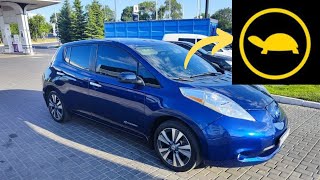
- Sudden Loss of Power / 'Turtle' Mode (Nissan) — The vehicle suddenly loses power under load and displays a 'turtle' icon, restricting speed to protect the battery. 🎬 Watch: Understanding why your Leaf enters turtle mode.
- Engine Misfire, Rough Idle, or Stalling (Volkswagen) — The engine runs unevenly, shakes at idle, or stalls during low-speed maneuvers because cylinder 4 lacks fuel. The car automatically switches to gasoline.
- Inaccurate Range / State of Charge Display (Nissan) — The car enters turtle mode or shuts down with 30-40% charge still displayed because a single weak cell hits its low-voltage cutoff.
- Vehicle Won't Enter 'Ready to Drive' Mode (Nissan) — The car powers on but refuses to shift into Drive or Reverse, locking into Park or Neutral to prevent battery damage.
- Check Engine Light On (Volkswagen) — The dashboard Malfunction Indicator Lamp illuminates immediately upon detecting the short circuit.
Diagnostic Flowchart
Tap your situation to follow the diagnostic path that matches what you're seeing on this code.
Common Fixes & Costs
- Replace Gas Fuel Injector(s) (Volkswagen) — Parts: $80-$250, Labor: $350-$550, ~3.5 hr book time (Intermediate)
- Replace High-Voltage Battery Pack (Nissan) — Parts: $4,500-$15,000, Labor: $1,000-$1,500, ~6 hr book time (Professional)
- Replace Individual Battery Modules (Nissan) — Parts: $500-$1,200 per module, Labor: $1,500-$2,500, ~10 hr book time (Professional)
- Repair Injector Wiring Harness (Volkswagen) — Parts: $20-$60, Labor: $200-$400, ~3 hr book time (Intermediate)
Used vs. New Parts: Buying Guide
What Happens If You Wait — Timeline
- 0-2 weeks: Check Engine Light on with P3398 and P0304. Car automatically switches to gasoline. Rough idle at startup, but runs acceptably on gasoline. (MPG impact: 5-10% (due to running on more expensive gasoline vs. CNG)% · Added cost: $0)
- 2 weeks - 3 months: Continued misfires on cylinder 4 allow unburnt fuel to enter the exhaust system. The catalytic converter begins to operate at higher-than-normal temperatures. (MPG impact: 5-10%% · Added cost: $50-150 in wasted fuel)
- 3-6 months: The catalytic converter substrate is destroyed by the continuous heat from unburnt fuel. A P0420 code appears. The car fails an emissions test. (MPG impact: 10-15%% · Added cost: $1200-2800 (for catalytic converter replacement))
- Immediate: Sudden 'turtle mode' or complete shutdown while driving, even with ample charge shown on the dash. The car is unreliable and unsafe. (MPG impact: N/A% · Added cost: $200-500 (for towing))
- 1-4 weeks: The fault becomes more frequent. The car refuses to enter 'Ready to Drive' mode, especially when cold or after sitting. It becomes undrivable for anything other than short, low-speed trips. (MPG impact: N/A% · Added cost: $200-500 (for additional towing))
- 1+ month: The vehicle is effectively 'bricked' and will not drive. The only solution is a high-voltage battery repair. (MPG impact: N/A% · Added cost: $4,500-15,000 (for battery module or pack replacement))
Cost of Not Fixing It
- 0-1 month: Persistent Check Engine Light, rough idle, and engine misfire on cylinder 4. The vehicle runs exclusively on gasoline with a 5-10% drop in fuel economy. (Added cost: 50-100)
- 1-6 months: Unburnt fuel from the misfiring cylinder continuously enters the exhaust, superheating and destroying the catalytic converter substrate. (Added cost: 1200-2800)
- Immediate: The vehicle is unreliable and unsafe to drive. It enters 'turtle mode' or shuts down completely without warning in traffic. (Added cost: 200-500 (Towing))
- 1+ month: The vehicle becomes completely undrivable and refuses to enter 'Ready to Drive' mode. Repeatedly trying to charge a pack with a failed cell causes further imbalance. (Added cost: 4500-15000)
Diagnosis Steps
- Identify Your Vehicle Type
Confirm if you are driving a Volkswagen with a CNG engine or a Nissan Leaf. The diagnostic path is completely different for each.
Tools: Owner's Manual (Beginner) - Nissan: Read Cell Voltages with LeafSpy
Use LeafSpy Pro to view individual cell voltages. A 'mV diff' reading greater than 50mV at rest or 100mV under load confirms a failing cell group breaching the 2.5V-3.2V safety threshold.
Tools: Advanced OBD-II Scanner or LeafSpy Pro with compatible adapter (Intermediate) - Volkswagen: Inspect Injector Wiring
Visually inspect the wiring harness and connector for the cylinder 4 gas fuel injector (N369). Look for melting, corrosion, chafing, or broken wires.
Tools: Flashlight, Inspection Mirror (Beginner) - Volkswagen: Test Injector Resistance
Disconnect the injector and measure resistance across its pins. A reading near 0 Ohms confirms an internal short. Healthy injectors read 1.5-2.5 Ohms.
Tools: Multimeter, Socket Set (Intermediate) - Volkswagen: Check for Voltage at the Connector
With key on (engine off), check for voltage on the injector connector pins. If the control wire shows a constant 12V, the harness is shorted to positive.
Tools: Multimeter (Intermediate) - Nissan: Professional Battery Load Test
A specialized EV repair shop performs a controlled discharge and load test on the battery pack to confirm which cells fail under real-world conditions.
Tools: Professional EV diagnostic equipment (Advanced) - Volkswagen: Perform an Injector 'Noid' Light Test
Plug a noid light into the injector connector. With the engine running, a P3398 fault causes the light to stay on constantly, confirming the control circuit is shorted to power.
Tools: Noid Light Set (Intermediate) - Volkswagen: Use an Oscilloscope for Waveform Analysis
Connect an oscilloscope to the injector's control wire. With a P3398 short, the waveform is 'stuck' at a constant 12V, proving the ECM's command is overridden by a short circuit.
Tools: Automotive Oscilloscope (Advanced)
When This Code Triggers (Freeze-Frame Conditions)
- Cell Voltage Difference (mV diff): > 100mV (The fault sets the moment the difference between the highest and lowest cell voltage exceeds a predefined threshold under load, indicating a weak cell is collapsing.)
- Battery State of Charge (SOC): < 50% (Fault occurs under load when the overall battery charge is lower, as the voltage of the weak cell sags dramatically.)
- Engine Coolant Temp: 185-210°F (85-99°C) (The code sets when the engine is fully warmed up and operating in closed-loop fuel control.)
- Engine RPM: 1500-2500 RPM (Triggered during steady-state cruising, not necessarily during hard acceleration or deceleration.)
Related Codes
- P0304 (Volkswagen) — This is the generic code for 'Cylinder 4 Misfire'. It appears alongside P3398 because a shorted injector prevents proper fueling, causing a misfire in that cylinder.
- P3399 (Volkswagen) — This code indicates a short to GROUND for the same cylinder 4 gas injector, whereas P3398 indicates a short to POSITIVE. Test the injector's control wire with a multimeter to differentiate.
- P3180 (Nissan) — This code indicates a general error logged in the Lithium Battery Controller (LBC). It is a 'gateway' fault that tells the main vehicle computer to check for more specific codes like P3398.
- P338D - P3397 (Nissan) — These are other codes in the same family as P3398, indicating cell over-discharge but for different specific cells within the battery pack.
Climate & Environmental Factors
- High Ambient Heat (Nissan): The Leaf's passive, air-cooled battery design makes it highly susceptible to accelerated degradation in hot climates. Sustained high temperatures increase internal resistance, making weaker cells fail and trigger an over-discharge code under load.
- Cold Weather (Volkswagen): Cold starts place additional stress on fuel injectors. For a VW CNG injector with a borderline internal fault, thermal contraction and increased initial fuel demand cause a complete failure, triggering the P3398 short circuit code.
- Humidity/Corrosion: In humid or coastal climates, moisture penetrates wiring connectors and accelerates corrosion. For the VW, this degrades the connection at the cylinder 4 injector, causing high resistance or a short.
How to Talk to a Mechanic About This Code
Where to Take It: Dealer vs Independent vs Chain
- Dealer:
For Nissan, the dealer is essential if the battery is under warranty. For VW, it's a safe but expensive option. For an out-of-warranty Leaf, an independent EV shop is a better financial choice.
Best for: Nissan Leaf: Vehicles still under the 8-year/100,000-mile battery warranty., Volkswagen: Complex electrical issues or if you prefer OEM parts and a manufacturer-backed warranty.
Downsides: Typically the highest labor rates (20-30% more than independents)., For Nissan, may only offer a full, new battery pack replacement which is prohibitively expensive on an out-of-warranty car. (Typical cost: +30% vs. baseline) - Independent Shop:
The BEST choice for an out-of-warranty Nissan Leaf is a reputable, independent EV specialist. For a VW, a trusted independent shop with European car experience is a great, cost-effective option.
Best for: Nissan Leaf (EV Specialist ONLY): Out-of-warranty battery module or full pack replacements, often using more affordable used or refurbished parts., Volkswagen (with VAG/German car experience): Out-of-warranty injector replacement or wiring harness repair.
Downsides: Quality and expertise vary wildly. A general mechanic shop CANNOT safely work on a Leaf's high-voltage battery., May have difficulty sourcing specific CNG parts for VW. (Typical cost: +0% vs. baseline) - Chain Shop:
AVOID for this code. The diagnosis for both VW and Nissan versions of P3398 requires specialized knowledge that is not available at a typical chain repair shop.
Best for: Simple maintenance like tires and oil changes.
Downsides: Technicians lack experience with VW CNG systems or Nissan high-voltage batteries., High risk of misdiagnosis, leading to unnecessary repairs. They are not equipped for the specialized nature of this code. (Typical cost: -10% vs. baseline)
When to Walk Away From the Repair
If the estimated repair cost exceeds 50% of the car's current private-party market value, you should seriously consider selling or trading in the vehicle instead of repairing it.
- Car worth $4000, fix is $800: Fix it. The repair for a VW CNG injector is well below the threshold for a car of this value.
- Car worth $5000, fix is $6500: Walk away. The cost of a used battery pack for an early Nissan Leaf often exceeds the car's value.
- Car worth $12000, fix is $8000: Borderline. A newer Leaf with a bad battery might be worth fixing with a refurbished pack, as it restores significant value and range. Get a second opinion before authorizing.
What Scan Tool You Need for This Code
Minimum: For Nissan Leaf: A Bluetooth OBD-II adapter and the LeafSpy Pro app. For Volkswagen: A basic OBD-II scanner to read the code, plus a digital multimeter for electrical testing.
For a Nissan Leaf, a basic scanner only shows the code (P3398) but provides ZERO insight into which battery cell is failing. The LeafSpy app is absolutely essential to see the individual cell voltages. For a VW, the code points to an electrical short, which cannot be diagnosed by a scanner alone; a multimeter is required to test resistance and voltage.
Budget: LELink^2 Bluetooth OBD-II Adapter + LeafSpy App (Nissan) / Basic Foxwell or ANCEL reader (VW) (~$40) — For Nissan, the LELink adapter is highly recommended for its stable connection with the LeafSpy app, allowing you to view all cell voltages, temperatures, and State of Health (SOH). For VW, a basic reader confirms the code, which is all a scanner can do before manual electrical testing begins.
Mid-range: Foxwell NT510 Elite for VAG / OBDeleven (Volkswagen) (~$180) — For VW, these scanners offer manufacturer-specific functions, such as reading data from the CNG control module, checking fuel pressures, and performing system adaptations after a repair. This is not necessary for the Nissan, where LeafSpy remains superior for battery analysis.
Professional: Autel MaxiCOM MK808 / MaxiSys Series (Both) (~$500-1200) — For Nissan, professional Autel tools with the EV Diagnostics upgrade perform a battery pack health check, run load tests, and analyze State of Charge/State of Health (SOC/SOH) data. For VW, they offer full bidirectional control to test components and have built-in oscilloscopes on higher-end models for definitive electrical diagnosis.
Rent vs buy: For Nissan, BUY. A Leaf owner should own a LeafSpy-compatible adapter as a permanent tool for monitoring battery health. For VW, if this is a one-time issue, you can rent a basic scanner from an auto parts store to confirm the code, but you will still need to buy a multimeter ($20-$50) to perform the actual diagnosis.
How to Clear the Code After You Fix It
- Use an OBD-II scan tool to clear the fault codes after the repair is complete.
- For VW, perform the specific VW Drive Cycle to run the system's readiness monitors.
- For Nissan, perform 2-3 full charge/discharge cycles (charge to 100%, drive until ~20%) to allow the BMS to balance and learn the new battery state.
Drive cycle (~30 minutes): Volkswagen Drive Cycle: 1) Cold start and idle for 2-3 minutes. 2) Accelerate smoothly to 55 mph and hold for 3-7 minutes. 3) Decelerate without brakes to 20 mph. 4) Accelerate smoothly to 65 mph and hold for 5 minutes. 5) Decelerate and idle for 3 minutes.
Readiness monitors affected: Catalyst (CAT) monitor, Oxygen (O2) Sensor monitor, Evaporative System (EVAP) monitor, Fuel System monitor
Before emissions retest: drive at least 50 miles to fully set monitors.
Watch out for:
- For VW, clearing the code is not enough; the drive cycle must be completed to set all readiness monitors for an emissions test.
- For Nissan, the code returns immediately if the underlying weak cell is not physically replaced. Software resets cannot fix hardware failure.
- Disconnecting the 12V battery clears codes but resets all readiness monitors to 'Not Ready' status, guaranteeing an emissions test failure.
Will This Fail Emissions / State Inspection?
Yes — this code typically fails an OBD-II emissions inspection.
- California: An illuminated Check Engine Light is an automatic test failure. A complete drive cycle must be performed to set all readiness monitors before re-testing.
- New York: An illuminated Malfunction Indicator Lamp (MIL) results in an automatic failure.
- Texas: Clearing the code right before the test results in a 'Not Ready' failure.
Most Commonly Affected Vehicles
- Nissan Leaf (2011-2017) — Early models with 24 kWh and 30 kWh batteries are particularly prone to battery degradation and cell failure due to the lack of an active battery thermal management system.
- Volkswagen Caddy (Bi-Fuel / CNG) (2004-2014) — These models were offered with a compressed natural gas (CNG) engine, which uses specific gas injectors like the N369 referenced by the fault.
- Volkswagen Golf (TGI / CNG) (2013-2020) — The Golf models factory-equipped with CNG (often badged as TGI) use the gas injection system that logs this fault code.
- Audi A3 / A4 / A5 (g-tron) (2013-2022) — Audi's g-tron models use the same CNG powertrain technology and exhibit the P3398 fault for the cylinder 4 gas injector.
- SEAT Leon / Ibiza / Arona (TGI) (2013-2022) — SEAT's TGI models are equipped with the same VAG CNG engine family, making them susceptible to the identical P3398 injector fault.
- Skoda Octavia / Scala / Kamiq (G-TEC) (2014-2022) — Skoda's G-TEC line of CNG vehicles shares its engine and fuel system components with Volkswagen.
- Nissan Leaf (2018-2019) — While the 40 kWh battery has improved chemistry, they are still air-cooled and suffer from cell failure. Included in service campaign NTB19-055a.
- Volkswagen Transporter T6 (CNG) (2015-2019) — Certain configurations of the T6 were available with a CNG powertrain, making them susceptible to this gas injector fault code.
Manufacturer-Specific Notes
- Nissan: The dashboard 'Guess-o-Meter' is dangerously misleading. A P3398 fault is triggered by a single weak cell's voltage dropping, causing the car to shut down even when the dash shows 30-40% charge remaining.
- Volkswagen: When one CNG injector fails, others follow. Due to the significant labor to access the fuel rail, technicians recommend replacing all four injectors at once to prevent repeat repairs.
- Nissan: Nissan's warranty replacement strategy for older models involves upgrading the battery pack. Failing 30kWh packs under warranty are replaced with newer, more robust 40kWh packs.
- Volkswagen: This code is specific to VW's Bi-Fuel or CNG models (TGI, G-TEC, g-tron). The vehicle automatically switches to its gasoline system, allowing it to be driven, but the Check Engine Light remains on.
Real Owner Stories
2016 Nissan Leaf, ~60k miles
Car entered 'turtle mode' and died on the highway with over 30% charge showing on the dash. Towed to dealer.
What they tried:
- Owner used LeafSpy and saw a massive cell voltage difference (over 900mV) under load, confirming a bad cell.
- Dealer initially struggled to diagnose, but eventually confirmed a failed cell module.
Outcome: The battery was still under the 8-year/100,000-mile warranty. Nissan authorized a full battery pack replacement. The owner received a new 40kWh pack as a replacement for the original 30kWh pack.
Lesson: If your Leaf is under warranty and shows symptoms of a bad cell, be persistent with the dealer. A video of the LeafSpy screen during the event is powerful evidence.
2018 VW Golf TGI (CNG), 60k miles
EPC and Check Engine lights came on while accelerating on the highway, with noticeable shaking. Codes P3398 and P0304 (Cylinder 4 Misfire) were stored.
What they tried:
- Owner took it to the dealership under warranty. The dealer claimed it was a 'loose coil pack' and cleared the codes, but the problem returned.
- The owner suspected an injector issue, as the problem only occurred under heavy acceleration.
Outcome: The issue was intermittent. The likely root cause is a failing cylinder 4 CNG injector that shorts under high load, but the dealer was unable to diagnose it beyond a simple code read.
Lesson: A P3398 code is an electrical fault, not a loose coil pack. If a new injector or coil doesn't fix a misfire, the wiring harness between the component and the ECM is the next logical place to inspect.
2021 Nissan Leaf SV, 40k miles
In cold weather (37°F), the car went into turtle mode with 69% charge remaining after heavy acceleration. LeafSpy showed a 926 mV difference.
What they tried:
- Owner posted on a forum and was advised it was a classic sign of a failed cell.
- Owner took the car to the dealer for a warranty claim.
Outcome: This is a clear warranty case. Describing the symptom ('turtle mode at 69% charge') is enough to initiate a diagnosis. The high mV difference confirms a hardware failure within the pack.
Lesson: Cold weather exacerbates high internal resistance in aging or faulty battery cells, causing voltage to plummet under load. A car that is fine in the summer becomes unreliable in the winter.
2014 VW Caddy (CNG), mileage unknown
Check Engine Light on with P3398. The owner suspected a wiring issue.
What they tried:
- A visual inspection of the engine bay wiring loom revealed chafed and corroded wires near the injector connectors.
Outcome: The damaged section of the wiring harness was repaired by splicing in new wires and protecting them with heat shrink tubing. The code was cleared and did not return.
Lesson: Before replacing an expensive component like an injector or ECM, always perform a thorough visual and electrical inspection of the wiring harness. Vibration and heat in the engine bay make wiring a common failure point.
How to Prevent This Code From Triggering
- Limit DC Fast Charging (Nissan) (Daily Habit) — DC fast charging generates significant heat, which is the primary cause of degradation in the Leaf's air-cooled battery. Use it for road trips, not as your primary charging method.
- Avoid Storing at 100% or 0% Charge (Nissan) (Daily Habit) — Lithium-ion cells are most stressed at very high and very low states of charge. Keeping the battery between 20% and 80% significantly prolongs its life.
- Park in the Shade (Nissan) (Whenever Possible) — In hot climates, ambient heat is a major enemy of the battery pack. Parking in a garage or shade reduces the pack's temperature, slowing down chemical aging and degradation.
- Use a Quality Fuel System Cleaner (Volkswagen) (Every 3,000-5,000 miles) — Keeping the mechanical parts of the CNG injectors clean prevents sticking and deposits that contribute to premature failure. Use a cleaner specifically designed for gas/petrol engines.
- Allow Battery to Cool Before Charging (Nissan) (After Highway Driving / Fast Charging) — Charging a battery that is already hot adds further stress and accelerates degradation. After a long highway drive, letting the car sit for an hour before plugging in preserves battery health.
Frequently Asked Questions
Is it safe to drive with code P3398?
For a VW, you can drive short distances to a repair shop, but it's not advised for long trips. For a Nissan Leaf, it is not safe; the car shuts down unexpectedly while driving, creating a significant safety hazard.
Why is the repair for a Nissan Leaf so expensive?
The repair involves the high-voltage lithium-ion battery, the most expensive component of an EV. A full pack replacement costs from $4,500 for a refurbished early pack to over $15,000 for a new unit.
Can I just switch to gasoline if the CNG injector fails on my VW?
Yes, most VW Bi-Fuel models automatically switch to gasoline if a fault is detected in the CNG system. However, the underlying electrical short must be repaired to prevent damage to the ECM.
Will my Nissan Leaf battery be covered under warranty?
Most Nissan Leaf models came with an 8-year/100,000-mile battery warranty against defects and excessive capacity loss. If your vehicle is within this period, a fault like P3398 is covered. Contact a Nissan dealer to confirm your warranty status.
My mechanic replaced the VW injector but the code returned. What's next?
If a new injector doesn't fix P3398, the problem is in the wiring harness or the Engine Control Module (ECM). Inspect the wiring from the ECM to the injector for shorts. If the wiring is good, the ECM's internal driver circuit has failed.
What is 'turtle mode' on a Nissan Leaf?
Turtle mode is a 'limp home' function where the car severely restricts power output. It protects the high-voltage battery from damage caused by excessive heat, cold, or a critically low state of charge on any individual cell.
Can a bad 12V battery cause code P3398 in a Nissan Leaf?
While a failing 12V battery causes strange electronic issues in a Leaf, it is not a direct cause of a specific cell over-discharge code like P3398. This code points directly to a problem within the main high-voltage traction battery pack.
Is it worth replacing the battery in an old Nissan Leaf?
For early models (2011-2015), the replacement cost easily exceeds the car's market value, making it more economical to replace the vehicle. For newer models, a battery replacement is a viable way to restore range and extend the car's life.
Key Takeaways
- P3398 means a cylinder 4 gas injector short circuit on Volkswagen CNG vehicles, or a severe high-voltage battery cell over-discharge on Nissan Leaf EVs.
- For a Nissan Leaf, immediately use the LeafSpy Pro app and an OBD-II adapter to check for a cell voltage difference exceeding 100mV under load.
- For a Volkswagen, test the cylinder 4 injector resistance with a multimeter; a reading near 0 Ohms confirms an internal short requiring a $430-$800 replacement.
- Never attempt a DIY Nissan Leaf battery repair; the 400V DC system carries a lethal shock risk and requires specialized lifting equipment for the 600-pound pack.
- Driving a Nissan Leaf with P3398 is a major safety risk, as the vehicle unexpectedly enters a 10-mph 'turtle mode' or shuts down completely in traffic.
Helpful Videos
Shop the Parts Behind P3398
Below are the parts most often responsible for code P3398, ranked by how frequently each one is the actual culprit (per the diagnosis above). Tap any to see what we have for your vehicle.



The information in this article is provided for general reference and educational purposes only. Vehicle specifications, procedures, and part compatibility can vary by production date, trim level, and region. Always consult your vehicle's factory service manual and verify part numbers before purchasing or performing repairs. Safety-critical components such as airbags, seat belts, and braking systems should be installed by a qualified professional.
- 🧭 Diagnostic Flowchart
- 🎬 Helpful Videos
- 🛍️ Shop This Part
- What Does P3398 Mean?
- Can I Drive With P3398?
- Common Causes
- Symptoms
- Common Fixes & Costs
- Used vs. New Parts: Buying Guide
- What Happens If You Wait — Timeline
- Cost of Not Fixing It
- Diagnosis Steps
- When This Code Triggers (Freeze-Frame Conditions)
- Related Codes
- Climate & Environmental Factors
- How to Talk to a Mechanic About This Code
- Where to Take It: Dealer vs Independent vs Chain
- When to Walk Away From the Repair
- What Scan Tool You Need for This Code
- How to Clear the Code After You Fix It
- Will This Fail Emissions / State Inspection?
- Most Commonly Affected Vehicles
- Manufacturer-Specific Notes
- Real Owner Stories
- 2016 Nissan Leaf, ~60k miles
- 2018 VW Golf TGI (CNG), 60k miles
- 2021 Nissan Leaf SV, 40k miles
- 2014 VW Caddy (CNG), mileage unknown
- How to Prevent This Code From Triggering
- Frequently Asked Questions
- Is it safe to drive with code P3398?
- Why is the repair for a Nissan Leaf so expensive?
- Can I just switch to gasoline if the CNG injector fails on my VW?
- Will my Nissan Leaf battery be covered under warranty?
- My mechanic replaced the VW injector but the code returned. What's next?
- What is 'turtle mode' on a Nissan Leaf?
- Can a bad 12V battery cause code P3398 in a Nissan Leaf?
- Is it worth replacing the battery in an old Nissan Leaf?
- Key Takeaways
- 🎟️ Get 5% Off