

OBD-II Code P3425: Cylinder 4 Deactivation/Intake Valve Control Circuit/Open
What P3425 means, why it triggers, and how to fix it
- Code P3425 indicates a broken electrical connection (open circuit) in the cylinder 4 deactivation system, disabling your vehicle's fuel-saving mode.
- Check your engine oil dipstick immediately; low oil pressure is the leading mechanical cause of this code.
- Expect a 5% to 15% drop in fuel economy while this code is active because the engine runs continuously on all cylinders.
- Test the solenoid's resistance with a multimeter before replacing it; a reading of infinite resistance (O.L.) confirms a dead solenoid.
- Replacing the solenoid on GM and Ram V8s costs between $500 and $950 because it requires removing the intake manifold.
What Does P3425 Mean?
P3425 means your Powertrain Control Module (PCM) detects a broken electrical connection in the system that turns off cylinder #4 to save fuel. This system (Active Fuel Management or Multi-Displacement System) operates during light highway cruising. The code specifically flags an 'open circuit' for the cylinder 4 intake valve control, meaning the electrical signal path is severed, preventing the PCM from deactivating the cylinder.
Technical definition: The SAE/OBD-II definition for P3425 is "Cylinder 4 Deactivation/Intake Valve Control Circuit/Open". The PCM monitors the voltage and current of the cylinder #4 deactivation solenoid control circuit. When the PCM commands the solenoid on or off and receives no electrical response (infinite resistance or 0 amps), it logs an open circuit condition and triggers P3425.
Can I Drive With P3425?
Yes, But With Caution. Yes, you can drive with this code, but do not exceed 500 miles. Your fuel economy drops by up to 15% because the engine runs on all cylinders continuously. You will likely notice a rough idle or reduced power. Driving long-term with a persistent misfire dumps unburnt fuel into the exhaust, destroying the catalytic converter—a repair costing upwards of $2,000.
Common Causes
- Low engine oil level or pressure (Very Common) — Cylinder deactivation is hydraulically operated via engine oil pressure. Low, dirty, or incorrect viscosity oil prevents the system from building the 16+ PSI required to operate the solenoids, triggering the code.
- Faulty cylinder deactivation solenoid (Very Common) — This electrically controlled valve directs oil flow. The internal electromagnetic coil frequently burns out, creating a hard open circuit, or the internal pintle seizes.
- Wiring, connector, or ground fault (Common) — The wiring harness routing to the cylinder 4 solenoid often chafes against engine components or suffers heat damage. Corroded pins or a broken ground strap sever the electrical path.
- Blocked oil passages (Engine Sludge) (Common) — Neglected oil changes create sludge that clogs the microscopic oil passages feeding the Valve Lifter Oil Manifold (VLOM) or MDS solenoids, starving them of pressure even if main engine oil pressure is normal.
- Blown fuse or failed relay (Less Common) — A dedicated fuse and relay power the solenoid control circuit. A blown fuse instantly cuts power, resulting in an open circuit code across the entire bank.
- Software or calibration issue (Less Common) — Outdated PCM software incorrectly flags the circuit as open due to overly sensitive logic parameters. Manufacturers frequently issue Technical Service Bulletins (TSBs) to patch this.
- Faulty Powertrain Control Module (PCM) (Rare) — The internal driver circuit within the PCM that grounds the solenoid burns out. This prevents the PCM from completing the circuit, mimicking a broken wire.
Symptoms
- Decreased fuel economy — The engine defaults to running on all 8 (or 6) cylinders 100% of the time, dropping fuel efficiency by 5% to 15%.
- Engine misfires and vibration — Cylinder 4 misfires, causing a noticeable shudder at idle or light acceleration. This frequently triggers a companion P0304 code.
- Audible clicking from engine valley — A failing solenoid rapidly cycles or struggles to actuate, producing a distinct ticking or buzzing noise under the intake manifold.
- Check Engine Light illuminated (also visible on scanner) — The Malfunction Indicator Lamp (MIL) turns on immediately after the PCM detects the open circuit during a drive cycle.
Diagnostic Flowchart
Tap your situation to follow the diagnostic path that matches what you're seeing on this code.
Common Fixes & Costs
- Engine Oil and Filter Change — Parts: $40-$80, Labor: $50-$100, ~0.5 hr book time (DIY)
- Replace Cylinder Deactivation Solenoid — Parts: $80-$150, Labor: $400-$800, ~3.5 hr book time (Advanced)
- Repair Wiring Harness or Connector — Parts: $10-$50, Labor: $150-$300, ~1.5 hr book time (Intermediate)
- Engine Sludge Chemical Flush — Parts: $20-$40, Labor: $100-$200, ~1.0 hr book time (Professional)
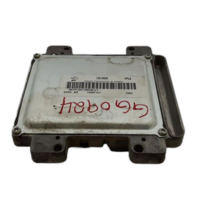
- Replace and Program PCM — Parts: $600-$1000, Labor: $200-$350, ~2.0 hr book time (Professional)
Used vs. New Parts: Buying Guide
When a used part is worth it: Never buy a used individual solenoid. Only consider a used part if you are replacing an entire, expensive assembly (like a GM VLOM) on a vehicle worth less than $5,000.
Donor-vehicle mileage cap: roughly under 60000 miles for the part to have meaningful remaining life.
Donor quality checklist:
- Verify the donor vehicle was not scrapped for engine failure or oil starvation.
- Inspect the electrical connector pins for green corrosion.
- Ensure the VLOM gasket surfaces are perfectly flat and undamaged.
Decision logic:
- If The part is an individual solenoid (Ram/Honda) → Buy new OEM. The $50 savings is not worth repeating 4 hours of labor.
- If The vehicle is under 10 years old → Buy new OEM to guarantee compatibility and longevity.
- If The repair requires intake manifold removal → Buy new OEM. Never install used electronic parts in hard-to-reach engine locations.
Warranty tradeoff: Used parts offer 30-day part-only warranties. New OEM parts offer 1-2 year warranties. Neither covers the $500 labor cost if the part fails.
Worst-case if a used part fails: $800 to repeat the intake manifold removal labor if the used solenoid fails.
What Happens If You Wait — Timeline
- 0-1 month: Check Engine Light illuminates. The PCM disables cylinder deactivation. The engine runs in V8 mode continuously. (MPG impact: 10%% · Added cost: $30 in wasted fuel)
- 1-3 months: The stuck solenoid causes cylinder 4 to misfire, creating a rough idle and hesitation during acceleration. (MPG impact: 15%% · Added cost: $100 in wasted fuel)
- 3-6 months: Persistent misfires dump raw fuel into the exhaust, overheating and melting the internal honeycomb of the catalytic converter. (MPG impact: 20%% · Added cost: $1,500 for a new catalytic converter)
- 6+ months: Oil starvation to the valvetrain causes the cylinder 4 lifter to collapse and grind against the camshaft. (MPG impact: 25%% · Added cost: $4,000 for camshaft and lifter replacement)
Cost of Not Fixing It
- 0-1 month: Decreased fuel economy by up to 15% as the engine cannot switch to V4 mode. (Added cost: $20-$50 in wasted fuel)
- 1-3 months: If the fault causes a persistent cylinder 4 misfire, unburnt fuel enters the exhaust and overheats the catalytic converter. (Added cost: $1,000-$2,500 for catalytic converter replacement)
- 6+ months: Continued operation with collapsed lifters or oil starvation destroys the camshaft, requiring a complete engine teardown. (Added cost: $3,000-$5,000+)
Diagnosis Steps
- Check Engine Oil Level and Condition
Pull the engine oil dipstick. Verify the oil level is at the 'Full' mark and the oil is clean. Low or heavily degraded oil is the leading mechanical cause of deactivation system failures.
Tools: Shop towel (Beginner) - Scan for Codes and Review Freeze Frame Data
Connect an OBD-II scanner. Confirm P3425 is active. Check for companion codes like P0521 (Oil Pressure) or P0304 (Cylinder 4 Misfire). Review freeze frame data to identify engine load and RPM when the fault occurred.
Tools: OBD-II Scanner (Beginner) - Visually Inspect Wiring and Fuses
Inspect the wiring harness leading to the cylinder 4 solenoid for melted insulation, chafing, or rodent damage. Disconnect the plug and check for green corrosion on the pins. Verify the cylinder deactivation circuit fuse in the main fuse box is intact.
Tools: Flashlight, Multimeter (for fuse testing) (Intermediate) - Test Solenoid Resistance
Disconnect the cylinder 4 solenoid. Measure resistance across its two pins with a multimeter. GM 5.3L/6.2L solenoids must read 11-18 ohms. Chrysler 5.7L solenoids read ~12 ohms. A reading of 'O.L.' (Open Loop) confirms a dead solenoid coil requiring replacement.
Tools: Multimeter, Service Manual (Intermediate) - Test Circuit Power and Ground
Turn the ignition ON (engine off). Probe the harness connector. One pin must show 12V battery voltage. The other pin is the PCM ground control. If 12V is missing, trace the wire back to the fuse/relay. If 12V is present, the wiring to the PCM or the PCM itself is faulty.
Tools: Multimeter, Back-probe pins (Advanced) - Verify Mechanical Oil Pressure
Remove the factory oil pressure sensor and install a mechanical gauge. Start the engine. Pressure must exceed 16-18 PSI at hot idle and rise smoothly with RPM. Low pressure disables the hydraulic lifters, setting the code.
Tools: Mechanical Oil Pressure Gauge, Socket Set (Advanced) - Command Solenoid via Scan Tool
Use a bidirectional scan tool to manually command the cylinder 4 solenoid ON. Listen for a sharp 'click'. If it clicks, the circuit and PCM are good, pointing to a clogged oil passage or collapsed lifter.
Tools: Bidirectional Scan Tool (Professional)
When This Code Triggers (Freeze-Frame Conditions)
- Engine Coolant Temp: 170-220°F (Fully warmed up)
- RPM: 1300-2500 (Cruise / steady throttle)
- Engine Load: 20-40% (Light load, steady-state cruising)
- Vehicle Speed: 40-75 mph (Highway driving)
Related Codes
- P0521 — Engine Oil Pressure Sensor Performance. Diagnose P0521 FIRST. The deactivation system requires perfect oil pressure; fixing the pressure issue usually clears P3425.
- P0304 — Cylinder 4 Misfire. A stuck deactivation lifter or failed solenoid directly causes cylinder 4 to misfire. Fix the P3425 circuit fault to resolve the misfire.
- P3400 — Cylinder Deactivation System Bank 1. This is the general code for the entire bank. P3425 narrows the fault specifically to cylinder 4.
- P3426 — Cylinder 4 Deactivation Circuit Low. Indicates a short to ground. P3425 indicates a broken wire (open). Multimeter testing easily differentiates the two.
Climate & Environmental Factors
- Extreme Cold: Using thick oil (like 10W-30) in freezing temperatures prevents proper flow to the VLOM/MDS solenoids on startup, triggering P3425 until the engine reaches operating temperature.
- High Ambient Heat: Sustained high temperatures accelerate oil breakdown and sludge formation, clogging the microscopic oil feed holes to the cylinder 4 lifters.
- Road Salt and Humidity: Moisture and salt penetrate the solenoid electrical connectors, corroding the pins and creating the exact 'open circuit' condition defined by P3425.
How to Talk to a Mechanic About This Code
Say this: "I have a check engine light with code P3425 for the cylinder 4 deactivation circuit. Please verify the oil pressure is in spec, and test the resistance and wiring of the cylinder 4 solenoid before quoting a replacement."
This proves you understand the diagnostic tree. It forces the shop to rule out cheap fixes (low oil pressure, blown fuse) before charging you $800 to remove the intake manifold to replace the solenoid.
Avoid saying:
- 'My car is misfiring, can you fix it?'
- 'The internet said I need a new VLOM.'
- 'Just replace whatever sensor is broken.'
Questions to ask before authorizing the repair:
- What was the exact mechanical oil pressure reading at hot idle?
- Did the cylinder 4 solenoid fail the multimeter resistance test?
- Did you verify 12V power and ground at the solenoid connector?
- Are there any PCM software updates (TSBs) available for this code?
Where to Take It: Dealer vs Independent vs Chain
- Dealer:
Use only if the vehicle is under warranty or you suspect a PCM software glitch.
Best for: Vehicles under powertrain warranty., Applying PCM software updates (TSBs) to fix false codes.
Downsides: Highest labor rates ($180-$250/hr)., Will often refuse to replace a single solenoid, forcing a $1,200 full VLOM assembly replacement. (Typical cost: +40% vs. baseline) - Independent Shop:
The best choice. A competent independent mechanic can easily test the circuit and replace the solenoid for hundreds less than a dealer.
Best for: Out-of-warranty vehicles., Cost-effective intake manifold removal and solenoid replacement.
Downsides: May lack the OEM software required to flash the PCM if an update is needed. (Typical cost: +0% vs. baseline) - Chain Shop:
Avoid for diagnosis. Do not let a quick-lube chain remove your intake manifold.
Best for: A basic oil change if the oil is low.
Downsides: Technicians lack the diagnostic skills for advanced circuit testing., Will likely throw parts at the problem without verifying oil pressure. (Typical cost: -10% vs. baseline)
When to Walk Away From the Repair
If the repair requires replacing the camshaft and lifters (due to long-term oil starvation) and costs over 40% of the vehicle's value, sell the car.
- Car worth $5000, fix is $3500: Walk away. If the solenoid failure led to a collapsed lifter and damaged camshaft, the $3,500 engine teardown is not worth it. Sell as a mechanic's special.
- Car worth $12000, fix is $800: Fix it. An $800 solenoid replacement is standard maintenance for these V8s and restores full functionality.
- Car worth $8000, fix is $150: Fix it. A simple wiring repair or oil change is a negligible cost to clear the code.
What Scan Tool You Need for This Code
Minimum: A scanner that reads live data PIDs for oil pressure, engine RPM, and cylinder misfire counts.
A $20 code reader cannot command the solenoid ON and OFF. Without bidirectional control, you cannot definitively test if the PCM and wiring are capable of firing the solenoid.
Budget: BlueDriver Pro (~$100) — Reads codes, provides freeze frame data, and graphs live oil pressure. Lacks bidirectional control.
Mid-range: Autel MaxiCOM MK808S (~$350) — Provides full bidirectional control. You can press a button on the screen to manually fire the cylinder 4 solenoid, instantly proving if the circuit is intact.
Professional: Launch X431 V+ (~$800) — Dealer-level bidirectional control, advanced graphing, and the ability to perform PCM resets and relearns after replacing components.
Rent vs buy: Buy the Autel MK808S if you plan to DIY the repair. Auto parts store loaner scanners do not have the bidirectional controls required to test the solenoid circuit.
How to Clear the Code After You Fix It
- Use an OBD-II scan tool to clear the code.
- Verify engine oil is at the correct level.
- Perform a complete drive cycle to reset monitors.
Drive cycle (~30 minutes): Start with a cold engine. Idle for 3 minutes. Drive at a steady 55 mph for 10 minutes to force the PCM to command cylinder deactivation. Perform 10 minutes of stop-and-go city driving. The code will return immediately if the circuit is still open.
Readiness monitors affected: Catalyst monitor, O2 sensor monitor, Misfire monitor
Before emissions retest: drive at least 50 miles to fully set monitors.
Watch out for:
- Disconnecting the battery clears the code but resets all readiness monitors, guaranteeing an emissions test failure.
- Clearing the code without fixing the open circuit results in the Check Engine Light returning the moment the vehicle hits highway speeds.
Will This Fail Emissions / State Inspection?
Yes — this code typically fails an OBD-II emissions inspection.
- California: An illuminated Check Engine Light is an automatic Smog Check failure. All monitors must be 'Ready' after repair.
- New York: NYVIP3 inspections fail any vehicle with an active MIL. You cannot pass with P3425 stored or active.
- Texas: Automatic failure. After clearing the code, you are allowed only one 'Not Ready' monitor to pass the OBD-II plug-in test.
Most Commonly Affected Vehicles
- Chevrolet Silverado, Tahoe, Suburban (2007-2018) — 5.3L and 6.2L V8s suffer frequent Valve Lifter Oil Manifold (VLOM) solenoid failures. The entire VLOM assembly is usually replaced.
- GMC Sierra, Yukon (2007-2018) — Shares the exact AFM architecture as Chevrolet. Solenoids are buried under the intake manifold.
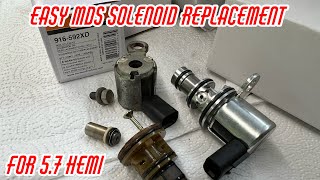
- Ram 1500 (2006-2022) — 5.7L Hemi V8s experience MDS solenoid coil burnouts. Mechanics strongly recommend replacing all four solenoids simultaneously due to high labor access costs.
- Chrysler / Dodge 300C, Charger, Durango (2006-2022) — 5.7L Hemi models share the Ram's MDS system. Wiring harness chafing at the rear of the engine block is a known issue.
- Honda Accord, Odyssey, Pilot (2008-2017) — V6 models with Variable Cylinder Management (VCM) trigger this code due to leaking spool valve assemblies or failing oil pressure switches.
Manufacturer-Specific Notes
- General Motors (Chevy/GMC): The solenoids are integrated into the VLOM under the intake manifold. A faulty PCM frequently misreports which specific cylinder failed. Always check for PCM software update TSBs before tearing down the engine.
- Chrysler/Dodge/Ram: MDS solenoid resistance is highly temperature-dependent but must read between 10-14 ohms at room temperature. Intermittent P3425 codes over bumps almost always indicate a chafed wiring harness near the firewall.
- Honda: VCM issues are heavily tied to oil consumption and fouled spark plugs. Honda issued warranty extensions (Service Bulletins 25-060/25-061) for piston ring issues that masquerade as VCM spool valve failures.
Real Owner Stories
2015 Ram 1500 5.7L Hemi
Check Engine Light for P3425 appeared intermittently, exclusively during warm weather and after hitting potholes.
What they tried:
- Cleared the code with a scanner, but it returned under the exact same physical conditions.
Outcome: The mechanic traced the harness and found the wire chafing against the rear of the engine block. Hitting a bump severed the connection momentarily. Repairing the wire fixed the code permanently.
Lesson: If a code triggers over bumps, stop looking at the solenoid and start inspecting the wiring harness for physical damage.
2010 Ram 1500 5.7L Hemi
P3425 triggered immediately after installing an aftermarket Diablo performance tune.
What they tried:
- Reverted the truck's PCM to the factory stock tune.
- Cleared the codes.
Outcome: The code never returned. The aftermarket tune altered the MDS voltage parameters, causing the PCM to falsely flag the circuit as open.
Lesson: Always remove aftermarket tunes as your step one diagnostic. Software conflicts frequently cause false circuit codes.
2018 Chevy Silverado 5.3L
Owner replaced the oil pressure sensor. Upon startup, codes P3425 and P3449 (Cylinder 7) appeared simultaneously.
What they tried:
- Verified oil pressure was normal on the dashboard gauge.
Outcome: The owner accidentally pinched the main VLOM wiring harness while reinstalling the intake manifold over the new oil pressure sensor. Repairing the crushed wires resolved both codes.
Lesson: If new codes appear immediately after a repair, you broke something during reassembly. Re-check all connectors in the area you just worked on.
How to Prevent This Code From Triggering
- Perform strict 5,000-mile full synthetic oil changes. (Every 5,000 miles) — Clean oil prevents sludge from clogging the microscopic feed holes in the VLOM and MDS solenoids, which is the #1 mechanical killer of these systems.
- Install an OBD-II AFM/MDS Disabler. (One-time installation) — Prevents the PCM from commanding cylinder deactivation. Stopping the constant mechanical cycling of the lifters and solenoids drastically extends their lifespan.
- Check engine oil level manually. (Every 1,000 miles) — Modern V8s consume oil. Running a quart low drops hydraulic pressure, starving the deactivation solenoids and triggering faults.
Frequently Asked Questions
What is cylinder deactivation?
It shuts down specific engine cylinders during light cruising to save fuel. The system uses oil pressure to keep intake and exhaust valves closed on those cylinders. This seamlessly transitions the engine from a V8 to a V4.
Will an oil change fix code P3425?
Yes, if the code is caused by low oil levels or minor sludge blocking the solenoid feed holes. Always verify the oil level and condition as your very first diagnostic step.
Can I permanently disable the cylinder deactivation system?
Yes, you can plug an aftermarket AFM/MDS disabler into your OBD-II port to stop the system from activating. While this prevents future lifter wear, it permanently reduces your highway fuel economy by 1-2 MPG. It will not clear an active P3425 code if the circuit is already broken.
Can I fix P3425 myself?
You can fix it yourself if the cause is low oil or an easily accessible wiring break. However, replacing the solenoid on most V8s requires removing the intake manifold. Leave manifold removal or PCM replacement to a professional.
How much does it cost to fix P3425?
An oil change costs $50-$100. If the solenoid requires replacement on a GM or Ram V8, expect to pay $500 to $950 due to the 3-4 hours of labor required to remove the intake manifold.
Key Takeaways
- Code P3425 indicates a broken electrical connection (open circuit) in the cylinder 4 deactivation system, disabling your vehicle's fuel-saving mode.
- Check your engine oil dipstick immediately; low oil pressure is the leading mechanical cause of this code.
- Expect a 5% to 15% drop in fuel economy while this code is active because the engine runs continuously on all cylinders.
- Test the solenoid's resistance with a multimeter before replacing it; a reading of infinite resistance (O.L.) confirms a dead solenoid.
- Replacing the solenoid on GM and Ram V8s costs between $500 and $950 because it requires removing the intake manifold.
Helpful Videos

Shop the Parts Behind P3425
Below are the parts most often responsible for code P3425, ranked by how frequently each one is the actual culprit (per the diagnosis above). Tap any to see what we have for your vehicle.


The information in this article is provided for general reference and educational purposes only. Vehicle specifications, procedures, and part compatibility can vary by production date, trim level, and region. Always consult your vehicle's factory service manual and verify part numbers before purchasing or performing repairs. Safety-critical components such as airbags, seat belts, and braking systems should be installed by a qualified professional.
- 🧭 Diagnostic Flowchart
- 🎬 Helpful Videos
- 🛍️ Shop This Part
- What Does P3425 Mean?
- Can I Drive With P3425?
- Common Causes
- Symptoms
- Common Fixes & Costs
- Used vs. New Parts: Buying Guide
- What Happens If You Wait — Timeline
- Cost of Not Fixing It
- Diagnosis Steps
- When This Code Triggers (Freeze-Frame Conditions)
- Related Codes
- Climate & Environmental Factors
- How to Talk to a Mechanic About This Code
- Where to Take It: Dealer vs Independent vs Chain
- When to Walk Away From the Repair
- What Scan Tool You Need for This Code
- How to Clear the Code After You Fix It
- Will This Fail Emissions / State Inspection?
- Most Commonly Affected Vehicles
- Manufacturer-Specific Notes
- Real Owner Stories
- 2015 Ram 1500 5.7L Hemi
- 2010 Ram 1500 5.7L Hemi
- 2018 Chevy Silverado 5.3L
- How to Prevent This Code From Triggering
- Frequently Asked Questions
- What is cylinder deactivation?
- Will an oil change fix code P3425?
- Can I permanently disable the cylinder deactivation system?
- Can I fix P3425 myself?
- How much does it cost to fix P3425?
- Key Takeaways
- 🎟️ Get 5% Off