

OBD-II Code P3441: Cylinder 6 Deactivation Circuit Fault
What P3441 means, why it triggers, and how to fix it
- Check your engine oil level and condition first, as low or dirty oil is the number one cause of code P3441.
- P3441 designates an electrical open circuit in the cylinder 6 deactivation system, typically requiring a $220–$450 solenoid replacement if the wiring is intact.
- Expect a 10-20% drop in fuel economy, a rough idle, and a forced cylinder misfire as the engine computer protects itself from the fault.
- Listen for a distinct ticking noise from the top of the engine; this signals a collapsed lifter requiring a $1,500+ mechanical repair rather than a simple electrical fix.
What Does P3441 Mean?
The Powertrain Control Module (PCM) detected an electrical open circuit in the system that shuts off cylinder #6 to save fuel during cruising. Consequently, the cylinder deactivation system (MDS, AFM, or VCM) fails to operate, forcing the engine to run inefficiently and often triggering a protective misfire.
Technical definition: SAE/OBD-II defines P3441 as "Cylinder 6 Deactivation/Intake Valve Control Circuit/Open". The PCM expects a specific voltage drop when commanding the cylinder 6 deactivation solenoid. An 'open' circuit means this electrical state is missing, indicating a broken wire, disconnected plug, or a severed internal solenoid coil.
Can I Drive With P3441?
Yes, But With Caution. Yes, but address the issue promptly. The engine runs rough, misfires, exhibits reduced power, and suffers poor fuel economy. Driving over 100 miles with an active misfire dumps unburnt fuel into the exhaust, destroying the catalytic converter and turning a $300 repair into a $2,500+ disaster. If the root cause is low oil pressure, you risk severe internal engine damage.
Common Causes
- Low, Dirty, or Incorrect Engine Oil (Very Common) — The hydraulic cylinder deactivation system requires clean oil at the exact specified viscosity (e.g., 5W-20) to function. Low fluid levels, heavy sludge, or overly thick oil prevent the solenoids from operating. This is the first item to check.
- Faulty Cylinder Deactivation Solenoid (VVT/MDS Solenoid) (Common) — The electronic valve directing oil flow fails electrically when its internal coil breaks, creating an open circuit. It also fails mechanically if debris jams the valve.
- Wiring or Connector Issues (Common) — Engine heat and vibration cause the wiring harness leading to the solenoid to become brittle and break. Corroded, loose, or oil-soaked connectors also sever the electrical circuit.
- Blocked Engine Oil Passages (Less Common) — Sludge clogs the microscopic passages feeding oil to the deactivation solenoids and lifters, starving the components of hydraulic pressure even if the oil pan is full.
- Failing Oil Pump (Rare) — A worn oil pump fails to generate the baseline pressure required to operate the engine's lubrication and cylinder deactivation systems. This triggers secondary warnings like code P0521.
- Low System Voltage (Rare) — A dying battery or failing alternator drops system-wide voltage below the threshold required by the PCM and solenoids, triggering electrical fault codes including P3441 and P0562.
- Outdated PCM Software (Rare) — Overly sensitive fault logic in the PCM incorrectly flags a hardware failure. Manufacturers release software updates (TSBs) to correct this.
- Faulty Powertrain Control Module (PCM) (Very Rare) — The internal driver circuit sending the signal to the solenoid burns out. Consider this only after ruling out wiring, solenoid, and oil pressure issues.
Symptoms
- Check Engine Light On — The PCM illuminates the Malfunction Indicator Lamp (MIL) immediately upon detecting the open circuit.
- Engine Misfire and Rough Running — The engine shakes and stumbles. The PCM often disables the cylinder 6 fuel injector as a protective measure, causing a forced 'dead miss'.
- Reduced Engine Power — The vehicle accelerates sluggishly due to the disabled cylinder and deactivated fuel-saving systems.
- Decreased Fuel Economy — Disabling the cylinder deactivation feature forces the engine to consume 10-20% more gasoline.
- Audible Ticking or Clicking Noise — A distinct ticking from the top of the engine signals a collapsed lifter or worn rocker arm, indicating a severe mechanical failure rather than a simple electrical fault.
Diagnostic Flowchart
Tap your situation to follow the diagnostic path that matches what you're seeing on this code.
Common Fixes & Costs
- Engine Oil and Filter Change — Parts: $30-$75, Labor: $20-$50, ~0.5 hr book time (DIY)
- Replace Cylinder Deactivation Solenoid (VVT/MDS)
— Parts: $50-$150, Labor: $170-$350, ~3.5 hr book time
(Intermediate)
: OEM Mopar: 53032152AE, 53022298AB (Alt: Dorman OE FIX 916-511XD, Standard Motor Products CDS02)
: OEM ACDelco: 12679218 (VLOM assembly) (Alt: Dorman: 917-253 (Solenoid Pack))
: OEM Honda: 15810-R70-A04, 15820-R70-A04 (Alt: Standard Motor Products VVT443) - Repair Wiring or Replace Connector — Parts: $10-$50, Labor: $100-$300, ~1.5 hr book time (Intermediate)
- Replace Lifters and Rocker Arms
— Parts: $200-$600, Labor: $1200-$2500, ~18 hr book time
(Professional)
: OEM Mopar: 5038784AD (Alt: Enginetech L3180)
: OEM ACDelco: HL177 (Alt: Melling JB-7011) - Replace Powertrain Control Module (PCM) — Parts: $800-$1200, Labor: $200-$300, ~2.5 hr book time (Professional)
Used vs. New Parts: Buying Guide
When a used part is worth it: For a cylinder deactivation solenoid, buying used never makes sense. The part is inexpensive compared to the high labor cost of removing the intake manifold to access it.
Donor-vehicle mileage cap: roughly under 40000 miles for the part to have meaningful remaining life.
Donor quality checklist:
- Verify the part number exactly, including any revisions. Superseded part numbers are improved versions.
- A new aftermarket part with a warranty is strongly preferred over a used OEM part with no history.
- Avoid parts from vehicles scrapped due to engine failure or high mileage.
Decision logic:
- If The part is an electronic/hydraulic solenoid or sensor → Buy new. The labor to replace it is too high to risk on a used part with an unknown lifespan.
- If The vehicle is older (>150k miles) and the budget is extremely tight → A used part is a gamble, but serves as a temporary solution. Expect a significantly shorter lifespan.
- If The part is a simple mechanical component with no wear items (e.g., a bracket) → Used is generally acceptable.
Warranty tradeoff: Salvage yard parts offer a 30-90 day warranty covering only the part, not the labor. New aftermarket parts carry a 1-year to lifetime warranty. New OEM parts carry a 1-2 year warranty.
Worst-case if a used part fails: $400-$800 if a used solenoid fails after installation, requiring a repeat of the labor to remove the intake manifold.
What Happens If You Wait — Timeline
- 0-1 month: Code P3441 is stored, Check Engine Light is on. The cylinder deactivation system is disabled, and the engine runs on all cylinders. (MPG impact: 5-10%% · Added cost: $20-50 in wasted fuel)
- 1-3 months: The PCM commands a 'dead miss' on cylinder 6 as a protective measure, causing a noticeable rough idle and engine vibration. (MPG impact: 10-20%% · Added cost: $50-150 in wasted fuel)
- 3-6 months: A persistent misfire dumps unburnt fuel into the exhaust, overheating and melting the catalytic converter's internal substrate. (MPG impact: 15-25%% · Added cost: $1,200-$2,800 for catalytic converter replacement)
- 6+ months: A failing lifter completely seizes or collapses, grinding down the camshaft lobe and sending metal debris throughout the engine. (MPG impact: N/A (Engine Failure)% · Added cost: $4,000-$9,000+ for camshaft/lifter replacement or a complete engine replacement)
Cost of Not Fixing It
- 0-1 month: Fuel economy drops 10-20% as the system fails to engage. The Check Engine Light masks new, potentially severe issues. (Added cost: Negligible, other than increased fuel costs.)
- 1-6 months: A persistent misfire dumps unburnt fuel into the exhaust, melting the catalytic converter substrate. (Added cost: $1200-$2800)
- 6+ months: A failing lifter completely collapses, grinding down the camshaft lobe and sending metal shrapnel throughout the engine. (Added cost: $4000-$9000+)
Diagnosis Steps
- Check Engine Oil Level and Condition
Ensure the engine oil is full, clean, and matches the owner's manual viscosity specification. Top off low oil. If the oil is dark or sludgy, perform an oil and filter change immediately.
Tools: Rag, Owner's Manual (Beginner) - Scan for Codes and Review Freeze Frame Data
Use an OBD-II scanner to confirm P3441 and check for companion codes (like P0306 or P0521). Review freeze frame data to see the engine RPM, speed, and temperature when the fault occurred.
Tools: OBD-II Scanner (Beginner) - Visually Inspect the Wiring and Connector
Locate the cylinder 6 deactivation solenoid. Inspect the wiring harness for burns, chafing, or rodent damage. Ensure the electrical connector is clean, dry, and securely plugged in. Wiggle the harness while the engine runs to check for intermittent misfires.
Tools: Flashlight (Beginner) - Test the Solenoid's Resistance
Unplug the solenoid and measure resistance across its two pins with a multimeter. A reading of 'OL' (Over Limit) confirms an internal open circuit and a dead solenoid. Normal specs are typically 10-15 Ohms (check your service manual).
Tools: Digital Multimeter, Service Manual (Intermediate) - Test the Solenoid Circuit for Voltage and Ground
With the key on and engine off, verify 12V+ on the power supply wire at the solenoid connector. Check the ground wire for continuity to the chassis. Missing voltage indicates a blown fuse or broken supply wire.
Tools: Digital Multimeter (Intermediate) - Perform a Scan Tool Actuator Test
Use a bi-directional scan tool to command the cylinder 6 solenoid on and off. Listen for an audible click. If it clicks, the PCM and wiring are good. If it doesn't, and the circuit tests good, the solenoid is mechanically stuck.
Tools: Bi-Directional Scan Tool (Advanced) - Check System-Wide Engine Oil Pressure
Connect a mechanical oil pressure gauge to verify adequate baseline pressure (e.g., >16 PSI hot for HEMI MDS). Low pressure confirms a failing oil pump or severe sludge.
Tools: Mechanical Oil Pressure Gauge, Service Manual (Advanced) - Advanced: Check Control Circuit Resistance
Measure the resistance of the control wire between the PCM connector pin and the solenoid connector pin. A reading above 5 Ohms indicates corrosion or a partial break in the wire.
Tools: Digital Multimeter, Service Manual with Pinout Diagrams (Advanced) - Advanced Test: Solenoid Current Ramping
Connect a low-amp clamp to an oscilloscope and monitor the current on the solenoid's control wire. A good solenoid shows a sharp, vertical current spike when activated. No current draw confirms an open circuit.
Tools: Oscilloscope, Low-Amp Clamp (Professional) - Advanced Test: Check Oil Passage with Pressure Transducer
Remove the solenoid and install a pressure transducer. Command the system on to measure if oil pressure actually reaches the solenoid, confirming or ruling out an internal engine blockage.
Tools: Pressure Transducer, Oscilloscope, Service Manual (Professional)
When This Code Triggers (Freeze-Frame Conditions)
- Engine Coolant Temp: 180-210°F (82-99°C) (The engine must be fully warmed up. The system is typically disabled when the engine is cold.)
- Engine RPM: 1200-2800 RPM (The fault is usually set during steady-state cruising, not during high acceleration or high-RPM driving.)
- Engine Load: 20-50% (Occurs under light to moderate load when the engine doesn't need full power, such as on a flat highway.)
- Vehicle Speed: 30-70 mph (48-112 kph) (The system is designed to activate during city and highway cruising speeds, not at a standstill or during low-speed maneuvers.)
Related Codes
- P0306 — 'Cylinder 6 Misfire Detected'. The PCM intentionally disables the fuel injector to cylinder 6 as a protective measure when it detects the P3441 circuit fault, directly causing a misfire. Diagnose P3441 first.
- P3400 — 'Cylinder Deactivation System Bank 1'. A general fault for the entire bank. P3400 paired with multiple deactivation codes points to a shared problem like a power feed, ground, or a faulty oil manifold (VLOM).
- P3443 — 'Cylinder 6 Deactivation/Intake Valve Control Performance'. P3441 is an ELECTRICAL fault (open circuit). P3443 is a PERFORMANCE fault, meaning the circuit is sound, but the deactivation failed mechanically due to a stuck solenoid or bad lifter.
- P0521 — 'Engine Oil Pressure Sensor/Switch Range/Performance'. Indicates main engine oil pressure is out of range. Seeing P0521 alongside P3441 points to a systemic oil pressure problem (bad oil pump, severe sludge) rather than an isolated solenoid fault.
- P0562 — 'System Voltage Low'. Indicates overall vehicle voltage is below the operating threshold. A failing battery or alternator causes this code and triggers P3441 as a secondary electrical fault.
Climate & Environmental Factors
- Cold Weather: Cold weather thickens engine oil, slowing the hydraulic response of the solenoids and lifters. This triggers code P3441 on startup, especially if the oil is old or of an incorrect, thicker viscosity. The issue often disappears once the engine warms up.
- High Engine Temperatures: Prolonged high engine temperatures accelerate oil breakdown and sludge formation, clogging the small oil passages feeding the deactivation system. Heat also degrades wiring insulation and plastic solenoid housings.
How to Talk to a Mechanic About This Code
Say this: "I have an OBD-II code P3441 for the cylinder 6 deactivation circuit. I verified the oil level and condition are correct. I need a diagnostic to test the solenoid resistance and its wiring harness."
This signals that you've done basic research and ruled out the simplest cause. It directs the technician to follow a logical diagnostic path rather than jumping to expensive conclusions like lifter replacement.
Avoid saying:
- 'My check engine light is on, can you look at it?'
- 'My car is running rough, just fix whatever's wrong.'
- 'I think I need new lifters.'
Questions to ask before authorizing the repair:
- Did you test the resistance of the solenoid? What was the reading in Ohms?
- Did you confirm there is voltage and a good ground at the solenoid's electrical connector?
- If you are recommending solenoid replacement, what is the labor time and total cost?
- If the solenoid and wiring tested good, what is your recommended next step and why?
Where to Take It: Dealer vs Independent vs Chain
- Dealer:
Recommended for in-warranty vehicles or if a specific TSB applies. A safe, but expensive, choice for major mechanical repairs.
Best for: Vehicles still under powertrain warranty., Cases where a known Technical Service Bulletin (TSB) or PCM software update is the fix., Complex internal engine repairs like camshaft and lifter replacement.
Downsides: Highest labor rates., Defaults to replacing a whole assembly (like a GM VLOM) when only a single solenoid failed. (Typical cost: +50% vs. baseline) - Independent Shop:
Best fit for most out-of-warranty P3441 repairs. A good independent shop handles the entire range of possible fixes cost-effectively.
Best for: Out-of-warranty vehicles where cost is a factor., Diagnosing and repairing common failures like a bad solenoid or wiring issue., Finding a brand specialist (e.g., GM or Mopar) for dealer-level expertise at a lower cost.
Downsides: Shop quality and diagnostic skill vary widely. Vet shops based on reviews and ASE certifications., Lacks access to the very latest manufacturer software updates. (Typical cost: +0% vs. baseline) - Chain Shop:
Acceptable ONLY for an oil change. AVOID for any further diagnosis or repair of a P3441 code.
Best for: Performing an oil and filter change as a first diagnostic step.
Downsides: Technician skill is highly variable and unsuited for complex electrical diagnosis or major engine disassembly., High pressure to upsell common items; frequently misdiagnoses the issue. (Typical cost: -10% vs. baseline)
When to Walk Away From the Repair
If the estimated repair cost exceeds 40% of the car's private-party value, consider selling the vehicle.
- Car worth $3500, fix is $2800: Walk away. The repair cost is 80% of the car's value. This is not an economic repair.
- Car worth $15000, fix is $450: Fix it. The repair (a typical solenoid replacement) is only 3% of the vehicle's value.
- Car worth $8000, fix is $2500: Borderline. The repair (a worst-case lifter/cam job) is over 30% of the car's value. Get a second opinion and assess the car's overall condition before proceeding.
What Scan Tool You Need for This Code
Minimum: A code reader that displays and clears codes, and shows freeze-frame data.
A basic $20 reader only confirms the P3441 code exists. It cannot test the solenoid or the circuit, leaving you guessing between a wiring problem, a bad solenoid, or a PCM issue.
Budget: BlueDriver Pro (~$90) — Reads the code, provides freeze-frame data, and offers repair reports based on a database of fixes. It lacks bi-directional control but is a great starting point.
Mid-range: Foxwell NT510 Elite / Topdon ArtiDiag800BT (~$160-350) — Provides bi-directional control ('Active Test'). This allows you to command the deactivation solenoid on and off directly from the tool to confirm if the fault is the solenoid, wiring, or PCM.
Professional: Autel MaxiCOM MK808 / XTOOL D7 (~$450-700) — Offers full bi-directional control, extensive live data graphing, and OE-level diagnostics for all modules. These tools perform advanced functions like PCM reprogramming.
Rent vs buy: You can borrow a basic code reader for free from auto parts stores to confirm the code initially. However, if you plan to diagnose the issue yourself beyond a visual inspection, you must buy a mid-range scanner with bi-directional control.
How to Clear the Code After You Fix It
- Use an OBD-II scan tool to clear the P3441 and any related fault codes.
- Perform a complete drive cycle to allow the vehicle's readiness monitors to run.
- Re-scan the vehicle to confirm no codes have returned.
Drive cycle (~30 minutes): A general OBD-II drive cycle includes a cold start (engine off for 8+ hours), 2-3 minutes of idling, 10-15 minutes of mixed city/suburban driving (with stops), and 5-10 minutes of steady highway driving between 55-60 mph.
Readiness monitors affected: Catalyst Monitor, Oxygen (O2) Sensor Monitor, EVAP System Monitor
Before emissions retest: drive at least 100 miles to fully set monitors.
Watch out for:
- Disconnecting the battery clears the code but erases all readiness monitors, guaranteeing an emissions test failure.
- The code returns immediately if the underlying electrical or mechanical problem remains unfixed.
- Failing to allow the engine to cool completely (cold soak) before starting the drive cycle prevents certain monitors from running.
Will This Fail Emissions / State Inspection?
Yes — this code typically fails an OBD-II emissions inspection.
- California: An illuminated Check Engine Light is an automatic failure. All OBD-II readiness monitors must be set to 'Ready'. Drive 100-200 miles after repair for monitors to complete.
- New York: The NYS DMV vehicle inspection includes an OBD-II scan. An active P3441 code and illuminated MIL results in an automatic failure.
- Texas: In counties requiring an emissions test, an illuminated Check Engine Light is an automatic failure. You cannot pass inspection until the repair is made and the light is off.
Most Commonly Affected Vehicles
- Dodge / Ram Charger, Ram 1500, Durango, Challenger (2006-2022) — Vehicles with the 5.7L HEMI V8 with Multi-Displacement System (MDS) are highly prone to solenoid and lifter issues. Early models (pre-2009) feature failure-prone plastic solenoid housings, often upgraded to an all-metal design.
- Jeep Grand Cherokee, Commander (2008-2022) — The 5.7L HEMI V8 shares the MDS issues of Dodge/Ram. The 3.6L Pentastar V6 (2011-2022) is notorious for a 'Pentastar Tick' where failed rocker arms and lifters cause this code.
- Chrysler 300, Aspen (2006-2022) — Commonly affected when equipped with the 5.7L HEMI V8 or 3.6L Pentastar V6. The 3.6L V6 had a warranty extension for the left cylinder head on 2011-2013 models related to valvetrain issues.
- Chevrolet / GMC Silverado, Sierra, Tahoe, Suburban, Yukon, Avalanche (2007-2014) — Engines with Active Fuel Management (AFM) frequently fail at the Valve Lifter Oil Manifold (VLOM) or suffer collapsed AFM lifters, requiring major mechanical repair.
- Cadillac Escalade (2007-2014) — Equipped with the 6.2L V8 with AFM, the Escalade shares the VLOM and AFM lifter failure points of Chevrolet and GMC.
- Honda Odyssey, Accord, Pilot, Ridgeline (2008-2017) — J35 V6 engines with Variable Cylinder Management (VCM) suffer from failing spool valve switches and excessive oil consumption. A class-action settlement extended the powertrain warranty on 2008-2013 models.
- Acura MDX, RDX, TLX (2009-2020) — Sharing the J-series V6 engines with Honda, Acura models experience identical spool valve gasket leaks causing low pressure and triggering bank-specific codes.
- Ford F-150, Mustang (2021-Present) — Ford's 5.0L 'Coyote' V8 cylinder deactivation system uses a different OHC design that defaults to the 'on' state if a fault is detected, preventing catastrophic lifter collapse.
Manufacturer-Specific Notes
- Chrysler/Dodge/Jeep/Ram (Stellantis): On 3.6L Pentastar V6 engines, this code precedes serious rocker arm and lifter failure. On 5.7L HEMI engines, the MDS solenoids under the intake manifold frequently fail; aftermarket metal-bodied solenoids are a necessary upgrade over the OEM plastic design.
- General Motors (Chevrolet/GMC/Cadillac): On AFM engines, the fault is frequently a failed Valve Lifter Oil Manifold (VLOM). Additionally, a transmission torque converter clutch (TCC) shudder is often misdiagnosed as an engine misfire (see GM TSB 18-NA-358).
- Honda/Acura: On J35 V6 engines, VCM-related codes stem from oil leaks at the spool valve gaskets, causing low oil pressure to the VCM assembly. Replacing the gasket and oil pressure switch fixes the issue without replacing the main VCM solenoid.
- Ford: Ford's OHC cylinder deactivation system defaults to the 'on' state if a fault is detected, preventing the catastrophic lifter collapse seen in GM and Stellantis pushrod engines.
Real Owner Stories
2013 Ram 1500 5.7L HEMI with P3441
The check engine light illuminated, revealing code P3441 for the cylinder 6 deactivation solenoid.
What they tried:
- The owner sought forum advice to understand the problem and the repair process involved.
Outcome: The diagnosis pointed to a faulty MDS solenoid located under the intake manifold. The recommended first step was verifying oil level and condition, as low or dirty oil is a primary cause of MDS faults.
Lesson: Before attempting a complex repair like replacing an MDS solenoid, always start with the simplest cause: checking the engine oil.
2011 Chevy Silverado 5.3L with AFM issues
The owner experienced a check engine light, rough running, and a ticking noise, diagnosed as a collapsed AFM lifter on cylinder 6 with code P3441.
What they tried:
- The owner considered disabling the AFM system with a plug-in tuner to prevent the issue from worsening.
Outcome: The ticking noise indicated a mechanical failure had already occurred. The owner required a major engine repair involving cylinder head removal to replace all AFM lifters, the camshaft, and the VLOM. The total repair cost exceeded $2,000.
Lesson: A ticking noise accompanying P3441 signals mechanical failure. An electronic disabler cannot fix a collapsed lifter; immediate mechanical repair is necessary.
2013 Honda Odyssey 3.5L with VCM-related codes
The owner reported excessive oil consumption, spark plug fouling, and engine vibrations leading to VCM-related misfire codes.
What they tried:
- The owner installed a 'VCMTUNER' device designed to disable the Variable Cylinder Management system.
Outcome: After installing the VCM disabler, oil consumption reduced significantly, preventing further spark plug fouling and damage to engine mounts caused by VCM-induced vibrations.
Lesson: On Honda/Acura V6 engines, installing a VCM disabler is an effective preventative measure to avoid costly repairs like fouled plugs and damaged engine mounts.
How to Prevent This Code From Triggering
- Use the exact manufacturer-specified oil viscosity and a high-quality filter (Every oil change) — Cylinder deactivation systems are extremely sensitive to oil viscosity and pressure. Incorrect weight or a cheap filter with a poor anti-drainback valve causes hydraulic failure.
- Perform regular oil changes at or before the recommended interval (Every 3,000-5,000 miles) — Old, sludgy oil clogs the tiny passages feeding the deactivation solenoids and lifters, starving them of hydraulic pressure.
- Avoid excessive engine idling (Daily habit) — Oil pressure is lowest at idle. Prolonged idling inadequately lubricates lifter rollers, leading to premature failure of MDS and non-MDS lifters.
- Consider an AFM/MDS/VCM disabler for GM, Ram, and Honda vehicles (One-time installation) — Disabling the system prevents failure-prone lifters from constantly activating and deactivating, a primary cause of wear and collapse.
Frequently Asked Questions
What are the most common mistakes when diagnosing P3441?
The biggest mistake is replacing the deactivation solenoid without checking the oil level and condition first. The second error is ignoring damaged wiring harnesses. Finally, technicians sometimes confuse a GM torque converter shudder for a P3441-related engine misfire.
I replaced the solenoid, but the P3441 code came back. What's next?
If a new solenoid fails to fix the issue, inspect the wiring and connector for intermittent breaks. Next, check for clogged oil passages preventing pressure from reaching the new solenoid. In rare cases, the PCM itself requires replacement.
Will an oil change really fix this code?
Yes, frequently. The cylinder deactivation system is highly sensitive to oil level, viscosity, and quality. Correcting low, old, or incorrect weight oil restores proper hydraulic pressure and resolves the fault.
Can the wrong oil filter cause a P3441 code?
Yes. A cheap filter with a faulty anti-drainback valve causes temporary oil pressure drops on startup, triggering the fault code.
I heard a ticking noise, and then the P3441 code appeared. What does that mean?
A top-end ticking noise combined with P3441 strongly indicates a collapsed lifter or worn rocker arm. This is a severe mechanical failure requiring immediate professional repair. Continued driving will destroy the camshaft.
The code appeared right after an oil change. What happened?
The shop likely used the incorrect oil viscosity or installed a defective filter. Alternatively, the technician accidentally bumped and damaged the solenoid wiring harness during the service.
Can a bad battery or alternator cause a P3441 code?
Yes. The PCM and solenoids require stable voltage to function. A failing battery or alternator drops system voltage, triggering P3441 alongside codes like P0562 (System Voltage Low).
My car has code P3441 but it runs fine and isn't misfiring. Why?
The PCM detects the open circuit and disables the cylinder deactivation system entirely before drivability issues occur. The engine simply runs on all cylinders permanently, resulting in a check engine light and reduced fuel economy.
Key Takeaways
- Check your engine oil level and condition first, as low or dirty oil is the number one cause of code P3441.
- P3441 designates an electrical open circuit in the cylinder 6 deactivation system, typically requiring a $220–$450 solenoid replacement if the wiring is intact.
- Expect a 10-20% drop in fuel economy, a rough idle, and a forced cylinder misfire as the engine computer protects itself from the fault.
- Listen for a distinct ticking noise from the top of the engine; this signals a collapsed lifter requiring a $1,500+ mechanical repair rather than a simple electrical fix.
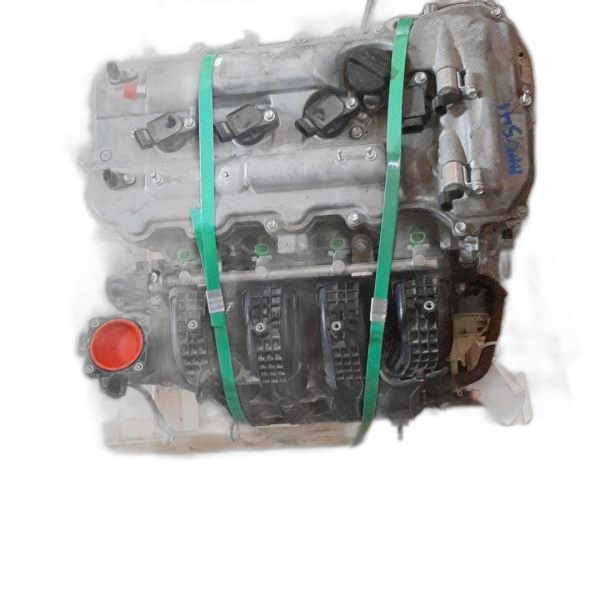
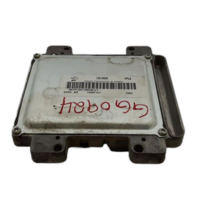
Shop the Parts Behind P3441
Below are the parts most often responsible for code P3441, ranked by how frequently each one is the actual culprit (per the diagnosis above). Tap any to see what we have for your vehicle.



The information in this article is provided for general reference and educational purposes only. Vehicle specifications, procedures, and part compatibility can vary by production date, trim level, and region. Always consult your vehicle's factory service manual and verify part numbers before purchasing or performing repairs. Safety-critical components such as airbags, seat belts, and braking systems should be installed by a qualified professional.
- 🧭 Diagnostic Flowchart
- 🛍️ Shop This Part
- What Does P3441 Mean?
- Can I Drive With P3441?
- Common Causes
- Symptoms
- Common Fixes & Costs
- Used vs. New Parts: Buying Guide
- What Happens If You Wait — Timeline
- Cost of Not Fixing It
- Diagnosis Steps
- When This Code Triggers (Freeze-Frame Conditions)
- Related Codes
- Climate & Environmental Factors
- How to Talk to a Mechanic About This Code
- Where to Take It: Dealer vs Independent vs Chain
- When to Walk Away From the Repair
- What Scan Tool You Need for This Code
- How to Clear the Code After You Fix It
- Will This Fail Emissions / State Inspection?
- Most Commonly Affected Vehicles
- Manufacturer-Specific Notes
- Real Owner Stories
- 2013 Ram 1500 5.7L HEMI with P3441
- 2011 Chevy Silverado 5.3L with AFM issues
- 2013 Honda Odyssey 3.5L with VCM-related codes
- How to Prevent This Code From Triggering
- Frequently Asked Questions
- What are the most common mistakes when diagnosing P3441?
- I replaced the solenoid, but the P3441 code came back. What's next?
- Will an oil change really fix this code?
- Can the wrong oil filter cause a P3441 code?
- I heard a ticking noise, and then the P3441 code appeared. What does that mean?
- The code appeared right after an oil change. What happened?
- Can a bad battery or alternator cause a P3441 code?
- My car has code P3441 but it runs fine and isn't misfiring. Why?
- Key Takeaways
- 🎟️ Get 5% Off