

OBD-II Code P3442: Cylinder 6 Deactivation Control Performance
What P3442 means, why it triggers, and how to fix it
- Code P3442 indicates the Powertrain Control Module (PCM) detected a failure in the cylinder 6 deactivation system, forcing the engine to run on all 8 cylinders and dropping fuel economy by 5-15%.
- Perform an oil and filter change using the exact factory-specified viscosity (usually 5W-20) before attempting any expensive repairs, as incorrect oil pressure is the leading cause of this code.
- Check for manufacturer Technical Service Bulletins (TSBs), as many Ram, Dodge, and Chrysler vehicles resolve this code permanently with a $150-$250 dealership PCM software update.
- Listen closely for a distinct ticking noise from the top of the engine; if present with P3442, immediately stop driving and tow the vehicle to a shop to prevent a $3,000+ camshaft failure.
What Does P3442 Mean?
P3442 means the Powertrain Control Module (PCM) detected a performance problem in the system that shuts off cylinder #6 to save fuel. This feature (known as Active Fuel Management in GM or Multi-Displacement System in Chrysler/Dodge/Jeep) operates during light-load highway cruising. The code triggers when cylinder 6 fails to activate or deactivate exactly as the PCM commanded.
Technical definition: The SAE/OBD-II definition is "Cylinder 6 Deactivation/Intake Valve Control Circuit Performance". The PCM commanded the cylinder 6 deactivation solenoid to change state but detected the actual mechanical or electrical response did not match the expected parameters.
Can I Drive With P3442?
Yes, But With Caution. Yes, but diagnose it quickly. The cylinder deactivation system disables itself, dropping fuel economy by 5-15%. Ignoring a mechanical cause like low oil pressure or a failed lifter causes catastrophic engine damage, including camshaft failure, turning a moderate repair into a multi-thousand-dollar engine rebuild.
🎬 Watch: See how a failed AFM lifter causes loud engine popping.Common Causes
- Low or Dirty Engine Oil (Very Common) — Hydraulic deactivation systems require clean oil at precise pressures. Low levels, sludge, or incorrect viscosity (e.g., 10W-30 instead of 5W-20) prevent solenoids and lifters from actuating.
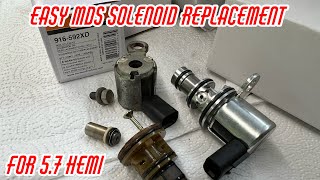
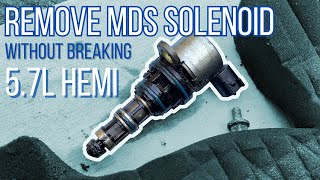
- Faulty Cylinder Deactivation Solenoid (Common) — This electronic valve controls oil flow to the deactivation lifters. It fails electrically (open/short circuit) or mechanically (stuck/clogged). 🎬 See this walkthrough on removing MDS solenoids without breaking them.
- Outdated Powertrain Control Module (PCM) Software (Common) — Factory software on many Ram, Dodge, and Chrysler vehicles is overly sensitive and falsely triggers P3442. A dealership software update (reflash) permanently resolves this.
- Wiring Harness or Connector Issue (Common) — Heat and vibration in the engine valley damage solenoid wiring. Look for melted wires, shorts to ground, or corroded connectors.
- Mechanically Failed Deactivation Lifter (Less Common) — Specialized AFM/MDS lifters stick or collapse over time. This causes a distinct ticking noise and destroys the camshaft if ignored.
- Blocked Oil Passages (Rare) — Engine sludge blocks the microscopic oil galleries feeding the solenoids, starving them of pressure even if overall engine oil pressure is normal.
- Faulty Oil Pressure Sensor (Rare) — The PCM relies on oil pressure data to enable the system. Inaccurate sensor readings prevent activation.
- Failing Powertrain Control Module (PCM) (Very Rare) — The internal driver circuit controlling the cylinder 6 solenoid fails. Rule out all other electrical and mechanical causes first.
Symptoms
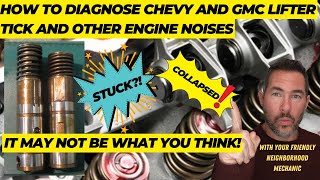
- Engine Ticking or Chattering Noise — A distinct ticking or knocking sound from the top of the engine indicates a failing lifter or a chattering solenoid. 🎬 Watch: Learn how to diagnose lifter tick versus other engine noises.
- Rough Idle, Hesitation, or Misfire — The engine stumbles, vibrates, or misfires during light acceleration when the system attempts to transition between 4-cylinder and 8-cylinder modes.
- Check Engine Light On (also visible on scanner) — The Malfunction Indicator Lamp (MIL) illuminates immediately upon fault detection.
- Reduced Fuel Economy (also visible on scanner) — The PCM disables cylinder deactivation as a fail-safe, forcing the engine to run on all 8 cylinders constantly, dropping fuel economy by 5-15%.
Diagnostic Flowchart
Tap your situation to follow the diagnostic path that matches what you're seeing on this code.
Common Fixes & Costs
- Perform an Oil and Filter Change — Parts: $40-$80, Labor: $20-$40, ~0.5 hr book time (DIY)
- Update PCM Software — Parts: $0, Labor: $150-$250, ~1.0 hr book time (Professional)
- Replace Cylinder Deactivation Solenoid(s) — Parts: $50-$150 (per solenoid), Labor: $450-$800, ~3.5 hr book time (Intermediate)
- Repair Wiring Harness or Connector — Parts: $10-$50, Labor: $150-$450, ~2.5 hr book time (Intermediate)
- Replace Failed Lifters and Camshaft — Parts: $600-$1800, Labor: $1200-$3000+, ~15 hr book time (Professional)
DIY vs Professional
- Perform an Oil and Filter Change 🟢 Beginner
Tools: Wrench for drain plug, oil filter wrench, drain pan, funnel, new oil, new filter. - Replace Cylinder Deactivation Solenoid(s) 🟢 Beginner
Tools: Advanced socket set, torque wrench, screwdrivers, pliers, intake manifold gaskets, new solenoid(s). - Update PCM Software 🟢 Beginner
Tools: OEM-level scan tool with a subscription for software flashing. - Repair Wiring Harness or Connector 🟢 Beginner
Tools: Multimeter, wire strippers, crimpers, heat gun, soldering iron, replacement connector pigtail. - Replace Failed Lifters and Camshaft 🟢 Beginner
Tools: Complete professional mechanic's tool set, engine crane, specialty timing tools, torque-to-yield bolt sockets.
Used vs. New Parts: Buying Guide
When a used part is worth it: Buying used deactivation solenoids or VLOM assemblies is never recommended. These parts live in a high-heat environment and are prone to failure from heat cycles and oil contamination.
Donor-vehicle mileage cap: roughly under 40000 miles for the part to have meaningful remaining life.
Donor quality checklist:
- Verify the part number exactly, as many have been superseded.
- Avoid parts from engines that had known 'Hemi Tick' or lifter noise.
- Inspect the solenoid's filter screens for any sludge or debris.
Decision logic:
- If The cost of a new OEM or reputable aftermarket solenoid/VLOM is under $200 → Always buy new. The savings from a used part do not justify the high risk of premature failure and repeat labor costs.
- If The part is electronic and internal to the engine (like a solenoid) → Favor new due to the high labor cost of replacement. The risk isn't worth the small savings.
Warranty tradeoff: Used parts from a salvage yard typically have a 30-90 day warranty. New aftermarket parts carry a 1-year to limited lifetime warranty. New OEM parts have a 1-2 year warranty.
Worst-case if a used part fails: 400-800. If a used solenoid fails, you pay the significant labor cost of removing the intake manifold a second time.
What Happens If You Wait — Timeline
- 0-1 month: Check Engine Light illuminates with P3442. Cylinder deactivation is disabled by the PCM. No other symptoms may be noticeable. (MPG impact: 5-10%% · Added cost: $20-80 in wasted fuel.)
- 1-4 months: If the cause is electrical, symptoms remain stable. If the cause is a developing mechanical lifter issue, a faint ticking noise begins, especially on cold starts. (MPG impact: 5-15%% · Added cost: $80-250 in wasted fuel.)
- 4-12 months: A failing lifter begins to stick or collapse more frequently, causing a persistent misfire (blinking CEL) and a loud, constant ticking/knocking noise. The misfire damages the catalytic converter. (MPG impact: 10-20%% · Added cost: $1500-2800 (for potential catalytic converter and O2 sensor replacement).)
- 12+ months: The stuck/collapsed lifter completely fails, grinding down the corresponding lobe on the camshaft. This is a catastrophic failure requiring a full engine teardown. (MPG impact: N/A (vehicle may be undrivable)% · Added cost: $3000-7000+ (for camshaft, lifters, and potential full engine rebuild).)
Cost of Not Fixing It
- 0-3 months: Guaranteed failure of emissions tests and a 5-15% drop in fuel economy as the engine constantly runs on all cylinders. (Added cost: 50-150)
- 3-12 months: A stuck lifter creates a persistent misfire, which overheats and damages the catalytic converter while washing cylinder walls with raw fuel. (Added cost: 1200-2800)
- 12+ months: A failing lifter eventually collapses or seizes, destroying the camshaft lobe. This catastrophic failure requires major engine disassembly and repair. (Added cost: 3000-7000+)
Diagnosis Steps
- Check Engine Oil Level and Condition
Ensure the engine oil is full and clean. If it is low, dark, or past its service interval, perform an oil and filter change using the exact manufacturer-specified oil viscosity. Incorrect viscosity is the leading cause of MDS/AFM issues.
Tools: Dipstick, new oil and filter (Beginner) - Scan for Codes and Check for TSBs
Use an OBD-II scanner to confirm P3442 and look for misfire codes (P0306). Crucially, check for Technical Service Bulletins (TSBs) for your specific VIN, as a PCM software update is a common fix for FCA vehicles.
Tools: OBD-II Scanner (Beginner) - Command Solenoid Activation with a Bi-Directional Scan Tool
Command the cylinder 6 deactivation solenoid on and off while the engine idles. Listen for an audible 'click' from the engine valley. No click means the solenoid is stuck or has failed electrically, dictating the next physical steps.
Tools: Advanced Bi-Directional Scan Tool (Advanced) - Inspect the Wiring and Connector
Visually inspect the wiring harness going to the cylinder 6 deactivation solenoid. Look for chafing, melting, or broken wires. Unplug the connector and check for corrosion or pushed-out pins.
Tools: Flashlight, Socket Set (for manifold removal) (Intermediate) - Test the Solenoid and Control Circuit
Disconnect the solenoid. Measure its resistance with a multimeter (typically 10-18 ohms depending on the make). Check the control wire for continuity to the PCM. Ensure 0V on the control circuit with the key on/engine off to rule out a short to voltage.
Tools: Multimeter, Factory Wiring Diagram (Advanced) - Check Engine Oil Pressure with a Mechanical Gauge
Dashboard gauges are inaccurate. Connect a mechanical gauge to the engine block. Chrysler MDS requires >16 PSI; GM AFM requires >22 PSI at hot idle to operate the lifters. Low pressure prevents the system from working.
Tools: Mechanical Oil Pressure Gauge (Advanced) - Inspect for Internal Mechanical Failure
If electrical tests pass and oil pressure is good, remove the intake manifold and cylinder heads to inspect for stuck lifters, clogged oil passages in the lifter tray, or a worn camshaft lobe.
Tools: Extensive Mechanical Tool Set (Professional)
When This Code Triggers (Freeze-Frame Conditions)
- Engine Coolant Temp: 180-210°F (82-99°C) (The engine must be fully warmed up for the system to activate.)
- RPM: 1,500-2,500 RPM (The code sets during steady-state cruising or light acceleration, not at idle.)
- Engine Load: 20-50% (Cylinder deactivation engages under light to moderate load conditions.)
- Vehicle Speed: 35-70 mph (56-112 km/h) (The system is designed exclusively for highway cruising speeds.)
Related Codes
- P0306 — Means 'Cylinder 6 Misfire'. It frequently appears with P3442 because a lifter stuck in the deactivated position prevents the cylinder from firing. A constant misfire strongly points to mechanical failure.
- P3441 — Means 'Cylinder 6 Deactivation/Intake Valve Control Circuit/Open'. It points directly to a break in the electrical circuit, like a broken wire or an internally failed solenoid.
- P3443 — Means 'Cylinder 6 Deactivation/Intake Valve Control Circuit Low', indicating the circuit has low voltage, likely due to a constant short to ground.
- P3400 — A general code for 'Cylinder Deactivation System Bank 1'. If present with P3442, it suggests a problem common to the entire bank, like a clogged oil gallery or low overall oil pressure.
Climate & Environmental Factors
- Cold Weather: Cold, thick oil slows the hydraulic actuation of the MDS/AFM system. Borderline conditions or incorrect oil viscosity cause sluggish performance and trigger a code on a cold engine.
- High Heat: Deactivation solenoids and wiring harnesses are located in the engine valley, a high-heat area. Over many heat cycles, wiring insulation becomes brittle and plastic solenoid housings fail.
How to Talk to a Mechanic About This Code
Say this: "I have a P3442 code on my vehicle and I'd like to schedule a diagnostic. I've already confirmed the engine oil is clean and at the correct level. I'd like you to check for any TSBs related to a PCM update and, if necessary, test the cylinder 6 deactivation solenoid circuit, including commanding it with a scan tool."
This signals you've done the basic checks and understand the common causes. It directs the technician toward an efficient diagnostic path (software, wiring, solenoid) and prevents them from simply recommending an oil change you don't need.
Avoid saying:
- 'My check engine light is on.' (Too vague)
- 'It's running a little rough, can you fix it?'
- 'Just do whatever it takes to fix the code.'
Questions to ask before authorizing the repair:
- Is there a Technical Service Bulletin (TSB) for a software update for this code on my vehicle?
- If you're recommending a solenoid replacement, did you test the circuit and command the solenoid with a scan tool to confirm it failed?
- If the solenoid and wiring are good, what was the oil pressure reading from your mechanical gauge?
- If you are replacing one solenoid, what is the cost to replace all of them on that bank while the intake manifold is off?
- What is the warranty on the parts and labor for this repair?
Where to Take It: Dealer vs Independent vs Chain
- Dealer:
Recommended, especially for Chrysler/Dodge/Ram vehicles where a software update is a very common fix. Also the best choice if the vehicle is under warranty.
Best for: Vehicles under warranty., Confirming if a PCM software update (reflash) is needed, as this is often a dealer-exclusive procedure., Complex electrical or internal engine diagnosis where manufacturer-specific tools are required.
Downsides: Labor rates can be 30-50% higher than independent shops., May be quicker to replace parts rather than perform detailed wiring repairs. (Typical cost: +40% vs. baseline) - Independent Shop:
Best fit for out-of-warranty repairs, provided you choose a well-regarded shop with experience in modern V8 engine diagnostics. Ask if they have bi-directional scan tools.
Best for: Out-of-warranty vehicles where the cause is likely a common hardware failure (solenoid, lifters)., Cost-effective labor rates for major repairs like lifter/camshaft replacement.
Downsides: Shop must have modern bi-directional scan tools and experience with MDS/AFM systems., May not have access to the latest manufacturer TSBs or PCM flashing capabilities. (Typical cost: +0% vs. baseline) - Chain Shop:
Acceptable only for an oil change. AVOID for diagnosing P3442, as it requires specialized tools and knowledge beyond the scope of most chain shops.
Best for: The first diagnostic step: performing an oil and filter change.
Downsides: Technicians may lack the specialized tools (bi-directional scanners) and training for MDS/AFM diagnosis., High potential for misdiagnosis, leading to unnecessary replacement of parts. (Typical cost: -10% vs. baseline)
When to Walk Away From the Repair
If the repair cost exceeds 50% of the vehicle's private-party value, sell it as-is or trade it in.
- Car worth $9000, fix is $850: Fix it. A solenoid replacement is a common repair and well below the threshold.
- Car worth $8000, fix is $4500: Walk away. The cost for a lifter and camshaft replacement is over 50% of the vehicle's value.
- Car worth $3000, fix is $1500: Borderline. The repair cost is 50% of the vehicle's value. Get a second opinion before proceeding.
What Scan Tool You Need for This Code
Minimum: Bi-directional control to command the deactivation solenoid.
A basic $20-$50 code reader will only tell you the P3442 code exists. It cannot perform the most crucial non-invasive diagnostic step: commanding the solenoid to activate. Without this test, you are just guessing whether the problem is the solenoid, the wiring, or a deeper mechanical issue.
Budget: BlueDriver Pro (~$100) — Reads and clears codes, provides freeze-frame data, and offers live data graphing. NOTE: BlueDriver lacks bi-directional control, so it cannot command the solenoid, making it insufficient for a full DIY diagnosis of this specific code.
Mid-range: Foxwell NT510 Elite / XTOOL D7 (~$150-350) — Provides full bi-directional control to command the MDS/AFM solenoid on and off, allowing you to hear it click and confirm if it's working mechanically. Also reads manufacturer-specific codes and live data streams.
Professional: Autel MaxiCOM MK808 / MK906BT (~$450-1200) — Offers full OEM-level bi-directional functions, advanced live data graphing, and potential access to guided functions and repair databases. This is professional-grade equipment.
Rent vs buy: Most auto parts store loaner tools are basic code readers and will NOT have the bi-directional capability needed to diagnose P3442 properly. For this code, you must buy a capable scanner or pay for a professional diagnosis.
How to Clear the Code After You Fix It
- Use an OBD-II scan tool to clear the P3442 code.
- Ensure the fuel tank is between 1/4 and 3/4 full.
- Perform a complete drive cycle to allow readiness monitors to run.
Drive cycle (~30 minutes): A general drive cycle includes a cold start (engine off for 8+ hours), a 2-3 minute idle, 15 minutes of mixed city/highway driving (including steady speeds of 55 mph), and several smooth decelerations without braking.
Readiness monitors affected: Catalyst Monitor, Evaporative System Monitor, Oxygen Sensor Monitor, EGR System Monitor
Before emissions retest: drive at least 100 miles to fully set monitors.
Watch out for:
- Disconnecting the battery clears the code but resets all readiness monitors to 'Not Ready', guaranteeing an emissions test failure.
- The code returns immediately if the root cause (e.g., bad solenoid, wiring fault) was not correctly repaired.
Will This Fail Emissions / State Inspection?
Yes — this code typically fails an OBD-II emissions inspection.
- California: An illuminated Check Engine Light is an automatic failure. After repair, all readiness monitors must be 'Ready' (with the potential exception of the EVAP monitor) to pass.
- New York: The NYS DMV inspection includes an OBD-II scan. An active P3442 code causes an automatic failure.
- Texas: In the 17 counties requiring emissions testing, an illuminated Check Engine Light is an automatic fail. You cannot have more than one readiness monitor 'Not Ready' to pass.
Most Commonly Affected Vehicles
- Ram 1500 / 2500 / 3500 (2006-2021) — Extremely common on 5.7L and 6.4L HEMI V8s. Often caused by a failed MDS solenoid or outdated software. TSBs like #18-036-20 point to a PCM reflash as the primary fix.
- Chevrolet Silverado 1500 / Tahoe / Suburban (2007-2020) — Very common on 5.3L and 6.2L V8 engines with Active Fuel Management (AFM). Frequently caused by a failed lifter or the solenoid inside the Valve Lifter Oil Manifold (VLOM).
- GMC Sierra 1500 / Yukon (2007-2020) — Mechanically identical to Chevrolet counterparts, these trucks share the same AFM system vulnerabilities, particularly lifter and VLOM solenoid failures.
- Dodge Charger / Durango (2006-2021) — Models with the 5.7L HEMI V8 use the MDS system and are prone to solenoid failures and related wiring issues.
- Jeep Grand Cherokee / Commander (2006-2021) — Equipped with the 5.7L HEMI V8 and MDS, these are commonly affected by failed MDS solenoids or oil pressure issues.
- Chrysler 300 / Aspen (2006-2021) — Susceptible to this code due to the 5.7L HEMI MDS engine. Solenoid failure and software updates are the most common fixes.
- Cadillac Escalade (2007-2020) — Equipped with the 6.2L V8 and AFM system, the Escalade is prone to lifter and solenoid (VLOM) failures.
- Honda Odyssey / Pilot / Accord (2008-2017) — Honda's Variable Cylinder Management (VCM) system triggers this family of codes due to clogged spool valve assemblies or faulty VCM oil pressure switches.
Manufacturer-Specific Notes
- General Motors (Chevrolet, GMC, Cadillac): On GM vehicles with Active Fuel Management (AFM), this code is frequently a precursor to a collapsed AFM lifter, which damages the camshaft. A common failure point is the filter screen under the oil pressure sensor, which clogs and starves the system.
- Ram / Dodge / Jeep (FCA): On vehicles with the HEMI Multi-Displacement System (MDS), FCA has released multiple Technical Service Bulletins (TSBs), such as 18-036-20, where a simple PCM software update fixes the code without replacing any parts.
- Honda: On Honda V6 engines with Variable Cylinder Management (VCM), equivalent codes are often caused by leaking VCM spool valve gaskets or a faulty VCM oil pressure switch, which are more accessible than domestic V8 solenoids.
- All: A common misdiagnosis is replacing the solenoid without verifying oil pressure with a mechanical gauge. Another mistake is replacing lifters when the actual cause was a simple wiring fault hidden under the intake manifold.
Real Owner Stories
2013 Ram 1500 5.7L at 90K miles with misfire
Owner experienced a severe loss of power and misfire, feeling like the truck was in limp mode.
What they tried:
- Took the vehicle to a professional shop for diagnosis.
Outcome: A shop diagnosed a failed MDS solenoid for cylinder #7. The owner wisely chose to have all four MDS solenoids replaced at the same time, since the intake manifold already had to be removed. This resolved the issue completely.
Lesson: When one MDS solenoid fails, the others are often not far behind. Replacing them all at once saves on significant future labor costs.
2019 Chevy Silverado 5.3L at 88K miles with sudden failure
While driving on the freeway, the check engine light began flashing, accompanied by traction control warnings. The truck had to be towed.
What they tried:
- The owner had been diligent with maintenance, including 3,100-mile oil changes.
Outcome: A dealership diagnosed a failed AFM lifter that went out of position and damaged the camshaft. The repair involved replacing all lifters and the camshaft, costing over $10,000.
Lesson: Even with meticulous maintenance, the mechanical design of AFM lifters can lead to failure. A blinking check engine light indicates a severe misfire; pull over immediately to prevent further engine damage.
2013 Ram 1500 with intermittent ticking noise and P3442
Owner reported a ticking noise and a P3442 code. The issue seemed sensitive to oil condition.
What they tried:
- Performed an early oil change using the correct 5W-20 viscosity oil.
Outcome: A simple oil and filter change with the correct, high-quality oil resolved the ticking noise and the code did not return.
Lesson: Always start with the simplest fix. Using the wrong viscosity (like 10W-30) or extending oil change intervals is a known cause of MDS/AFM problems.
How to Prevent This Code From Triggering
- Use high-quality full synthetic oil of the correct viscosity. (Every oil change) — MDS/AFM systems are extremely sensitive to oil quality and viscosity. High-quality synthetics resist breakdown and prevent sludge that clogs the tiny passages in the solenoids and lifters.
- Shorten oil change intervals. (Every 3,000-5,000 miles) — Do not rely on the vehicle's oil life monitor. Frequent changes ensure the oil remains clean, preventing the contamination and sludge that are primary causes of lifter and solenoid failure.
- Install an AFM/DFM Disabler device. (One-time installation) — For GM vehicles, these OBD-II plug-in devices prevent the computer from ever activating cylinder deactivation. This stops the constant cycling of the failure-prone AFM lifters, significantly reducing the chance of mechanical failure.
- Perform a full AFM/MDS mechanical delete. (Once, during a major service or repair) — This is the only 100% permanent solution. It involves replacing the special AFM/MDS lifters with standard lifters, replacing the camshaft, and tuning the ECU to remove the system entirely.
Frequently Asked Questions
Can I fix P3442 myself?
Yes, if the cause is low oil or a dirty filter, an oil change is a simple DIY fix. Replacing the deactivation solenoid requires removing the intake manifold, suited only for advanced DIYers. Internal engine issues like a bad lifter require a professional mechanic.
How much does it cost to fix P3442?
An oil change costs under $100, while a dealership PCM software update runs $150 to $250. Replacing a failed deactivation solenoid costs $450 to $800 due to the labor of removing the intake manifold. A worst-case lifter and camshaft replacement exceeds $2,000.
Will changing my oil fix the P3442 code?
Yes, it often does. Low oil levels, incorrect viscosity (like 10W-30 instead of 5W-20), or heavy sludge prevent the hydraulic deactivation system from working. An oil change is always the first and cheapest diagnostic step.
What is a cylinder deactivation solenoid?
It is an electronically controlled valve that directs pressurized engine oil to specialized hydraulic lifters. When activated by the PCM, the oil pressure collapses the lifters, keeping the cylinder's valves closed. This effectively shuts the cylinder off to save fuel during highway cruising.
Is P3442 a serious code?
The immediate severity is moderate, causing a 5-15% drop in fuel economy as the system disables itself. However, if the root cause is low oil pressure or a failing lifter, ignoring it causes catastrophic engine damage. Diagnose it immediately to prevent a multi-thousand-dollar repair.
What does 'Hemi Tick' have to do with P3442?
The 'Hemi Tick' is a distinct tapping noise often caused by a failing MDS solenoid or a collapsed MDS lifter. If you have code P3442 accompanied by this ticking sound, it strongly indicates mechanical failure. Stop driving and inspect the lifters to prevent camshaft destruction.
I replaced the solenoid but the code came back. Now what?
First, check for Technical Service Bulletins (TSBs) requiring a PCM software update, which is a common fix for FCA vehicles. Next, verify engine oil pressure with a mechanical gauge to ensure the new solenoid is receiving adequate pressure. If pressure is good, suspect a clogged oil passage or a mechanically failed lifter.
Why do so many MDS/AFM systems fail?
These systems rely on complex hydraulic lifters and solenoids operating in high-heat environments under the intake manifold. Extended oil change intervals create sludge that clogs the microscopic oil passages required for actuation. Heat cycles also make the wiring and plastic solenoid housings brittle over time.
Key Takeaways
- Code P3442 indicates the Powertrain Control Module (PCM) detected a failure in the cylinder 6 deactivation system, forcing the engine to run on all 8 cylinders and dropping fuel economy by 5-15%.
- Perform an oil and filter change using the exact factory-specified viscosity (usually 5W-20) before attempting any expensive repairs, as incorrect oil pressure is the leading cause of this code.
- Check for manufacturer Technical Service Bulletins (TSBs), as many Ram, Dodge, and Chrysler vehicles resolve this code permanently with a $150-$250 dealership PCM software update.
- Listen closely for a distinct ticking noise from the top of the engine; if present with P3442, immediately stop driving and tow the vehicle to a shop to prevent a $3,000+ camshaft failure.
Helpful Videos
Shop the Parts Behind P3442
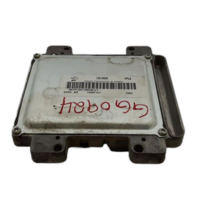
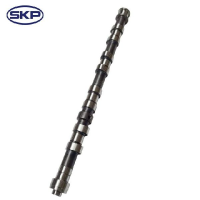
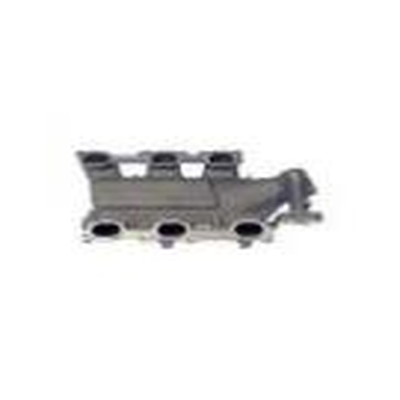
Below are the parts most often responsible for code P3442, ranked by how frequently each one is the actual culprit (per the diagnosis above). Tap any to see what we have for your vehicle.


The information in this article is provided for general reference and educational purposes only. Vehicle specifications, procedures, and part compatibility can vary by production date, trim level, and region. Always consult your vehicle's factory service manual and verify part numbers before purchasing or performing repairs. Safety-critical components such as airbags, seat belts, and braking systems should be installed by a qualified professional.
- 🧭 Diagnostic Flowchart
- 🎬 Helpful Videos
- 🛍️ Shop This Part
- What Does P3442 Mean?
- Can I Drive With P3442?
- Common Causes
- Symptoms
- Common Fixes & Costs
- DIY vs Professional
- Used vs. New Parts: Buying Guide
- What Happens If You Wait — Timeline
- Cost of Not Fixing It
- Diagnosis Steps
- When This Code Triggers (Freeze-Frame Conditions)
- Related Codes
- Climate & Environmental Factors
- How to Talk to a Mechanic About This Code
- Where to Take It: Dealer vs Independent vs Chain
- When to Walk Away From the Repair
- What Scan Tool You Need for This Code
- How to Clear the Code After You Fix It
- Will This Fail Emissions / State Inspection?
- Most Commonly Affected Vehicles
- Manufacturer-Specific Notes
- Real Owner Stories
- 2013 Ram 1500 5.7L at 90K miles with misfire
- 2019 Chevy Silverado 5.3L at 88K miles with sudden failure
- 2013 Ram 1500 with intermittent ticking noise and P3442
- How to Prevent This Code From Triggering
- Frequently Asked Questions
- Can I fix P3442 myself?
- How much does it cost to fix P3442?
- Will changing my oil fix the P3442 code?
- What is a cylinder deactivation solenoid?
- Is P3442 a serious code?
- What does 'Hemi Tick' have to do with P3442?
- I replaced the solenoid but the code came back. Now what?
- Why do so many MDS/AFM systems fail?
- Key Takeaways
- 🎟️ Get 5% Off