

P3442 on 2015-2018 Ram 2500: Cylinder 6 Deactivation Performance Fixes
P3442 on a Ram 2500 HEMI indicates a fault in the Cylinder 6 deactivation (MDS) system. The most common causes are a faulty MDS solenoid or outdated PCM software. A software update may be required per TSBs, while a replacement solenoid costs between $50 and $110.
- P3442 on a 2015-2018 Ram 2500 points to a fault with the cylinder 6 deactivation (MDS) system.
- Before replacing any parts, check with a dealer to see if your truck needs a PCM software update, as multiple TSBs list this as the primary fix.
- The most common hardware failure is the cylinder 6 MDS solenoid, located under the intake manifold.
- Always check your engine oil level and condition first, as low or incorrect oil can cause this code.
- This code is often seen with other MDS codes (P3402, P3426, P3450), reinforcing the likelihood of a systemic software or oil pressure issue.
What's Unique About the 2015-2018 Ram 2500
🎬 Watch: A heavy mechanic's review of common 6.4L HEMI engine issues.For this generation of Ram trucks, the P3442 code is frequently linked to software issues within the Powertrain Control Module (PCM). Ram's parent company issued multiple Technical Service Bulletins (TSBs) indicating that a simple PCM reflash with updated software can resolve this and other related MDS performance codes. This suggests that the logic for controlling the MDS was overly sensitive or flawed in the original software, making a software update a primary diagnostic step before replacing hardware.
Diagnostic Flowchart
Tap your situation to follow the diagnostic path that matches what you're seeing on this vehicle.
Symptoms You May Notice
- Check Engine Light (MIL) is on.
- Rough or uneven idle.
- Reduced engine performance or hesitation during acceleration.
- Decreased fuel economy as the MDS system is disabled.
- A shudder or pulsation feeling at highway speeds.
- Possible ticking or knocking noises from the engine.
- Replacing the MDS solenoid when only a PCM software update was needed.
- Replacing spark plugs and ignition coils, which are unlikely to cause a specific cylinder deactivation performance code.
Most Likely Causes
- Outdated Powertrain Control Module (PCM) Software 🔴 High Probability → Shop Engine Control Module (ECM) Multiple TSBs (#18-036-20, #18-082-16, #18-002-15 REV B, #18-080-15 REV A) were issued by the manufacturer to correct this exact code via a software update, indicating it's a very common, documented issue.
How to confirm: A dealership or qualified shop can check if your vehicle's PCM software is up to date by connecting a diagnostic scan tool (like wiTECH) and checking for available updates.
Typical fix: Reprogramming the PCM with the latest software version.
Est. part cost: $0 - Faulty Cylinder 6 MDS Solenoid 🟡 Medium Probability → Shop Engine Cylinder Deactivation Solenoid The MDS solenoids operate in hot engine oil and can fail electrically or become clogged with debris over time.
How to confirm: After confirming oil level and pressure are good, a technician can command the solenoid on and off with a scan tool. If it doesn't respond, or if its electrical resistance (measured with a multimeter) is out of spec, it has failed.
Typical fix: Replace the cylinder 6 MDS solenoid. This requires removing the intake manifold to access the solenoids. 🎬 See this step-by-step walkthrough for replacing a HEMI MDS solenoid.
Est. part cost: $50-$110 - Low Engine Oil Level or Incorrect Viscosity 🟡 Medium Probability The MDS system is hydraulic and relies entirely on correct oil pressure to function. Using oil that is too thick or thin, or simply being low on oil, can prevent the lifters from deactivating correctly.
How to confirm: Check the engine oil level on the dipstick and verify the correct oil type (e.g., 0W-40 for the 6.4L HEMI) is being used. A mechanical oil pressure test can confirm proper pressure.
Typical fix: Perform an oil and filter change with the manufacturer-specified oil viscosity and ensure the level is correct.
Est. part cost: $50-$120 - Wiring Harness or Connector Issue ⚪ Low Probability The engine harness is exposed to heat and vibration, which can lead to chafed wires or corroded connector pins over time.
How to confirm: Visually inspect the wiring harness leading to the MDS solenoids (under the intake manifold) for damage. Check the connector for corrosion or loose pins. A multimeter can be used to check for continuity between the PCM and the solenoid connector.
Typical fix: Repair the damaged section of the wiring harness or clean/replace the faulty connector.
Est. part cost: $10-$50
Rare But Worth Checking
- Failed MDS Lifter: If the solenoid, wiring, and oil pressure are all good, the issue may be a mechanical failure of the special MDS lifter for cylinder 6. This is a more involved and expensive repair that can cause misfires and engine noise.
- Restricted Oil Passages: Engine sludge or debris can block the small oil passages leading to the MDS solenoid and lifters, preventing proper operation. This usually points to a larger issue of engine sludge.
Diagnosis Steps
- Check the engine oil level and condition. Ensure the correct oil viscosity is being used. Top off or change if necessary.
- Use a scan tool to check for any other DTCs, especially other MDS codes or misfire codes.
- Check for applicable TSBs. For this vehicle, confirm if TSBs #18-036-20, #18-082-16, #18-002-15 REV B, or #18-080-15 REV A have been performed. If not, a PCM reflash is the next logical step.
- If software is up to date, inspect the wiring harness and connectors for the MDS solenoids, which are located under the intake manifold. Look for any signs of damage, corrosion, or loose connections.
- Using an advanced scan tool, command the cylinder 6 MDS solenoid on and off to check for an audible click and response.
- If the solenoid does not respond, test its resistance with a multimeter. Compare the reading to the manufacturer's specification. An out-of-spec reading indicates a failed solenoid.
- If the solenoid and wiring test good, the problem may be mechanical, such as a stuck/failed MDS lifter or clogged oil passages. This requires more significant engine disassembly to inspect.
Parts You'll Likely Need
- Multiple Displacement System (MDS) Solenoid
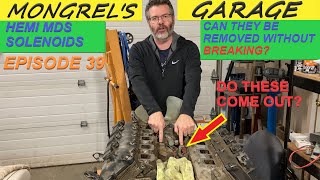
(OEM #53022298AB)— This solenoid is the most common hardware component to fail. 🎬 Watch: Pro tips for removing stubborn or broken MDS solenoids. It controls the oil flow that activates the deactivation lifter for cylinder 6.
Trusted brands: Mopar
OEM price range: $75-$110
Aftermarket price range: $40-$70
Related Codes That Often Appear With This One
- P3402 — Cylinder 1 Deactivation Control Performance. Often appears with P3442 as part of a systemic MDS issue, frequently addressed by the same TSBs.
- P3426 — Cylinder 4 Deactivation Control Performance. Often appears with P3442 as part of a systemic MDS issue, frequently addressed by the same TSBs.
- P3450 — Cylinder 7 Deactivation Control Performance. Often appears with P3442 as part of a systemic MDS issue, frequently addressed by the same TSBs.
- P0306 — Cylinder 6 Misfire. A failing MDS lifter or solenoid can sometimes lead to a misfire on the same cylinder.
Technical Service Bulletins (TSBs) & Recalls
- 18-036-20: Addresses P3442 and other MDS codes, recommending a PCM reflash.
- 18-082-16: Lists P3442 as a code that can be resolved with a software update.
- 18-002-15 REV B: Involves reprogramming the PCM for P3442 and other deactivation performance codes.
- 18-080-15 REV A: Also points to a PCM software update as a fix for a group of codes including P3442.
Platform-Specific Known Issues
- A number of TSBs (e.g., #18-036-20, #18-002-15 REV B) were released by the manufacturer specifically to address P3442 and other MDS codes with a PCM software update. This should be the first item checked at a dealership.
Mechanic-Grade Diagnostic Values
- MDS Solenoid Coil Resistance — expected: Typically in the single to low-double-digit ohms range (~6–30 Ω). One service manual specifies checking for resistance below 5.0 ohms as part of a continuity test from the PCM.. Failure: A reading outside the specified range, or an open/shorted circuit, indicates a faulty solenoid.
- MDS Solenoid Control Circuit Voltage — expected: When commanding the solenoid ON with a scan tool, a test light connected to the control circuit should flash. Voltage should cycle between 0V and near battery voltage.. Failure: No voltage or constant voltage when the solenoid is actuated suggests a wiring or PCM driver issue.
- PCM Supply Voltage Stability — expected: Should be a stable 12V.. Failure: Fluctuations greater than ±0.2 V can corrupt signal timing and indicate a voltage regulation problem that needs to be addressed before replacing other components.
Scan Tool Commands That Help
- wiTECH: MDS Solenoid Actuation Test — This bidirectional command is used to manually activate and deactivate the Cylinder 6 MDS solenoid. A technician can listen for an audible click from the solenoid (located under the intake manifold) to confirm it is mechanically responding to the PCM's command. This helps isolate a faulty solenoid from a wiring or oil pressure issue.
- wiTECH: View DTCs / Read Freeze Frame — Used as the initial step to confirm P3442 is active and to check for any other related codes (like misfires or other MDS cylinder codes) and review the engine conditions at the time the fault was set.
Wiring & Ground Locations
- (K453) MDS Solenoid No. 6 Control Circuit — This is the specific wire running from the Powertrain Control Module (PCM) to the MDS solenoid for cylinder 6.. Technicians must test this wire for continuity, shorts to voltage, or shorts to ground between the PCM and the solenoid to rule out a wiring fault.
- C101 / C140 Harness Connector — A key inline harness connector between the PCM and the engine components, including the MDS solenoids. Its exact location can vary but it serves as a critical test point.. Service procedures recommend testing for resistance and voltage at this connector to differentiate between a problem in the engine-side harness (solenoid) and the body-side harness (PCM).
- (Z903) / (Z904) Ground Circuit — This is the ground circuit for the MDS solenoid, which terminates at the PCM.. A faulty ground connection can cause the solenoid to function incorrectly. Testing for continuity to ground is a key step in diagnosing the circuit.
Real Owner Repair Stories
- RamForum.com user 'loopless' (2013 Ram 1500 5.7L, 90K miles) — Misfire on cylinder #7, loss of power, felt like limp mode.
❌ Tried (didn't work) The owner's personal OBD reader gave no clue about the actual cause.
✅ What actually fixed it A shop diagnosed a failed MDS solenoid for cylinder #7. The owner had all four solenoids replaced since the intake manifold had to be removed for the repair, which resolved the issue. - RamForum.com user 'narshbox' (2012 Ram 5.7L, 188,000 kms (approx. 115k miles)) — A steady 'tick' noise when the MDS (eco mode) was active, which was distinct from a manifold leak sound.
✅ What actually fixed it An early oil change using the correct viscosity oil (Valvoline 5W-20) made the ticking noise go away, suggesting the solenoids are highly sensitive to oil condition and viscosity.
OEM Part Supersession History
53022298AA→53022298AB— Likely an internal revision for improved reliability or manufacturing process. Mopar describes the new part as having an improved internal O-ring for easier assembly.
Model Year Variations Within This Range
- 2016-2018: Fuse 72 in the fuse box shifted its purpose from a voltage stabilizer module ('14-'15) to the Powertrain Control Module (PCM) in 2016-2018 models, which could be relevant when diagnosing power supply issues to the PCM.
Helpful Videos


The information in this article is provided for general reference and educational purposes only. Vehicle specifications, procedures, and part compatibility can vary by production date, trim level, and region. Always consult your vehicle's factory service manual and verify part numbers before purchasing or performing repairs. Safety-critical components such as airbags, seat belts, and braking systems should be installed by a qualified professional.
- Ram 2500:
- 🧭 Diagnostic Flowchart
- 🎬 Helpful Videos
- What's Unique About the 2015-2018 Ram 2500
- Symptoms You May Notice
- Most Likely Causes
- Rare But Worth Checking
- Diagnosis Steps
- Parts You'll Likely Need
- Related Codes That Often Appear With This One
- Technical Service Bulletins (TSBs) & Recalls
- Platform-Specific Known Issues
- Mechanic-Grade Diagnostic Values
- Scan Tool Commands That Help
- Wiring & Ground Locations
- Real Owner Repair Stories
- OEM Part Supersession History
- Model Year Variations Within This Range
- 🎟️ Get 5% Off