

P3442 on 2015-2018 Ram 3500: Cylinder 6 Deactivation Performance Causes and Fixes
On 2015-2018 Ram 3500s with a HEMI engine, code P3442 is most often caused by a faulty Cylinder 6 MDS (Multi-Displacement System) solenoid or low/dirty engine oil. Replacing the solenoid is a common fix, costing around $50-$100 for the part (Mopar P/N: 53032152AE), but requires removing the intake manifold. An oil change with the correct viscosity oil should be the first step.
- P3442 on a HEMI-powered Ram 3500 points to a fault in the Cylinder 6 deactivation circuit.
- The most likely causes are low/dirty oil or a failed MDS solenoid for cylinder 6.
- Before performing expensive repairs, ensure your engine oil is clean and at the correct level, and check if a PCM software update is available from a dealer.
- Repairing this code requires removing the intake manifold to access the solenoids, making it a moderately difficult DIY job (4/5).
- If you are performing the repair, it is wise to replace all four MDS solenoids at once to prevent future failures.
What's Unique About the 2015-2018 Ram 3500
This code is specific to the 5.7L and 6.4L HEMI V8 engines equipped with MDS technology. Unlike a simple sensor failure, P3442 points to a failure in a complex hydraulic-electronic system. The MDS solenoids are located under the intake manifold in the engine valley, making their replacement more labor-intensive than on some other vehicles. Furthermore, FCA (the parent company of Ram) has issued several Technical Service Bulletins (TSBs), such as #18-036-20, that involve software updates to the PCM, which can resolve this and other related MDS codes. [Bulletin #18-036-20] This indicates that the issue can sometimes be software-related, causing hesitation or specific noises, rather than a purely mechanical failure. [Bulletin #18-036-20]
Diagnostic Flowchart
Tap your situation to follow the diagnostic path that matches what you're seeing on this vehicle.
Symptoms You May Notice
- Check Engine Light (MIL) is on.
- Reduced fuel economy as the MDS system will be disabled.
- Rough or uneven idle.
- Noticeable hesitation or engine vibration, especially during light acceleration or when the system tries to switch modes.
- Engine may make a ticking or chattering noise, sometimes referred to as the 'Hemi Tick', which can be related to either the solenoids or lifters.
- Replacing spark plugs or ignition coils. While these can cause a misfire (P0306), they will not directly cause a P3442 code, which is specific to the deactivation control circuit performance.
- Replacing the camshaft or lifters immediately. While a failed lifter can be the cause, it is far less common and much more expensive than a bad solenoid or oil-related issue. Always diagnose the simpler causes first.
Most Likely Causes
- Low or Dirty Engine Oil 🔴 High Probability The MDS system is hydraulic and relies on clean oil of the correct viscosity to actuate the solenoids and lifters properly. Sludge, debris, or low oil levels can prevent the system from building the necessary pressure to deactivate the cylinder. Forum users have reported that an oil change, especially if overdue, can sometimes resolve MDS-related ticking noises.
How to confirm: Check the engine oil level on the dipstick and inspect the oil's condition. If it's low, dark, or sludgy, it needs to be changed.
Typical fix: Perform an oil and filter change using the manufacturer-specified oil grade (typically 5W-20 for the 5.7L or 0W-40 for the 6.4L). Clear codes and perform a drive cycle to see if the issue returns.
Est. part cost: $50-$120 - Faulty MDS Solenoid for Cylinder 6 🔴 High Probability → Shop Engine Cylinder Deactivation Solenoid The solenoids can fail electrically (internal short/open) or mechanically (sticking plunger). The original solenoids have plastic bodies that can become brittle from heat, and the filter screens can get clogged with sludge. Their location under the intake manifold exposes them to significant heat.
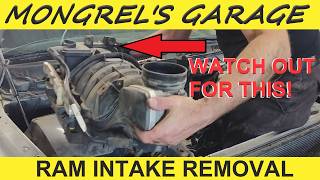
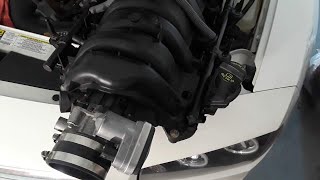
How to confirm: Using a bi-directional scan tool, attempt to actuate the solenoid and listen for a click. A more definitive test involves measuring the solenoid's resistance (specifications are often temperature-dependent) and checking for shorts or opens in the circuit after removing the intake manifold to access it. 🎬 Watch: How to remove the intake manifold on your Ram.
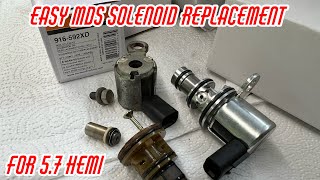
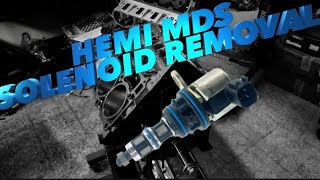
Typical fix: Replace the faulty MDS solenoid. The OEM part number 53032152AD has been superseded by 53032152AE. Since accessing them requires removing the intake manifold, many owners and mechanics choose to replace all four MDS solenoids at the same time. Be careful during removal, as the old plastic solenoids can break, leaving pieces in the engine block. 🎬 See how to remove MDS solenoids without breaking them.
Est. part cost: $40-$100 per solenoid - PCM Software Out of Date 🟡 Medium Probability Manufacturer TSBs #18-036-20, #18-082-16, and others indicate that a PCM software update can fix performance issues with the cylinder deactivation system, often addressing multiple MDS codes (P3402, P3426, P3442, P3450) at once. [Bulletin #18-036-20] TSB #18-036-20 specifically mentions an optional software path to address drone, shudder, or vibration when in MDS mode. [Bulletin #18-036-20]
How to confirm: A Ram dealership or a qualified shop with a wiTECH scan tool can check the current software version of your PCM and see if an update is available based on your VIN and symptoms.
Typical fix: Reprogram the Powertrain Control Module (PCM) with the latest software. This is a dealer or specialty shop repair.
Est. part cost: $0 (if under warranty) - $250 - Wiring or Connector Issue ⚪ Low Probability The wiring harness to the MDS solenoids is located under the intake manifold in a high-heat area, which can make it susceptible to damage over time. Rodents can also chew on wires, causing shorts or opens.
How to confirm: Once the intake manifold is removed, visually inspect the wiring harness and connector for the cylinder 6 solenoid for any signs of damage, corrosion, or loose pins. Check for continuity and for voltage between the PCM and the solenoid connector using a multimeter.
Typical fix: Repair the damaged section of the wiring harness or replace the connector.
Est. part cost: $10-$50
Rare But Worth Checking
- Failed MDS Lifter: If the solenoid and wiring are good, the issue could be a collapsed or stuck MDS lifter for cylinder 6. This is a much more involved and expensive mechanical repair that requires removing the cylinder head. A misfire code (like P0306) is more likely to accompany a failed lifter. Forum discussions often detail a 'Hemi tick' that progresses to a misfire, ultimately diagnosed as a failed lifter and damaged camshaft.
- Blocked Oil Passages: Severe engine sludge can block the small oil passages leading to the MDS solenoids and lifters, preventing them from functioning even if the parts themselves are good. This often requires significant engine disassembly to clean and is a strong argument for regular oil changes with quality oil.
- Faulty Powertrain Control Module (PCM): → Shop Engine Control Module (ECM) While rare, the driver circuit within the PCM that controls the solenoid can fail. This should only be considered after all other possibilities (wiring, solenoid, oil issues) have been exhaustively ruled out.
Diagnosis Steps
- Check engine oil level and condition. Top off or change the oil and filter if necessary, using the correct viscosity. Clear the code and see if it returns.
- Using a bi-directional scan tool, check for any other stored DTCs. Note any other MDS codes (P3402, P3426, P3450) which might point towards a software or systemic issue. [Bulletin #18-036-20]
- Attempt to command the Cylinder 6 MDS solenoid on and off with the scan tool. Listen for an audible click from the engine valley.
- If the solenoid does not click or the code persists, the intake manifold must be removed to access the MDS solenoids.
- Visually inspect the wiring and connector for the cylinder 6 solenoid for damage or corrosion.
- Disconnect the solenoid and measure its resistance with a multimeter. Compare the reading to the manufacturer's specification (typically 8-15 ohms, but can vary with temperature). An open or shorted reading indicates a failed solenoid.
- If the solenoid resistance is good, check the wiring harness for continuity and for shorts to power or ground between the PCM and the solenoid connector. 🎬 Watch: How to check the wiring before replacing parts.
- If wiring and the solenoid test good, the issue may be a stuck/failed lifter or a faulty PCM. At this point, further mechanical inspection (removing cylinder heads) or advanced electronic diagnosis is required.
Parts You'll Likely Need
- MDS Solenoid
(OEM #53032152AE)— This is the most common component to fail in the circuit, either electrically or by sticking mechanically. The original part number 53032152AD was superseded by 53032152AE.
Trusted brands: Mopar, Dorman (OE FIX versions often feature an upgraded metal body instead of plastic), Standard Motor Products
OEM price range: $60-$100
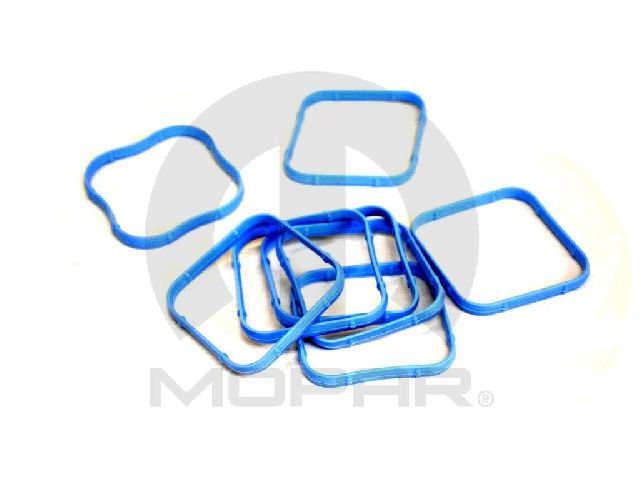
Aftermarket price range: $40-$80 - Intake Manifold Gasket Set
(OEM #MS97089 (Fel-Pro))— These are single-use gaskets that must be replaced anytime the intake manifold is removed to access the MDS solenoids.
Trusted brands: Mopar, Fel-Pro, Mahle
OEM price range: $40-$60
Aftermarket price range: $25-$45
Related Codes That Often Appear With This One
- P3402 — Cylinder 1 Deactivation Control Performance. Often appears with P3442 in TSBs, suggesting a systemic issue like a software glitch or oil problem affecting multiple cylinders. [Bulletin #18-036-20]
- P3426 — Cylinder 4 Deactivation Control Performance. Also commonly grouped with P3442 in service bulletins for the same reasons. [Bulletin #18-036-20]
- P3450 — Cylinder 7 Deactivation Control Performance. The fourth MDS cylinder code that frequently appears alongside P3442. [Bulletin #18-036-20]
- P0306 — Cylinder 6 Misfire. If the deactivation system fails to reactivate the cylinder properly, or if the lifter has failed, it can lead to a misfire condition on that cylinder.
Technical Service Bulletins (TSBs) & Recalls
- 18-036-20
- 18-082-16
- 18-002-15 REV B
- 18-080-15 REV A
Platform-Specific Known Issues
- Several Technical Service Bulletins (TSBs) have been issued by FCA for PCM software updates to correct MDS performance issues, including #18-036-20, #18-082-16, and #18-002-15. These often address multiple MDS codes appearing together.
- The plastic body of the original equipment MDS solenoids is known to become brittle and break during removal, potentially dropping fragments into the engine. Care must be taken, and some owners opt for aftermarket solenoids with metal bodies.
- While not specific to the 3500, the 'Hemi Tick' is a widely discussed issue in the community, which can be a precursor to MDS solenoid or, more seriously, lifter and camshaft failure.
Mechanic-Grade Diagnostic Values
- MDS Solenoid Resistance — expected: The resistance varies with temperature. At 68°F (20°C), the expected resistance is approximately 10.3 ohms. At 150°F (65°C), it's 12.2 ohms. At 200°F (93°C), it's 13.4 ohms.. Failure: A reading that is significantly outside the expected range for a given temperature, or an open/infinite resistance reading, indicates a faulty solenoid.
- MDS Solenoid Hold Down Bolt Torque — expected: 11 N·m (97 in. lbs.). Failure: N/A - This is an installation specification.
- MDS Solenoid Control Circuit to PCM Resistance — expected: Below 5.0 ohms.. Failure: A resistance reading above 5.0 ohms indicates excessive resistance or an open in the wiring harness between the main engine connector and the PCM.
Scan Tool Commands That Help
- wiTECH or equivalent bi-directional scanner: MDS Solenoid #6 Actuator Test — This command is used to manually cycle the cylinder 6 MDS solenoid. A technician can listen for an audible click from the engine valley to confirm the solenoid is mechanically actuating. The test can also be used with a test light on the control circuit to verify the PCM is sending the command.
Wiring & Ground Locations
- (K453) MDS Solenoid No.6 Control Circuit — This is the specific wire in the engine harness that runs from the PCM to the MDS solenoid connector for cylinder 6.. This is the control circuit that the PCM monitors. A short to voltage, short to ground, or an open in this circuit is a primary cause for P3442. Technicians test this wire for continuity and shorts.
- (Z904) Ground Circuit — This is the ground circuit wire shared by the MDS solenoids, which terminates at a chassis or block ground point.. A poor or open ground on this circuit can cause intermittent or failed solenoid operation, leading to this code.
- C101 / C140 Harness Connector — This is a main engine harness connector that contains the control and ground circuits for the MDS solenoids before they route under the intake manifold. The exact designator can vary by year/model.. This connector is a common point to test the circuit from the PCM without having to remove the intake manifold first. A problem at this connector can mimic a failed solenoid.
Real Owner Repair Stories
- RamForum.com user (Ram truck with 5.7L Hemi) — Check Engine Light, misfiring, sluggish performance.
❌ Tried (didn't work) Replaced all four MDS solenoids with new Mopar parts.
✅ What actually fixed it The user replaced the solenoids but the code (P3441 in this case, for cylinder 5) immediately returned. The user suspected the next logical cause was a clogged oil passage, as the wiring and solenoids were now new. The final resolution was not posted, but it highlights that solenoid replacement is not always the final fix.
OEM Part Supersession History
53032152AC, 53032152AD, 68060345AA→53032152AE— Standard part revision and consolidation by the manufacturer.Mopar 53032152AE (Plastic Body)→Dorman 916-592XD (Aftermarket Alternative)— The Dorman 'OE FIX' version is designed with a full steel body instead of plastic to improve durability and prevent breakage from engine heat and during removal. It also features a larger filter screen.
Heads up: This is a popular aftermarket upgrade, not an OEM supersession.
Helpful Videos

We Have This Part in Stock


The information in this article is provided for general reference and educational purposes only. Vehicle specifications, procedures, and part compatibility can vary by production date, trim level, and region. Always consult your vehicle's factory service manual and verify part numbers before purchasing or performing repairs. Safety-critical components such as airbags, seat belts, and braking systems should be installed by a qualified professional.
- Ram 3500:
- 🧭 Diagnostic Flowchart
- 🎬 Helpful Videos
- 🛍️ Shop This Part
- What's Unique About the 2015-2018 Ram 3500
- Symptoms You May Notice
- Most Likely Causes
- Rare But Worth Checking
- Diagnosis Steps
- Parts You'll Likely Need
- Related Codes That Often Appear With This One
- Technical Service Bulletins (TSBs) & Recalls
- Platform-Specific Known Issues
- Mechanic-Grade Diagnostic Values
- Scan Tool Commands That Help
- Wiring & Ground Locations
- Real Owner Repair Stories
- OEM Part Supersession History
- 🎟️ Get 5% Off