

OBD-II Code P3515: Ignition Coil 'O' (Cylinder 15) Circuit Malfunction
What P3515 means, why it triggers, and how to fix it
- OBD-II code P3515 indicates an electrical fault in the cylinder 15 ignition coil circuit, applying almost exclusively to 16-cylinder Bugatti engines.
- On PACCAR MX-13 commercial diesel engines, P3515 indicates a completely different issue: a short circuit in the DEF dosing valve requiring a $600 to $1,200 repair.
- Replacing a faulty ignition coil on a Bugatti W16 requires over 40 hours of labor and costs upwards of $20,000 due to extreme engine packaging.
- Never attempt a DIY repair on a Bugatti W16; immediately schedule service with a certified technician to prevent catalytic converter damage exceeding $25,000.
What Does P3515 Mean?
Code P3515 indicates the Powertrain Control Module (PCM) detects an electrical fault in the ignition coil circuit for cylinder 15. The spark plug is not receiving the correct electrical signal to fire, pointing to a failed coil, damaged wiring, or a faulty PCM.
Technical definition: The SAE definition is "Ignition Coil 'O' Primary / Secondary Circuit Malfunction". The letter 'O' is the 15th letter of the alphabet, designating cylinder 15. The PCM monitors the primary (computer-controlled) and secondary (high-voltage) circuits for electrical faults. Note: PACCAR commercial diesel engines use this exact code to indicate a DEF Dosing Valve Short Circuit.
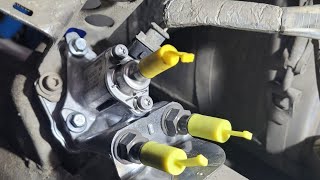
🎬 Watch: How to replace a PACCAR DEF dosing valve.Can I Drive With P3515?
Yes, But With Caution. Driving is possible, but strongly discouraged. On a W16 engine, a single misfire forces unburned fuel into the exhaust, rapidly overheating the catalytic converter. Extended driving (over 50 miles) risks turning a $20,000 coil repair into a $50,000+ exhaust system replacement.
Common Causes
- Failed Ignition Coil (Very Common) — The ignition coil fails from internal short circuits, extreme engine heat, or age. This is the most frequent cause of a P3515 code on W16 engines.
- Wiring Harness or Connector Damage (Common) — Extreme engine heat, vibrations, or rodents damage the wires leading to the ignition coil. Corrosion, loose connector pins, or a bad ground strap disrupt the electrical signal.
- Worn or Improperly Gapped Spark Plug (Common) — Worn, fouled, or improperly gapped spark plugs require significantly more voltage to create a spark. This extra demand overloads and permanently damages the ignition coil.
- Valve Cover Gasket Oil Leak (Less Common) — A leaking valve cover gasket allows oil to seep into the spark plug tube, soaking the ignition coil boot. The oil degrades the coil's insulation, causing it to short out and fail.
- Powertrain Control Module (PCM) Failure (Rare) — The internal PCM driver circuit controlling the ignition coil fails, or a software glitch erroneously triggers the code. This requires professional diagnosis after ruling out all other components.
Symptoms
- Check Engine Light On — The PCM activates the Check Engine Light immediately upon detecting the circuit fault.
- Engine Misfire or Rough Idle — The engine runs rough, shakes, or vibrates. On a 16-cylinder engine, this is often only noticeable at high speeds or under heavy acceleration.
- Reduced Engine Power — Losing a cylinder causes a noticeable decrease in overall engine power and sluggish acceleration.
- Fuel Smell from Exhaust — A strong smell of raw gasoline indicates unburned fuel is passing through the misfiring cylinder, directly threatening the catalytic converter.
- Decreased Fuel Economy — The engine wastes unburned fuel, causing a measurable drop in gas mileage.
Diagnostic Flowchart
Tap your situation to follow the diagnostic path that matches what you're seeing on this code.
Common Fixes & Costs
- Replace Ignition Coil(s) and Spark Plug(s) — Parts: $730 - $1,200, Labor: $20,000 - $25,000, ~40 hr book time (Professional)
- Repair DEF Dosing Valve Circuit (PACCAR) — Parts: $300 - $600, Labor: $300 - $600, ~2.5 hr book time (Intermediate)
- Repair Wiring Harness or Connector — Parts: $50 - $200, Labor: $5,000 - $15,000, ~30 hr book time (Professional)
- Replace Valve Cover Gasket — Parts: $500 - $1,500, Labor: $8,000 - $18,000, ~35 hr book time (Professional)
- Replace Powertrain Control Module (PCM) — Parts: $2,000 - $5,000, Labor: $10,000 - $20,000, ~25 hr book time (Professional)
Used vs. New Parts: Buying Guide
When a used part is worth it: Using a non-OEM part on a Bugatti is highly discouraged. Given the extreme labor costs, the savings on a used part are negligible compared to the risk of premature failure.
Donor-vehicle mileage cap: roughly under 20000 miles for the part to have meaningful remaining life.
Donor quality checklist:
- Verify the exact OEM part number matches.
- Obtain vehicle history to ensure the donor car wasn't flood or fire-damaged.
- Visually inspect the part for heat stress, cracking, or oil contamination.
Decision logic:
- If The vehicle is a Bugatti or similar hypercar → Always buy a new, genuine OEM part from an authorized dealer. The financial risk of a used part failing is too high.
- If The part is for a PACCAR DEF system → A used part from a reputable heavy-duty truck dismantler is viable on a tight budget, but new OEM is recommended for reliability.
- If Part has a known wear-out failure mode (e.g. ignition coils) → Favor new. The lifespan of a used coil is unknown, and they degrade with heat cycles and age.
Warranty tradeoff: Used parts typically carry a 30-day warranty. New OEM Bugatti parts carry a 2-year warranty, providing significant value given the labor costs.
Worst-case if a used part fails: 20000
What Happens If You Wait — Timeline
- 0-100 miles: Check Engine Light illuminates. On a W16, a slight roughness at idle may be perceptible. On a PACCAR, a DEF system warning and engine derate occurs. (MPG impact: 1-5%% · Added cost: $0)
- 100-500 miles: For a Bugatti, unburned fuel enters the exhaust. The catalytic converter temperature rises significantly. Fuel economy drops noticeably. (MPG impact: 5-10%% · Added cost: $200)
- 500-1,000 miles: Sustained high temperatures melt the precious metal substrate of the catalytic converter. A strong smell of gasoline is present. Engine power is severely reduced. (MPG impact: 10-15%% · Added cost: $25000)
- 1,000+ miles: The catalytic converter substrate breaks apart, creating a major exhaust blockage. Backpressure spikes, causing extreme engine heat and catastrophic engine failure. (MPG impact: 15-25%% · Added cost: $50000)
Cost of Not Fixing It
- 0-1 month: Noticeable reduction in engine power, rough idle, and a 5-10% decrease in fuel economy. The Check Engine Light remains illuminated. (Added cost: 0)
- 1-6 months: Unburned fuel continuously enters the exhaust, superheating the catalytic converter. The internal substrate melts, causing a complete blockage and catastrophic failure. (Added cost: 25000)
- 6+ months: A clogged catalytic converter creates immense backpressure, causing engine overheating, warped exhaust valves, and catastrophic engine failure. (Added cost: 50000)
Diagnosis Steps
- Read the Trouble Codes
Use an OBD-II scanner to confirm P3515 is active. Check for related misfire codes (P0300, P0315). On a professional scanner, view live data PIDs like 'Misfire Count Cyl 15' to verify active misfires.
Tools: OBD-II Scanner (Beginner) - Swap the Ignition Coil
Swap the ignition coil from cylinder 15 with cylinder 16. Clear the codes and drive. If the code returns as P3516, the ignition coil is faulty. If P3515 returns, the problem is in the wiring or PCM.
Tools: Basic hand tools (socket set) (Professional) - Visually Inspect the Area
Inspect the wiring harness and connector for ignition coil 15. Look for burns, chafing, corrosion, or loose connections. Check for oil contamination from a leaking valve cover gasket.
Tools: Flashlight, Borescope (Professional) - Check the Spark Plug
Remove the spark plug for cylinder 15. Inspect it for wear, fouling, or damage. Replace it if it shows signs of degradation, as a bad plug destroys new coils.
Tools: Spark plug socket, ratchet, torque wrench (Professional) - Test the Coil Circuit
Use a multimeter to check for proper voltage and ground at the coil connector. With the ignition on, one pin must show battery voltage (approx. 12.6V) and another must show good ground (less than 0.1V).
Tools: Digital Multimeter, vehicle-specific wiring diagram (Advanced) - Check for Voltage Drop
Perform a voltage drop test on the power and ground circuits. A reading above 0.5V on the power side or 0.2V on the ground side indicates excessive resistance requiring wiring repair.
Tools: Digital Multimeter (Advanced) - Test Ignition Coil Resistance
Measure the resistance of the primary and secondary windings. Primary resistance should be 0.4-2.0 ohms; secondary should be 6,000-15,000 ohms. Infinity (OL) indicates an open circuit; near zero indicates a short.
Tools: Digital Multimeter, Service Manual (Advanced) - Analyze the Ignition Waveform
Use an oscilloscope to observe the primary and secondary ignition waveforms. The secondary waveform reveals the coil's firing line voltage and spark duration, differentiating between a coil, plug, or compression issue.
Tools: Oscilloscope, ignition system probes (Professional) - Test the PCM
If the coil, spark plug, and wiring test perfectly, test the ignition coil driver circuit in the PCM by directly probing the PCM connectors.
Tools: Advanced diagnostic tools, PCM pinout diagrams (Professional)
When This Code Triggers (Freeze-Frame Conditions)
- Engine Coolant Temp: 180-210°F (The fault is most often detected once the engine is fully warmed up and operating in closed-loop fuel control.)
- RPM: 1500-4000 RPM (The code sets under load during steady cruising or moderate acceleration, not typically at idle.)
- Engine Load: 30-70% (The PCM actively monitors coil circuits under load, making failures most apparent when power is demanded.)
- Vehicle Speed: 40-70 mph (Correlates with steady RPM and engine load typical of highway driving where misfires become noticeable.)
Related Codes
- P0315 — Indicates 'Cylinder 15 Misfire Detected'. It appears alongside P3515 because the electrical fault directly causes the misfire. Diagnose P3515 first to resolve both.
- P0300 — Indicates 'Random/Multiple Cylinder Misfire Detected'. Appears if the P3515 fault is intermittent or if oil contamination affects multiple coils simultaneously.
- P3516 — Indicates 'Ignition Coil P (Cylinder 16) Circuit'. Appears if a technician swaps coils between cylinders 15 and 16 during diagnosis, confirming the coil itself is faulty.
- U3515 — A network code indicating a fault in a High-Voltage System Interlock Circuit. Completely unrelated to the ignition system, highlighting the importance of reading the first letter correctly.
Climate & Environmental Factors
- Extreme Heat: Ignition coils sit directly on the engine block. Over time, extreme heat breaks down the coil's internal epoxy insulation, causing internal shorts and eventual failure.
- High Humidity / Moisture: Moisture penetrates hairline cracks in an aging ignition coil's housing or seeps into poorly sealed connectors, causing high voltage to short to ground.
- Cold Weather: Extremely cold temperatures increase the internal resistance of ignition coils. A weak coil fails to produce a strong enough spark to start a cold engine, triggering a fault code.
How to Talk to a Mechanic About This Code
Say this: "For a Bugatti: "I have a P3515 code on my Veyron/Chiron with a misfire under load. I need to schedule a diagnostic with a W16-certified technician." For a PACCAR truck: "I have a P3515 code on my MX-13, and the truck is in derate. I believe this is a DEF dosing valve circuit fault.""
This language signals you understand the specific nature of the code. For a Bugatti, it directs the service center to the correct technician. For a PACCAR, it points the mechanic directly to the emissions system instead of the ignition, saving diagnostic time.
Avoid saying:
- 'My check engine light is on.' (Too vague, invites a wide-ranging diagnostic process.)
- 'Just fix whatever is wrong.' (Gives the shop a blank check to replace parts without thorough diagnosis.)
- 'My car is shaking, I think it's a misfire.' (Providing the specific code P3515 is far more useful.)
Questions to ask before authorizing the repair:
- For a Bugatti: 'Have you confirmed whether the fault is the coil itself or the wiring harness before quoting the full replacement? What is the all-in estimate including labor for engine access?'
- For a PACCAR: 'Did you test the resistance of the DEF dosing valve? If the valve is good, what is your plan to diagnose the wiring harness?'
- What is the warranty on the parts and labor for this repair?
Where to Take It: Dealer vs Independent vs Chain
- Dealer:
Required for Bugatti; Recommended for PACCAR if the issue is complex or under warranty.
Best for: Bugatti: This is the ONLY option. The vehicle requires brand-specific tools, training, and parts access., PACCAR: Vehicles under warranty or complex electronic issues.
Downsides: Highest labor rates., For PACCAR, may default to replacing the whole harness instead of repairing a single wire. (Typical cost: +50% vs. baseline) - Independent Shop:
Best fit for a PACCAR truck out of warranty; AVOID for a Bugatti at all costs.
Best for: PACCAR: A qualified independent heavy-duty diesel shop is an excellent choice for out-of-warranty DEF system repairs.
Downsides: For Bugatti: Completely lack the necessary tools, software, and parts., For PACCAR: Quality varies; ensure the shop has diagnostic software for PACCAR engines. (Typical cost: +0% vs. baseline) - Chain Shop:
STRONGLY AVOID for both Bugatti and PACCAR applications. These shops are not equipped for this code.
Best for: Simple services on standard cars.
Downsides: Technicians lack the specialized training for either Bugatti hypercars or PACCAR heavy-duty diesel systems., High risk of misdiagnosis or causing further damage. (Typical cost: -10% vs. baseline)
When to Walk Away From the Repair
For standard vehicles, if the repair cost exceeds 50% of private-party value, consider selling. This rule does NOT apply to hypercars or commercial vehicles where repair is a cost of doing business.
- Car worth $2000000, fix is $25000: Fix it. This is a normal, expected maintenance cost for a Bugatti. Not fixing it makes the car nearly worthless.
- Car worth $75000, fix is $1200: Fix it. The repair cost for a PACCAR DEF valve is a minor expense compared to the value of a revenue-generating commercial truck.
- Car worth $2500, fix is $1500: Walk away. For a standard, high-mileage car, this repair cost is not economical.
What Scan Tool You Need for This Code
Minimum: For a Bugatti owner, any basic OBD-II reader confirms the code before calling the dealer. For a PACCAR owner, a scanner must support heavy-duty truck protocols (J1939, J1708) and read manufacturer-specific codes.
A basic car scanner will not communicate with a heavy-duty truck's ECU. For a PACCAR, you need a tool that understands P3515 means a DEF fault, not an ignition fault, and can perform DEF system tests.
Budget: BlueDriver Pro (~$90) — Excellent for reading codes on passenger cars to rule out a scanner error. It lacks PACCAR-specific definitions or commands.
Mid-range: FOXWELL HD500 (~$350) — Specifically designed for heavy-duty trucks. Correctly identifies the P3515 code on a PACCAR engine, reads live data, and performs DPF regeneration.
Professional: Autel MaxiSys MS908CV II (~$2500) — Offers OEM-level diagnostics for PACCAR, allowing technicians to perform active tests on the DEF dosing valve, check wiring diagrams, and perform system calibrations.
Rent vs buy: For a Bugatti owner, there is no need to buy a scanner. For a PACCAR owner-operator, buying a midrange or pro-level scanner is a wise investment that saves thousands in diagnostic fees and downtime.
How to Clear the Code After You Fix It
- Reconnect any disconnected components.
- Use a compatible OBD-II scan tool to erase the DTCs from the PCM's memory.
- Perform a complete OBD-II drive cycle to allow readiness monitors to run self-tests.
Drive cycle (~30 minutes): Start the engine cold (below 122°F) and idle for 3 minutes. Accelerate gently to 55 mph and hold a steady speed for 5 minutes. Coast down to 20 mph without braking, followed by 10 minutes of mixed city driving. Allow the vehicle to cool completely.
Readiness monitors affected: Misfire Monitor, Catalyst Monitor, Oxygen (O2) Sensor Monitor, Comprehensive Component Monitor
Before emissions retest: drive at least 100 miles to fully set monitors.
Watch out for:
- Disconnecting the battery clears the code but resets all readiness monitors to 'incomplete', causing an automatic emissions test failure.
- The code returns immediately if the underlying electrical fault was not properly repaired.
Will This Fail Emissions / State Inspection?
Yes — this code typically fails an OBD-II emissions inspection.
- California: An illuminated Check Engine Light is an automatic failure. After clearing the code, all readiness monitors must be set to 'Ready', requiring up to 100 miles of driving.
- New York: A vehicle automatically fails if the Check Engine Light is on. Clearing the code right before the test results in a rejection due to 'Not Ready' monitors.
- Texas: An illuminated Check Engine Light results in an automatic failure. Clearing the code resets all monitors, causing a failure until a full drive cycle is completed.
Most Commonly Affected Vehicles
- Bugatti Veyron (2005-2015) — Features an 8.0L W16 engine. The extreme complexity makes accessing ignition coils a highly labor-intensive and expensive job.
- Bugatti Chiron (2016-2024) — Successor to the Veyron with a similar 8.0L W16 engine. Maintenance and repair costs remain exceptionally high.
- PACCAR MX-13 Engines (Kenworth, Peterbilt) (2010-2024) — On PACCAR MX-13 engines, code P3515 indicates a short circuit in the DEF dosing valve, completely unrelated to ignition coils.
- Cizeta-Moroder V16T (1991-1995) — An extremely rare supercar with a V16 engine. While predating OBD-II, retrofits theoretically produce this code.
- Cadillac Sixteen Concept (2003-2003) — A one-off concept car with a 13.6L V16 engine, demonstrating the engine type where this code applies.
- Devel Sixteen (2017-2024) — A hypercar with a 12.3L V16 engine. Susceptible to this code if utilizing standard OBD-II diagnostics.
- Various Manufacturers All Models (1996-2024) — For standard 4, 6, or 8-cylinder vehicles, P3515 is invalid. Its presence indicates a faulty scanner or a misinterpreted manufacturer-specific code.
Manufacturer-Specific Notes
- Bugatti: Replacing ignition coils requires removing numerous body panels and using special equipment to access the engine, turning a simple part swap into a 40-hour, $20,000+ job.
- PACCAR: PACCAR uses P3515 to indicate a fault with the Diesel Exhaust Fluid (DEF) dosing valve, completely ignoring the standardized OBD-II ignition coil definition.
- Bugatti: Bugatti requires cars to be serviced by certified 'flying doctor' technicians or transported to specialized service centers, refusing to sell critical parts to independent shops.
- General OBD-II Standard: The 'P3XXX' range contains both standardized and manufacturer-specific codes. This lack of uniform definition allows P3515 to mean an ignition coil on a Bugatti and a DEF valve on a semi-truck.
Real Owner Stories
Bugatti Veyron with high-speed misfire
Owner of a Veyron with 15,000 miles noticed a loss of power and misfiring only at full throttle above 140 mph. The check engine light indicated misfires on cylinders 13 and 16.
What they tried:
- The vehicle was taken to an independent specialty shop to diagnose the high-speed 'spark blowout'.
- Technicians identified faulty ignition coils unable to produce a strong enough spark under high boost pressure.
Outcome: The shop replaced all 16 ignition coils and spark plugs. The total repair exceeded $20,000 due to the 35+ hours of labor required to remove body panels and access the engine.
Lesson: On a turbocharged W16 engine, a weak ignition coil only shows symptoms under maximum load, not during normal driving. Repair costs are driven entirely by labor.
Kenworth T680 with P3515 and derate warning
A fleet operator noticed a 2018 Kenworth with a PACCAR MX-13 engine threw code P3515 and immediately went into a low-power derate mode with a DEF system warning.
What they tried:
- A mobile mechanic scanned the codes and confirmed P3515 on a PACCAR means a 'DEF Dosing Valve Short Circuit'.
- The mechanic tested the DEF dosing valve with a multimeter and found its resistance was open, indicating an internal failure.
Outcome: The mechanic replaced the DEF Dosing Valve for $550. After clearing the codes, the truck returned to normal operation.
Lesson: The same code means completely different things on different vehicles. P3515 is an ignition coil on a Bugatti but a DEF system fault on a PACCAR truck.
Misdiagnosis on a Ford F-150
Owner of a Ford F-150 used a generic OBD-II scanner and received code P3515. Confused, as his truck only has 8 cylinders, he posted on a forum for help.
What they tried:
- Forum members pointed out that P3515 is not a valid code for a Ford V8 engine.
- He had the codes re-scanned with a higher-quality tool at an auto parts store.
Outcome: The professional scanner revealed the actual code was P0351 - 'Ignition Coil A (Cylinder 1) Circuit'. The generic scanner misinterpreted the code.
Lesson: If a code seems impossible for your vehicle, the scan tool is faulty. Always verify with a quality scanner before beginning any repairs.
How to Prevent This Code From Triggering
- Replace Spark Plugs at Recommended Intervals (Per manufacturer schedule (e.g., every 15,000 miles for Veyron)) — Worn spark plugs require the ignition coil to generate higher voltage, straining the coil and leading to overheating and premature failure.
- Address Oil Leaks Immediately (At first sign of leak) — A leaking valve cover gasket allows oil to soak the ignition coil boot, degrading its insulation and causing the spark to short to the cylinder head.
- Use Only OEM or High-Quality Coils (During replacement) — High-performance engines generate extreme heat. OEM coils use superior epoxy to withstand these temperatures, whereas cheap aftermarket coils break down quickly.
- Keep Engine Bay Clean (Annually or as needed) — Dirt and grime trap heat around the ignition coils, accelerating the degradation of their internal insulation.
- For PACCAR: Regular DEF System Maintenance (Annually) — Cleaning the DEF doser nozzle via a forced regen and replacing the DEF filter prevents clogs and backpressure that strain the valve and its electronics.
Frequently Asked Questions
Why is this code so rare?
P3515 designates cylinder 15. This code only appears on 16-cylinder engines, found almost exclusively in multi-million dollar hypercars like the Bugatti Veyron and Chiron.
Can I fix a P3515 code myself?
For a Bugatti, DIY repair is impossible without specialized tools and extensive disassembly. For a PACCAR truck (where P3515 means a DEF valve fault), an experienced owner-operator can replace the dosing valve.
How much does it cost to fix a P3515 on a Bugatti?
A single ignition coil costs $730 to $1,200, but labor is the primary expense. Replacing coils requires over 40 hours of labor to remove rear bodywork, pushing total costs above $20,000.
What is a common misdiagnosis for P3515?
Mechanics often replace the ignition coil without testing the wiring harness. A corroded connector pin or chafed wire causes the exact same code and must be ruled out first to avoid wasting thousands of dollars.
Why did P3515 show up on my Ford/Toyota/Honda?
Standard OBD-II code P3515 requires 15 cylinders, making it invalid for standard vehicles. Your scanner is either faulty or misinterpreting a manufacturer-specific code; re-scan with a professional-grade tool.
What is an ignition coil?
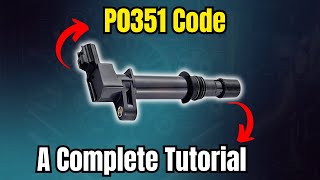
An ignition coil is a compact transformer that converts a vehicle's 12-volt battery power into the 20,000+ volts needed to spark the spark plugs. This spark ignites the air-fuel mixture inside the engine cylinders.
Will a bad coil damage my engine?
Yes, driving with a bad coil forces unburned fuel into the exhaust system. This raw fuel superheats and destroys the catalytic converter, a replacement that costs tens of thousands of dollars on a hypercar.
What does the 'O' in 'Ignition Coil O' mean?
OBD-II standards use letters to identify cylinder ignition coils sequentially. 'A' is cylinder 1, 'B' is cylinder 2, and 'O' is the 15th letter, designating cylinder 15.
Key Takeaways
- OBD-II code P3515 indicates an electrical fault in the cylinder 15 ignition coil circuit, applying almost exclusively to 16-cylinder Bugatti engines.
- On PACCAR MX-13 commercial diesel engines, P3515 indicates a completely different issue: a short circuit in the DEF dosing valve requiring a $600 to $1,200 repair.
- Replacing a faulty ignition coil on a Bugatti W16 requires over 40 hours of labor and costs upwards of $20,000 due to extreme engine packaging.
- Never attempt a DIY repair on a Bugatti W16; immediately schedule service with a certified technician to prevent catalytic converter damage exceeding $25,000.
Helpful Videos


Shop the Parts Behind P3515
Below are the parts most often responsible for code P3515, ranked by how frequently each one is the actual culprit (per the diagnosis above). Tap any to see what we have for your vehicle.




The information in this article is provided for general reference and educational purposes only. Vehicle specifications, procedures, and part compatibility can vary by production date, trim level, and region. Always consult your vehicle's factory service manual and verify part numbers before purchasing or performing repairs. Safety-critical components such as airbags, seat belts, and braking systems should be installed by a qualified professional.
- 🧭 Diagnostic Flowchart
- 🎬 Helpful Videos
- 🛍️ Shop This Part
- What Does P3515 Mean?
- Can I Drive With P3515?
- Common Causes
- Symptoms
- Common Fixes & Costs
- Used vs. New Parts: Buying Guide
- What Happens If You Wait — Timeline
- Cost of Not Fixing It
- Diagnosis Steps
- When This Code Triggers (Freeze-Frame Conditions)
- Related Codes
- Climate & Environmental Factors
- How to Talk to a Mechanic About This Code
- Where to Take It: Dealer vs Independent vs Chain
- When to Walk Away From the Repair
- What Scan Tool You Need for This Code
- How to Clear the Code After You Fix It
- Will This Fail Emissions / State Inspection?
- Most Commonly Affected Vehicles
- Manufacturer-Specific Notes
- Real Owner Stories
- Bugatti Veyron with high-speed misfire
- Kenworth T680 with P3515 and derate warning
- Misdiagnosis on a Ford F-150
- How to Prevent This Code From Triggering
- Frequently Asked Questions
- Why is this code so rare?
- Can I fix a P3515 code myself?
- How much does it cost to fix a P3515 on a Bugatti?
- What is a common misdiagnosis for P3515?
- Why did P3515 show up on my Ford/Toyota/Honda?
- What is an ignition coil?
- Will a bad coil damage my engine?
- What does the 'O' in 'Ignition Coil O' mean?
- Key Takeaways
- 🎟️ Get 5% Off