

OBD-II Code P3877: Glow Plug Control Module System Voltage
The Ultimate Guide to Diagnosing and Fixing P3877 on Ford Power Stroke and Other Diesel Engines.
- Code P3877 on Ford Power Stroke engines indicates a power supply failure to the Glow Plug Control Module, causing a no-start condition in weather below 50°F.
- Always load-test both batteries and verify alternator output (13.5V-14.5V) before replacing the GPCM, as a weak charging system is the #1 misdiagnosis.
- Replacing the GPCM costs between $280 and $500 (parts and labor) and takes approximately 1.5 hours to complete.
- Do not confuse P3877 on a Ford with the same code on Paccar engines, where it indicates a diesel aftertreatment system fault rather than a glow plug issue.
What Does P3877 Mean?
P3877 indicates the Powertrain Control Module (PCM) detects a voltage drop in the power supply to the Glow Plug Control Module (GPCM) 🎬 Watch: Locate the GPCM on a Ford 6.7L diesel engine.. The GPCM requires stable voltage to heat the glow plugs. Without this heat, diesel fuel cannot ignite in a cold engine, resulting in immediate cold-start failures.
Technical definition: For Ford vehicles, SAE/ISO defines P3877 as 'Glow Plug Control Module System Voltage'. The PCM triggers this when voltage supplied to the GPCM falls outside the expected 12.0V-14.5V range. On Paccar engines (Kenworth/Peterbilt), this code indicates an aftertreatment system fault ('Heater element pressure line – open circuit'), completely unrelated to glow plugs.
Can I Drive With P3877?
Yes, But With Caution. Yes, but you risk becoming stranded. The engine will not start in cold weather (below 50°F). Repeated cold-start attempts strain the starter motor and batteries, causing premature failure and adding $500+ to your repair bill. Fix this before winter.
Common Causes
- Failed Glow Plug Control Module (GPCM) (Very Common) — Internal electronics fail from heat and vibration, preventing proper power management. This often causes internal shorts that blow the main fuse.
- Weak Batteries or Failing Alternator (Common) — A failing alternator or weak batteries cause system-wide voltage drops during the high-amperage demand of a cold start, triggering the code.
- Blown GPCM Fuse or Fusible Link (Common) — A short circuit in the wiring or inside the GPCM blows the high-current protection fuse, instantly cutting all power to the module.
- Damaged Wiring Harness or Corroded Connector (Common) — Main power and ground wires fray, melt against hot engine parts, or corrode at the connector. This creates high resistance and a measurable voltage drop.
- Failed Powertrain Control Module (PCM) (Very Rare) — The PCM misinterprets the voltage signal or suffers a driver failure. Consider this only after verifying harness integrity and replacing the GPCM. 🎬 Watch this step-by-step guide to replacing a Ford GPCM.
Symptoms
- Engine will not start when cold — Without glow plugs, compression heat cannot ignite diesel fuel in temperatures below 50°F.
- Check Engine Light is on — The PCM stores P3877 and illuminates the malfunction indicator lamp.
- Excessive white exhaust smoke on startup — Unburnt fuel injected into cold cylinders vaporizes in the exhaust, creating thick white smoke that clears as the engine warms.
- Flashing or Inoperative 'Wait to Start' Light — The dashboard glow plug indicator flashes or turns off prematurely.
- Rough Idle When Cold — The absence of a post-heating cycle causes poor combustion and rough running until the engine reaches operating temperature.
Diagnostic Flowchart
Tap your situation to follow the diagnostic path that matches what you're seeing on this code.
Common Fixes & Costs
- Replace Glow Plug Control Module (GPCM) — Parts: $130-$280, Labor: $150-$225, ~1.5 hr book time (DIY)
- Replace Batteries and/or Alternator — Parts: $400-$900, Labor: $150-$300, ~2.0 hr book time (DIY)
- Repair Damaged Wiring or Connector — Parts: $30-$80, Labor: $150-$450, ~2.5 hr book time (Professional)
- Replace Blown Fuse or Fusible Link — Parts: $5-$20, Labor: $0-$50, ~0.2 hr book time (DIY)
- Clean Battery Terminals and Ground Straps — Parts: $10-$25, Labor: $50-$100, ~0.5 hr book time (DIY)
DIY vs Professional
- Replace Glow Plug Control Module (GPCM) — Beginner: Yes, on most pickup truck models where the GPCM is accessible on the valve cover or inner fender.
Tools: Socket set, wrenches, flashlight. - Repair Damaged Wiring or Connector — Beginner: No. Improper wiring repair causes high resistance and fire risks.
Tools: Multimeter, wire strippers, crimpers, heat shrink tubing, soldering iron, replacement pigtail. - Replace Blown Fuse or Fusible Link — Beginner: Yes. This is one of the simplest checks and fixes.
Tools: Fuse puller or needle-nose pliers. - Replace Batteries and/or Alternator — Beginner: Yes. Battery replacement is a fundamental DIY task. Alternator replacement is manageable for an intermediate DIYer.
Tools: Wrench set, socket set, battery terminal cleaner.
Used vs. New Parts: Buying Guide
When a used part is worth it: Buying a used GPCM is not recommended. It is a common failure item with no visible signs of remaining lifespan. Use only as a last resort for an older vehicle if the budget is extremely tight.
Donor-vehicle mileage cap: roughly under 60000 miles for the part to have meaningful remaining life.
Donor quality checklist:
- Verify the part number is an exact match for your vehicle's engine and year.
- Inspect the connector sockets for any signs of corrosion, melting, or spread pins.
- Avoid parts from flood or fire-damaged vehicles.
Decision logic:
- If Vehicle is a daily driver or used for work → Buy a new OEM or high-quality aftermarket part. The reliability is worth the extra cost.
- If Budget is the primary concern on a high-mileage vehicle (>150K miles) → A new aftermarket part offers the best balance of cost and reliability.
- If The cost of a new OEM part is over $300 → A reputable aftermarket brand with a lifetime warranty is a sensible financial choice.
Warranty tradeoff: Used parts typically come with a 30-90 day functional warranty. New aftermarket parts offer a 1-year to limited lifetime warranty. New OEM parts carry a 1-2 year warranty.
Worst-case if a used part fails: $250-$600 for repeat labor costs and a replacement module if the used part fails prematurely.
What Happens If You Wait — Timeline
- 0-1 month: Check Engine Light is on with code P3877. In warm weather, there are no noticeable symptoms. In cool weather (below 50°F/10°C), the engine requires slightly longer cranking to start. (MPG impact: 0-1%% · Added cost: $0)
- 1-3 months: Engine becomes very difficult or impossible to start in cold weather. The driver must crank the engine for extended periods (10-30 seconds). This puts extreme strain on the starter motor and both batteries. (MPG impact: 1-3% (due to poor cold-engine combustion)% · Added cost: $50 in wasted fuel and significant inconvenience.)
- 3-6 months: The starter motor fails due to overheating from repeated, long cranking cycles. The batteries are permanently damaged from being deeply discharged and strained, and no longer hold a full charge. (MPG impact: 1-3%% · Added cost: $750-$1100 (Cost to replace a Super Duty starter is ~$470-$550, and two new batteries are ~$300-$550).)
- 6+ months: Total starting system failure. If the root cause was a wiring short, it melts adjacent wires in the harness, leading to complex electrical faults. An internally shorted GPCM causes a parasitic drain, leaving the truck with a dead battery every morning. (MPG impact: N/A (Vehicle is likely inoperable)% · Added cost: $1000-$2500+ (Includes starter and battery replacement plus potential costs for complex wiring harness repair or GPCM replacement).)
Cost of Not Fixing It
- Immediate: Vehicle will not start in cold weather. Reduced fuel economy and rough running. (Added cost: $0, but high inconvenience.)
- 1-6 months: Repeated cranking destroys the starter motor and deeply discharges batteries. (Added cost: $450-$800 for a new starter.)
- 6+ months: Internally shorted GPCM causes parasitic battery drain, destroying batteries. (Added cost: $800-$1500 for starter and dual batteries.)
Diagnosis Steps
- Scan for All Trouble Codes
Check for active and stored codes. P3877 paired with P0562 (System Voltage Low) points to the batteries. P3877 paired with P0670 points to the GPCM.
Tools: OBD-II Scanner (Beginner) - Verify Battery and Charging System Health
Check battery voltage (12.6V off) and alternator output (13.5V-14.5V running). Load-test both batteries. Fix charging issues before touching the GPCM.
Tools: Multimeter, Battery Load Tester (Beginner) - Inspect GPCM Fuses and Battery Connections
Locate the GPCM maxi-fuse in the power distribution box. Verify it is intact. Clean battery terminals and main ground straps.
Tools: Owner's Manual, Fuse Puller, Wire Brush (Beginner) - Visually Inspect GPCM Wiring and Connector
Locate the GPCM (usually on the passenger valve cover or inner fender). Disconnect the main plug and check for melted plastic, spread pins, or green corrosion.
Tools: Flashlight (Intermediate) - Test Power and Ground at GPCM Connector
With the key 'ON', probe the main power pin for battery voltage (12.0V+). Check resistance between the ground pin and the negative battery terminal (must be <1 ohm).
Tools: Multimeter, Wiring Diagram (Intermediate) - [PRO TIP] Perform a Voltage Drop Test
Back-probe the connected GPCM. A reading above 0.5V on the power side or 0.2V on the ground side indicates excessive circuit resistance requiring harness repair.
Tools: Multimeter with Back-Probing Pins (Advanced) - [PRO TIP] Load Test the GPCM Power Circuit
Connect a sealed-beam headlight between the harness power and ground pins. A dim or unlit bulb confirms high resistance in the wiring.
Tools: Sealed-Beam Headlight with Test Leads (Advanced) - [PRO TIP] Analyze Live Data PIDs
Monitor 'GPCM_VOLTAGE' and 'GLOW_PLUG_CMD_STATE'. If the commanded state is ON but voltage drops significantly, the module or supply circuit is failing.
Tools: Advanced OBD-II Scanner with Live Data (Advanced) - [PRO TIP] Check for CAN Bus Communication
If the GPCM will not communicate, check the CAN bus wires at the module's connector. With the key on, you should see approximately 2.5 volts on each of the two CAN wires.
Tools: Multimeter (Advanced)
When This Code Triggers (Freeze-Frame Conditions)
- Engine Coolant Temp: 185-205°F (85-96°C) (Engine at full operating temperature.)
- Engine RPM: 1600-2200 RPM (Highway cruise speed.)
- Engine Load: 30-50% (Steady throttle on a flat road or slight incline.)
- Vehicle Speed: 55-70 mph (88-112 km/h) (Highway driving.)
- Battery Voltage: <12.0V (fault triggered) (The parameter that triggered the code, showing a momentary or sustained voltage drop below the PCM's threshold while the engine is running.)
Related Codes
- P0670 — Indicates a problem inside the module itself or its communication with the PCM. P3877 is about power to the module, while P0670 is about the function of the module. They often appear together, strongly suggesting a failed GPCM.
- P0671-P0678 — Correspond to faults in the circuit for individual glow plugs. P3877 alongside multiple P067x codes confirms the GPCM is the culprit. One or two P067x codes without P3877 points to a bad glow plug.
- P0562 — Indicates 'System Voltage Low' and a vehicle-wide electrical problem. If you have P0562 and P3877 together, the root cause is the batteries or alternator. Fix P0562 first.
- P0380 — A generic code for 'Glow Plug/Heater Circuit 'A' Malfunction'. On older diesel vehicles using a simple glow plug relay (GPR), this is the common failure code.
Climate & Environmental Factors
- Cold Weather: Cold temperatures make a P3877 fault noticeable. In warm weather, a diesel engine starts without glow plugs, masking the problem. Below 50°F (10°C), the engine will not start without functional glow plugs.
- High Humidity / Moisture: Moisture intrusion accelerates GPCM failure by corroding circuit boards and connector pins. On 6.7L Power Stroke engines, the GPCM's location behind the wheel well splash shield makes it highly vulnerable to road spray.
- High Altitude: At higher altitudes, less dense air results in lower compression temperatures. The engine relies heavily on the glow plug system for proper ignition, turning a borderline GPCM issue into a hard-start problem.
How to Talk to a Mechanic About This Code
Say this: "I have a P3877 code on my truck and it's hard to start when cold. I'd like to book a diagnostic appointment. Before you replace the glow plug control module, please specifically test the batteries and alternator, and perform a voltage drop test on the GPCM power and ground circuits to confirm the fault."
This signals to the shop that you are an informed customer. It directs them to perform the necessary electrical tests to prevent the most common misdiagnosis (replacing a good GPCM when the batteries/alternator are weak), saving you from paying for unnecessary parts.
Avoid saying:
- 'My truck won't start, just fix it.'
- 'My check engine light is on, I think it's the glow plugs.'
- 'Just replace the glow plug module.'
Questions to ask before authorizing the repair:
- What were the results of the battery load test and the alternator output voltage?
- What was the voltage drop reading on the GPCM power and ground circuits?
- If the module needs to be replaced, is the part from the OEM (Motorcraft) or is it an aftermarket brand?
- What is the warranty on the parts and labor for this repair?
Where to Take It: Dealer vs Independent vs Chain
- Dealer:
A safe but expensive choice. They are perfectly capable of fixing this, but you will pay a premium for it.
Best for: Vehicles still under powertrain or emissions warranty., Complex electrical issues or when a PCM reflash is needed., When you want an OEM (Motorcraft) part installed.
Downsides: Highest labor rates, typically 1.5-2x more than an independent shop., Less willing to install customer-supplied or aftermarket parts. (Typical cost: +50% vs. baseline) - Independent Shop:
Best fit, with a major condition: you must choose an independent shop that specializes in diesel repair. They have the right tools and experience to diagnose P3877 correctly and efficiently.
Best for: Out-of-warranty trucks where cost is a major factor., Shops that specialize in diesel engines (Power Stroke, Cummins)., Getting an accurate diagnosis without the high dealer overhead.
Downsides: Quality and expertise vary widely. You MUST vet the shop., A general auto shop lacks specific diesel experience and misdiagnoses the issue. (Typical cost: +0% vs. baseline) - Chain Shop:
AVOID for diagnosis. While they test and replace batteries/alternator (a key first step), do not trust them to diagnose the P3877 code itself. They are very likely to misdiagnose and recommend replacing the wrong parts.
Best for: Battery testing and replacement., Simple, unrelated maintenance like oil changes or tires.
Downsides: Technicians are not experienced with complex diesel systems. High risk of misdiagnosis., High pressure to upsell services and parts you do not need. (Typical cost: -10% vs. baseline)
When to Walk Away From the Repair
If the estimated repair cost exceeds 40% of the truck's private-party value, evaluate whether to fix it, sell it as-is, or trade it in.
- Car worth $15000, fix is $850: Fix it. The repair cost is a small fraction of the truck's value and is essential for its operation in cold climates.
- Car worth $7000, fix is $3500: Borderline. The P3877 fix is only $850, but if the other ~$2700 is for major work on a 6.0L Power Stroke (e.g., head studs, oil cooler), you must weigh if the total investment is worth it for an older truck.
- Car worth $4000, fix is $850: Fix it. Even on a lower-value work truck, an $850 repair to ensure it starts every day is a worthwhile investment.
What Scan Tool You Need for This Code
Minimum: A scanner that reads manufacturer-specific codes (not just generic OBD-II) and displays live data PIDs for Ford, specifically the 'GPCM_VOLTAGE' parameter.
A basic $20 code reader only tells you the P3877 code exists. It cannot show you the live voltage the module is seeing, which is essential for determining if the problem is the wiring, alternator, or the module itself.
Budget: BlueDriver Pro or FORScan with OBDLink Adapter (~$120) — Connects to your smartphone or laptop. Reads Ford-specific codes and lets you view live data PIDs to monitor GPCM voltage, battery voltage, and glow plug command status. This is the minimum required for an effective DIY diagnosis.
Mid-range: Foxwell NT510 Elite for Ford (~$180) — A dedicated handheld scanner that provides deep Ford-specific diagnostics. In addition to reading codes and live data, it offers bidirectional controls to test components, helping pinpoint faults more quickly than observation alone.
Professional: Autel MaxiCOM MK808S / XTOOL D7 (~$450-700) — Tablet-based, professional-grade tools with full bidirectional capabilities. They allow you to command the GPCM on and off, perform injector cutout tests, and access a huge range of diagnostic functions invaluable for a serious diesel technician.
How to Clear the Code After You Fix It
- Use an OBD-II scan tool to erase the diagnostic trouble codes.
- Perform a complete drive cycle to allow the vehicle's readiness monitors to run.
- Rescan the vehicle to confirm P3877 has not returned and that monitors are set.
Drive cycle (~30 minutes): From a cold start (engine off for 8+ hours), start and idle for 2-3 minutes. Drive in stop-and-go traffic for 15 minutes, including several steady-speed segments. Accelerate to highway speed (55-65 mph) and maintain a steady speed for 10 minutes. Allow the vehicle to cool down completely.
Readiness monitors affected: Comprehensive Component Monitor, Misfire Monitor
Before emissions retest: drive at least 100 miles to fully set monitors.
Watch out for:
- Disconnecting the battery clears the code but resets all readiness monitors, prolonging emissions test readiness.
- The code returns immediately if the root cause (e.g., a frayed wire, weak alternator) was not repaired.
- Failing to drive a varied cycle prevents readiness monitors from completing.
Will This Fail Emissions / State Inspection?
Yes — this code typically fails an OBD-II emissions inspection.
- California: Illuminated Check Engine Light results in automatic failure. Full drive cycle required after repair.
- New York: Fails inspection if Check Engine Light is on. 2001+ diesels allow one 'not ready' monitor.
- Texas: Automatic failure in emissions counties if MIL is on. Drive cycle required to set readiness monitors.
Most Commonly Affected Vehicles
- Ford F-250/F-350 Super Duty (2011-2016) — The GPCM on the 6.7L PowerStroke is a very common failure point. It is located behind the passenger side front wheel well splash shield, making it susceptible to moisture.
- Ford F-250/F-350 Super Duty (2008-2010) — The 6.4L PowerStroke engine's GPCM is prone to failure. These engines experience significant emissions system issues that cause cascading electrical problems.
- Ford F-250/F-350 Super Duty (2003-2007) — The 6.0L PowerStroke GPCM is a frequent failure item. Ensure the PCM has the latest software calibration, as many drivability issues are resolved with a reflash.
- Ford Excursion (2003-2005) — Shares the same 6.0L PowerStroke engine and GPCM as the Super Duty trucks, making it equally vulnerable to failure.
- Ford E-Series Van (E-350/E-450) (2004-2010) — Uses the 6.0L PowerStroke. The GPCM is located on the passenger side valve cover, requiring removal of the interior engine cover ('doghouse') for access.
- Kenworth / Peterbilt Trucks with Paccar Engines (2010-2020) — Uses code P3877 to indicate an aftertreatment system fault ('Heater element pressure line – open circuit'), completely unrelated to glow plugs.
Manufacturer-Specific Notes
- Ford: On Power Stroke engines, P3877 strongly indicates a failed GPCM or power circuit. TSB 12-11-11 warns that related glow plug codes on 2011 6.7L engines require immediate inspection to prevent broken exhaust valves and catastrophic engine damage.
- Paccar: P3877 indicates a fault in the diesel aftertreatment system (e.g., 'Heater element pressure line – open circuit'). Diagnosing this as a glow plug issue on a Kenworth or Peterbilt is a complete misdirection.
- General Motors: Duramax engines do not use P3877 for GPCM failures; they use P0670. GM TSB 17-NA-355 involves reprogramming the GPCM to prevent false individual glow plug codes.
- Ford (7.3L Engine): Pre-2002 7.3L engines use a Glow Plug Relay (GPR) instead of a GPCM. Verify which component your vehicle has before ordering parts, as they are not interchangeable.
Real Owner Stories
2012 Ford F-250 6.7L at 130K miles - Misdiagnosis Story
Truck was hard to start in the morning and threw code P3877. Owner assumed it was the common GPCM failure.
What they tried:
- Replaced the Glow Plug Control Module (GPCM) with a new Motorcraft part for over $300.
- The code returned the next day with the same hard-start issue.
Outcome: Took the truck to a shop. They performed a proper charging system test and found one battery failing a load test and the alternator putting out 12.9V. Replaced both batteries and the alternator. The P3877 code cleared and did not return.
Lesson: Always test the batteries and alternator before replacing the GPCM. A weak charging system is a very common cause of this code and replacing the module first is a costly misdiagnosis.
2006 Ford F-350 6.0L at 171K miles - Easy Fix
Check Engine Light came on with P3877 and all individual glow plug codes (P0671-P0678). Truck started fine but smoked a bit more than usual.
What they tried:
- Owner tested glow plugs at the valve cover harness and all were in spec.
- Checked the GPCM connectors and found no visible damage.
- Ordered and replaced the GPCM.
Outcome: Replacing the GPCM resolved the issue. After clearing the codes, they did not return, and the truck started smoother in cold weather.
Lesson: When P3877 is accompanied by codes for all eight glow plugs (P0671-P0678), it is a very strong indication that the GPCM itself has failed internally.
2014 Ford F-250 6.7L - Unusual Root Cause
P3877 code appeared intermittently. The truck would sometimes be completely dead in the morning, requiring a jump start. A parasitic draw was suspected.
What they tried:
- Batteries were tested and found to be good.
- A parasitic draw test was performed by hooking a multimeter in series with the negative battery cable.
- The draw was normal (under 50mA) until they started pulling fuses.
Outcome: The owner discovered that pulling the GPCM fuse caused the parasitic draw to disappear. The GPCM was shorting internally, draining the battery when the truck was off. Replacing the GPCM fixed both the P3877 code and the parasitic battery drain.
Lesson: A faulty GPCM causes a parasitic battery drain. If you have both a P3877 code and a dead battery problem, perform a parasitic draw test and pull the GPCM fuse to see if the module is the source.
How to Prevent This Code From Triggering
- Periodically Clean Battery Terminals and Chassis Grounds (Every 15,000 miles or annually) — Corrosion on battery terminals and ground points creates resistance, leading to unstable voltage throughout the electrical system. This causes low voltage conditions that trigger P3877 and stress electronic modules.
- Apply Dielectric Grease to GPCM Connector (Whenever the connector is disconnected for service) — Dielectric grease seals out moisture and oxygen, preventing corrosion on the connector pins. This is critical for the 6.7L PowerStroke where the GPCM is exposed to road spray behind the wheel well liner.
- Ensure Wheel Well Liners are Intact and Secure (During every oil change) — On 2011-2016 6.7L PowerStrokes, the GPCM is located behind the passenger-side wheel well liner. A damaged or missing liner allows water, salt, and debris to spray directly onto the module, drastically increasing failure rates.
- Replace Glow Plugs as a Set at Recommended Intervals (Approximately every 60,000-100,000 miles) — As glow plugs age, their resistance changes or they short out. A shorted glow plug draws excessive current, creating voltage spikes that damage the GPCM's internal circuits. Replacing them proactively reduces this risk.
Frequently Asked Questions
Can I still start my truck with a P3877 code?
In warm weather (above 50°F), the engine starts easily. In cold weather, it becomes extremely difficult or impossible to start. You risk being stranded if you rely on the vehicle in a winter climate.
What is the most common misdiagnosis for P3877?
Replacing the GPCM without testing the batteries and alternator is the most common mistake. A weak charging system causes a voltage drop during startup that mimics a GPCM circuit fault. Always load-test the batteries and verify alternator output (13.5V-14.5V) first.
Can a bad GPCM drain my battery?
Yes. An internal short circuit within the GPCM creates a parasitic draw that drains the batteries when the engine is off. If you experience dead batteries alongside a P3877 code, the GPCM is the likely culprit.
Does P3877 mean I need to replace all my glow plugs?
No. P3877 points to a voltage supply problem for the control module, not the glow plugs themselves. You must resolve the P3877 code first, as a faulty module prevents even brand-new glow plugs from working.
Is it a Glow Plug Relay (GPR) or a Glow Plug Control Module (GPCM)?
Most modern diesels (2002+) use a GPCM, while older Ford 7.3L Power Strokes used a simpler GPR. A GPR looks like a large starter solenoid, whereas a GPCM is a black plastic module with two large multi-pin connectors. Visually inspect your engine to confirm.
Where is the GPCM located on a Ford Power Stroke?
On 6.7L engines (2011+), it sits behind the passenger front wheel well liner. On 6.0L and 6.4L engines, it mounts on the passenger side valve cover. E-Series vans require removing the interior engine cover for access.
Can I replace the Glow Plug Control Module myself?
Yes, replacing the GPCM on most pickup trucks is a straightforward DIY repair requiring basic hand tools. It involves removing a few bolts and unplugging two electrical connectors, with no special programming required. Stop DIY and consult a shop if the connector is melted and requires wiring harness repairs.
Key Takeaways
- Code P3877 on Ford Power Stroke engines indicates a power supply failure to the Glow Plug Control Module, causing a no-start condition in weather below 50°F.
- Always load-test both batteries and verify alternator output (13.5V-14.5V) before replacing the GPCM, as a weak charging system is the #1 misdiagnosis.
- Replacing the GPCM costs between $280 and $500 (parts and labor) and takes approximately 1.5 hours to complete.
- Do not confuse P3877 on a Ford with the same code on Paccar engines, where it indicates a diesel aftertreatment system fault rather than a glow plug issue.
Helpful Videos

Shop the Parts Behind P3877
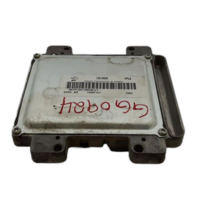
Below are the parts most often responsible for code P3877, ranked by how frequently each one is the actual culprit (per the diagnosis above). Tap any to see what we have for your vehicle.




The information in this article is provided for general reference and educational purposes only. Vehicle specifications, procedures, and part compatibility can vary by production date, trim level, and region. Always consult your vehicle's factory service manual and verify part numbers before purchasing or performing repairs. Safety-critical components such as airbags, seat belts, and braking systems should be installed by a qualified professional.
- 🧭 Diagnostic Flowchart
- 🎬 Helpful Videos
- 🛍️ Shop This Part
- What Does P3877 Mean?
- Can I Drive With P3877?
- Common Causes
- Symptoms
- Common Fixes & Costs
- DIY vs Professional
- Used vs. New Parts: Buying Guide
- What Happens If You Wait — Timeline
- Cost of Not Fixing It
- Diagnosis Steps
- When This Code Triggers (Freeze-Frame Conditions)
- Related Codes
- Climate & Environmental Factors
- How to Talk to a Mechanic About This Code
- Where to Take It: Dealer vs Independent vs Chain
- When to Walk Away From the Repair
- What Scan Tool You Need for This Code
- How to Clear the Code After You Fix It
- Will This Fail Emissions / State Inspection?
- Most Commonly Affected Vehicles
- Manufacturer-Specific Notes
- Real Owner Stories
- 2012 Ford F-250 6.7L at 130K miles - Misdiagnosis Story
- 2006 Ford F-350 6.0L at 171K miles - Easy Fix
- 2014 Ford F-250 6.7L - Unusual Root Cause
- How to Prevent This Code From Triggering
- Frequently Asked Questions
- Can I still start my truck with a P3877 code?
- What is the most common misdiagnosis for P3877?
- Can a bad GPCM drain my battery?
- Does P3877 mean I need to replace all my glow plugs?
- Is it a Glow Plug Relay (GPR) or a Glow Plug Control Module (GPCM)?
- Where is the GPCM located on a Ford Power Stroke?
- Can I replace the Glow Plug Control Module myself?
- Key Takeaways
- 🎟️ Get 5% Off