

U0001 on 2011-2017 Hyundai Accent: High-Speed CAN Bus Failure Causes and Fixes
The U0001 code on a 2011-2017 Hyundai Accent means there's a critical communication failure on the main vehicle network (CAN bus). The most common causes are poor battery connections, specifically a corroded negative terminal, or a faulty Body Control Module (BCM), often due to water damage. Start by checking the battery and its terminals before suspecting expensive modules.
- U0001 is a serious network failure, not a simple sensor issue. Do not drive the vehicle if possible.
- Always start your diagnosis with the simplest things: check the battery's health and clean the battery terminals thoroughly.
- The most likely component to fail is not a module, but the wiring. Inspect the interior fuse box/BCM for signs of water damage before suspecting more expensive parts.
- This is a difficult DIY repair. If you are not comfortable with advanced electrical diagnostics using a multimeter, professional service is strongly recommended.
What's Unique About the 2011-2017 Hyundai Accent
On this generation of Hyundai Accent (known as the RB series), the U0001 code often points back to two main vulnerabilities. First, simple electrical issues like a corroded negative battery terminal can create enough voltage instability to disrupt the entire network. This is a known issue discussed by owners. Second, the main interior fuse box, also called the IP Junction Block or Body Control Module (BCM), acts as a central hub for the CAN network and has been found to be susceptible to water damage, leading to corrosion and complete network failure.
Symptoms You May Notice
- Multiple warning lights on the dashboard simultaneously (Check Engine, ABS, Traction Control, Power Steering).
- Gauges like the tachometer and temperature gauge stop working.
- Transmission may get stuck in one gear or shift very harshly.
- Engine may stall or fail to start.
- Inability for a standard OBD-II scanner to communicate with the vehicle.
- Random electrical issues, such as power windows, locks, or infotainment not working.
- Airbag light stays illuminated.
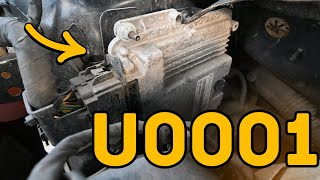
- Replacing the ECM or TCM without proper diagnosis. The U0001 code indicates a communication problem, which is more often caused by wiring or a different module on the network, not necessarily the module that stored the code. 🎬 Watch: This video explains how to fix CAN communication problems fast.
- Overlooking a simple battery or terminal issue. A weak or poorly connected battery can mimic complex network failures, leading to unnecessary and expensive diagnostic paths.
Most Likely Causes
- Poor Battery Connection or Failing Battery 🔴 High Probability → Shop Vehicle Battery An owner of a 2017 Accent reported this exact issue on a Reddit forum, where a corroded negative battery terminal was the root of the problem, causing multiple warning lights and a U0001 code. Low or unstable system voltage is a common cause of network communication errors across all modern vehicles because modules require stable power to communicate reliably. Corrosion on the negative terminal is often caused by hydrogen gas released from the battery reacting with the terminal material.
How to confirm: Check the battery terminals for any white, blue-green, or crusty deposits. Clean them thoroughly with a wire brush and a mixture of baking soda and water. Have the battery and alternator tested at an auto parts store to ensure they are providing stable voltage (at least 12.4V with the engine off, and 13.5V-14.5V with the engine running).
Typical fix: Clean or replace the battery terminals and cables. If the battery is weak or failing, replace it. Applying dielectric grease or a specific anti-corrosion spray to the terminals after cleaning can prevent future buildup.
Est. part cost: $10-$50 for cables/terminals, $150-$250 for a new battery. - Water Intrusion in Body Control Module (BCM) / IP Junction Box 🟡 Medium Probability → Shop Body Control Module The BCM, which often integrates the interior fuse panel, is a central gateway for the CAN network. Its location under the driver's side dashboard makes it vulnerable to water leaks from a compromised windshield seal or clogged cowl drains. In a documented case on a similar Hyundai platform, water leaked into the main interior junction box (BCM), causing corrosion on the connector pins and taking the entire CAN network down. Some TSBs for similar platforms describe water leaks from A-pillar seams or HVAC drain hoses that can drip onto the BCM.
How to confirm: Locate the interior fuse panel/BCM, typically behind the lower part of the dashboard on the driver's side. Disconnect its main connectors (after disconnecting the battery) and inspect carefully for any signs of green or white corrosion, rust, or moisture on the pins and inside the connectors.
Typical fix: If corrosion is minor, it may be possible to clean the pins with an electrical contact cleaner and a small brush. If the damage is severe, the BCM and potentially the connector pigtail will need to be replaced. A replacement BCM will require programming by a dealer or qualified shop to match the vehicle's options and VIN.
Est. part cost: $300-$600 for a new BCM, plus programming. Used BCMs are available for a lower cost but still require programming. - Damaged CAN Bus Wiring Harness 🟡 Medium Probability Wiring can be damaged from previous accidents, improper repairs, rodent damage, or chafing against sharp metal edges under the dash or in the engine bay. A known chafe point on some Hyundai models is where the engine harness can rub against a mounting bracket, potentially damaging the ignition coil wires and other circuits.
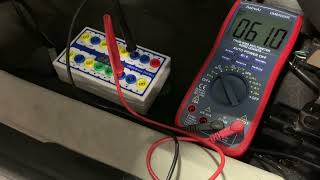
How to confirm: Visually inspect all visible wiring harnesses, especially those connecting the ECM, TCM, ABS module, and BCM. Look for any breaks, chafing, or melted sections. A more advanced check involves using a multimeter to test for resistance between Pin 6 (CAN-H) and Pin 14 (CAN-L) at the OBD-II port (with the battery disconnected). A healthy network should read ~60 Ohms.
Typical fix: Repair the damaged section of wire. This involves soldering in a new piece of wire and protecting it with heat-shrink tubing. Finding the break can be very time-consuming and is often the most difficult part of the repair.
Est. part cost: $5-$20 for wiring repair supplies.
Rare But Worth Checking
- Faulty Control Module (ECM, TCM, ABS): While less common than wiring or power issues, any single module on the network can fail internally and disrupt communication for all other modules. Diagnosis involves disconnecting modules one by one to see if communication is restored. This is a process of elimination.
- Aftermarket Electronics: A poorly installed remote starter, alarm system, or stereo that is improperly tapped into the CAN bus wiring can introduce electrical noise or shorts, causing a U0001 code. These devices can interfere with the precise signaling required for the network to function.
Diagnosis Steps
- Check Battery Health: Start with the basics. Ensure the battery has a full charge (at least 12.4V) and that the terminals are clean and tight. A weak battery is a frequent cause of network codes.
- Scan All Modules: Use an advanced scan tool (not a basic code reader) to attempt communication with every module on the vehicle (ECM, TCM, BCM, ABS, SRS, etc.). Make a list of which modules are responding and which are not. This helps narrow down the location of the fault.
- Visual Inspection: Thoroughly inspect the wiring harnesses going to the non-communicating modules. Look for obvious damage, corrosion, or loose connectors. Pay special attention to the interior fuse box/BCM area for signs of water damage, and check engine bay harnesses for rodent damage or chafing.
- Check CAN Bus Resistance: Disconnect the negative battery terminal. Set a multimeter to Ohms and measure the resistance between Pin 6 (CAN-H) and Pin 14 (CAN-L) of the OBD-II diagnostic port. The reading should be approximately 60 Ω. 🎬 Watch: How to test your CAN BUS network with a multimeter.
- - If it reads ~120 Ω, there is an open circuit in the harness or a problem with one of the two 'terminating' modules (usually the ECM and Instrument Cluster).
- - If it reads close to 0 Ω, the CAN High and CAN Low wires are shorted together.
- Isolate the Fault: If the resistance is incorrect, begin disconnecting modules from the CAN network one at a time (e.g., unplug the ABS module, then the instrument cluster, etc.) and re-measure the resistance after each one. When the resistance returns to 60 Ω, the last module you disconnected (or its wiring) is likely the source of the fault.
- Verify Power and Ground: If a specific module is suspected, use a multimeter to confirm it is receiving proper power and has a solid ground connection at its electrical connector before condemning the module itself. A module cannot communicate without proper power.
Parts You'll Likely Need
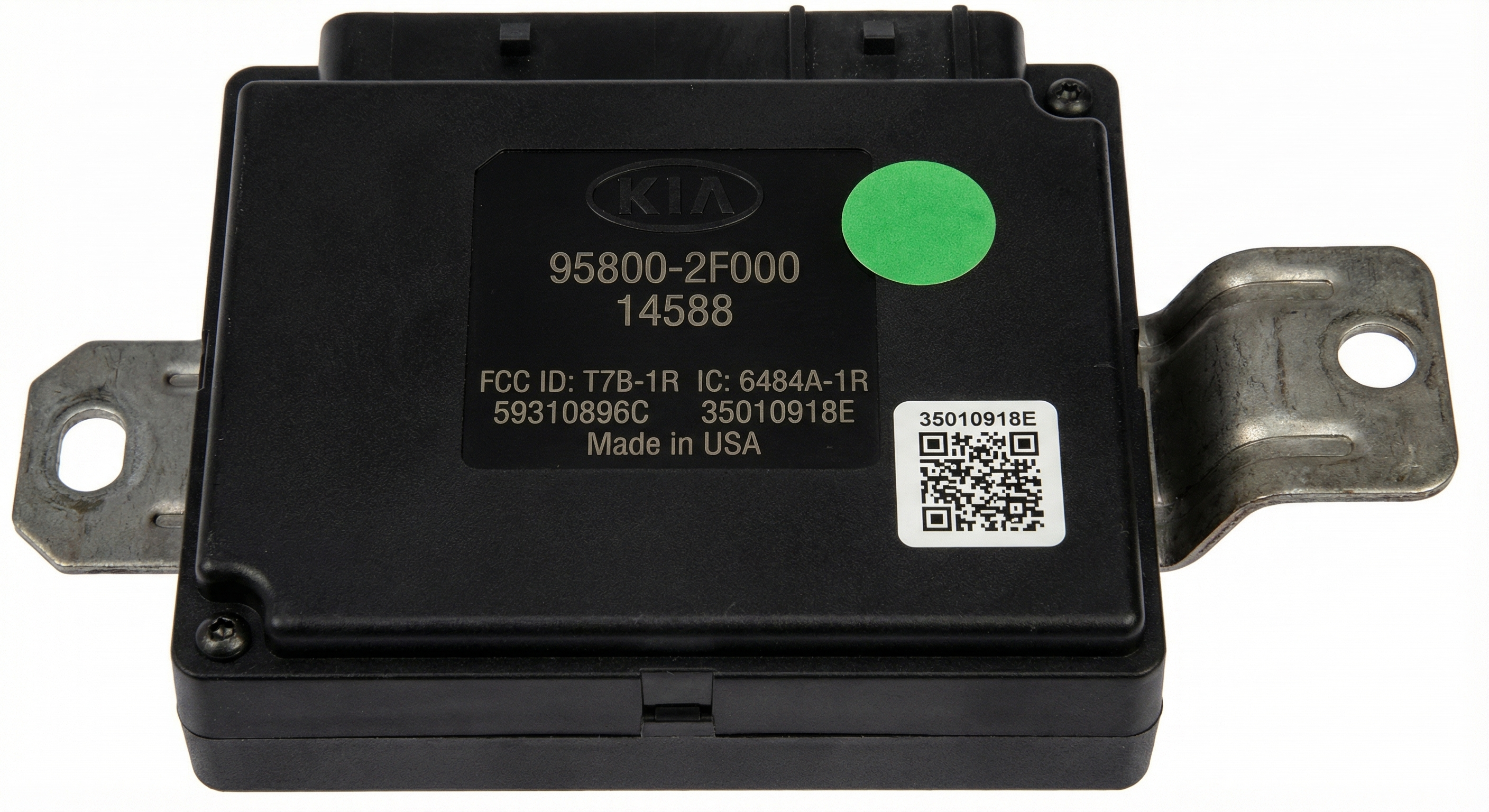
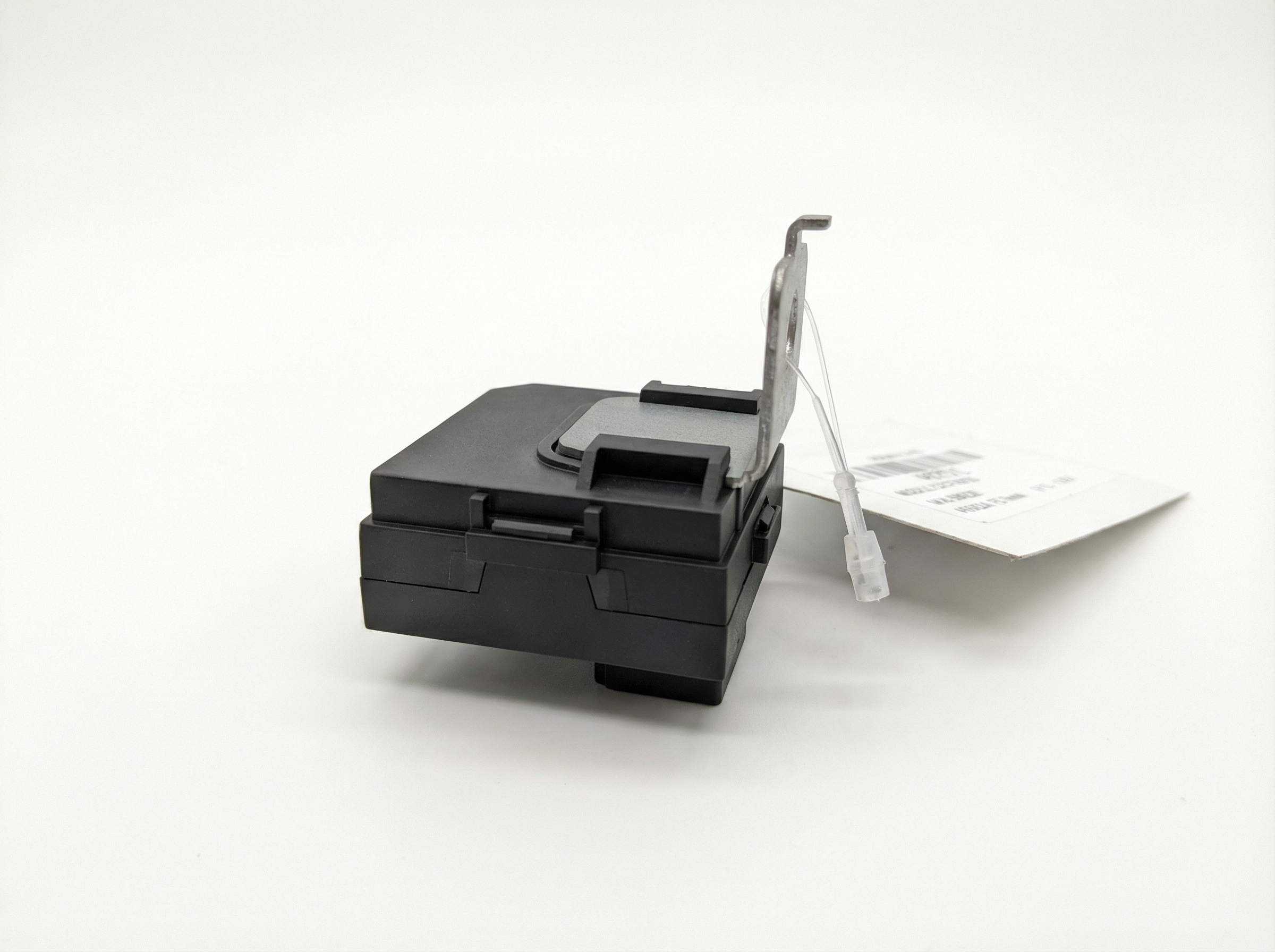
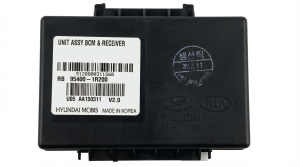
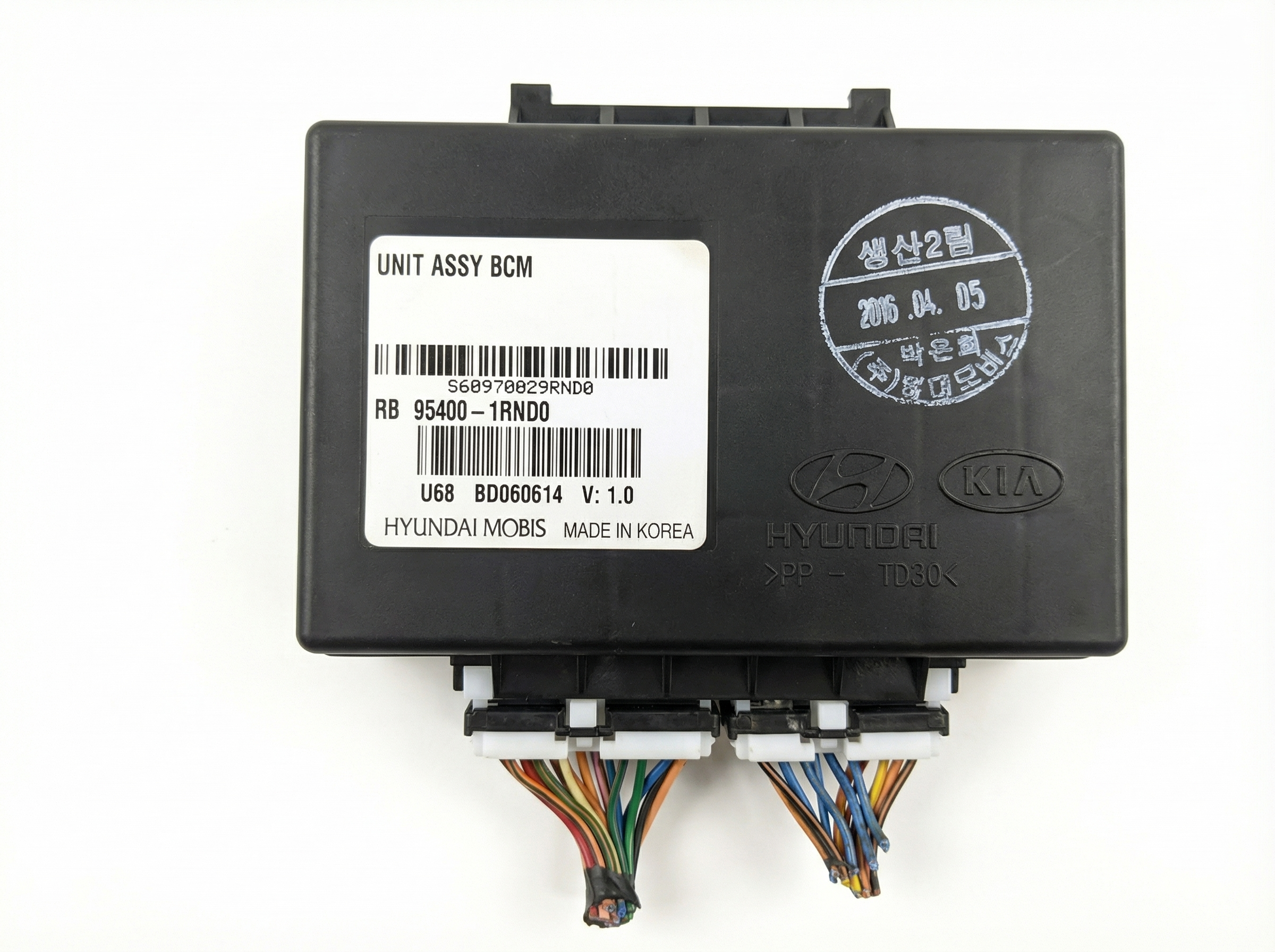
- Body Control Module (BCM) / Smart Junction Box
(OEM #95400-1RBL0, 95400-1RND0)— This module is a central hub for the CAN network and is a common failure point, sometimes due to water intrusion. Several part numbers exist depending on the model year and trim.
Trusted brands: Hyundai (OEM)
Related Codes That Often Appear With This One
- C1611 — This code means 'CAN Timeout EMS (Engine Management System)' and indicates the ABS/Traction Control module has lost communication with the engine computer, a direct result of the U0001 fault.
- C1616 — This code means 'CAN Bus Off' and is logged by a module when it detects so many errors on the network that it stops trying to communicate altogether, which is a symptom of the main U0001 failure.
- U0100 — Lost Communication with ECM/PCM. This is a more specific version of U0001, indicating other modules cannot hear from the engine computer.
- U0101 — Lost Communication with TCM. This indicates other modules cannot hear from the transmission computer, often leading to shifting problems.
Technical Service Bulletins (TSBs) & Recalls
- Recall 113 (NHTSA 13V-354) — Relates to rear crossmember corrosion on Sonatas and Azeras but is indicative of Hyundai's broader issues with subframe corrosion in salt-belt states, a known issue for this Accent generation as well.
- TSB 12-BE-005-2 — Mentioned in several other TSBs as a procedure for erasing DTCs in the BlueLink system after a software update or repair, indicating it's a standard dealer procedure during electronic system service.
Mechanic-Grade Diagnostic Values
- CAN Bus Resistance — expected: ~60 Ω between Pin 6 (CAN-H) and Pin 14 (CAN-L) at the OBD-II port with the battery disconnected.. Failure: A reading of ~120 Ω indicates an open circuit or a missing terminating resistor. A reading near 0 Ω indicates a short between the CAN-H and CAN-L wires.
- CAN Bus Voltage (Oscilloscope) — expected: At idle, CAN-H should be at ~2.5V and rise to ~3.5V during communication. CAN-L should be at ~2.5V and fall to ~1.5V during communication. The two signals should be mirror images of each other.. Failure: A flat line on either wire, or signals that do not mirror each other, indicates a wiring fault or a module pulling the bus down.
- Module Ground Resistance — expected: ≤ 0.1 Ω between the module's ground pin and a known good chassis ground.. Failure: Higher resistance indicates a poor ground connection, which can cause communication errors.
- Module CAN Transceiver Power — expected: 5.0 V ± 0.5 V at the module's CAN transceiver power pin with the ignition on.. Failure: Voltage outside this range indicates a power supply issue to the module.
Scan Tool Commands That Help
- Hyundai GDS (Global Diagnostic System): Fault Code Searching (All Systems) — This is the initial step to identify which modules are not communicating on the network. The GDS can poll every module and provide a list of responding vs. non-responding units, which is critical for isolating the fault.
- Hyundai GDS (Global Diagnostic System): BCM/SMK Programming — This function is mandatory after replacing the Body Control Module (BCM) or Smart Key Module (SMK). It syncs the new module to the vehicle's VIN and immobilizer system, allowing the car to start.
- Hyundai GDS (Global Diagnostic System): Current Data (Live Data) — To monitor network status and module inputs/outputs in real-time. For a U0001, a technician would use this to see if any specific module is reporting erratic data before it drops off the network entirely.
Wiring & Ground Locations
- CAN Junction Block — On the 2011-2017 Accent, the CAN bus wiring is integrated into the main junction block, which is part of the Body Control Module (BCM) assembly located under the driver's side dashboard, behind the kick panel.. This is the central hub for network communications. Any corrosion (often from water leaks) or poor connection at this point can take the entire network down, causing a U0001.
- Ground Point G-04 — Located in the driver's side footwell area, near the A-pillar. It serves as a primary ground point for several interior components, including modules.. A loose or corroded G-04 ground can cause intermittent or total failure of modules connected to it, leading to communication dropouts on the CAN bus.
- Engine Ground Strap — A braided copper strap connecting the engine block or transmission housing to the vehicle's chassis/frame.. While the main battery ground is critical, a poor engine ground strap can also introduce electrical noise and voltage differentials that disrupt sensitive module communications, contributing to network errors.
- OBD-II Connector Pins — Under the driver's side dashboard.. Pin 6 is CAN-High and Pin 14 is CAN-Low. These are the direct access points for testing the network's resistance and observing signals with an oscilloscope.
Real Owner Repair Stories
- Reddit user /u/Friendly_Sugar2119 (2017 Hyundai Accent, Manual, 57,000 miles) — Multiple dash lights on (ABS, Brake, traction, power steering), tachometer and temp gauge not working, scanner could not communicate. Intermittent issue.
❌ Tried (didn't work) Had alternator tested (it was good).
✅ What actually fixed it The user noted the negative battery terminal was corroded. Cleaning it provided a temporary fix. The problem was fully resolved by replacing the corroded negative battery cable and the battery itself. The user noted that even with a new, incorrect cable where the battery sensor was left unplugged, the issue persisted, highlighting the importance of correct and clean connections.
OEM Part Supersession History
95400-1R200→95400-1R201— Internal revision or component update by the manufacturer.95400-1E605→95400-1E606— Internal revision or component update by the manufacturer.
Model Year Variations Within This Range
- 2014-2017: The 2014 model year received a minor facelift which included some updated interior electronics and lighting. While the core CAN bus architecture remained the same, part numbers for modules like the BCM may have changed. It is critical to match the OEM part number exactly from the original unit rather than relying on year range compatibility alone.
Diagnostic Flowchart
Other Known Issues on This Vehicle
Issues unrelated to this code that are worth knowing about as an owner of this generation:
- GDI Engine Carbon Buildup 🟠 Medium — Becomes noticeable after 60,000-100,000 miles. Causes rough idle, misfires, and reduced power. (Ref: TSB 22-EM-010H provides guidelines for cleaning the intake system during engine work.)
- Peeling White Paint 🟡 Low — Widespread issue, particularly on vehicles painted 'Chalk White' or 'Pearl White'. Can start peeling after just a few years. (Ref: Hyundai extended the paint warranty for this issue to 10 years/unlimited miles for certain models and years.)
- Subframe and Suspension Corrosion 🔴 High — Common in 'salt belt' states, leading to premature rusting of the front subframe and rear suspension components. (Ref: Hyundai initiated several recalls and service campaigns (e.g., Recall 113) for older models to inspect and rust-proof or replace affected components.)
- Faulty Canister Purge Valve 🟡 Low — A common cause for a Check Engine Light with code P0441. Relatively easy and inexpensive to replace.
- ABS Module Failure 🔴 High → Shop ABS Control Module — Subject to a major recall where the ABS module can leak brake fluid internally, causing an electrical short and potential engine compartment fire, even when the car is off. (Ref: NHTSA Recall 20V520000)
Used vs. New Parts: Buying Guide for This Vehicle
When a used part is the smart pick: A used Body Control Module (BCM) is a very cost-effective option for this repair, often costing a fraction of a new OEM part. Since the failure is typically electronic and not wear-related, a used module from a donor vehicle that did not suffer water damage is a viable choice.
Donor-vehicle mileage cap: roughly under 150000 miles for the part to have meaningful remaining life.
What to inspect on the donor part:
- Verify the OEM part number on the used BCM is an EXACT match to your original.
- Inspect the connectors and pins on the used module for any signs of corrosion, moisture, or bent pins.
- Ask the seller if they know the history of the donor car (e.g., was it in a flood, front-end collision, etc.). Avoid parts from flood-damaged vehicles.
- Purchase from a reputable salvage yard that offers a short-term warranty (e.g., 30-90 days) to protect against receiving a dead-on-arrival part.
OEM-only on this vehicle (don't cheap out):
- Body Control Module (BCM) - While a used OEM part is fine, avoid new aftermarket BCMs as they often have compatibility and programming issues. Stick with genuine Hyundai parts, whether new or used.
Brands owners have reported issues with on this vehicle:
- Unbranded/No-name BCMs from online marketplaces. These are risky due to uncertain quality and the critical need for correct programming.
Real Owner Stories
Aggregated from forums and TSBs cited above. Mileages and costs reflect what owners reported in those sources.
2017 Hyundai Accent
Symptoms: Multiple warning lights on the dashboard appeared simultaneously and the vehicle threw a U0001 code.
What fixed it: Cleaning the corroded negative battery terminal and replacing the battery cable.
Source hint: Reddit: Hyundai accent DTC U0001
2011-2017 Hyundai Accent (GDI Engine) — ~80000 miles
Symptoms: Rough idle, misfires, and reduced power.
What fixed it: Cleaning the intake system as per TSB 22-EM-010H guidelines for GDI carbon buildup.
Source hint: TSB 22-EM-010H / GDI Engine Carbon Buildup known issue
Related OBD-II Codes
Frequently Asked Questions
My 2017 Hyundai Accent has multiple warning lights and a U0001 code; could it just be the battery?
Is there a specific issue with the negative battery terminal on the Hyundai Accent?
Can water leaks cause the U0001 communication code in this vehicle?
What should the CAN bus resistance be when testing the OBD-II port on my Accent?
Does the 2011-2017 Hyundai Accent have any recalls related to corrosion that might affect electronics?
How do I clear the U0001 code after a repair on my Accent?
Helpful Videos

We Have This Part in Stock

The information in this article is provided for general reference and educational purposes only. Vehicle specifications, procedures, and part compatibility can vary by production date, trim level, and region. Always consult your vehicle's factory service manual and verify part numbers before purchasing or performing repairs. Safety-critical components such as airbags, seat belts, and braking systems should be installed by a qualified professional.
- Hyundai Accent:
- 🧭 Diagnostic Flowchart
- 🎬 Helpful Videos
- 🛍️ Shop This Part
- What's Unique About the 2011-2017 Hyundai Accent
- Symptoms You May Notice
- Most Likely Causes
- Rare But Worth Checking
- Diagnosis Steps
- Parts You'll Likely Need
- Related Codes That Often Appear With This One
- Technical Service Bulletins (TSBs) & Recalls
- Mechanic-Grade Diagnostic Values
- Scan Tool Commands That Help
- Wiring & Ground Locations
- Real Owner Repair Stories
- OEM Part Supersession History
- Model Year Variations Within This Range
- Other Known Issues on This Vehicle
- Used vs. New Parts: Buying Guide for This Vehicle
- Real Owner Stories
- 2017 Hyundai Accent
- 2011-2017 Hyundai Accent (GDI Engine) — ~80000 miles
- Related OBD-II Codes
- Frequently Asked Questions
- 🎟️ Get 5% Off