

U0001 on 2016-2017 Jeep Renegade: High-Speed CAN Bus Failure Causes and Fixes
On a 2016-2017 Jeep Renegade, code U0001 indicates a critical communication failure on the high-speed CAN C network. This is often caused by a weak battery, poor wiring connections (especially grounds), or a faulty control module, particularly the Transmission Control Module (TCM). The fix can range from a simple battery replacement or software update to complex electrical diagnostics and module replacement.
- U0001 on a 2016-2017 Renegade is a critical network failure code that makes the vehicle unsafe to drive.
- Always check the battery first; low voltage is a simple but very common cause for this complex-looking code.
- The problem is frequently related to the transmission's electrical system, as confirmed by multiple manufacturer TSBs.
- Do not replace any expensive control modules without performing a full electrical diagnosis to confirm the wiring and other modules are functioning correctly.
- This is not a DIY-friendly repair for beginners. Professional diagnosis is strongly recommended to avoid unnecessary expense and ensure safety.
What's Unique About the 2016-2017 Jeep RENEGADE

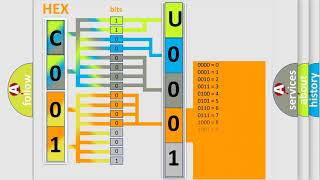
The first-generation Jeep Renegade, built on the FCA Small Wide 4x4 platform, is known for electrical and transmission-related sensitivities. Technical Service Bulletins (TSBs) for this platform specifically link the U0001 code to issues 🎬 Watch: A short explanation of the Jeep U0001-88 code. with the transmission control circuits and shifter module, often appearing alongside codes like P0887 (TCM Power Control Circuit High) and U1412 (Implausible Vehicle Speed Signal). This indicates that on the Renegade, U0001 is frequently a symptom of a problem originating in the transmission's electrical system or a software glitch in the TCM, rather than a random wiring fault elsewhere.
Diagnostic Flowchart

Tap your situation to follow the diagnostic path that matches what you're seeing on this vehicle.
Symptoms You May Notice

- Sudden loss of engine power or stalling.
- Vehicle enters 'limp mode' with reduced power.
- Rough or erratic idling.
- Check Engine Light is on.
- Multiple warning lights on the dashboard simultaneously (e.g., 'Service Transmission', 'Service Airbag', 'Service Parking Brake'), often described as a 'Christmas tree' effect.
- Harsh or jerky transmission shifting, or getting stuck in one gear.
- Vehicle may fail to start or experience a long crank.
- Loss of convenience features like infotainment, power windows, or start/stop system.
- Replacing a single module without confirming it is the source of the network failure. The U0001 code often means one module is taking the whole network down, but it may not be the first one that flags an error.
- Overlooking a simple software update. Many dealer visits for this code result in a TCM flash as prescribed by a TSB, not a hardware replacement.
- Ignoring a bad ground connection. A corroded or loose ground strap can create intermittent and hard-to-diagnose network problems that mimic a failing module.
Most Likely Causes

- Weak or Failing Battery 🔴 High Probability → Shop Vehicle Battery Modern vehicles with numerous electronic modules, like the Renegade, are highly sensitive to voltage fluctuations. A weak battery can cause low voltage (below 12.4V at rest), leading to communication errors between modules before any starting issues are apparent. This is often the first and easiest thing to check.
How to confirm: Test the battery voltage with the engine off using a multimeter; a healthy battery should read at least 12.4V. Perform a load test to check its health under stress. Check the voltage while cranking to ensure it doesn't drop below 9.6V. Ensure battery terminals are clean and tight.
Typical fix: Replace the vehicle's battery and clean the terminals. After replacement, clear codes and see if they return.
Est. part cost: $150-$300 - Damaged Wiring or Loose Connections 🟡 Medium Probability Wiring harnesses, especially those around the engine and transmission, are exposed to heat, vibration, and potential abrasion. Poor ground connections are a known weak point; a loose or corroded main ground strap can cause network-wide issues.
How to confirm: Visually inspect all accessible wiring harnesses connected to the PCM, TCM, and ABS module for chafing, corrosion, or loose connectors. Pay special attention to the main battery ground cable and other chassis grounds. With the battery disconnected, use a multimeter to check for approximately 60 Ohms of resistance across Pin 6 (CAN-H) and Pin 14 (CAN-L) at the OBD-II port. A reading of 120 Ohms suggests an open circuit or a missing terminating resistor, while near 0 Ohms indicates a short between the CAN wires.
Typical fix: Repair the damaged section of the wiring harness or clean and secure the affected connector or ground point. This can range from a simple cleaning to extensive harness repair.
Est. part cost: $20-$500 - Faulty Control Module (especially TCM) 🟡 Medium Probability TSBs #21-043-17 and #21-011-17 point to issues with the transmission control circuits, suggesting the TCM or AGSM can fail internally, disrupting the entire network. The TCM is a very common point of failure for this code on the Renegade platform.
How to confirm: This is a process of elimination. If the battery, software, and wiring are confirmed to be good, a technician will use an advanced scan tool to see which modules are offline. They may disconnect modules one by one to see if communication is restored. If unplugging the TCM allows the other modules to communicate, the TCM is the likely culprit.
Typical fix: Replace the faulty module (e.g., TCM, PCM, or AGSM). This often requires programming by a dealer or qualified shop with tools like wiTECH.
Est. part cost: $400-$1200
Rare But Worth Checking
- Software Glitch / Proxy Alignment Needed: Sometimes, communication issues can be resolved by a software update for one of the vehicle's control modules. TSBs #21-043-17 and #21-011-17 specifically call for reprogramming the TCM with the latest software as a fix for U0001 and related codes. After replacing a module, a 'Proxy Alignment' procedure is required using a tool like wiTECH or AlfaOBD to make the new module communicate with the car's network. A flashing odometer is a key symptom that a proxy alignment is needed.
- Blown Fuse: A blown fuse that supplies power to a critical module like the ECM or TCM can cause it to drop off the network, triggering a U0001 code. Check fuses in the engine bay and interior fuse panels.
- Faulty Blind Spot Sensor Module: On some FCA vehicles, a faulty Blind Spot Sensor (RBSS/LBSS) module can short out or broadcast noise on the CAN bus, bringing down the entire network. These modules are exposed to the elements behind the rear bumper and are susceptible to water intrusion and corrosion. If other diagnostics fail, disconnecting the blind spot modules can be a valid diagnostic step.
Diagnosis Steps
- Read all stored DTCs with an OBD-II scanner to see which other codes are present. Note any codes that point to a specific module or circuit.
- Check for Applicable TSBs: Contact a dealer with your VIN or search online for TSBs like #21-043-17 and #21-011-17. A software flash may be the prescribed fix.
- Check the Battery and Grounds: Ensure the battery has a full charge (12.4V+ engine off) and that terminals are clean. Inspect the main negative battery cable and its connection to the chassis for corrosion or looseness.
- Perform a thorough visual inspection of the main wiring harnesses, particularly around the engine, transmission, and under the dashboard. Look for any signs of damage, chafing, or corrosion.
- Check CAN Bus Resistance: Disconnect the battery. Using a multimeter, measure the resistance between Pin 6 (CAN-H) and Pin 14 (CAN-L) on the OBD-II port. A healthy network should read approximately 60 Ohms. A 120 Ohm reading indicates an open circuit or faulty terminating resistor; ~0 Ohms indicates a short.
- Check CAN Bus Voltage (Advanced): With the battery connected and ignition on, check voltage between CAN-H (Pin 6) and ground (Pin 4/5). It should be ~2.5-3.5V. Check CAN-L (Pin 14) to ground; it should be ~1.5-2.5V. Incorrect voltages can point to a short or a faulty module.
- Isolate the Faulty Module (Advanced): If wiring and resistance are good, begin disconnecting modules from the CAN bus one at a time, re-checking resistance after each one. If disconnecting a specific module (like the TCM) causes the 120 Ohm reading to return to 60 Ohms, that module is likely the source of the fault.
- If the above steps do not identify the issue, the problem requires advanced diagnostics with an oscilloscope to analyze the CAN signal waveform and is best left to a professional.
Parts You'll Likely Need
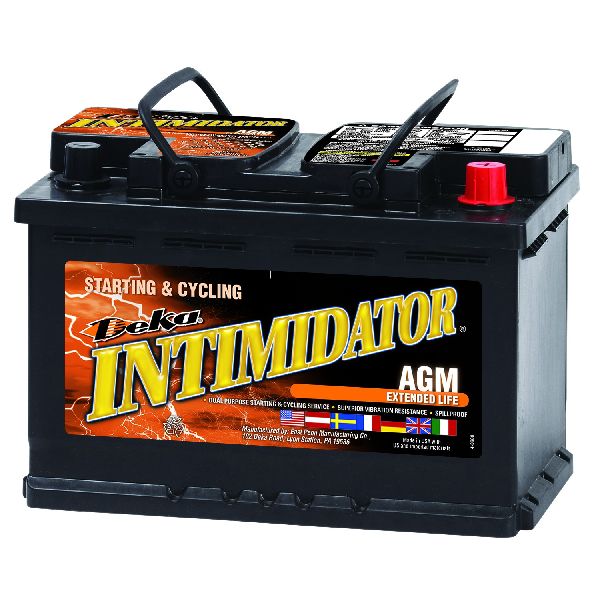
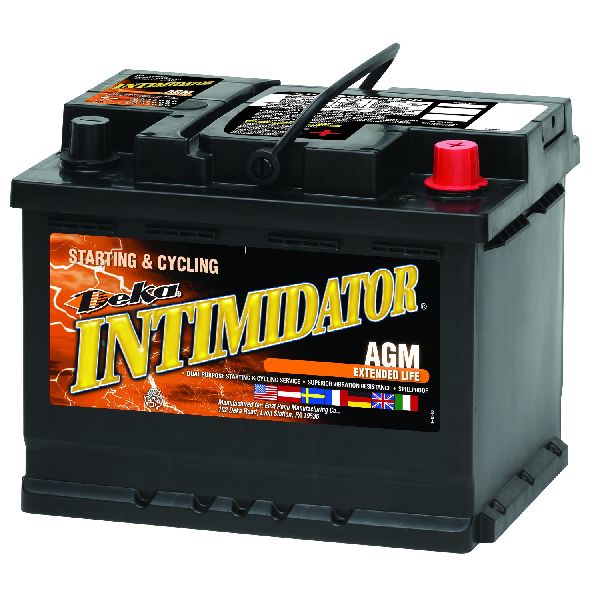
- Battery — A weak or failing battery is a frequent cause of network communication codes due to unstable voltage.
Trusted brands: Mopar, Interstate, DieHard
OEM price range: $200-$350
Aftermarket price range: $150-$300 - Transmission Control Module (TCM)
(OEM #68249614AA, 68503925AA (Verify by VIN and specific transmission))— Given the associated TSBs and common companion codes like P0887, the TCM is a likely point of failure on this platform when U0001 is present. It can fail internally or require a software update.
Trusted brands: Mopar
OEM price range: $600-$1200
Aftermarket price range: $400-$800 (often remanufactured)
Related Codes That Often Appear With This One
- P0887 — As cited in TSBs #21-043-17 and #21-011-17, this code for 'TCM Power Control Circuit High' often accompanies U0001, pointing to an electrical fault related to the transmission controller.
- U1412 — Also cited in TSBs #21-043-17 and #21-011-17, 'Implausible Vehicle Speed Signal Received' indicates a data conflict, which is a direct result of the CAN bus communication failure.
- P0901 — Mentioned in TSB #21-043-17, this 'Clutch Actuator Circuit Performance' code further reinforces that the root cause is often within the transmission's control system.
Technical Service Bulletins (TSBs) & Recalls
- 21-043-17: Links U0001 to the AGSM CAN Bus and other transmission-related DTCs. Recommends a TCM software flash.
- 21-011-17: Identifies U0001 as a 'CAN C BUS' fault appearing with other transmission electrical codes. Also recommends a TCM software flash.
- 21-042-17: Covers both the Jeep Renegade and Fiat 500X, addressing a condition where the 'CAN bus message may drop out after a network restart', fixed by a TCM software update.
Platform-Specific Known Issues
- NHTSA Technical Service Bulletin #21-043-17 specifically identifies U0001 occurring with P0887, U1412, and P0901. The bulletin's primary fix is to reprogram the Transmission Control Module.
Mechanic-Grade Diagnostic Values
- CAN Bus Resistance (at OBD-II Port) — expected: ~60 Ω. Failure: 120 Ω indicates an open circuit or a single terminating resistor is offline. ~0 Ω indicates a short between CAN-H and CAN-L. ~40-45 Ω may indicate a third, unintended resistor on the network or a faulty module.
- CAN-H Voltage (Key On, Engine Off) — expected: Approx. 2.5V (recessive/idle) to 3.5V (dominant/transmitting). Failure: Voltage stuck high, low, or at 0V. No change between states.
- CAN-L Voltage (Key On, Engine Off) — expected: Approx. 2.5V (recessive/idle) to 1.5V (dominant/transmitting). Failure: Voltage stuck high, low, or at 0V. No change between states.
- CAN Transceiver Power Pin Voltage — expected: 5.0 V ± 0.5 V. Failure: Unstable or out-of-range voltage can cause the module to drop off the network.
Scan Tool Commands That Help
- wiTECH or AlfaOBD/Multiecuscan: Proxy Alignment (Configuration) — Required after replacing a major control module (like the TCM, BCM, or ABS). A flashing odometer is a primary indicator that a proxy alignment is needed to sync the new module with the vehicle's configuration stored in the Body Control Module (BCM).
- wiTECH: Clear All DTCs — After performing a proxy alignment or any major repair, it's critical to clear all fault codes from all modules, as the communication disruption will have stored numerous secondary codes.
- wiTECH or advanced scan tool: Network Scan / View Topology — This function pings all modules on the network and displays which ones are communicating and which are not. It's a crucial first step to see the scope of the failure and identify which modules are offline.
Wiring & Ground Locations
- Engine Compartment Fuse Box — Located next to the battery in the engine compartment.. Contains fuses and relays that power critical modules on the CAN C bus, such as the PCM and TCM. A blown fuse here can take a module offline.
- Dashboard Fuse Box / BCM — Located under the dashboard, to the left of the steering column. Removing the lower knee bolster panel is required for access.. This area houses the Body Control Module (BCM), which is one of the two main terminating resistors for the CAN bus. Poor connections or ground issues here can disrupt the entire network.
- Main Chassis Ground — The main negative battery cable connects directly to the vehicle's chassis/frame near the battery.. A corroded or loose main ground is a high-probability cause for widespread, intermittent electronic issues, including CAN bus communication failures.
- Engine Block Ground — A ground strap connects the engine block to the chassis. On similar Jeep platforms, this is often near the passenger side motor mount or the dipstick tube stud.. Provides the ground reference for the PCM and other engine-mounted sensors. A poor connection can introduce electrical noise and communication errors.
Real Owner Repair Stories
- Reddit user in r/JeepRenegade (2017 Jeep Renegade) — Car would not start, brake pedal stiff, multiple service lights on including Air Bag service light.
❌ Tried (didn't work) Attempting to restart the car multiple times.
✅ What actually fixed it Replacing the vehicle's battery resolved the multiple electronic failures and allowed the car to start normally. Another user noted that Renegades are very sensitive to low battery voltage, even if the battery isn't completely dead. - Reddit user in r/JeepRenegade (2015 Jeep Renegade 1.4L Turbo) — Check Engine Light, 'Start-Stop Unavailable', 'Blind Spot Unavailable', Cruise Control not working.
❌ Tried (didn't work) Mechanic checked battery and said it was 'a little flat' but okay.
✅ What actually fixed it Multiple commenters insisted the battery was the cause, stating that Renegades are extremely sensitive to voltage changes and can throw numerous, seemingly unrelated codes when the battery is failing, even if it passes a basic test. The consensus was to replace the battery with a high-quality AGM model.
OEM Part Supersession History
68249614AB→68249614AA— Part revision or update by manufacturer.
Heads up: The part number 68249614AA is listed as a replacement for 68249614AB. However, some vendor sites list 68249614AA as discontinued. It is critical to verify the correct, most current part number with a dealer using the vehicle's VIN before ordering.
Helpful Videos
We Have This Part in Stock


The information in this article is provided for general reference and educational purposes only. Vehicle specifications, procedures, and part compatibility can vary by production date, trim level, and region. Always consult your vehicle's factory service manual and verify part numbers before purchasing or performing repairs. Safety-critical components such as airbags, seat belts, and braking systems should be installed by a qualified professional.
- Jeep RENEGADE:
- 🧭 Diagnostic Flowchart
- 🎬 Helpful Videos
- 🛍️ Shop This Part
- What's Unique About the 2016-2017 Jeep RENEGADE
- Symptoms You May Notice
- Most Likely Causes
- Rare But Worth Checking
- Diagnosis Steps
- Parts You'll Likely Need
- Related Codes That Often Appear With This One
- Technical Service Bulletins (TSBs) & Recalls
- Platform-Specific Known Issues
- Mechanic-Grade Diagnostic Values
- Scan Tool Commands That Help
- Wiring & Ground Locations
- Real Owner Repair Stories
- OEM Part Supersession History
- 🎟️ Get 5% Off