

U0001 on 2002-2007 Nissan Murano: High Speed CAN Bus Failure Causes and Fixes
Code U0001 on a 2002-2007 Nissan Murano indicates a critical failure in the High-Speed CAN communication network. This is not a DIY-friendly repair. Common causes include a failed ABS control module, wiring damage (especially grounds under the battery tray), or a failing alternator providing unstable voltage. Diagnosis is complex and requires professional tools to isolate the faulty component on the network.
- U0001 is a critical network failure code that makes the vehicle unsafe to drive.
- This is not a DIY repair. It requires professional diagnostic equipment and expertise in automotive network troubleshooting.
- The most common causes are a failed control module (often the ABS unit on Nissans), damaged CAN bus wiring, or a poor ground connection.
- Diagnosis involves systematically testing the network's resistance, voltage, and isolating modules to find the source of the communication breakdown.
- Do not replace expensive modules like the ECM or ABS unit without a definitive diagnosis confirming they are the root cause of the failure.
What's Unique About the 2002-2007 Nissan Murano
On many Nissan vehicles of this era, including the first-generation Murano, the ABS actuator and control unit is a primary and common failure point on the CAN bus. An internal fault within this ABS module can bring down the entire network, triggering a U0001 code. Additionally, a frequently cited weak point is the main chassis ground connection located directly under the battery and its tray. This ground is highly susceptible to corrosion from battery fumes or minor leaks, leading to intermittent and hard-to-diagnose network voltage issues. Technicians use Nissan's specific diagnostic flow charts (like TSB NTB13-027a) to systematically trace these complex CAN communication failures.
Symptoms You May Notice
- Multiple warning lights on the dashboard (Check Engine, ABS, Airbag, VDC/SLIP, AWD)
- Engine may stall, refuse to start, or have reduced/unresponsive throttle performance
- Transmission may shift harshly or get stuck in one gear (fail-safe mode)
- Speedometer or other gauges may stop working
- Loss of power steering assist
- Air conditioning or other electronic features may fail
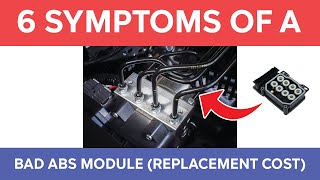
- A buzzing or humming noise from the ABS pump motor, which may run continuously even with the car off 🎬 Watch: Learn the common symptoms of a bad ABS module.
- Replacing the ECM or TCM without confirming it is the faulty module. The U0001 code often points to a network-wide issue, and one module is often just a symptom of another's failure (like the ABS module) or a wiring problem.
Most Likely Causes
- Damaged or Corroded CAN Bus Wiring / Grounds 🔴 High Probability Wiring harnesses can become damaged from vibrations, improper repairs, or exposure to the elements. A critical weak point on the Murano is the main chassis ground located under the battery tray, which is highly prone to corrosion from battery acid/fumes, disrupting network communication.
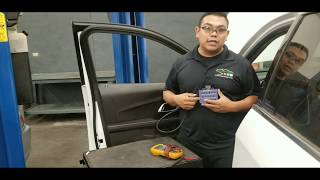
How to confirm: A technician will perform a visual inspection of harnesses. A key step is to remove the battery and tray to inspect and clean the ground connection point on the frame. A multimeter is used to check for continuity, shorts, and proper resistance (approx. 60 ohms) across CAN High (Pin 6) and CAN Low (Pin 14) at the DLC. 🎬 Watch: How to perform a CAN bus resistance check.
Typical fix: Repairing the specific section of damaged wiring or, more commonly, removing, cleaning, and securing the main ground connection under the battery.
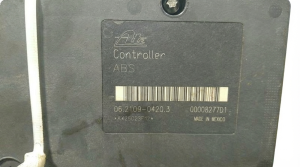
Est. part cost: $10-$100 - Failed ABS Control Module 🔴 High Probability → Shop ABS Control Module The ABS module on this generation Murano is a well-documented failure point that can internally short and bring down the entire CAN network. This failure can be triggered suddenly, for instance, after hitting a pothole.
How to confirm: A professional scan tool will show the ABS module as 'offline' or not communicating. A technician will disconnect the ABS module; if communication is restored to other modules on the network, the ABS module is confirmed as the fault.
Typical fix: Replacing the faulty ABS control module and actuator assembly. This repair requires programming and calibration of the steering angle sensor with a Nissan-specific scan tool.
Est. part cost: $200-$1500+ - Failing Alternator or Poor Battery Voltage 🟡 Medium Probability → Shop Alternator A weak battery or, more specifically, a failing alternator can provide unstable voltage, causing unpredictable communication errors across the network. First-generation Muranos are known for alternator failures, and owners report that aftermarket replacement alternators often fail prematurely, making an OEM unit the recommended fix.
How to confirm: Test the battery voltage with the engine off (should be ~12.6V) and running (should be 13.5-14.5V). If the voltage drops while running or doesn't increase from the resting voltage, the alternator is likely faulty.
Typical fix: Replacing a weak battery or faulty alternator. Using a genuine Nissan alternator is highly recommended to avoid repeat failures. 🎬 See this step-by-step Nissan Murano alternator replacement walkthrough.
Est. part cost: $150-$700
Rare But Worth Checking
- Faulty Aftermarket Electronics: Poorly installed remote starters, alarms, or stereo systems that are tapped into the CAN bus can interfere with network communication and cause a U0001 code.
- Water Intrusion: On models with a sunroof, clogged drain tubes can cause water to leak into the A-pillar and dashboard area, potentially corroding wiring harnesses or control modules like the BCM, leading to network faults.
Diagnosis Steps
- Verify the battery is fully charged and the terminals are clean and tight. A running voltage test should show 13.5-14.5V to rule out a bad alternator.
- Connect a professional scan tool to read all stored codes from all modules. Note which modules are communicating and which are not. A U0001 code often accompanies a module that is completely offline.
- Visually inspect the main wiring harnesses for any obvious signs of damage, corrosion, or rodent activity.
- CRITICAL: Remove the battery and battery tray to access the main chassis ground point. Thoroughly inspect this connection for corrosion, clean it to bare metal, and ensure it is tight.
- With the ignition off, measure the resistance between Pin 6 (CAN-H) and Pin 14 (CAN-L) at the OBD-II diagnostic port. A healthy network should read approximately 60 ohms.
- If the resistance is 120 ohms, it indicates one of the two terminating resistors (usually in the ECM and another module) is offline. If it's open (OL) or 0 ohms, it indicates a wiring open or short.
- If a module is suspected (especially the ABS module), disconnect its electrical connector. Re-measure the CAN bus resistance. If the resistance returns to a normal value or communication is restored with other modules, the disconnected module is faulty.
- Consult the Nissan-specific TSB (NTB13-027a) for a detailed diagnostic flowchart for CAN issues.
- Use an oscilloscope for advanced diagnosis to view the CAN signal waveforms and identify noise or signal degradation.
Parts You'll Likely Need
- ABS Control Module / Actuator
(OEM #47660-CA000, 47660-CA001, 47660-CA002, 47660-CB000 (Verify by VIN, FWD/AWD specific))— This is a frequently cited failure point on first-generation Muranos that can take down the entire high-speed CAN network.
Trusted brands: Hitachi, Bosch, OEM Nissan
OEM price range: $1000-$2000
Aftermarket price range: $400-$900 (Remanufactured) - Alternator
(OEM #23100-CN100, 2310M-CN10ERW (Hitachi LR1110-725))— A failing alternator provides unstable voltage, a common cause of CAN communication errors. Aftermarket units are known to fail prematurely on this platform.
Trusted brands: Hitachi (OEM), Denso, Bosch
OEM price range: $400-$600
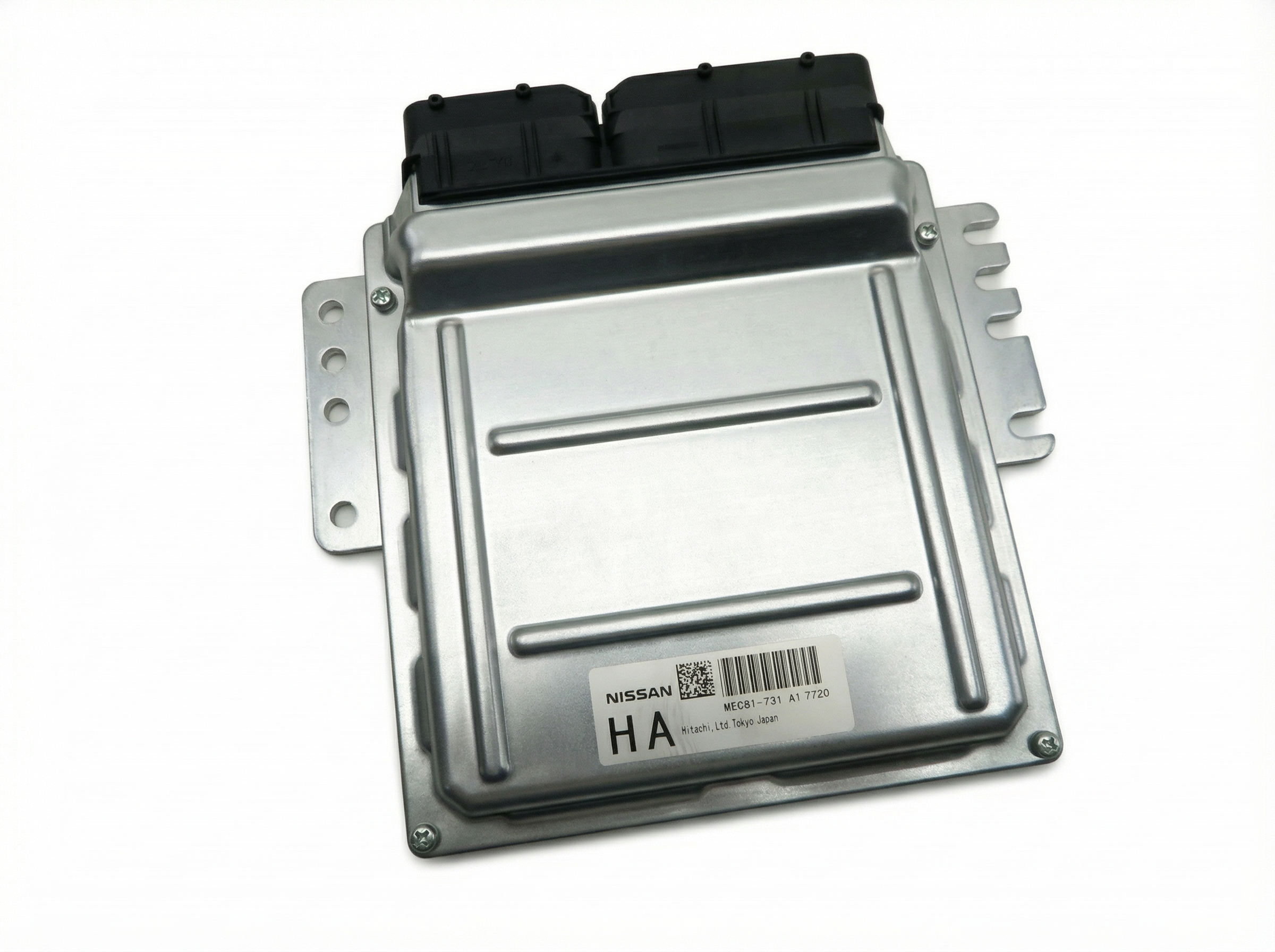
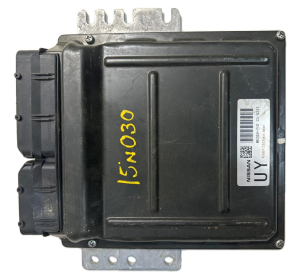
Aftermarket price range: $150-$300 - Engine Control Module (ECM) — The ECM is a terminating module on the CAN bus. An internal failure can disrupt all communication, though this is less common than an ABS module or wiring fault.
Trusted brands: Hitachi, OEM Nissan
OEM price range: $800-$1500
Aftermarket price range: $300-$600 (Remanufactured/Programmed)
Related Codes That Often Appear With This One
- U1000 — This is a common Nissan-specific code for a CAN communication line malfunction, which often appears alongside the more generic U0001, frequently pointing to the same root causes like bad grounds or a faulty module.
- U1001 — Another Nissan-specific CAN communication code that can be stored when the network is compromised.
- C1110 — This code indicates an ABS 'Controller Failure'. If this code is present along with U0001, it strongly suggests the ABS module is the root cause of the network crash.
Technical Service Bulletins (TSBs) & Recalls
- NTB13-027a: CAN Communication - Network Diagnostic Flow Chart. This bulletin provides the official Nissan procedure for diagnosing CAN bus failures across many models from 2005-2013.
Platform-Specific Known Issues
- ABS Module Failure Disables Vehicle: → Shop ABS Control Module A user on a Russian-language forum for a 2007 Murano with 80,000 km reported that ABS, ESP, and 4WD lights appeared during normal braking. The dealer diagnosed a failed ABS unit and quoted an exorbitant price for a new one. This highlights the commonality of the ABS module being the central point of failure for network-related warning lights.
- Unresponsive Throttle Traced to Failing Alternator: → Shop Alternator An owner of a 2007 Murano on Reddit described an incident where the throttle became completely unresponsive while driving, followed by a no-start condition. After jump-starting, voltage tests revealed the alternator was not charging the battery (voltage would drop with the engine running).
Mechanic-Grade Diagnostic Values
- CAN Bus Resistance — expected: ~60 Ω (measured at DLC pins 6 and 14 with battery disconnected). Failure: 120 Ω indicates an open circuit or an offline terminating module. 0 Ω indicates a short between CAN-H and CAN-L.
- CAN High Voltage to Ground — expected: ~2.5V to 3.0V (ignition ON). Failure: Significant deviation indicates a fault on the CAN High line.
- CAN Low Voltage to Ground — expected: ~2.0V to 2.5V (ignition ON). Failure: Significant deviation indicates a fault on the CAN Low line.
- Alternator Charging Voltage — expected: 13.5V - 14.5V (engine running). Failure: Voltage below 13.2V or dropping while running indicates a failing alternator, which can cause network instability.
Hidden / Shadow Codes Worth Checking
- U1000 / U1001: Nissan-specific CAN Communication Line Malfunction codes. These almost always accompany a U0001 and confirm a network-wide issue. They do not pinpoint the fault but reinforce the diagnosis of a bus failure. (see via Standard OBD-II scanner or Nissan CONSULT.)
- C1110: ABS Controller Failure. When seen with U0001, this code is a very strong indicator that the ABS module itself has failed and is the source of the network crash. (see via Professional scan tool capable of reading ABS module codes.)
Scan Tool Commands That Help
- Nissan CONSULT-II / CONSULT-III: Automated CAN Diagnosis / Self-Diagnosis — This is the primary dealer-level function to use for a U0001. The tool automatically polls all modules on the network and provides a list of which ones are communicating and which are 'offline'. This is the fastest way to identify a non-responsive module (like a failed ABS unit) without having to physically disconnect components one by one.
- Nissan CONSULT-III: Active Test — Allows the technician to command specific functions in various modules. If a module responds to active tests but is setting communication codes, it suggests the module itself is functional but has an issue with its network connection (wiring/ground).
- Nissan CONSULT-III / High-End Professional Scan Tool: Steering Angle Sensor Calibration / G-Sensor Calibration — This is a required procedure after replacing the ABS control module. The new module will not function correctly and will continue to set codes until it is calibrated to the vehicle's steering and yaw rate sensors.
Wiring & Ground Locations
- Main Chassis Ground — Directly under the battery tray, on the frame rail. Requires removal of the battery and the plastic battery tray to access.. This is the most notorious ground point on the first-generation Murano. It is highly susceptible to corrosion from battery fumes/leaks, causing intermittent high resistance that disrupts CAN bus communication for multiple modules, triggering U0001.
- IPDM E/R (Intelligent Power Distribution Module Engine Room) — In the engine compartment, typically on the driver's side, near the firewall. It's a black box containing multiple fuses and relays.. The IPDM is a central hub for power and communication signals. It contains fuses and relays for many critical modules. A fault within the IPDM or corrosion on its connectors can cause widespread network issues.
- DLC (Data Link Connector) Pins 6 & 14 — The OBD-II port under the driver's side dashboard.. Pin 6 is CAN High and Pin 14 is CAN Low. These are the primary test points for measuring the overall health of the CAN bus with a multimeter (resistance) or an oscilloscope (waveform).
Real Owner Repair Stories
- Consolidated from multiple owner reports on nissanmurano.org and nicoclub.com (2005 Nissan Murano SL AWD, ~120,000 miles) — Vehicle suddenly went into limp mode while driving. ABS, VDC, SLIP, and Check Engine lights all came on. Speedometer stopped working. Transmission was stuck in gear. After shutting off, it was a no-start.
❌ Tried (didn't work) Replacing the battery (the old one tested weak, but this didn't fix the issue)., Clearing codes (they returned immediately)., Checking all visible fuses.
✅ What actually fixed it The owner removed the battery and battery tray and found the main chassis ground bolt was heavily corroded. They removed the bolt, cleaned the cable terminal and the frame contact point down to bare metal with a wire brush, applied dielectric grease, and reassembled. All communication was restored, and all codes were cleared and did not return. This repair is a common 'first step' for experienced Nissan technicians facing these symptoms.
"I Checked Everything" — The Actual Cause
- A common scenario for U0001 is when a technician checks the CAN bus resistance with the vehicle off and measures a perfect 60 ohms, leading them to believe the wiring is fine. However, the actual cause is a failing alternator providing 'dirty' or fluctuating voltage while the engine is running. This electrical noise disrupts communication dynamically but won't be caught by a static resistance test. The fix is to test alternator voltage and ripple while the engine is running, which often reveals the true source of the network instability.
OEM Part Supersession History
47660-CAxxx series (e.g., 47660-CA000, 47660-CA002)→Varies by year and options— Revisions for reliability and component changes.
Heads up: CRITICAL: ABS modules are not cross-compatible between FWD and AWD models, or between models with and without VDC (Vehicle Dynamic Control). A part number from a donor vehicle must be an exact match or a confirmed superseded number for the specific VIN's configuration. Installing the wrong module will result in a no-communication state and persistent warning lights.
Model Year Variations Within This Range
- 2006-2007: For the 2006 model year facelift, the ECM (Engine Control Module) was moved from the engine compartment to behind the glove box. This can be relevant when tracing CAN bus wiring to or from the ECM.
- 2006-2007: A 7-inch color LCD display became standard in 2006. While this doesn't change the U0001 diagnosis directly, the display has its own CAN diagnostic menu (accessed via a button-and-knob sequence) that can show the status of AV-related CAN signals, which may offer clues if the issue is related to aftermarket stereo integration.
Diagnostic Flowchart
Other Known Issues on This Vehicle
Issues unrelated to this code that are worth knowing about as an owner of this generation:
- Continuously Variable Transmission (CVT) Failure 🔴 High → Shop Transmission Assembly — Widespread issue, often occurring before 100,000 miles. Symptoms include jerking, stalling, and total failure. (Ref: While later generations were part of class-action lawsuits, early models are known for premature failure, with replacement costs ranging from $3,500 to $5,000.)
- Rear Subframe Corrosion 🔴 High — Common in regions where road salt is used. The subframe can rust through, causing the rear end to become unstable, especially over bumps. (Ref: While no official recall was issued for the Murano, a similar issue on the Altima and Maxima of the same platform led to a warranty extension and service campaign (NTB12-055 / WB/05-038), indicating a known issue with the platform design.)
- Failing Alternator 🟠 Medium → Shop Alternator — Failures can cause a wide range of electrical issues, including battery drain and communication codes. Aftermarket alternators are reported to fail frequently on this platform.
- Broken Driver's Seat Adjuster Assembly 🟡 Low — A common complaint where the seat frame cracks or the adjuster mechanism fails, causing the seat to rock or sit at an angle.
- Worn Timing Chain Guides and Tensioners 🟠 Medium — Can occur over time, especially with delayed oil changes. Leads to rattling or ticking noises from the engine and potential runnability problems.
Used vs. New Parts: Buying Guide for This Vehicle
When a used part is the smart pick: A used ABS control module from a salvage yard is a very common and smart repair, as a new OEM unit can be prohibitively expensive. This is the primary component where a used part is a viable option for this repair.
Donor-vehicle mileage cap: roughly under 150000 miles for the part to have meaningful remaining life.
What to inspect on the donor part:
- Verify the donor vehicle's VIN to confirm its options (AWD/FWD, VDC).
- Inspect the electrical connector on the module for any signs of corrosion, bent pins, or heat damage.
- If possible, get a module from a vehicle that was not a frontal collision, to reduce the chance of shock damage.
- The best option is often sending your original module to a specialty repair service (like XeMODeX), as it is returned with its original programming and requires no calibration.
OEM-only on this vehicle (don't cheap out):
- Alternator
Aftermarket brands forum-validated for this vehicle:
- Hitachi (OEM for Alternator)
- Bosch (OEM for ABS components)
Brands owners have reported issues with on this vehicle:
- No-name or 'white box' alternators are frequently reported on forums to fail prematurely on this vehicle, often causing a repeat of the original U0001 electrical issue within months.
Real Owner Stories
Aggregated from forums and TSBs cited above. Mileages and costs reflect what owners reported in those sources.
2007 Murano — 49710 miles
Symptoms: ABS, ESP, and 4WD lights appeared on the dashboard during normal braking.
What fixed it: The dealer diagnosed a failed ABS unit as the cause of the network communication failure.
Source hint: A user on a Russian-language forum for a 2007 Murano with 80,000 km
2007 Murano
Symptoms: The throttle became completely unresponsive while driving, which was followed by a no-start condition.
What fixed it: The issue was traced back to a failed alternator that was not charging the battery. Replacing the alternator resolved the problem.
Source hint: An owner of a 2007 Murano on Reddit
Related OBD-II Codes
Frequently Asked Questions
My 2006 Murano has the Check Engine, ABS, VDC, and AWD lights on with code U0001. What are the most common causes?
Where is the main ground that causes these U0001 issues on the Murano, and how do I check it?
My mechanic says the alternator is bad. Could that really cause all these communication errors and warning lights?
Is there an official Nissan diagnostic procedure I can reference for this U0001 code?
If I need to replace the ABS module, can I just install a used one?
How can a technician test the CAN bus network itself?
Helpful Videos
![How To Test CAN BUS With A Multimeter [CAN Bus Resistance Check] Mechanic Mindset](https://img.youtube.com/vi/JPE42HSJxAk/mqdefault.jpg)
We Have This Part in Stock

The information in this article is provided for general reference and educational purposes only. Vehicle specifications, procedures, and part compatibility can vary by production date, trim level, and region. Always consult your vehicle's factory service manual and verify part numbers before purchasing or performing repairs. Safety-critical components such as airbags, seat belts, and braking systems should be installed by a qualified professional.
- Nissan Murano:
- 🧭 Diagnostic Flowchart
- 🎬 Helpful Videos
- 🛍️ Shop This Part
- What's Unique About the 2002-2007 Nissan Murano
- Symptoms You May Notice
- Most Likely Causes
- Rare But Worth Checking
- Diagnosis Steps
- Parts You'll Likely Need
- Related Codes That Often Appear With This One
- Technical Service Bulletins (TSBs) & Recalls
- Platform-Specific Known Issues
- Mechanic-Grade Diagnostic Values
- Hidden / Shadow Codes Worth Checking
- Scan Tool Commands That Help
- Wiring & Ground Locations
- Real Owner Repair Stories
- "I Checked Everything" — The Actual Cause
- OEM Part Supersession History
- Model Year Variations Within This Range
- Other Known Issues on This Vehicle
- Used vs. New Parts: Buying Guide for This Vehicle
- Real Owner Stories
- 2007 Murano — 49710 miles
- 2007 Murano
- Related OBD-II Codes
- Frequently Asked Questions
- 🎟️ Get 5% Off