

U0001 on 2015-2016 Ram 2500: CAN C Bus Communication Failure Causes and Fixes
U0001 on a 2015-2016 Ram 2500 with the 6.7L Cummins engine indicates a communication failure on the main vehicle network (CAN C Bus). Before replacing parts, check for software updates, as multiple Technical Service Bulletins (TSBs) exist to fix this and other related codes with a simple PCM reflash. Common physical faults include chafed wiring harnesses and, less frequently, a faulty TIPM.
- U0001 on your Ram 2500 means there is a critical communication error on the main vehicle network.
- The most likely cause, according to multiple manufacturer bulletins, is outdated PCM software. Check with a dealer for updates before attempting expensive repairs.
- If software is not the issue, the next most common causes are wiring problems or a weak battery/charging system.
- This is not a DIY-friendly code. Proper diagnosis requires specialized tools and knowledge to avoid replacing the wrong parts.
- The code often appears with other emissions-related codes; fixing the U0001 communication issue will often resolve the others.
What's Unique About the 2015-2016 Ram 2500

On the 2015-2016 Ram 2500, particularly with the 6.7L Cummins, the U0001 code is frequently logged alongside a host of emissions system trouble codes. Manufacturer TSBs, such as 18-076-22 and 18-130-22 REV A, confirm that a software glitch in the Powertrain Control Module (PCM) is a very common cause. This means the issue is often not a physical part failure, but rather a software problem that can be resolved with a dealer-performed update which also addresses numerous other codes.
Diagnostic Flowchart

Tap your situation to follow the diagnostic path that matches what you're seeing on this vehicle.
Symptoms You May Notice

- Check Engine Light is on
- Multiple other warning lights may illuminate (ABS, Airbag, Traction Control)
- Engine may stall, run rough, or fail to start
- Instrument cluster gauges may behave erratically or drop to zero
- Transmission may not shift correctly or may feel stuck in one gear
- Loss of convenience features like radio or power windows
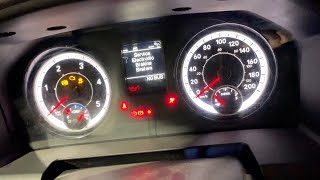
- Message center may display "No Bus" or similar communication errors 🎬 See this guide on solving common No Bus errors on Ram trucks.
- Replacing the ECM/PCM when only a software update is needed.
- Replacing random modules like the ABS or TCM without confirming they are the source of the network disruption.
- Replacing sensors for other emissions codes that appear alongside U0001, when the U0001 communication fault is the root cause and is fixable via a TSB software update.
Most Likely Causes

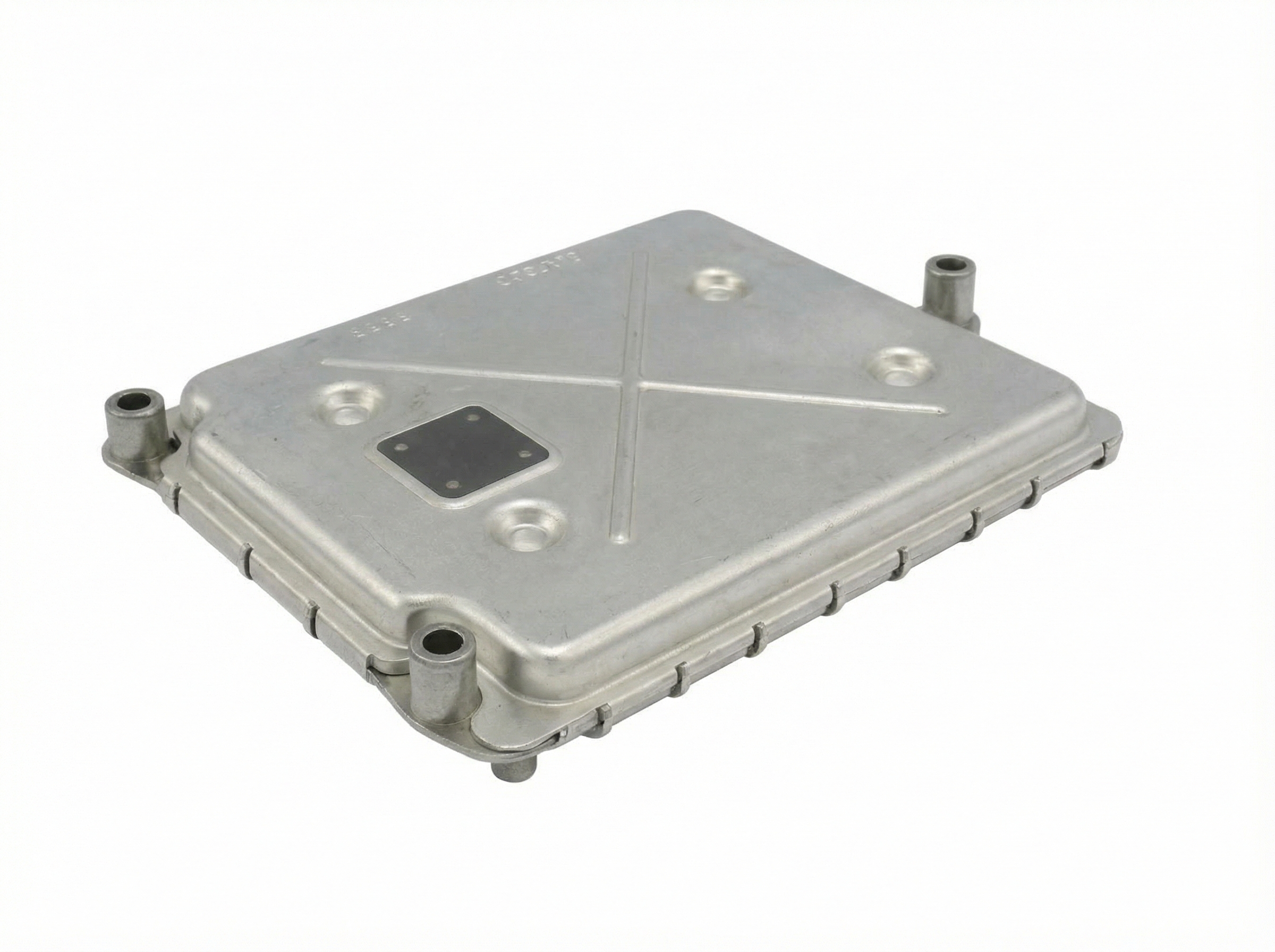
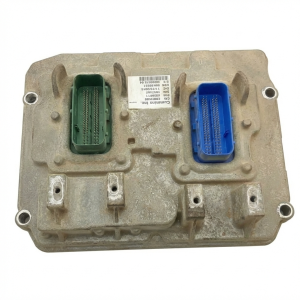
- Powertrain Control Module (PCM) Software Glitch 🔴 High Probability → Shop Engine Control Module (ECM) Multiple manufacturer TSBs (18-076-22 for 2015 models, 18-130-22 REV A for 2016 models) have been issued to correct this exact code, along with a long list of others, via a software update. This is a well-documented issue for this platform.
How to confirm: A Ram dealer or a properly equipped independent shop can check your vehicle's VIN against their database to see if the PCM has the latest software version and if it's covered by any open TSBs or service campaigns.
Typical fix: Reprogramming (reflashing) the PCM with the updated software provided by the manufacturer. The process requires a proprietary scan tool (wiTECH) and a stable power supply.
Est. part cost: $0-$250 - Damaged or Corroded Wiring Harness 🟡 Medium Probability The CAN bus wiring runs throughout the truck, including near the engine and exhaust where it's exposed to heat, vibration, and potential chafing. Owners on forums report specific chafe points near the starter, A/C compressor, and where the main harness routes near the fender liners.
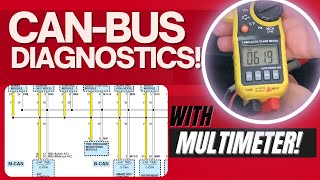
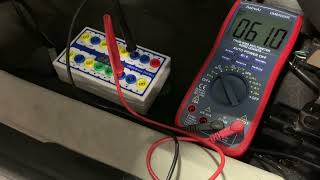
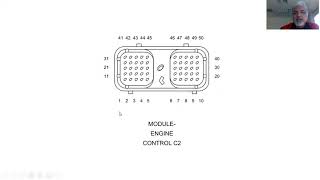
How to confirm: Visually inspect the main engine wiring harness, especially around the ECM, TIPM (fuse box), and common rub points. Advanced diagnosis involves checking for approximately 60 ohms of resistance across the CAN high (Pin 6) and CAN low (Pin 14) pins at the OBD-II port with the battery disconnected. 🎬 Watch: How to test CAN bus resistance and voltage with a multimeter.
Typical fix: Repairing the specific damaged section of the wiring harness. This involves soldering, heat-shrinking, and re-looming the affected wires. In severe cases, the entire harness may need replacement.
Est. part cost: $10-$1500 - Weak or Failing Battery/Alternator 🟡 Medium Probability → Shop Alternator These trucks have a high electrical demand with two batteries. Low or unstable system voltage (below 10V) can cause communication modules to drop off the network randomly, triggering a U0001 code. This can happen even if the truck still starts.
How to confirm: Test the battery voltage with the engine off (should be >12.4V) and the alternator output with the engine running (should be ~13.5-14.5V). Get both batteries professionally load tested, as one failing battery can drag the system down.
Typical fix: Replace the weak battery (or both batteries, as they should be replaced in pairs) or the failing alternator.
Est. part cost: $200-$700 - Faulty Totally Integrated Power Module (TIPM) ⚪ Low Probability → Shop Fuse Box The TIPM acts as a central gateway for many electrical circuits and is a known failure point on many Ram trucks, though less common for this specific code than software or wiring. An internal TIPM failure can disrupt CAN bus communications.
How to confirm: This is a process of elimination. If wiring, software, and all other modules are ruled out, the TIPM becomes a primary suspect. A technician may try to isolate the TIPM from the network to see if communication between other modules is restored.
Typical fix: Replace the faulty TIPM. This part often requires programming to the vehicle's VIN and specific options. 🎬 Watch: Understanding how the TIPM affects your Ram's network communication.
Est. part cost: $500-$1200
Rare But Worth Checking
- Aftermarket Devices: Poorly installed aftermarket electronics like remote starters, alarms, or tuners plugged into the OBD-II port can interfere with the CAN bus network and cause this code. Always disconnect these devices first when troubleshooting.
- Faulty Terminating Resistor: The CAN bus has a 120-ohm resistor at each end of the network to prevent signal reflection. On these trucks, they are typically integrated into modules like the ECM and Instrument Cluster. A failure is rare, but if one fails, the total network resistance will read 120 ohms instead of 60 at the OBD-II port.
- Faulty Control Module (Other than TIPM/PCM): Any module on the CAN bus (ABS, TCM, etc.) can fail internally and broadcast junk data, disrupting the entire network. Diagnosing this requires a technician to disconnect modules one by one until the network stabilizes.
Diagnosis Steps
- Check for TSBs: This is the most critical first step. Ask a dealer if there are any open recalls or software updates for your VIN, specifically mentioning TSBs 18-076-22 (for 2015) or 18-130-22 REV A (for 2016).
- Scan for All Codes: Use a quality scanner to pull all codes from all modules (Engine, ABS, TIPM, etc.). Note which modules are not responding, as this points to the source of the break.
- Check Battery and Charging System: Ensure both batteries are healthy and hold a charge above 12.4V. Check that the alternator is charging correctly (~13.5-14.5V). A weak battery is a common cause of network communication faults.
- Inspect Wiring: Perform a thorough visual inspection of the engine wiring harness. Pay close attention to the harness near the starter, A/C compressor, around the ECM connectors, and where it passes through the firewall and fender wells.
- Check Terminating Resistance: With the key off and batteries disconnected, measure the resistance between Pin 6 (CAN-H) and Pin 14 (CAN-L) on the OBD-II port. A healthy network should read approximately 60 ohms. A reading of 120 ohms indicates one of the two terminating resistors (or the wiring to it) has failed. A reading of 0 ohms or a direct short indicates the CAN-H and CAN-L wires are shorted together.
- Isolate Modules: If the resistance is incorrect, a technician will disconnect modules one by one from the CAN bus (e.g., ABS module, instrument cluster) and re-measure the resistance to find the faulty module or wiring section. This is an advanced step.
- Check Signal with Oscilloscope: For intermittent issues, a professional will use an oscilloscope to look for a clean, square waveform on the CAN lines. This can identify noise or a module that is corrupting the data stream.
Parts You'll Likely Need
- PCM Software Reflash — This is not a physical part, but a service. Manufacturer TSBs indicate this is the most common required fix for a group of codes including U0001.
Trusted brands: Mopar (Dealer Service)
OEM price range: $100-$250
Aftermarket price range: N/A - Totally Integrated Power Module (TIPM)
(OEM #68243265AC, 68322377AD)— The TIPM (fuse box) is a central communication hub. An internal failure can bring down the CAN bus. It's a less common but known failure point for this code.
Related Codes That Often Appear With This One
- P218F — Reductant No Flow Detected. This code is explicitly listed in TSBs 18-076-22 and 18-113-22 alongside U0001, indicating a common software fix.
- P1451 — Diesel Particulate Filter System Performance. Also listed in TSB 18-076-22 with U0001 as being resolved by a PCM reflash.
- P229E — NOx Sensor Circuit. This is another emissions-related code often fixed by the same software update (TSB 18-076-22) that addresses U0001.
- P24A5 — EGR Cooler Bypass Bank 1 Control Stuck. Frequently cited in the same TSBs (18-076-22, 18-113-22) as U0001 for a software update fix.
- P020A-P020F — Fuel Injector Performance. TSB 18-076-22 lists these injector codes as being addressed by the same PCM update that fixes U0001.
Technical Service Bulletins (TSBs) & Recalls
- TSB 18-076-22 (for 2015 models): Involves a PCM software reflash to address a long list of DTCs, including U0001, various fuel injector codes, and emissions system codes.
- TSB 18-130-22 REV A (for 2016 models): Supersedes a previous version and involves a PCM software update to fix numerous DTCs related to emissions systems, misfires, and includes U0001-00.
- TSB 18-113-22 (for 2015 Cab & Chassis): Applies to 3500/4500/5500 Cab & Chassis models, also calling for a PCM reflash to fix U0001 and other emissions-related codes.
Platform-Specific Known Issues
- A primary issue for the 2015-2016 model years is the need for PCM software updates to resolve a collection of DTCs, including U0001, that may set without a physical fault being present.
- Owners frequently report wiring harness chafing issues. Common locations include the harness rubbing against the A/C compressor, the starter motor, or brackets near the engine block. The vibration of the Cummins engine contributes to this wear over time.
Mechanic-Grade Diagnostic Values
- CAN Bus Terminating Resistance — expected: Approximately 60 Ω. Failure: A reading of ~120 Ω indicates a fault in one of the two terminating resistors or its wiring. A reading near 0 Ω indicates the CAN-H and CAN-L wires are shorted together.
- CAN Bus Voltage (Oscilloscope, Active) — expected: CAN-H should be a square wave between ~2.5V and ~3.5V. CAN-L should be a mirror-image square wave between ~2.5V and ~1.5V.. Failure: Waveforms that are not mirror images, or signals that match each other instead of opposing, indicate data corruption or a short. A flat line indicates an open or short to ground/power.
- CAN Bus Voltage (Multimeter, Key On, Engine Off) — expected: CAN-H should read ~2.7V to 3.0V. CAN-L should read ~2.1V to 2.3V. An idle bus may show both lines at ~2.5V.. Failure: Both lines at 0V suggests a short to ground. Both lines at a higher voltage (e.g., 5V or 12V) suggests a short to power. Identical voltage on both lines suggests they are shorted together.
Hidden / Shadow Codes Worth Checking
- 920, 921, 999: These are internal instrument cluster diagnostic codes that may appear alongside a 'No Bus' message on the dash display. They indicate a loss of communication from the cluster's perspective. (see via These codes can sometimes be retrieved by holding the trip/reset button on the instrument cluster while turning the ignition to the 'ON' position, initiating a cluster self-test.)
Scan Tool Commands That Help
- wiTECH 2.0: Loss of Comm Test — This function is critical for intermittent U0001 faults. It continuously pings all modules on the network (10 times per second) and logs any that fail to respond. This helps pinpoint a specific module or wiring branch that is intermittently dropping off the network, which is common with chafed wires or failing components.
- wiTECH 2.0: View Network Topology — Use this at the beginning of diagnosis to get a map of all modules the vehicle is equipped with and see which ones are currently not communicating. This helps create a targeted diagnostic plan.
Wiring & Ground Locations
- CAN C Star Connector / Splice Pack — There are multiple splice points. One commonly referenced location is under the dashboard, potentially near or behind the glove box.. This connector is where multiple CAN bus circuits branch off. It serves as a central test point. A technician can disconnect branches one by one to isolate the part of the network that is causing the fault, drastically speeding up diagnosis compared to checking each module individually.
- G915A (example ground point) — Body ground points are located throughout the vehicle, including near the battery, on the frame rails, behind the driver's side kick panel, and near the windshield wiper motor.. A loose or corroded ground for any major module on the CAN C bus (like the PCM, ABS, or TIPM) can cause it to malfunction and disrupt network communication, triggering a U0001 code. Verifying main body and module grounds is a key step.
- OBD-II Port Pins 6 & 14 — The Data Link Connector (DLC) located under the driver's side dashboard.. This is the primary access point for the entire network. Pin 6 is CAN-H and Pin 14 is CAN-L. All network-wide voltage and resistance tests start here to determine the overall health of the bus before moving to specific components.
Real Owner Repair Stories
- Ram Forum user 'crazykid1994' (2014 Ram 1500 (similar CAN architecture)) — A whole load of issues, truck would shut down, multiple communication codes including U0001.
❌ Tried (didn't work) Initial research pointed to PCM, star connector, or general power failure.
✅ What actually fixed it The dealer replaced the TIPM under warranty. The specific failure was identified as the internal Intelligent Power Control (IPC) board, which is integrated into the TIPM. - Reddit user in r/Cummins (2016 Ram 2500 6.7L) — U0001 code appeared immediately after taking the truck in for an emissions test. No other symptoms were present.
❌ Tried (didn't work) Driving normally for 250 miles with 25 cold starts did not clear the code.
✅ What actually fixed it The code cleared itself after the owner towed their fifth-wheel trailer for about 50 miles. This suggests the fault was related to an emissions readiness monitor that required the engine to be under significant load to complete its cycle. - Ram Forum user 'Colorado Cub' (2016 Ram 3500 6.7L with ~24,900 miles) — Intermittent Check Engine Light, which would sometimes turn off on its own after an ignition cycle.
❌ Tried (didn't work) Cycling the ignition.
✅ What actually fixed it The code cleared itself when a parts store employee plugged in a scan tool. The stored code was U0001, and the scanner's recommendation was 'Repair Totally Integrated Power Module (TIPM) Wiring'. The owner noted this was the second time it had happened in two years, indicating a persistent intermittent issue likely in the TIPM or related wiring.
"I Checked Everything" — The Actual Cause
- The network equivalent of a 'smoke test clean' scenario is when the CAN bus resistance measures a perfect 60 ohms, suggesting the wiring is intact. However, the U0001 code persists, often intermittently. In these cases, the root cause is frequently a single module on the network that is broadcasting corrupt data or 'noise'. This doesn't change the circuit's resistance but disrupts communication. An oscilloscope is needed to see the corrupted signal (glitches where CAN-H and CAN-L waveforms match instead of mirror). The fix is to isolate the faulty module by disconnecting components one-by-one from the CAN splice pack until the waveform on the oscilloscope becomes clean.
When the Usual Fixes Don't Work
- While the most common fixes involve software updates or physical repairs, there is anecdotal evidence that the U0001 code can be triggered by an incomplete emissions system self-test. One owner reported the code appeared after a state emissions inspection and would not clear with normal driving, but it disappeared on its own after towing a heavy trailer for 50 miles. This suggests that before pursuing costly repairs, ensuring the vehicle has completed a full, strenuous drive cycle to satisfy all readiness monitors may resolve the issue, particularly if it appeared after a short trip or test.
OEM Part Supersession History
68243265AC→68322377AD— This is a supersession for the Totally Integrated Power Module (TIPM) / Intelligent Power Distribution Center. Reasons often include internal component revisions for improved reliability.
Model Year Variations Within This Range
- 2015 vs 2016: The software fix for the U0001 code is year-specific. TSB 18-076-22 applies to 2015 models, while TSB 18-130-22 REV A applies to 2016 models. This indicates that while the symptoms are the same, the underlying PCM software and the required patch are different for each model year.
Helpful Videos
We Have This Part in Stock

The information in this article is provided for general reference and educational purposes only. Vehicle specifications, procedures, and part compatibility can vary by production date, trim level, and region. Always consult your vehicle's factory service manual and verify part numbers before purchasing or performing repairs. Safety-critical components such as airbags, seat belts, and braking systems should be installed by a qualified professional.
- Ram 2500:
- 🧭 Diagnostic Flowchart
- 🎬 Helpful Videos
- 🛍️ Shop This Part
- What's Unique About the 2015-2016 Ram 2500
- Symptoms You May Notice
- Most Likely Causes
- Rare But Worth Checking
- Diagnosis Steps
- Parts You'll Likely Need
- Related Codes That Often Appear With This One
- Technical Service Bulletins (TSBs) & Recalls
- Platform-Specific Known Issues
- Mechanic-Grade Diagnostic Values
- Hidden / Shadow Codes Worth Checking
- Scan Tool Commands That Help
- Wiring & Ground Locations
- Real Owner Repair Stories
- "I Checked Everything" — The Actual Cause
- When the Usual Fixes Don't Work
- OEM Part Supersession History
- Model Year Variations Within This Range
- 🎟️ Get 5% Off