

U0001 on 2007-2013 Toyota Tundra: High-Speed CAN Bus Communication Failure Explained
Code U0001 on a Toyota Tundra means there's a critical communication failure on the main vehicle network. The most common causes are wiring damage, a failing battery or bad ground, or a faulty electronic module, particularly the ABS/Skid Control ECU. Diagnosis is complex and often requires professional tools to isolate the fault.
- U0001 is a critical network failure, not a simple sensor issue. Do not ignore it.
- Before any complex diagnosis, ensure your Tundra's battery is fully charged and the terminals and grounds are clean and tight.
- The most common cause is a physical problem with the wiring harness (damage, corrosion, shorts).
- Diagnosis is complex and best left to a professional with experience in electrical and network issues, as it often involves tracing wires and isolating electronic modules.
What's Unique About the 2007-2013 Toyota Tundra
For the 2007-2013 Tundra, the U0001 code doesn't point to a single, common faulty part, but rather a general network health problem. However, forum discussions suggest the ABS / Skid Control ECU can be a potential culprit that takes down the network. Toyota's own service manuals for this era provide detailed procedures for tracing wiring issues, such as short circuits between the CAN bus lines (CAN_H and CAN_L) and the vehicle's power supply. This suggests that diagnosing the problem often involves methodical electrical testing rather than simply replacing a specific, known-to-fail component. Aftermarket accessories like remote starters or stereos improperly spliced into the CAN harness are also a notable cause of network interference.
Symptoms You May Notice
- Multiple warning lights on the instrument cluster (Check Engine, ABS, VSC, Airbag, etc.)
- Engine may not start, or may stall unexpectedly
- Loss of communication with multiple modules when using a scan tool
- Gauges on the instrument cluster behaving erratically or not working
- Features like air conditioning or power steering may fail to operate
- Transmission may be stuck in one gear or shift harshly (limp mode)
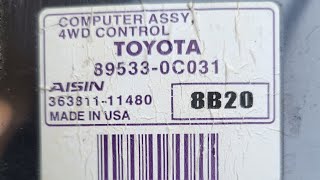
- 4WD system may become inoperative 🎬 Watch: How to locate and remove the 4x4 control module
- Replacing a single module (like the ECM or instrument cluster) without first confirming that the wiring and power supply to it are good. The U0001 code is a network-wide fault, and the root cause is often the wiring that connects the modules, not a module itself.
- Replacing a wheel speed sensor when an ABS/VSC light is on with a U0001 code. While a sensor can be faulty, the U0001 indicates a network failure, which is more likely caused by the ABS control module itself or its wiring, not a single sensor. 🎬 Watch: How to diagnose and fix a U0001 CAN bus code
Most Likely Causes
- CAN Bus Wiring or Connector Fault 🔴 High Probability Wiring harnesses can be susceptible to damage from vibrations, moisture intrusion, rodent damage, or chafing against the frame or other components over the vehicle's lifespan. Aftermarket accessories are often improperly tapped into the CAN bus, causing interference.
How to confirm: Perform a visual inspection of harnesses for damage, particularly near the engine, under the dash, and around the ABS module. With the battery disconnected, use a multimeter to check for ~60 ohms of resistance between pins 6 (CAN-H) and 14 (CAN-L) on the OBD-II port. A reading of ~120 ohms suggests an open circuit or a missing terminating resistor, while a much lower reading suggests a short circuit.
Typical fix: Repair the damaged section of wiring or replace the corroded connector. Remove any improperly installed aftermarket devices from the CAN network.
Est. part cost: $10-$100 for wiring repair supplies - Weak Battery or Poor Ground Connection 🟡 Medium Probability → Shop Vehicle Battery Low system voltage (below 12.4V) can cause electronic modules to drop off the network or send corrupt data, triggering a communication fault. Tundras have numerous body and engine grounds that can corrode over time, especially in rust-prone areas.
How to confirm: Test the battery voltage; it should be above 12.4V with the engine off and 13.5V-14.5V when running. Check that battery terminals are clean and tight. Inspect the main engine and chassis ground straps for corrosion or looseness. A wiring diagram can help locate all critical ground points.
Typical fix: Charge or replace the battery. Clean or replace corroded terminals and ground straps.
Est. part cost: $150-$300 for a new battery - Failed Electronic Control Module (e.g., ABS/Skid Control ECU) 🟡 Medium Probability Any single module on the network can fail internally and disrupt the entire bus, sometimes by shorting the communication lines. On Tundras, the Skid Control ECU (also referred to as the ABS module) is a complex unit that is central to the CAN network and has been identified in owner forums as a potential cause of network-wide failures.
How to confirm: This is an advanced diagnostic step. It involves disconnecting modules from the CAN bus one at a time while monitoring network resistance or signal to see if communication is restored. The ABS module is a good starting point for isolation. This requires a vehicle-specific wiring diagram.
Typical fix: Replace the faulty module. The ABS/Skid Control ECU is a common point of failure and may require programming or calibration by a dealer or qualified shop after replacement.
Est. part cost: $400-$2000+ depending on the module, with the ABS module being on the higher end.
Rare But Worth Checking
- Aftermarket Electronics Interference:
Diagnosis Steps
- Check for Other Codes: Scan the vehicle for all stored trouble codes. A U0001 code will almost always be present with a host of other U-codes pointing to specific modules that are offline. Note which modules are not communicating.
- Check Battery and Grounds: Ensure the battery has a full charge (12.4V+ engine off, 13.5V+ running) and that the terminals and main chassis/engine grounds are clean, tight, and free of corrosion.
- Inspect for Aftermarket Devices: Check for any non-factory electronics (remote start, alarm, stereo, etc.). If present, disconnect them fully to eliminate them as a variable.
- Visual Inspection: Carefully inspect the main wiring harnesses, especially around the engine bay, under the dashboard, and near the wheels/ABS module, for any signs of physical damage, chafing, rodent damage, or corrosion.
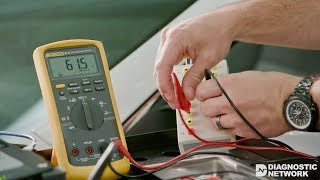
- Check CAN Bus Resistance: Disconnect the negative battery terminal. Set a multimeter to Ohms (Ω) and measure the resistance between Pin 6 (CAN High) and Pin 14 (CAN Low) at the OBD-II diagnostic port. A healthy network should read approximately 60 Ω.
- Interpret Resistance Reading: If the reading is ~120 Ω, it indicates an open in the circuit or a problem with one of the two terminating resistors (often located in the ECM and another module). If the reading is very low (near 0 Ω), it indicates a short circuit between the CAN High and CAN Low wires.
- Check for Shorts to Power/Ground: With the battery still disconnected, check for continuity between Pin 6 and a chassis ground, and between Pin 14 and a chassis ground. There should be no continuity (infinite resistance). Then, check between Pin 6 and Pin 16 🎬 See this guide: Toyota CAN bus network diagnostics (Battery Positive), and Pin 14 and Pin 16. There should also be no continuity.
- Isolate Modules (Advanced): If wiring tests are inconclusive, the next step is to disconnect modules one by one to see if the 60 Ω resistance returns to normal. Given forum reports, the ABS/Skid Control ECU is a primary suspect and a good place to start. This requires a wiring diagram to locate modules and their connectors.
Parts You'll Likely Need
- Wiring Harness Repair Supplies — The most frequent cause is a break or short in the CAN bus wiring harness, which requires repair rather than part replacement.
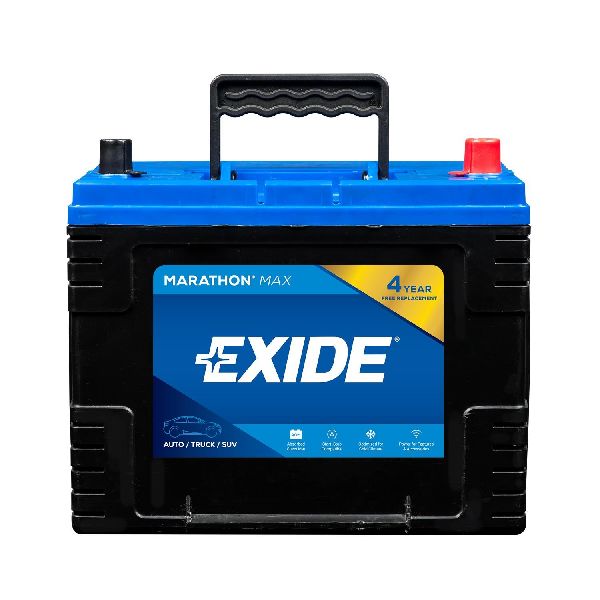
Aftermarket price range: $10-$50 - Battery — A weak or failing battery can cause low system voltage, leading to network communication errors.
Trusted brands: Interstate, DieHard, Duralast
OEM price range: $200-$350
Aftermarket price range: $150-$250 - ABS Control Module / Skid Control ECU
(OEM #Varies by year/model (e.g., 89541-0C150, 89541-0C210))— This module is a central node on the CAN bus and its internal failure can bring down the entire network. It's a commonly cited point of failure in owner forums for causing widespread communication issues.
Related Codes That Often Appear With This One
- U0100 — Lost Communication With ECM/PCM
- U0101 — Lost Communication with TCM
- U0129 — Lost Communication With Brake System Control Module
- U-series codes for other modules — A U0001 code indicates a total bus failure, which will typically be accompanied by multiple 'lost communication' codes for every major module on that network.
Platform-Specific Known Issues
- ABS/Skid Control ECU Failure: Owners on forums like TundraTalk.net and Tundras.com have reported instances where a failing ABS module (Toyota calls it the Skid Control ECU) was the root cause of a U0001 code and widespread network failure. Symptoms include the ABS and VSC lights illuminating, followed by other system warnings. Isolating this module by unplugging it during diagnosis can help confirm if it's the source of the network disruption.
- Rodent Damage to Wiring: Like many trucks, the Tundra's engine bay and frame rails can provide a home for rodents, who often chew on wiring harnesses. The soy-based wiring insulation used in some modern vehicles can be attractive to them. A thorough inspection of the main harnesses is crucial, as even a small amount of damage to the CAN bus twisted-pair wiring can cause a U0001 code.
Mechanic-Grade Diagnostic Values
- CAN High (Pin 6) to Chassis Ground Voltage (KOEO, network active) — expected: 2.5V to 3.5V, typically averaging ~2.7V. Failure: A reading of 0V indicates a short to ground. A reading of ~2.5V can indicate a short to CAN Low. A reading near battery voltage indicates a short to power.
- CAN Low (Pin 14) to Chassis Ground Voltage (KOEO, network active) — expected: 1.5V to 2.5V, typically averaging ~2.3V. Failure: A reading of 0V indicates a short to ground. A reading of ~2.5V can indicate a short to CAN High. A reading near battery voltage indicates a short to power.
- CAN Bus Resistance (Battery Disconnected) — expected: ~60 Ohms between Pin 6 and Pin 14 of the DLC. Failure: ~120 Ohms indicates an open circuit or one missing terminating resistor. Near 0 Ohms indicates a short between CAN High and CAN Low wires.
Hidden / Shadow Codes Worth Checking
- C1300 / Blink Code 62: Indicates an internal malfunction within the Skid Control ECU (ABS Module). This is a strong indicator that the module itself has failed and is the source of the network crash. (see via A professional scan tool like Techstream will show C1300. The blink code can sometimes be retrieved by jumping pins on the OBD-II connector.)
Scan Tool Commands That Help
- Toyota Techstream: Health Check — This is the first step in any network diagnosis. It polls all control modules on the vehicle and provides a list of which ones are communicating and which are not, helping to isolate the scope of the problem.
- Toyota Techstream: Zero Point Calibration — This is a mandatory procedure after replacing the Skid Control ECU / ABS module. It calibrates the steering angle sensor, yaw rate sensor, and deceleration sensor to the new module. Failure to perform this step will result in ABS/VSC/TRAC warning lights and system malfunction, even with a good part.
Wiring & Ground Locations
- Main Engine Grounds — At the rear of the cylinder heads, one on each side, near where the engine mates to the transmission.. A poor engine ground can cause voltage fluctuations that disrupt communication between critical modules like the ECM and TCM, leading to network codes.
- BP1 Connector — Under the driver's seat. The seat must be unbolted and removed for access.. This is a known junction where wiring running to the rear of the vehicle can fail. A broken wire in this area can take down the entire CAN bus.
- J74 Junction Connector — On the passenger side of the vehicle, behind the dashboard/glove box area.. This is a CAN bus junction. On some Tundra configurations, this connector is unused and has a dead-end cap from the factory. It's a good place to inspect for corrosion or damage if other tests are inconclusive.
Real Owner Repair Stories
- Toyota Tundra Forum (2007-2013 Tundra (specific year not mentioned)) — EVAP system codes, but diagnostic process is relevant to any wiring fault.
❌ Tried (didn't work) Initial visual inspection of engine bay wiring.
✅ What actually fixed it The owner learned to read wiring diagrams and located the BP1 connector under the driver's seat. After removing the seat, a continuity test on the suspect wire failed. He ran a new wire from the connector to the component at the rear of the truck, which resolved the issue. This demonstrates a common failure point in the harness under the driver's side floor. - NHTSA ODI #11376111 — While reported on a different Toyota model (Highlander), an owner described a similar failure where the vehicle lost power while on the accelerator. The owner was able to pull codes U0001 and U0100 initially, though the codes did not reappear during subsequent occurrences of the fault.
OEM Part Supersession History
44050-0C171→Not specified, but this part is listed as 'Replaced'— Standard part evolution, potential design improvement.
Heads up: Always verify the correct part number for your specific VIN and model year, as there are many variations of the ABS Actuator Assembly.Part of 44050-0C040→44050-0C040 is the replacement for a previous, unspecified part number.— Standard part evolution.
Heads up: Using an incorrect module, even from the same year range, can cause communication failures if not matched to the vehicle's specific options (e.g., 2WD vs 4WD, cab size).
Model Year Variations Within This Range
- 2007-2013: The entire 2007-2013 generation uses the 'Classical CAN' (CAN 2.0) protocol. Diagnostic procedures, wiring topology, and common failure points are generally consistent across this model year range, prior to the major facelift in 2014.
Diagnostic Flowchart
Other Known Issues on This Vehicle
Issues unrelated to this code that are worth knowing about as an owner of this generation:
- Secondary Air Injection System Failure 🔴 High — Very common, often occurs after the original warranty period. Can cost thousands to repair. (Ref: Toyota issued a warranty extension for this issue on many models. TSBs like T-SB-0350-09 and T-SB-0230-12 address related DTCs.)
- Camshaft Tower Oil Leak 🟠 Medium — A common oil leak, particularly on the 5.7L V8. It's a slow seep in most cases but is very labor-intensive and expensive to repair correctly as it requires significant engine disassembly.
- Frame Rust 🔴 High — Significant issue, especially for vehicles in the salt belt. Can lead to structural failure of the frame, particularly the rear crossmember. (Ref: Toyota initiated a large-scale frame replacement program and warranty extension (e.g., Program ZH7) following a class-action lawsuit.)
- Water Pump Failure 🟠 Medium — The water pump, particularly on the 5.7L V8, is a known failure point that can lead to coolant loss and overheating.
- Cracked/Leaking Exhaust Manifolds 🟡 Low — The factory exhaust manifolds can develop cracks, leading to an exhaust leak often heard as a ticking noise on acceleration.
Used vs. New Parts: Buying Guide for This Vehicle
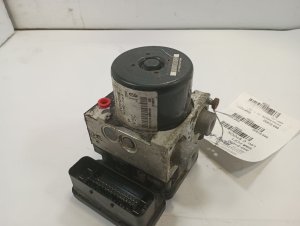
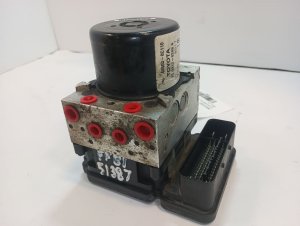
When a used part is the smart pick: For the expensive ABS Control Module / Skid Control ECU, a used part from a reputable salvage yard can be a cost-effective solution, often saving over $1000 compared to a new OEM unit.
Donor-vehicle mileage cap: roughly under 150000 miles for the part to have meaningful remaining life.
What to inspect on the donor part:
- Verify the part number exactly matches your original unit.
- Inspect all electrical connectors for signs of corrosion, bent pins, or heat damage.
- Ensure the donor vehicle had a similar configuration (e.g., Crew Cab vs. Double Cab, 2WD vs. 4WD) as this can affect programming.
- Obtain the VIN of the donor vehicle if possible, as it can sometimes aid in programming.
OEM-only on this vehicle (don't cheap out):
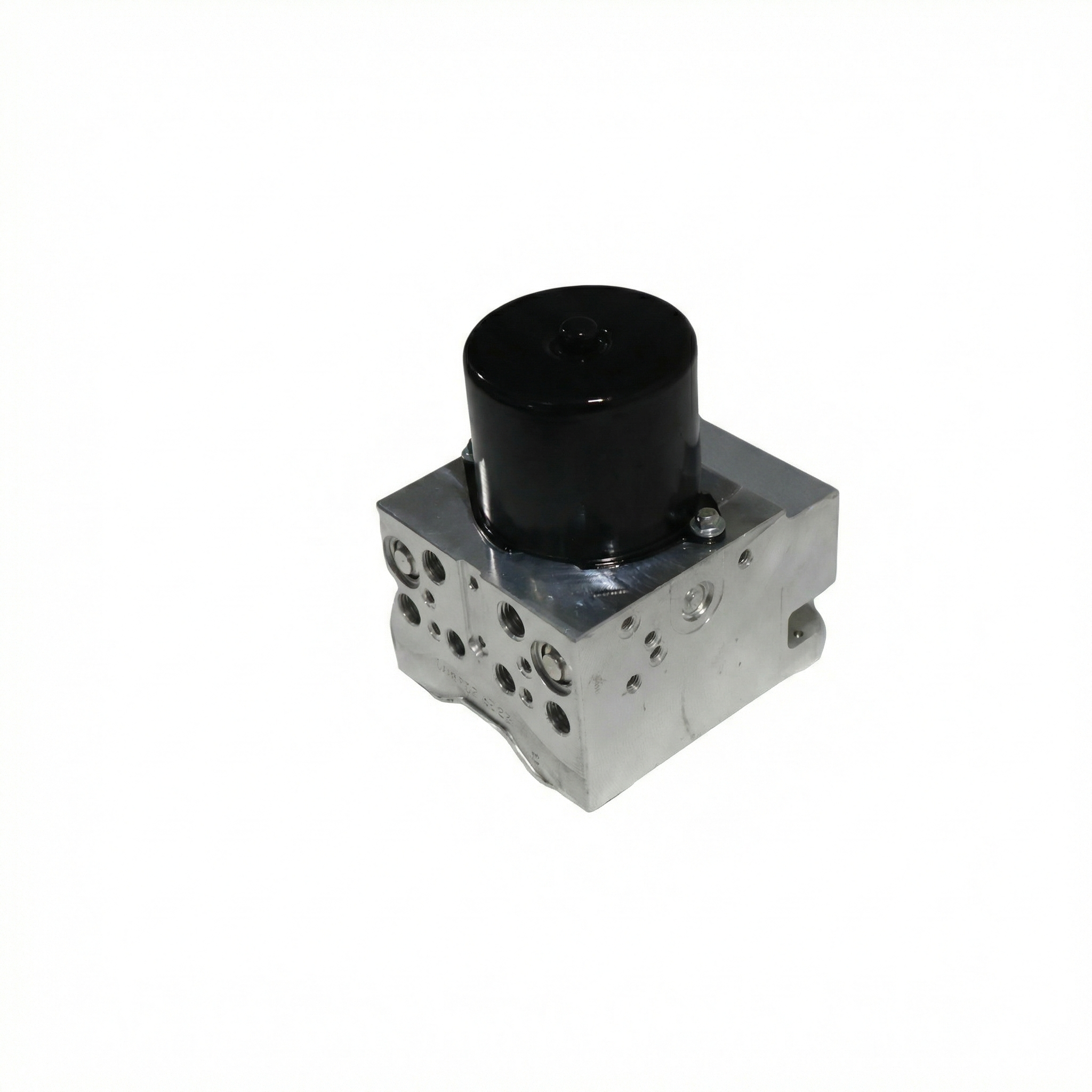
- While a used OEM module is a good option, it is strongly recommended to avoid new aftermarket (non-remanufactured) ABS modules. These often have software and communication incompatibilities that can make the problem worse.
Aftermarket brands forum-validated for this vehicle:
- XeMODeX (Repair Service): They offer a service to repair your existing module, which avoids programming issues.
Brands owners have reported issues with on this vehicle:
- Unknown, unbranded ABS modules sold on marketplaces like eBay or Amazon should be avoided due to high failure and incompatibility rates.
Real Owner Stories
Aggregated from forums and TSBs cited above. Mileages and costs reflect what owners reported in those sources.
2011 Toyota Tundra
Symptoms: Classic 'Christmas tree' dash lights and the vehicle entering limp mode.
What fixed it: Replacement of the ABS Control Module (Skid Control ECU).
Source hint: https://www.tundras.com/threads/abs-control-module.103989/
2007-2013 Toyota Tundra
Symptoms: Multiple warning lights and suspicion of a failed Skid Control ECU during the diagnostic process.
What fixed it: Identifying the Skid Control ECU (ABS ECU) as the single point of failure for the network.
Source hint: https://www.tundras.com/threads/skid-control-ecu.130198/
Related OBD-II Codes
Frequently Asked Questions
Why are my 2007-2013 Tundra's ABS and VSC lights on along with the Check Engine light?
Can a weak battery cause a U0001 communication code on my Tundra?
I installed an aftermarket remote start; could this be causing my U0001 code?
Where should I check for wiring damage if I suspect rodents caused my U0001 code?
Is there a specific module known to fail and cause network-wide issues on the 2007-2013 Tundra?
What resistance reading should I see at the OBD-II port to confirm the CAN bus is healthy?
Helpful Videos
Used OEM Parts in Stock
New Aftermarket Parts Available


The information in this article is provided for general reference and educational purposes only. Vehicle specifications, procedures, and part compatibility can vary by production date, trim level, and region. Always consult your vehicle's factory service manual and verify part numbers before purchasing or performing repairs. Safety-critical components such as airbags, seat belts, and braking systems should be installed by a qualified professional.
- Toyota Tundra:
- 🧭 Diagnostic Flowchart
- 🎬 Helpful Videos
- 🛍️ Shop This Part
- What's Unique About the 2007-2013 Toyota Tundra
- Symptoms You May Notice
- Most Likely Causes
- Rare But Worth Checking
- Diagnosis Steps
- Parts You'll Likely Need
- Related Codes That Often Appear With This One
- Platform-Specific Known Issues
- Mechanic-Grade Diagnostic Values
- Hidden / Shadow Codes Worth Checking
- Scan Tool Commands That Help
- Wiring & Ground Locations
- Real Owner Repair Stories
- OEM Part Supersession History
- Model Year Variations Within This Range
- Other Known Issues on This Vehicle
- Used vs. New Parts: Buying Guide for This Vehicle
- Real Owner Stories
- 2011 Toyota Tundra
- 2007-2013 Toyota Tundra
- Related OBD-II Codes
- Frequently Asked Questions
- 🎟️ Get 5% Off