

OBD-II Code U0012: Medium Speed CAN Communication Bus (+) Open
What U0012 means, why it triggers, and how to fix it
- A broken wire or corroded connector in the CAN bus network causes 80% of U0012 codes.
- Expect widespread electrical failures, including a dead instrument cluster, disabled power windows, and 3 or more warning lights illuminating simultaneously.
- Do not drive with an active U0012 code; the vehicle can unexpectedly enter limp mode or stall in traffic, disabling power steering and brakes.
- Basic $20 code readers cannot diagnose U0012; you need a bidirectional scanner to poll all modules and a multimeter to test the 60-ohm network resistance.
- Repair costs range from $5 for a blown fuse to over $1,200 if a primary control module requires replacement and dealer programming.
What Does U0012 Mean?
U0012 means your car's computers cannot communicate. Think of it like a cut phone line between different parts of your car. Specifically, the 'Medium Speed CAN Bus (+)' wire—part of a network connecting modules for the dashboard, radio, and climate control—has an open circuit. This break prevents data transmission.
Technical definition: The official SAE/OBD-II definition is "Medium Speed CAN Communication Bus (+) Open". This indicates a controller on the network detected a break or excessively high resistance in the positive line of the medium-speed data network. This network operates body and convenience features.
Can I Drive With U0012?
Yes, But With Caution. The vehicle often starts and runs, but driving is unsafe. You will likely experience sudden loss of critical information like speed, or the vehicle enters 'limp mode,' drastically reducing power. In some vehicles, this fault causes stalling in traffic, resulting in a complete loss of power steering and braking assist. Continuing to drive causes unpredictable voltage spikes that damage other expensive control modules. Diagnose the issue promptly to avoid safety risks and escalating repair costs.
Common Causes
- Damaged, Corroded, or Loose Wiring/Connectors (Very Common) — This is the most frequent cause. Wires in the CAN bus harness sustain damage from rubbing against metal, rodents, or improper repairs. Connectors corrode from moisture or vibrate loose over time, breaking the connection.
- Water Intrusion into Connectors or Modules (Common) — Moisture from rain, car washes, or blocked drainage plenums seeps into critical multi-pin connectors or directly into control modules. This water causes corrosion and short circuits that bring down the entire communication bus.
- Low Battery Voltage (Common) — A weak or failing battery causes system voltage to drop low enough that control modules cannot operate or communicate. The diagnostic system misinterprets this voltage drop as a network fault.
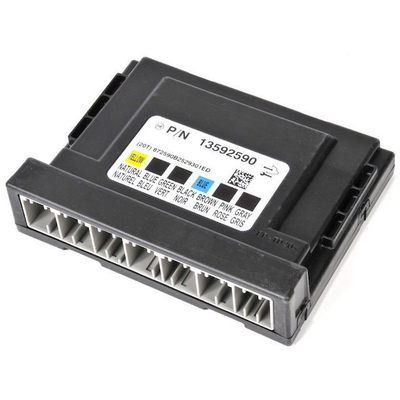
- Faulty Control Module (Common) — Any electronic control module on the medium-speed network (like the Body Control Module or Instrument Panel Cluster) can fail internally. A failed transceiver chip inside a module creates an open on the bus, causing all other modules to lose communication.
- Poor Power or Ground to a Module (Less Common) — A control module requires a stable power supply and a solid ground connection to communicate. A corroded ground wire or a blown fuse supplying power to a key module prevents it from talking on the network.
- Missing or Incorrect Bus Termination (Less Common) — The CAN bus network requires a 120-ohm resistor at each end to function. If a module containing a terminating resistor is unplugged, or the resistor fails, total bus resistance changes from 60 ohms to 120 ohms, triggering a U0012 code.
- Aftermarket Electronics Interference (Less Common) — Improperly installed aftermarket devices like remote starters or alarms interfere with CAN bus signals. Tapping these devices into the wrong wires disrupts communication.
- Software Glitches or Incompatible Updates (Rare) — A software glitch within a control module or a failed firmware update causes it to stop communicating on the network. This occurs most often after a dealer service or update attempt.
Symptoms
- Multiple Warning Lights on Dashboard — Expect a 'Christmas tree' of lights, including the Check Engine, ABS, Traction Control, and Stability Control lights illuminating simultaneously.
- Instrument Cluster Malfunction — The speedometer, tachometer, fuel gauge, and temperature gauge drop to zero or display dashes (---).
- Loss of Electronic Features — Convenience features like power windows, power door locks, the radio, and climate controls stop working entirely.
- Vehicle Stuck in Gear or Limp Mode — The vehicle locks out of higher gears or significantly reduces engine power as a safety precaution when critical communication is lost.
- "No Communication" or "Bus Error" Message — The driver information center displays a specific warning message about a communication or network error.
Diagnostic Flowchart
Tap your situation to follow the diagnostic path that matches what you're seeing on this code.
Common Fixes & Costs
- Repair Damaged Wiring or Connectors — Parts: $20-$60, Labor: $150-$350, ~2.5 hr book time (Intermediate)
- Replace a Blown Fuse and Diagnose the Cause — Parts: $1-$10, Labor: $122-$179, ~0.5 hr book time (DIY)
- Repair a Faulty Ground Connection — Parts: $5-$20, Labor: $122-$250, ~1.5 hr book time (Intermediate)
- Replace a Faulty Control Module (e.g., BCM, IPC) — Parts: $600-$1200, Labor: $150-$300, ~2 hr book time (Professional)
- Seal Connectors with Dielectric Grease — Parts: $5-$15, Labor: $50-$100, ~0.5 hr book time (DIY)
Used vs. New Parts: Buying Guide
When a used part is worth it: For high-mileage vehicles (>150k miles), a used module from a reputable salvage yard is a cost-effective solution, provided it matches the exact part number and can be reprogrammed.
Donor-vehicle mileage cap: roughly under 100000 miles for the part to have meaningful remaining life.
Donor quality checklist:
- Match the part number exactly. Even a single digit difference means incompatibility.
- Verify the donor vehicle's history to avoid modules from flood-damaged or fire-damaged cars.
- Inspect the connector pins on the used module for any signs of corrosion or damage before purchase.
Decision logic:
- If The vehicle is less than 8 years old or has under 100k miles. → Buy a new OEM or high-quality remanufactured module. The longevity and warranty justify the cost.
- If The part is a Dodge/Chrysler/Jeep TIPM. → Strongly consider a professionally remanufactured unit over a used one, as even used TIPMs have a high failure rate.
- If The vehicle is old, has high mileage, and you have access to professional programming tools. → A used module is a reasonable gamble to save money, but be prepared for the possibility of it failing.
Warranty tradeoff: Used parts from salvage yards typically offer a 30-90 day warranty. Remanufactured modules often come with a 1-year to lifetime warranty. New OEM parts carry a 1-2 year warranty when installed by a dealer.
Worst-case if a used part fails: $500-$1200 if a used module is dead on arrival or fails shortly after the warranty period, requiring repeat labor costs for removal, installation, and programming.
What Happens If You Wait — Timeline
- 0-4 weeks: Intermittent symptoms appear. The check engine light comes on, and you occasionally lose gauges or power windows. The fault is often temporary and resets after restarting the car. The issue is annoying but doesn't feel critical yet. (MPG impact: 0%% · Added cost: $0)
- 1-3 months: The fault becomes more frequent and persistent. The vehicle unexpectedly enters 'limp mode' or stalls. The safety risk increases significantly as you can no longer predict the car's behavior. Diagnostic difficulty increases as intermittent faults are harder to trace. (MPG impact: 0-2%% · Added cost: $150-$300 in added diagnostic labor time if the fault remains intermittent.)
- 3-6 months: An unstable network with fluctuating voltages stresses the sensitive electronics in other control modules. The original open circuit causes data corruption or voltage spikes that wear out other components on the bus. (MPG impact: 0-5%% · Added cost: $800-$2000. This represents the cost of a secondary module (like the BCM, TIPM, or ABS module) failing due to the unstable network, in addition to the original wiring repair cost.)
- 6+ months: A critical module fails completely, leading to a no-start condition. The repair now involves fixing the original wiring fault AND replacing and programming the expensive, secondarily-damaged module. The total repair cost and vehicle downtime are now maximized. (MPG impact: N/A (vehicle may not start)% · Added cost: $1500-$3000+)
Cost of Not Fixing It
- Immediate: Loss of critical driver information (speedometer), failure of convenience features (windows, locks), and multiple distracting warning lights. Potential for sudden stalling or entering 'limp mode' creates a significant safety hazard. (Added cost: Negligible)
- Weeks to Months: Continued driving with an unstable network causes voltage spikes or data corruption that damages other, more expensive control modules on the bus, such as the PCM or ABS module. (Added cost: $800-$2000)
- Long-Term: A persistent open circuit leads to a complete no-start condition if the faulty module is integral to the vehicle's security or starting sequence. The diagnostic time and cost to find the original fault plus any new ones increases significantly. (Added cost: $500-$2500+)
Diagnosis Steps
- Check the Battery and Fuses
Ensure the battery is fully charged (above 12.4V) and terminals are clean. A weak battery causes widespread electrical issues. Inspect all fuses related to control modules (Body Control, Instrument Cluster, ABS) and replace any blown fuses.
Tools: Multimeter, Fuse Puller (Beginner) - Scan for All Codes
Use an advanced OBD-II scanner to identify which modules are offline. U0012 is often accompanied by other 'U' codes (U0100, U0121, U0140) that pinpoint the break's location. Record freeze frame data.
Tools: Advanced OBD-II Scanner (Intermediate) - Perform a Visual Inspection
Inspect visible wiring harnesses for rodent damage, chafing against the frame, or corrosion on connectors. Focus on areas exposed to the elements or where water collects, like the firewall, A-pillars, or trunk.
Tools: Flashlight, Inspection Mirror (Beginner) - Check CAN Bus Resistance
Disconnect the negative battery terminal. At the OBD-II port, measure resistance between Pin 6 (CAN High) and Pin 14 (CAN Low). 🎬 Watch: How to test a CAN bus network with a meter A healthy bus reads 60 ohms. A 120-ohm reading indicates a break or missing terminating resistor. Infinite resistance confirms an open circuit.
Tools: Multimeter (Intermediate) - Perform a CAN Bus Voltage Check
Reconnect the battery and turn the ignition ON. Measure DC voltage between Pin 6 and ground, then Pin 14 and ground. A healthy MS-CAN bus shows CAN+ slightly above 2.5V and CAN- slightly below 2.5V. A 0V or battery voltage reading confirms an open or short.
Tools: Multimeter (Advanced) - Isolate the Faulty Module or Wiring Section
Using a wiring diagram, locate modules on the medium-speed CAN bus. Disconnect them one by one, re-checking bus resistance (battery disconnected) each time. If resistance drops from 120 ohms to 60 ohms after disconnecting a module, that module or its connector is the source.
Tools: Multimeter, Wiring Diagram, Panel Removal Tools (Advanced) - Test for an Open in the Harness
Perform a continuity test on the CAN+ wire between two connectors in the suspected harness section. A healthy wire shows less than 0.2 ohms. Infinite resistance ('OL') confirms the exact location of the broken wire.
Tools: Multimeter, Wiring Diagram (Advanced) - Analyze the CAN Signal with an Oscilloscope
Connect channel A to CAN+ (Pin 6) and channel B to CAN- (Pin 14). With ignition on, you should see a mirrored square wave. If U0012 is active, the CAN+ channel displays a flat or erratic signal, confirming the open circuit.
Tools: 2-Channel Automotive Oscilloscope, Wiring Diagram (Professional)
When This Code Triggers (Freeze-Frame Conditions)
- Engine Coolant Temp: 170-200°F (Fully warmed up. The fault often appears after the vehicle has been running for a while.)
- RPM: 700-2500 (Idle or steady cruise. The fault triggers from vibrations that cause an intermittent open in the wiring.)
- Vehicle Speed: 0 mph or 35-55 mph (Either at a standstill (idle) or during highway driving, consistent with when vibrations expose a wiring fault.)
- Module Voltage: 12.0-14.5V (Normal operating voltage. Freeze frame data confirms if a system-wide voltage drop is the root cause.)
Related Codes
- U0100 — Lost Communication With ECM/PCM. U0012 is a potential cause for U0100. If the network wire is open (U0012), the other modules cannot hear from the Engine Control Module, so they log U0100. Diagnosing U0012 first is key.
- U0140 — Lost Communication With Body Control Module (BCM). The BCM is a major hub. An open in the bus (U0012) prevents other modules from communicating with the BCM, triggering U0140. If you have both codes, the fault is in the network wiring (U0012), not the BCM itself.
- U0121 — Lost Communication With Anti-Lock Brake System (ABS) Control Module. The ABS module is often on the medium-speed bus. A U0012 fault isolates the ABS module, causing it to log this code. If multiple modules are offline, the root cause is the network bus (U0012).
- U0015 — Medium Speed CAN Communication Bus (-) Open. This is the sister code to U0012. The CAN bus uses a twisted pair of wires (+ and -) for signal integrity. U0012 indicates an open on the positive wire, while U0015 indicates an open on the negative wire. Diagnostic steps are identical, but you test the CAN (-) wire instead.
Climate & Environmental Factors
- Road Salt / Cold Climates: Road salt used in winter mixes with water and snow to create a highly corrosive electrolyte solution. This solution splashes onto the undercarriage, seeping into wiring harnesses and connectors, where it dramatically accelerates corrosion and breaks wires.
- High Humidity: In humid climates, moisture gets trapped inside connectors and looms that are not perfectly sealed. This constant moisture leads to gradual corrosion of copper wires and connector pins, increasing resistance and causing an open circuit.
How to Talk to a Mechanic About This Code
Say this: "I have a U0012 network communication code with multiple warning lights. Please start by checking the bus resistance at the OBD-II port and inspecting the wiring harness for opens or shorts before recommending any module replacements."
This signals you understand that U0012 is a network wiring problem, not necessarily a failed module. It directs the technician to perform the correct diagnostic steps first and prevents them from jumping to the expensive conclusion of replacing a module that is simply offline due to the network fault.
Avoid saying:
- 'My check engine light is on, can you look at it?'
- 'A bunch of lights came on, just fix it.'
- 'My scanner said to replace the ABS module.' (This is a symptom, not the cause)
Questions to ask before authorizing the repair:
- What was the CAN bus resistance reading in ohms? Did it read 60, 120, or something else?
- Can you show me the location of the wiring damage or corrosion you found?
- If you are recommending a module replacement, how did you prove the wiring to and from that module is good?
- Does the replacement module require programming, and is that cost included in your estimate?
- What is the warranty on this electrical repair and the parts?
Where to Take It: Dealer vs Independent vs Chain
- Dealer:
Good, but expensive. The best choice for warranty work or if you've exhausted other options.
Best for: Vehicles still under warranty, Known manufacturer-specific issues (e.g., Alfa Romeo rotary knob), When you are certain a complex module replacement and programming is required
Downsides: Highest labor rates, often 1.5-2x more than independent shops., Defaults to replacing large, expensive assemblies rather than repairing a specific wire. (Typical cost: +50% vs. baseline) - Independent Shop:
Best fit. An independent shop with strong electrical skills is perfectly equipped to diagnose and repair a U0012 code, often by repairing the specific wire, which is more cost-effective.
Best for: Out-of-warranty vehicles, Diagnosing intermittent electrical faults, Getting a second opinion on a dealer's recommendation
Downsides: Quality varies; ensure the shop specializes in electrical diagnostics, not just general repairs. (Typical cost: +0% vs. baseline) - Chain Shop:
AVOID. This type of complex electrical fault is outside the scope of most chain repair shops and is highly likely to result in an expensive and incorrect repair.
Best for: Tires, oil changes, brakes, and other simple, high-volume jobs.
Downsides: Technicians are often not equipped or trained for complex network diagnostics., High risk of misdiagnosis, leading to unnecessary replacement of expensive modules. (Typical cost: -10% vs. baseline)
When to Walk Away From the Repair
If the estimated repair cost exceeds 40% of the car's private-party value, seriously consider selling the vehicle as-is.
- Car worth $4000, fix is $2000: Borderline. The repair cost is 50% of the car's value. Get a second opinion before authorizing the repair.
- Car worth $12000, fix is $1800: Fix it. The repair is only 15% of the vehicle's value and is well below the threshold.
- Car worth $2500, fix is $1500: Walk away. The repair cost is 60% of the car's value. It is not economical to repair.
What Scan Tool You Need for This Code
Minimum: A scanner that reads codes from ALL vehicle systems (ABS, BCM, SRS, etc.), not just the engine. It must be able to see which modules are not communicating.
A basic $20 code reader only talks to the engine computer (PCM). It cannot see 'U' codes or tell you which other modules (like the instrument cluster or body control module) have dropped off the network. You will be flying blind without an all-system scanner.
Budget: Autel MaxiAP AP200 or Mucar BT200 (~$70) — These are Bluetooth dongles that pair with your smartphone. They perform an all-system scan, showing you exactly which modules are online and which are reporting communication loss. This is the minimum data needed for an intelligent diagnosis.
Mid-range: Foxwell NT510 Elite or XTOOL D7 (~$250) — These handheld or tablet scanners offer full system access plus bidirectional controls. This allows you to command modules to turn on/off or run self-tests, which confirms if a module is alive but just not communicating on the bus.
Professional: Autel MaxiCOM MK808 / MK906BT or Launch X431 Series (~$500-1200) — Provides full, OEM-level diagnostics, bidirectional control, and sometimes component coding and programming. These tools display live network data in a graphical format, making it easier to spot inconsistencies. This is what a professional shop uses.
How to Clear the Code After You Fix It
- Reconnect the negative battery terminal if it was disconnected for the repair.
- Use an advanced OBD-II scan tool to clear the U0012 and any related communication codes from ALL modules.
- Perform a complete drive cycle to allow the onboard readiness monitors to run and complete their self-tests.
Drive cycle (~30 minutes): Start with a cold engine (ideally after an 8-hour soak). Let the vehicle idle for 2-3 minutes. Drive for 15-20 minutes in mixed city/suburban traffic, including at least four idle periods. Drive for 10 minutes at a steady highway speed (55 mph or more). Allow the vehicle to cool down completely.
Readiness monitors affected: Comprehensive Component Monitor (CCM), EVAP System Monitor
Before emissions retest: drive at least 100 miles to fully set monitors.
Watch out for:
- Simply disconnecting the battery clears the code, but it also resets all readiness monitors, guaranteeing an emissions test failure until a full drive cycle is completed.
- If the underlying wiring or module fault is not fixed, the U0012 code returns almost immediately upon starting the vehicle.
- Using a cheap scanner that only clears codes from the PCM leaves the U-code active in other modules like the BCM or ABS.
Will This Fail Emissions / State Inspection?
Yes — this code typically fails an OBD-II emissions inspection.
- California: A U0012 code causes an automatic failure of the Smog Check. The Check Engine Light being on is an instant fail, and the communication issue prevents the OBD-II system check from being completed.
- New York: The NYS vehicle safety/emissions inspection includes an OBD-II scan. An active U0012 code and illuminated Check Engine Light result in an emissions failure.
- Texas: In the 17 counties requiring emissions testing, a vehicle with an active U0012 code fails the OBD-II portion of the test. Even with the elimination of the safety inspection for non-commercial vehicles in 2025, this emissions test failure prevents you from renewing your registration.
Most Commonly Affected Vehicles
- Ford F-150 (2004-2014) — Prone to wiring harness issues, especially where the harness chafes near the transmission, frame rails, or behind the engine. TSBs for this generation often relate to electrical and communication problems that trigger U-codes.
- Dodge Ram 1500/2500/3500 (2012-2018) — These trucks are notorious for failures of the Totally Integrated Power Module (TIPM), which causes a host of communication and electrical issues, including U0012. Corrosion in connectors is also a frequent problem.
- Chevrolet / GMC Silverado / Sierra, Colorado / Canyon (2007-2018) — Wiring harness issues, particularly poor ground connections or corrosion in connectors under the vehicle, are a common source of network codes. TSB 18-NA-002 points to poor connections at the Serial Data Gateway Module on some models.
- Hyundai Sonata, Elantra, Santa Fe (2011-2017) — Often related to wiring issues, including harnesses with soy-based wiring that attract rodents. Failures in the BCM or other modules are also reported.
- Subaru Forester, Outback (2014-2019) — Owners report a 'Christmas tree' of dash lights and being stuck in gear. The issue traces to a faulty ABS module or its related wiring, which brings down the MS-CAN bus.
- Volkswagen Jetta, Golf, Tiguan (2010-2018) — Known for 'electrical gremlins,' a U0012 code on these models stems from faulty modules, harness damage, or water intrusion into electronics, particularly around the comfort control module.
- Alfa Romeo Giulia, Stelvio (2019-2020) — On these models, U0012 points specifically to a known failure of the center console's rotary control knob, as detailed in TSBs 08-023-21 and 08-022-21, rather than a general bus failure.
- Honda CR-V (2012-2017) — This generation experiences a cascade of warning lights due to CAN bus communication issues, sometimes related to a weak battery or software glitches that require dealer updates.
Manufacturer-Specific Notes
- Alfa Romeo: On 2019-2020 Giulia and Stelvio models, U0012 has a specific meaning related to the 'Up' function of the infotainment rotary knob failing, as defined in TSBs like 08-022-21. It is not a general bus error.
- Ford: On many F-150s, a common trouble spot for CAN bus wiring is the harness near the transmission or at the rear of the engine, where it gets damaged or is improperly secured from the factory. Another known issue is water intrusion in the driver-side sill plate harness connector.
- Dodge/Ram: On Ram trucks, a faulty Totally Integrated Power Module (TIPM) is a very common cause of network codes like U0012. The internal circuit board is prone to failure and corrosion, causing a wide range of electrical issues.
- GM (Chevrolet/GMC): TSB 18-NA-002 addresses communication DTCs on some 2017-2018 Colorado and Canyon trucks. It points to poor terminal tension or backed-out terminals at the X1 and X2 connectors of the Serial Data Gateway Module (SDGM), which causes an open circuit.
Real Owner Stories
2013 Ford F-150 with 110K miles - The Misdiagnosis
Owner experienced a 'Christmas tree' of dash lights (ABS, Traction, Check Engine) and the speedometer dropping to zero intermittently. An auto parts store scan showed U0121 (Lost Communication with ABS).
What they tried:
- Based on the U0121 code, the owner replaced the ABS module for $700. The problem persisted.
- A professional shop with an advanced scanner was consulted. They found U0012 stored in the Body Control Module (BCM), indicating a network-wide issue, not just an ABS fault.
Outcome: The technician found a chafed section of the main wiring harness near the transmission, a common issue on this model. The damaged CAN bus wires were repaired for $250. The original ABS module was likely fine.
Lesson: Don't replace an expensive module based on a 'Lost Communication' code alone. A U-code like U0121 often points to a network problem (like U0012) as the root cause, not the module itself.
2019 Alfa Romeo Giulia with 35K miles - The Manufacturer Quirk
Check engine light came on, and the infotainment rotary knob stopped responding to 'up' inputs. A scan revealed code U0012.
What they tried:
- Owner initially feared a major wiring problem. Research on Alfa Romeo forums pointed to a specific Technical Service Bulletin (TSB 08-022-21).
Outcome: The U0012 code on this specific model does not indicate a general bus failure, but a fault with the rotary knob circuit. The dealer confirmed the issue and replaced the entire center console switch unit (Part #156156650) under warranty. The fix required a 'Proxy Alignment' with a dealer tool.
Lesson: Always search for your specific make, model, and year along with the code. Manufacturer-specific TSBs turn a scary network code into a known, simple component replacement.
2011 Volvo XC60 with 140K miles - The Easy (but scary) Fix
Immediately after an automatic car wash with an undercarriage spray, the transmission warning light came on, power steering failed, and multiple other errors appeared.
What they tried:
- The owner feared catastrophic transmission or electrical failure. A forum suggested that high-pressure water penetrated a critical connector.
Outcome: The owner parked the car in a garage, opened the hood to help it air out, and let it sit overnight. The next day, all warning lights were gone, and the car drove normally. The water caused a temporary short or open on the CAN bus, and then evaporated.
Lesson: If a major electrical fault appears immediately after a car wash, water intrusion is the most likely cause. Before paying for a diagnosis, let the vehicle dry out completely for 24 hours. Applying dielectric grease to key connectors prevents this from happening again.
How to Prevent This Code From Triggering
- Apply Dielectric Grease to Exposed Connectors (Once, or whenever connectors are serviced) — Dielectric grease is a non-conductive, waterproof sealant. Applying a small amount to the rubber seals of connectors, especially those under the vehicle or in the engine bay, prevents moisture and road salt from causing corrosion on the pins, which is a primary cause of high resistance and open circuits.
- Install Rodent-Repellent Tape or Spray (As needed, or once per year) — Many modern cars use soy-based wire insulation that attracts rodents. Wrapping key harnesses in capsaicin-infused (hot pepper) tape or using peppermint oil sprays creates an unpleasant environment that deters rodents from chewing on the wires and causing an open circuit.
- Inspect and Secure Wiring Harnesses (During every oil change) — Vibration causes wiring harnesses to rub against sharp metal edges of the frame or engine block, eventually wearing through the insulation and causing a short or open. Take a moment to look for loose harnesses and ensure they are properly secured with zip ties or clips, away from moving parts and heat sources.
- Maintain Battery Health and Clean Terminals (Every 6 months) — Control modules require a stable voltage to communicate properly. A weak battery or corroded terminals cause voltage drops that make modules malfunction, triggering false communication codes. Regularly cleaning the battery terminals and testing the battery's health ensures the network's power supply is stable.
- Clear Debris from Water Drain Plenums (Every fall and spring) — Leaves and debris clog the water drains located at the base of the windshield and around the sunroof. When these clog, rainwater overflows into the vehicle's cabin, often dripping directly onto fuse boxes and control modules (like the BCM), causing catastrophic water damage and network failures.
Frequently Asked Questions
Can a bad battery cause a U0012 code?
Yes. A weak battery providing low voltage causes modules to malfunction and drop off the network. Always test the battery first, as it is the easiest and most common fix.
What's the difference between MS-CAN and HS-CAN?
MS-CAN handles non-critical body systems like the radio, door locks, and climate control. HS-CAN handles critical powertrain and safety systems like the engine and transmission computers. While less dangerous than an HS-CAN failure, an MS-CAN fault still disables essential driver information.
Can a bad ground cause CAN bus problems?
Absolutely. Every module requires a solid ground connection to communicate effectively. A corroded ground strap prevents the module from powering up, causing all other modules on the network to report a communication loss.
What are the most common misdiagnosis mistakes for U0012?
The biggest mistake is replacing a control module simply because it reports 'lost communication'. U0012 indicates the physical communication wire is broken, not the module itself. Always perform a 60-ohm bus resistance check before condemning a $600 part.
My cheap scanner doesn't show any U-codes, but the symptoms are all here. Why?
Basic $20 code readers only communicate with the engine computer to read 'P' codes. Network faults ('U' codes) exist in body and chassis modules. You need an advanced, all-system scan tool to see which specific modules are offline.
How much does it cost to diagnose a U0012 code?
Shops charge a standard electrical diagnostic fee ranging from $122 to $179. This covers the first hour of the technician's time to test the battery, scan all modules, and check network resistance.
Will clearing the code fix the problem?
No. Clearing the code only turns off the warning lights temporarily. The code returns the millisecond the modules attempt to communicate and fail. You must repair the underlying physical wiring or module fault.
Is this something I can fix myself?
Simple fixes like replacing a blown fuse or cleaning battery terminals are highly DIY-friendly. However, tracing a broken wire requires wiring diagrams and multimeter proficiency. Stop DIY and visit a shop if the repair requires replacing and programming a new control module.
Key Takeaways
- A broken wire or corroded connector in the CAN bus network causes 80% of U0012 codes.
- Expect widespread electrical failures, including a dead instrument cluster, disabled power windows, and 3 or more warning lights illuminating simultaneously.
- Do not drive with an active U0012 code; the vehicle can unexpectedly enter limp mode or stall in traffic, disabling power steering and brakes.
- Basic $20 code readers cannot diagnose U0012; you need a bidirectional scanner to poll all modules and a multimeter to test the 60-ohm network resistance.
- Repair costs range from $5 for a blown fuse to over $1,200 if a primary control module requires replacement and dealer programming.
Helpful Videos
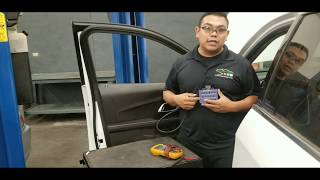
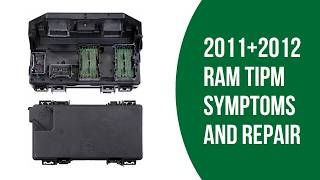
Shop the Parts Behind U0012
Below are the parts most often responsible for code U0012, ranked by how frequently each one is the actual culprit (per the diagnosis above). Tap any to see what we have for your vehicle.



The information in this article is provided for general reference and educational purposes only. Vehicle specifications, procedures, and part compatibility can vary by production date, trim level, and region. Always consult your vehicle's factory service manual and verify part numbers before purchasing or performing repairs. Safety-critical components such as airbags, seat belts, and braking systems should be installed by a qualified professional.
- 🧭 Diagnostic Flowchart
- 🎬 Helpful Videos
- 🛍️ Shop This Part
- What Does U0012 Mean?
- Can I Drive With U0012?
- Common Causes
- Symptoms
- Common Fixes & Costs
- Used vs. New Parts: Buying Guide
- What Happens If You Wait — Timeline
- Cost of Not Fixing It
- Diagnosis Steps
- When This Code Triggers (Freeze-Frame Conditions)
- Related Codes
- Climate & Environmental Factors
- How to Talk to a Mechanic About This Code
- Where to Take It: Dealer vs Independent vs Chain
- When to Walk Away From the Repair
- What Scan Tool You Need for This Code
- How to Clear the Code After You Fix It
- Will This Fail Emissions / State Inspection?
- Most Commonly Affected Vehicles
- Manufacturer-Specific Notes
- Real Owner Stories
- 2013 Ford F-150 with 110K miles - The Misdiagnosis
- 2019 Alfa Romeo Giulia with 35K miles - The Manufacturer Quirk
- 2011 Volvo XC60 with 140K miles - The Easy (but scary) Fix
- How to Prevent This Code From Triggering
- Frequently Asked Questions
- Can a bad battery cause a U0012 code?
- What's the difference between MS-CAN and HS-CAN?
- Can a bad ground cause CAN bus problems?
- What are the most common misdiagnosis mistakes for U0012?
- My cheap scanner doesn't show any U-codes, but the symptoms are all here. Why?
- How much does it cost to diagnose a U0012 code?
- Will clearing the code fix the problem?
- Is this something I can fix myself?
- Key Takeaways
- 🎟️ Get 5% Off