

OBD-II Code U0018: Medium Speed CAN Communication Bus (-) Shorted to Bus (+)
The Ultimate 2026 Guide to What U0018 Means, Why It Triggers, and How to Fix It
- Code U0018 indicates the two wires of your MS-CAN network are shorted together, confirmed by a resistance reading near 0 ohms at the OBD-II port.
- A physically damaged or corroded wire causes 80% of U0018 codes, so visually inspect the wiring harness before spending $400+ on replacement control modules.
- Expect immediate failure of interior electronics (radio, climate control, power windows) and a dashboard illuminated with multiple warning lights.
- Isolate the short by disconnecting modules one by one while monitoring bus resistance; if the reading jumps from 0 to 60 ohms, you found the faulty circuit.
What Does U0018 Mean?
Your car's computers communicate over an internal network. Code U0018 signifies a critical error on the Medium Speed (MS) CAN bus. The two wires of this network are touching or 'shorted' together. This short circuit scrambles communication between modules controlling body and comfort functions (radio, climate control, power windows, door locks), causing them to malfunction or stop working entirely.
Technical definition: The SAE/OBD-II definition is 'Medium Speed CAN Communication Bus (-) shorted to Bus (+)'. A primary control module detects the two wires of the MS-CAN bus are electrically shorted to each other. This creates a bus resistance near 0 ohms (a healthy bus reads ~60 ohms), making all 🎬 Watch: How to perform a CAN bus resistance check with a multimeter. data transmission impossible.
Can I Drive With U0018?
Yes, But With Caution. You can drive short distances, but it is strongly discouraged. Critical features fail without warning. The Medium Speed (MS) CAN bus connects to the instrument cluster, body control module, and anti-theft system. A sudden failure causes the engine to stall or prevents restarting, stranding you and requiring a $100-$300 tow. Driving with this active fault triggers a cascade of other error codes, making diagnosis more complex. Have the vehicle diagnosed promptly.
Common Causes
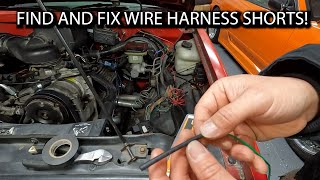
- Damaged or Chafed Wiring Harness (Very Common) — The MS-CAN bus wiring harness routes through tight spaces, near sharp metal brackets, or in high-vibration areas. Over time, protective insulation wears through, causing the CAN (-) and CAN (+) 🎬 Watch: How to find and fix a short in your wiring harness. wires to touch and short.
- Corroded Connectors (Water Intrusion) (Common) — Water from windshield leaks, clogged sunroof drains, or road salt corrodes connector pins. This corrosion creates an unintended electrical bridge between the CAN (-) and CAN (+) terminals, shorting the network.
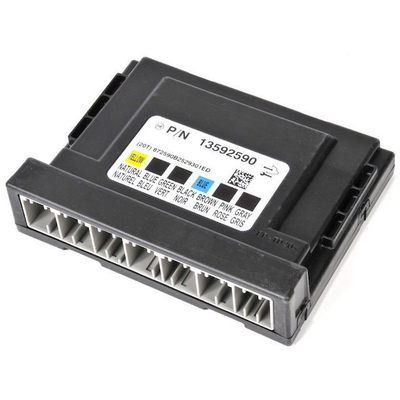
- Faulty Control Module (Less Common) — An electronic control module (BCM, Radio, Instrument Cluster) can fail internally. The module's transceiver chip shorts out, bringing down the entire network. Suspect this only after proving the wiring is intact.
- Incorrect Wiring Repairs (Less Common) — Previous improper repairs cause failures. Unsealed butt connectors allow moisture in, and twisted wires inevitably short over time. Always solder and heat-shrink CAN bus repairs.
- Rodent Damage (Less Common) — Rodents chew through the soy-based insulation used in modern wiring harnesses, easily shorting the paired CAN bus lines.
- Aftermarket Accessories (Rare) — Improperly installed remote starters, alarms, or stereos cause this code if installers incorrectly tap into the CAN bus network or damage the wires.
- Faulty Clock Spring (Rare) — MS-CAN wires pass through the steering column clock spring for steering wheel controls. A worn clock spring shorts these wires together.
Symptoms
- Loss of Interior Features — The radio/infotainment screen goes blank, climate controls become unresponsive, and power windows or door locks stop working.
- Multiple Warning Lights — The dashboard illuminates with Check Engine, ABS, Airbag, and Traction Control lights because modules can no longer communicate.
- Instrument Cluster Malfunction — The instrument cluster acts erratically or goes dead. Gauges sweep back and forth, freeze, or the odometer displays dashes.
- Vehicle Won't Start or Stalls — Anti-theft and ignition signals transmit over the MS-CAN bus. A short prevents the engine from cranking or causes unexpected stalling.
- Key Fob / Remote Start Malfunction — The keyless entry system fails. The vehicle cannot detect the key fob, preventing you from locking, unlocking, or starting the car.
Diagnostic Flowchart
Tap your situation to follow the diagnostic path that matches what you're seeing on this code.
Common Fixes & Costs
- CAN Bus Wiring Harness Repair — Parts: $10-$50, Labor: $300-$1,500+, ~2.0-10.0+ hr book time (Professional)
- Clean or Replace Corroded Connector — Parts: $20-$120, Labor: $150-$500, ~1.0-3.5 hr book time (Intermediate)
- Electrical System Diagnostic Check — Parts: $0, Labor: $150-$450, ~1.0-3.0 hr book time (Professional)
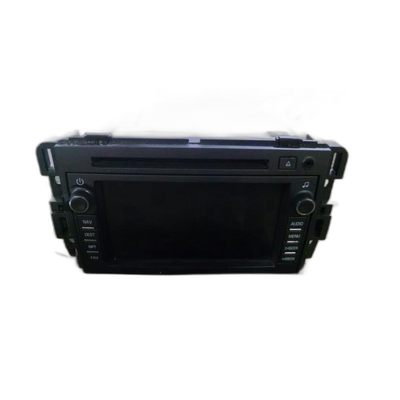
- Control Module Replacement (e.g., BCM, Radio) — Parts: $400-$1,500, Labor: $150-$400, ~1.0-2.5 hr book time (Professional)
- Connector Pin Terminal Repair/Replacement — Parts: $5-$25, Labor: $200-$600, ~1.5-4.0 hr book time (Professional)
Used vs. New Parts: Buying Guide
When a used part is worth it: For a common fix like a Body Control Module (BCM), a used part makes sense if the vehicle is older (over 100k miles), the budget is tight, and you have access to a mechanic with the specific tools to program it.
Donor-vehicle mileage cap: roughly under 100000 miles for the part to have meaningful remaining life.
Donor quality checklist:
- Verify the part number matches EXACTLY. Superseded numbers may not be compatible.
- Obtain the VIN of the donor car to check for compatibility.
- Avoid parts from flood-damaged or high-corrosion (rust belt) vehicles.
- Ask about the warranty; 30-90 days is typical for used electronic parts.
Decision logic:
- If The part requires programming (like a BCM or Instrument Cluster) → Favor a new or remanufactured part with a warranty, as programming a used module is problematic.
- If The part is a simple, non-programmable module → A used part is a reasonable, low-risk option.
- If The vehicle is under 8 years/80,000 miles → Check if the failed module is covered under the federal emissions warranty before buying any part.
Warranty tradeoff: Used parts typically have a 30-90 day exchange-only warranty. Remanufactured modules come with a 1-year to lifetime warranty. New OEM parts carry the manufacturer's warranty (1-2 years).
Worst-case if a used part fails: $500-$1000 if a used, programmed module fails. This includes the cost of the failed part plus non-refundable labor for installation and programming.
What Happens If You Wait — Timeline
- Immediate (Hard Short): Code U0018 sets instantly. Multiple warning lights appear. Radio, climate control, and power windows stop working completely. Vehicle stalls or fails to start. (MPG impact: 0%% · Added cost: $100-$300 (Potential tow bill if stranded).)
- 1-4 Weeks (Intermittent Short): Symptoms appear randomly, triggered by bumps or moisture. The radio flickers, or warning lights flash. The problem becomes more frequent as wires continue to chafe. (MPG impact: 0-2%% · Added cost: $0-$50 (Cost of misdiagnosis if user replaces a battery unnecessarily).)
- 1-6 months (Ignored Intermittent Short): Intermittent shorting sends repeated voltage spikes across the network. This electrical stress damages sensitive transceiver chips within otherwise healthy control modules. (MPG impact: 0-5%% · Added cost: $400-$1500 (Cost to replace a module damaged by the initial wiring fault).)
- 6+ months (Ignored Water Intrusion): Prolonged moisture causes severe galvanic corrosion. The corrosion spreads, destroying entire sections of the wiring harness and multiple connector pins beyond simple repair. (MPG impact: N/A% · Added cost: $1500-$5000+ (Cost for a complete wiring harness replacement).)
Cost of Not Fixing It
- Immediate: Loss of critical interior functions, potential no-start or stalling condition, creating a significant safety risk. Inability to lock/unlock doors. (Added cost: $100-$300 for a tow if stranded.)
- 1-3 months: Continued driving with an intermittent short causes voltage spikes that stress electronic modules, leading to premature failure of an otherwise good module. (Added cost: $400-$1500 per damaged module.)
- 3+ months: A persistent short from water intrusion leads to advanced corrosion, damaging the entire wiring harness beyond simple repair. (Added cost: $1500-$5000+)
Diagnosis Steps
- Verify Battery Health and Check Fuses
Ensure the battery is fully charged (above 12.4V) and passes a load test. Visually inspect and test all fuses related to the affected modules (BCM, Radio, Instrument Cluster).
Tools: Multimeter, Vehicle Fuse Diagram (Beginner) - Measure CAN Bus Resistance
Disconnect the negative battery terminal. Measure resistance between the two MS-CAN bus pins at the OBD-II port (commonly Pins 3 and 11, but verify with a diagram). A reading near 0 ohms confirms a U0018 short. A healthy bus reads ~60 ohms.
Tools: Multimeter, OBD-II Port Pinout Diagram (Intermediate) - Perform a Thorough Visual Inspection
Inspect visible wiring harnesses for damage. Check where harnesses pass through the firewall, under carpets, inside door jambs, and near the OBD-II port. Look for chafing, melting, rodent damage, and water intrusion.
Tools: Flashlight, Inspection Mirror (Beginner) - Scan for All Network Codes
Use an advanced scanner to read codes from ALL modules. Make a list of modules showing 'No Comm'. This list pinpoints the wiring fault's location.
Tools: Advanced Bi-Directional OBD-II Scanner (Intermediate) - Isolate the Faulty Circuit or Module
With a confirmed short (~0 ohms), unplug modules on the MS-CAN bus one by one. Re-measure resistance at the OBD-II port after each. When resistance jumps to ~60 or ~120 ohms, the fault is in the last disconnected module or its wiring.
Tools: Multimeter, Vehicle Wiring Diagrams, Basic Hand Tools (Advanced) - Perform 'Wiggle' Test (Pro Tip)
If the short is intermittent, connect the multimeter and have an assistant wiggle sections of the wiring harness. If resistance drops to 0 ohms when a specific area moves, you found the short.
Tools: Multimeter, Assistant (Advanced) - Test Individual Modules
If unplugging a module cleared the short, plug all other modules back in. If bus resistance reads a healthy 60 ohms with only the suspect module disconnected, replace that module. If the short returns, the wiring is faulty.
Tools: Basic Hand Tools, Multimeter (Advanced) - Measure Bus Voltage with Multimeter
Reconnect the battery. Turn the key on and measure DC voltage from each MS-CAN pin to ground. A healthy bus reads ~2.5V on both lines at idle. A U0018 short causes both lines to read a collapsed, identical voltage (often 0V).
Tools: High-Impedance Multimeter, OBD-II Port Pinout Diagram (Advanced) - Analyze Bus with Oscilloscope (Definitive Diagnosis)
Connect an oscilloscope to the MS-CAN pins. A healthy bus shows a square wave mirroring between ~1.5V and ~3.5V. A U0018 short shows a flat line or heavily distorted signal, confirming no communication.
Tools: Automotive Oscilloscope, Wiring Diagrams (Professional)
When This Code Triggers (Freeze-Frame Conditions)
- Fault Trigger: Key On or During Operation (The code sets immediately upon key-on or the moment the short occurs while driving, as modules fail their initial communication check-in.)
- Module Voltage: 11.8V - 14.5V (The fault occurs at any normal operating voltage; it is a physical wiring failure, not voltage-dependent.)
- Vehicle Speed: 0 - 75 mph (Logged at any speed. A short caused by vibration triggers at specific speeds or on rough roads.)
- Communication Status: No Communication (Freeze frame data is limited from modules on the affected MS-CAN bus, as the short prevents data transmission.)
Related Codes
- U0011, U0012, U0013, U0014 — These codes specify different shorts on the MS-CAN bus. U0018 is a direct short between the two CAN wires. U0011/U0012 indicate CAN+ shorted to ground/power, and U0013/U0014 indicate CAN- shorted to ground/power.
- U0140 — 'Lost Communication With Body Control Module.' When U0018 shorts the network, other modules cannot hear from the BCM and log this code as a symptom. Fixing U0018 resolves U0140.
- U0155 — 'Lost Communication With Instrument Panel Cluster.' The instrument cluster is a key module on the MS-CAN bus. When the bus goes down due to U0018, this code is set by other modules.
- U-codes in general (e.g., U0100, U0141, U0212) — A U0018 fault is accompanied by a flood of other 'U' codes indicating 'Lost Communication'. They are symptoms of the network being down. Fix the physical fault causing U0018, and all other U-codes resolve.
Climate & Environmental Factors
- High Humidity / Water Intrusion: Water from leaking windshields or clogged sunroof drains gets into electrical connectors. This moisture creates conductive paths that short the CAN bus pins together.
- Road Salt (Rust Belt Regions): Salt spray attacks wiring insulation and rapidly corrodes connector pins, especially on frame-mounted connectors (like Ford's C405), causing shorts and communication failures.
- Extreme Cold: Extreme cold makes old plastic insulation brittle. If the harness flexes during these conditions, the insulation cracks, exposing wires and creating short circuits.
How to Talk to a Mechanic About This Code
Say this: "I have a U0018 CAN bus code, and I'd like to schedule a diagnostic. I suspect a wiring or connector issue, as the bus resistance is likely shorted. Please focus on tracing the short in the harness rather than immediately replacing modules."
This signals you understand the code relates to a physical wiring fault, not a bad computer. It directs the technician toward proper electrical diagnosis (tracing wires) and away from the expensive 'parts cannon' approach.
Avoid saying:
- 'My check engine light is on, can you look at it?'
- 'My radio and windows stopped working.'
- 'Just fix whatever is wrong.'
Questions to ask before authorizing the repair:
- What was the CAN bus resistance reading when you tested it?
- Can you show me the location of the short in the wiring or the corroded connector?
- How did you determine that a module needs to be replaced?
- Is the diagnostic fee applied to the final repair cost?
Where to Take It: Dealer vs Independent vs Chain
- Dealer:
A strong, safe choice if you can afford it. They are best equipped for complex electrical issues but recommend more expensive repairs.
Best for: Vehicles under warranty., Complex, brand-specific electrical issues (e.g., VW Gateway, Ram TIPM)., When you want guaranteed access to proprietary wiring diagrams and tools.
Downsides: Highest labor rates, often $200+/hour., Dealerships frequently replace entire wiring harnesses ($2,000+) rather than performing targeted $300 wire repairs. (Typical cost: +50% vs. baseline) - Independent Shop:
The best fit, IF you find the right shop. Look for an 'auto electric specialist' with ASE certifications and good reviews for diagnosing complex electrical problems.
Best for: Out-of-warranty vehicles where cost is a major factor., Finding a technician who performs detailed wiring repairs instead of full harness replacements.
Downsides: General mechanics lack the oscilloscopes and network experience required. You must find an ASE-certified auto electrical specialist. (Typical cost: +0% vs. baseline) - Chain Shop:
AVOID for this code. U0018 requires specialized diagnostic skill that is beyond the scope of a chain repair shop.
Best for: Simple jobs like battery replacement or oil changes.
Downsides: Technicians are generally not equipped or trained for in-depth electrical diagnosis., High risk of misdiagnosis, leading to unnecessary and expensive part replacements. (Typical cost: -10% vs. baseline)
When to Walk Away From the Repair
If the estimated repair cost for the U0018 fault exceeds 50% of your vehicle's current private-party value, sell the car as-is or trade it in.
- Car worth $4000, fix is $2000: Walk away. The repair cost is 50% of the car's value. Sell the vehicle as a 'mechanic's special' or trade it in.
- Car worth $15000, fix is $1200: Fix it. The repair cost is only 8% of the vehicle's value, which is well below the threshold. This is a worthwhile investment.
- Car worth $7000, fix is $1800: Borderline. At over 25% of the car's value, get a second opinion before proceeding. If the rest of the car is in excellent condition, it is worth fixing.
What Scan Tool You Need for This Code
Minimum: A scanner that performs a full system scan on all modules (ABS, BCM, IPC, etc.), not just a basic engine code reader.
A $20 code reader only pulls codes from the engine computer. It cannot tell you which other modules are offline, which is critical to diagnose a network fault.
Budget: BlueDriver Pro (~$100) — Connects to your smartphone and performs a full system scan to identify which modules are not communicating.
Mid-range: Foxwell NT510 Elite / Autel MaxiCOM MK808S (~$180) — These handheld tools offer full system scans and crucial bi-directional controls, allowing you to command components to test functionality.
Professional: Autel MaxiCOM MK900-BT / Launch X431 Series (~$500-1200) — These professional-grade tools offer full bi-directional control, advanced ECU coding functions, and topology mapping to visually display the network layout.
Rent vs buy: AutoZone's Loan-A-Tool program offers basic readers. For a U0018 code, a basic rental is insufficient. Buying a mid-range scanner is a worthwhile investment.
How to Clear the Code After You Fix It
- Reconnect the negative battery terminal.
- Use an OBD-II scan tool to perform a 'Clear All DTCs' command.
- Perform a full network scan to confirm all modules are communicating.
- Start the engine and test all previously failed functions (radio, windows, etc.).
- Perform the specific drive cycle to set readiness monitors for emissions testing.
Drive cycle (~20 minutes): A general drive cycle involves: 1) Cold start and idle for 2-3 minutes. 2) Drive in stop-and-go traffic for 5-10 minutes with smooth accelerations. 3) Drive at a steady highway speed (55-60 mph) for 5-10 minutes. 4) Allow the vehicle to cool down.
Readiness monitors affected: This is a network code, not an emissions code, so it does not directly fail a specific readiness monitor. However, by illuminating the Check Engine Light, it causes an automatic failure of any OBD-II emissions test.
Before emissions retest: drive at least 50 miles to fully set monitors.
Watch out for:
- Clearing the code without fixing the physical short results in the code returning instantly.
- Disconnecting the battery will not clear the hard fault code from most modules.
- Rushing to an emissions test after repair without completing a drive cycle results in a 'Not Ready' failure.
Will This Fail Emissions / State Inspection?
Yes — this code typically fails an OBD-II emissions inspection.
- California: An illuminated Check Engine Light results in an automatic failure. A U-code indicates a network malfunction that prevents a valid test.
- New York: The NYVIP3 inspection system scans for all diagnostic trouble codes. Any 'U' code that turns on the Check Engine Light is grounds for failure.
- Texas: A U0018 code with an active Check Engine Light causes an automatic failure. The vehicle fails if the communication port is inaccessible or non-functional.
Most Commonly Affected Vehicles
- Ford F-150 (2015-2020) — Extremely common. Inspect the 16-pin connector C405 on the frame rail under the driver's cab corner for corrosion. Also check the main body harness for chafing against frame brackets.
- Chevrolet / GMC Silverado / Sierra 1500 (2014-2021) — Wiring harnesses chafe against frame members, A/C lines, and suspension components. Poor ground connections (G218 under the dash) cause network failures. See TSB 21-NA-149 for 2019+ models.
- Dodge / Ram Ram 1500 / 2500 (2010-2018) — The Totally Integrated Power Module (TIPM) is a frequent failure point. Internal shorts or corrosion at its connectors take down the network.
- Jeep Wrangler (JK/JL), Grand Cherokee (WK2) (2012-2020) — CAN bus issues stem from water intrusion into the cabin fuse box or chafed wiring near the transfer case.
- Volkswagen Jetta / Golf / Passat (2010-2019) — Suffer from issues with the CAN Gateway module located above the accelerator pedal. Water intrusion from clogged sunroof drains corrodes wiring harnesses under the driver-side carpet.
- Hyundai / Kia Elantra / Sonata / Optima (2011-2018) — Failures trace to corrosion in connectors behind the driver's side kick panel fuse box or chafed wiring in the flexible driver's door jamb harness.
- Subaru Outback / Forester (2014-2019) — Known for issues in the bulkhead wiring harness where it passes through the firewall. Connectors for the Body Integrated Unit (BIU) are a common failure point.
- Nissan Titan / Armada (2005-2015) — CAN communication failures are frequently caused by poor or corroded main ground connections, especially the battery-to-chassis and engine block grounds.
Manufacturer-Specific Notes
- Ford: On F-150s (2015-2020), connector C405 on the frame rail under the driver's side door is highly susceptible to water and salt intrusion, causing pins to corrode and short the MS-CAN bus.
- General Motors (Chevrolet/GMC): GM trucks have specific TSBs for CAN bus wiring chafing. TSB 21-NA-149 details how an unsecured engine harness rubs through on brackets, causing codes like U0073 and U0018.
- Dodge / Ram / Chrysler: The Totally Integrated Power Module (TIPM) is a frequent source of CAN bus problems. Internal failures or corroded connections at the TIPM take down the entire network.
- Volkswagen / Audi: The CAN Gateway module acts as the central router for all network traffic and frequently suffers water damage due to clogged sunroof drains or leaking windshields.
- Nissan: CAN communication codes are frequently caused by corroded main ground wires. Always inspect, clean, and tighten the negative battery cable connections at the battery, chassis, and engine block first.
Real Owner Stories
2018 Ram 2500 at 135K miles with intermittent no-start
Vehicle would crank but not start, especially after refueling. The issue became more frequent over several months.
What they tried:
- Replaced the fuel pump with an aftermarket unit ($250), but the problem persisted.
- Discovered the fuel pump relay inside the TIPM (fuse box) is integrated and not easily replaceable.
- Attempted a temporary fix using a jumper wire in the fuse panel to bypass the relay.
Outcome: The owner determined the issue was a failing relay on the TIPM circuit board. The final fix required a professional TIPM repair/replacement.
Lesson: On Ram trucks, a crank-no-start condition is very often a TIPM failure, not a fuel pump failure. Don't replace the pump until you've verified it's receiving power.
2019 GMC Sierra with multiple warning lights and stalling
Check Engine Light came on, gauges swept to zero, and the truck stalled. A flood of 'U' codes were present.
What they tried:
- A visual inspection revealed the engine wiring harness was rubbing against a sharp metal bracket near the driver-side upper control arm.
Outcome: The chafed wires were repaired using proper splicing techniques and protected with anti-abrasion tape. The harness was secured away from the sharp edge as detailed in GM's TSB 21-NA-149, resolving all codes.
Lesson: For late-model GM trucks, harness chafing is a well-documented cause of CAN bus failures. Perform a thorough visual inspection of the engine harness in areas identified by GM's TSBs before suspecting modules.
2011 Ford F-150 EcoBoost with P0016 and P0018 codes
Vehicle had a check engine light and was running rough. The owner continued to drive the vehicle for an extended period.
What they tried:
- The owner ignored the initial camshaft/crankshaft correlation codes (P0016, P0018).
Outcome: The stretched timing chain caused the valves to contact the pistons, resulting in complete engine failure requiring a full engine replacement.
Lesson: While U0018 is a network code, it shares a number with an engine timing fault (P0018). If you have rough running and engine noise with a P0018 code, it is a critical timing chain issue, not a CAN bus short.
How to Prevent This Code From Triggering
- Periodically clean and apply dielectric grease to critical connectors (Every 2-3 years, or during other maintenance) — Applying non-conductive dielectric grease to connector seals creates a barrier against moisture, preventing corrosion that leads to shorts. Focus on connectors exposed to the elements.
- Inspect and secure wiring harnesses (Annually, or whenever working in the area) — Visually check that wiring harnesses are properly clipped and not rubbing against sharp metal edges. Adding protective conduit or anti-abrasion tape prevents chafing.
- Keep sunroof drains and cowl vents clear (Twice a year (spring and fall)) — Clogged drains cause water to overflow into the cabin, soaking fuse boxes and wiring harnesses located in the kick panels. This is a primary cause of water-induced CAN bus shorts.
- Implement rodent protection measures (Ongoing, especially if parking outdoors or in rural areas) — Rodents chew on soy-based wire insulation. Using peppermint oil, ultrasonic repellents, or capsaicin-laced tape in the engine bay deters them from causing wiring damage.
Frequently Asked Questions
What is the most common misdiagnosis for U0018?
The biggest mistake is replacing control modules without confirming the wiring is good. A U0018 code with a resistance reading near 0 ohms almost always indicates a wiring or connector problem. Isolate the short by disconnecting modules one by one instead of guessing.
Why do so many unrelated warning lights turn on with this code?
The MS-CAN bus is a shared network for many modules. When the two network wires short together, communication stops entirely. Modules responsible for Airbags, ABS, and the Instrument Cluster log faults and trigger warning lights as a failsafe.
Can a bad battery cause code U0018?
A weak battery cannot directly cause a U0018 physical short circuit. However, low voltage causes modules to behave erratically and generate confusing communication codes. Always verify battery health before starting electrical diagnostics.
What is the difference between High Speed and Medium Speed CAN?
High Speed (HS-CAN) operates at 500 kbps for critical systems like the engine, transmission, and anti-lock brakes. Medium Speed (MS-CAN) operates at 125 kbps for body and comfort systems like the radio and climate control.
How much does it cost to diagnose a U0018 code?
A professional diagnostic check for a CAN bus issue typically costs between $150 and $450. This fee covers the technician's time to trace and locate the exact source of the short circuit. The actual repair cost is additional.
Will clearing the code fix the problem?
No, clearing the code will not fix a physical short circuit. The warning lights will disappear momentarily but return immediately when modules attempt to communicate. You must locate and repair the damaged wire or connector.
Can I replace a module myself to fix U0018?
Replacing a module yourself is not recommended because the fault is usually in the wiring. Furthermore, modern control modules require dealer-level tools for mandatory programming to the vehicle's VIN. An unprogrammed module will not work and triggers anti-theft lockouts.
What tools are absolutely necessary for a DIY diagnosis?
You need a quality multimeter, a vehicle-specific wiring diagram, and an advanced scanner capable of a full network scan. A basic $20 code reader cannot identify which specific modules are offline. Without these tools, you cannot perform the essential resistance tests.
Key Takeaways
- Code U0018 indicates the two wires of your MS-CAN network are shorted together, confirmed by a resistance reading near 0 ohms at the OBD-II port.
- A physically damaged or corroded wire causes 80% of U0018 codes, so visually inspect the wiring harness before spending $400+ on replacement control modules.
- Expect immediate failure of interior electronics (radio, climate control, power windows) and a dashboard illuminated with multiple warning lights.
- Isolate the short by disconnecting modules one by one while monitoring bus resistance; if the reading jumps from 0 to 60 ohms, you found the faulty circuit.
Helpful Videos
![How To Test CAN BUS With A Multimeter [CAN Bus Resistance Check] Mechanic Mindset](https://img.youtube.com/vi/JPE42HSJxAk/mqdefault.jpg)
Shop the Parts Behind U0018
Below are the parts most often responsible for code U0018, ranked by how frequently each one is the actual culprit (per the diagnosis above). Tap any to see what we have for your vehicle.

The information in this article is provided for general reference and educational purposes only. Vehicle specifications, procedures, and part compatibility can vary by production date, trim level, and region. Always consult your vehicle's factory service manual and verify part numbers before purchasing or performing repairs. Safety-critical components such as airbags, seat belts, and braking systems should be installed by a qualified professional.
- 🧭 Diagnostic Flowchart
- 🎬 Helpful Videos
- 🛍️ Shop This Part
- What Does U0018 Mean?
- Can I Drive With U0018?
- Common Causes
- Symptoms
- Common Fixes & Costs
- Used vs. New Parts: Buying Guide
- What Happens If You Wait — Timeline
- Cost of Not Fixing It
- Diagnosis Steps
- When This Code Triggers (Freeze-Frame Conditions)
- Related Codes
- Climate & Environmental Factors
- How to Talk to a Mechanic About This Code
- Where to Take It: Dealer vs Independent vs Chain
- When to Walk Away From the Repair
- What Scan Tool You Need for This Code
- How to Clear the Code After You Fix It
- Will This Fail Emissions / State Inspection?
- Most Commonly Affected Vehicles
- Manufacturer-Specific Notes
- Real Owner Stories
- 2018 Ram 2500 at 135K miles with intermittent no-start
- 2019 GMC Sierra with multiple warning lights and stalling
- 2011 Ford F-150 EcoBoost with P0016 and P0018 codes
- How to Prevent This Code From Triggering
- Frequently Asked Questions
- What is the most common misdiagnosis for U0018?
- Why do so many unrelated warning lights turn on with this code?
- Can a bad battery cause code U0018?
- What is the difference between High Speed and Medium Speed CAN?
- How much does it cost to diagnose a U0018 code?
- Will clearing the code fix the problem?
- Can I replace a module myself to fix U0018?
- What tools are absolutely necessary for a DIY diagnosis?
- Key Takeaways
- 🎟️ Get 5% Off