

OBD-II Code U0028: Vehicle Communication Bus 'A' Fault
What U0028 means, why it triggers, and how to fix it
- Code U0028 indicates a critical failure on Vehicle Communication Bus A, instantly disabling infotainment, instrument clusters, and safety alerts.
- On 2015-2020 GM trucks and SUVs, over 80% of U0028 codes stem from a pinched dashboard wiring harness documented in TSB #PIT5288H.
- A U0028 fault prevents electronic modules from entering sleep mode, causing a parasitic drain that kills a healthy car battery within 24 to 48 hours.
- Diagnosing a MOST bus ring network requires a $20 fiber-optic bypass loop to isolate the single failed module taking down the system.
What Does U0028 Mean?
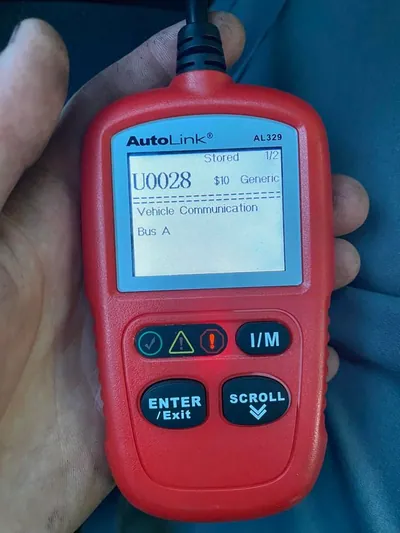
U0028 means a critical communication network, 'Vehicle Communication Bus A,' has failed. This network acts as a central nervous system, allowing electronic modules—like the Body Control Module (BCM), instrument cluster, and radio—to share data. When communication stops, these dependent electronic systems shut down.
Technical definition: The SAE/OBD-II definition for U0028 is 'Vehicle Communication Bus A'. It indicates a controller detected a complete loss of communication on this specific data bus. On modern General Motors vehicles, 'Bus A' refers to the Media Oriented Systems Transport (MOST) fiber-optic or electrical ring network. On Honda or Hyundai, it refers to the F-CAN or LIN bus.
Can I Drive With U0028?
Yes, But With Caution. The vehicle remains drivable, but you lose infotainment features, the backup camera, safety system alerts, and instrument cluster functions. More critically, this fault prevents modules from entering 'sleep mode,' causing a parasitic battery drain that strands you without warning. Drive only to reach a repair shop.
Common Causes

- Pinched or Damaged Wiring Harness (Very Common) — On 2015-2020 GM trucks and SUVs, the main wiring harness behind the dashboard is frequently crushed by a sharp metal bracket (documented in TSB #PIT5288H). This physical damage severs the communication wires, causing a complete network failure.
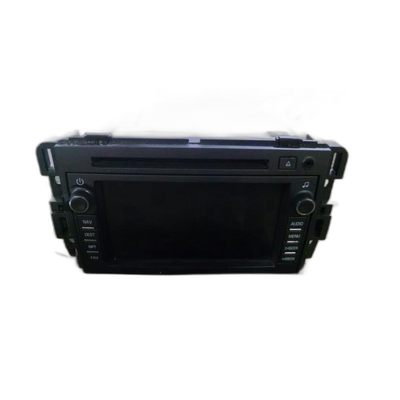
- Failed Control Module (Common) — Any module on the communication bus (radio, CD player, or Human Machine Interface module) can fail internally. Because MOST networks connect in a ring, one dead module breaks the entire communication loop, triggering the U0028 code.
- Module Power or Ground Issues (Less Common) — Every electronic module requires a stable power supply and solid ground. A blown fuse, corroded ground strap, or weak battery connection causes a module to lose power and drop off the network.
- Corroded Connectors or Water Intrusion (Less Common) — Water leaking from a bad window seal or clogged sunroof drain saturates wiring harnesses. This moisture causes immediate shorts or long-term pin corrosion that interrupts the high-speed data stream.
- Aftermarket Electronics Interference (Less Common) — Improperly installed aftermarket accessories, such as remote starters or audio equipment, introduce electrical noise or draw excessive power. This disrupts the data bus and is a frequent source of misdiagnosis.
- Failed Termination Resistor (Rare) — CAN bus networks utilize a 120-ohm resistor at each end. If one resistor fails, the total bus resistance shifts from the required 60 ohms to 120 ohms, preventing communication.
- Corrupted Module Software (Rare) — An interrupted software update or a severe voltage spike corrupts the software within a control module, rendering it unable to communicate on the network.
Symptoms

- Blank Infotainment Screen and No Audio/Chimes — The radio or navigation screen goes completely black, speakers output no sound, and warning chimes or turn signal 'clicks' disappear. This is the classic signature of a MOST bus failure.
- Dead Battery — The communication fault prevents modules from entering 'sleep mode,' creating a parasitic drain that kills a healthy battery overnight or within 48 hours.
- Dead Instrument Cluster — The speedometer, tachometer, fuel gauge, and temperature gauge freeze or drop to zero as the cluster loses network communication.
- Loss of Convenience Features — Power windows, door locks, remote key functions, and automatic headlights stop working when the Body Control Module (BCM) drops offline.
- Dashboard Warning Lights (also visible on scanner) — ABS, airbag, or 'Service AdvanceTrac' warning lights illuminate because safety modules can no longer broadcast their status to the network.
Diagnostic Flowchart

Tap your situation to follow the diagnostic path that matches what you're seeing on this code.
Common Fixes & Costs
- Repairing Pinched Dash Wiring Harness (GM) — Parts: $10-$50, Labor: $300-$800, ~3.5 hr book time (Professional)
- Replacing a Failed Control Module (e.g., HMI, Radio) — Parts: $150-$800, Labor: $150-$300, ~1.5 hr book time (Professional)
- Bypassing a Non-Essential Module (e.g., CD Player) — Parts: $15-$30, Labor: $100-$200, ~1.0 hr book time (Intermediate)
- Repairing Damaged Wiring or Connectors — Parts: $10-$30, Labor: $150-$500, ~2.0 hr book time (Intermediate)
- Reprogramming or Updating Module Software — Parts: $0, Labor: $120-$250, ~1.0 hr book time (Professional)
Used vs. New Parts: Buying Guide
When a used part is worth it: Buying a used electronic module (HMI, Radio) from a salvage yard is NOT recommended for DIYers. These modules are VIN-locked and will not function without dealer-level programming. A used part only makes sense if you use a specialized service that unlocks and pre-programs the module to your VIN before shipping.
Donor-vehicle mileage cap: roughly under 50000 miles for the part to have meaningful remaining life.
Donor quality checklist:
- Verify the seller pre-programs the module to your VIN before shipping.
- Ensure the part number is an exact match for your original module.
- Demand a functional warranty of at least 90 days.
- Reject modules with any signs of water damage or physical case damage.
Decision logic:
- If The part is a complex, VIN-locked electronic module (e.g., HMI, Radio, BCM) → Buy a remanufactured module pre-programmed to your VIN. The higher upfront cost prevents a non-functional part and repeat labor.
- If You are a DIYer with no access to specialist programming tools → Do not buy a used module from a salvage yard unless the seller explicitly provides VIN programming.
- If The failed part is a non-intelligent component on the bus (e.g., CD player) → A used part is acceptable, but it is more cost-effective to bypass the module permanently with a loop.
Warranty tradeoff: Used Parts: 30-90 day warranty covering only the part. Remanufactured (Pre-Programmed): 1-year or limited lifetime warranty. OEM New (Dealer Installed): 12 months/12,000 miles covering parts and labor.
Worst-case if a used part fails: $500-$1000 (Cost of the non-functional used part, plus diagnostic time and labor to install and remove it, before buying the correct part).
What Happens If You Wait — Timeline
- 0-1 week: Infotainment system fails at startup. Code U0028 sets. A parasitic drain begins because a module on the bus cannot enter 'sleep mode'. (Added cost: $60-$100 (Cost of a single roadside assistance jump-start).)
- 1-4 weeks: Repeated jump-starts are required. The battery's health degrades significantly from deep discharges. The alternator strains to recharge a dead battery. (Added cost: $200-$450 (Cost of a new battery and potential towing fees).)
- 1-3 months: The constant strain from recharging a failing battery causes the alternator to wear out. Voltage spikes from improper jump-starts stress other electronic modules. (Added cost: $700-$1200 (Cost of new battery + new alternator and labor).)
- 3+ months: Voltage instability causes permanent damage to sensitive, expensive modules like the ECU or BCM. (Added cost: $1500-$3000+ (Cost of battery, alternator, plus additional control modules and programming).)
Cost of Not Fixing It
- Immediate (1-7 days): Stranded vehicle due to parasitic battery drain. The communication fault prevents modules from entering sleep mode, killing the battery. (Added cost: $200-$450 (Cost of a new battery plus potential towing fees).)
- Short Term (1-3 months): Repeated battery failure and safety hazards. Continuously jump-starting strains the alternator. Driving without a functional backup camera or safety alerts increases accident risk. (Added cost: $400-$900 (Cost of multiple batteries and potential alternator replacement).)
- Long Term (6+ months): Progressive electrical system degradation. Chronic low voltage and voltage spikes from repeated jump-starts permanently damage other sensitive electronic modules. (Added cost: $1000+ (Cost of diagnosing and replacing additional damaged modules).)
Diagnosis Steps
- Perform a Full Vehicle Scan
Use a professional OBD-II scanner to read fault codes from all modules. Note any companion 'U' codes (especially U0029) and document exactly which modules are not communicating. Do not clear the codes.
Tools: Professional OBD-II Scanner (Beginner) - Check Battery and Fuses
Verify battery voltage is above 12.4 volts; low voltage triggers false communication errors. Inspect all fuses related to the BCM, radio, instrument cluster, and HMI module.
Tools: Digital Multimeter, Fuse Puller (Beginner) - Perform a Hard Reset
Disconnect the negative battery terminal for 30 minutes. Touch the disconnected negative cable to the positive terminal (while both are disconnected from the battery) to drain residual power. This clears temporary software glitches.
Tools: Wrench Set (Beginner) - Visually Inspect Wiring Harness (GM Specific)
On 2015-2020 GM trucks and SUVs, inspect the wiring harness under the driver's side dashboard near the parking brake pedal. Look for a large harness pinched or chafed by a sharp metal bracket (TSB #PIT5288H).
Tools: Flashlight, Trim Removal Tools (Intermediate) - Analyze Scan Tool Network Data
Using an advanced scan tool, monitor the 'Number of MOST Communication Breaks' PID. A count of '1' confirms a physical ring break. A count of '0' with a U0029 code present proves a module is failing internally without breaking the ring.
Tools: Advanced OBD-II Scanner (e.g., GM GDS2) (Professional) - Isolate the Faulty Module (MOST Network)
For MOST networks, use a bypass loop tool to jump one module at a time (e.g., CD player, HMI). When the faulty module is bypassed, the rest of the system powers on and the U0028 code changes to 'history'.
Tools: MOST Bus Bypass Loop, Trim Removal Tools (Advanced) - Test Bus Wiring Resistance (CAN Bus)
With the battery disconnected, measure resistance between CAN High and CAN Low at the OBD-II port. A reading of 60 ohms means the wiring and resistors are intact. 120 ohms indicates a broken wire or missing resistor. 0 ohms indicates a short.
Tools: Digital Multimeter (Advanced) - Verify Bus Signal with a Multimeter (LIN Bus)
For LIN bus faults (common on Hyundai/Kia), test the single data wire. At rest, it shows battery voltage (~12V). When communicating, it toggles rapidly between 12V and ~1V. A stuck voltage indicates a bus fault.
Tools: Digital Multimeter (Advanced) - Verify Bus Signal with an Oscilloscope (CAN Bus)
Connect an oscilloscope to CAN High and CAN Low. A healthy bus shows clean, mirror-image square waves. No signal, a stuck signal, or a noisy pattern pinpoints a wiring short, open, or interference issue.
Tools: Automotive Oscilloscope, Back-probe pins (Professional)
When This Code Triggers (Freeze-Frame Conditions)
- System Voltage: 11.5-12.5V (During key-on, before engine start.)
- Ignition Status: ON (Code sets the moment ignition is turned on as modules fail their initial handshake.)
- Vehicle Speed: 0 mph (Fault is present at startup before the vehicle moves.)
- Module Status: No Communication (Triggered by a primary module (Radio or BCM) detecting a loss of communication from another node.)
Related Codes
- U0029 — Indicates 'Vehicle Communication Bus A Performance'. While U0028 means a complete physical break in the network, U0029 means the network is intact but a module is sending corrupt data. Seeing U0029 with zero communication breaks strongly points to a dead module, not a cut wire.
- U0140 — Means 'Lost Communication with Body Control Module (BCM)'. Because the BCM is a central hub, a U0028 bus failure causes other modules to log U0140. If U0140 is present without U0028, the BCM itself is the problem.
- U0184 — Means 'Lost Communication With Radio'. If the radio fails and breaks the MOST ring, it triggers U0028, and other modules log U0184. If you only have U0184, the issue is isolated to the radio's direct power or ground.
- U0151 — Means 'Lost Communication with Restraints Control Module'. This code frequently pairs with U0028 on GM vehicles with the pinched harness issue, as airbag wires and MOST bus wires share the same damaged bundle.
Climate & Environmental Factors
- High Humidity: Promotes condensation inside connectors and modules. This creates corrosion on pins and circuit boards, increasing electrical resistance until communication fails completely.
- Extreme Temperature Cycles: Repeated expansion and contraction stresses wiring, connectors, and solder joints. In sub-zero weather, wire insulation becomes brittle and snaps easily if the harness is under tension.
- Water Intrusion: Direct water leaks from clogged sunroof drains or bad windshield seals saturate wiring harnesses, causing immediate electrical shorts that crash the communication bus.
How to Talk to a Mechanic About This Code
Say this: "I have a U0028 communication code on my [Vehicle Make/Model/Year] and the main symptom is a black infotainment screen. I'd like to schedule a diagnostic appointment. Based on my research, this is a network problem, not just a bad radio. Can you confirm your technicians have experience with CAN bus or MOST bus diagnostics?"
This signals you understand the complexity of the issue, mentions the specific code, and qualifies the shop's expertise in electrical diagnostics. It prevents a simple, incorrect quote for a new radio.
Avoid saying:
- 'My radio is broken.'
- 'My screen is black, can you fix it?'
- 'Just fix whatever is wrong with the electronics.'
Questions to ask before authorizing the repair:
- How did you isolate the fault? Did you find a wiring issue or a failed module?
- If it's a wiring issue, what is your plan to repair and protect the harness?
- If it's a module, how did you confirm that specific module was the point of failure? Did you use a bypass loop?
- Does the replacement module require VIN programming, and is that included in the quote?
Where to Take It: Dealer vs Independent vs Chain
- Dealer:
A strong, safe choice. Dealers have guaranteed access to specific TSBs, diagnostic tools (like GM's GDS2 and MOST bypass loops), and the ability to program new modules.
Best for: Vehicles under warranty., Complex, manufacturer-specific electrical issues (like MOST bus faults)., Repairs requiring proprietary software and module programming.
Downsides: Highest labor rates., May default to replacing expensive modules rather than performing complex wiring repairs. (Typical cost: +50% vs. baseline) - Independent Shop:
A good option, but requires vetting. Ask specifically if they are equipped for network communication diagnostics. An independent specialist is the best blend of expertise and value.
Best for: Out-of-warranty vehicles where cost is a major factor., Shops specializing in your vehicle's brand., Shops with a known reputation for strong electrical diagnostics.
Downsides: Quality and expertise vary widely., A general mechanic lacks the specific tools (MOST loop) or knowledge for this code, leading to misdiagnosis. (Typical cost: +0% vs. baseline) - Chain Shop:
AVOID. This is not the type of repair chain shops are set up to handle effectively. The diagnostic process is too specialized.
Best for: Simple, routine maintenance like oil changes, tires, and batteries.
Downsides: Technicians are not equipped or trained for complex network diagnostics., High risk of misdiagnosis, leading to unnecessary replacement of parts like the battery or radio. (Typical cost: -10% vs. baseline)
When to Walk Away From the Repair
If the estimated repair cost for the U0028 fault exceeds 40-50% of your car's current private-party value, seriously consider selling the car as-is or trading it in.
- Car worth $15000, fix is $1200: Fix it. The repair cost is well under the threshold and restores significant functionality and value.
- Car worth $7000, fix is $1800: Borderline, but likely worth fixing. This is a major repair relative to the car's value, but cheaper than replacing the vehicle. Get a second opinion.
- Car worth $3000, fix is $1500: Walk away. The repair cost is 50% of the car's value. The risk of chasing a complex electrical issue on an older, low-value car is too high.
What Scan Tool You Need for This Code
Minimum: A scanner that performs an 'All-System Scan' to read codes from every module (BCM, Radio, ABS, etc.), not just the engine computer.
A basic $20 code reader only checks for engine codes (P-codes). A U0028 fault lives in the network and is reported by various modules a basic reader cannot see.
Budget: BlueDriver Pro Scan Tool (~$90) — Reads codes from all modules (ABS, Airbag, BCM, etc.) on most major brands, which is the minimum requirement to see the scope of the U0028 fault.
Mid-range: Innova 5610 / Foxwell NT530 (~$350) — Adds bidirectional controls and manufacturer-specific data PIDs (like GM's 'Number of MOST Communication Breaks'), which is extremely helpful for isolating the fault.
Professional: Autel MaxiCOM MK808 / Launch X431 CRP919XBT (~$450-800) — Provides full bidirectional control, OE-level diagnostics, and advanced functions needed for complex network diagnosis and module coding.
How to Clear the Code After You Fix It
- Perform the physical repair (fix wiring or replace module).
- Reconnect the battery if disconnected.
- Use an OBD-II scan tool to clear the U0028 and all related U-codes.
- Start the vehicle and verify the initial symptoms (e.g., blank screen) are resolved.
Drive cycle (~30 minutes): After clearing the code, run a standard drive cycle to reset OBD-II readiness monitors. This involves a cold start, 5 minutes of idling, 15 minutes of stop-and-go city driving, and 10 minutes of steady highway driving at 60 mph.
Readiness monitors affected: Catalyst (CAT), Evaporative (EVAP) System, Oxygen (O2) Sensor, Oxygen Sensor Heater
Before emissions retest: drive at least 50 miles to fully set monitors.
Watch out for:
- Disconnecting the battery to clear the code resets all readiness monitors, guaranteeing an automatic emissions test failure.
- The code returns immediately upon key-on if the physical break in the network has not been repaired.
Will This Fail Emissions / State Inspection?
Yes — this code typically fails an OBD-II emissions inspection.
- California: An active U0028 code causes an automatic Smog Check failure. After repair, readiness monitors must be 'Ready' before passing a re-test.
- New York: The NYS inspection includes an OBD-II scan. Any active diagnostic trouble code, including a U-code, results in an inspection failure.
- Texas: In the 17 Texas counties requiring emissions testing, an active U0028 code fails the OBD-II portion of the inspection.
Most Commonly Affected Vehicles
- Chevrolet Silverado / Sierra (2014-2019) — Extremely prone to a pinched wiring harness behind the driver's side dashboard (TSB #PIT5288H). The MOST infotainment bus is the primary point of failure.
- GMC Yukon / Yukon XL (2015-2020) — Shares the K2XX platform and wiring harness pinch point issue. The HMI module and CD player are also frequent internal failure points on the MOST bus.
- Chevrolet Tahoe / Suburban (2015-2020) — Affected by the pinched dash harness issue (TSB #PIT5288H), leading to a MOST bus failure. Diagnosis requires isolating the fault in the ring network.
- Cadillac Escalade (2015-2020) — Susceptible to the pinched dash harness issue, as well as internal HMI or radio module failures on the CUE system's MOST network.
- Cadillac ATS / CTS / XTS / SRX (2013-2018) — U0028 points to a failure on the fiber-optic MOST network for the CUE infotainment system. It is almost always caused by an internal failure of the HMI, radio, or amplifier.
- Chevrolet Corvette (2014-2019) — The C7 Corvette uses a MOST bus for infotainment. U0028 is commonly caused by an internal failure of the Instrument Panel Cluster (IPC) or HMI module breaking the ring.
- Ford F-Series / Super Duty (2013-2019) — U0028 indicates a communication failure on a dedicated CAN bus between the Restraints Control Module (RCM) and the ABS module, triggering a 'Service AdvanceTrac' warning.
- Honda Civic (2006-2011) — U0028 points to a communication failure on the F-CAN bus between the Engine Control Module (ECM) and other modules. A software update for the ECM is the standard first fix.
- Hyundai i30 (2012-2016) — U0028 refers to a fault on the LIN bus, a single-wire network. It is frequently triggered by a communication error between the ECM and the oil level sensor.
Manufacturer-Specific Notes
- General Motors (Chevrolet, GMC, Cadillac): The most common cause on 2015-2020 trucks/SUVs is a pinched wiring harness behind the driver's side dash (TSB #PIT5288H). The infotainment network is a MOST bus ring; a single module failure takes down the whole system. Diagnosis requires a bypass loop (EL-51578).
- Ford: U0028 points to a specific, dedicated CAN bus between the ABS module and the Restraints Control Module (RCM). This fault immediately illuminates the 'Service AdvanceTrac' warning light.
- Honda / Acura: The code relates to the F-CAN (Fast Controller Area Network) bus and a communication failure with the ECM. Checking for an available PCM/ECM software update is the standard and most successful diagnostic step.
- Hyundai / Kia: U0028 refers to a fault on the Local Interconnect Network (LIN) bus. This single-wire network connects components like the oil level sensor to the ECM. Diagnosis requires checking the single LIN wire for its specific voltage signature (~12V at rest, toggling to ~1V).
Real Owner Stories
2015 Chevrolet Silverado with black screen
Owner experienced a sudden black MyLink screen, no radio function, and no button response at 75,000 miles.
Outcome: Found the large wiring harness crushed by a sharp metal bracket. The owner repaired several severed wires using butt connectors and heat shrink, then rerouted the harness. All infotainment functions returned.
Lesson: On a 2014-2019 GM truck or SUV, always perform the physical inspection for the pinched dash harness before replacing expensive modules.
2017 Cadillac with CUE system failure and battery drain
The Cadillac CUE screen was black, and the battery died if the car sat for more than a day.
Outcome: The specialist used a MOST bypass loop to test each module. They discovered the CD player failed internally, breaking the ring and causing a parasitic draw. Bypassing the CD player permanently fixed the issue for $150.
Lesson: Misdiagnosis is expensive. A U0028 fault is rarely the BCM. On a MOST network, isolate the failure with a bypass loop.
2016 Chevrolet Corvette with intermittent cluster/radio issues
The instrument cluster randomly went blank while driving, and the radio cut out. Codes U0028 and U0029 were stored.
Outcome: The owner checked the MOST bus connections at the Instrument Panel Cluster (IPC). The connector was not fully seated. After firmly reconnecting it until it clicked, communication was restored.
Lesson: Before assuming a module has failed, check physical connections. On a ring network, one loose connector brings the entire system down.
How to Prevent This Code From Triggering
- Periodically clean sunroof drains (Once per year) — Clogged sunroof drains cause water to leak into the cabin, saturating wiring harnesses and modules under the dash, leading to corrosion and bus failure.
- Inspect and clean battery terminals and ground connections (Every oil change) — Corrosion on battery terminals creates unwanted resistance, leading to low voltage conditions that trigger random communication codes.
- Apply dielectric grease to critical connectors (When a connector is disconnected for service) — Dielectric grease seals connector pins from moisture and salt, preventing the formation of corrosion that interrupts sensitive data signals.
- Ensure proper installation of any aftermarket electronics (During installation) — Improperly tapping into CAN bus wires causes communication faults. Professional installation using proper T-harnesses prevents damage and electrical noise.
Frequently Asked Questions
Can a bad battery cause a U0028 code?
Yes, a weak battery causes low voltage conditions that trigger a cascade of communication faults, including U0028. Always verify battery voltage is above 12.4V at rest before starting complex network diagnostics.
What is a MOST bus bypass loop and do I need one?
A MOST bypass loop is a diagnostic tool that 'jumps' the connection for a specific module in a ring network. It is essential for diagnosing U0028 on GM and European vehicles to pinpoint the failed module without guessing.
What is the difference between U0028 and U0029?
U0028 indicates a 'bus off' condition, meaning a complete physical break in the communication ring. U0029 means the ring is physically intact, but a module is sending corrupt data. Seeing U0029 alone points directly to a faulty module rather than a cut wire.
Could my aftermarket remote starter be causing this code?
Yes. Poorly installed aftermarket electronics frequently cause network communication codes by tapping into the wrong data wire or creating a voltage drain. Disconnect any aftermarket devices completely to see if the fault clears.
My radio screen is black. Is the screen broken?
With a U0028 code, a black screen is almost never a broken display. The screen is blank because the network sending it information has failed. Replacing the screen will not fix this issue.
Will replacing the BCM fix the U0028 code?
Only replace the BCM if it is definitively diagnosed as the specific point of failure. Replacing modules without proper diagnosis wastes money and rarely fixes the root cause, which is usually a wiring issue or a different module.
I found the pinched harness on my GM truck. What's the fix?
Carefully separate the damaged wires, repair each using solder and heat shrink, and wrap the harness in protective conduit. You must reroute the harness away from the sharp metal bracket to prevent future pinching.
Key Takeaways
- Code U0028 indicates a critical failure on Vehicle Communication Bus A, instantly disabling infotainment, instrument clusters, and safety alerts.
- On 2015-2020 GM trucks and SUVs, over 80% of U0028 codes stem from a pinched dashboard wiring harness documented in TSB #PIT5288H.
- A U0028 fault prevents electronic modules from entering sleep mode, causing a parasitic drain that kills a healthy car battery within 24 to 48 hours.
- Diagnosing a MOST bus ring network requires a $20 fiber-optic bypass loop to isolate the single failed module taking down the system.
Shop the Parts Behind U0028
Below are the parts most often responsible for code U0028, ranked by how frequently each one is the actual culprit (per the diagnosis above). Tap any to see what we have for your vehicle.





The information in this article is provided for general reference and educational purposes only. Vehicle specifications, procedures, and part compatibility can vary by production date, trim level, and region. Always consult your vehicle's factory service manual and verify part numbers before purchasing or performing repairs. Safety-critical components such as airbags, seat belts, and braking systems should be installed by a qualified professional.
- 🧭 Diagnostic Flowchart
- 🛍️ Shop This Part
- What Does U0028 Mean?
- Can I Drive With U0028?
- Common Causes
- Symptoms
- Common Fixes & Costs
- Used vs. New Parts: Buying Guide
- What Happens If You Wait — Timeline
- Cost of Not Fixing It
- Diagnosis Steps
- When This Code Triggers (Freeze-Frame Conditions)
- Related Codes
- Climate & Environmental Factors
- How to Talk to a Mechanic About This Code
- Where to Take It: Dealer vs Independent vs Chain
- When to Walk Away From the Repair
- What Scan Tool You Need for This Code
- How to Clear the Code After You Fix It
- Will This Fail Emissions / State Inspection?
- Most Commonly Affected Vehicles
- Manufacturer-Specific Notes
- Real Owner Stories
- 2015 Chevrolet Silverado with black screen
- 2017 Cadillac with CUE system failure and battery drain
- 2016 Chevrolet Corvette with intermittent cluster/radio issues
- How to Prevent This Code From Triggering
- Frequently Asked Questions
- Can a bad battery cause a U0028 code?
- What is a MOST bus bypass loop and do I need one?
- What is the difference between U0028 and U0029?
- Could my aftermarket remote starter be causing this code?
- My radio screen is black. Is the screen broken?
- Will replacing the BCM fix the U0028 code?
- I found the pinched harness on my GM truck. What's the fix?
- Key Takeaways
- 🎟️ Get 5% Off