

OBD-II Code U0037: Vehicle Communication Bus 'B' Off — The Ultimate 2026 Guide
What U0037 means, why it triggers, and how to fix it for good
- Code U0037 flags a total failure of 'Bus B', the network controlling body electronics like windows, locks, and wipers.
- Do not drive with this code; unpredictable engine stalling and sudden loss of headlights or wipers create severe safety hazards.
- Always inspect the battery, ground straps, and wiring harnesses for physical damage before replacing expensive control modules.
- Ford F-150 owners (2017-2020) must check the 15525 transmission wiring harness for chafing, a documented flaw causing this exact code.
What Does U0037 Mean?
Code U0037 means the computer modules controlling body and convenience functions—lights, windows, door locks, wipers—have stopped communicating. Think of it as a critical computer network failure; 'Vehicle Communication Bus B' is offline. The main body computer detects this total communication loss, triggering seemingly unrelated electrical problems.
Technical definition: SAE/ISO defines U0037 as 'Vehicle Communication Bus B Off'. A primary control module, typically the Body Control Module (BCM), detects a total communication loss on a secondary data bus (often a LIN or low-speed CAN bus). The 'Bus Off' state is a fail-safe triggered when a node detects severe errors, ceasing all transmission to prevent network corruption.
Can I Drive With U0037?
No — Do Not Drive. Do not drive. The engine can stall or enter a no-start condition without warning, leaving you stranded. On vehicles like the Ford F-150, this fault causes erratic transmission shifting or forces 'limp mode' with reduced power. Unpredictable lighting and wiper failures further compromise safety. Continued driving risks accidents and towing fees.
Common Causes
- Damaged, Chafed, or Corroded Wiring (Very Common) — Communication bus wires run through vulnerable areas like door jambs and under carpets. Vibration and wear cause physical breaks or chafing against metal frames, interrupting the signal.
- Poor Ground Connection (Common) — Networks require a solid chassis ground. A loose or rusted ground strap introduces electrical noise and voltage drops, corrupting data signals and crashing the bus.
- Low Battery Voltage or Failing Battery (Common) — Modules require stable voltage (above 12.0V). A weak battery causes unpredictable glitches and triggers communication codes during engine cranking.
- Water Intrusion (Common) — Moisture from clogged sunroof drains or leaking windshields seeps into connectors. This corrodes pins, creating high resistance or shorts that shut down the network.
- Failing Body Control Module (BCM) (Common) — The BCM administers body electronics. An internal transceiver or processor failure stops message transmission, triggering U0037.
- Improperly Installed Aftermarket Accessories (Less Common) — Poorly installed remote starters or alarms tapped into the data bus corrupt signals and cause shorts. Inspect these first if recently installed.
- Faulty Non-BCM Module (Less Common) — A single faulty module (e.g., door controller, radio) shorts internally and broadcasts nonsensical data ('babbling node'), shutting down the entire bus.
- Blown Fuse or Faulty Fuse Box (TIPM) (Rare) — A blown fuse or failing fuse box (like Chrysler's TIPM) cuts power to multiple modules simultaneously, stopping all communication.
- Software Corruption (Rare) — Failed updates or mismatched calibration data corrupt firmware, preventing a module from participating in network traffic.
Symptoms
- Multiple, unrelated warning lights on the dashboard — A cascade of warning lights illuminates for the ABS, traction control, airbag, and check engine systems simultaneously.
- Malfunctioning interior and exterior electronics — Power windows, door locks, dome lights, radio, turn signals, and headlights stop working or behave erratically.
- Instrument cluster glitches or failure — Gauges flicker, drop to zero unexpectedly, or the entire display goes blank and restarts.
- No-start or stalling condition — The communication failure triggers the anti-theft system or powertrain controls, preventing the engine from starting or causing it to stall.
- Transmission shifting problems — On vehicles where the bus links to powertrain components (e.g., Ford F-150), the transmission shifts harshly or gets stuck in one gear.
- Auto Start/Stop system inoperative — The start/stop system disables itself as a fail-safe measure when critical communication codes are present.
Diagnostic Flowchart
Tap your situation to follow the diagnostic path that matches what you're seeing on this code.
Common Fixes & Costs
- Repairing Damaged Wiring or Connectors — Parts: $20-$50, Labor: $150-$450, ~1.5 hr book time (Intermediate)
- Cleaning or Repairing Chassis Ground Connections — Parts: $5-$20, Labor: $75-$150, ~0.8 hr book time (DIY)
- Replacing the Body Control Module (BCM) — Parts: $500-$900, Labor: $150-$300, ~2 hr book time (Professional)
- Replacing a Faulty Non-BCM Module — Parts: $200-$700, Labor: $100-$200, ~1.5 hr book time (Intermediate)
- Reprogramming or Updating Module Software — Parts: $0, Labor: $125-$250, ~1.2 hr book time (Professional)
Used vs. New Parts: Buying Guide
When a used part is worth it: For a Body Control Module (BCM), a used part only makes sense if purchased from a specialist who 'unlocked' it, or if using a cloning service. Buying a random junkyard BCM fails because it is VIN-locked to the original car and dealers cannot reprogram it.
Donor-vehicle mileage cap: roughly under 100000 miles for the part to have meaningful remaining life.
Donor quality checklist:
- Verify the exact part number, including hardware and software versions.
- Ensure the seller guarantees the module is 'unlocked' and ready for programming.
- Avoid modules from flood-damaged vehicles; internal circuit board corrosion is guaranteed.
Decision logic:
- If The original BCM communicates but has a specific internal fault. → Use a BCM repair/cloning service. This is the most cost-effective and reliable option.
- If The vehicle is older (10+ years) and budget is the primary concern. → Buy a guaranteed, programmable remanufactured BCM over a new OEM part.
- If The vehicle is newer, under warranty, or ensuring 100% compatibility is critical. → Buy a new OEM BCM from a dealer. It eliminates all compatibility risks.
Warranty tradeoff: Junkyard parts offer 30-day warranties and reject returns if programming fails. Remanufactured units offer 1-year to lifetime warranties. New OEM parts carry 1-2 year warranties when dealer-installed.
Worst-case if a used part fails: $300-$800 if an improperly programmed BCM fails, covering repeat labor, towing, and a replacement module.
What Happens If You Wait — Timeline
- Immediate: Code sets. Intermittent failure of body systems (windows, radio). Vehicle stalls or fails to start without warning. (Added cost: $100-$300 for a potential tow.)
- Days to Weeks: Intermittent issues become frequent. A faulty module creates a parasitic draw, causing a dead battery overnight. (Added cost: $200-$350 for battery replacement and diagnostics.)
- 1-3 Months: A persistent short circuit puts electrical stress on healthy modules, causing a cascading failure. (Added cost: $500-$1500 to replace the original faulty part plus a secondarily damaged module.)
- 3+ Months: A continuous short circuit generates heat, melting adjacent wire insulation and creating a fire hazard. (Added cost: $2000+ for major wiring harness replacement.)
Cost of Not Fixing It
- Immediate: Significant safety risk. The vehicle stalls, fails to start, or loses essential functions like headlights and wipers without warning. You risk being stranded or causing an accident. (Added cost: $100-$300 for a tow.)
- Days to Weeks: Progressive system degradation. Intermittent electrical issues become permanent. Unstable voltage from shorts puts stress on healthy electronic modules, causing secondary failures. (Added cost: $200-$1200 to replace an additional module damaged by the initial fault.)
- 1+ Month: Catastrophic module failure or fire hazard. A persistent short circuit overheats wiring harnesses, melting insulation. A 'babbling' module constantly sending bad data eventually burns out. (Added cost: $2000+ for major harness replacement or multiple module replacements.)
Diagnosis Steps
- Check the Battery and Charging System
Verify the battery is fully charged (12.4-12.6V off, 13.7-14.7V running) and terminals are tight. Weak batteries cause false communication faults. Auto parts stores test batteries for free.
Tools: Digital Multimeter, Battery Terminal Brush (Beginner) - Scan for All Codes in All Modules
Use a professional OBD-II scanner to access all modules (BCM, PCM, ABS). Note companion codes like U0140 (Lost Communication With BCM) or U0101 to pinpoint the fault origin.
Tools: Professional OBD-II Scanner (Beginner) - Check for Technical Service Bulletins (TSBs)
Search for TSBs for your specific vehicle. Manufacturers document known wiring flaws (like Ford's F-150 harness issues), saving hours of diagnostic time.
Tools: Internet access (Beginner) - Perform a Thorough Visual Inspection
Inspect wiring harnesses at firewalls, door jambs, and under carpets. Look for chafing, melted insulation, or green corrosion on connectors. Check chassis ground straps for tightness.
Tools: Flashlight, Inspection Mirror (Intermediate) - Isolate the Faulty Module (The 'Disconnect' Method)
With the battery disconnected, unplug one bus module at a time. Reconnect the battery and clear codes. If U0037 disappears, the unplugged module is crashing the network.
Tools: OBD-II Scanner, Basic hand tools (Advanced) - Test Bus Wiring Integrity (Resistance)
Disconnect the battery. Measure resistance between CAN High and CAN Low at the OBD-II port. A healthy bus reads 60 ohms. 120 ohms indicates an open circuit; near 0 ohms indicates a short.
Tools: Digital Multimeter, Vehicle-specific wiring diagram (Advanced) - [PRO TIP] Test Bus Voltage
With Key On, Engine Off, measure bus voltage. High-speed CAN-High reads ~2.6V; CAN-Low reads ~2.4V. LIN bus reads steady battery voltage (~12V). Deviations indicate shorts or opens.
Tools: Digital Multimeter, Wiring Diagram (Advanced) - [PRO TIP] Perform a Parasitic Draw Test
If a module fails to sleep, it drains the battery and disrupts communication. Measure draw at the negative terminal after 60 minutes. If over 50mA, pull fuses to isolate the faulty circuit.
Tools: Digital Multimeter with 10A/mA setting, Fuse puller (Professional) - [PRO TIP] Analyze the Bus with an Oscilloscope
Analyze the bus signal. CAN bus shows mirroring square waves; LIN bus toggles between 12V and 0V. Flat or noisy lines confirm circuit faults. Take the vehicle to a shop if you reach this step.
Tools: Automotive Oscilloscope, Wiring Diagram (Professional)
When This Code Triggers (Freeze-Frame Conditions)
- Vehicle Speed: 0-45 mph (Variable; occurs at startup or during city driving.)
- Engine RPM: 0-2500 RPM (Triggers with Key On, Engine Off, or during normal driving.)
- Engine Coolant Temp: 40-210°F (Occurs on a cold start or when fully warmed up, tied to electrical load changes.)
- Battery Voltage: 11.8-14.5V (Fault sets frequently when voltage drops below 12.0V during engine cranking.)
Related Codes
- U0140 — 'Lost Communication With Body Control Module.' If paired with U0037, it strongly suggests the BCM is the source of the network failure.
- U0101 — 'Lost Communication with TCM'. A common companion code to U0037 on Ford F-150s. Physical damage to the transmission harness affects both communication wires simultaneously.
- U0073 — 'Control Module Communication Bus A Off.' Bus 'A' is the high-speed CAN bus for critical powertrain systems. U0073 is generally more severe as it directly impacts drivability.
- P061A — 'Internal Control Module Torque Performance.' On Ford F-150s, this code indicates the PCM is receiving implausible data due to the communication bus being down.
Climate & Environmental Factors
- Humidity and Moisture: High humidity and rain increase water intrusion into connectors and fuse boxes. Moisture accelerates pin corrosion, causing high resistance or shorts on the communication bus.
- Road Salt (Cold Climates): Road salt creates a highly corrosive environment for underbody wiring and grounds. Salt spray wicks into connectors, accelerating wire degradation and causing open circuits.
- Vibration and Heat Cycles: Extreme temperature swings cause connectors to expand and contract, loosening pins. Vibration on rough roads causes wiring harnesses to rub against metal, leading to chafing and shorts.
How to Talk to a Mechanic About This Code
Say this: "I have a U0037 'Vehicle Communication Bus B Off' code, and my windows and radio stopped working. I'd like to schedule a diagnostic appointment. Please start by checking for TSBs, inspecting battery/ground connections, and looking at known problem areas for wiring before quoting a module replacement."
This signals you are an informed customer. It directs the technician to follow a logical, cost-effective diagnostic process rather than immediately defaulting to an expensive BCM replacement.
Avoid saying:
- 'Just fix whatever's wrong'
- 'My check engine light is on, can you look at it?'
- 'I think the computer is bad'
Questions to ask before authorizing the repair:
- Did you find a TSB for this issue on my specific vehicle?
- Can you show me the damaged wiring or the corroded ground you found?
- How did you determine this specific module failed? Did you test the wiring to and from it first?
- If a module needs replacement, does the new part require programming and is that included in the quote?
- What is the warranty on this repair, including both parts and labor?
Where to Take It: Dealer vs Independent vs Chain
- Dealer:
Recommended. A U0037 code often involves manufacturer-specific diagnostic procedures, TSBs, and software. The dealer has direct access to this information and required tools.
Best for: Vehicles under warranty, Complex manufacturer-specific quirks (e.g., Honda/Toyota's unique U0037 definitions), Repairs that require proprietary software updates or module programming
Downsides: Highest labor rates, Technicians often replace entire modules or harnesses rather than performing detailed, localized wiring repairs. (Typical cost: +50% vs. baseline) - Independent Shop:
Viable with caution. Choose a top-rated independent shop that explicitly mentions 'electrical diagnostics' or 'module programming' as a specialty.
Best for: Out-of-warranty vehicles where cost is a major factor, Common, well-documented issues (like the Ford F-150 harness problem), Shops that specialize in electrical diagnostics
Downsides: Quality varies greatly. Many lack the $3,000+ manufacturer-specific scan tools required for module programming. (Typical cost: +0% vs. baseline) - Chain Shop:
AVOID. This is not a job for a quick-lube or general-purpose chain shop. The diagnostic complexity is far beyond their scope.
Best for: Simple jobs like battery replacement or oil changes.
Downsides: Technicians lack training for complex network diagnostics., High pressure to upsell unnecessary parts., Unlikely to have tools for module programming. (Typical cost: -10% vs. baseline)
When to Walk Away From the Repair
If the estimated repair cost for the U0037 fault exceeds 40% of the car's current private-party value, sell the vehicle instead of repairing it.
- Car worth $4000, fix is $2000: Walk away. The repair cost is 50% of the car's value. There's a high risk another expensive, age-related failure occurs soon.
- Car worth $12000, fix is $1800: Fix it. The repair cost is only 15% of the vehicle's value, which is well below the walk-away threshold.
- Car worth $2500, fix is $1500: Walk away. At 60% of the vehicle's value, this repair is not a sound financial decision.
What Scan Tool You Need for This Code
Minimum: A scanner that reads manufacturer-specific codes and accesses all vehicle modules (BCM, ABS, TCM), not just the engine computer.
A $20 reader only pulls generic engine codes and cannot see the BCM where 'U' codes originate. It misses manufacturer-specific definitions, guaranteeing a wrong diagnosis.
Budget: BlueDriver Pro Scan Tool (~$100) — Connects to a smartphone app and performs a full system scan, identifying codes in the BCM. It reads freeze-frame data to see what happened when the code set.
Mid-range: Innova 5610 (~$350) — Offers bidirectional controls, allowing you to command modules to perform self-tests. It reads OE-level codes and provides live data streams to isolate the faulty component.
Professional: Autel MaxiCOM MK808 / MK906BT (~$500-1200) — Provides full bidirectional control, module coding capabilities, and advanced network topology mapping. It performs the same functions as dealer equipment.
Rent vs buy: For a one-time diagnosis, use the free loaner tool program from stores like AutoZone. You pay a deposit equal to the tool's cost, fully refunded upon return. Buy a scanner only if you perform regular diagnostics.
How to Clear the Code After You Fix It
- Ensure the underlying physical fault (wiring, ground, module) is corrected.
- With the ignition off, reconnect all components and the battery.
- Use a professional-grade OBD-II scanner to erase U0037 from all modules.
- Start the vehicle and idle for 3 minutes while testing previously failed functions.
- Perform a full drive cycle to confirm the fix and run readiness monitors.
Drive cycle (~20 minutes): A complete drive cycle requires a cold start, 3 minutes of idling, mixed city driving with stops, and 10 minutes of steady highway cruising at 55 mph. This operates the vehicle under all conditions to ensure the network remains stable.
Readiness monitors affected: Comprehensive Component Monitor, CAN/Network Communication
Before emissions retest: drive at least 50 miles to fully set monitors.
Watch out for:
- Clearing the code without fixing the root cause guarantees it returns immediately upon ignition.
- Disconnecting the battery resets readiness monitors, causing an automatic emissions test failure until a drive cycle is completed.
Will This Fail Emissions / State Inspection?
Yes — this code typically fails an OBD-II emissions inspection.
- California: A 'U' code stored as a permanent fault results in an automatic smog check failure. The issue must be repaired and a drive cycle completed to clear the permanent code.
- New York: The presence of U0037, especially with an active Check Engine Light, causes an immediate failure of the OBD-II emissions inspection.
- Texas: In the 17 counties requiring emissions testing, an active U0037 fails the vehicle. Clearing the code right before the test fails the vehicle for 'Not Ready' monitors.
Most Commonly Affected Vehicles
- Ford F-150 (2017-2020) — Extremely common issue caused by the transmission wiring harness (part #15525) chafing against the engine. Documented in Ford SSMs 47097 & 48563. Often accompanied by U0101.
- Jeep Wrangler (JL), Gladiator (JT) (2018-2022) — Often related to software glitches requiring a dealer re-flash. A group failure of wipers, turn signals, and headlights is a key symptom.
- Dodge / Ram 1500 / 2500 / 3500 (2012-2018) — Frequently defined as 'LIN BUS - CIRCUIT SHORT TO GROUND'. Diagnostics point directly to a fault in the driver's door module or window switch wiring.
- Chevrolet / GMC Silverado / Sierra, Tahoe / Yukon (2010-2015) — Experiences U0037 due to failing Body Control Modules or poor ground connections. Check ground G218 under the driver's side dash.
- Chrysler / Dodge Town & Country, Grand Caravan (2010-2016) — Failures in the power sliding door wiring harness are a notorious cause. Constant flexing breaks wires, shorting the communication bus.
- Honda Various Models (e.g., Civic Hybrid) (2006-2012) — CRITICAL: On Hondas, U0037 means 'Vacuum Sensor for Absorber & Catalyst Performance,' unrelated to network communication. Always use a scanner that reads manufacturer-specific codes.
- Volkswagen Routan (2009-2014) — As a rebadged Chrysler minivan, the Routan is susceptible to the exact same sliding door wiring harness failures.
- Toyota Tundra, Sequoia (2007-2013) — U0037 is defined as 'Airbag Signal Test Failed,' indicating a communication loss between the radio and the Occupant Restraint Controller. This requires a targeted diagnostic approach.
Manufacturer-Specific Notes
- Ford: On 2017-2020 F-150s, ALWAYS inspect the 15525 transmission wiring harness for chafing before replacing modules. Ford's service messages (SSM 47097 & 48563) point to this as the primary cause.
- Jeep / Dodge / Chrysler: FCA STAR case S2208000025 directs technicians to inspect, clean, and secure ground location G907A before performing other diagnostics when U0037 appears with U0121.
- Dodge / Ram: The fault is specifically defined as 'LIN BUS - CIRCUIT SHORT TO GROUND'. The factory procedure starts by disconnecting the Driver Window Switch and measuring LIN circuit voltage.
- Honda: U0037 means 'Vacuum Sensor for Absorber & Catalyst Performance.' This is NOT a communication code. Using a generic code reader leads to a completely incorrect diagnosis.
- Toyota: U0037 is defined as 'Airbag Signal Test Failed,' indicating a communication loss between the radio and the Occupant Restraint Controller. This is different from the standard SAE definition.
Real Owner Stories
2018 Ford F-150 with multiple random faults
While driving, the dashboard went black, transmission shifted erratically, and power windows failed. Multiple 'U' codes stored, including U0037.
What they tried:
- Dealership performed a battery reset and self-test, but the problem returned.
- Owner replaced the battery and performed a BMS reset, which failed to solve the issue.
Outcome: The owner discovered a poorly installed aftermarket remote start system under the dashboard. Wires were improperly tapped, crashing the bus. Securing the wiring and removing the faulty module resolved all symptoms permanently.
Lesson: If a vehicle has aftermarket electronics, inspect them first. Improper installation is a primary cause of complex electrical failures.
2013 Ram 1500 with intermittent driver-side failures
The front windows intermittently stopped working, and the radio stayed on after opening the driver's door. Codes for the driver door module and LIN bus (U0037) were present.
What they tried:
- Owner considered replacing the expensive BCM or Driver Door Module.
- Decided to perform a visual inspection of the door wiring first.
Outcome: Pulling back the rubber boot in the driver's door jamb revealed frayed and broken wires causing intermittent shorts. Repairing the harness fixed all problems.
Lesson: For faults isolated to a specific door, always inspect the wiring harness in the flexible door jamb boot before replacing modules.
2019 Jeep Wrangler (JLU) with U0037 and total electrical failure
Check Engine Light on with U0037. The vehicle experienced a total electrical failure while driving, losing steering and brakes.
What they tried:
- Dealer performed a full system software reload, which was ineffective and introduced a new code (P00E1).
Outcome: The dealer traced the new P00E1 code to a single loose pin in a coolant temperature sensor connector. Securing this pin resolved all fault codes, including U0037.
Lesson: A communication bus failure can be a symptom of a fault in an unrelated system. A loose pin on one sensor disrupts the entire network.
How to Prevent This Code From Triggering
- Clean Chassis Ground Points Annually (Once per year, especially before winter.) — Modules require a perfect ground reference. Rust creates resistance, corrupting data signals. Cleaning the contact point to bare metal prevents 'floating grounds'.
- Apply Dielectric Grease to Exposed Connectors (Whenever a connector is disconnected for service.) — Dielectric grease is a waterproof sealant. Applying it to the weather seal prevents moisture and road salt from corroding metal pins.
- Routinely Wash Vehicle Undercarriage in Winter (Every 10-14 days in areas with road salt.) — Road salt creates a corrosive brine that attacks wiring and grounds. Regular undercarriage washing removes salt before it causes long-term damage.
- Inspect and Secure Wiring Harnesses (During any under-hood or under-dash maintenance.) — Bus failures are often caused by harnesses vibrating against engine components. Securing harnesses with zip ties prevents chafing and shorts.
Frequently Asked Questions
Can I fix U0037 myself?
Basic checks like testing the battery, cleaning grounds, and inspecting wiring are DIY-friendly. Pinpointing broken wires or faulty modules requires advanced tools like an oscilloscope. Module replacement requires professional programming.
Will clearing the code make it go away?
No. U0037 is a 'hard' fault that detects the problem immediately upon ignition. Clearing it only removes the code for a second before it returns.
How much does it cost to fix code U0037?
Costs vary based on the root cause. A simple wiring repair costs $150-$450. Replacing and programming a Body Control Module ranges from $650 to $1,200.
What is the difference between a CAN bus and a LIN bus?
A CAN bus is a high-speed, two-wire network for critical systems like the engine. A LIN bus is a slower, single-wire network for convenience features like windows and wipers. U0037 often relates to a LIN bus failure.
Why did my power windows, radio, and wipers all stop working at once?
These components share the same communication network. When the network crashes (triggering U0037), they lose connection to the main controller. This causes all connected systems to fail simultaneously.
What is a common misdiagnosis for U0037?
Technicians often wrongly condemn and replace the BCM when the actual cause is simpler. Corroded grounds, chafed harnesses, or weak batteries frequently trigger this code. Always verify wiring and power before replacing modules.
Can a bad ground wire really cause all these problems?
Yes. Modules communicate using precise voltage signals that require a stable ground reference. A bad ground corrupts these signals, causing a total communication breakdown and multiple system failures.
Key Takeaways
- Code U0037 flags a total failure of 'Bus B', the network controlling body electronics like windows, locks, and wipers.
- Do not drive with this code; unpredictable engine stalling and sudden loss of headlights or wipers create severe safety hazards.
- Always inspect the battery, ground straps, and wiring harnesses for physical damage before replacing expensive control modules.
- Ford F-150 owners (2017-2020) must check the 15525 transmission wiring harness for chafing, a documented flaw causing this exact code.
Helpful Videos
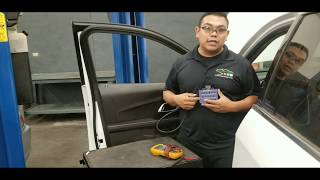
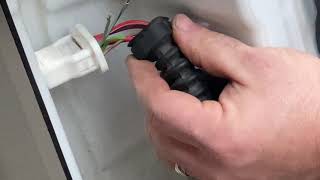
Shop the Parts Behind U0037
Below are the parts most often responsible for code U0037, ranked by how frequently each one is the actual culprit (per the diagnosis above). Tap any to see what we have for your vehicle.
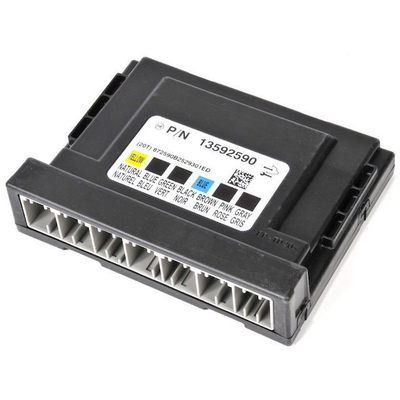
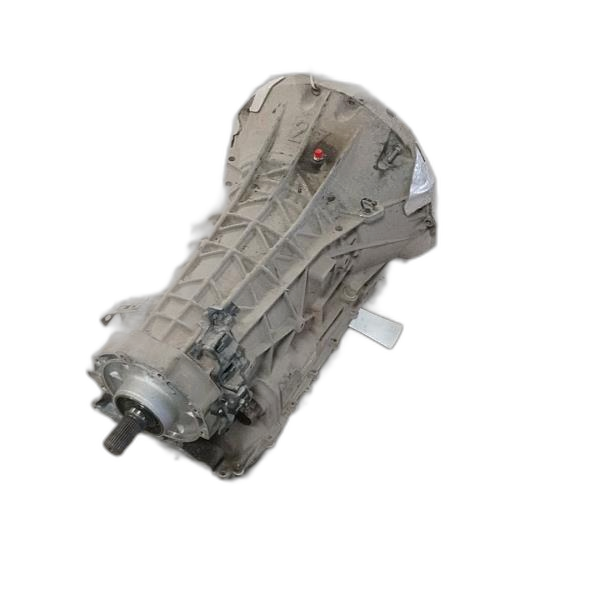


The information in this article is provided for general reference and educational purposes only. Vehicle specifications, procedures, and part compatibility can vary by production date, trim level, and region. Always consult your vehicle's factory service manual and verify part numbers before purchasing or performing repairs. Safety-critical components such as airbags, seat belts, and braking systems should be installed by a qualified professional.
- 🧭 Diagnostic Flowchart
- 🎬 Helpful Videos
- 🛍️ Shop This Part
- What Does U0037 Mean?
- Can I Drive With U0037?
- Common Causes
- Symptoms
- Common Fixes & Costs
- Used vs. New Parts: Buying Guide
- What Happens If You Wait — Timeline
- Cost of Not Fixing It
- Diagnosis Steps
- When This Code Triggers (Freeze-Frame Conditions)
- Related Codes
- Climate & Environmental Factors
- How to Talk to a Mechanic About This Code
- Where to Take It: Dealer vs Independent vs Chain
- When to Walk Away From the Repair
- What Scan Tool You Need for This Code
- How to Clear the Code After You Fix It
- Will This Fail Emissions / State Inspection?
- Most Commonly Affected Vehicles
- Manufacturer-Specific Notes
- Real Owner Stories
- 2018 Ford F-150 with multiple random faults
- 2013 Ram 1500 with intermittent driver-side failures
- 2019 Jeep Wrangler (JLU) with U0037 and total electrical failure
- How to Prevent This Code From Triggering
- Frequently Asked Questions
- Can I fix U0037 myself?
- Will clearing the code make it go away?
- How much does it cost to fix code U0037?
- What is the difference between a CAN bus and a LIN bus?
- Why did my power windows, radio, and wipers all stop working at once?
- What is a common misdiagnosis for U0037?
- Can a bad ground wire really cause all these problems?
- Key Takeaways
- 🎟️ Get 5% Off