

U0073 on 2014 Cadillac ELR: Control Module Communication Failure Causes and Fixes
U0073 on a 2014 Cadillac ELR means there's a major communication failure on the main vehicle network (CAN bus). This often causes blank screens, multiple warning lights, and loss of various functions. The most common cause, cited in GM TSBs, is a poor ground connection at G218 under the driver's dash. Other causes include wiring issues or a single faulty control module bringing the network down. Diagnosis is complex and professional help is recommended.
- U0073 indicates a serious network failure, not a simple sensor issue. Do not drive the vehicle.
- Symptoms are often dramatic, such as blank screens and multiple warning lights, but the cause can be a single point of failure.
- Always check the 12V battery and ground connections first, as this is a simple and common cause.
- Diagnosis is complex and best left to a professional with GM-specific diagnostic tools to avoid replacing expensive parts unnecessarily.
- Do not assume a blank screen means the screen is broken; it's almost always a symptom of the U0073 network fault.
What's Unique About the 2014-2014 Cadillac ELR
The Cadillac ELR, being a sophisticated plug-in hybrid based on GM's Global A electrical architecture, has numerous interconnected control modules. A network failure like U0073 can be particularly disruptive. GM Technical Service Bulletin #PIT5405B specifically links this code to the instrument panel, radio, and HVAC displays going blank simultaneously. The bulletin further identifies a primary cause for this platform: a poor Body Control Module (BCM) ground at location G218, often due to sound-deadening material being trapped under the ground terminal from the factory. The complexity of the hybrid system makes diagnosing the source of the network interruption more challenging than on a conventional vehicle.
Diagnostic Flowchart
Tap your situation to follow the diagnostic path that matches what you're seeing on this vehicle.
Symptoms You May Notice
- Instrument panel, radio, and/or HVAC displays go blank. [TSB #PIT5405B]
- Multiple warning lights appearing at once (Check Engine, ABS, Stabilitrak).
- Loss of power steering assist.
- Vehicle may not start or may stall while driving.
- Transmission may not shift correctly.
- Power door locks may cycle or become inoperative.
- Hood ajar message may appear on the dash.
- Wipers may continue to run after being turned off and park in the wrong location.
- Replacing the instrument cluster or radio display screen when it goes blank. The blank screen is usually a symptom of the network failure, not the cause. The root problem is often a different module or wiring.
- Replacing multiple control modules without proper diagnosis. Often, only one faulty module is the culprit, but it makes other healthy modules appear to be offline.
Most Likely Causes
- Poor BCM Ground at G218 🔴 High Probability This is a well-documented factory issue. TSB #PIT5405B and its successors state that the front dash insulator mat is often trapped between the G218 ground eyelet and the body stud during assembly. This prevents a solid ground connection for the Body Control Module, a critical hub for network communication, causing intermittent or total network failure.
How to confirm: Visually inspect the G218 ground stud, located behind the driver's side kick panel near the A-pillar. Remove the nut and eyelet terminal to check for black foam insulation or corrosion underneath it. A voltage drop test on the ground while the system is under load can also confirm a poor connection.
Typical fix: Remove the ground nut and eyelet. Cut away the interfering section of the dash insulator mat. Clean the stud and the terminal face to bare metal, then securely reinstall the eyelet and nut.
Est. part cost: $0-$10 - Damaged or Corroded CAN Bus Wiring/Connectors 🟡 Medium Probability Wiring harnesses can rub against chassis components, and connectors can be exposed to moisture, leading to chafing, short circuits, or corrosion. TSBs also point to inspecting connectors like X183 and X133 for loose or backed-out terminals that can cause these symptoms.
How to confirm: Visually inspect the main wiring harnesses, especially where they pass through the firewall, under the driver's side dash near the OBD-II port, and around various control modules. Check for chafed wires, pinched sections, or green/white corrosion in connectors. A multimeter can be used to check for continuity and resistance on the CAN bus wires.
Typical fix: Repair the damaged section of wiring or clean/replace the corroded connector. This is a labor-intensive but often low-cost parts fix.
Est. part cost: $10-$50 - Failed Control Module 🟡 Medium Probability Any single module on the high-speed network (e.g., ABS, BCM, HMI, or even the radio) can fail internally, creating electrical 'noise' or a short that brings down the entire network.
How to confirm: This requires a professional scan tool to see which modules are not communicating (a 'roll call'). A technician will then disconnect the non-communicating module to see if communication is restored to the rest of the network. If unplugging a specific module makes the others work again, that module is the culprit.
Typical fix: Replace the faulty control module. The new module will require programming to the vehicle's VIN by a dealer or qualified shop. Some vendors offer a cloning service where they transfer data from your old module to the replacement.
Est. part cost: $200-$800 - Poor Battery Voltage or Bad Main Ground 🟡 Medium Probability → Shop Vehicle Battery The ELR's complex electronics are sensitive to voltage fluctuations. A weak 12V battery or a loose/corroded main battery or engine ground (separate from G218) can prevent modules from initializing correctly, causing network communication errors, especially during startup.
How to confirm: Test the 12V battery's health and voltage with a proper load tester. Ensure it has at least 12.4 volts with the vehicle off and that the charging system maintains 13.5-14.5V when in 'Ready' mode. Inspect and clean the main battery terminals and chassis ground points, ensuring they are tight and free of corrosion.
Typical fix: Charge or replace the 12V battery. Clean and tighten all main power and ground connections.
Est. part cost: $20-$250
Rare But Worth Checking
- Aftermarket Electronics Interference: Improperly installed aftermarket devices like remote starters, alarms, or audio equipment can interfere with the CAN bus network and trigger this code. If the issue started after an installation, try disconnecting the aftermarket device first.
Diagnosis Steps
- Check the 12V Battery: Ensure the battery is fully charged and passes a load test. Clean terminals and verify the charging system is working correctly. Low voltage is a common trigger for communication faults.
- Scan for All Codes: Use a professional scan tool to perform a 'roll call' and see which modules are not communicating. The list of offline modules provides critical clues to the location of the fault.
- Inspect Ground G218: Given the TSBs for this platform, this is a primary check. Locate the G218 ground behind the driver's kick panel and inspect for trapped insulation or corrosion as detailed in the 'Common Causes' section.
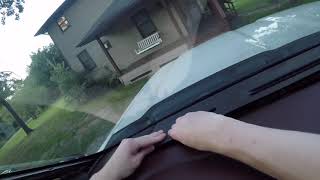
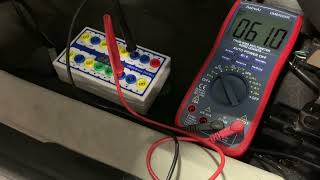
- Check CAN Bus Resistance: With the battery disconnected, use a multimeter to measure the resistance between Pin 6 (CAN High) and Pin 14 (CAN Low) at the OBD-II port. A healthy network has two 120-ohm terminating resistors in parallel and should read approximately 60 ohms. 🎬 See this guide on testing CAN bus resistance with a multimeter. A reading of 120 ohms indicates an open circuit or that one half of the network (including one terminating resistor) is offline. A reading near 0 ohms indicates a short circuit between the CAN high and low wires.
- Visual Wiring Inspection: Thoroughly inspect visible sections of the main wiring harness for any signs of damage, chafing, or corrosion, paying close attention to areas near the firewall, under the dash, and connectors X183/X133.
- Isolate Modules: If resistance is incorrect or modules are offline, a technician will begin disconnecting individual modules from the network one at a time. If disconnecting a module causes the bus resistance to return to 60 ohms (from 0) or allows other modules to come back online, that module is the source of the fault.
Parts You'll Likely Need
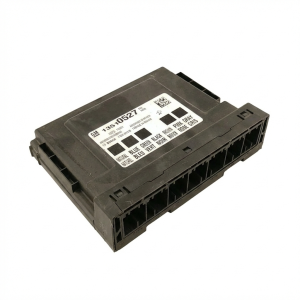
- Body Control Module (BCM)
(OEM #13590173 (Other compatible numbers: 13580698, 13589115, 13593775, 13594564))— The BCM is a central hub for many communication networks. Its failure, or more commonly its poor ground at G218, can easily take down the high-speed CAN bus.
Trusted brands: ACDelco (OEM)
OEM price range: $300-$500
Aftermarket price range: $200-$400 (Often requires programming/cloning service) - ABS Control Module (EBCM) — The ABS module is another critical node on the high-speed network and often contains one of the 120-ohm terminating resistors. An internal short circuit in this module is a known cause for bringing the bus down.
Trusted brands: ACDelco, Bosch
OEM price range: $400-$700
Aftermarket price range: $250-$500 - 12V AGM Battery — A weak or failing 12V battery can cause insufficient voltage for modules to operate correctly, leading to network faults, especially on electronically-dense vehicles like the ELR.
Trusted brands: ACDelco, Optima, Odyssey
OEM price range: $200-$350
Aftermarket price range: $180-$300
Related Codes That Often Appear With This One
- U0100 — Lost Communication With ECM/PCM
- U0101 — Lost Communication with TCM
- U0121 — Lost Communication With Anti-Lock Brake System (ABS) Control Module
- U0140 — Lost Communication With Body Control Module (BCM)
Technical Service Bulletins (TSBs) & Recalls
- PIT5405B: Mentions U0073 in the context of multiple modules going offline and displays going blank. Crucially, it identifies the G218 ground being obstructed by the dash insulator as a primary cause.
- PIC5988: Lists U0073 as part of a complex electrical fault that may require escalation to the GM Technical Assistance Center.
Platform-Specific Known Issues
- GM TSB #PIT5405B is highly relevant. It directly links U0073 with blank displays and multiple communication codes to a poor BCM ground at G218. The bulletin specifically states the cause is often the dash insulator mat being trapped between the ground eyelet and the body stud, which is a factory assembly issue.
- GM TSB #PIC5988 also lists U0073 among a large number of codes that indicate a complex electrical issue requiring GM Technical Assistance, highlighting the diagnostic difficulty on this platform.
Mechanic-Grade Diagnostic Values
- High-Speed CAN Bus Resistance — expected: ~60 Ohms (with battery disconnected). Failure: 120 Ohms indicates an open circuit or one terminating resistor is offline. ~0 Ohms indicates a short between CAN High and Low wires. Readings like ~40 Ohms may suggest a third, unintended resistor on the network.
- CAN Bus Voltage (Key On, Engine Off) — expected: CAN High (Pin 6): Fluctuating between 2.5V and 3.5V. CAN Low (Pin 14): Fluctuating between 1.5V and 2.5V. Both measured to ground.. Failure: Voltages that are flat, stuck high/low, or do not mirror each other (in opposite directions from 2.5V) indicate a bus fault. A standard multimeter may only show an average around 2.5V; an oscilloscope is required for accurate measurement.
- 12V AGM Battery Voltage (Vehicle Off) — expected: 12.4V to 12.6V. Failure: A reading below 12.4V suggests a discharged or failing battery that can cause communication faults.
- 12V Charging System Voltage (Vehicle in 'Ready' Mode) — expected: 13.5V to 14.5V. Failure: Voltage outside this range indicates a problem with the Accessory Power Module (APM), which charges the 12V system.
Hidden / Shadow Codes Worth Checking
- Symptom Bytes (e.g., U0073 71, U0073 72): These are manufacturer-specific sub-codes that provide more detail about the fault. For example, '71' can mean 'Invalid Serial Data Received' and '72' can mean 'Alive Counter Incorrect'. This helps pinpoint whether the bus is completely off or just receiving bad data. (see via These are typically only visible using a dealer-level scan tool like GM's GDS2 (Global Diagnostic System 2) or a high-end professional scanner.)
Scan Tool Commands That Help
- GDS2 (GM Global Diagnostic System 2): Module 'Roll Call' or 'Vehicle Wide DTC Clear' — A 'roll call' is the first step to see which modules are not communicating on the network. This list is critical for diagnosis. A vehicle-wide clear, followed by cycling the ignition, can help determine which codes set immediately, pointing towards a hard fault.
- GDS2 (GM Global Diagnostic System 2): High Speed Comms Diagnostic — This specific diagnostic routine within the GDS2 software guides the technician through a step-by-step process to test the network, often providing specific instructions based on which modules are unresponsive.
Wiring & Ground Locations
- G218 — Under the driver's side dash, behind the kick panel, near the A-pillar.. This is the primary ground for the Body Control Module (BCM). TSB #PIT5405B/C identifies that sound insulation is often trapped under this ground from the factory, causing high resistance and leading to a network shutdown.
- CAN Bus Terminating Resistors — On GM Global A platforms, there are two 120-ohm resistors. One is typically integrated into the Engine Control Module (ECM). The second is often located in another module at the far end of the bus, such as the Electronic Brake Control Module (EBCM) or sometimes as a separate, plug-in resistor in the harness near a rear module like the Fuel Pump Control Module.. The network requires two terminating resistors to function. If one is missing due to an open circuit or a failed module, the bus resistance will read 120 ohms instead of 60, causing communication to fail.
- X183 / X133 — These are main power and ground 2-way connectors for the power steering system, with their exact location varying by model but generally in the engine bay or under the vehicle.. TSB #PIT5405C mentions that a loose connection at these specific connectors can cause a large electrical load, dropping system voltage and triggering a U0073 code, often accompanied by power steering issues.
- 12V Battery Location — The 12V AGM battery is located in the rear compartment, behind a closeout panel.. All control modules rely on a stable 12V power source. Accessing the battery for testing is a primary diagnostic step.
Real Owner Repair Stories
- LS1Tech forum user (2014 GM vehicle with similar CAN bus architecture (Gen 5)) — No crank, multiple communication codes.
❌ Tried (didn't work) Initial scans showed communication loss.
✅ What actually fixed it The user diagnosed an open in the CAN bus circuit. By measuring resistance from different points (OBD-II port vs. EBCM connector), they determined one leg of the network was open. They found they could only see one of the two 120-ohm terminating resistors from the OBD-II port, confirming a break in the wiring between the port and the second resistor. The fix was to locate and repair the open wire in the harness.
Helpful Videos

![How To Test CAN BUS With A Multimeter [CAN Bus Resistance Check] Mechanic Mindset](https://img.youtube.com/vi/JPE42HSJxAk/mqdefault.jpg)

Used OEM Parts in Stock
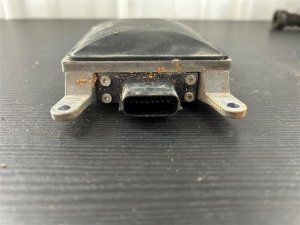
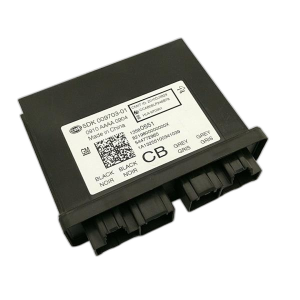
New Aftermarket Parts Available

The information in this article is provided for general reference and educational purposes only. Vehicle specifications, procedures, and part compatibility can vary by production date, trim level, and region. Always consult your vehicle's factory service manual and verify part numbers before purchasing or performing repairs. Safety-critical components such as airbags, seat belts, and braking systems should be installed by a qualified professional.
- Cadillac ELR:
- 🧭 Diagnostic Flowchart
- 🎬 Helpful Videos
- 🛍️ Shop This Part
- What's Unique About the 2014-2014 Cadillac ELR
- Symptoms You May Notice
- Most Likely Causes
- Rare But Worth Checking
- Diagnosis Steps
- Parts You'll Likely Need
- Related Codes That Often Appear With This One
- Technical Service Bulletins (TSBs) & Recalls
- Platform-Specific Known Issues
- Mechanic-Grade Diagnostic Values
- Hidden / Shadow Codes Worth Checking
- Scan Tool Commands That Help
- Wiring & Ground Locations
- Real Owner Repair Stories
- 🎟️ Get 5% Off