

U0073 on 2007-2013 Cadillac Escalade EXT: Network Communication Failure Causes and Fixes
On a 2007-2013 Escalade EXT, code U0073 indicates a total loss of communication on the high-speed CAN bus. This is most often caused by a chafed or corroded wiring harness, particularly in the 16-way transmission connector (X184) or where the harness runs along the frame. The fix is typically a wiring or connector repair, not module replacement, a fact supported by GM's own service bulletins.
- U0073 on your Escalade is a critical network failure, not a simple sensor issue. Do not drive the vehicle.
- The most likely cause is a physical wiring problem (chafing or corrosion), not a failed computer. A thorough visual inspection is the most important diagnostic step.
- Before replacing any expensive modules, test the CAN bus resistance at the OBD-II port. It should be 60 ohms. If it's not, the problem is in the wiring or one of the two termination resistors.
- A specific GM Technical Service Bulletin (08-07-30-021H) exists for this exact problem and should guide the diagnosis.
- Due to the complexity of network diagnostics, this repair is best left to a professional technician with experience in CAN bus systems.
What's Unique About the 2007-2013 Cadillac ESCALADE EXT
The GMT900 platform, which the 2007-2013 Escalade EXT is built on, is well-documented for having issues that lead to code U0073. A specific GM Technical Service Bulletin, #08-07-30-021H, points directly to problems like chafed wiring harnesses and faulty termination resistors. A particularly notorious failure point is the 16-way transmission harness connector (X184), which is prone to corrosion. These issues are so common that they should be the first suspect, often saving owners from mistakenly replacing expensive control modules. The symptoms can be dramatic, including the transmission failing to shift, the engine stalling, and the instrument cluster going haywire, making this code a high priority to diagnose correctly.
Diagnostic Flowchart
Tap your situation to follow the diagnostic path that matches what you're seeing on this vehicle.
Symptoms You May Notice
- Multiple warning lights on the instrument panel (Check Engine, ABS, Stabilitrak, Service Suspension).
- Transmission may not shift or may be stuck in one gear (often 2nd).
- Engine may stall or fail to start.
- Instrument panel gauges fluctuating wildly or going dead.
- Intermittent cycling of door locks and chimes, sometimes when applying the brakes.
- Loss of power steering assist (if equipped with variable assist).
- Scan tool cannot communicate with multiple control modules, or only communicates with some.
- "Service Stabilitrak" or "Service Traction Control" messages displayed.
- Replacing the ECM or BCM without testing the wiring. On this platform, the wiring is the most likely culprit, and modules are expensive. Always rule out wiring, connectors, and termination resistors first, as explicitly warned in TSB #08-07-30-021H.
Most Likely Causes
- Chafed or Damaged Wiring Harness 🔴 High Probability TSB #08-07-30-021H specifically calls out wiring harness issues on this platform. Common chafe points are where the harness routes over the transmission bell housing, along the driver's side frame rail (especially near the EBCM and under the driver's door), and near the cooling fins of the Transmission Auxiliary Fluid Pump Control Module on hybrid models. Vibration and heat cause the protective conduit to wear through, exposing the twisted pair of CAN wires (typically a Tan and Tan/Black or Dark Green and Yellow pair).
How to confirm: Perform a thorough visual inspection of the wiring harness, focusing on the areas mentioned. A 'wiggle test' (moving the harness while the vehicle is running) can sometimes trigger the fault. Disconnect the battery and measure the resistance between pins 6 and 14 of the OBD-II port. A healthy network reads ~60 ohms. A reading of ~120 ohms or an open circuit (OL) points to a break in the wiring.
Typical fix: Repair the damaged section of the CAN bus wiring. This involves soldering the broken wires, ensuring the twist is maintained to reduce interference, and protecting the repair with heat shrink tubing and new conduit.
Est. part cost: $5-$25 - Corrosion in Transmission Connector (X184) 🔴 High Probability → Shop Transmission Assembly The main 16-way transmission connector, known as X184, is located on the driver's side of the 6L80 transmission and is highly exposed to road spray and moisture. TSB #08-07-30-021H specifically mentions terminals backing out or corroding in this connector, which interrupts communication with the Transmission Control Module (TCM/TEHCM) located inside the oil pan.
How to confirm: Locate and disconnect the large, lever-lock connector on the side of the transmission. Visually inspect the pins and sockets for any green or white crusty deposits, moisture, or bent/backed-out pins.
Typical fix: Clean the connector terminals thoroughly with a specialized electrical contact cleaner and a small brush. Apply dielectric grease to the seal before reconnecting to prevent future moisture intrusion. If pins are severely damaged, the connector pigtail may need to be replaced.
Est. part cost: $10-$75 - Failed CAN Bus Termination Resistor 🟡 Medium Probability The CAN bus has two 120-ohm termination resistors. One is internal to a module (often the ECM or BCM), and the other is a separate component located at the rear of the vehicle frame, often taped to the harness near the spare tire or fuel pump control module, where it's exposed to the elements. Corrosion or physical damage can cause this external resistor to fail.
How to confirm: If the resistance check at the OBD-II port shows 120 ohms, it often means one of the two resistors isn't being seen by the network. Locate the external resistor, disconnect it, and measure its resistance directly. It should be 120 ohms.
Typical fix: Replace the faulty termination resistor. This is a plug-and-play part. The common GM part number is 12191173.
Est. part cost: $15-$40 - Poor Ground Connection 🟡 Medium Probability Multiple ground points are critical for module communication. Ground G300 (on the frame rail under the driver's door area) and G102/G103 (on the cylinder heads) are common culprits for corrosion or looseness, which can introduce noise or cause modules to drop off the network.
How to confirm: Locate the main ground points on the frame and engine block. Disassemble the connection and inspect for rust, paint, or undercoating between the terminal and the frame/block.
Typical fix: Clean the ground point and the wire terminal with a wire brush or sandpaper until bare metal is exposed. Re-secure the ground tightly and apply a conductive protectant to prevent future corrosion.
Est. part cost: $0-$5 - Faulty Control Module ⚪ Low Probability While less common than wiring issues, any module on the high-speed network (ECM, TCM/TEHCM, BCM, EBCM) can fail internally and either stop communicating or flood the network with bad data, bringing it down. The TEHCM (inside the transmission) is a known failure item, though it often presents with other symptoms as well.
How to confirm: This is a process of elimination. If all wiring, connectors, and resistors test good, disconnect modules one by one while monitoring the bus resistance. When the faulty module is disconnected, the bus resistance should return to a normal 60 ohms. This requires an advanced scan tool to see which modules are offline.
Typical fix: Replace the failed control module. The new module will require programming by a dealer or a properly equipped independent shop using GM's Service Programming System (SPS).
Est. part cost: $200-$1200+
Rare But Worth Checking
- Faulty Aftermarket Electronics: Improperly installed remote starters, alarms, or trailer brake controllers can interfere with or short out the CAN bus wiring, causing a U0073 code. If the problem started after an accessory was installed, this should be the first thing you investigate.
Diagnosis Steps
- Check Battery Health: Ensure the battery is fully charged (at least 12.4V) and the terminals are clean and tight. Low voltage can cause communication errors.
- Scan for All Codes: Use a scan tool to retrieve all codes from all modules. Note which modules are not communicating. A flurry of 'U' codes alongside U0073 points to a network-wide failure.
- Check CAN Bus Resistance: Turn the ignition OFF and disconnect the negative battery terminal. Use a quality multimeter to measure the resistance between Pin 6 (CAN High) and Pin 14 (CAN Low) at the OBD-II port. A healthy bus will read approximately 60 ohms.
- Interpret Resistance Reading: If the reading is ~120 ohms, it indicates a break in the circuit or a missing/failed termination resistor. If it's near 0 ohms, the CAN High and Low wires are shorted together. If it's an open circuit (OL), there is a major break in the bus wiring.
- Check CAN Bus Voltage (Advanced): With the battery connected and ignition ON, measure DC voltage. Pin 6 (CAN High) to ground should be ~2.6V. Pin 14 (CAN Low) to ground should be ~2.4V. Voltages that are stuck high, low, or match each other indicate a short to power, ground, or together.
- Visual Inspection: Thoroughly inspect the main wiring harness, especially at the X184 transmission connector, along the driver's side frame rail, and over the transmission bell housing. Look for any signs of chafing, melting, or corrosion.
- Inspect Connectors and Grounds: Disconnect, inspect, and clean critical grounds (G102, G103, G300) and connectors (X184).
Parts You'll Likely Need
- CAN Bus Termination Resistor
- Wiring Repair Supplies
- Electrical Contact Cleaner
- Transmission Connector Pigtail (X184)
Related Codes That Often Appear With This One
- U0100 — Lost Communication with ECM. This is a direct result of the U0073 network failure.
- U0101 — Lost Communication with TCM. This is also a direct result of the U0073 network failure and explains why the transmission may not shift.
- U0121 — Lost Communication with EBCM (ABS Module). This is another common code that appears with U0073, indicating the ABS and Stabilitrak systems are offline.
- U0140 — Lost Communication with BCM. This code is also expected during a U0073 event, as the Body Control Module is a key hub on the network.
Technical Service Bulletins (TSBs) & Recalls
- TSB #08-07-30-021H: This is the most critical document for this issue. It directly addresses the loss of high-speed GMLAN communication and lists symptoms like gauge fluctuation, no-shift conditions, and the setting of code U0073. It explicitly tells technicians to investigate wiring, connectors (especially the transmission connector), and the termination resistor before replacing any modules.
Platform-Specific Known Issues
- X184 Connector Corrosion: The 16-pin connector (X184) on the driver's side of the transmission is a primary failure point. Its location makes it vulnerable to water and road salt, causing corrosion that disrupts communication with the TCM/TEHCM and brings down the entire network.
- Frame Harness Chafing: The main harness running along the driver's side frame rail is known to rub against brackets and the frame itself, eventually wearing through the loom and shorting the CAN bus wires. This area requires careful inspection, especially under the driver's door and near the EBCM.
Mechanic-Grade Diagnostic Values
- High-Speed GMLAN Bus Resistance — expected: 60 Ω (± 5 Ω) across Pins 6 and 14 of the OBD-II port with battery disconnected.. Failure: A reading of ~120 Ω indicates an open circuit or a failed termination resistor. A reading near 0 Ω indicates the CAN High and Low wires are shorted together.
- High-Speed GMLAN Bus Voltage (Key On, Engine Off) — expected: CAN High (Pin 6) to ground: ~2.6V. CAN Low (Pin 14) to ground: ~2.4V.. Failure: Voltages that are stuck at 0V, 12V, or are equal to each other indicate a short to ground, power, or together.
- System Voltage — expected: >12.4V with engine off. 13.5V - 14.8V with engine running.. Failure: Low static voltage or improper charging voltage can cause random communication faults across all modules.
Wiring & Ground Locations
- X184 — Large 16-pin lever-lock connector on the driver's side of the 6L80 transmission.. This is the main harness connector for the Transmission Control Module (TEHCM). It is highly exposed to the elements and a very common point of corrosion, which directly causes U0073 and U0101 codes.
- G102 / G103 — On the front of the cylinder heads, one on each side of the engine.. These are primary engine block grounds. A poor connection can affect the Engine Control Module (ECM), a critical node on the CAN bus, causing network instability.
- G300 — On the frame rail, under the driver's door area.. This is a major chassis ground point. Corrosion here can introduce noise and communication issues for various modules, including the BCM.
- Termination Resistor (External) — Often taped to the main wiring harness in the rear of the vehicle, near the spare tire or Fuel Pump Control Module.. The CAN bus requires two 120-ohm resistors to function. While one is internal to a module (like the ECM), this external one can fail due to corrosion, causing the bus resistance to read 120 ohms instead of the correct 60 ohms.
- Data Link Connector (DLC) Pins 6 & 14 — Under the driver's side dashboard.. Pin 6 is CAN High and Pin 14 is CAN Low. These are the primary access points for testing the entire high-speed network's resistance and voltage.
Real Owner Repair Stories
- Tahoe Yukon Forum (2007 Cadillac Escalade, 6.2L V8, 6L80 Transmission, 175,000 miles at failure) — Vehicle drove perfectly under normal conditions. When accelerating hard or towing, it would fail on the 2-3 shift, go into neutral, and set code U0073. Clearing the code would allow it to drive again until the next high-load situation.
❌ Tried (didn't work) Chasing and testing all wiring and connections., Complete transmission rebuild with a new drum (initially misdiagnosed as a mechanical failure)., Replacing seals on the original TEHCM.
✅ What actually fixed it Replacing the Transmission Control Module (TEHCM) with a rebuilt unit finally solved the problem. The original TEHCM had an internal fault that only manifested under the stress of a high-load shift.
When the Usual Fixes Don't Work
- In one documented case, a 2007 Escalade repeatedly set a U0073 code only during a hard 2-3 shift while under load. Extensive diagnosis of the wiring harness and connectors found no faults. Even a complete transmission rebuild did not solve the issue. The root cause was ultimately an internal failure within the Transmission Control Module (TEHCM) that would only occur under the specific electrical and physical stress of a high-torque shift. This highlights that even when wiring is the most common cause, intermittent module failure under specific operating conditions can be the true culprit and is easily misdiagnosed.
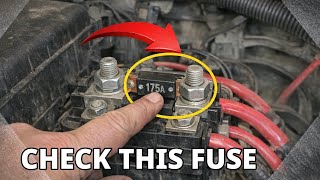
Helpful Videos
We Have This Part in Stock


The information in this article is provided for general reference and educational purposes only. Vehicle specifications, procedures, and part compatibility can vary by production date, trim level, and region. Always consult your vehicle's factory service manual and verify part numbers before purchasing or performing repairs. Safety-critical components such as airbags, seat belts, and braking systems should be installed by a qualified professional.
- Cadillac ESCALADE EXT:
- 🧭 Diagnostic Flowchart
- 🎬 Helpful Videos
- 🛍️ Shop This Part
- What's Unique About the 2007-2013 Cadillac ESCALADE EXT
- Symptoms You May Notice
- Most Likely Causes
- Rare But Worth Checking
- Diagnosis Steps
- Parts You'll Likely Need
- Related Codes That Often Appear With This One
- Technical Service Bulletins (TSBs) & Recalls
- Platform-Specific Known Issues
- Mechanic-Grade Diagnostic Values
- Wiring & Ground Locations
- Real Owner Repair Stories
- When the Usual Fixes Don't Work
- 🎟️ Get 5% Off