

U0073 on 2006-2011 Cadillac STS: Causes for Control Module Communication Failure
On a 2006-2011 Cadillac STS, code U0073 almost always points to a wiring problem, not a failed module. A GM Technical Service Bulletin (TSB) specifically identifies loose pins in the main transmission connector as the most common culprit. Inspecting and securing this large, round, twist-lock connector on the driver's side of the transmission should be your first step.
- U0073 on a 2006-2011 Cadillac STS is a critical communication code that makes the vehicle unsafe to drive.
- Do not immediately assume a costly control module has failed. The most probable cause is a known issue with loose pins in the transmission connector, as documented in GM TSB PIC4740E.
- Diagnosis should start with a full system scan and a physical inspection of the transmission connector.
- This is a complex electrical issue; professional diagnosis is strongly recommended to avoid causing more damage or replacing unnecessary parts.
What's Unique About the 2006-2011 Cadillac STS
For this specific generation of Cadillac STS, General Motors issued a Technical Service Bulletin (PIC4740E) that directly links code U0073 🎬 Watch: Understanding the U0073 code and how the CAN bus works. and a host of other communication codes to a known problem. The bulletin points to unseated or loose terminal pins in the X1 electrical connector at the transmission. This connector is a large, round, black, twist-lock style connector located on the driver's side of the transmission housing. Its location makes it susceptible to vibration and heat, which can cause the delicate pins inside to lose contact. This makes a wiring inspection at this specific location the highest priority, often solving the problem without needing to replace expensive control modules.
Diagnostic Flowchart
Tap your situation to follow the diagnostic path that matches what you're seeing on this vehicle.
Symptoms You May Notice
- Check Engine Light is on
- Multiple warning lights on the dash (e.g., ABS, Traction Control, Stabilitrak)
- Vehicle will not crank or start
- Transmission shifts harshly or erratically, or gets locked in one gear
- Engine runs in 'Reduced Power' mode
- Door locks cycle while driving
- Inability to communicate with the ECM or TCM with a scan tool
- Instrument cluster gauges (coolant temp, oil temp) suddenly drop to zero
- Heads-Up Display (HUD) changes settings on its own
- Replacing the Engine Control Module (ECM) or Transmission Control Module (TCM) without first performing a thorough wiring inspection. Given the known TSB, the fault is much more likely to be in the wiring or connectors, specifically the X1 connector at the transmission.
Most Likely Causes
- Loose or Corroded Pins in Transmission Connector (X1) 🔴 High Probability → Shop Transmission Assembly A specific TSB (PIC4740E) was issued by GM for this exact problem on this vehicle. Vibrations and heat cycles can cause the small terminal pins within the large, round, twist-lock connector to become unseated over time. This is the most frequently confirmed fix in owner forums.
How to confirm: Locate the large, round X1 connector on the driver's side of the transmission. Disconnect it by first pulling out the white safety tab, then twisting the collar to release it. Inspect for corrosion, moisture, or bent pins. Gently tug on each individual wire going into the connector to ensure the pin is fully seated and locked in place.
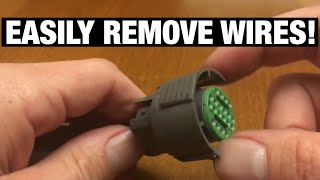
Typical fix: Reseat any loose terminals. If terminals are corroded or damaged, they must be professionally replaced using a terminal release tool. 🎬 See how to properly remove and reseat pins in this connector. Clean the connector housing with electrical contact cleaner and apply dielectric grease before reconnecting to seal out moisture.
Est. part cost: $5-$50 - Damaged CAN Bus Wiring Harness 🟡 Medium Probability The CAN bus wires are a twisted pair that run throughout the vehicle. They can be susceptible to chafing against engine or chassis components, rodent damage, or corrosion from water intrusion, especially near the fuse box or under the carpet.
How to confirm: Perform a visual inspection of the wiring harness for any signs of physical damage, particularly where it runs near hot or vibrating parts. A technician would use a multimeter to check for correct resistance (around 60 ohms between CAN High and CAN Low at the OBD-II port) and an oscilloscope to check for a clean signal.
Typical fix: Repair the damaged section of wiring. This is a delicate repair that requires soldering and heat-shrinking to protect the connection.
Est. part cost: $10-$100 - Weak Battery or Poor Ground Connection ⚪ Low Probability → Shop Vehicle Battery Control modules require a stable voltage above a certain threshold to initialize and communicate properly. While not specific to this car, it's a common cause for network codes on many modern vehicles, and an easy first check.
How to confirm: Test the battery voltage. It should be at least 12.4V with the engine off and 13.7-14.7V while running. Inspect and clean the main battery terminals, chassis ground, and engine block ground straps for corrosion or looseness.
Typical fix: Charge or replace the weak battery. Clean or replace corroded ground straps or terminals.
Est. part cost: $20-$250 - Failed Control Module ⚪ Low Probability Less common than wiring issues, a single module (like the BCM, TCM, or ABS module) can fail internally and broadcast junk data or go silent, pulling the entire network down.
How to confirm: This requires an advanced scan tool to see which modules are not communicating. A technician can then disconnect the suspect module to see if communication is restored to the rest of the network.
Typical fix: Replace the failed module. The new module will require programming to the vehicle's VIN.
Est. part cost: $300-$1200
Rare But Worth Checking
- Faulty Aftermarket Electronics: Improperly installed remote starters, alarms, or audio equipment can interfere with the CAN bus network, causing communication errors. If the problem started after an installation, this should be the first thing you disconnect.
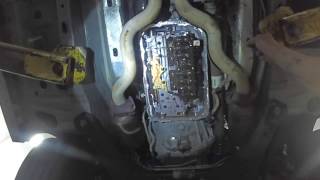
- Internal TEHCM Failure: The Transmission Electro-Hydraulic Control Module (TEHCM), which is located inside the transmission oil pan, can fail. While less common than the external connector issue, a TEHCM failure can produce identical communication codes. This is a more involved repair that requires removing the transmission pan. 🎬 Watch this walkthrough on replacing the internal TEHCM.
Diagnosis Steps
- Read all stored codes from all available modules using a professional-grade scan tool. Note which modules are not responding.
- Check battery voltage and charging system health to rule out a power supply issue.
- Following TSB PIC4740E, locate the large, round X1 connector on the driver's side of the transmission. Disconnect it, inspect for any corrosion or damage, and gently pull on each wire to confirm the terminal is securely seated.
- If the connector is fine, perform a visual inspection of the main CAN bus wiring harness, looking for any signs of chafing, pinching, or heat damage, particularly around the engine and transmission.
- Using a multimeter, check the resistance between Pin 6 (CAN High) and Pin 14 (CAN Low) at the OBD-II port. A healthy network should read approximately 60 Ohms.
- If a specific module is suspected, disconnect it and re-check if communication is restored among the other modules.
- If wiring is confirmed to be good, the issue may be a failed module, which requires professional diagnosis and replacement.
Parts You'll Likely Need
- Connector Terminals / Pigtail Connector
(OEM #e.g., ACDelco PT2875, 19368140 (example pigtails, not specific to X1))— To repair the transmission X1 connector, which is the most likely cause of the fault according to GM's own service bulletin. Often, individual terminals can be re-seated, but if corroded or damaged, a new terminal or pigtail splice is needed.
Trusted brands: ACDelco, Dorman
OEM price range: $5-$15 per terminal, $30-$60 for a pigtail
Aftermarket price range: $2-$10 per terminal, $15-$40 for a pigtail - Body Control Module (BCM) — If a module is confirmed to be the cause, the BCM is a central communication hub and a potential point of failure.
Trusted brands: ACDelco, Dorman
OEM price range: $300-$500
Aftermarket price range: $200-$400 - Transmission Control Module (TCM/TEHCM) — As the problematic connector attaches directly to the transmission, the TCM is another potential, though less likely, point of failure if wiring is not the cause. The TEHCM is located inside the transmission.
Trusted brands: ACDelco
OEM price range: $500-$900
Aftermarket price range: $350-$700
Related Codes That Often Appear With This One
- U0100 — Lost Communication With ECM/PCM
- U0101 — Lost Communication With TCM
- U0121 — Lost Communication With Anti-Lock Brake System (ABS) Control Module
- U0140 — Lost Communication With Body Control Module
- P0700 — Transmission Control Module (TCM) Requested MIL Illumination
Technical Service Bulletins (TSBs) & Recalls
- PIC4740E: States that vehicles may exhibit a no-crank, hard shifting, or multiple warning lights, along with code U0073 and others. It directs technicians to inspect the transmission X1 connector terminals for being loose or unseated.
Platform-Specific Known Issues
- TSB PIC4740E explicitly calls out unseated pins in the transmission X1 connector as a primary cause for code U0073 and other communication failures on the 2006-2011 STS.
- Owner experiences on forums frequently confirm that inspecting this specific connector, cleaning it, and ensuring all pins are fully seated resolves a wide array of seemingly unrelated electronic issues and communication codes.
Mechanic-Grade Diagnostic Values
- CAN Bus Resistance — expected: Approximately 60 Ω. Failure: A reading of ~120 Ω indicates an open in the circuit or a missing termination resistor. A reading of 0 Ω indicates a short between the CAN High and CAN Low wires.
- CAN High Voltage (Key On, Engine Off) — expected: Approximately 2.5V (recessive state) to 3.5V (dominant state). Failure: No voltage, voltage stuck at 2.5V, or voltage significantly outside the 2.5-3.5V range can indicate a short or open on the CAN High line.
- CAN Low Voltage (Key On, Engine Off) — expected: Approximately 2.5V (recessive state) to 1.5V (dominant state). Failure: No voltage, voltage stuck at 2.5V, or voltage significantly outside the 1.5-2.5V range can indicate a short or open on the CAN Low line.
Scan Tool Commands That Help
- GM Tech2 / GDS2 or equivalent professional scanner: Module Status / Network Test — This is a primary diagnostic step. The function polls all modules on the network and displays a list of which ones are communicating and which are not. For a U0073 code, this instantly tells the technician which module has dropped off the network, providing a starting point for checking its specific power, ground, and data lines.
Wiring & Ground Locations
- X1 Transmission Connector — Large, round, black, twist-lock connector on the driver's side of the transmission housing.. This is the specific connector identified in TSB PIC4740E as the most common source of loose or unseated pins causing code U0073 and other communication failures.
- G201 — In the passenger compartment, behind the right kick panel.. This is a major interior ground point. A poor connection here can affect multiple modules located inside the cabin, including the Body Control Module (BCM) or Instrument Panel Module (IPM), causing network-wide communication issues.
- G103 — At the left rear of the engine compartment on the cowl, above the brake booster.. This ground serves several critical components, including the Body Control Module (BCM) and the Data Link Connector (DLC) itself. A fault at G103 can interrupt communication for the entire vehicle network.
- Instrument Panel Module (IPM) / Body Control Module (BCM) — Located behind the glove box on the right side of the dash.. The BCM/IPM acts as a central gateway for the CAN bus network. Any wiring or connector issues at this module can bring down the entire network.
Real Owner Repair Stories
- Synthesized from multiple GM diagnostic videos and forum posts (2008 GM Vehicle with U0101 (Lost Communication with TCM), demonstrating the same diagnostic principle as for U0073.) — No crank, no start, multiple warning lights, scan tool shows 'No Communication with TCM'.
❌ Tried (didn't work) Clearing codes (codes returned immediately)., Replacing the battery without testing voltage and grounds first.
✅ What actually fixed it The technician first confirmed the TCM was not communicating using a scan tool. They then checked for power and ground at the TCM connector. A good ground was missing at one of the pins due to an open circuit inside a large splice connector in the harness near the driver's side footwell. Repairing the broken wire within the splice restored the ground to the TCM, which brought it back online and cleared all communication codes. This highlights the importance of testing powers and grounds directly at the non-communicating module before condemning the part.
Model Year Variations Within This Range
- 2005-2007: The ECM on the 3.6L engine is located on the passenger side valve cover, while on the 4.6L engine, the ECM is located below the driver's side headlight. This is critical to know when visually inspecting the module and its connectors.
Helpful Videos

Used OEM Parts in Stock
New Aftermarket Parts Available

The information in this article is provided for general reference and educational purposes only. Vehicle specifications, procedures, and part compatibility can vary by production date, trim level, and region. Always consult your vehicle's factory service manual and verify part numbers before purchasing or performing repairs. Safety-critical components such as airbags, seat belts, and braking systems should be installed by a qualified professional.
- Cadillac STS:
- 🧭 Diagnostic Flowchart
- 🎬 Helpful Videos
- 🛍️ Shop This Part
- What's Unique About the 2006-2011 Cadillac STS
- Symptoms You May Notice
- Most Likely Causes
- Rare But Worth Checking
- Diagnosis Steps
- Parts You'll Likely Need
- Related Codes That Often Appear With This One
- Technical Service Bulletins (TSBs) & Recalls
- Platform-Specific Known Issues
- Mechanic-Grade Diagnostic Values
- Scan Tool Commands That Help
- Wiring & Ground Locations
- Real Owner Repair Stories
- Model Year Variations Within This Range
- 🎟️ Get 5% Off