

U0073 on 2007-2010 Chevrolet Silverado 2500: Causes and Fixes for Communication Bus Failure
On a 2007-2010 Silverado 2500, code U0073 indicates a total communication failure on the main GMLAN data network. The most common causes are wiring issues (especially chafing near the parking brake bracket or corrosion under the fuse block), poor grounds (G218), a blown 175-amp mega fuse after a jump-start, or a failing control module like the EBCM (ABS). The fix is often a wiring repair rather than an expensive module replacement.
- U0073 is a serious network failure, not a simple sensor issue. Do not start by replacing expensive modules.
- Always start diagnostics by checking the battery, charging system, and all major power/ground connections.
- If the problem started after a jump-start, the #1 suspect is the 175-amp mega fuse located near the battery.
- Diagnosing this code requires a methodical electrical approach, including checking CAN bus resistance at the OBD-II port.
- The problem is more likely to be a break in a wire, a bad ground, or a blown fuse than a failed ECM.
What's Unique About the 2007-2010 Chevrolet SILVERADO 2500
On these GMT900 trucks, U0073 is notorious for causing a cascade of bizarre electrical problems, as documented in several GM Technical Service Bulletins (TSBs). Symptoms often include a blank instrument panel, HVAC control failure, and the transmission refusing to shift. Unlike many other vehicles, these Silverados are prone to specific failure points: the main wiring harness rubbing against the sharp metal edge of the parking brake bracket, water intrusion causing corrosion in the Underhood Bussed Electrical Center (UBEC/fuse block), and a specific 175-amp mega fuse that can blow during a jump-start, shutting down the entire network.
Diagnostic Flowchart
Tap your situation to follow the diagnostic path that matches what you're seeing on this vehicle.
Symptoms You May Notice
- Multiple warning lights on the dashboard (Check Engine, ABS, Traction Control, Stabilitrak).
- Instrument panel goes blank or displays dashes.
- Transmission may not shift or gets stuck in one gear (limp mode).
- Engine may have reduced power, run rough, or not start at all.
- HVAC controls become inoperative. [Bulletin #PIT5586E]
- Intermittent cycling of door locks or chimes. [Bulletin #08-07-30-021H, 8]
- Power windows, radio, or other accessories stop working.
- "Service StabiliTrak" or "Service Trailer Brake System" messages displayed.
- Replacing a single control module (like the TCM or ECM) because a related code (like U0101 or U0100) is present. The root cause is often the network wiring itself, not the individual module.
Most Likely Causes
- Damaged or Corroded Wiring Harness 🔴 High Probability Vibration, heat, and exposure cause wires in the main harness to chafe, break, or corrode. TSB 08-07-30-021H highlights this as a primary cause. Two notorious spots are: 1) where the harness passes the parking brake pedal assembly, rubbing on a sharp metal bracket, and 2) under the underhood fuse block (UBEC), where water intrusion causes corrosion in the large connectors.
How to confirm: Visually inspect the CAN bus wiring (twisted pair of Tan and Tan/Black wires) for damage, especially around the parking brake pedal and under the UBEC. Check resistance between Pin 6 and Pin 14 at the OBD-II port (should be ~60 Ohms with the battery disconnected for 10+ minutes).
Typical fix: Repairing the damaged section of the wire or cleaning/replacing the corroded connector and addressing the source of water intrusion.
Est. part cost: $5-$50 - Poor Ground Connection 🟡 Medium Probability GM trucks of this era are known for having ground issues. A specific ground, G218, located under the driver's side dash/kick panel, is a frequent culprit for network problems. Another critical ground is G107, located on the frame rail below the driver's door.
How to confirm: Locate the main ground points for the BCM and ECM. Disassemble, clean all contact surfaces (body and terminal) until they are shiny, and re-secure them tightly.
Typical fix: Cleaning and tightening the ground connection.
Est. part cost: $0-$5 - Blown 175-Amp Mega Fuse 🟡 Medium Probability A voltage spike, often from an improper jump-start or briefly reversed cables, can blow this main fuse to protect the vehicle's expensive control modules.
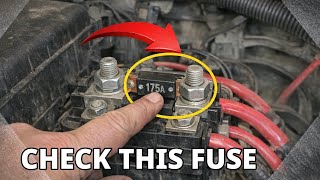
How to confirm: Locate the battery distribution block on or near the positive battery terminal. The mega fuse is a large, blocky fuse held by two nuts. Remove it (with the battery disconnected) and test for continuity with a multimeter. An open circuit (no beep) means it's blown.
Typical fix: Replace the blown mega fuse (GM P/N 15305191) and perform a global power reset by touching the disconnected battery cable ends together for one minute to drain residual power from all modules.
Est. part cost: $10-$25 - Failing Control Module (especially EBCM/ABS) ⚪ Low Probability Any module on the network can fail internally and broadcast junk data or short the bus. The Electronic Brake Control Module (EBCM/ABS) is a very common offender on this platform. Due to its location, it's susceptible to weather and vibration, and an internal short can take down the entire GMLAN network.
How to confirm: This is difficult without a professional scan tool. The process involves unplugging modules one by one while monitoring the CAN bus. A common diagnostic step is to unplug the main connector at the EBCM and see if communication is restored to the other modules. If it is, the EBCM is the faulty component.
Typical fix: Replacing the faulty module, which often requires programming to the vehicle's VIN.
Est. part cost: $200-$800
Rare But Worth Checking
- Aftermarket Electronics Interference: Poorly installed remote starters, alarms, stereos, or trailer brake controllers can be improperly tapped into CAN bus wires, introducing electrical noise or shorts that disrupt the network.
- Weak Battery or Failing Alternator: → Shop Vehicle Battery Low system voltage can cause modules to initialize improperly or drop off the network, triggering communication codes. Always verify the battery and charging system are healthy (12.4V+ engine off, 13.8-14.5V running) before diving into complex network diagnostics.
Diagnosis Steps
- Check Battery and Charging System: Ensure the battery has at least 12.4V with the engine off and that the alternator produces 13.8-14.5V while running. Clean battery terminals. A weak system can cause modules to drop out.
- Perform a Full Vehicle DTC Scan: Use a scan tool that can read codes from all modules. Note which modules are not communicating. A flood of 'U' codes confirms a network-wide issue.
- Check the 175A Mega Fuse: Especially if the issue occurred after a jump-start, inspect the large fuse (GM P/N 15305191) at the battery distribution block 🎬 Watch: How to replace a blown mega fuse after a jump-start. for continuity.
- Check CAN Bus Resistance: Disconnect the battery for at least 10 minutes. At the OBD-II port, measure the resistance between Pin 6 (CAN High) and Pin 14 (CAN Low). A healthy network will read approximately 60 Ohms. 120 Ohms indicates an open circuit or a missing terminating resistor, while near 0 Ohms indicates a short between the wires.
- Inspect Critical Grounds: Check and clean the main engine/body grounds, specifically ground G218 (under driver's side dash/kick panel) and G107 (on the frame rail under the driver's door).
- Inspect Wiring Harnesses: Visually and physically inspect the main harnesses for chafing, corrosion, or damage. Pay close attention to the harness near the parking brake pedal and the connectors under the underhood fuse block (UBEC).
- Isolate Modules: If resistance is incorrect, begin unplugging modules on the high-speed CAN bus one at a time (start with the EBCM/ABS, as it's a common failure) and re-check resistance after each one. If the resistance returns to 60 Ohms after unplugging a module, that module is likely the cause of the failure.
Parts You'll Likely Need
- 175 Amp Mega Fuse
(OEM #15305191)— This fuse is a common failure point after a voltage spike from a jump-start, and replacing it can restore the entire network.
Trusted brands: ACDelco (GM Genuine), Littelfuse, Bussmann
OEM price range: $15-$30
Aftermarket price range: $10-$20 - Body Control Module (BCM)
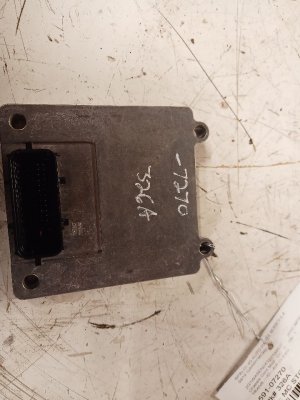
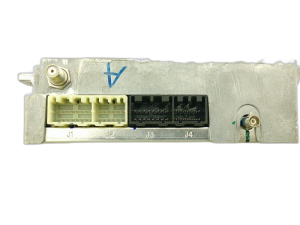
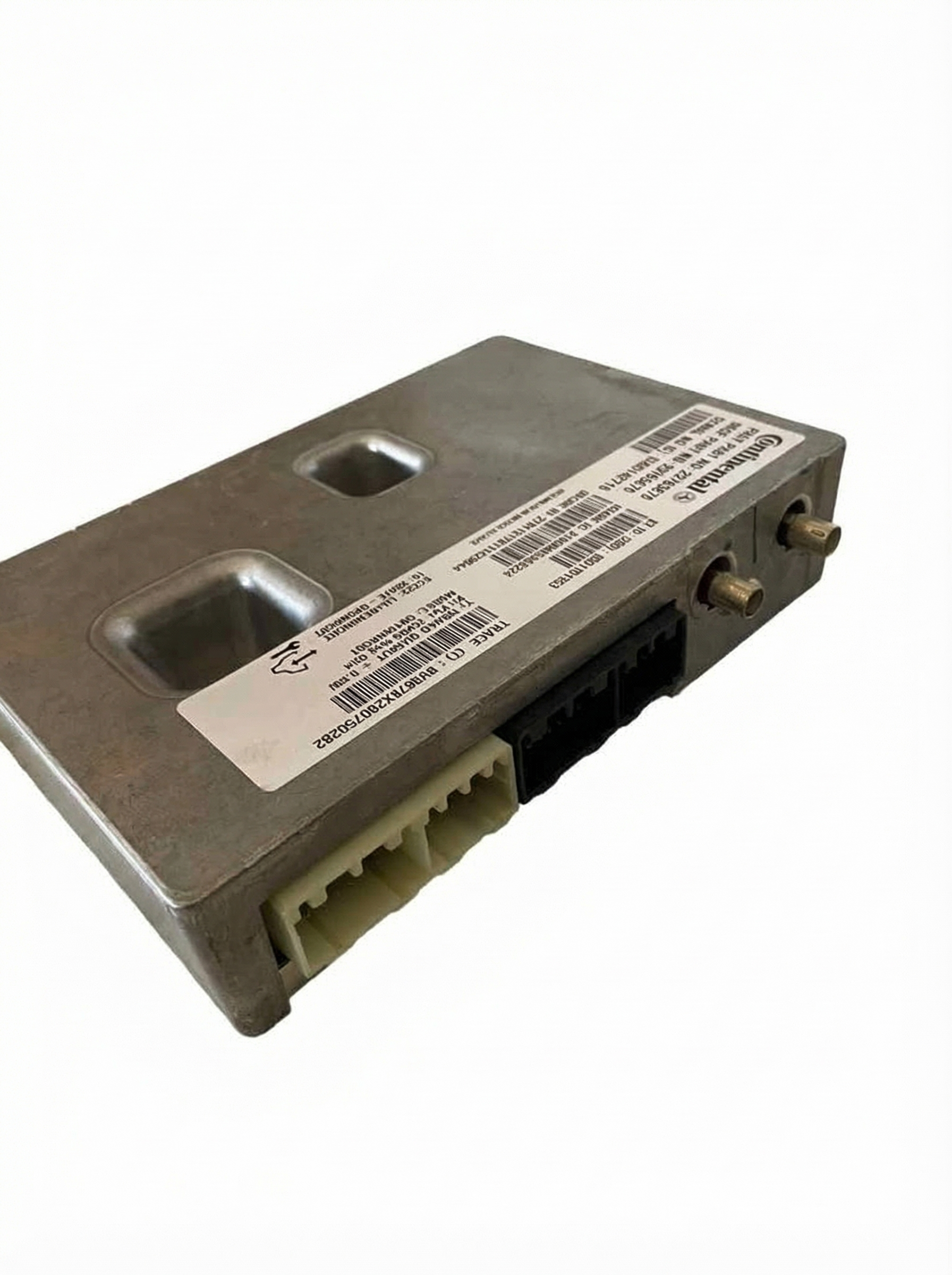
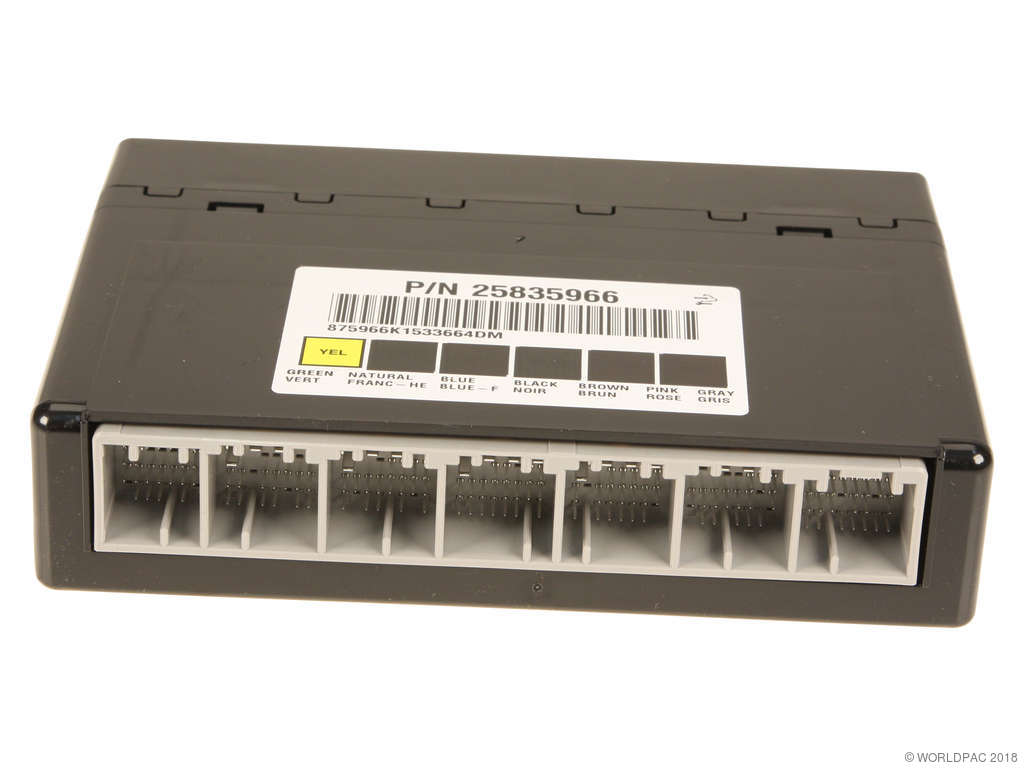
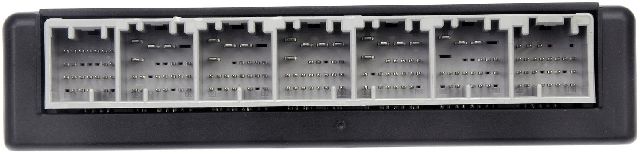
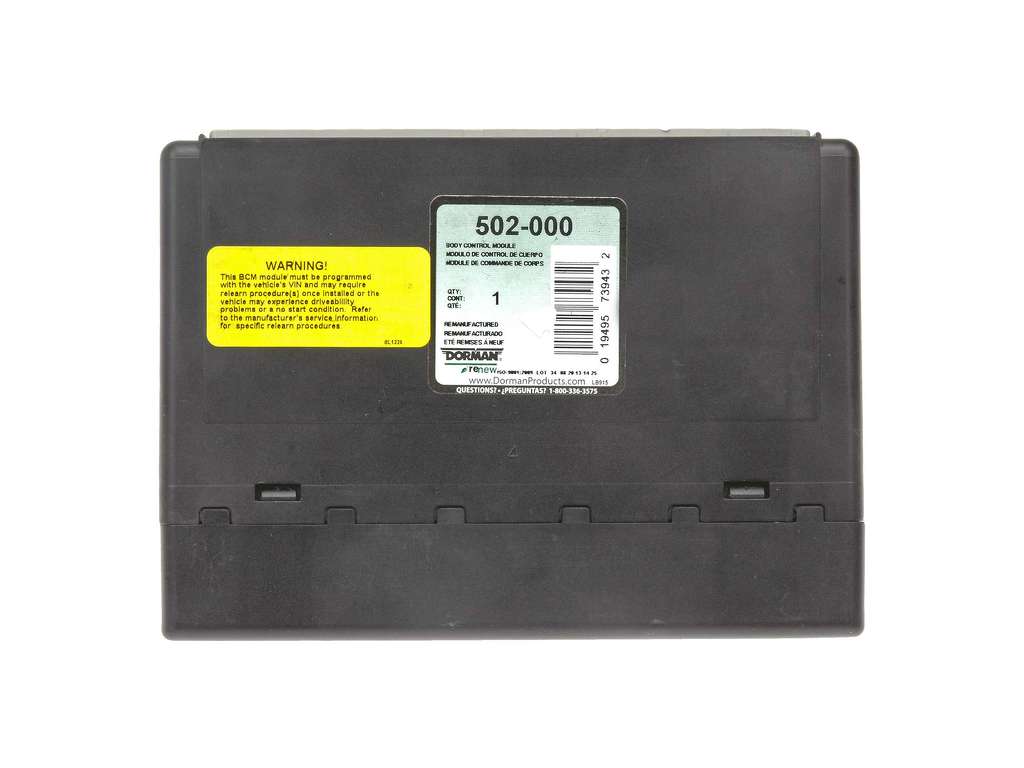
(OEM #25896456 (or superseded P/Ns like 22860591, 25835966))— The BCM acts as a central hub for communication. If it fails, it can bring down the entire network. Replacement requires programming.
Trusted brands: ACDelco, Dorman
OEM price range: $250-$400
Aftermarket price range: $150-$300 - Electronic Brake Control Module (EBCM)
(OEM #25918307 (or superseded P/Ns))— The EBCM (ABS module) is a frequent point of failure. An internal short within the module can corrupt or short the entire CAN bus, causing a U0073 code. Unplugging it is a key diagnostic step.
Related Codes That Often Appear With This One
- U0100 — Lost Communication With ECM/PCM. This appears because the network bus is down, preventing all modules from hearing the ECM.
- U0101 — Lost Communication with TCM. This appears because the network bus is down, preventing all modules from hearing the Transmission Control Module.
- U0121 — Lost Communication With Anti-Lock Brake System (ABS) Control Module. This appears because the network bus is down, preventing all modules from hearing the ABS module.
- U0140 — Lost Communication With Body Control Module. This appears because the network bus is down, preventing all modules from hearing the BCM.
Technical Service Bulletins (TSBs) & Recalls
- Bulletin #PIT5586E
- Bulletin #08-07-30-021H
- Bulletin #PIT5405A
- Bulletin #PIT5586B
Platform-Specific Known Issues
- Wiring Harness Chafe at Parking Brake: The main dash wiring harness is routed in a way that it can rub against the sharp metal bracket of the parking brake assembly. Over time, this can wear through the insulation of the Tan and Tan/Black GMLAN wires, causing them to short to ground or each other, taking down the entire network.
- Corrosion in Underhood Fuse Block (UBEC): → Shop Fuse Box Water can leak past the cover of the UBEC, dripping down onto the large multi-pin connectors on its underside. This causes corrosion on the CAN bus pins, leading to high resistance or an open circuit. TSB #08-07-30-021H specifically calls out checking for corrosion in module connectors.
Mechanic-Grade Diagnostic Values
- CAN Bus Resistance — expected: ~60 Ohms. Failure: 120 Ohms indicates an open in the circuit or a missing terminating resistor. ~0 Ohms indicates a short between the CAN High and CAN Low wires.
- CAN High (GMLAN+) Voltage — expected: ~2.5V to 3.5V (key on, engine off). Failure: Voltage significantly outside this range, or stuck at 0V or 5V, indicates a short to ground or power.
- CAN Low (GMLAN-) Voltage — expected: ~1.5V to 2.5V (key on, engine off). Failure: Voltage significantly outside this range, or stuck at 0V or 5V, indicates a short to ground or power.
Scan Tool Commands That Help
- GDS2/Tech2: Module Status/Device Control — To view a list of all control modules on the network and see which ones are actively communicating and which are offline. This is the primary step to narrow down the location of the network fault.
- GDS2/Tech2: Clear All DTCs — After a repair, a global DTC clear is necessary. For intermittent issues, clearing codes and test driving can help see which 'U' code returns first, pointing to the module with the initial problem.
- GDS2/Tech2: BCM/SDM Programming — Required after replacing the Body Control Module (BCM) or Sensing and Diagnostic Module (SDM/Airbag). Failure to program the new module will result in a no-start condition or persistent warning lights.
Wiring & Ground Locations
- G218 — Behind the driver's side kick panel, bolted to the metal dashboard frame/support.. This is a major interior ground point for several modules. A loose or corroded connection here is a very common cause of intermittent network communication failures and U0073.
- G103 / G104 — G103 is on the right rear of the engine block. G104 is on the front of the left cylinder head.. These are primary engine-to-chassis grounds. A poor connection can create electrical noise and voltage differentials that disrupt CAN bus signals originating from the ECM.
- G107 — On the frame rail below the driver's door.. This is a key body-to-frame ground. Corrosion here is common and can affect multiple systems, including the BCM and other modules grounded to the body.
- X109 Connector — A large, 38-pin pass-through connector located on the left side of the engine compartment, below the underhood fuse block.. This connector is a major junction for wiring between the engine/ECM and the interior/BCM. The High-Speed GMLAN wires (Tan and Tan/Black) pass through pins 27 and 28. Corrosion or poor pin fitment in this connector can sever communication.
- Serial Data Gateway Module (SDGM) — On many GMT900 trucks, the Body Control Module (BCM) itself functions as the gateway module. It is located under the driver's side of the dashboard.. The SDGM (or BCM acting as one) is the central router between the high-speed and low-speed data buses. TSBs PIT5586E and PIT5586B mention a "logic lock" of this module, which can take down the network and requires a hard reset (battery disconnect) to resolve.
- Terminating Resistors — The High-Speed GMLAN bus has two 120-ohm resistors. One is internal to the Engine Control Module (ECM). The second is often located at the opposite end of the bus, sometimes integrated into the Trailer Brake Control Module (TBCM) or as a standalone resistor in the harness near the rear of the vehicle.. The network requires both resistors to be present to achieve the correct 60-ohm total resistance. If the TBCM fails or is unplugged, or if the wiring to the rear resistor is damaged, resistance will jump to 120 ohms, causing code U0073.
Real Owner Repair Stories
- silveradosierra.com forum user (2007.5 Chevrolet Silverado 2500HD) — Service StabiliTrak, Service Trailer Brake, Check Engine lights on. Codes U0073, U0100, U0101, U0121, U0140.
❌ Tried (didn't work) Checking all fuses, Checking grounds G218, G103, G104
✅ What actually fixed it The Trailer Brake Control Module (TBCM) was faulty. Unplugging the TBCM restored communication to all other modules and cleared the symptoms. Replacing the TBCM resolved the issue. - gm-trucks.com forum user (2008 Chevrolet Silverado) — ABS and Stabilitrak lights on, multiple U-codes including U0073, U0121, U0100. Truck would randomly go into limp mode.
❌ Tried (didn't work) Replacing the ABS module (EBCM), Checking grounds near the battery and under the driver's door
✅ What actually fixed it Found a corroded connector on the frame rail under the driver's seat. Cleaning the connector terminals resolved the problem.
OEM Part Supersession History
15940214, 25835966→22860591— Part consolidation and internal revisions by GM.
Heads up: While many part numbers are interchangeable, the replacement BCM must be programmed to the vehicle's VIN using a tool like GDS2. Failure to program will result in a no-start condition and other system malfunctions.
Model Year Variations Within This Range
- 2007-2008: These model years were more commonly equipped with the 4-speed 4L60-E automatic transmission.
- 2009-2010: The 6-speed 6L80 automatic transmission became standard, replacing the 4-speed. This changes the Transmission Control Module (TCM) and its interaction on the CAN bus.
- 2007+: Two distinct dashboard styles were offered: a "pure truck" version for lower trims and a "luxury-inspired" dash for LTZ/SLT trims. This affects the Instrument Panel Cluster (IPC) and some switchgear, which are all nodes on the data bus.
Helpful Videos
Used OEM Parts in Stock
New Aftermarket Parts Available

The information in this article is provided for general reference and educational purposes only. Vehicle specifications, procedures, and part compatibility can vary by production date, trim level, and region. Always consult your vehicle's factory service manual and verify part numbers before purchasing or performing repairs. Safety-critical components such as airbags, seat belts, and braking systems should be installed by a qualified professional.
- Chevrolet SILVERADO 2500:
- 🧭 Diagnostic Flowchart
- 🎬 Helpful Videos
- 🛍️ Shop This Part
- What's Unique About the 2007-2010 Chevrolet SILVERADO 2500
- Symptoms You May Notice
- Most Likely Causes
- Rare But Worth Checking
- Diagnosis Steps
- Parts You'll Likely Need
- Related Codes That Often Appear With This One
- Technical Service Bulletins (TSBs) & Recalls
- Platform-Specific Known Issues
- Mechanic-Grade Diagnostic Values
- Scan Tool Commands That Help
- Wiring & Ground Locations
- Real Owner Repair Stories
- OEM Part Supersession History
- Model Year Variations Within This Range
- 🎟️ Get 5% Off