

U0073 on 2007-2014 Chevrolet Tahoe: Causes and Fixes for Communication Bus Failure
On a 2007-2014 Tahoe, code U0073 is almost always caused by a wiring problem, not a bad module. A GM Technical Service Bulletin points to a specific harness connector at the transmission and other known weak points like grounds and chafing spots as the most common culprits. The fix is often cleaning and securing connections or repairing wires, which is a low-cost repair if you can find the fault.
- U0073 on a 2007-2014 Tahoe is a network communication failure, not a specific component failure.
- Symptoms are often severe and can make the vehicle unsafe to drive.
- The most likely cause is a wiring or connection issue, specifically at a harness connector near the driver's kick panel, as identified in a GM TSB.
- Always diagnose wiring, grounds, and connections thoroughly before considering the replacement of expensive control modules like the ECM or BCM.
- Due to the complexity, professional diagnosis with a proper network scan tool is highly recommended.
What's Unique About the 2007-2014 Chevrolet TAHOE

The GMT900 platform, which includes the 2007-2014 Tahoe, is specifically called out in GM Technical Service Bulletin #08-07-30-021H for issues that cause code U0073. The bulletin identifies common failure points, most notably backed-out terminals in the 16-way transmission harness connector, chafed wiring harnesses, and poor ground connections (like G102 and G300). This makes wiring issues the primary suspect for this code on these trucks, more so than random module failure.
🎬 Watch: A breakdown of what code U0073 really means.Diagnostic Flowchart

Tap your situation to follow the diagnostic path that matches what you're seeing on this vehicle.
Symptoms You May Notice

- Multiple warning lights on the dashboard, including Check Engine, ABS, StabiliTrak, and Airbag.
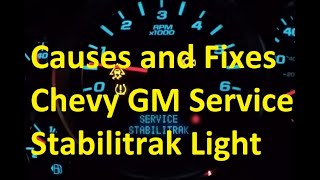
- "Service StabiliTrak" or "Service Traction Control" messages displ 🎬 See this guide on fixing common StabiliTrak warning causes.ayed.
- Instrument panel gauges fluctuating wildly or going completely dead.
- Transmission failing to shift or getting stuck in one gear (limp mode).
- Intermittent cycling of door locks and random chimes.
- Engine may stall, run rough, or fail to start intermittently.
- Loss of power features like cruise control or power windows.
- Engine cooling fans may run continuously, leading to a dead battery.
- Replacing the Engine Control Module (ECM) or Transmission Control Module (TCM) without performing a full network and wiring diagnosis. The U0073 code indicates a communication line problem, and the modules themselves are often not the root cause, as emphasized by TSB #08-07-30-021H.
Most Likely Causes

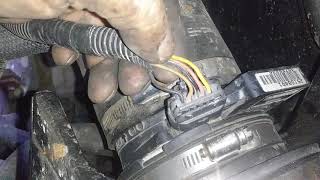
- Poor Connection at Transmission Harness Connector 🔴 High Probability → Shop Transmission Assembly TSB #08-07-30-021H specifically identifies the 16-way electrical connector at the automatic transmission as a primary failure point. Terminals for the GMLAN data bus can back out or lose tension, causing an intermittent open in the circuit.
How to confirm: Raise the vehicle and locate the main electrical connector on the transmission. Disconnect it and inspect the male and female terminals for any signs of corrosion, moisture, or pins that are not fully seated. Tug gently on the CAN bus wires (typically a twisted pair of Tan and Tan/Black wires) to ensure they are secure in the connector body.
Typical fix: Reseat any backed-out terminals. Clean the terminals with a dedicated contact cleaner. Apply a thin layer of dielectric grease before securely reconnecting. If terminals are damaged, they must be replaced.
Est. part cost: $5-$50 - Damaged or Corroded Ground Wires 🟡 Medium Probability GM trucks of this era are known for having ground connection issues. Specific grounds like G102 (engine harness), G218 (behind driver kick panel), and G300 (frame) have been identified in service information as potential causes for communication loss when loose or corroded.
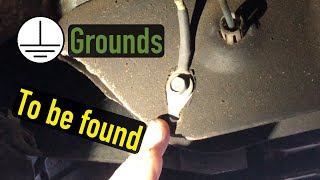
How to confirm: Locate and inspect major ground points. Check G102 on the engine, G218 in the driver's footwell, and G300 on the frame. Disassemble the connection, clean the ring terminal and the mounting surface to bare metal, and re-secure tightly. Tug on the wires at the crimp to ensure they are not broken internally.
Typical fix: Clean the ground point to bare metal, and repair or replace any broken or corroded ground terminals.
Est. part cost: $1-$20 - Chafed or Broken CAN Bus Wiring 🟡 Medium Probability
How to confirm: Visually inspect the wiring harness, particularly under the driver's side carpet/sill plate, around the parking brake mechanism, where the harness passes through the firewall, and near the transmission. Look for any areas where the harness may rub against a sharp metal edge or has been pinched.
Typical fix: Repair the damaged wires by splicing in a new section of wire with uninsulated butt connectors and heat shrink tubing. Reroute the harness to prevent future chafing.
Est. part cost: $5-$25 - Weak or Failing Battery / Poor Charging System ⚪ Low Probability → Shop Vehicle Battery
How to confirm: Test the battery voltage with the vehicle off (should be >12.4V) and while running (should be 13.7V-14.7V). Low or fluctuating system voltage can cause modules to drop off the network intermittently.
Typical fix: Charge or replace the battery. Test the alternator and replace if it is failing.
Est. part cost: $150-$400
Rare But Worth Checking
- Failing Control Module: While less common than wiring issues, a single module (like the EBCM, BCM, or TCM) can fail internally and disrupt the entire network. This should only be considered after all wiring and connections have been proven to be good.
- Faulty Terminating Resistor: The CAN bus has two 120-ohm resistors. If one fails or its circuit is open, it will disrupt communication. A resistance test across pins 6 and 14 of the OBD-II port (with battery disconnected) should read approximately 60 ohms. A reading of 120 ohms indicates a problem with one of the resistors or the circuit to it.
- Improperly Installed Aftermarket Electronics: A poorly installed remote starter, alarm, or trailer brake controller can interfere with or short out the CAN bus wiring.
- Blown 175A Mega Fuse After Jump Start: A voltage spike from an improper jump start can blow the 175-amp mega fuse located on the battery distribution block. This is a protective measure to save the modules, but it will take the high-speed CAN network offline, causing a U0073 code.
Diagnosis Steps
- Check and verify battery health and charging system operation. Ensure voltage is stable and above 12.4V.
- Using a professional scan tool, attempt to communicate with all modules on the high-speed CAN bus. Note which modules are not responding.
- Follow TSB #08-07-30-021H: Raise the vehicle and inspect the 16-way transmission harness connector. Disconnect, check for backed-out pins, corrosion, or damage. Clean, apply dielectric grease, and reconnect securely.
- Inspect key ground connections for the main control modules, especially G102 (engine), G218 (driver kick panel), and G300 (frame). Ensure they are clean, tight, and free of corrosion.
- With the battery disconnected, measure the resistance between Pin 6 (CAN High) and Pin 14 (CAN Low) on the OBD-II port. A healthy network will read approximately 60 ohms.
- If the resistance is 120 ohms, a terminating resistor is offline or the circuit is open. If it's near 0 ohms, the CAN High and Low wires are shorted together.
- Visually inspect the wiring harness for physical damage, especially under the driver's side carpet, along the frame, and through the firewall.
- If a recent jump start occurred, inspect the 175A Mega Fuse on the battery distribution block for continuity.
- If all wiring and resistance checks are good, begin disconnecting modules one at a time (starting with the EBCM or any non-responsive modules) to see if network communication is restored. The module whose disconnection restores communication is likely the faulty one.
Parts You'll Likely Need
- Wiring Harness Connector Terminals — Often the fix is not a whole part, but replacing corroded or loose pins within a connector, as highlighted by TSB #08-07-30-021H.
Trusted brands: ACDelco
OEM price range: $5-$15 per terminal
Aftermarket price range: $2-$10 per terminal - Electronic Brake Control Module (EBCM)
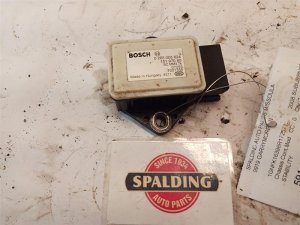
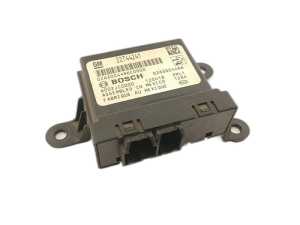
(OEM #20896914 (or superseded by 84256781; also check 25989531, 20817954))— If a module is confirmed to be at fault, the EBCM is a common failure point as it's mounted on the frame and exposed to the elements. It is a key node on the high-speed CAN bus.
Trusted brands: ACDelco, Dorman (e.g., 599-775)
OEM price range: $400-$950
Aftermarket price range: $250-$500
Related Codes That Often Appear With This One
- U0100 — Lost Communication with ECM/PCM. Often appears with U0073 as the ECM is a primary module on the network.
- U0101 — Lost Communication with TCM. This is common when the transmission goes into limp mode or if the fault is in the transmission harness.
- U0121 — Lost Communication with Anti-Lock Brake System (ABS) Control Module. This triggers ABS and StabiliTrak warnings.
- U0140 — Lost Communication with Body Control Module (BCM). This can cause the erratic door lock and chime behavior.
- P0700 — Transmission Control System (MIL Request). This code is set by the ECM when the TCM has stored a serious fault, often related to communication loss.
Technical Service Bulletins (TSBs) & Recalls
- GM TSB #08-07-30-021H: 'Loss of High Speed GMLAN Communications, Intermittent No Crank, IP Gage Fluctuation...' - This is the primary document for this issue. It lists numerous symptoms and codes (U0073, U0100, U0101, U0121, etc.) and points to several potential wiring faults, with a strong emphasis on backed-out terminals in the transmission harness connector, chafed wiring, and poor grounds. It explicitly warns against replacing modules before a thorough wiring diagnosis.
Platform-Specific Known Issues
- TSB #08-07-30-021H: GM explicitly details symptoms like gauge fluctuation, door lock cycling, no-shift conditions, and various communication DTCs including U0073. It points technicians toward checking for poor connections in harness connectors as a primary cause.
- Owner Complaint NHTSA ODI #11093883: A 2008 Tahoe owner reported gauge fluctuation and intermittent door lock operation with code U0073, perfectly matching the symptoms described in the TSB.
- Owner Complaint NHTSA ODI #11105156: A 2011 Tahoe exhibited code U0073 along with faults in the Electronic Brake Control Module (EBCM) and other systems, highlighting how a network failure can trigger codes across multiple, seemingly unrelated modules.
Mechanic-Grade Diagnostic Values
- CAN Bus Resistance — expected: ~60 Ω (±5 Ω). Failure: A reading of ~120 Ω indicates an open circuit or faulty terminating resistor. A reading near 0 Ω indicates a short between the CAN High and CAN Low wires.
- CAN High Voltage (Key-On, Engine-Off) — expected: 2.5V - 3.5V. Failure: A flatline voltage or one stuck near 0V or 5V indicates a bus fault.
- CAN Low Voltage (Key-On, Engine-Off) — expected: 1.5V - 2.5V. Failure: A flatline voltage or one stuck near 0V or 5V indicates a bus fault.
- Battery Voltage (Resting) — expected: >12.4V. Failure: A weak battery can cause modules to drop off the network, especially during startup.
Hidden / Shadow Codes Worth Checking
- U0073 with symptom code (e.g., -71, -72, -00): A dealer-level scan tool like a Tech 2 may show a symptom byte. For example, -71 could indicate ECU High Speed Bus Off, while -72 could indicate ECU Low Speed Bus Off. These provide more specific information about the nature of the communication failure. (see via GM Tech 2 or GDS2 diagnostic tool.)
Scan Tool Commands That Help
- GDS2/Tech 2: Module Communication Status / Network Topology — This function allows a technician to see a list of all expected modules on the network and which ones are currently not communicating. This is the first step in isolating the source of the U0073 code.
- GDS2/Tech 2: Bidirectional Controls — After identifying non-communicating modules, bidirectional controls can be used to command other modules on the bus to perform actions (like cycle a solenoid or turn on a light). If commands work for some modules but not others, it helps narrow down the location of the wiring break or faulty module.
Wiring & Ground Locations

- G102 — On the driver's side (left hand) of the 5.3L engine, on the cylinder head.. This is a primary engine harness ground. Poor connection here can affect the ECM and TCM's ability to communicate.
- G103 — On the front of the passenger side (right hand) cylinder head.. This ground is critical for multiple modules, including the BCM, IPC (Instrument Panel Cluster), and the DLC (Data Link Connector) itself. A bad G103 can cause a host of communication issues.
- G104 — Located on the rear of the driver's side (left) cylinder head, often securing a braided ground strap that runs to the firewall.. Provides the main ground path between the engine and the vehicle's body/firewall. Corrosion or looseness here can create voltage potential differences that disrupt network communication.
- G218 — Located behind the driver's side kick panel, in the footwell area.. A GM Service Information bulletin (PIT5405C) specifically calls out checking G218 for being loose or having the dash insulator mat trapped under it, which can cause intermittent network codes like U0073.
- SP205 / SP206 — These are CAN bus splice packs located under the driver's side dash. They act as junctions for the network wiring.. If a single module fails or has a wiring short, it can disrupt the entire network. A technician can disconnect legs from these splice packs one by one to isolate the problematic circuit or module.
Real Owner Repair Stories
- Tahoe Yukon Forum user 'Joseph Garcia' (2009 Tahoe LTZ) — U0073 code, transmission in limp mode, BCM losing connection with TCM and other modules, stored VIN in BCM disappearing intermittently.
❌ Tried (didn't work) Checking wiring, Checking grounds, Bidirectional testing with scan tool
✅ What actually fixed it The owner discovered the problem was caused by a faulty aftermarket phone charger plugged into the cigarette lighter port. When the charger was removed, the problems ceased. Replacing the faulty charger resolved the issue permanently. - Tahoe Yukon Forum user 'West 1' (2007 Cadillac Escalade (GMT900 platform) with 6L80 transmission, 175,000 miles) — Code U0073. Vehicle drove fine under normal conditions but would fail on a 2-3 or 3-4 shift and go into neutral when under hard acceleration or when towing. Required clearing codes with a scan tool to drive again.
❌ Tried (didn't work) Chasing wire connections and testing them., Installing new seals in the old TEHCM (Transmission Electro-Hydraulic Control Module).
✅ What actually fixed it The root cause was a cracked drum inside the 6L80 transmission that was losing pressure under load. The transmission was rebuilt with new parts, including an improved GM drum, which resolved the symptoms and the code. The U0073 was a symptom of the mechanical/hydraulic failure being detected by the transmission controls.
Model Year Variations Within This Range
- 2009-2014: A 6-speed automatic transmission replaced the previous 4-speed transmission starting in the 2009 model year. This can affect diagnosis if the fault is related to the transmission harness or TCM, as the components are different.
- 2010+: Models from 2010 onward may have a USB port for the radio and a different instrument cluster with more information in the Driver Information Center (DIC). While not directly related to U0073, these changes introduce different modules and wiring to the vehicle's overall network.
- 2007-2008 vs 2009+: The alternator amperage rating can vary (e.g., 145A, 160A) depending on the vehicle's options. While not a direct cause, an incorrect replacement alternator could potentially contribute to electrical system instability.
Helpful Videos


We Have This Part in Stock

The information in this article is provided for general reference and educational purposes only. Vehicle specifications, procedures, and part compatibility can vary by production date, trim level, and region. Always consult your vehicle's factory service manual and verify part numbers before purchasing or performing repairs. Safety-critical components such as airbags, seat belts, and braking systems should be installed by a qualified professional.
- Chevrolet TAHOE:
- 🧭 Diagnostic Flowchart
- 🎬 Helpful Videos
- 🛍️ Shop This Part
- What's Unique About the 2007-2014 Chevrolet TAHOE
- Symptoms You May Notice
- Most Likely Causes
- Rare But Worth Checking
- Diagnosis Steps
- Parts You'll Likely Need
- Related Codes That Often Appear With This One
- Technical Service Bulletins (TSBs) & Recalls
- Platform-Specific Known Issues
- Mechanic-Grade Diagnostic Values
- Hidden / Shadow Codes Worth Checking
- Scan Tool Commands That Help
- Wiring & Ground Locations
- Real Owner Repair Stories
- Model Year Variations Within This Range
- 🎟️ Get 5% Off