

U0073 on 2005-2012 Ford Escape Hybrid: Causes for Control Module Communication Failure
On a 2005-2012 Ford Escape Hybrid, code U0073 is most often caused by a faulty ABS module, especially on 2008-2012 models. This can cause a no-start condition and multiple warning lights. Other common causes include a weak 12V battery or damaged wiring.
- Code U0073 on a 2005-2012 Escape Hybrid indicates a serious network communication failure that makes the vehicle unsafe to drive.
- For 2008-2012 models, the most likely cause is a failed ABS control module, which will also trigger ABS and brake warning lights.
- Before suspecting expensive modules, always test the 12V battery first, as low voltage is a common trigger for this code.
- Diagnosis is complex and requires a professional scan tool to identify which modules are offline. Do not attempt to replace modules without a proper diagnosis.
- If the ABS module is replaced, it must be programmed to the vehicle to function correctly.
What's Unique About the 2005-2012 Ford Escape Hybrid
The Ford Escape Hybrid from this era integrates multiple complex control systems for its powertrain, braking, and charging functions. A communication failure can be particularly disruptive. Notably, the second-generation models (2008-2012) are known for failures of the ABS control module, which can single-handedly bring down the entire communication network and trigger a U0073 code. This makes the ABS module a primary suspect on these vehicles, more so than on many other cars where wiring is the more common culprit. The failure can manifest intermittently, with brake pressure and warning lights changing after a key cycle, further complicating diagnosis.
Generation note: This range covers the first-generation Escape Hybrid (2005-2007) and the second-generation (2008-2012). While the general causes apply to both, failure of the ABS control module is a particularly common cause for the U0073 code on the second-generation (2008-2012) models. First-generation models are also susceptible to ABS issues, but often related to corroded ABS tone rings which can cause erratic ABS behavior but are less likely to bring down the entire network.
Symptoms You May Notice
- Check Engine Light is on
- ABS, brake, and traction control warning lights are on
- Vehicle will not start or crank
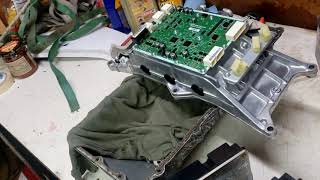
- Loss of regenerative braking function 🎬 Watch: Diagnosing a no-start condition on a 2009 Escape Hybrid (charge gauge doesn't move when braking)
- Speedometer does not work
- Vehicle enters 'limp mode' with reduced power
- Unresponsive or hard brake pedal
- Power steering assist may be lost
- Replacing the PCM when the ABS module is the actual cause of the network failure.
- Replacing individual wheel speed sensors when the issue is the central ABS module's inability to communicate.
- Replacing the 12V battery without addressing an underlying faulty module that is causing a parasitic drain.
Most Likely Causes
- Faulty ABS Control Module 🔴 High Probability → Shop ABS Control Module The ABS module on the 2008-2012 models is a known failure point. Internal electronic failure within the module can cause it to stop communicating, bringing down the entire network. This is a widely discussed issue in owner forums for this specific model year range.
How to confirm: Use a professional scan tool to check for communication with the ABS module. If the module does not respond, and its power and ground connections are verified to be good, the module itself is likely faulty. Often, a code like B1342 (ECU Internal Fault) will be stored in the ABS module before it fails completely. A smell of burnt electronics near the module can also be an indicator.
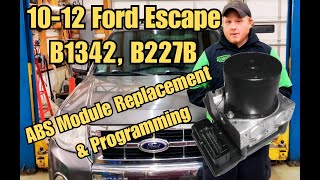
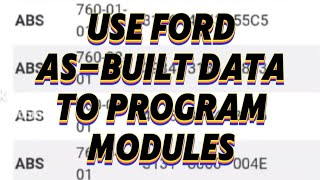
Typical fix: Replace the ABS module and hydraulic unit assembly. The new module will require programming (Programmable Module Installation or PMI) to the vehicle with a Ford-specific diagnostic tool like IDS or a capable aftermarket tool like FORScan. 🎬 Learn how to find Ford As-Built data for module programming After installation, a special electronic brake bleeding procedure 🎬 See this walkthrough for replacing and programming the ABS module is required.
Est. part cost: $499-$1200 - Weak or Failing 12V Battery 🟡 Medium Probability → Shop Vehicle Battery All modern vehicles with multiple control modules are sensitive to low voltage. The Escape Hybrid is no different, and a weak 12V battery is known to cause a no-start condition with multiple communication-related fault codes.
How to confirm: Test the 12V battery with a digital multimeter or a battery tester. Voltage should be above 12.4V with the vehicle off. Low voltage can prevent control modules from initializing correctly at startup, causing communication faults.
Typical fix: Charge or replace the 12V battery.
Est. part cost: $150-$250 - Damaged Wiring or Corroded Connectors 🟡 Medium Probability Wiring harnesses, particularly those exposed in the engine bay near the ABS module, are susceptible to heat, vibration, and moisture over time.
How to confirm: Visually inspect the wiring harnesses connected to the PCM, ABS module, and Body Control Module (BCM). Check for chafing, rodent damage, or corrosion, especially at the main connector for the ABS module (C135). A resistance check between pins 6 and 14 of the OBD-II port should read approximately 60 Ohms with the battery disconnected. A reading of 120 ohms indicates an open circuit or a failed terminating resistor (often inside the PCM or ABS module). A reading near 0 ohms indicates a short between the two CAN wires.
Typical fix: Repair the damaged section of the wiring harness or clean/replace the corroded connector.
Est. part cost: $20-$200
Rare But Worth Checking
- Faulty Powertrain Control Module (PCM): → Shop Engine Control Module (ECM) While less common than an ABS module failure, the PCM can also fail internally and cause a network shutdown. The PCM is one of the modules containing a 120-ohm terminating resistor for the HS-CAN bus. Its failure would result in a 120-ohm reading at the OBD-II port.
- Faulty Instrument Panel Cluster (IPC): → Shop Instrument Cluster The IPC acts as a gateway module on many Ford vehicles and often contains the second 120-ohm terminating resistor. An internal failure can disrupt communication between different networks, potentially leading to a U0073 code.
Diagnosis Steps
- Check 12V Battery Health: Ensure the battery is fully charged (above 12.4V) and the terminals are clean and tight. A weak battery is a common cause of random communication codes.
- Full System Scan: Use a professional scan tool (like FORScan or Ford's IDS) to scan all modules on the vehicle, not just the PCM. Note which modules are not communicating. Pay close attention to codes stored in the ABS, BCM, and Instrument Cluster modules.
- Check for ABS Communication: Attempt to directly communicate with the ABS module using the scan tool. If it does not respond, it is a primary suspect.
- Inspect ABS Module Connector: Disconnect the battery. Unplug the large electrical connector at the ABS module (C135). Inspect for any signs of corrosion, moisture, or bent/damaged pins. Clean with electrical contact cleaner if necessary.
- Check Power and Ground at ABS Module: With the key on, use a multimeter to verify that the ABS module connector is receiving battery voltage and has a solid ground connection on the appropriate pins (refer to a vehicle-specific wiring diagram). For the C135 connector, power is supplied to pins 1 and 25, and ground is at pins 13 and 38.
- CAN Bus Resistance Test: With the battery still disconnected, measure the resistance between Pin 6 (CAN High) and Pin 14 (CAN Low) at the OBD-II diagnostic port. A healthy network should read approximately 60 ohms. A reading of 120 ohms indicates an open circuit or a failed terminating resistor (often inside the PCM or ABS module). A reading near 0 ohms indicates a short between the two CAN wires.
- Isolate Modules: If the resistance reading is incorrect, you can disconnect modules one by one (starting with the ABS module) and re-check the resistance to see if it returns to normal. This helps pinpoint a module or wiring section that is causing the fault.
Parts You'll Likely Need
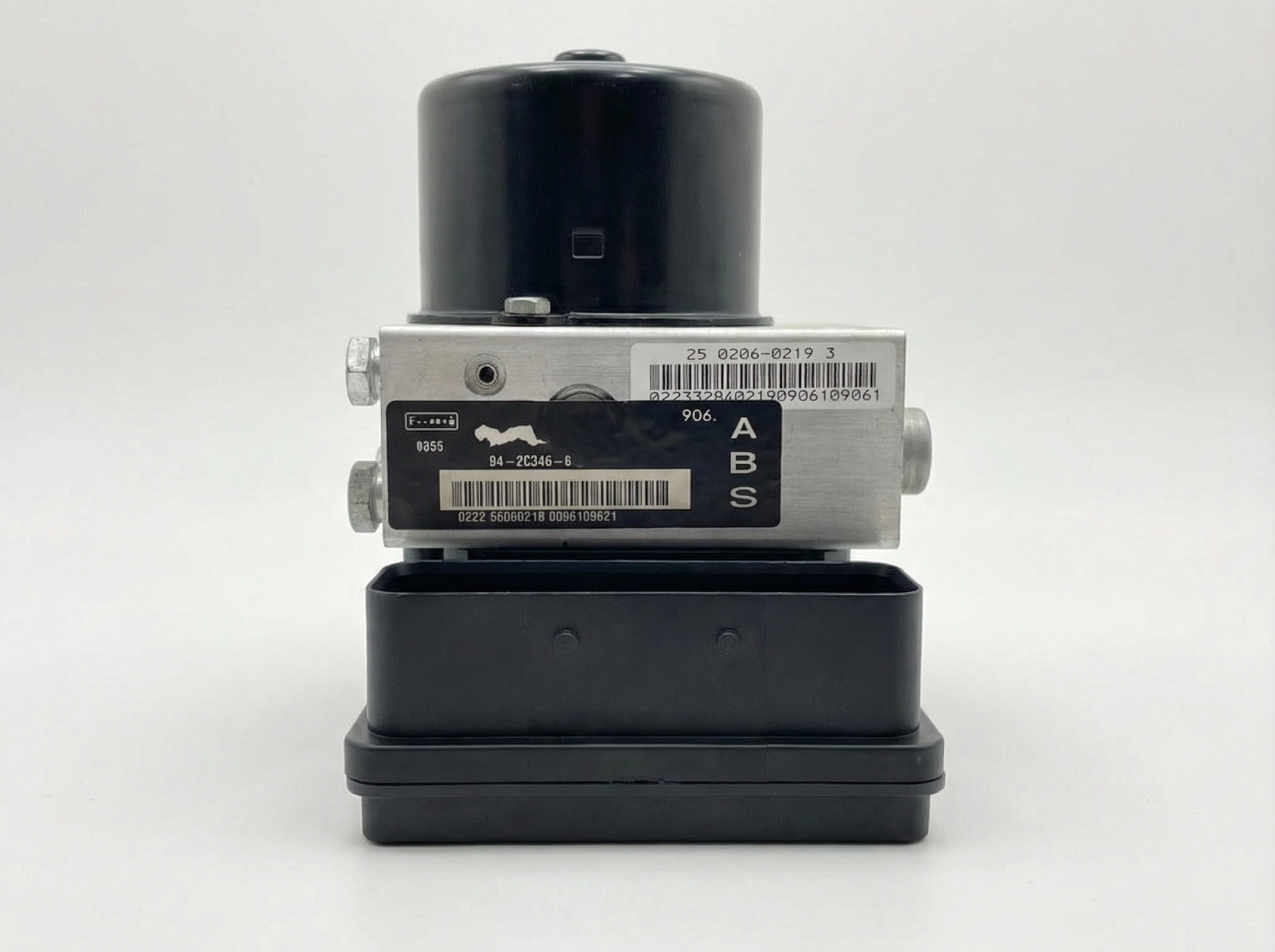
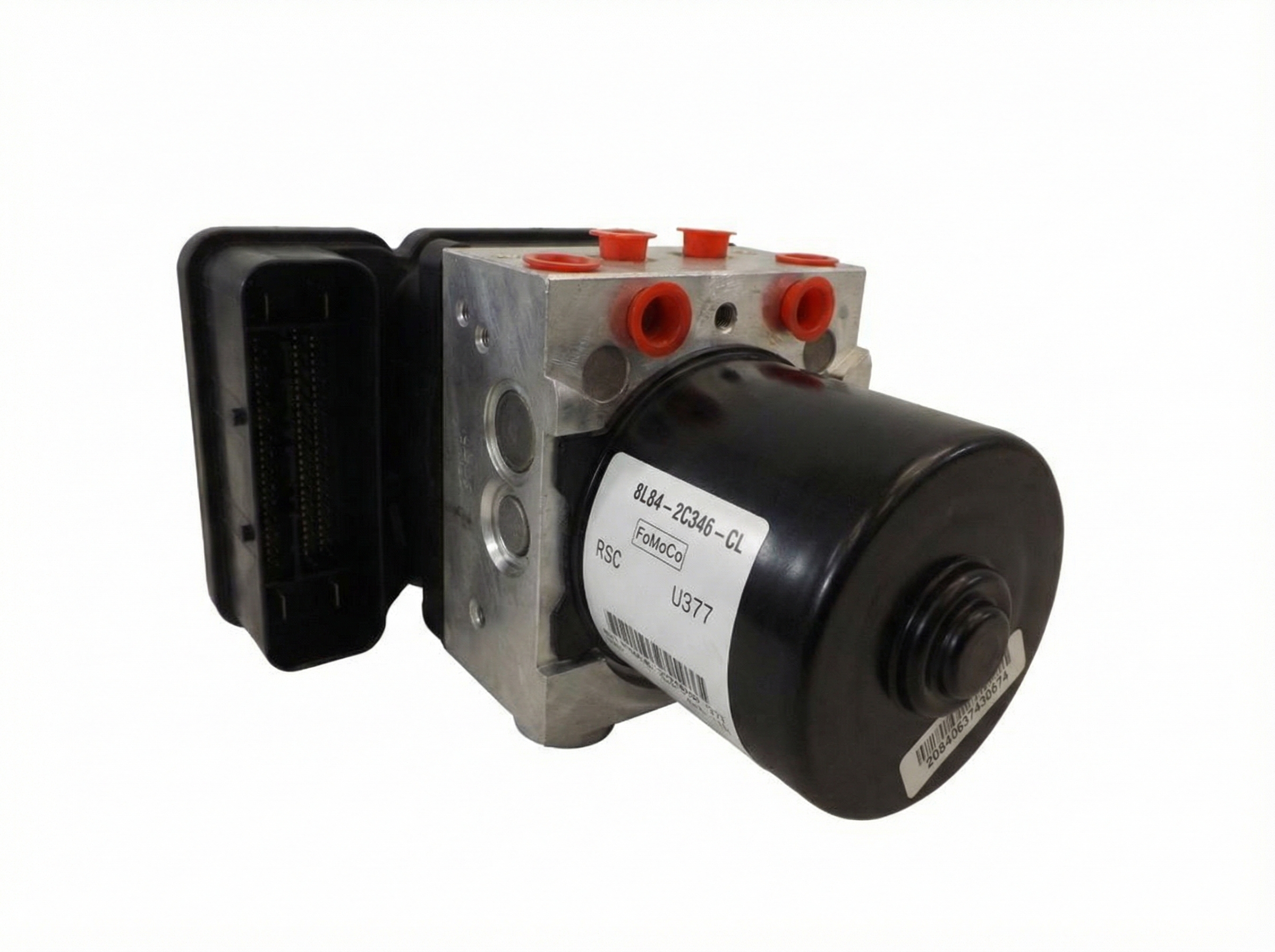
- ABS Control Module and Hydraulic Unit
(OEM #8M6Z-2C219-A, 9M6Z-2C219-A, AM6Z-2C215-A)— This is the most common point of failure on 2008-2012 models that causes a U0073 code. The internal electronics fail, disrupting network communication. Part numbers vary by year and specific vehicle options.
Trusted brands: Motorcraft (OEM), Cardone (Remanufactured), Dorman (Remanufactured)
OEM price range: $800-$1700
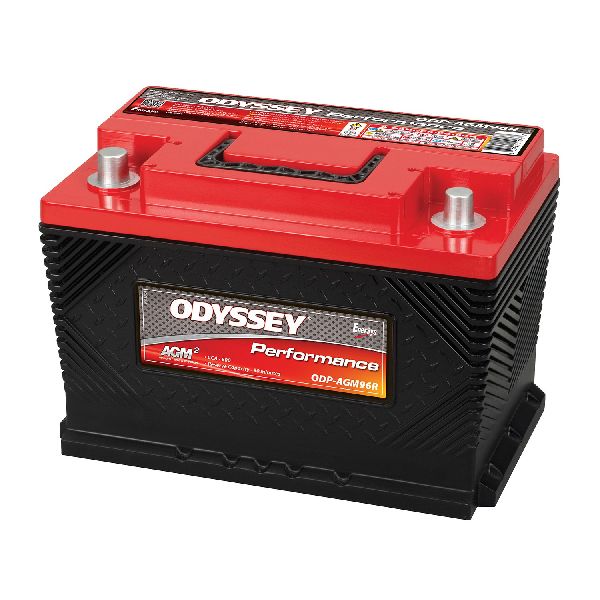
Aftermarket price range: $400-$800 (Remanufactured) - 12V AGM Battery — A weak 12V battery can cause insufficient voltage for modules to operate correctly, leading to communication faults.
Trusted brands: Motorcraft, Interstate, DieHard
OEM price range: $200-$300
Aftermarket price range: $150-$250
Related Codes That Often Appear With This One
- U0121 — This code means 'Lost Communication With Anti-Lock Brake System (ABS) Control Module'. It often appears with U0073 when the ABS module is the root cause of the network failure.
- B1342 — This Ford-specific code indicates an 'ECU Internal Fault' within a module. If found in the ABS module, it's a strong indicator that the module itself has failed and is causing the U0073 code.
Technical Service Bulletins (TSBs) & Recalls
- TSB 08-24-5: While not directly for U0073, this TSB addresses issues with the Motor Electronics Cooling System (MECS) pump on 2005-2008 models, which can cause other electronic failures and warning lights.
Platform-Specific Known Issues
- A known high failure rate of the ABS control module on second-generation (2008-2012) Escape Hybrids frequently leads to CAN communication codes, including U0073.
- Corrosion and cracking of the ABS tone rings, particularly on the front axles, is a common issue across all years. This typically causes ABS/traction control activation at low speeds and codes like C1142 or C1234, but is not a direct cause of U0073.
Mechanic-Grade Diagnostic Values
- HS-CAN Bus Resistance — expected: ~60 Ω. Failure: 120 Ω indicates one of the two terminating resistors (in the PCM or IPC/ABS module) is offline. ~0 Ω indicates a short between CAN High and CAN Low wires.
- HS-CAN High Voltage (Key On, Engine Off) — expected: Fluctuating between 2.5V and 3.5V. Failure: A static voltage or one outside this range indicates a bus fault.
- HS-CAN Low Voltage (Key On, Engine Off) — expected: Fluctuating between 1.5V and 2.5V. Failure: A static voltage or one outside this range indicates a bus fault.
- ABS Module Power Supply — expected: Battery Voltage (typically >12.4V). Failure: Low or no voltage indicates a problem with the power feed or fuse.
- ABS Module Ground — expected: < 5 Ω resistance to chassis ground. Failure: High resistance indicates a poor ground connection.
Scan Tool Commands That Help
- FORScan or Ford IDS: Programmable Module Installation (PMI) — This function is required after replacing the ABS module. It copies the configuration data from the old module (if readable) or downloads it from Ford's server and writes it to the new module, programming it to the vehicle's VIN and specific options.
- FORScan or Ford IDS: ABS Service Bleed — After replacing the ABS hydraulic unit, this automated procedure is necessary to cycle the internal valves and solenoids to purge all air from the new component, which cannot be done with a manual bleed.
- FORScan or Ford IDS: IVD Initialization Sequence / Calibrate Longitudinal Sensor — After programming a new ABS module, this function calibrates the yaw rate and longitudinal accelerometer sensors, which are part of the vehicle's stability control system. Failure to perform this step can leave stability control-related fault codes.
Wiring & Ground Locations
- C135 — The main electrical connector on the ABS module, located at the left rear of the engine compartment.. This is the primary connection point for the ABS module. Checking for power, ground, and CAN signals here is a critical diagnostic step. Corrosion or damage to this connector is a potential cause of the U0073 code.
- G104 / G121 — Main chassis ground point located on the left front fender apron, near the strut tower.. The ABS module relies on this ground point (specifically, circuit GD121 at pins 13 and 38 of C135). A loose or corroded connection here can cause the ABS module to lose power and drop off the network, triggering a U0073.
- CAN Bus Terminating Resistors — The HS-CAN bus has two 120-ohm terminating resistors. One is located inside the Powertrain Control Module (PCM), and the other is typically inside the Instrument Panel Cluster (IPC).. The network requires both resistors to function. If a module containing a resistor fails, or the wiring to it is broken, the total bus resistance will change from 60 ohms to 120 ohms, and communication will cease.
Real Owner Repair Stories
- Electric Vehicle Forums (2009 Ford Escape Hybrid) — No start, no crank. Wrench and 'triangle of death' lights on the dash. Had a history of needing to jiggle the ignition key to get it to work.
❌ Tried (didn't work) Checking the high voltage battery charge, checking fuses.
✅ What actually fixed it The owner had previously replaced the ignition switch due to intermittent connection issues. The problem returned and was ultimately traced back to a faulty ignition switch again, which was preventing the vehicle's systems from powering on correctly and initiating a start sequence. - YouTube Channel 'BL Automotive' (2009 Ford Escape Hybrid) — No crank, no start after a replacement transmission (with integrated TCM) was installed by another mechanic.
❌ Tried (didn't work) The previous mechanic was unable to program the replacement TCM and get the vehicle to start.
✅ What actually fixed it The fix required two steps: 1) A 'Parameter Reset' was performed with a professional scan tool to 'marry' the replacement TCM to the vehicle's instrument cluster for the PATS (Passive Anti-Theft System) to work. 2) The high-voltage battery had discharged below the minimum threshold (under 300V) from sitting. It had to be manually charged to over 330V before the system would allow the engine to crank. - NHTSA ODI #11549596 — A Ford owner reported a diagnostic report for U0073, described as "Control module communication bus A off," with a failure type of "Bus off." This was documented as a non-current DTC during a diagnostic session for electrical system issues.
OEM Part Supersession History
9M6Z-2C219-A→AM6Z-2C219-B— Part revision by the manufacturer, likely to address internal component failures.
Heads up: While physical fitment may be the same, using an incorrect part number for the vehicle's specific year and options (e.g., with/without AdvanceTrac RSC) can result in configuration errors during programming.
Model Year Variations Within This Range
- 2005-2007: First-generation models use a different ABS module and are less prone to the specific internal failure that causes a total network shutdown on 2008-2012 models. Network issues on these earlier models may have a higher probability of being related to wiring or the PCM.
- 2008-2012: These second-generation models are known for the high failure rate of the ABS control module (Teves MK60EC1), making it the primary suspect for a U0073 code, especially when accompanied by a no-start condition.
Diagnostic Flowchart
Other Known Issues on This Vehicle
Issues unrelated to this code that are worth knowing about as an owner of this generation:
- Motor Electronics Coolant System (MECS) Pump Failure 🔴 High — Very common on 2005-2008 models, leading to a recall. Can still fail on later models. (Ref: NHTSA Recall 14V526000 (Ford 14S19) for 2005-2008 models. TSB 08-24-5 also applies.)
- High Voltage Battery Cooling Fan Failure 🟠 Medium → Shop Vehicle Battery — Common across all years. Prevents EV mode and can lead to battery degradation if ignored.
- Blend Door Actuator Failure (Cabin and Battery) 🟠 Medium — Extremely common. Causes clicking from the dash or rear cargo area, and inability to control cabin temperature or properly cool the hybrid battery.
- Cracked/Corroded ABS Tone Rings 🟠 Medium — Very common, especially in rust-prone areas. Causes unwanted ABS activation at low speeds.
- Transmission Problems (Early Models) 🔴 High → Shop Transmission Assembly — More prevalent on the earliest 2005-2008 models, which had higher rates of transmission and general hybrid system faults.
Used vs. New Parts: Buying Guide for This Vehicle
When a used part is the smart pick: A used ABS module from a junkyard can be a cost-effective option, but it is a high-risk, high-reward choice. It makes sense only if you have access to advanced diagnostic tools like FORScan or Ford IDS and are comfortable with the module programming (PMI) process. You must obtain the exact same part number from a donor vehicle with identical options.
Donor-vehicle mileage cap: roughly under 80000 miles for the part to have meaningful remaining life.
What to inspect on the donor part:
- Verify the part number on the used module EXACTLY matches the original.
- Inspect the electrical connector pins for any signs of corrosion, moisture, or damage.
- If possible, get the VIN of the donor car to verify its options (e.g., with/without stability control).
- Choose a donor from a region with less road salt to minimize the risk of corrosion on the hydraulic block.
OEM-only on this vehicle (don't cheap out):
- For a guaranteed fix with less hassle, a new OEM (Motorcraft) ABS module is the recommended path. While expensive, it eliminates the risk of receiving a faulty used unit or one that is incompatible.
Aftermarket brands forum-validated for this vehicle:
- There is no widespread consensus on 'known good' aftermarket brands for this specific, complex module. The primary aftermarket options are remanufactured units.
Brands owners have reported issues with on this vehicle:
- Cardone and Dorman are the most common remanufacturers, but owner experiences are mixed. Some report success, while others report receiving dead-on-arrival units or premature failure. Buying a remanufactured unit should be considered a gamble, albeit one with a warranty, unlike a junkyard part.
Real Owner Stories
Aggregated from forums and TSBs cited above. Mileages and costs reflect what owners reported in those sources.
2011 Ford Escape Hybrid
Symptoms: Intermittent brake problems and communication issues where the ABS module stops responding on the network.
What fixed it: Replacement of the ABS control module and hydraulic unit assembly, followed by module programming and a special electronic brake bleed.
Source hint: r/fordescape - Thread: 'help! Ford escape faulty abs control module! (escape hybrid 2011)'
Related OBD-II Codes
Frequently Asked Questions
My 2011 Ford Escape Hybrid has a hard brake pedal and the charge gauge doesn't move when I brake. Is this related to U0073?
Does TSB 08-24-5 explain why I have a U0073 code?
Can I use a used ABS module from a junkyard to fix this?
Why did my Ford Escape Hybrid stop starting after showing communication codes?
Is there a recall for the electronic issues on my 2008 Escape Hybrid?
I have a Mercury Mariner Hybrid; does the ABS module failure apply to me too?
Helpful Videos
Used OEM Parts in Stock
New Aftermarket Parts Available


The information in this article is provided for general reference and educational purposes only. Vehicle specifications, procedures, and part compatibility can vary by production date, trim level, and region. Always consult your vehicle's factory service manual and verify part numbers before purchasing or performing repairs. Safety-critical components such as airbags, seat belts, and braking systems should be installed by a qualified professional.
- Ford Escape Hybrid:
- 🧭 Diagnostic Flowchart
- 🎬 Helpful Videos
- 🛍️ Shop This Part
- What's Unique About the 2005-2012 Ford Escape Hybrid
- Symptoms You May Notice
- Most Likely Causes
- Rare But Worth Checking
- Diagnosis Steps
- Parts You'll Likely Need
- Related Codes That Often Appear With This One
- Technical Service Bulletins (TSBs) & Recalls
- Platform-Specific Known Issues
- Mechanic-Grade Diagnostic Values
- Scan Tool Commands That Help
- Wiring & Ground Locations
- Real Owner Repair Stories
- OEM Part Supersession History
- Model Year Variations Within This Range
- Other Known Issues on This Vehicle
- Used vs. New Parts: Buying Guide for This Vehicle
- Real Owner Stories
- 2011 Ford Escape Hybrid
- Related OBD-II Codes
- Frequently Asked Questions
- 🎟️ Get 5% Off