

U0073 on 2010-2015 GMC Terrain: Causes and Fixes for Communication Bus Failure
Code U0073 on a 2010-2015 GMC Terrain indicates a critical communication failure on the vehicle's internal network (CAN bus). The most common cause is corrosion or a broken wire in the X411 harness connector, located on the driver's side under the rear of the vehicle. The fix is typically a targeted wiring repair, not an expensive module replacement.
- U0073 on a 2010-2015 GMC Terrain is a serious network communication failure.
- Before suspecting expensive computers, inspect the wiring. The fault is most likely corrosion or a broken wire in the X411 connector under the rear of the vehicle.
- Check for GM TSBs PIT5171D and PIT5427A, which directly address this common problem.
- Do not drive the vehicle, as critical safety systems like ABS, StabiliTrak, and power steering may be disabled.
- Diagnosis is complex and best left to a professional with the right tools to avoid causing more damage.
What's Unique About the 2010-2015 Gmc TERRAIN

The first-generation GMC Terrain and its sibling, the Chevrolet Equinox, are particularly known for communication issues stemming from a specific wiring vulnerability. Unlike many other vehicles where a U-code might point to a failed module, on this platform, the problem is very frequently a physical break or corrosion in the wiring harness. GM has issued multiple Technical Service Bulletins (TSBs) that direct technicians to inspect the X411 connector, located under the driver's side rear of the vehicle behind the fuel tank, as the primary source of the problem.
Diagnostic Flowchart

Tap your situation to follow the diagnostic path that matches what you're seeing on this vehicle.
Symptoms You May Notice

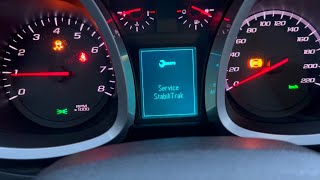
- "Service StabiliTrak" message on the driver information center.
- "Service Power Steering" message.
- "Engine Power is Reduced" message and limp mode activation.
- ABS and Traction Control warning lights 🎬 See how to fix ABS and Traction Control warnings. are illuminated.
- Engine may hesitate, stall, or fail to start.
- Transmission may be stuck in one gear (limp mode).
- Erratic behavior of door locks or interior lights.
- Loss of communication with the OBD-II port, preventing scanning.
- Replacing the Body Control Module (BCM) or Electronic Brake Control Module (EBCM) without first thoroughly inspecting the wiring harness, especially the X411 connector, which is the most common point of failure for this specific vehicle and code.
Most Likely Causes

- Corrosion or Broken Wires in X411 Connector 🔴 High Probability This 16-pin connector is located under the rear of the vehicle on the driver's side, behind the fuel tank and near the subframe. This location makes it highly susceptible to moisture, road salt, and wheel spray, leading to corrosion and wire degradation, especially on the twisted-pair CAN bus wires (typically Tan and Tan/Black).
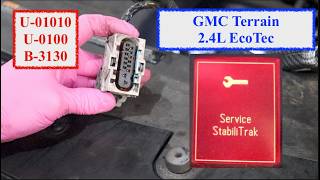
How to confirm: Visually inspect the X411 connector for green or white corrosion, swollen wires, or broken pins. TSBs recommend removing tape and conduit to inspect wires leading into the connector, as breaks can occur inside the insulation. Perform a 'wiggle' test on the harness while monitoring network status with a scan tool. 🎬 Watch this walkthrough for troubleshooting intermittent StabiliTrak messages.
Typical fix: Repair or replace the damaged terminals and connector body. Clean any corrosion and apply dielectric grease to seal the connection from future moisture intrusion. In severe cases, a new connector pigtail is spliced in.
Est. part cost: $20-$75 - Damaged or Chafed Wiring Harness 🟡 Medium Probability Wiring harnesses can rub against chassis or engine components over time, leading to chafing that shorts out the CAN bus wires. Rodent damage has also been noted as a cause for breaks in the harness near the X411 connector.
How to confirm: Visually inspect major wiring harnesses in the engine bay and under the vehicle for signs of wear, rubbing, or rodent damage.
Typical fix: Repair the damaged section of wire, ensuring the twisted-pair nature of the CAN bus wires is maintained to preserve signal integrity. Reroute or protect the harness to prevent future damage.
Est. part cost: $5-$25 - Weak Battery or Poor Ground Connection ⚪ Low Probability → Shop Vehicle Battery
How to confirm: Test the battery voltage (should be above 12.4V with the engine off and 13.7V+ when running). Inspect and clean the main battery terminals and chassis ground points for tightness and corrosion.
Typical fix: Charge or replace the battery. Clean or tighten ground connections.
Est. part cost: $0-$250 - Failed Control Module ⚪ Low Probability
How to confirm: Use a professional scan tool to see which modules are not communicating. Disconnect suspect modules one by one to see if communication on the network is restored. A module that brings the network back online when unplugged is likely faulty and pulling the bus down.
Typical fix: Replace the failed module (e.g., BCM, EBCM, TCM) and perform any necessary programming.
Est. part cost: $200-$800
Rare But Worth Checking
- Faulty Aftermarket Electronics: Improperly installed remote starters, alarms, stereos, or trailer brake controllers can interfere with or short the CAN bus network, causing communication faults. If the issue started after an installation, this should be the first thing you check.
Diagnosis Steps
- Check and confirm the battery has a full charge (at least 12.4 volts) and that the terminals are clean and tight.
- Scan all vehicle modules with a professional-grade scan tool that can read network status. Note which modules are not communicating.
- Inspect all fuses related to control modules (BCM, ECM, EBCM, etc.) in both the interior and under-hood fuse boxes.
- Locate and meticulously inspect the X411 connector under the rear of the vehicle on the driver's side, as specified in TSB PIT5427B. Disconnect it and check for any signs of green/white corrosion, moisture, or damaged pins.
- Perform a thorough visual inspection of the main wiring harnesses for any signs of physical damage, chafing, or rodent activity, paying close attention to the harness leading to X411.
- If no visual faults are found, disconnect the battery and measure the resistance between Pin 6 (CAN High) and Pin 14 (CAN Low) at the OBD-II port. A healthy network should read approximately 60 ohms. A reading of 120 ohms indicates an open circuit or a missing terminating resistor. A reading near 0 ohms indicates a short between the high and low lines.
- If the resistance is incorrect (e.g., 120 ohms), begin disconnecting modules one at a time from the high-speed CAN bus and re-check the resistance. The module that, when disconnected, restores the 60-ohm reading (or brings the 120 ohm reading to open) is likely the source of the fault.
- If a wiring fault is suspected, repair the damaged wires or terminals, ensuring a solid, weather-proof connection. Use a new connector pigtail if the original is too damaged.
Parts You'll Likely Need
- Wiring Harness Connector Pigtail
(OEM #ACDelco PT2782 (or similar, verify by terminal type))— This is the most common fix, needed to replace corroded terminals or the entire connector body for the X411 connector.
Trusted brands: ACDelco, Dorman
OEM price range: $40-$75
Aftermarket price range: $20-$50 - X411 Connector Body
(OEM #ACDelco 13580899)— If only the plastic connector housing is damaged and terminals can be saved or replaced individually, this part may be needed.
Trusted brands: ACDelco
OEM price range: $25-$40
Aftermarket price range: $15-$30 - Electronic Brake Control Module (EBCM) — In the rare case that a module has failed and is taking down the network, the EBCM is a common culprit as it contains a terminating resistor. Requires programming after installation.
Trusted brands: ACDelco
OEM price range: $400-$600
Aftermarket price range: $250-$450
Related Codes That Often Appear With This One
- U0100 — Lost Communication With ECM/PCM
- U0101 — Lost Communication with TCM
- U0121 — Lost Communication With Anti-Lock Brake System (EBCM) Control Module
- U0140 — Lost Communication With Body Control Module
- C0045, C0050 — Wheel speed sensor codes that appear when the EBCM loses communication.
Technical Service Bulletins (TSBs) & Recalls
- PIT5427B: Supersedes PIT5427A. Identifies corrosion in the X411 connector (located under the rear of the vehicle, behind and to the left of the fuel tank) as a primary cause for U0073 and numerous other communication and stability system DTCs.
- PIT5171D: Points to inspecting the X411 connector for a wire break inside the wire harness insulation, sometimes with no visible external damage, when U0073 is present with ABS/Stabilitrak messages.
- PIT5400: Mentions U0073 in a list of codes that can appear with 'service power steering' or 'vehicle soon' messages, often related to the same underlying network communication failure.
Platform-Specific Known Issues
- GM Technical Service Bulletin PIT5427B is the primary document for this issue, superseding previous versions. It explicitly calls out corrosion in the X411 connector as the cause for U0073 and a host of other communication codes on the 2010-2017 Terrain and Equinox.
- GM Technical Service Bulletin PIT5171D also points to a wire break *inside* the insulation of the harness near the X411 connector as a cause for U0073 and related ABS codes, sometimes due to rodent damage.
Mechanic-Grade Diagnostic Values
- CAN Bus Network Resistance — expected: Between 45 and 65 Ohms when measured between Pin 6 and Pin 14 of the DLC with the battery disconnected. A perfect reading is ~60 Ohms.. Failure: A reading of ~120 Ohms indicates an open circuit or one of the two terminating resistors is offline. A reading near 0 Ohms indicates a short between the CAN High and CAN Low wires.
- CAN High Voltage to Ground — expected: 2.5V to 3.5V with the key on, engine off (network idle).. Failure: Voltage that is flatlined, stuck high, or does not mirror the CAN Low signal indicates a bus or module fault.
- CAN Low Voltage to Ground — expected: 1.5V to 2.5V with the key on, engine off (network idle).. Failure: Voltage that is flatlined, stuck low, or does not mirror the CAN High signal indicates a bus or module fault.
Wiring & Ground Locations

- X411 Connector — Under the vehicle on the driver's side, located on a bracket behind the fuel tank and near the rear subframe.. This is the most common failure point for U0073 on this platform due to its exposure to moisture and road salt, as documented in multiple GM TSBs.
- DLC (OBD-II Port) Pins — Under the driver's side dashboard.. Pin 6 is the CAN High line and Pin 14 is the CAN Low line. These are the primary access points for testing the entire network's resistance.
- G103 — Located at the left rear of the engine compartment on the cowl, above the brake booster.. This ground point serves the Body Control Module (BCM) and the Data Link Connector (DLC). A poor connection here can cause widespread communication failures and prevent a scan tool from connecting.
- G401 — Located in the left side of the luggage compartment.. This ground serves rear-body modules. While less common, a fault here could impact modules on the rear of the CAN bus, contributing to network instability.
- G301 — Located under the driver's seat.. This ground point is for components under the passenger compartment. A loose or corroded G301 can cause intermittent issues with modules located inside the cabin.
Real Owner Repair Stories
- Chevy HHR Network forum user (Chevrolet HHR (similar GM platform)) — Power steering warning, anti-theft light, limp mode, and code U0073. The issue was intermittent.
❌ Tried (didn't work) Replacing the battery (provided a temporary fix for one week)., Replacing the anti-theft module (immobilizer ring); the system would not relearn the keys with the new part.
✅ What actually fixed it The issue was ultimately resolved by reinstalling the *original* anti-theft module and having a technician with a proper scan tool perform a 'Download of the key data' to properly relearn the module and keys. This indicates the root cause was a software/data corruption issue, not a hard part failure.
"I Checked Everything" — The Actual Cause
- A common scenario matching GM TSB PIT5171D is when a visual inspection and even a 'wiggle test' of the X411 harness show no obvious faults. The actual cause is a wire that has broken *inside* the insulation. The outer sheathing looks intact, but the copper conductor inside has failed due to corrosion or stress. The only way to find this is to physically pull on each individual CAN wire at the connector; the broken wire will stretch like a rubber band before snapping.
OEM Part Supersession History
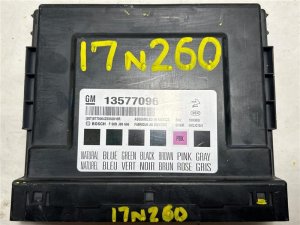
22911900, 22911902→22754644, 23156466— Updated part revision for the Electronic Brake Control Module (EBCM).
Heads up: Always verify the correct part number with a vehicle's VIN before ordering, as programming is required after installation.84107316→84342062— Standard part number update for a newer version of the Electronic Brake Control Module Assembly.
Heads up: This part is listed for models with specific options like 'collision avoidance'. Fitment must be verified by VIN.
Helpful Videos
We Have This Part in Stock

The information in this article is provided for general reference and educational purposes only. Vehicle specifications, procedures, and part compatibility can vary by production date, trim level, and region. Always consult your vehicle's factory service manual and verify part numbers before purchasing or performing repairs. Safety-critical components such as airbags, seat belts, and braking systems should be installed by a qualified professional.
- Gmc TERRAIN:
- 🧭 Diagnostic Flowchart
- 🎬 Helpful Videos
- 🛍️ Shop This Part
- What's Unique About the 2010-2015 Gmc TERRAIN
- Symptoms You May Notice
- Most Likely Causes
- Rare But Worth Checking
- Diagnosis Steps
- Parts You'll Likely Need
- Related Codes That Often Appear With This One
- Technical Service Bulletins (TSBs) & Recalls
- Platform-Specific Known Issues
- Mechanic-Grade Diagnostic Values
- Wiring & Ground Locations
- Real Owner Repair Stories
- "I Checked Everything" — The Actual Cause
- OEM Part Supersession History
- 🎟️ Get 5% Off