

U0073 on 2007-2014 GMC Yukon XL: Causes and Fixes for Communication Failure
On a 2007-2014 GMC Yukon XL, code U0073 indicates a loss of network communication. This is most often caused by corroded or damaged wiring in the harness located under the driver's side carpet and sill plate, a known issue for this platform. Other common causes include poor connections at the transmission harness and faulty grounds. The fix is typically a targeted wiring repair, not an expensive module replacement.
- U0073 on a 2007-2014 Yukon XL is a critical network failure code that makes the vehicle unsafe to drive.
- Do not immediately assume a control module has failed. The problem is most likely a wiring issue.
- The first and most important place to inspect for damage is the wiring harness located under the driver's side carpet and door sill plate.
- Diagnosing this code requires a multimeter to check for CAN bus resistance (60 ohms) at the OBD-II port.
- Referencing GM TSB #08-07-30-021H is crucial, as it details common failure points like the transmission harness connector.
What's Unique About the 2007-2014 Gmc YUKON XL
The GMT900 platform, which includes the 2007-2014 Yukon XL, is well-known for issues that trigger the U0073 code. The primary vulnerability is the main CAN bus wiring harness, which is routed through a channel under the driver's side carpet and door sill plate. This area is prone to water intrusion from leaking windshield seals, sunroof drains, or door seals, making the critical network wires highly susceptible to corrosion and damage over time. This specific wiring issue is the leading cause of U0073 on these trucks. 🎬 Watch: A deep dive into GMC CAN bus communication codes. Additionally, GM Technical Service Bulletin #08-07-30-021H specifically addresses GMLAN communication loss on these vehicles, pointing to other common failure points like backed-out terminals in the transmission connector and poor grounds.
Diagnostic Flowchart
Tap your situation to follow the diagnostic path that matches what you're seeing on this vehicle.
Symptoms You May Notice
- Multiple warning lights on the instrument panel (Check Engine, ABS, StabiliTrak).
- "Service StabiliTrak" or "Service Traction Control" messages on the Driver Information Center (DIC).
- Transmission may not shift correctly, may be stuck in one gear (limp mode), or may feel like it's in neutral.
- Instrument panel gauges fluctuating wildly or going completely dead.
- Door locks cycling intermittently on their own.
- Engine may stall, crank but not start, or not crank at all.
- Scan tool cannot communicate with any modules, or only communicates with a few.
- Radio or infotainment screen may go blank or reset.
- Replacing the Body Control Module (BCM) or Engine Control Module (ECM) without first diagnosing the wiring harness. The cause is far more likely to be a wiring fault than a failed module.
- Replacing the Transmission Control Module (TCM/TEHCM) without first inspecting the transmission's 16-way connector and harness per TSB #08-07-30-021H.
Most Likely Causes
- Corroded or Damaged Wiring Under Driver's Carpet/Sill Plate 🔴 High Probability The GMT900 platform routes the main CAN bus harness in a channel under the driver's side carpet, which is a known collection point for water from various leaks (windshield, sunroof, door seals). This leads to corrosion and breaks in the network wires, which are typically a twisted pair.
How to confirm: Pull up the driver's side door sill plate and peel back the carpet to visually inspect the wiring harness channel for signs of water, moisture, or corrosion (green or white powder). The GMLAN wires are typically a twisted pair of Tan and Tan/Black wires. Carefully unwrap the harness tape to inspect the wires themselves.
Typical fix: Cut out the damaged section of the CAN bus wires, splice in new 18-20 gauge wire using solder and heat shrink tubing for a permanent, sealed repair. It is critical to also identify and repair the source of the water leak to prevent a recurrence.
Est. part cost: $5-$25 - Poor Connection at Transmission Harness Connector 🟡 Medium Probability → Shop Transmission Assembly As detailed in GM TSB #08-07-30-021H, terminals for the high-speed GMLAN can back out of the 16-way electrical connector (X214) at the transmission, or the harness itself can be chafed or damaged. This is a very common failure point noted by GM.
How to confirm: With the vehicle raised, disconnect and inspect the 16-way connector on the right side of the transmission for backed-out terminals, corrosion, or damage. Wiggling the harness while monitoring network status with a scan tool can also help identify an intermittent connection.
Typical fix: Reseat or replace the affected terminals in the connector. Repair any damaged wires. Apply dielectric grease to the connector and ensure it is fully seated and the lock is engaged.
Est. part cost: $10-$50 - Weak or Failing Battery / Poor Ground Connection 🟡 Medium Probability → Shop Vehicle Battery Control modules are sensitive to voltage. Low voltage during startup can prevent modules from initializing correctly, causing them to drop off the network. These trucks also have several critical ground points (like G102, G300) that can corrode or become loose, causing floating voltages and communication errors. TSBs specifically mention checking G102 and G300 for poor connections.
How to confirm: Test the battery voltage with the engine off (should be >12.4V) and alternator output while running (13.7-14.7V). Perform a load test on the battery. Inspect and clean main battery terminals and chassis ground points, especially G102 (left rear of the engine) and G300 (under the vehicle at the driver door on a body mount).
Typical fix: Replace the weak battery. Disassemble, clean to bare metal, and re-secure corroded or loose ground connections.
Est. part cost: $150-$300 - Failed Terminating Resistor ⚪ Low Probability The CAN bus has two 120-ohm terminating resistors. If one fails, network communication is disrupted. On GMT900 trucks, one resistor is internal to the ECM. The second is often a separate component taped into the wiring harness near the rear of the vehicle, sometimes near the spare tire or Fuel Pump Control Module (FPCM).
How to confirm: With the battery disconnected, measure the resistance between Pin 6 (CAN High) and Pin 14 (CAN Low) at the OBD-II port. A healthy network will read approximately 60 ohms. A reading of 120 ohms indicates one of the two resistors is offline (or there's a break in the circuit). A reading near 0 ohms indicates a short circuit.
Typical fix: Locate and replace the failed resistor. The standalone resistor is often GM Part #88988999 or similar, and may require splicing into the harness.
Est. part cost: $20-$40
Rare But Worth Checking
- Failed Control Module: A single module (e.g., BCM, ECM, EBCM, or TCM) can fail internally and short out the entire network. This should only be considered after all wiring and connection issues have been ruled out, as it's a less common cause than wiring faults. Diagnosis involves disconnecting modules one by one to see if the network comes back online.
- Aftermarket Electronics: Improperly installed remote starters, alarms, stereos, or aftermarket trailer brake controllers tapped into the CAN bus can disrupt communication and cause a U0073 code.
- Internal Transmission Failure: → Shop Transmission Assembly In some cases with the 6L80 transmission, a severe internal mechanical or hydraulic failure (like a cracked drum) can cause the Transmission Control Module (TEHCM) to send erratic data or go offline, triggering a U0073 as a secondary symptom.
Diagnosis Steps
- Check Battery and Grounds: Ensure the battery is fully charged (>12.4V) and passes a load test. Clean all battery and main chassis ground connections, paying special attention to grounds G102 and G300.
- Scan for Codes: Use a high-quality scan tool to check for codes in ALL modules. Note which modules are not communicating, as this provides crucial diagnostic clues.
- Check CAN Bus Resistance: Disconnect the negative battery terminal. At the OBD-II port, measure the resistance between Pin 6 (CAN High) and Pin 14 (CAN Low). The reading should be approximately 60 ohms. If it's 120 ohms, a terminating resistor is offline or there's an open circuit. If it's near 0 ohms, the CAN wires are shorted together.
- Inspect Driver's Side Wiring: This is the most critical step. Remove the driver's side door sill plate and pull back the carpet. Thoroughly inspect the wiring harness in the channel for any signs of water damage, corrosion (green/white powder), or broken wires, especially the twisted pair of GMLAN wires.
- Inspect Transmission Connector: Raise the vehicle and inspect the 16-way connector at the transmission for damage, corrosion, or backed-out pins as per TSB 08-07-30-021H.
- Perform a "Wiggle Test": With the key on and a scan tool monitoring network status, carefully wiggle wiring harnesses at known problem areas (under driver's carpet, at transmission connector, near fuse block) to see if you can make the fault appear or disappear.
- Isolate Modules (If Necessary): If resistance is incorrect and no visible wiring damage is found, you can begin disconnecting modules one by one from the CAN bus (e.g., ABS, TCM, BCM) and re-checking resistance to see which module brings the reading back to normal. This indicates a faulty module or a short in the wiring leading to it.
Parts You'll Likely Need
- Wiring Repair Supplies — The most common fix is repairing corroded or broken CAN bus wires, which requires wire, solder, and heat shrink tubing.
- Battery — A weak or failing battery can cause low voltage issues that trigger communication codes.
- GMLAN Terminating Resistor
(OEM #88988999)— If the network resistance test reads 120 ohms, a terminating resistor may have failed. This is a common replacement part.
Related Codes That Often Appear With This One
- U0100 — Lost Communication With ECM/PCM
- U0101 — Lost Communication With TCM
- U0121 — Lost Communication With Anti-Lock Brake System (ABS) Control Module
- U0140 — Lost Communication With Body Control Module (BCM)
Technical Service Bulletins (TSBs) & Recalls
- 08-07-30-021H: Loss of High Speed GMLAN Communications, Intermittent No Crank, IP Gage Fluctuation. This is the main TSB for U0073 on this platform. It details checking for backed-out terminals at the transmission connector, chafed wiring, and poor connections before replacing any modules.
- PIT4853C: Intermittent No Crank / Loss Of High Speed LAN / Loss Of Powertrain Expansion Bus / SES Lamp / Multiple DTCs. This bulletin points technicians to check ground G300 for undercoating interference, check ground G102, and inspect for specific harness chafing points.
Platform-Specific Known Issues
- GM Technical Service Bulletin #08-07-30-021H is the primary document for this issue. It directly addresses loss of high-speed GMLAN communications and lists multiple potential causes including backed-out terminals at the transmission connector, chafed harnesses, and poor connections, advising against immediate module replacement.
- GM Preliminary Information Bulletin PIT4853C also addresses intermittent no-crank and loss of communication codes, pointing to poor connections at ground G300 (due to undercoating) and G102, as well as chafed harnesses.
Mechanic-Grade Diagnostic Values
- CAN Bus Resistance (at OBD-II Pins 6 & 14) — expected: ~60 Ohms (with battery disconnected). Failure: A reading of ~120 Ohms indicates an open circuit or one terminating resistor is offline. A reading near 0 Ohms indicates a short between the CAN High and Low wires.
- CAN High Voltage (Pin 6 to ground, key on) — expected: Toggling between 2.5V and 3.5V. Failure: A flatline voltage, or voltage spiking towards battery voltage, indicates a short or a module pulling the bus high.
- CAN Low Voltage (Pin 14 to ground, key on) — expected: Toggling between 2.5V and 1.5V. Failure: A flatline voltage, or voltage dropping to 0V, indicates a short or a module pulling the bus low.
- Battery Voltage (Engine Off) — expected: >12.4V. Failure: Voltage below 12.4V indicates a weak or discharged battery, which is a common cause of communication codes.
Scan Tool Commands That Help
- GDS2/Tech2: Data Bus Diagnostic Tool — As of 2015, GM recommends using this tool first to diagnose High Speed LAN issues. It can help identify which modules are not communicating and guide diagnostics before performing manual checks.
- High-end Bidirectional Scanner: Module Status / Network Test — To see a list of all modules on the network and identify which ones are not responding. This is the first step to narrow down the location of the fault.
Wiring & Ground Locations
- G300 — Under the vehicle at the driver door on a body mount.. A GM TSB specifically calls out checking this ground for being loose or having undercoating between the eyelet and the frame, which causes a poor connection and intermittent network issues.
- G102 — On the left rear of the engine, near the cylinder head.. This is a primary engine-related ground. A TSB for Hybrid models with U0073 specifically mentions checking G102 for a clean and tight connection.
- C3 (X3) Connector — A green connector on the back of the Left I/P Junction Block (the interior fuse box).. This is a critical diagnostic connector for splitting the high-speed CAN bus. Disconnecting it separates the BCM/ECM/TCM from other modules, allowing a technician to quickly determine if the fault is in the front or rear half of the vehicle's network.
- G201 — In the upper left corner of the instrument panel, near the A-pillar, behind the dash.. This is a key ground for the instrument panel cluster and other dash components. A fault here can cause the gauges to go erratic or dead, a primary symptom of U0073.
- X214 Connector — The 16-way electrical connector on the right side of the transmission (6L80/6L90).. TSB #08-07-30-021H identifies this connector as a primary failure point where terminals can back out, causing a loss of communication with the TCM and bringing down the entire network.
Real Owner Repair Stories
- CorvetteForum user (2008 Chevrolet Corvette (shares GMT900 electrical architecture and TSB)) — Gauge cluster goes crazy, "Service Traction System" message, car gets stuck in 2nd gear, codes P0700 and U0073.
❌ Tried (didn't work) Clearing codes (they would return after 30-50 miles).
✅ What actually fixed it The user was following TSB #08-07-30-021H, which points to backed-out terminals in the transmission connector or chafed wiring. The forum discussion confirms that repeatedly unplugging and replugging the connector (as would happen during a TCM replacement) can sometimes temporarily fix the connection, leading to the misdiagnosis of a bad module. The root cause is the physical connection at the harness.
Model Year Variations Within This Range
- 2009+: TSB #08-07-30-021H notes that on 2009 and newer Sierra and Silverado models, the term 'Data Link Resistor' is used for the terminating resistor, whereas 'Terminator Resistor' was used for 2007 models. This is a terminology change in service information but refers to the same functional component.
Helpful Videos


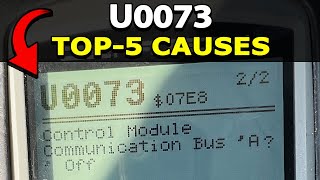
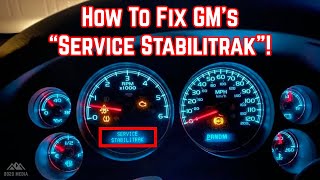

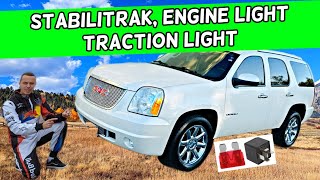
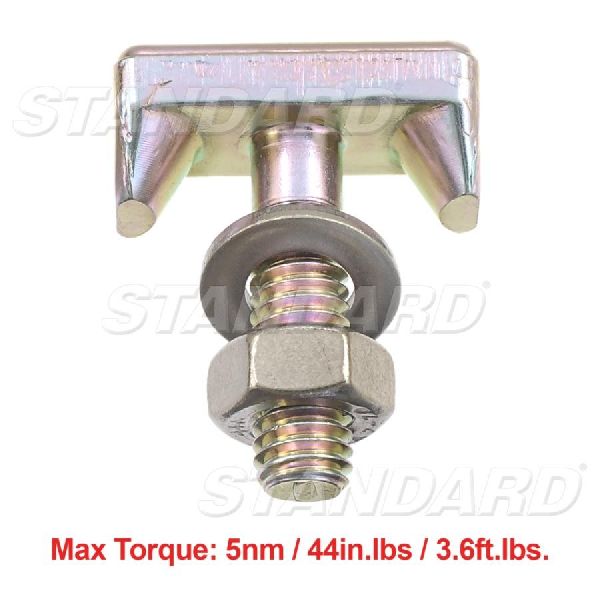
We Have This Part in Stock


The information in this article is provided for general reference and educational purposes only. Vehicle specifications, procedures, and part compatibility can vary by production date, trim level, and region. Always consult your vehicle's factory service manual and verify part numbers before purchasing or performing repairs. Safety-critical components such as airbags, seat belts, and braking systems should be installed by a qualified professional.
- Gmc YUKON XL:
- 🧭 Diagnostic Flowchart
- 🎬 Helpful Videos
- 🛍️ Shop This Part
- What's Unique About the 2007-2014 Gmc YUKON XL
- Symptoms You May Notice
- Most Likely Causes
- Rare But Worth Checking
- Diagnosis Steps
- Parts You'll Likely Need
- Related Codes That Often Appear With This One
- Technical Service Bulletins (TSBs) & Recalls
- Platform-Specific Known Issues
- Mechanic-Grade Diagnostic Values
- Scan Tool Commands That Help
- Wiring & Ground Locations
- Real Owner Repair Stories
- Model Year Variations Within This Range
- 🎟️ Get 5% Off