

U0073 on 2015-2017 GMC Yukon XL: Causes and Fixes for Communication Failure
On a 2015-2017 GMC Yukon XL, code U0073 almost always points to a poor ground connection at the G218 ground stud under the driver's side dash. This causes a network failure, leading to blank screens and other electrical issues. The fix is often as simple as cleaning the ground connection, which is a low-cost DIY repair. This is a well-documented issue in GM TSB PIT5405C.
- U0073 on a 2015-2017 Yukon XL is a network communication failure, not a single part failure.
- The most likely cause is a poor ground at G218 under the driver's side dash, a known issue covered by GM TSBs.
- Symptoms include blank radio/HVAC screens, erratic wipers, and a host of warning messages. Do not replace these components; they are symptoms, not the cause.
- Always start diagnosis by checking the battery and the G218 ground before attempting more complex or expensive repairs.
- Driving the vehicle is not recommended as it can stall or lose power steering unexpectedly.
What's Unique About the 2015-2017 Gmc YUKON XL
The K2XX platform, which includes the 2015-2017 Yukon XL, is notoriously sensitive to ground issues and voltage stability. GM issued multiple Technical Service Bulletins (TSBs) about this exact problem. The most common cause of U0073 and its associated symptoms—like the radio and HVAC screens going blank or wipers acting erratically—is a specific design flaw where the dash insulator mat gets trapped under the main Body Control Module ground (G218), causing an intermittent and frustrating loss of communication across the entire vehicle.
Diagnostic Flowchart
Tap your situation to follow the diagnostic path that matches what you're seeing on this vehicle.
Symptoms You May Notice
- Instrument panel cluster goes blank or is inoperative
- Radio and/or Heater-Vent-Air Conditioning (HVAC) screen goes blank
- Service StabiliTrak message appears with a warning chime
- Engine may stall or not start
- Reduced or total loss of power steering assist
- Wipers continue to run after being turned off or park in the wrong position
- Multiple warning lights on the dashboard (Check Engine, ABS, Traction Control)
- Harsh or erratic transmission shifting
- Alarm sounds when locking doors or door locks cycle randomly
- Hood ajar message appears and/or dome lamps flash when shifting into reverse
- Replacing the radio or HVAC control unit because the screen is blank. The blank screen is a symptom of the network failure, not the cause.
- Replacing the Body Control Module (BCM) or Engine Control Module (ECM) without first verifying the G218 ground and performing a full network diagnostic.
Most Likely Causes
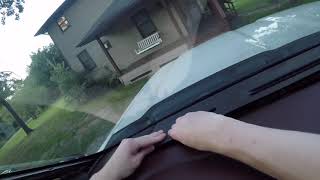
- Poor Ground Connection at G218 🔴 High Probability A known manufacturing defect documented in GM TSBs PIT5405A, PIT5405B, and PIT5405C. The factory dash insulator mat often gets trapped between the G218 ground eyelet and the body stud, preventing a solid connection for the Body Control Module (BCM) and other components. 🎬 Watch: How to fix the G218 ground connection step-by-step.
How to confirm: Visually inspect the G218 ground stud located under the driver's side dash, behind the kick panel near the A-pillar and emergency brake pedal. Check if the black dash mat is underneath the ground's metal eyelet. The ground nut may also be loose or cross-threaded.
Typical fix: Using a 10mm socket, remove the ground nut and eyelet. Cut away the section of the dash insulator mat that is interfering with the stud. Use a wire brush or sandpaper to clean the eyelet and the body surface to bare metal. Reinstall the eyelet and nut, ensuring a tight, clean metal-to-metal connection.
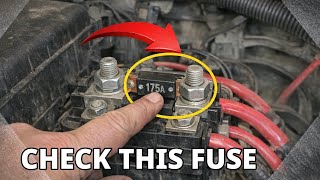
Est. part cost: $0-$5 - Low Battery Voltage or Poor Battery Cable Connections 🟡 Medium Probability → Shop Vehicle Battery Modern vehicles are highly sensitive to voltage. A weak AGM battery, corroded terminals, or loose main power/ground cables can cause modules to fail initialization during startup, triggering communication codes. 🎬 See how a blown mega fuse can cause similar electrical failures. TSB PIT5405C specifically calls out checking battery cable integrity.
How to confirm: Test the battery to ensure it has a static charge above 12.4V and that the charging system is producing 13.7-14.7V when running. TSB PIT5405C advises tightening battery clamp nuts to 7 Nm (62 lb-in) and the negative cable-to-block nut to 45 Nm (33 ft-lb). Perform a loaded voltage drop test on the main battery cables; a drop over 200mV on the negative or 100mV on the positive indicates a bad cable.
Typical fix: Clean battery terminals and cable ends with a wire brush. Tighten all connections to the specified torque. If the battery fails a load test or the cables fail a voltage drop test, they must be replaced.
Est. part cost: $0-$400 - Shorted Battery Cable at Starter ⚪ Low Probability → Shop Vehicle Battery TSB PIT5405C notes that the starter solenoid B+ battery cable can short against the starter heat shield due to mis-installation or a loose shield. This can cause a significant voltage drop across the electrical system, disrupting module communication.
How to confirm: Visually inspect the clearance between the B+ battery cable terminal and the starter heat shield. Look for any signs of arcing, melting, or physical contact.
Typical fix: If contact is found, replace both the B+ battery cable and the starter heat shield to ensure proper clearance and prevent a recurrence.
Est. part cost: $50-$200 - Faulty Control Module ⚪ Low Probability While less common than wiring or ground issues, any single module on the network (BCM, ECM, TCM, SDGM, etc.) can fail internally and disrupt the entire CAN bus. The Serial Data Gateway Module (SDGM) in particular is noted in other TSBs as a potential point of failure that can cause a 'logic lock'.
How to confirm: This requires an advanced scan tool to see which modules are offline. The definitive test is to unplug modules one by one to see if communication is restored to the rest of the network. If unplugging a specific module brings the network back online, that module is the culprit.
Typical fix: Replace the faulty module. Note that most modules (ECM, BCM, SDGM) require programming to the vehicle's VIN after installation.
Est. part cost: $300-$1500
Rare But Worth Checking
- Faulty Aftermarket Electronics: Improperly installed remote starters, alarms, or even faulty phone chargers plugged into an accessory port can introduce electrical noise or shorts onto the CAN bus network. If you have recently installed any aftermarket device, try disconnecting it to see if the problem resolves.
Diagnosis Steps
- Check the battery. Ensure it is fully charged (above 12.4V), passes a load test, and that the terminals and main cable connections are clean and tight to specified torque (62 lb-in).
- Scan for all codes from all modules. A long list of 'U' (communication) codes from various modules points to a network-wide failure, not individual part failures.
- Inspect the G218 ground. This is the most critical step. Locate the ground stud under the driver's side dash near the kick panel. Use a 10mm socket to remove the nut and check for the dash insulation mat being trapped under the eyelet. Clean all contact surfaces to bare metal. 🎬 Watch this walkthrough to locate and repair the G218 ground stud.
- If the G218 ground is good, perform a visual inspection of other major grounds (engine block, frame) and wiring harnesses for any obvious damage, corrosion, or looseness.
- Perform a loaded voltage drop test on the positive (max 100mV drop) and negative (max 200mV drop) battery cables as described in TSB 20-NA-188.
- (Advanced) With the battery disconnected, measure the resistance between Pin 6 (CAN High) and Pin 14 (CAN Low) at the OBD-II port. A healthy reading is approximately 60 ohms. A reading of 120 ohms indicates a problem with a termination resistor or the wiring to it.
- (Advanced) If a faulty module is suspected, use a scan tool to identify non-communicating modules and unplug them one at a time to try and restore the network.
Parts You'll Likely Need
- Wiring Repair Supplies — The most common fix is repairing the G218 ground, which may only require basic hand tools and sandpaper. If other wiring is damaged, butt connectors and heat shrink may be needed.
OEM price range: $0-$20
Aftermarket price range: $0-$20 - Body Control Module (BCM)
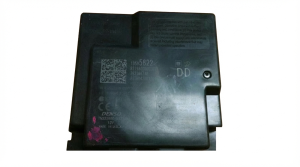
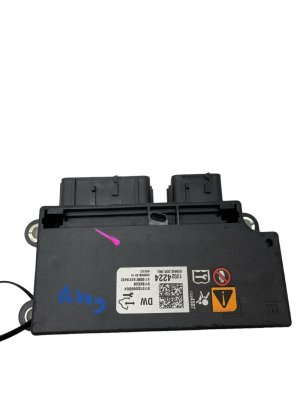
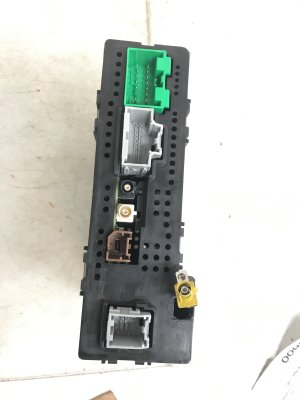
(OEM #13594692 (supersedes 13587704, 13536380, 13541808, 13546978))— If the G218 ground is confirmed good and diagnostics point to a module failure, the BCM is a possible culprit, but should only be replaced after exhaustive diagnosis. Requires programming.
Trusted brands: ACDelco (GM Genuine)
OEM price range: $170-$500
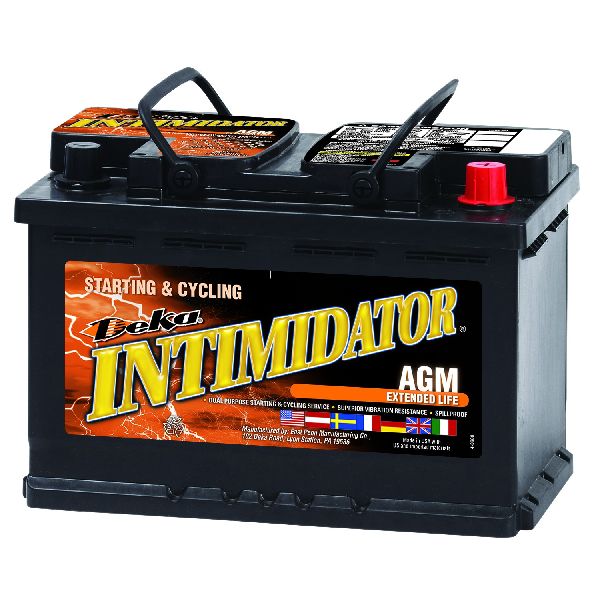
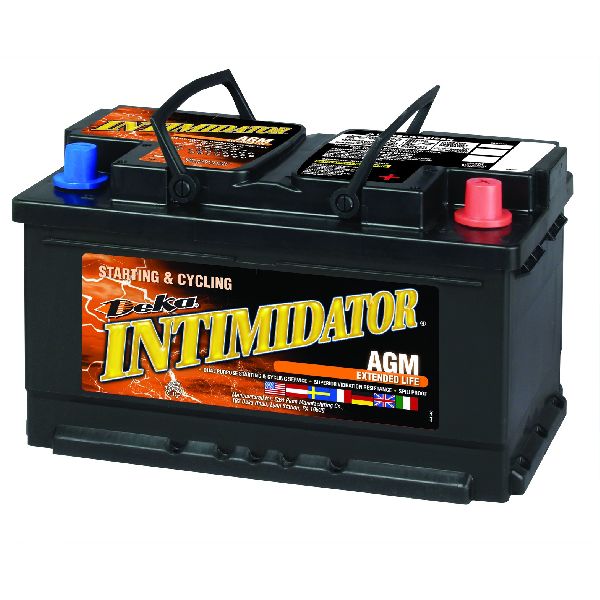
Aftermarket price range: $150-$400 - Battery — A weak or failing battery is a common cause of low voltage issues that can trigger a cascade of communication codes. These vehicles typically require an AGM-type battery.
Trusted brands: ACDelco, Optima, Odyssey
OEM price range: $200-$350
Aftermarket price range: $180-$300
Related Codes That Often Appear With This One
- U0100 — Lost Communication With ECM/PCM
- U0101 — Lost Communication with TCM
- U0121 — Lost Communication With Anti-Lock Brake System (ABS) Control Module
- U0140 — Lost Communication With Body Control Module
- U0415 — Invalid Data Received From Anti-Lock Brake System Control Module
Technical Service Bulletins (TSBs) & Recalls
- PIT5405C — Steering Jerks Or Kicks Back / Reduced Power Steering Assist / Engine Stall / No Start / Service Stabilitrak / IPC / Radio / HVAC Goes Blank Various DTCs — This is the primary GM document for the U0073 issue on this platform. It explicitly identifies the poor BCM ground at G218 (due to an interfering dash insulator mat), a shorted starter B+ cable, and high-resistance battery cables as the main causes for a host of electrical problems, including a long list of communication DTCs starting with U0073.
- 20-NA-188 — Intermittent Electrical Issues, Various DTCs, No Start, Stall — This bulletin supersedes PIT5405C. It reiterates the same diagnostic steps, focusing on checking the G218 ground, performing loaded voltage drop tests on battery cables, and inspecting for shorts at the starter.
Platform-Specific Known Issues
- TSB PIT5405C directly links a long list of electrical problems on the 2015-2017 Yukon XL—including blank screens, erratic wipers, and multiple communication DTCs like U0073—to the G218 ground. The bulletin explicitly states the cause is often the 'front dash insulator mat...trapped between the ground eyelet and the body stud'.
- TSB PIT5405A, an earlier version of the bulletin, identified the same G218 ground issue as the cause for engine stalls and blank instrument panel, radio, and HVAC screens.
Mechanic-Grade Diagnostic Values
- CAN Bus Resistance — expected: ~60 Ω (measured between Pin 6 and Pin 14 of the OBD-II port with battery disconnected). Failure: A reading of ~120 Ω indicates an open circuit or one of the two termination resistors is offline. A reading near 0 Ω indicates the CAN High and CAN Low wires are shorted together.
- CAN High Voltage (Bus Active) — expected: ~2.5V to 3.5V (measured from Pin 6 of OBD-II port to chassis ground). Failure: Voltage that is flatlined, stuck high, or does not fluctuate indicates a bus problem.
- CAN Low Voltage (Bus Active) — expected: ~1.5V to 2.5V (measured from Pin 14 of OBD-II port to chassis ground). Failure: Voltage that is flatlined, stuck low, or does not mirror the CAN High signal indicates a bus problem.
- CAN Bus Voltage (Bus Asleep) — expected: 0V (measured between Pin 6 and Pin 14 of the OBD-II port). Failure: Any persistent voltage indicates a module is not going to sleep and may be keeping the bus awake.
Hidden / Shadow Codes Worth Checking
- SDGM 'Logic Lock': This is not a formal DTC, but a well-documented condition where the Serial Data Gateway Module (SDGM) freezes or becomes unresponsive, shutting down all CAN bus communication. It can be triggered by voltage fluctuations and will not be resolved until the module is power-cycled. (see via This condition is diagnosed by observing a total loss of communication with multiple modules on a scan tool, even when wiring and resistance tests appear normal. A temporary fix via a battery reset is a strong indicator of a logic lock event.)
Scan Tool Commands That Help
- GDS2 / Professional Scan Tool: Module Status / Network Test — Use this function at the start of diagnosis to get a list of all modules on the network and see which ones are 'Present' vs. 'Not Communicating'. A long list of non-communicating modules confirms a network-wide fault.
- Manual Procedure / GDS2: Module Isolation Diagnostic — When CAN bus resistance is incorrect or multiple modules are offline, physically disconnect non-essential modules one-by-one (e.g., ABS, seat heater module, radio) and re-check for communication. If the network comes back online after unplugging a specific module, that module is the source of the fault.
- Manual Procedure: Global Power Reset — After a repair (like replacing a fuse or module) or to resolve a suspected 'logic lock'. Disconnect both battery cables and hold the metal cable ends together for one minute. This drains residual power from all modules, forcing a complete, clean reboot upon reconnection.
Wiring & Ground Locations
- G218 — Under the driver's side dash, behind the kick panel, near the A-pillar. It is the primary ground for the Body Control Module (BCM).. This is the most common cause of U0073 on this platform due to a factory defect where an insulation mat gets trapped under the ground terminal, causing high resistance.
- Termination Resistors — The CAN bus has two 120-ohm resistors. One is internal to the Engine Control Module (ECM). The second is often a separate, plug-in component taped to the wiring harness, frequently located on a frame crossmember above the spare tire near the Fuel Pump Control Module (FPCM).. The network requires both resistors to function. If the external resistor fails or its wiring is damaged, the total bus resistance will read 120 ohms instead of 60, causing communication to fail.
- Serial Data Gateway Module (SDGM) — Located in the driver's footwell, to the left of the steering column, often mounted near the BCM. It has two main connectors, typically one black and one gray.. This module is the central router for all data networks. It is prone to 'logic lock' (freezing), which halts all communication and is a primary suspect if the G218 ground is good.
- Connector X225 — A large wiring harness connector located in the center console area.. This connector is a known weak point susceptible to corrosion or high resistance from spilled drinks, which can disrupt CAN bus signals passing through it.
- Circuit 5986 (Communication Enable) — A specific wire that runs from the BCM to multiple modules, often routed in the wiring harness under the driver's and passenger's side door sill plates.. This wire provides a 12V 'wake-up' signal to modules. A break or short in this circuit, often due to corrosion under the sill plates, can prevent modules from communicating, mimicking a full CAN bus failure.
Real Owner Repair Stories
- Chevy HHR Network forum post (GM Vehicle with similar CAN bus architecture) — Multiple communication codes including U0073, erratic electrical system behavior.
❌ Tried (didn't work) General owner troubleshooting
✅ What actually fixed it A GM technician found the ABS module was internally shorted, which was disrupting the entire network. Replacing and reprogramming the ABS module resolved all symptoms and codes. - Chevy Tahoe / GMC Yukon Forum user experience (General GM SUV) — Multiple 'U' codes, vehicle won't start, CAN bus network down.
❌ Tried (didn't work) Initial visual inspection
✅ What actually fixed it The problem was a faulty seat heater control module shorting out the data bus. The fault was isolated by disconnecting modules one by one until the network came back online. - Tahoe Yukon Forum user experience (GM SUV with modified suspension) — No communication with any module, CAN bus shorted (0 ohms resistance), smoke from passenger wheel well.
❌ Tried (didn't work) Cleaning underhood fuse box, Swapping fuse box cradle
✅ What actually fixed it An aftermarket resistor installed to delete the Z55 autoride suspension had failed and melted, shorting the CAN bus wiring. Cutting out the faulty resistor was the necessary step to begin restoring the network.
"I Checked Everything" — The Actual Cause
- In the context of network diagnostics, the equivalent of a 'smoke test clean' scenario is when all basic wiring tests pass, yet the problem persists. A primary example for the Yukon XL is a 'logic lock' of the Serial Data Gateway Module (SDGM). A technician can measure the correct 60 ohms of resistance and see no shorts to power or ground, but the vehicle still has no communication because the SDGM's software has frozen. The fix is not a wiring repair, but a power cycle of the module, either by disconnecting the battery or pulling the F28DL fuse.
- Another case, documented in GM TSB PIT5171B, involves CAN bus wires that break *internally* within the insulation. These wires can pass a simple continuity test with a multimeter because the copper strands are barely touching, but they fail under load or vibration. The fault is only found by physically pulling on the wires in the harness to see if they stretch or separate, revealing the hidden break.
When the Usual Fixes Don't Work
- While the G218 ground is the most common fix, numerous owner and technician reports confirm that when this repair does not work, the cause is often an entirely different component shorting the network. In one case, an internally failed ABS module was the true cause. In another, a faulty aftermarket suspension resistor melted and shorted the CAN wires. A third instance traced the fault to a bad seat heater module. These cases prove that if the G218 ground fix doesn't resolve the issue, a systematic 'divide and conquer' approach of isolating individual modules is the necessary next step, rather than assuming a different wiring or ground fault exists.
Model Year Variations Within This Range
- 2015-2017: No significant variations affecting the diagnosis or common causes of code U0073 have been identified within this specific model year range. The primary issues related to the G218 ground, SDGM logic lock, and general CAN bus architecture are consistent across these years of the K2XX platform.
Helpful Videos

Used OEM Parts in Stock
New Aftermarket Parts Available


The information in this article is provided for general reference and educational purposes only. Vehicle specifications, procedures, and part compatibility can vary by production date, trim level, and region. Always consult your vehicle's factory service manual and verify part numbers before purchasing or performing repairs. Safety-critical components such as airbags, seat belts, and braking systems should be installed by a qualified professional.
- Gmc YUKON XL:
- 🧭 Diagnostic Flowchart
- 🎬 Helpful Videos
- 🛍️ Shop This Part
- What's Unique About the 2015-2017 Gmc YUKON XL
- Symptoms You May Notice
- Most Likely Causes
- Rare But Worth Checking
- Diagnosis Steps
- Parts You'll Likely Need
- Related Codes That Often Appear With This One
- Technical Service Bulletins (TSBs) & Recalls
- Platform-Specific Known Issues
- Mechanic-Grade Diagnostic Values
- Hidden / Shadow Codes Worth Checking
- Scan Tool Commands That Help
- Wiring & Ground Locations
- Real Owner Repair Stories
- "I Checked Everything" — The Actual Cause
- When the Usual Fixes Don't Work
- Model Year Variations Within This Range
- 🎟️ Get 5% Off