

U0073 on 2013-2020 Subaru BRZ: Causes and Fixes for Communication Bus 'A' Off
On a 2013-2020 Subaru BRZ, the U0073 code is most often caused by an aftermarket device plugged into the OBD-II port, like an insurance tracker, Bluetooth scanner (especially with the Torque app), or an OpenFlash Tablet. Before attempting any repairs, unplug all devices from the port, clear codes, and disconnect the battery for a few minutes to reset the system. If the issue persists, a weak battery or a failed ABS/VDC module are the next most common causes.
- The most likely cause of U0073 on a BRZ is an aftermarket device in the OBD-II port. Remove it first.
- A weak battery can cause this code. Ensure your battery and charging system are healthy.
- This code indicates a serious network issue. Do not ignore it, as safety systems like ABS and VSC are likely disabled.
- If the simple fixes don't work, professional diagnosis is strongly recommended to avoid replacing expensive parts by guessing.
What's Unique About the 2013-2020 Subaru BRZ
The first-generation Subaru BRZ (and its Toyota 86/Scion FR-S siblings) has a CAN bus system that is known to be particularly sensitive to aftermarket electronics. Many owner reports indicate that devices plugged into the OBD-II port, such as insurance telematics dongles, Bluetooth scanners running the Torque app, or even aftermarket tuners like the OpenFlash Tablet (OFT), can disrupt the network and trigger a U0073 code. This often happens if the device is connected or the app is running when the car is started. While wiring and module failures are possible, interference from plug-in devices is a uniquely common first step for diagnosis on this specific platform.
Symptoms You May Notice
- Check Engine Light is on.
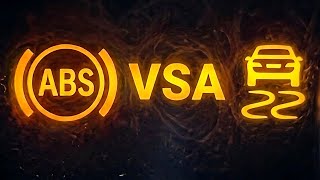
- ABS, Traction Control (VSC), and/or Tire Pressure warning lights are illuminated.
- Power Steering warning light may illuminate.
- Inability for an external scan tool (especially at an inspection station) to communicate with the vehicle.
- Vehicle may not start or crank in severe cases.
- Erratic gauge behavior on the instrument cluster.
- Loss of power or vehicle entering 'limp mode'.
- Engine may stall unexpectedly.
- Replacing the ECM (Engine Control Module) when the issue is a simple wiring problem or an interfering OBD-II device.
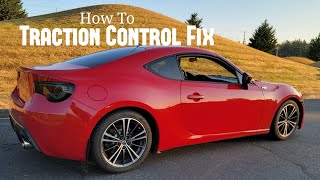
- Replacing wheel speed sensors when ABS/VSC lights are on, without realizing the root cause is a network failure. 🎬 Watch: How to fix VSC and traction lights on this platform.
Most Likely Causes
- Aftermarket Device in OBD-II Port 🔴 High Probability The CAN bus on the BRZ/FR-S/86 platform is sensitive. Many owners report that insurance trackers (like Progressive Snapshot), Bluetooth scanners (especially when used with the Torque app), or tuning devices (like the OpenFlash Tablet) cause this specific code, often if the device is active during startup.
How to confirm: Unplug any and all devices from the OBD-II port, including extension cables. Clear the codes using a scanner, or disconnect the negative battery terminal for 10 minutes to reset the modules. If the code does not return, the device was the cause.
Typical fix: Permanently remove the offending device from the OBD-II port, or ensure it is not active when starting the vehicle.
Est. part cost: $0 - Weak or Failing Battery 🟡 Medium Probability → Shop Vehicle Battery Modern control modules require stable voltage to initialize and communicate properly. Low voltage during startup is a common cause of network communication faults across many makes. One BRZ owner on Reddit reported this code appeared specifically after installing a used battery, which likely had low voltage.
How to confirm: Test the battery voltage at rest (should be >12.4V) and while the engine is running (should be 13.7V-14.7V). Have the battery load-tested at an auto parts store to confirm its health.
Typical fix: Replace the vehicle's 12V battery.
Est. part cost: $150-$250 - Damaged Wiring or Poor Connection ⚪ Low Probability The OBD-II port on this platform has been described by users as 'flimsy', making it susceptible to damage from frequently plugging and unplugging devices. General issues like corrosion, rodent damage, or chafed wires at key ground points or junction connectors can also interrupt the network.
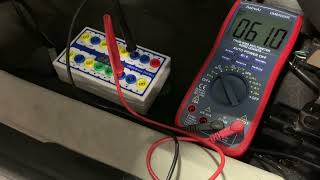
How to confirm: Visually inspect the wiring and pins at the OBD-II port. A professional would test the CAN bus resistance between pins 6 (CAN High) and 14 (CAN Low) of the OBD-II port with the battery disconnected. A healthy network should read approximately 60 Ohms. A reading of 120 Ohms indicates a break in the circuit or a faulty terminating resistor in a module, while a reading near 0 Ohms indicates a short circuit between the CAN wires.
Typical fix: Repair the damaged section of wiring or replace the affected connector.
Est. part cost: $5-$500 - Failed ABS/VDC Control Module ⚪ Low Probability → Shop ABS Control Module The ABS/VDC module is a key node on the CAN bus. If it fails internally, it can stop communicating and take down the entire network, causing U0073. This module contains one of the network's 120-Ohm terminating resistors, so its failure can disrupt the entire bus.
How to confirm: This is difficult without a professional scan tool. If U0073 is accompanied by multiple ABS/VDC-specific codes (C-codes), it points toward the ABS module. A technician would try to communicate with each module individually to see which one is offline and check CAN resistance. A confirmed repair involved replacing the module when U0073 was present with C1234, C146c, and C146e.
Typical fix: Replace the ABS/VDC control module and pump assembly. This may require programming or calibration by a dealer or specialist. It is critical to match the part number exactly to the original unit.
Est. part cost: $200-$800 (Used/Reman), $800-$1500 (New OEM)
Rare But Worth Checking
- Improperly Installed Aftermarket Electronics: If a remote start, aftermarket stereo/head unit, or alarm system was recently installed, it may be wired incorrectly and interfering with the CAN bus by tapping into the wrong wires. Try disconnecting it to see if the fault clears.
Diagnosis Steps
- Check for and remove any devices plugged into the OBD-II port (e.g., insurance trackers, Bluetooth scanners, tuners, extension cables).
- Inspect the OBD-II port itself for any bent, pushed-back, or damaged pins.
- Clear the codes. If they return, disconnect the negative battery terminal for at least 10 minutes to perform a hard reset of all vehicle modules.
- Test the battery and charging system. Ensure the battery is fully charged (>12.4V at rest) and the alternator is functioning correctly (13.7-14.7V when running).
- Inspect all related fuses in the interior and under-hood fuse boxes, particularly those for the ECU, BCM, and VDC systems.
- Visually inspect visible wiring harnesses under the dashboard and in the engine bay for any signs of damage, corrosion, or modification. Pay special attention to main ground points.
- With the battery disconnected, use a multimeter to measure the resistance between Pin 6 and Pin 14 of the OBD-II port. The reading should be approximately 60 Ohms. If it's 120 Ohms or open, there's a break in the circuit or a failed terminating module. If it's near 0 Ohms, there's a short.
- Using an oscilloscope, probe Pin 6 (CAN High) and Pin 14 (CAN Low) of the OBD-II port. With the key on, you should see mirror-image square wave patterns. CAN High should toggle between ~2.5V and ~3.5V, while CAN Low toggles between ~2.5V and ~1.5V. A flat line or missing signal indicates a wiring or module fault.
- If the problem persists, the vehicle should be taken to a qualified technician to perform network diagnostics with a professional scan tool (like the Subaru Select Monitor) to isolate the faulty module or wiring section.
Parts You'll Likely Need
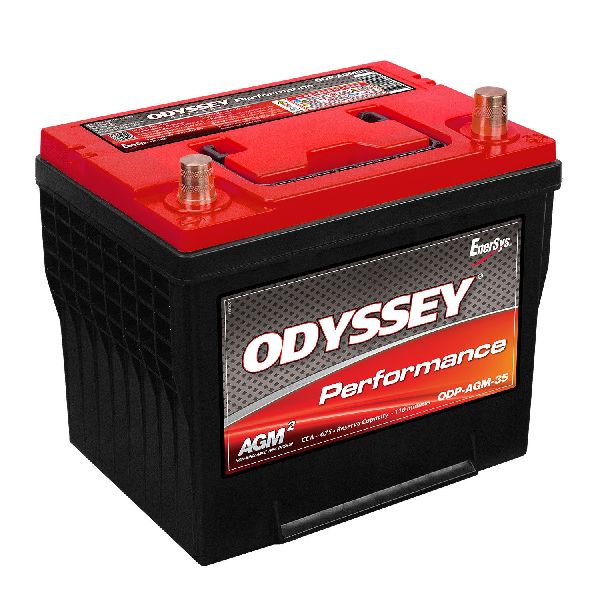
- 12V Battery — A weak or failing battery is a common cause of various electrical and communication faults due to unstable voltage.
Trusted brands: Interstate, DieHard, Duralast, Bosch
OEM price range: $200-$300
Aftermarket price range: $150-$250 - ABS Control Module / VDC Unit
(OEM #27596CA013)— If the ABS module fails internally, it can stop communicating and bring down the entire CAN network, causing code U0073. It is critical to match the part number exactly to the original unit, as multiple versions exist depending on year and trim.
Trusted brands: Subaru (OEM), Advics (OEM supplier), XeMODeX (Remanufacturer)
OEM price range: $800-$1500
Aftermarket price range: $200-$800 (Used/Remanufactured)
Related Codes That Often Appear With This One
- U0122 — Lost Communication With Vehicle Dynamics Control Module (VDC). This often appears with U0073 if the VDC/ABS module is the source of the network failure or is not communicating.
- U0140 — Lost Communication With Body Control Module (BCM). This can appear alongside U0073 if the BCM is offline or if there is a general network failure.
- C1234, C146c, C146e — These are manufacturer-specific ABS codes. Their presence alongside U0073 strongly suggests a fault within the ABS system, potentially the module itself, is causing the network to go down.
Mechanic-Grade Diagnostic Values
- CAN Bus Resistance (Battery Disconnected) — expected: ~60 Ω. Failure: 120 Ω indicates an open circuit or failed terminating resistor. ~0 Ω indicates a short between CAN High and CAN Low.
- CAN High Voltage (Key On, Engine Off) — expected: Toggles between ~2.5V (recessive) and ~3.5V (dominant). Failure: A flat line at 0V, 2.5V, or battery voltage indicates a short or open circuit.
- CAN Low Voltage (Key On, Engine Off) — expected: Toggles between ~2.5V (recessive) and ~1.5V (dominant). Failure: A flat line at 0V, 2.5V, or battery voltage indicates a short or open circuit.
Scan Tool Commands That Help
- Subaru Select Monitor (SSM): Each System Check > Brake Control System > Clearing Memory — To clear U0073 and related fault codes from the VDC (ABS) module after a repair. A standard OBD-II clear command may not clear codes from all modules.
- Techstream / Subaru Select Monitor (SSM) / Capable Aftermarket Scanner: Chassis > ABS/VSC/TRAC > Utility > VSC Sensor Neutral Memorization — This is a required zero point calibration after replacing the ABS/VDC module or any related chassis/steering components. Failure to perform this can result in other ABS/VSC related codes.
Wiring & Ground Locations
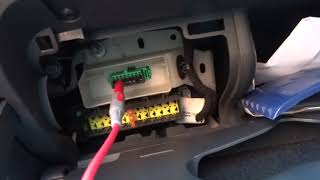
- D43 Junction Connector — Located in the instrument panel / dashboard area. It serves as a central hub for CAN bus signals.. As a central CAN hub, a poor connection or corrosion at this connector can disrupt communication between multiple modules, leading to a U0073 code. It's a key inspection point for network-wide failures.
- Ground Point H1 — Under the left (driver's side) center pillar trim.. A loose or corroded ground point for instrument panel or body modules can cause communication errors on the CAN bus.
- Ground Point A2 — At the left end of the dash / driver's side kick panel area.. This is a primary grounding location for many components in the driver's area, including modules connected to the CAN bus. A poor ground here can cause erratic behavior.
- Engine/Transmission Ground Strap — A key ground strap is located on the passenger side, at the top-rear of the engine/transmission assembly, connecting to the transmission tunnel.. This is a main ground for the powertrain. While less likely to cause a U-code alone, a poor connection here can create electrical noise and voltage stability issues that affect all modules. It's often forgotten during clutch or transmission work.
Real Owner Repair Stories
- Motor Vehicle Maintenance & Repair Stack Exchange (2014 Subaru BRZ) — U0073, C1234, C146c, C146e codes. ABS, TRAC, and parking brake lights on.
❌ Tried (didn't work) Checking fuses.
✅ What actually fixed it Replaced the ABS module with a used unit from eBay. The owner stressed the importance of matching the part number exactly, as multiple variations existed for the same model year. No reprogramming was needed for the used part. - ft86club.com forum user (2013 Scion FR-S (same platform)) — U0073, ABS light, Traction Control light, Tire Pressure light.
❌ Tried (didn't work) Checking tire pressure.
✅ What actually fixed it The user had a Progressive Snapshot insurance dongle plugged into the OBD-II port. Removing the device and disconnecting the negative battery terminal for a few minutes to reset the ECU resolved the issue completely. - Reddit user r/MechanicAdvice (2017 Subaru BRZ, 40k miles) — U0073 code, failed state inspection due to no communication with scan tool.
❌ Tried (didn't work) Clearing the code with a personal scanner.
✅ What actually fixed it The user reported the issue started after replacing a dead battery with a *used* battery. The car also had an aftermarket remote start. The combination of a potentially weak battery and aftermarket electronics tapping into the system was the root cause. A new, correct-spec battery and inspection of the remote start wiring was the resolution path. - NHTSA ODI #11723030 (Subaru Owner Report) — An owner reported a CAN bus communication fault U0073 affecting multiple vehicle safety systems simultaneously, including electronic power steering (EPS) fault codes creating safety critical steering concerns.
OEM Part Supersession History
27596CA012→27596CA013— Standard part revision/update by the manufacturer.
Heads up: These early part numbers are not compatible with 2015+ models or models with different options (e.g., Brembo brakes, automatic transmission).Varies (e.g., SU003-08218)→Varies (e.g., 27536CA020)— Part numbers change for the 2017+ refresh and for different trim levels like the TRD/Performance Package with Brembo brakes.
Heads up: A module from a non-Brembo car will not work on a Brembo-equipped car, and vice-versa. Manual and Automatic transmission cars also use different modules. Part number matching is absolutely critical.
Model Year Variations Within This Range
- 2017-2020: The 2017 model year refresh introduced significant changes, including a revised engine (manual models), different suspension, full LED headlights, a new steering wheel, and an updated gauge cluster. While the core CAN architecture is the same, these new/different modules mean that control units like the ABS module are often not interchangeable with pre-2017 parts.
Diagnostic Flowchart
Other Known Issues on This Vehicle
Issues unrelated to this code that are worth knowing about as an owner of this generation:
- Engine Valve Spring Fracture 🔴 High — Common enough to trigger a major recall (WTY-84) affecting all 2013 model year BRZ vehicles. Can lead to engine noise, stalling, or failure to restart. (Ref: Subaru Safety Recall WTY-84 / NHTSA ID 18V-772)
- High-Pressure Fuel Pump 'Crickets' 🟡 Low — A very common high-pitched chirping or squeaking noise from the engine bay, especially on earlier models (2013-2015). It is caused by fuel aeration in the HPFP and is mostly considered an annoyance, though a TSB exists. (Ref: Subaru TSB 09-54-12R)
- Throwout Bearing Failure 🟠 Medium — Premature failure of the clutch throwout bearing is a widely reported issue on manual transmission models, particularly earlier years. Symptoms include a grinding or chirping noise when the clutch pedal is pressed, and difficulty shifting.
- Tail Light Gasket Leak 🟡 Low — The factory foam gaskets for the tail lights degrade over time, allowing water to enter the trunk and cause condensation inside the light housings. It's a very common issue across all years.
- Rough Idle / ECU Software 🟡 Low — Some owners experience a rough or shuddering idle. This can sometimes be resolved with an ECU software update or re-flash from the dealer.
- Failing Ignition Coil Packs 🟠 Medium — Coil packs on early models are known to fail, leading to engine misfires. It's recommended to replace them as a set if one fails.
Used vs. New Parts: Buying Guide for This Vehicle
When a used part is the smart pick: A used ABS/VDC control module is a very sensible and cost-effective repair strategy for this vehicle, often saving over $1000 compared to a new OEM part. Multiple owner reports confirm that used modules can be plug-and-play without requiring expensive dealer reprogramming, *provided* the part number is an exact match.
Donor-vehicle mileage cap: roughly under 120000 miles for the part to have meaningful remaining life.
What to inspect on the donor part:
- CRITICAL: The part number on the used module MUST exactly match the part number on your original module. There are many variations based on year, transmission type, and brake package (Brembo vs. standard).
- Visually inspect the electrical connector pins for any signs of corrosion, moisture, or damage.
- Purchase from a reputable auto recycler that offers a warranty and guarantees the part was tested and functional upon removal.
- Ensure the hydraulic pump portion is included, as some repair services warn that separating the electronic module from the pump can cause permanent damage.
OEM-only on this vehicle (don't cheap out):
- For a NEW replacement, OEM (Subaru or OEM supplier Advics) is the only reliable choice. There are no known reputable aftermarket manufacturers of the complete ABS module assembly.
Aftermarket brands forum-validated for this vehicle:
- XeMODeX offers a 'Repair Service' for your existing module, which is a trusted alternative to buying a used or new part.
Brands owners have reported issues with on this vehicle:
- Avoid generic, no-name used modules from platforms like eBay or Amazon unless the seller is a dedicated and highly-rated auto recycler and you can verify the exact part number from photos.
Real Owner Stories
Aggregated from forums and TSBs cited above. Mileages and costs reflect what owners reported in those sources.
2014 Subaru BRZ
Symptoms: The vehicle threw a U0073 code along with multiple C-codes including C1234, C146c, and C146e.
What fixed it: Replacing the ABS/VDC control module and pump assembly.
Source hint: Motor Vehicle Maintenance & Repair Stack Exchange
2017 Subaru BRZ
Symptoms: U0073 code appeared after an inspection; the vehicle also had an aftermarket remote start installed and a recently installed used battery.
What fixed it: Addressing low voltage/battery health issues (context notes the code appeared specifically after installing a used battery).
Source hint: reddit.com/r/MechanicAdvice
2013-2020 Subaru BRZ (General)
Symptoms: The ECU becomes confused on startup, triggering U0073 and forcing the car into limp mode.
What fixed it: Ensuring the Torque app is not running when starting the car.
Source hint: ft86club.com thread titled 'Torque app specifically can confuse the ECU'
Related OBD-II Codes
Frequently Asked Questions
Can using the Torque app on my BRZ trigger a U0073 code and limp mode?
I have a 2013 BRZ; could my U0073 code be related to the major valve spring recall?
Why did my BRZ throw a U0073 code after I plugged in my insurance tracking device?
Could a faulty ABS unit cause a U0073 communication error on my Subaru?
Is the OBD-II port on the BRZ known for physical connection issues?
Will a weak battery cause U0073 on my 2017 BRZ?
Helpful Videos


Used OEM Parts in Stock
New Aftermarket Parts Available


The information in this article is provided for general reference and educational purposes only. Vehicle specifications, procedures, and part compatibility can vary by production date, trim level, and region. Always consult your vehicle's factory service manual and verify part numbers before purchasing or performing repairs. Safety-critical components such as airbags, seat belts, and braking systems should be installed by a qualified professional.
- Subaru BRZ:
- 🧭 Diagnostic Flowchart
- 🎬 Helpful Videos
- 🛍️ Shop This Part
- What's Unique About the 2013-2020 Subaru BRZ
- Symptoms You May Notice
- Most Likely Causes
- Rare But Worth Checking
- Diagnosis Steps
- Parts You'll Likely Need
- Related Codes That Often Appear With This One
- Mechanic-Grade Diagnostic Values
- Scan Tool Commands That Help
- Wiring & Ground Locations
- Real Owner Repair Stories
- OEM Part Supersession History
- Model Year Variations Within This Range
- Other Known Issues on This Vehicle
- Used vs. New Parts: Buying Guide for This Vehicle
- Real Owner Stories
- 2014 Subaru BRZ
- 2017 Subaru BRZ
- 2013-2020 Subaru BRZ (General)
- Related OBD-II Codes
- Frequently Asked Questions
- 🎟️ Get 5% Off