

U0073 on 2014-2018 Subaru Forester: Guide to CAN Bus Communication Faults
U0073 on a Subaru Forester means there's a communication breakdown between the car's computers. This is often caused by a wiring issue, a faulty control module (especially the ABS/VDC module), or a weak battery. Diagnosis is complex, often requires professional tools like an oscilloscope, and should start with checking the easiest things first: battery, fuses, and visible wiring.
- U0073 is a serious communication error that should be diagnosed promptly.
- Do not immediately replace parts. The first steps are to check the battery, fuses, and wiring.
- On the 2014-2018 Forester, the ABS/VDC module is a very common point of failure that causes this code.
- Diagnosis is a process of elimination, often requiring professional tools to isolate the faulty wire or module.
What's Unique About the 2014-2018 Subaru Forester
On the 2014-2018 Forester (SJ generation), the CAN bus is a critical network linking the engine computer (ECM), ABS/VDC module, transmission computer (TCM), and Body Integrated Unit. While U0073 is a generic code, on Subarus of this era, it's frequently accompanied by a cascade of warning lights for the ABS, Hill Start Assist, and Vehicle Dynamics Control (VDC). Forum and video evidence strongly suggests the ABS/VDC control module is a common point of failure that can bring down the entire network, making it a key suspect during diagnosis. 🎬 Watch: Real-world diagnosis of a Forester CAN bus fault. In some cases, a failing ABS module will cause the ABS pump to run continuously, even with the ignition off.
Symptoms You May Notice
- Check Engine Light is on
- ABS, Vehicle Dynamics Control (VDC), and/or Hill Start Assist warning lights are on
- Erratic or harsh transmission shifting, or being stuck in one gear
- Hesitation or loss of power while accelerating
- Instrument cluster gauges behaving erratically (e.g., speedometer at zero, temperature gauge maxing out)
- Engine may crank but not start, or stall intermittently
- At-EyeSight, RAB, and other driver-assist system warnings illuminated
- Transmission temperature light flashing
- ABS pump motor runs continuously, even with the key off
- Replacing a single sensor without diagnosing the network. For example, replacing a wheel speed sensor when the actual fault is the ABS module's communication, not the sensor itself.
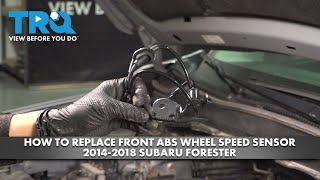
- Immediately replacing the ECM or TCM. 🎬 Watch: How to replace front ABS wheel speed sensors. These are expensive components and are less likely to be the root cause than a wiring fault or a failed ABS module.
Most Likely Causes
- Damaged Wiring or Loose Connections 🔴 High Probability Engine vibration and exposure to the elements can cause wiring to chafe or connectors to corrode. Rodent damage is also a known cause, with animals chewing through the soy-based wire insulation used in many modern cars.
How to confirm: Perform a thorough visual inspection of the main wiring harnesses, especially around the engine bay, under the dashboard, near the ABS module, and any areas where harnesses pass through the firewall. Look for any signs of rodent damage (chew marks, nests), chafing, or corrosion in connectors. Check main ground connections for cleanliness and tightness.
Typical fix: Repair the damaged section of wire or clean/replace the corroded connector. This requires soldering and heat-shrinking for a durable repair.
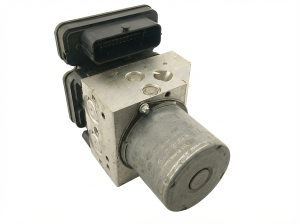
Est. part cost: $10-$50 - Failing ABS/VDC Control Module 🟡 Medium Probability → Shop ABS Control Module There are numerous documented cases on Subaru platforms where the internal electronics of the ABS module fail, causing it to send disruptive signals or stop communicating entirely, bringing down the network. This is a widely reported failure point for this generation.
How to confirm: A professional technician would use a scan tool to see if the ABS module is unresponsive. The definitive test is to use an oscilloscope on the CAN lines; if the signal becomes clean after disconnecting the ABS module, the module is faulty. Another clue is if the ABS pump runs constantly.
Typical fix: Replace the ABS/VDC control module and pump assembly. This requires reprogramming and a specialized brake bleeding procedure (VDC activation bleed) using a high-end scan tool.
Est. part cost: $400-$1600 - Weak Battery or Faulty Charging System 🟡 Medium Probability → Shop Vehicle Battery Modern vehicles are highly sensitive to voltage. A weak or dying battery can provide inconsistent power to the modules, causing communication dropouts, especially during startup.
How to confirm: Test the battery voltage with a multimeter. It should be ~12.6V with the engine off and 13.7V-14.7V with the engine running. Most auto parts stores can perform a load test on the battery and check the alternator output. This should be the very first check.
Typical fix: Replace the battery and/or alternator.
Est. part cost: $150-$600 - Faulty Aftermarket OBD-II Device ⚪ Low Probability Devices like tuners (e.g., Cobb AccessPort), insurance trackers, or cheap Bluetooth scanners that plug into the diagnostic port become part of the CAN network. A faulty device, a damaged cable, or even just poor design can disrupt communication and trigger a U0073 code.
How to confirm: Unplug any and all devices from the OBD-II port. Clear the codes and drive the vehicle to see if the code returns.
Typical fix: Replace the faulty device or its cable.
Est. part cost: $20-$500
Rare But Worth Checking
- Faulty Engine Control Module (ECM) or Body Integrated Unit (BIU): → Shop Engine Control Module (ECM) While less common than an ABS module failure, any primary control module can theoretically fail and cause this issue. The BIU (Subaru's term for the Body Control Module) is a central hub for many functions. A failure here can cause widespread electrical chaos. Diagnosis involves isolating the module from the network to see if the problem resolves.
- Corroded or Damaged Connector at the TCM: On some GM vehicles with similar issues, fluid intrusion into the transmission harness connector was a known cause. While not as widely reported on Subarus, it's worth inspecting the transmission connectors for any signs of fluid contamination or backed-out pins if transmission-related symptoms are present.
Diagnosis Steps
- Check for any other stored trouble codes. Codes pointing to a specific module (like U0122 for the VDC) can provide a crucial starting point.
- Check the battery voltage and charging system performance. Ensure voltage is stable and within specification (~12.6V off, 13.7-14.7V running). This is the easiest and most important first step.
- Inspect all fuses related to the ECM, TCM, ABS, and BCM.
- If any aftermarket devices are plugged into the OBD-II port, remove them, clear the codes, and test drive.
- Perform a detailed visual inspection of the main wiring harnesses under the hood and dash. Pay close attention to areas where wires might rub against metal, pass through the firewall, or could be exposed to rodent damage.
- Check the main ground connections for the engine and chassis to ensure they are clean and tight.
- If the problem persists, professional diagnosis is recommended. A technician will likely use a scan tool to attempt to communicate with each module individually.
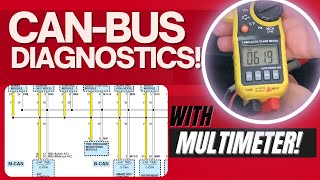
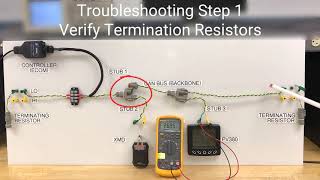
- A key network check is to measure the resistance between Pin 6 (CAN-H) and Pin 14 (CAN-L) on the OBD-II port with the battery disconnected. A healthy network should read approximately 60 Ohms. 🎬 See how to perform a CAN bus resistance check. A reading of 120 Ohms suggests an open circuit or a missing terminating resistor, while 0 Ohms indicates a short between the two lines.
- If the signal is corrupt or resistance is wrong, the technician will disconnect modules one by one (starting with the most likely culprits like the ABS module) until the signal becomes clean or resistance returns to 60 Ohms, isolating the faulty component or wiring section.
Parts You'll Likely Need
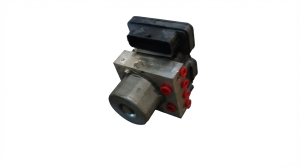
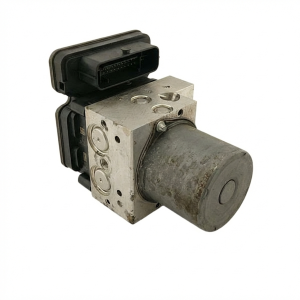
- ABS Control Module and Pump Assembly
(OEM #27536SG061, 27536SG110, 27596SG080, 27596SG110 (Varies by trim/options, verify with VIN))— This module is a known high-failure item on this platform that can disrupt the entire CAN network when it goes bad.
Trusted brands: Subaru (OEM)
OEM price range: $800-$1600
Aftermarket price range: $400-$700 (Used/Remanufactured) - Automotive Wire and Connectors — If the cause is a wiring fault from chafing or rodent damage, only repair materials will be needed.
OEM price range: $10-$50
Aftermarket price range: $10-$50
Related Codes That Often Appear With This One
- U0100 — Lost Communication With ECM/PCM. Often appears with U0073 when the entire network is down.
- U0101 — Lost Communication with TCM (Transmission Control Module).
- U0122 — Lost Communication with Vehicle Dynamics Control Module. This points strongly toward the ABS/VDC unit as the culprit.
- U0140 — Lost Communication With Body Control Module (BIU).
Technical Service Bulletins (TSBs) & Recalls
- While no TSB directly addresses U0073 on the 2014-2018 Forester, Subaru TSB 07-179-20 for the 2017-2019 Outback is relevant. It describes how a faulty Power Rear Gate module fails to let the CAN bus 'sleep', causing a battery drain. This illustrates a key principle: a single misbehaving module can disrupt the entire network, which is the core issue with the U0073 code.
Platform-Specific Known Issues
- ABS/VDC Module Internal Failure: A significant number of 2014-2018 Forester owners report that the U0073 code, along with a dashboard full of warning lights, was ultimately traced back to a failed ABS/VDC control unit. In some cases, the dealer quoted repairs up to $1600. Symptoms can include the ABS pump running constantly, even with the car off. This appears to be the most common 'big ticket' repair for this specific fault code on this vehicle.
- Rodent Damage to Wiring Harness: The soy-based wiring insulation used in this era of vehicles can attract rodents, who may chew through the CAN bus wires. This can cause an open or short in the network, leading to the U0073 code. A visual inspection of harnesses in the engine bay is critical if rodent activity is suspected.
Mechanic-Grade Diagnostic Values
- CAN Bus Resistance — expected: ~60 Ω between Pin 6 (CAN-H) and Pin 14 (CAN-L) of the OBD-II port with battery disconnected.. Failure: A reading of ~120 Ω indicates an open circuit or one of the terminating resistors is offline. A reading of 0 Ω indicates a short between the CAN-H and CAN-L wires.
- CAN High (CAN-H) Voltage to Ground — expected: ~2.5V in recessive state (bus idle), ~3.5V in dominant state (transmitting data).. Failure: Voltage stuck high or low, or not switching, indicates a bus problem or faulty transceiver.
- CAN Low (CAN-L) Voltage to Ground — expected: ~2.5V in recessive state (bus idle), ~1.5V in dominant state (transmitting data).. Failure: Voltage stuck high or low, or not switching, indicates a bus problem or faulty transceiver.
- Differential CAN Voltage (CAN-H vs CAN-L) — expected: ~0V in recessive state, ~2.0V in dominant state.. Failure: An incorrect differential voltage points to noise, a short, or a faulty module driving the bus incorrectly.
Scan Tool Commands That Help
- Subaru Select Monitor (SSM4): All System Scan — Use this at the beginning of diagnosis to capture all current and past DTCs with their associated Freeze Frame Data (FFD) from every module on the network.
- Subaru Select Monitor (SSM4): Each System Check — After identifying a potential problem module (e.g., ABS), use this function to connect to it individually, view its live data stream, and confirm if it is online and communicating properly.
- Subaru Select Monitor (SSM4): Reprogram — This function is required after replacing a major control module like the ABS/VDC unit to load the correct software and configure it for the vehicle's specific options.
- Subaru Select Monitor (SSM4): VDC Activation Bleed / ABS Brake Bleed Function — This is a mandatory procedure after replacing the ABS/VDC module and pump assembly. It cycles the internal pump and valves to purge all air from the new component, which cannot be done with a manual bleed.
Wiring & Ground Locations
- CAN Bus Terminating Resistor 1 — Inside the Engine Control Module (ECM).. One of the two 120 Ω resistors that create the required 60 Ω bus resistance is in the ECM. If the ECM is offline or its connector is compromised, the total bus resistance will read 120 Ω.
- CAN Bus Terminating Resistor 2 — Inside the ABS/VDC Control Module.. The second 120 Ω terminating resistor is located in the ABS module. This is a critical diagnostic fact, as a faulty ABS module can both corrupt the signal and cause an incorrect bus resistance reading.
- CAN Joint Connector — Typically located behind the dashboard, often on the driver's side. On a 2017 Forester, it was found and used for diagnosis.. This is a splice pack where multiple CAN bus wire pairs branch off to different modules. Unplugging the connector allows a technician to isolate entire legs of the network to quickly determine which branch contains the short or faulty module, saving hours of diagnostic time.
- Trailer Harness Connector — Behind the driver's side rear trim panel in the cargo area.. This is the factory plug-in point for OEM and aftermarket trailer wiring harnesses. A faulty trailer module or a poorly installed harness can inject noise or shorts onto the CAN bus, causing a U0073 code. It's a frequently overlooked cause.
- Main ECU Ground — The ECU itself grounds through its harness to points on the top of the intake manifold.. A poor ground connection at the intake manifold can cause erratic ECU behavior and communication faults. This is especially common if engine work was performed and ground straps were not properly re-secured.
Real Owner Repair Stories
- Automotive Diagnostic Podcast, E:258 (2017 Subaru Forester with Eyesight) — Eyesight warning message on, multiple warning lights. No communication with scan tool initially.
❌ Tried (didn't work) Simply replacing the blown 10A fuse in the cabin fuse box (#4) made things worse, causing the entire CAN bus to go down.
✅ What actually fixed it The standard 60-ohm resistance check at the OBD-II port passed, but the fault persisted. The technician located a CAN junction connector behind the dash and disconnected it to isolate different legs of the network. By doing this, they identified the specific wire branch that had a short, which was causing the fuse to blow and taking down the network when power was applied. The fix was repairing the short on the isolated branch, not replacing a major module. - NHTSA ODI #11723030 — An owner of a related Subaru model reported that a CAN bus communication fault U0073 affected multiple vehicle safety systems simultaneously, including a safety-critical electronic power steering (EPS) fault.
"I Checked Everything" — The Actual Cause
- A common diagnostic trap for U0073 is relying solely on the 60-ohm resistance check at the OBD-II port. In a documented 2017 Forester case, the resistance was a perfect 60 ohms, suggesting the main bus between the ECM and ABS module was intact. However, the fault was a short-to-ground on a branch circuit that only became apparent when a blown fuse was replaced. This powered up the shorted circuit, which then crashed the entire network. The correct diagnosis required going beyond the OBD-II port and isolating network branches at a junction connector to find the true source of the problem.
Model Year Variations Within This Range
- 2014-2018: No significant variations have been noted regarding the cause or diagnosis of U0073 within this generation. The CAN architecture and the most common failure points (wiring, ABS module) appear consistent across the SJ generation, including the 2017 model year refresh.
Diagnostic Flowchart
Used vs. New Parts: Buying Guide for This Vehicle
When a used part is the smart pick: For the most common part failure, the ABS/VDC module, a used OEM part from a reputable automotive recycler is a very sensible and cost-effective option. These modules are generally reliable, and failures are often due to internal electronic faults rather than wear, making a used unit a good value proposition.
Donor-vehicle mileage cap: roughly under 100000 miles for the part to have meaningful remaining life.
What to inspect on the donor part:
- Verify the part number on the used module EXACTLY matches the original part.
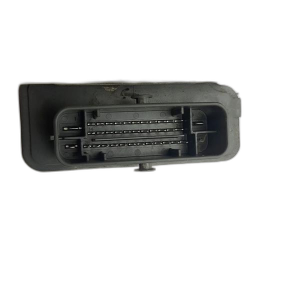
- Inspect the electrical connector pins for any signs of corrosion, moisture, or damage.
- Ask the salvage yard about the donor vehicle's history (e.g., was it a flood vehicle? Avoid if so).
- Ensure the salvage yard offers at least a 30-90 day warranty on electronic parts.
OEM-only on this vehicle (don't cheap out):
- While not strictly 'OEM-only', this repair is best done with an OEM or a used/remanufactured OEM ABS module. There are no widely trusted third-party aftermarket manufacturers for this specific, complex component.
Brands owners have reported issues with on this vehicle:
- Be cautious of unusually cheap 'new' modules from unknown brands on online marketplaces. They are often low-quality, may not program correctly, and typically lack support or a meaningful warranty.
Real Owner Stories
Aggregated from forums and TSBs cited above. Mileages and costs reflect what owners reported in those sources.
2014-2018 Subaru Forester
Symptoms: The dashboard was lit up with warning lights for ABS, VDC, and Hill Assist. The ABS pump motor was also running continuously, even when the vehicle was turned off.
What fixed it: The problem was traced back to a failed ABS/VDC control unit, which had to be replaced.
Cost: $400-$1600
Source hint: vehicle_specific_issues section on 'ABS/VDC Module Internal Failure'
2014-2018 Subaru Forester
Symptoms: Check Engine Light on with code U0073 and multiple other warning lights illuminated.
What fixed it: A visual inspection revealed that rodents had chewed through the CAN bus wires in the engine bay. Repairing the damaged section of the wiring harness resolved the issue.
Source hint: vehicle_specific_issues section on 'Rodent Damage to Wiring Harness'
2017 Subaru Crosstrek
Symptoms: The vehicle set a U0073 code and the transmission was stuttering.
What fixed it: The source describes the symptoms on a shared platform but does not detail the specific repair that resolved the issue.
Source hint: Reddit r/subaru & r/MechanicAdvice
Related OBD-II Codes
Frequently Asked Questions
My 2015 Forester has the ABS, VDC, and Hill Assist lights on with code U0073. What is the most likely expensive part that has failed?
I heard rodents can cause the U0073 code on my Forester. Is this a real issue?
My ABS pump runs constantly, even after I turn my 2016 Forester off. Is this related to the Check Engine Light and U0073 code?
Could the cheap Bluetooth OBD-II scanner I leave plugged in cause the U0073 code?
Is there a specific Technical Service Bulletin (TSB) from Subaru for the U0073 code on my 2014-2018 Forester?
My mechanic wants to test the CAN bus resistance at the OBD-II port. What should the reading be for my Forester?
Helpful Videos
![How To Test CAN BUS With A Multimeter [CAN Bus Resistance Check] Mechanic Mindset](https://img.youtube.com/vi/JPE42HSJxAk/mqdefault.jpg)
We Have This Part in Stock

The information in this article is provided for general reference and educational purposes only. Vehicle specifications, procedures, and part compatibility can vary by production date, trim level, and region. Always consult your vehicle's factory service manual and verify part numbers before purchasing or performing repairs. Safety-critical components such as airbags, seat belts, and braking systems should be installed by a qualified professional.
- Subaru Forester:
- 🧭 Diagnostic Flowchart
- 🎬 Helpful Videos
- 🛍️ Shop This Part
- What's Unique About the 2014-2018 Subaru Forester
- Symptoms You May Notice
- Most Likely Causes
- Rare But Worth Checking
- Diagnosis Steps
- Parts You'll Likely Need
- Related Codes That Often Appear With This One
- Technical Service Bulletins (TSBs) & Recalls
- Platform-Specific Known Issues
- Mechanic-Grade Diagnostic Values
- Scan Tool Commands That Help
- Wiring & Ground Locations
- Real Owner Repair Stories
- "I Checked Everything" — The Actual Cause
- Model Year Variations Within This Range
- Used vs. New Parts: Buying Guide for This Vehicle
- Real Owner Stories
- 2014-2018 Subaru Forester
- 2014-2018 Subaru Forester
- 2017 Subaru Crosstrek
- Related OBD-II Codes
- Frequently Asked Questions
- 🎟️ Get 5% Off