

U0073 on 2000-2009 Volvo S60: CAN Bus Error Causes and Fixes
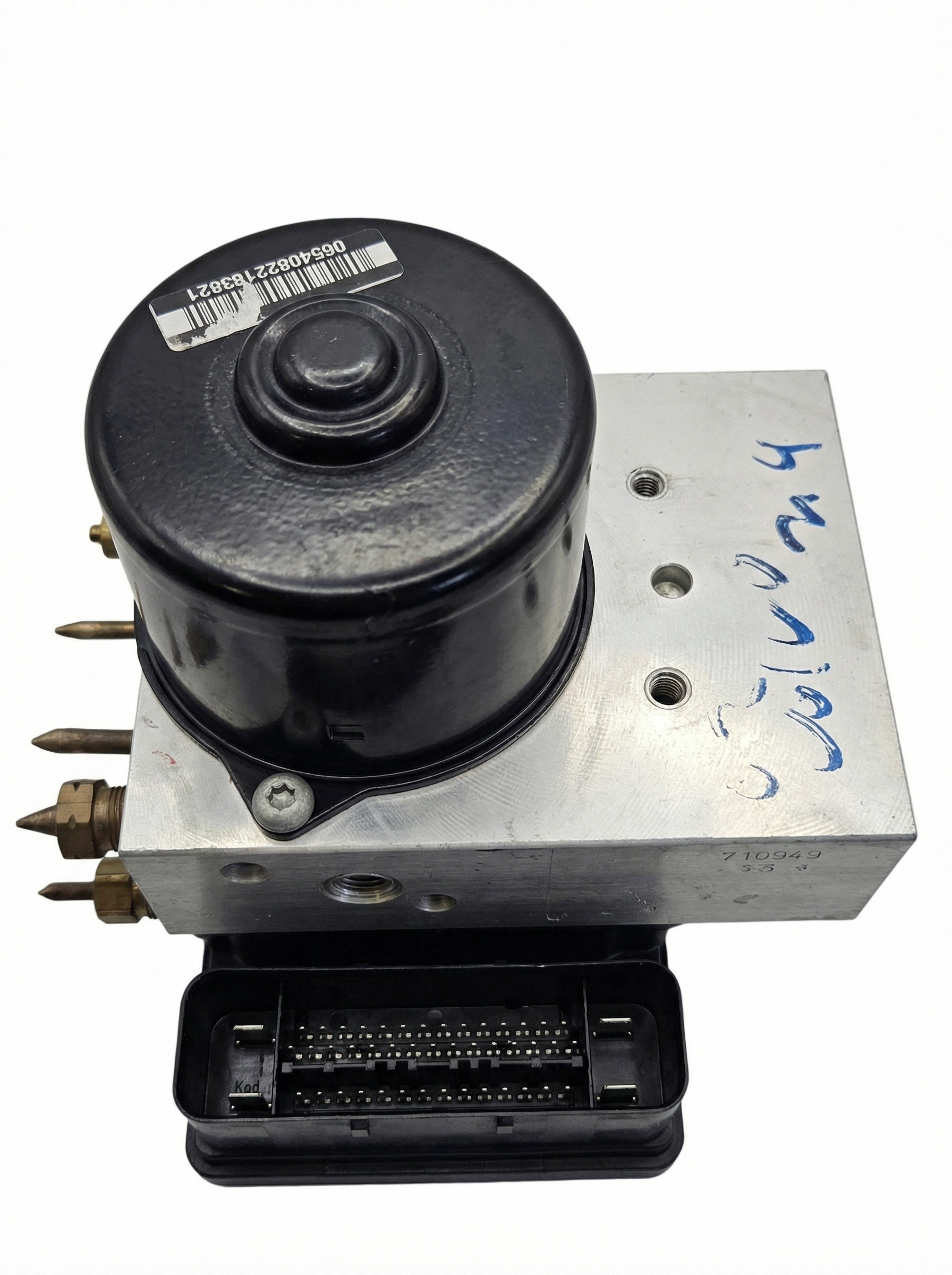
On a 2000-2009 Volvo S60, code U0073 almost always points to a failed ABS control module. This communication error triggers ABS and anti-skid warnings. The most common fix is to have the original module rebuilt by a specialist service, which costs around $100-$350 and avoids the need for expensive dealer programming of a new unit.
- U0073 on a 2000-2009 S60 is almost certainly caused by a faulty ABS control module.
- Before assuming the module is bad, always check the ABS fuses and the battery's health first.
- The most economical and effective repair is to remove your original ABS module and send it to a specialist for rebuilding.
- Driving with this fault is possible, but your vehicle's primary safety systems (ABS and traction/stability control) are inactive.
- Do not replace wheel speed sensors or other components until the ABS module's communication is restored.
What's Unique About the 2000-2009 Volvo S60
The first-generation Volvo S60 (P2 platform) is infamous for a specific design flaw that triggers the U0073 code: internal failure of the ATE-manufactured ABS control module. While any car can get this code from a wiring issue, on this specific Volvo, the ABS module is the culprit in a vast majority of cases. The module's circuit board is prone to developing microscopic cracks in its solder joints over many years of heat cycles and vibration. Because the ABS module acts as a central communication node on the CAN bus, its internal failure disrupts the entire network, causing the widespread communication faults reported by the U0073 code.
Symptoms You May Notice
- "ANTI-SKID SERVICE REQUIRED" or "BRAKE ASSIST SERVICE REQUIRED" message on the instrument cluster
- ABS and/or TRACS/DSTC warning light is illuminated
- Speedometer may work intermittently or not at all (as it gets its signal via the ABS module)
- Check Engine Light may be on
- Transmission may go into limp mode, exhibit harsh shifting, or display a "TRANSMISSION SERVICE REQUIRED" message
- Inability to communicate with the BCM/ABS module using a standard OBD-II scanner
- Cruise control becomes inoperative
- Replacing wheel speed sensors. While wheel speed sensor codes often accompany U0073, they are usually a symptom of the ABS module being offline, not the root cause. The module cannot report sensor status when it's not communicating.
- Replacing the entire ABS pump and module assembly. This is very expensive and often unnecessary. Only the electronic control module needs to be rebuilt, not the hydraulic pump it attaches to. The module can be removed without opening any brake lines.
Most Likely Causes
- Failed ABS Control Module 🔴 High Probability → Shop ABS Control Module The ATE Teves MK20 and later MK60 ABS modules used on the P2 platform are notorious for internal electronic failures. Solder joints on the circuit board, particularly for the power supply and wheel speed sensor inputs, crack from thousands of heat cycles and vibrations, causing an internal open circuit and taking the entire CAN bus down with it.
How to confirm: After ruling out fuses, the definitive test is to attempt communication with the Brake Control Module (BCM) using a Volvo-specific scanner like VIDA. If the BCM does not respond, it has almost certainly failed. Another strong indicator is the presence of Volvo-specific code BCM-0070. Physically removing the module and sending it to a specialized repair service for bench testing is the final confirmation.
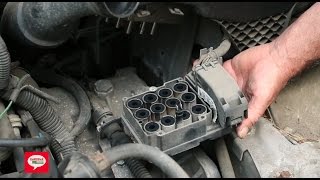
Typical fix: Remove the ABS control module (the electronic part held on by four E5 Torx bolts 🎬 Watch: How to safely remove the ABS module, not the whole hydraulic pump) and send it to a reputable electronics rebuilder. This is far cheaper than a new unit from Volvo and, crucially, does not require expensive dealer software programming as the original vehicle-specific coding is retained.
Est. part cost: $100-$350 for a rebuild service - Blown ABS System Fuse ⚪ Low Probability
How to confirm: Check the fuses for the ABS/DSTC system in the engine bay fuse box (consult owner's manual for exact location, often positions 16 and 17). A Reddit user with a P2 S60 reported fixing their issue by replacing a blown 30A fuse.
Typical fix: Replace the blown fuse. If it blows again immediately, this indicates a short circuit, most likely in the ABS pump motor itself, which is a common secondary failure mode of the ABS control module.
Est. part cost: $1-$5 - Weak or Failing Battery ⚪ Low Probability → Shop Vehicle Battery Like many European cars of this era, the P2 platform's sensitive electronics can behave erratically when system voltage is low. A weak battery can cause transient communication errors across multiple modules.
How to confirm: Test the battery voltage with a multimeter. A reading below 12.4 volts with the engine off, or below 10 volts during cranking, indicates a weak battery. A professional load test is the most accurate method.
Typical fix: Charge or replace the vehicle's battery.
Est. part cost: $150-$250
Rare But Worth Checking
- Damaged CAN Bus Wiring: While less common than module failure, physical damage to the twisted-pair CAN bus wires can interrupt the network. These wires can chafe against the chassis or other components. A visual inspection of harnesses near the ABS module and under the driver's side dashboard near the Central Electronic Module (CEM) is worthwhile.
- Failed Central Electronic Module (CEM): The CEM is the main computer and another critical node on the CAN bus. While its failure is less common for this specific code than the ABS module, a faulty CEM can also cause network-wide communication failures. CEM failure is often associated with water ingress due to a clogged sunroof drain or cowl plenum, leading to corrosion on the module itself.
Diagnosis Steps
- Check Fuses: Start with the simplest check. Inspect fuses for the ABS/DSTC system in the engine bay fuse box. Replace any that are blown.
- Check Battery and Alternator: Ensure the battery holds a charge above 12.4V and that the alternator is charging correctly (typically 13.8V-14.4V when running). Low or fluctuating voltage can trigger network codes.
- Scan with a Volvo-Specific Tool: Use a diagnostic tool like VIDA to check for communication with all modules. A failure to communicate with the BCM (Brake Control Module) is the strongest indicator that it has failed. Note accompanying codes like CEM-1A62 or BCM-0070.
- Visually Inspect Wiring: Look for obvious damage, corrosion, or loose connections on the wiring harness going to the ABS module connector. Also check the area around the CEM under the dash for signs of water damage.
- Remove and Inspect ABS Module: If the above steps don't resolve the issue, remove the ABS control module. Disconnect the battery first. The module is held to the hydraulic block by four E5 External Torx bolts. The main connector has a locking tab that must be released before pulling it up.
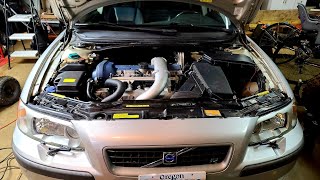
- Send Module for Rebuild: The most probable cause is internal failure. Send the module to a reputable electronics repair service that specializes in Volvo ABS modules. They can test it, confirm the failure, rebuild it with more robust connections 🎬 See how to repair the internal circuit board, and provide a warranty.
Parts You'll Likely Need
- ABS Control Module Rebuild Service
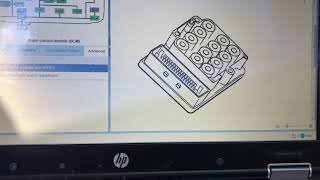
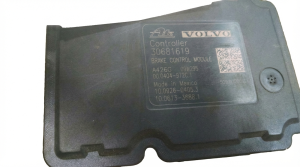
(OEM #Common part numbers include 8619537, 30643979, 30793453. Always match the part number on your specific unit.)— This is the most common failure point on the P2 platform that causes a U0073 code. Rebuilding the original unit is cost-effective and avoids the need for dealer programming. 🎬 Watch: Understanding BCM configuration and programming errors
Trusted brands: Xemodex, RoachTech, Module Master, ECU Testing
OEM price range: $800-$1200 for a new unit, plus programming
Aftermarket price range: $100-$350 for a rebuild service
Related Codes That Often Appear With This One
- BCM-0070 — This is a Volvo-specific code for 'Pump motor, faulty signal'. It is frequently logged alongside U0073 and points directly to the common internal failure of the ABS module's power supply to the pump motor.
- U0121 — This generic code means 'Lost Communication With Anti-Lock Brake System (ABS) Control Module'. It is often logged by other modules (like the ECM or TCM) when the ABS module goes offline, confirming the ABS module is the source of the network disruption.
- CEM-1A62 — This is a Volvo-specific code stored in the Central Electronic Module (CEM) indicating 'Communication with the Brake Control Module (BCM) is missing'. It is a definitive pointer that the CEM cannot see the ABS module on the network.
Technical Service Bulletins (TSBs) & Recalls
- While no specific TSB directly addresses U0073 for this model range, Volvo has issued related bulletins for other models concerning BCM communication loss due to software bugs, such as TSB S10020-2020-06-0 for newer cars, indicating a history of communication-related issues with these modules.
Platform-Specific Known Issues
- The solder joints inside the ATE Teves ABS control module are a well-documented weak point on the Volvo P2 platform, leading to intermittent or total failure and causing CAN bus communication to drop out. This is one of the most common electronic failures for this generation of Volvo.
- Removal of the module requires an E5 External Torx socket, which is not a standard tool in most DIY toolkits.
Mechanic-Grade Diagnostic Values
- CAN Bus Network Resistance — expected: ~60 Ω. Failure: A reading of ~120 Ω indicates a terminating module (ECM or BCM) is offline. A reading near 0 Ω indicates a short between CAN High and Low wires. A reading of ~40 Ω may indicate an unauthorized third resistor on the network.
- CAN Bus Voltage (Key On, Engine Off) — expected: CAN-H (Pin 6 to ground) ≈ 2.5V-3.5V (typically 2.7V). CAN-L (Pin 14 to ground) ≈ 1.5V-2.5V (typically 2.3V).. Failure: Voltages stuck at 0V, 5V, or battery voltage, or not showing a differential, indicate a wiring short or a faulty module transceiver.
- Alternator AC Ripple Voltage — expected: < 100mV AC. Failure: AC voltage greater than 100mV indicates failing alternator diodes, which can introduce electrical noise onto the CAN bus and disrupt communication.
Hidden / Shadow Codes Worth Checking
- BCM-0076: Control module, Faulty configuration. This code is specifically set when a replacement (typically used) Brake Control Module is installed but has not been correctly paired to the vehicle's network. (see via Volvo VIDA diagnostic software.)
Scan Tool Commands That Help
- Volvo VIDA: BCM Reconfigure / Calibration — This function is used after installing a used BCM to correctly pair it with the car's Central Electronic Module (CEM) and other systems. It is found under the advanced functions for the BCM or by following the diagnostic procedure for code BCM-0076. This avoids the need for a full software 'reload,' which often fails on used modules.
Wiring & Ground Locations
- BCM (Brake Control Module) — At the left rear of the engine compartment, bolted to the ABS hydraulic pump.. This is the most common point of failure. Its connector and nearby harness are subject to heat and vibration and should be inspected for corrosion or damage.
- CEM (Central Electronic Module) — Behind the left side of the dashboard, above the driver's feet.. The CEM is a major CAN bus hub. It is notoriously prone to water damage from clogged sunroof drains, especially in 2004+ models, leading to corroded connectors and network failure.
- Ground Point 31/4 — Engine block.. This is a primary engine ground. A loose or corroded connection here can cause fluctuating voltages and electrical noise, disrupting CAN bus communication across multiple modules.
- CAN Bus Terminating Resistors — Inside the Engine Control Module (ECM) and the Brake Control Module (BCM). Each is 120 Ohms.. The health of the entire network depends on these two resistors being present and connected. If the BCM fails internally or its connector is compromised, its resistor is lost from the network, causing the total resistance to jump from 60 to 120 Ohms and leading to communication failure.
Real Owner Repair Stories
- Volvo Forums user 'bikerider58' (2004 Volvo S60) — Bad ABS control module, likely with U0073 and 'Anti-Skid' warnings.
❌ Tried (didn't work) Installing a used Brake Control Module (BCM) with the same part number (8671224) from a 2005 S60. The car still had BCM communication errors that could not be cleared, and the odometer/trip meter stopped working.
✅ What actually fixed it Taking the car to an independent Volvo specialist who used a diagnostic computer (like VIDA) to perform a 'software reload/synch' on the used module. The dealer was unwilling to attempt this procedure on a used part. The used module then worked correctly.
OEM Part Supersession History
8671224→N/A, but compatible across some years— This part number was used on multiple model years, including 2004 and 2005 S60s.
Heads up: While a used module with a matching part number may physically fit, it is 'locked' to the donor vehicle's VIN and configuration (STC vs DSTC, AWD vs FWD). It will not function correctly until it is 'reconfigured' to the new vehicle using specialized software like Volvo VIDA. Dealers are often unwilling to do this.
Model Year Variations Within This Range
- 2004-2009: Post-facelift models (2004/2005 onwards) are noted for having a higher incidence of Central Electronic Module (CEM) failure due to water ingress. The design of the cowl and plenum allows water from clogged drains to drip directly onto the CEM, causing corrosion and network failures that can mimic a BCM failure.
- 2002-2006 vs 2007-2009: The ABS module design was updated around 2007, moving to a different style of housing. While both are prone to the internal solder joint failure, the specific part numbers and physical case will differ. Cross-compatibility between these major design changes is not possible.
Diagnostic Flowchart
Other Known Issues on This Vehicle
Issues unrelated to this code that are worth knowing about as an owner of this generation:
- Electronic Throttle Module (ETM) Failure 🔴 High — Very common on 1999-2002 models. A contactless sensor replacement (from XeMODeX) is the permanent fix. Volvo extended the warranty to 10 years/200,000 miles on some models. (Ref: Warranty Extension Program)
- Clogged PCV/Crankcase Ventilation System 🟠 Medium — Common on turbo models, especially after 80,000 miles. A clogged system builds crankcase pressure, blowing out cam and main seals, causing oil leaks.
- Front Suspension Wear (Control Arm Bushings, Strut Mounts) 🟠 Medium — Control arm bushings and upper strut spring seats/mounts commonly fail around 100,000 miles, causing clunking noises, poor handling, and uneven tire wear.
- Automatic Transmission Valve Body Failure 🔴 High → Shop Transmission Assembly — The Aisin-Warner AW55-50/51SN transmission is prone to harsh shifting, flares, and banging into gear, especially when hot. This is often due to valve body wear and typically surfaces after 100,000 miles.
- AWD Angle Gear Collar Sleeve Failure 🟠 Medium — On AWD models, the splined collar connecting the transmission to the angle gear can strip, resulting in a loss of all-wheel drive. This was more common on pre-2006 models.
- Broken Fuel Door Hinge 🟡 Low — The plastic fuel door hinge is notoriously fragile and breaks easily, leaving the fuel door floppy. It's a very common and inexpensive DIY fix.
Used vs. New Parts: Buying Guide for This Vehicle
When a used part is the smart pick: A used ABS module is a high-risk, high-effort option that only makes sense for an expert-level DIYer with access to Volvo's VIDA software or an independent shop willing to program used parts. It is a gamble because the used part may have the same inherent solder-joint flaw. It is NOT a plug-and-play solution.
Donor-vehicle mileage cap: roughly under 50000 miles for the part to have meaningful remaining life.
What to inspect on the donor part:
- Must have the EXACT same part number as the original unit.
- Donor car must have the same configuration (e.g., FWD vs AWD, STC vs DSTC).
- Visually inspect the connector pins for any signs of corrosion or physical damage.
- Ask for a warranty or return policy, as failure rates for used modules are high.
OEM-only on this vehicle (don't cheap out):
- While the part itself isn't OEM-only, the *programming* for a new or used module is effectively dealer/specialist-only. This is why a rebuild of the original module is the most popular fix, as it requires no programming.
Aftermarket brands forum-validated for this vehicle:
- For rebuild services: XeMODeX, Module Master, ECU Testing. These companies specialize in repairing the original module with improved internal connections.
Brands owners have reported issues with on this vehicle:
- No-name, unverified used modules from online marketplaces without a matching part number and a clear return policy.
Real Owner Stories
Aggregated from forums and TSBs cited above. Mileages and costs reflect what owners reported in those sources.
2004 Volvo S60 — ~100000 miles
Symptoms: ABS and/or TRACS/DSTC warning light is illuminated; 'ANTI-SKID SERVICE REQUIRED' message on the instrument cluster.
What fixed it: Removed the ABS control module (the electronic part held on by four E5 Torx bolts) and sent it to a reputable electronics rebuilder to fix cracked solder joints on the circuit board.
Cost: $100-$350
Source hint: Matthews Volvo Site - ABS Module Rebuild Threads
2002 Volvo S60 — ~125000 miles
Symptoms: Transmission going into limp mode, exhibiting harsh shifting, and displaying a 'TRANSMISSION SERVICE REQUIRED' message; inability to communicate with the BCM/ABS module.
What fixed it: Replaced a blown 30A fuse for the ABS/DSTC system in the engine bay fuse box.
Cost: $1-$5
Source hint: Reddit user with a P2 S60
Related OBD-II Codes
Frequently Asked Questions
My S60 is displaying 'ANTI-SKID SERVICE REQUIRED' and the speedometer stopped working. Is this related to code U0073?
Can I just replace a fuse to fix the communication loss with the BCM?
Do I need to pay a Volvo dealer to program a new ABS module if mine has failed?
Why does my S60 transmission shift harshly and show 'TRANSMISSION SERVICE REQUIRED' alongside U0073?
Is there a specific tool I need to remove the ABS module on my 2000-2009 S60?
Could a weak battery be causing these intermittent 'ANTI-SKID' warnings?
Helpful Videos
We Have This Part in Stock

The information in this article is provided for general reference and educational purposes only. Vehicle specifications, procedures, and part compatibility can vary by production date, trim level, and region. Always consult your vehicle's factory service manual and verify part numbers before purchasing or performing repairs. Safety-critical components such as airbags, seat belts, and braking systems should be installed by a qualified professional.
- Volvo S60:
- 🧭 Diagnostic Flowchart
- 🎬 Helpful Videos
- 🛍️ Shop This Part
- What's Unique About the 2000-2009 Volvo S60
- Symptoms You May Notice
- Most Likely Causes
- Rare But Worth Checking
- Diagnosis Steps
- Parts You'll Likely Need
- Related Codes That Often Appear With This One
- Technical Service Bulletins (TSBs) & Recalls
- Platform-Specific Known Issues
- Mechanic-Grade Diagnostic Values
- Hidden / Shadow Codes Worth Checking
- Scan Tool Commands That Help
- Wiring & Ground Locations
- Real Owner Repair Stories
- OEM Part Supersession History
- Model Year Variations Within This Range
- Other Known Issues on This Vehicle
- Used vs. New Parts: Buying Guide for This Vehicle
- Real Owner Stories
- 2004 Volvo S60 — ~100000 miles
- 2002 Volvo S60 — ~125000 miles
- Related OBD-II Codes
- Frequently Asked Questions
- 🎟️ Get 5% Off