

U0074 on 2008-2014 Cadillac CTS: Causes for Control Module Communication Bus 'B' Off
On a 2008-2014 Cadillac CTS, code U0074 is most often caused by unseated pins or corrosion in the main transmission harness connector (X1). Inspecting and securing this connector, located on the transmission, is the most common fix and should be the first step in diagnosis, as outlined in GM TSB #PIC4740E and its successor, #PIC4740F.
- U0074 on a 2008-2014 CTS is a serious network communication code that makes the vehicle unsafe to drive.
- Before suspecting expensive computers, always start by inspecting the transmission harness connector (X1) as specified in GM TSB #PIC4740E.
- The most common fix is simply cleaning and securing the pins in the transmission connector.
- This is not a typical DIY repair due to the complex nature of network diagnostics.
- This code will almost always appear with a long list of other 'U' (communication) codes.
What's Unique About the 2008-2014 Cadillac CTS
For this generation of Cadillac CTS, General Motors has issued a specific Technical Service Bulletin (TSB), originally #PIC4740E and later superseded by #PIC4740F, that points to a known weak point. The TSB suggests that unseated pins or poor connections at the transmission's main electrical connector (X1) are a frequent cause for this communication failure. It also highlights a potential harness chafing point near a securing bracket on the passenger side of the transmission bell housing. This makes the diagnosis more direct than on other vehicles where the cause is often a random wiring short or module failure.
Diagnostic Flowchart
Tap your situation to follow the diagnostic path that matches what you're seeing on this vehicle.
Symptoms You May Notice
- Multiple warning lights on the dashboard (Check Engine, ABS, StabiliTrak, Traction Control).
- "Service StabiliTrak" and "Reduced Engine Power" messages on the driver information center.
- Engine may not crank or start.
- Vehicle may enter a "reduced power" mode, limiting acceleration.
- Harsh or erratic transmission shifting, or being stuck in one gear.
- Door locks may cycle unexpectedly while driving.
- Loss of power windows, interior lights, or other electronic accessories.
- Scan tool may lose communication with the ECM or TCM.
- Replacing the Engine Control Module (ECM) or Transmission Control Module (TCM) without first thoroughly inspecting the wiring harness and connectors per TSB #PIC4740F. The issue is far more likely to be a simple connection problem than an expensive module failure.
- Replacing wheel speed sensors or the throttle body in response to StabiliTrak or Reduced Power messages without first checking for network codes like U0074, which can be the root cause of those secondary symptoms.
Most Likely Causes
- Unseated Pins or Corrosion in Transmission Connector (X1) 🔴 High Probability → Shop Transmission Assembly As identified in GM TSB #PIC4740E and its successor #PIC4740F, the main 16-pin transmission harness connector (X1) is a known point of failure for causing communication codes, including U0074. Vibrations and exposure can lead to poor pin contact or moisture intrusion over time.
How to confirm: Disconnect the X1 connector at the transmission. Carefully inspect for any green or white corrosion on the pins. Per the TSB, gently tug on each individual wire to ensure the terminal is fully seated and locked in the connector body. A side load on the wires can give a false sense of security.
Typical fix: Reseat any loose terminals. Clean corroded pins with an electrical contact cleaner and a small brush. Apply dielectric grease to the connector seal to prevent future moisture intrusion before reconnecting. If the connector or terminals are damaged, a new connector pigtail may need to be spliced in.
Est. part cost: $5-$50 - Damaged or Chafed Wiring Harness 🟡 Medium Probability TSB #PIC4740F specifically calls out an inspection of the harness securing bracket located on the passenger side of the vehicle where the transmission bell housing attaches to the engine block. The harness can rub against this metal bracket, wearing through the insulation and shorting the communication circuit wires.
How to confirm: Visually inspect the wiring harness in the area specified by the TSB, near the passenger side of the transmission bell housing. Look for any signs of rubbing, melting, or exposed copper wires. Another reported chafe point is behind the passenger side front wheel well liner.
Typical fix: Repair the damaged section of wire. This involves cutting out the bad section, splicing in a new piece of wire using solder and heat shrink tubing, and re-routing or protecting the harness with loom to prevent future chafing against the bracket.
Est. part cost: $10-$30 - Faulty Control Module ⚪ Low Probability While less common than wiring issues, any module on the affected communication bus (e.g., ECM, TCM, BCM, EBCM) can fail internally and disrupt the entire network.
How to confirm: This is a process of elimination. If the wiring, connectors, and grounds are all confirmed to be good, a technician can use a scan tool to isolate modules one by one. Disconnecting the suspect module should allow the rest of the network to resume communication.
Typical fix: Replace the faulty module (e.g., ECM, TCM, BCM). The new module will require programming to the vehicle's VIN using specialized dealer-level software.
Est. part cost: $200-$1000+
Rare But Worth Checking
- Poorly Installed Aftermarket Electronics: Aftermarket alarms, remote starters, or audio systems that are improperly tapped into the vehicle's wiring can interfere with the CAN bus network and cause communication codes.
- Faulty MDI to DLC Cable: In some diagnostic situations, GM has noted that a faulty MDI (Multiple Diagnostic Interface) cable connecting the scan tool to the vehicle's OBD-II port can itself cause communication codes like U0074 to appear and not clear, leading to a misdiagnosis. Trying a different MDI cable can sometimes resolve the issue.
Diagnosis Steps
- Check and charge the battery. Low voltage (below 12.4V) can cause unpredictable communication errors.
- Perform a full vehicle scan to retrieve all stored trouble codes from all modules. Note all 'U' codes present.
- Follow TSB #PIC4740F: Locate the transmission X1 connector on the side of the transmission. Disconnect it and inspect thoroughly for corrosion, moisture, or damaged pins.
- Gently pull on each wire going into the X1 connector to ensure the pins are fully seated and locked in place. This is a critical step highlighted by the TSB.
- Inspect the wiring harness for any signs of chafing or damage, especially near the bell housing bracket on the passenger side, as specified in the TSB.
- If wiring appears intact, use a multimeter to check for 60 ohms of resistance across the CAN bus terminals at the OBD-II port (typically pins 6 and 14 for high-speed CAN, or other pins for the secondary bus). A reading of 120 ohms indicates an open circuit or a faulty terminating resistor, while 0 ohms indicates a short between the two lines.
- If you have access to an oscilloscope, check for a valid CAN signal waveform on the bus. The signal should show two square waves mirroring each other.
- If a specific module is suspected, disconnect it from the network and see if communication between the other modules is restored. This will isolate the faulty component.
Parts You'll Likely Need
- Transmission Harness Connector Pigtail
(OEM #ACDelco PT2385 (This is a common GM pigtail, verify connector shape and pin count before ordering))— If the original connector is damaged or corroded beyond cleaning, a new pigtail is needed to be spliced in to ensure a solid connection.
Trusted brands: ACDelco, Dorman
OEM price range: $40-$70
Aftermarket price range: $20-$40 - Electrical Contact Cleaner — Used to clean corrosion from connector pins without causing damage.
Trusted brands: CRC, WD-40 Specialist
OEM price range: $10-$15
Aftermarket price range: $8-$12 - Dielectric Grease — Applied to the connector seal after cleaning to prevent moisture and corrosion from returning.
Trusted brands: Permatex, CRC
OEM price range: $5-$10
Aftermarket price range: $4-$8
Related Codes That Often Appear With This One
- U0073 — This is the code for 'Control Module Communication Bus A Off'. It often appears with U0074 as they are primary and secondary communication networks, and a major electrical fault can affect both.
- U0100 — Lost Communication With ECM/PCM. This code indicates other modules cannot hear from the engine computer, which is a direct result of the network bus being down.
- U0101 — Lost Communication With TCM. This indicates other modules cannot hear from the transmission computer, a common symptom when the fault lies in the transmission harness area.
- U0121 — Lost Communication With Anti-Lock Brake System (ABS) Control Module. The ABS module (EBCM) is another critical component on the network that will log a code when communication is lost.
- U0140 — Lost Communication With Body Control Module. This explains why body-related functions like power locks and interior lights may fail.
Technical Service Bulletins (TSBs) & Recalls
- PIC4740F: Supersedes PIC4740E. Addresses multiple communication DTCs (U0074, U0100, U0101, etc.), no-crank, and hard shifting. Directs technicians to inspect the transmission X1 connector for unseated pins and the nearby harness for chafing on CTS, ATS, STS, and SRX models.
- PIC4740E: The original TSB identifying the transmission connector and harness chafing as the primary cause for these communication faults.
Platform-Specific Known Issues
- Per TSB #PIC4740F, the 2008-2014 CTS is known for communication issues stemming from unseated terminals in the transmission X1 connector and potential harness chafing near the transmission bell housing on the passenger side. This is the most common cause and should be the first check.
Mechanic-Grade Diagnostic Values
- High-Speed GMLAN Bus Resistance — expected: Approximately 60 Ω. Failure: A reading of ~120 Ω indicates an open circuit or one of the two terminating resistors is offline. A reading near 0 Ω indicates a short between the CAN High and CAN Low wires.
- CAN Bus Voltage (Key On, Engine Off) — expected: CAN High (Pin 6): ~2.5-3.5V. CAN Low (Pin 14): ~1.5-2.5V.. Failure: Voltages stuck high, low, or at battery/ground potential indicate a short circuit on that line.
Hidden / Shadow Codes Worth Checking
- U0074 with Symptom Byte: GM often appends a two-digit symptom byte (e.g., U0074 71 for 'Invalid Serial Data Received') to network codes. This provides more specific information about the nature of the fault but is typically only visible on dealer-level scan tools like the GDS2. (see via GM GDS2 or equivalent high-end professional scan tool.)
Scan Tool Commands That Help
- GDS2 (GM Global Diagnostic System 2): Module Status / Power and Signal List — This function polls the network and displays a list of all expected control modules and their communication status ('Active', 'Not Communicating', 'Not Equipped'). This is the primary method for quickly identifying which specific module(s) have dropped off the bus, which helps pinpoint the location of the wiring fault.
- GDS2 (GM Global Diagnostic System 2): Data Bus Diagnostic Tool — This is a specialized software utility that actively tests the data circuits from the DLC. It can help determine if the fault (open, short to ground, short to power) is present on the bus and identify which modules are failing to respond, aiding in fault isolation.
Wiring & Ground Locations
- Terminating Resistors — The two 120 Ω terminating resistors for the high-speed GMLAN are located internally within the Engine Control Module (ECM) and the Body Control Module (BCM).. If the bus resistance measures 120 Ω instead of 60 Ω, it means one of these modules is disconnected or has failed, opening the circuit. Knowing their location is key to diagnosis.
- G105 / G106 — Main engine-to-chassis ground points, typically located on the front of the engine block or nearby on the frame rail.. A poor engine ground can cause voltage differentials between modules, leading to a flood of communication codes, including U0074. These should be checked for corrosion and tightness.
- Underhood Fuse Block — Located in the engine compartment, typically on the passenger side.. This fuse block not only contains fuses for various modules but also has internal bussing that can fail. An internal open circuit in the fuse block can cut power to one or more modules, causing them to drop off the network.
- X1 Connector (Transmission) — The main 16-pin electrical connector on the side of the transmission case.. This is the primary point of failure identified in GM's TSB #PIC4740F for U0074 and related codes on this vehicle.
Real Owner Repair Stories
- CadillacForums user report (2008 Cadillac CTS) — Multiple 'U' codes including U0073, U0100, U0101, U0121, U0140, no communication with multiple modules.
❌ Tried (didn't work) Replacing the Transmission Control Module (TCM).
✅ What actually fixed it The problem was found to be a corroded pin inside one of the main connectors at the Engine Control Module (ECM). Cleaning the corrosion from the ECM connector and pin resolved all communication issues. - CadillacForums user report (2011 Cadillac CTS) — No crank, no start, no communication with scan tool, multiple warning lights.
❌ Tried (didn't work) Inspecting the transmission X1 connector per the TSB.
✅ What actually fixed it A dealership diagnosed and replaced the entire underhood fuse block. An internal connection within the fuse block had failed, cutting power and communication to essential modules. - Owner forum report (2009 Cadillac CTS) — Classic symptoms of U0074 including multiple warning lights and erratic behavior.
❌ Tried (didn't work) Checking the transmission connector (X1) which appeared fine.
✅ What actually fixed it The fault was a chafed wiring harness located behind the passenger side front wheel well liner. The harness had rubbed through against the chassis, shorting the CAN bus wires. Repairing the wires and protecting the harness fixed the problem.
When the Usual Fixes Don't Work
- While TSB #PIC4740F is an excellent starting point, multiple owner-documented repairs show that it is not the only cause. In several cases, the transmission connector and harness were found to be in perfect condition. The actual faults were located elsewhere, including corrosion at the ECM connector (potentially from a coolant leak), an internally failed underhood fuse block, and harness chafing behind the passenger wheel well liner. This proves that a full network diagnosis should not stop at the TSB if the initial inspection reveals no faults.
Model Year Variations Within This Range
- 2012-2014: Models equipped with the 3.6L LFX engine use a different Engine Control Module (ECM), typically GM part #12651994 (E39 ECM), than the earlier 2008-2011 3.6L LLT engines (E69 ECM). While the U0074 diagnosis is similar, the specific ECM part number for replacement will differ.
Helpful Videos
We Have This Part in Stock
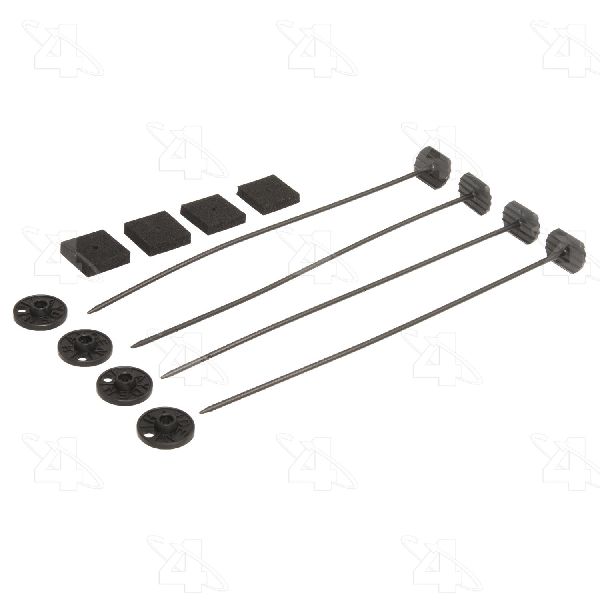

The information in this article is provided for general reference and educational purposes only. Vehicle specifications, procedures, and part compatibility can vary by production date, trim level, and region. Always consult your vehicle's factory service manual and verify part numbers before purchasing or performing repairs. Safety-critical components such as airbags, seat belts, and braking systems should be installed by a qualified professional.
- Cadillac CTS:
- 🧭 Diagnostic Flowchart
- 🎬 Helpful Videos
- 🛍️ Shop This Part
- What's Unique About the 2008-2014 Cadillac CTS
- Symptoms You May Notice
- Most Likely Causes
- Rare But Worth Checking
- Diagnosis Steps
- Parts You'll Likely Need
- Related Codes That Often Appear With This One
- Technical Service Bulletins (TSBs) & Recalls
- Platform-Specific Known Issues
- Mechanic-Grade Diagnostic Values
- Hidden / Shadow Codes Worth Checking
- Scan Tool Commands That Help
- Wiring & Ground Locations
- Real Owner Repair Stories
- When the Usual Fixes Don't Work
- Model Year Variations Within This Range
- 🎟️ Get 5% Off