

U0074 on 2011-2015 Chevrolet Camaro: Chassis Bus Communication Failure Guide
This code means a critical communication network for safety systems has failed. It's often caused by a wiring issue, a faulty Electronic Brake Control Module (EBCM), or a faulty Power Steering Control Module (PSCM). This is a complex electrical issue that requires professional diagnosis and is unsafe to ignore, as it disables StabiliTrak and can cause loss of power steering.
- U0074 on a 2011-2015 Camaro is a critical fault indicating a failure on the network connecting your power steering and stability control systems.
- Do not drive the vehicle. The loss of these systems makes the car unsafe.
- The most likely causes are a wiring problem or a failed Electronic Brake Control Module (EBCM) or Power Steering Control Module (PSCM), as outlined in GM TSB #PIT5076E.
- This is not a DIY-friendly repair. Accurate diagnosis requires professional tools and a systematic approach to electrical troubleshooting.
What's Unique About the 2011-2015 Chevrolet CAMARO
For the 5th generation Camaro, General Motors issued a specific Technical Service Bulletin (TSB #PIT5076E) that directly addresses code U0074. The bulletin guides technicians to diagnose the 'Chassis bus' when this code appears, especially if accompanied by symptoms in the electronic brake or power steering systems. This indicates a known pattern on this platform where wiring or module faults on this specific network are the root cause. Forum discussions among owners frequently point to intermittent faults that are hard to duplicate, sometimes triggered by physical shock (like hitting bumps or railroad tracks) or temperature changes, pointing towards loose connections or failing modules. A common chafe point is the main engine harness on the passenger side, where it can rub against metal retainers for the ground cables, causing shorts.
Diagnostic Flowchart
Tap your situation to follow the diagnostic path that matches what you're seeing on this vehicle.
Symptoms You May Notice
- "Service StabiliTrak" message on the driver information center
- "Service Power Steering" message
- ABS and Traction Control warning lights illuminated
- Red "BRAKE" light may flash or stay on
- Check Engine Light is on
- Loss of power steering assist, making the wheel very hard to turn
- Vehicle may enter a reduced power 'limp mode'
- Faults may appear intermittently, sometimes after hitting a bump or after a cold start
- Replacing the Engine Control Module (ECM) or Body Control Module (BCM) without proper diagnosis. This code points to a specific sub-network (Bus 'B' / Chassis Bus), and the fault is rarely with the main engine or body computers.
- Replacing a wheel speed sensor. While a faulty wheel speed sensor can cause ABS/StabiliTrak lights, it typically won't cause a U0074 code by taking down the entire chassis bus.
- Replacing the steering rack without diagnosing the PSCM. The fault is often in the control module, not the mechanical rack itself.
Most Likely Causes
- Wiring or Connector Fault on the Chassis Bus 🔴 High Probability Wiring harnesses, especially those near the engine and transmission, are subject to heat, vibration, and potential chafing over time. Aftermarket modifications like long-tube headers can increase the risk of melting nearby harnesses. TSB #PIT5076E specifically directs diagnosis to the bus wiring, suggesting it's a common point of failure. A known chafe point on 5th Gen Camaros is the main engine harness on the passenger side where it can rub against metal harness retainers near the main engine ground.
How to confirm: Visually inspect the wiring harnesses and connectors going to the EBCM and PSCM. Look for chafing, melting (especially near exhaust), or corrosion. A technician would use a multimeter to check for continuity, shorts to ground, and proper resistance on the CAN bus wires. A healthy network should read approximately 60 Ohms between pins 12 and 13 of the DLC. A reading of 120 Ohms indicates a break in the circuit or a missing terminating resistor.
Typical fix: Repairing the damaged section of the wire or replacing a corroded connector pigtail. This often involves soldering and heat-shrinking for a durable repair. Securing the harness away from heat sources like headers is critical.
Est. part cost: $10-$50 - Failed Electronic Brake Control Module (EBCM) 🟡 Medium Probability → Shop ABS Control Module The EBCM is a primary module on the chassis bus and acts as a gateway to other networks. An internal failure of its communication circuit can bring down the entire network, triggering the U0074 code, as hinted at in TSB #PIT5076E. The EBCM contains one of the two 120-ohm terminating resistors for the chassis bus; if it fails, the network integrity is compromised.
How to confirm: After confirming the wiring is intact, a technician will use a high-end scan tool (like GM's GDS2) to attempt to communicate with the EBCM directly. If it's unresponsive but has power and ground, it has likely failed. Isolating the module by disconnecting it can also prove it's the cause if communication on the bus returns between the other modules.
Typical fix: Replacement of the EBCM, which requires professional programming to match the vehicle's VIN and configuration.
Est. part cost: $300-$800 - Failed Power Steering Control Module (PSCM) 🟡 Medium Probability → Shop Power Steering Control Module Similar to the EBCM, the PSCM is another critical node on the chassis bus mentioned in TSB #PIT5076E. Its internal failure can disrupt all communication on the network. The PSCM is also a terminating module containing a 120-ohm resistor, making its health critical for the network.
How to confirm: The diagnostic process is the same as for the EBCM: verify good wiring, then attempt to isolate the module to see if the fault clears. A technician can use a scan tool to see if the module is communicating. If it is offline, they will verify it has power and ground before condemning the module. Disconnecting the PSCM and seeing if the 60-ohm bus resistance changes can confirm it as the source of the problem.
Typical fix: Replacement and programming of the Power Steering Control Module. This is typically done by a dealer or a shop with a GM MDI tool and a subscription to their service.
Est. part cost: $250-$700 - Low Battery Voltage or Poor Grounds ⚪ Low Probability → Shop Vehicle Battery All modern vehicles are sensitive to voltage. While not specific to the Camaro, low voltage can cause unpredictable behavior in various control modules, including communication dropouts. Some owners have reported that fixing loose ground straps, particularly the main engine ground (G107) on the rear of the cylinder head, resolved intermittent power steering and StabiliTrak warnings.
How to confirm: Test the battery voltage at rest (should be >12.4V) and while the engine is running (should be ~13.7-14.7V). Inspect and clean the main battery terminals and chassis ground connections, including the main engine-to-chassis ground strap (G107) on the passenger side cylinder head.
Typical fix: Recharge or replace the battery. Clean, tighten, or replace corroded or loose ground connections. Some owners add a supplementary ground wire to improve electrical stability.
Est. part cost: $5-$250
Rare But Worth Checking
- Faulty Steering Angle Sensor (SAS): → Shop Steering Angle Sensor
Diagnosis Steps
- Verify the battery is fully charged and that terminals and primary ground points are clean and tight. Check the engine ground strap (G107) on the passenger side cylinder head.
- Use a professional-grade scan tool (like GM GDS2) to read codes from ALL modules (ECM, BCM, EBCM, PSCM, etc.), not just the engine computer.
- Note all present 'U' (communication) codes and from which modules they were set. This helps identify which modules are offline.
- With the key off, measure the resistance between Pin 12 (Chassis CAN High) and Pin 13 (Chassis CAN Low) at the Data Link Connector (DLC). A healthy network should read approximately 60 ohms. A reading of 120 ohms points to an open circuit or a failed terminating module. A reading near 0 ohms indicates a short between the two CAN wires. 🎬 Watch: Professional diagnostic steps for troubleshooting U0074 CAN bus faults.
- Follow TSB PIT5076E's guidance to inspect the Chassis Bus wiring. Visually inspect for any signs of chafing, corrosion, or melting, especially where the harness runs near the engine, exhaust headers, or transmission. Pay close attention to the harness routing on the passenger side of the engine bay near metal ground brackets.
- If wiring appears intact, begin isolating modules. Disconnect the PSCM first and re-measure resistance across the bus. If the reading returns to a stable 120 Ohms (from the EBCM's terminating resistor), the PSCM is likely faulty.
- If the PSCM is not the cause, reconnect it and disconnect the EBCM. If communication returns with the EBCM disconnected, the EBCM is the likely cause of the failure.
- If a module is suspected, verify it has proper power and ground at its connector before condemning the module.
Parts You'll Likely Need
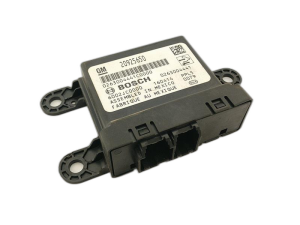
- Electronic Brake Control Module (EBCM)
(OEM #22936531)— As a primary module on the chassis bus, its internal failure is a common cause for taking the network down, as suggested by TSB PIT5076E.
Trusted brands: ACDelco (Genuine GM)
OEM price range: $400-$800
Aftermarket price range: $300-$600 (Remanufactured) - Power Steering Control Module (PSCM)
(OEM #22870761)— This is the other key module on the chassis bus. An internal short or communication failure will cause a U0074 code. It is often integrated with the steering rack assembly.
Trusted brands: ACDelco (Genuine GM)
OEM price range: $350-$700
Aftermarket price range: $250-$550 (Remanufactured) - Wiring Harness Connector Pigtail — If corrosion or damage is found at the connector for the EBCM or PSCM, replacing the connector pigtail is the proper repair.
Trusted brands: ACDelco, Dorman
OEM price range: $40-$80
Aftermarket price range: $20-$50
Related Codes That Often Appear With This One
- U0077 — Also indicates a communication issue on the same chassis bus, often set in conjunction with U0074 per TSB PIT5076E.
- U0121 — Lost Communication With Anti-Lock Brake System (ABS) Control Module. This is a direct symptom of the EBCM being offline.
- U0131 — Lost Communication With Power Steering Control Module. This is a direct symptom of the PSCM being offline.
- U0125 — Lost Communication With Yaw Rate Sensor Module, which is part of the StabiliTrak system and communicates on the chassis bus.
- U0126 — Lost Communication With Steering Angle Sensor Module, another key input for StabiliTrak that uses the chassis bus.
- C0186, C0196, C0287 — These are chassis codes related to the StabiliTrak/ABS system that can be triggered by the underlying U0074 communication fault, as listed in TSB PIT5076E.
Technical Service Bulletins (TSBs) & Recalls
- PIT5076E: Advises technicians to diagnose the Chassis bus when U0074 is set, often in conjunction with other codes (U0077, U0125, U0126, etc.) and symptoms related to the electronic brake control module or power steering control module.
Platform-Specific Known Issues
- GM Technical Service Bulletin PIT5076E specifically identifies a diagnostic path for U0074 on this platform, pointing towards the Chassis Bus and its connected modules (EBCM, PSCM) as the area of concern.
- Owners on forums frequently report intermittent issues with "Service StabiliTrak" and "Service Power Steering" messages that can be triggered by bumps, hard turns, or temperature changes, suggesting a loose connection or a module on the verge of failure.
- The installation of aftermarket long-tube headers is a common modification that can lead to this code if the engine wiring harness is not properly secured away from the new heat source, causing wires on the chassis bus to melt.
Mechanic-Grade Diagnostic Values
- CAN Bus Resistance — expected: ~60 Ω between DLC pins 12 (CAN-B High) and 13 (CAN-B Low) with key off, battery disconnected.. Failure: 120 Ω indicates an open circuit or one of the two terminating modules (EBCM, PSCM) is offline. ~0 Ω indicates a short between the high and low wires.
- CAN High Voltage (Dominant State) — expected: ~3.5 V (Key On, Engine Off). Failure: Significant deviation from 3.5V can indicate a bus problem or faulty transceiver.
- CAN Low Voltage (Dominant State) — expected: ~1.5 V (Key On, Engine Off). Failure: Significant deviation from 1.5V can indicate a bus problem or faulty transceiver.
- CAN High/Low Voltage (Recessive State) — expected: ~2.5 V (Key On, Engine Off). Failure: When the bus is idle, both lines should rest near 2.5V. Voltages stuck high or low point to shorts to power or ground.
Scan Tool Commands That Help
- GDS2 (GM Global Diagnostic System 2): Vehicle DTC Information / All DTC Check — This is the first step to see which modules are reporting communication loss codes (U-codes), helping to map out which modules are offline.
- GDS2 (GM Global Diagnostic System 2): Module Diagnostics > [Select Module, e.g., EBCM or PSCM] — Used to attempt direct communication with a specific module. If the tool cannot establish communication with a module (e.g., the EBCM), but can talk to others, it strongly suggests a fault with that specific module or its dedicated wiring.
- GDS2 (GM Global Diagnostic System 2): Data Display — After communication is established, this function allows viewing live data from the module's sensors (like individual wheel speeds from the EBCM or steering angle from the PSCM) to confirm it is operating correctly.
Wiring & Ground Locations
- DLC (Data Link Connector) — Driver's side of the instrument panel, behind a cover.. This is the primary access point for diagnostics. The Chassis Bus (CAN 'B') is on Pins 12 (High) and 13 (Low). Resistance and voltage tests start here.
- G107 — On the left rear of the engine for a 3.6L V6, or the right rear of the engine for a V8.. This is a primary engine ground. A poor connection here can cause a host of electrical issues, including module communication problems that can trigger a U0074.
- G101 / G102 — G101 is on the right side of the engine compartment. G102 is on the right side of the engine compartment, near the EBCM and ECM.. These are the main grounds for the EBCM and ECM. The EBCM is a key module on the chassis bus, and a bad ground can cause it to fail or drop off the network.
- Passenger-Side Engine Harness — Runs along the passenger side of the engine, near the cylinder head and exhaust manifold/header.. This harness is a very common chafe/melt point. It can rub against metal harness retainers near the main engine ground, or melt from proximity to aftermarket headers, causing wires for the chassis bus to short together or to ground.
- EBCM (Electronic Brake Control Module) — Located on the right front of the engine compartment, attached to the ABS hydraulic block.. This is a terminating module for the chassis bus. All wiring checks and module isolation steps will lead here.
- PSCM (Power Steering Control Module) — Mounted on the electric power steering rack itself, underneath the front of the vehicle.. This is the other terminating module for the chassis bus. It is exposed to road debris and heat, making its connector and wiring a potential point of failure.
Real Owner Repair Stories
- Camaro5 forum user (5th Gen Camaro with aftermarket headers) — Car fell on its face, engine light on, multiple codes including P0010 and P080c, then no-start with zero fuel pressure.
❌ Tried (didn't work) Clearing codes.
✅ What actually fixed it The main engine harness running down the passenger side had been resting on an exhaust header tube, melting the wrap and fusing 4-7 wires together. Repairing the melted wires and properly securing the harness away from the heat source resolved the issue. - Camaro5 forum user (2010 Camaro 1LT RS V6) — Intermittent loss of acceleration, car would not respond to gas pedal at a stoplight as if it were in neutral.
❌ Tried (didn't work) Replacing the crankshaft position sensor, replacing the battery.
✅ What actually fixed it A technician found that an engine wire harness had been rubbing against the corner of the underhood fuse block mount, fraying the wires and causing a short. Replacing the damaged section of the harness and protecting it resolved the problem. - YouTube video by a technician (5th Gen Camaro (older model)) — Not specified, but discussing common wiring issues.
❌ Tried (didn't work) N/A
✅ What actually fixed it Identified a common failure point where the plastic covers on metal wiring harness retainers on the passenger side of the engine break off. This allows the main engine harness to rub directly on the sharp metal edge of the retainer, eventually wearing through the insulation and causing shorts. The fix is to repair any damaged wires and re-secure the harness away from the metal edge.
OEM Part Supersession History
25916075, 25962338→Multiple revisions, leading up to 84446361— Likely internal component revisions for reliability.
Heads up: While many part numbers for the PSCM have been issued, it is critical to use a part number specified for the Camaro. Part numbers like 84446361 may also fit trucks like the Silverado but have different programming. Always verify fitment by VIN.25907525, 25907539→20827127 (for early models)— Internal component and software updates.
Heads up: EBCM part numbers are very specific to the vehicle's year and options (e.g., V6 vs V8, specific brake packages). Using the wrong part number can result in it not programming or functioning correctly.
Model Year Variations Within This Range
- 2010-2015: While the fundamental cause of U0074 (Chassis Bus Off) remains the same, part numbers for the EBCM and PSCM may have changed across the generation. The 2014-2015 facelift models have different exterior lighting and infotainment, but the core chassis electrical architecture related to this code is largely consistent with earlier 5th-gen cars. Always confirm part numbers with the vehicle's VIN.
Helpful Videos
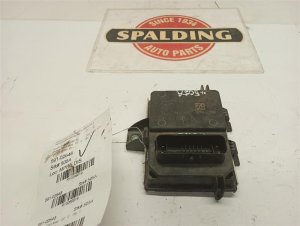
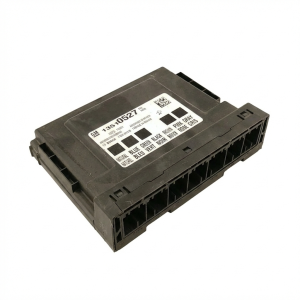
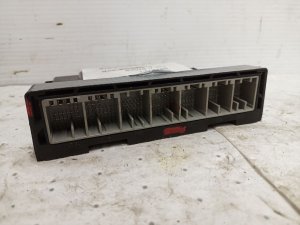
We Have This Part in Stock

The information in this article is provided for general reference and educational purposes only. Vehicle specifications, procedures, and part compatibility can vary by production date, trim level, and region. Always consult your vehicle's factory service manual and verify part numbers before purchasing or performing repairs. Safety-critical components such as airbags, seat belts, and braking systems should be installed by a qualified professional.
- Chevrolet CAMARO:
- 🧭 Diagnostic Flowchart
- 🎬 Helpful Videos
- 🛍️ Shop This Part
- What's Unique About the 2011-2015 Chevrolet CAMARO
- Symptoms You May Notice
- Most Likely Causes
- Rare But Worth Checking
- Diagnosis Steps
- Parts You'll Likely Need
- Related Codes That Often Appear With This One
- Technical Service Bulletins (TSBs) & Recalls
- Platform-Specific Known Issues
- Mechanic-Grade Diagnostic Values
- Scan Tool Commands That Help
- Wiring & Ground Locations
- Real Owner Repair Stories
- OEM Part Supersession History
- Model Year Variations Within This Range
- 🎟️ Get 5% Off