

U0074 on 2010-2017 Chevrolet Equinox: Network Failure Causes & Fixes
On a 2010-2017 Equinox, U0074 almost always points to corrosion in the X411 connector, located under the rear of the vehicle near the driver's side rear wheel, close to the fuel tank. Cleaning or repairing this connector, as detailed in GM TSB PIT5427B, is the most common fix and is a well-documented issue.
- U0074 on a 2010-2017 Equinox is a serious network failure, not a simple sensor issue.
- Before considering any expensive module replacements, your first step should always be to inspect the X411 connector under the rear of the vehicle for corrosion.
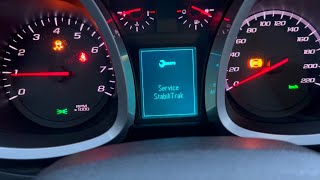
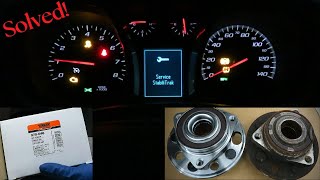
- This issue often triggers a cascade of warning lights, including 'Service StabiliTrak', 'Service Brakes', and 'Service Power Steering'.
- Repairing the X411 connector with cleaning and dielectric grease is often a permanent and low-cost fix.
- Do not drive the vehicle with this code active, as critical safety systems are likely offline.
What's Unique About the 2010-2017 Chevrolet EQUINOX

The second-generation Chevrolet Equinox and its sibling, the GMC Terrain, are uniquely susceptible to this code due to a specific design vulnerability. General Motors issued Technical Service Bulletin (TSB) #PIT5427B, which identifies a primary culprit: the X411 electrical connector. Its location under the rear of the vehicle, just forward of the driver's side rear wheel and to the left of the fuel tank, makes it highly prone to water intrusion and corrosion from road salt, causing the entire communication network to fail.
Diagnostic Flowchart

Tap your situation to follow the diagnostic path that matches what you're seeing on this vehicle.
Symptoms You May Notice

- "Service StabiliTrak" message on the Driver Information Center (DIC)
- "Service ABS" or "Service Brakes" message
- "Service Power Steering" message
- Hard or difficult steering
- Check Engine Light (SES MIL) is on
- ABS and Traction Control lights are on
- "Service AWD" message (if equipped)
- Sudden loss of power or reduced engine power message
- Replacing a single control module (like the EBCM or PSCM) without first thoroughly inspecting, cleaning, and testing the X411 connector and its associated wiring. The problem is very often the connection, not the module itself.
Most Likely Causes

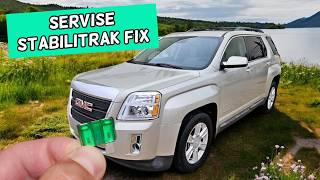
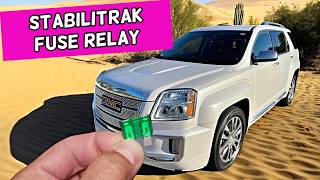
- Corrosion or Damage in Connector X411 🔴 High Probability The connector is located under the rear of the vehicle, behind and to the left of the fuel tank, exposing it to moisture, dirt, and road salt, as documented in GM TSB #PIT5427B. 🎬 Watch: Diagnosing the X411 connector and Stabilitrak messages. Another TSB, PIT5171D, also points to internal wire breaks within the harness insulation near this same connector, sometimes caused by rodent damage.
How to confirm: Visually inspect the pins and wiring of the X411 connector for green or white corrosion, bent pins, or water intrusion. This requires safely raising the vehicle. The connector is typically black and located forward of the driver's side rear wheel.
Typical fix: Disconnect the battery. Carefully clean the connector pins with an electrical contact cleaner and a small brush. If pins are severely corroded or broken, the connector terminals or the entire connector pigtail must be replaced. The pigtail connector is often available as ACDelco part #PT2782. Apply dielectric grease upon reassembly to prevent future corrosion.
Est. part cost: $15-$70 - Failing Control Module 🟡 Medium Probability Any module on the high-speed CAN bus (e.g., BCM, EBCM, Power Steering Control Module) can fail internally, creating a short that takes down the entire network. The Electronic Brake Control Module (EBCM) is a frequently cited point of failure.
How to confirm: This is an advanced diagnostic step. If the X411 connector is clean, a technician will disconnect modules from the CAN bus one by one. When the faulty module is disconnected, communication among the other modules will be restored, and the U0074 code may clear. This can also be diagnosed with an oscilloscope by observing the data signal drop out when the faulty module is tapped or stressed.
Typical fix: Replace the identified faulty module. Most modules, like the BCM or EBCM, require programming to the vehicle's VIN after installation.
Est. part cost: $200-$800 - Damaged Wiring Harness ⚪ Low Probability Wiring can be damaged from previous accidents, improper repairs, or chafing against chassis components. TSB PIT5171D specifically notes that wires can break internally within their insulation near the X411 connector, making the damage invisible without carefully pulling on the individual wires.
How to confirm: Visually inspect the wiring harnesses leading to and from major control modules. Check for continuity on the CAN bus wires (often twisted pairs) using a multimeter if a break is suspected. Per TSB guidance, gently pull on individual wires near the X411 connector to see if the insulation stretches or breaks, revealing a broken wire inside. 🎬 See how to find and repair broken AWD wiring.
Typical fix: Repair the broken or shorted section of wire. This involves soldering in a new piece of wire and protecting it with heat-shrink tubing.
Est. part cost: $1-$20
Rare But Worth Checking
- Poor Ground Connection: A corroded or loose main ground for a control module can cause a variety of unpredictable electrical faults, including communication network errors.
- Aftermarket Accessories: Improperly installed remote starters, alarms, or audio equipment spliced into the vehicle's CAN bus wiring can disrupt communication and trigger a U0074 code.
Diagnosis Steps
- Verify Battery Health: Ensure the battery voltage is above 12.4V and that terminals are clean and tight. Low voltage can cause numerous communication errors.
- Scan for All Codes: Use a scan tool capable of reading codes from all modules (ECM, BCM, EBCM, etc.) to see which ones are not communicating and confirm the presence of U0074.
- Inspect Connector X411: Safely raise the rear of the vehicle. Locate connector X411 forward of the driver's side rear wheel, near the frame rail and fuel tank. Disconnect it and thoroughly inspect for any signs of corrosion, moisture, or damaged pins. This is the most likely cause per TSB PIT5427B.
- Clean or Repair X411: If corrosion is found, clean the terminals with electrical contact cleaner. If damage is severe, replace the affected terminals or the connector pigtail (ACDelco PT2782). Apply dielectric grease before reconnecting.
- Check CAN Bus Resistance: If X411 is clean, check the resistance between Pin 6 (CAN High) and Pin 14 (CAN Low) at the OBD-II port with the battery disconnected. A healthy network should read approximately 60 Ω. A reading of 120 Ω indicates a break in the circuit or a missing terminating resistor. A reading near 0 Ω indicates a short circuit.
- Wiggle Test: While measuring resistance at the DLC, have a helper gently wiggle and flex the wiring harness near the X411 connector and leading to other modules. If the resistance value jumps or changes, it indicates an intermittent open or short in that area of the harness.
- Isolate Modules: If resistance is incorrect, begin disconnecting modules on the high-speed CAN bus one at a time (e.g., EBCM, Power Steering Control Module) and re-check resistance. When the resistance returns to normal (60 Ω), the last module disconnected is likely the source of the fault.
- Professional Diagnosis: If the cause is not apparent after these steps, professional diagnosis with an oscilloscope may be needed to analyze the network data signals directly to find the source of the disruption.
Parts You'll Likely Need
- Electrical Connector Pigtail
(OEM #ACDelco PT2782 (cross-references GM 13585316))— Used to replace the entire X411 connector housing and wires if it is severely corroded or damaged. This is the most common failure point.
Trusted brands: ACDelco, Dorman
OEM price range: $30-$70
Aftermarket price range: $15-$40 - Dielectric Grease — Essential for protecting the cleaned or repaired X411 connector from future moisture and corrosion.
Trusted brands: Permatex, CRC
OEM price range: $5-$15
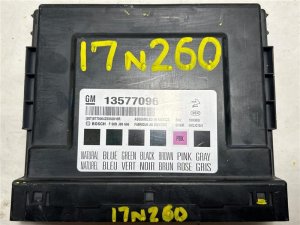
Aftermarket price range: $3-$10 - Electronic Brake Control Module (EBCM) — If a module is found to be shorting the network, the EBCM is a common culprit after the X411 connector has been ruled out.
Trusted brands: ACDelco
OEM price range: $250-$400
Aftermarket price range: $150-$300
Related Codes That Often Appear With This One
- U0100 — Lost Communication With ECM/PCM 'A'. This code often appears with U0074 because the ECM is one of the primary modules on the failed bus.
- U0121 — Lost Communication With Anti-Lock Brake System (ABS) Control Module. The ABS/EBCM is on the same bus, and its failure to communicate triggers StabiliTrak and ABS warnings.
- C0045, C0050 — These are wheel speed sensor circuit codes. They can be set when the ABS module loses power or communication and cannot process sensor signals. TSB PIT5171D specifically links these codes to the X411 wiring issue.
- U0140 — Lost Communication With Body Control Module. The BCM is another critical hub on the network, and its loss is common with a U0074 fault.
Technical Service Bulletins (TSBs) & Recalls
- PIT5427B: Addresses multiple service messages (Stabilitrak, ABS, Power Steering) and communication DTCs (including U0074) caused by corrosion in the X411 connector on 2010-2017 Equinox and Terrain models. Recommends replacing terminals or the connector as needed.
- PIT5171D: Also points to the X411 connector area, but specifically for intermittent issues caused by internal wire breaks within the harness insulation, sometimes due to rodent damage. It advises inspecting wires for hidden breaks near the connector.
Platform-Specific Known Issues
- X411 Connector Corrosion: The primary vehicle-specific issue is the documented tendency for the X411 connector to corrode due to its exposed location under the vehicle, as outlined by GM in TSB PIT5427B. Owners in forums frequently report that finding this connector covered in green or white corrosion, cleaning it thoroughly, and applying dielectric grease resolves the cascade of warning lights.
Mechanic-Grade Diagnostic Values
- High-Speed GMLAN Bus Resistance — expected: Approximately 60 Ω between Pin 6 and Pin 14 of the DLC with the battery disconnected.. Failure: A reading of ~120 Ω indicates an open circuit or a missing terminating resistor. A reading near 0 Ω indicates a short between the high and low circuits.
- High-Speed GMLAN Bus Voltage (Key On) — expected: Approximately 2.5V on both CAN High (Pin 6) and CAN Low (Pin 14) to ground when the bus is idle. During communication, CAN High should toggle up to ~3.5V and CAN Low should toggle down to ~1.5V.. Failure: Voltages stuck high or low, or no voltage, indicates a short to power, short to ground, or an open circuit.
Scan Tool Commands That Help
- GDS2 (Global Diagnostic System 2): Vehicle DTC Information / Display DTCs — To query all modules on the vehicle simultaneously and see which ones are reporting 'No Communication' and which ones are setting the U0074 code. This helps map out the scope of the network failure.
- GDS2 (Global Diagnostic System 2): Module Diagnostics > [Module Name] > Control Functions — After communication is restored, this allows for bidirectional control of individual components (like lights, motors, solenoids) to verify that a specific module is fully functional. For example, commanding headlights on/off from the BCM menu.
- GDS2 (Global Diagnostic System 2): Data Bus Diagnostic Tool — This specialized function within GDS2 acts as an external node to test the integrity of the data bus itself, helping to identify which modules are active and communicating on the selected bus.
Wiring & Ground Locations
- X411 — Under the rear of the vehicle, forward of the driver's side rear wheel, behind and to the left of the fuel tank. It's a large, multi-wire inline connector for the rear body harness.. This is the single most common failure point for U0074 on this platform. The High-Speed GMLAN wires (CAN bus) pass through this connector. Its exposed location makes it highly susceptible to corrosion, which breaks communication for all modules downstream, including the Rear Differential Control Module and Multi-Axis Acceleration Sensor.
- X411 Pinout (High-Speed GMLAN) — Within the X411 connector.. For targeted testing: Pin E (Tan wire, circuit 2501) is CAN Bus High (+). Pin D (Tan/Black wire, circuit 2500) is CAN Bus Low (-). These are the specific pins to test for continuity, shorts, and corrosion.
- G103 — At the left rear of the engine compartment on the cowl, above the brake booster.. This is a major ground point for several critical modules, including the Body Control Module (BCM) and the Instrument Panel Cluster (IPC). A poor connection here can cause widespread communication faults.
- Terminating Resistors — The High-Speed GMLAN bus has two 120 Ω terminating resistors. One is internal to the Engine Control Module (ECM). The other is typically located in another module at the opposite end of the bus, often the Electronic Brake Control Module (EBCM) or within a harness connector near the end of the line.. The health of these resistors is what creates the expected 60 Ω reading. If one is missing due to a module being disconnected or a wiring break, the resistance will jump to 120 Ω, causing signal integrity issues and communication faults.
Real Owner Repair Stories
- YouTube video by a Master Auto Tech (2014 Chevrolet Equinox) — Multiple CAN bus communication faults, including issues with steering angle sensor and multi-axis acceleration sensor.
❌ Tried (didn't work) Unplugging the multi-axis acceleration sensor., Unplugging the rear differential module.
✅ What actually fixed it The technician found that the wiring harness had rubbed through on the chassis near the rear differential clutch module, causing the CAN bus wires to short out. The fix was to repair the damaged section of the wiring harness. This confirms that physical harness inspection for chafing is critical, even if the X411 connector itself looks clean.
OEM Part Supersession History
13585316→ACDelco PT2782— PT2782 is the service pigtail part number for the connector body that corresponds to GM part number 13585316. It includes the connector and a short length of wire for splicing into the harness.
Model Year Variations Within This Range
- 2016-2017: The 2016 model year introduced a facelift with a new grille, headlamps, and rear fascia. While the underlying electrical architecture and the location of the X411 connector remained the same, some interior tech, like the standard 7-inch MyLink screen, changed. New safety features like Side Blind Zone Alert were also added, increasing the number of modules on the network, but the U0074 root cause (X411) remains consistent across the 2010-2017 range.
Helpful Videos


We Have This Part in Stock

The information in this article is provided for general reference and educational purposes only. Vehicle specifications, procedures, and part compatibility can vary by production date, trim level, and region. Always consult your vehicle's factory service manual and verify part numbers before purchasing or performing repairs. Safety-critical components such as airbags, seat belts, and braking systems should be installed by a qualified professional.
- Chevrolet EQUINOX:
- 🧭 Diagnostic Flowchart
- 🎬 Helpful Videos
- 🛍️ Shop This Part
- What's Unique About the 2010-2017 Chevrolet EQUINOX
- Symptoms You May Notice
- Most Likely Causes
- Rare But Worth Checking
- Diagnosis Steps
- Parts You'll Likely Need
- Related Codes That Often Appear With This One
- Technical Service Bulletins (TSBs) & Recalls
- Platform-Specific Known Issues
- Mechanic-Grade Diagnostic Values
- Scan Tool Commands That Help
- Wiring & Ground Locations
- Real Owner Repair Stories
- OEM Part Supersession History
- Model Year Variations Within This Range
- 🎟️ Get 5% Off