

U0074 on 2014-2016 Chevrolet Silverado 1500: Causes and Fixes for Bus Communication Failure
Code U0074 on a 2014-2016 Silverado indicates a loss of communication on a critical data network. This is most often caused by a chafed or corroded wiring harness (especially along the driver's frame rail or near the battery tray), a bad ground (specifically G218 under the driver's dash), or a faulty terminating resistor located in the harness above the spare tire. The fix is usually a wiring or ground repair, not an expensive module replacement.
- U0074 is a network code, not a part failure code. Do not replace any modules until you have performed a full electrical diagnosis.
- Always diagnose and fix U0074 before addressing other codes like P2635 (fuel pump). The communication fault is the root cause.
- The most common fixes are physical: repairing a chafed wire, cleaning a ground, or replacing a corroded connector/resistor. A thorough visual inspection is the most critical first step.
- A healthy CAN bus should have 60 ohms of resistance. Measuring 120 ohms is a clear sign of a problem on the network, often a broken wire or failed terminating resistor.
- Do not drive the vehicle. A loss of communication with the brake and steering modules is a serious safety risk.
What's Unique About the 2014-2016 Chevrolet SILVERADO 1500

For the K2XX platform (Silverado, Sierra, Tahoe, etc.), U0074 is frequently tied to specific, known issues. There are two main scenarios: 1) A failure on the chassis bus, which affects the EBCM and PSCM, often from a chafed harness or bad G218 ground. 2) A failure on the dedicated 'Powertrain Expansion Bus' that connects only the ECM and the Fuel Pump Control Module (FPCM). TSB PIP5427B specifically addresses this ECM-FPCM link, noting that this communication loss is the primary fault to diagnose before any fuel system codes like P2635. 🎬 Watch: Diagnostic walkthrough for U0074 and fuel system codes. Additionally, TSB 23-NA-074 points to the wiring harness chafing on the battery tray support bracket as a common cause.
Diagnostic Flowchart

Tap your situation to follow the diagnostic path that matches what you're seeing on this vehicle.
Symptoms You May Notice
- Service StabiliTrak warning light
- Service Power Steering warning message
- ABS and Traction Control lights on
- Check Engine Light on
- Fuel gauge reading empty or inaccurately.
- Radio or infotainment screen may be blank or flickering.
- Vehicle may not start or may stall intermittently.
- Headlights and dash lights may flicker, especially when turning or braking.
- Replacing the fuel pump or Fuel Pump Control Module (FPCM) for a P2635 code without first diagnosing the U0074. The communication failure is almost always the root cause of the fuel system code, which can cause the fuel pressure to read artificially high.
Most Likely Causes

- Damaged or Chafed Wiring Harness 🔴 High Probability Harnesses on trucks are exposed to harsh conditions. Known chafe points on the K2XX platform include: where the harness runs along the driver's side frame rail (especially near the FPCM and EBCM), against the battery tray support bracket (TSB 23-NA-074), and near the ECM/TCM bracket or upper control arm (TSB 21-NA-149).
How to confirm: Perform a thorough visual inspection of the main harness along the driver's side frame rail, around the EBCM, near the spare tire, and around the battery tray. Flex the harness while monitoring bus resistance with a multimeter to find internal breaks.
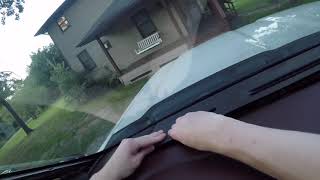
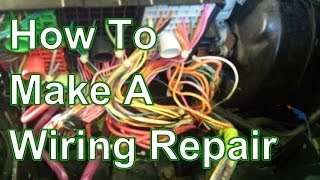
Typical fix: Repair the damaged wire using solder and heat-shrink tubing. Protect the harness with anti-abrasion tape or loom 🎬 Watch: Professional tips for repairing a damaged wiring harness. and secure it away from sharp edges to prevent recurrence.
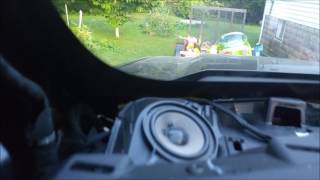
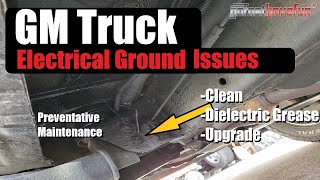
Est. part cost: $10-$50 - Poor Ground Connection (G218) 🟡 Medium Probability Ground G218, located under the driver's side dash behind the kick panel near the A-pillar speaker, is a known weak point. Factory sound-deadening insulation often gets trapped under the nut, preventing a solid connection and causing a wide range of electrical issues, 🎬 See how to locate and fix the G218 ground issue. including network failure.
How to confirm: Locate ground G218, remove the 10mm nut, pull back any trapped insulation, clean the contact surfaces of the terminals and the body stud with a wire brush or sandpaper, and securely re-fasten it.
Typical fix: Clean, secure, and ensure no insulation is interfering with the ground connection.
Est. part cost: $0-$5 - Failed External Terminating Resistor 🟡 Medium Probability The CAN bus requires two 120-ohm resistors. One is internal to a control module (like the EBCM), but the other is an external resistor (GM Part #13596282) located in the harness above the spare tire, where it's exposed to moisture and corrosion.
How to confirm: With the battery disconnected, measure resistance between Pin 6 and Pin 14 of the OBD-II port. A healthy bus reads ~60 ohms. A reading of ~120 ohms points to an open circuit, often a failed or disconnected terminating resistor. You can locate the resistor, unplug it, and test it directly; it should read 120 ohms.
Typical fix: Replace the faulty terminating resistor. It is often taped to the harness near the rear chassis components.
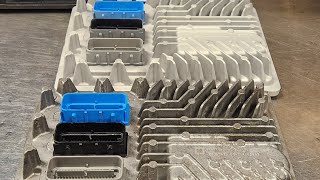
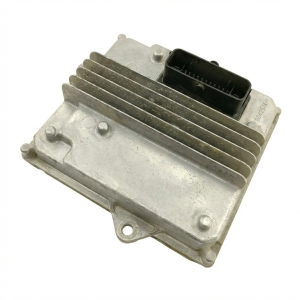
Est. part cost: $15-$40 - Faulty Control Module ⚪ Low Probability While less common than wiring issues, any module on the bus can fail and disrupt the network. The Electronic Brake Control Module (EBCM) and Fuel Pump Control Module (FPCM) are common culprits due to their location and function. In some cases where U0074, P2635, and P018B are all present and wiring tests good, the ECM itself has been identified as the root cause.
How to confirm: This is a process of elimination. If wiring, grounds, and the terminating resistor are confirmed good, disconnect modules from the bus one at a time. The faulty module is the one that, when disconnected, allows the bus resistance to return to 60 ohms.
Typical fix: Replace the faulty module. Note that many modules, like the EBCM or FPCM, require programming by a dealer or qualified shop after installation.
Est. part cost: $150-$800
Rare But Worth Checking
- Corroded Connector: Connectors like X411 (under the rear of the vehicle) or the main connector at the EBCM can get filled with water and corrode, causing an open or short on the bus. Always inspect connectors in the affected area.
- Improperly Installed Aftermarket Accessories: Remote starters, alarms, or audio systems that are incorrectly spliced into CAN bus wires can disrupt the network and cause a U0074 code.
- High-Resistance Battery Cables: → Shop Vehicle Battery Per TSB 18-NA-161, the short jumper cables at the battery or the main negative cable can develop high internal resistance, causing voltage drops that lead to communication errors.
Diagnosis Steps
- Record all Diagnostic Trouble Codes (DTCs) from all modules. Prioritize diagnosis of U0074 before any other codes, as per TSB #PIP5427B.
- Disconnect the battery.
- Using a quality multimeter, measure the resistance between Pin 6 (CAN High) and Pin 14 (CAN Low) at the OBD-II Data Link Connector (DLC). A healthy network should read approximately 60 ohms.
- If the reading is ~120 ohms, it indicates an open circuit, likely a broken wire or a failed/missing terminating resistor.
- If the reading is near 0 ohms, it indicates a short between the CAN High and CAN Low wires.
- Perform a thorough visual inspection of the wiring harness, focusing on the driver's side frame rail, around the spare tire (near the FPCM and terminating resistor), at the EBCM, and around the battery tray support bracket. Look for any signs of chafing, melting, or corrosion.
- Inspect and clean the G218 ground under the driver's side dash. Remove the 10mm nut, clean all contacts, and ensure no insulation is caught underneath.
- If wiring and grounds appear good, begin isolating modules. Disconnect one module on the chassis bus at a time (e.g., EBCM, PSCM, FPCM) and re-check resistance at the DLC. When the resistance returns to 60 ohms, the last module disconnected is the likely source of the fault.
Parts You'll Likely Need
- CAN Bus Terminating Resistor
(OEM #13596282)— The external resistor located near the rear of the truck is exposed to the elements and can fail, causing the bus resistance to double and communication to cease.
Trusted brands: ACDelco
OEM price range: $25-$40
Aftermarket price range: $15-$30 - Electronic Brake Control Module (EBCM)
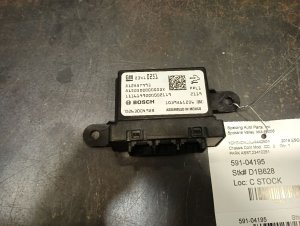
(OEM #23487274 (superseded by 84160654, 85590322))— The EBCM is a primary module on the chassis bus and may contain one of the terminating resistors. An internal failure can bring down the entire network. Part requires programming after installation.
Trusted brands: ACDelco (Genuine GM)
OEM price range: $400-$700
Aftermarket price range: $250-$500 (Remanufactured) - Fuel Pump Control Module (FPCM)
(OEM #23282991 (superseded by 84406298))— A communication breakdown between the ECM and FPCM is a specific cause of U0074 cited in TSBs. An internal failure of the FPCM can be the cause. Part requires programming after installation.
Trusted brands: ACDelco (Genuine GM)
OEM price range: $150-$250
Aftermarket price range: $80-$180
Related Codes That Often Appear With This One
- P2635 — This code for 'Fuel Pump Flow Performance' is often set because the ECM loses communication with the Fuel Pump Control Module (FPCM) due to the U0074 fault. TSB #PIP5427B explicitly states to diagnose U0074 first.
- U18A2 — This is another communication code that often appears with U0074 and P2635, pointing to a loss of communication with the FPCM. TSB #PIP5427B states U0074 takes priority if both are present.
- C0561 — This code indicates a problem with the StabiliTrak system. It is often a symptom of the U0074 code, as the EBCM (which controls StabiliTrak) has lost communication on the bus.
- U0131 — Indicates 'Lost Communication With Power Steering Control Module (PSCM)'. This is a direct result of the chassis bus being down, causing the 'Service Power Steering' message.
Technical Service Bulletins (TSBs) & Recalls
- PIP5427B: Explicitly states to diagnose U0074 before P2635 (Fuel Pump Flow) as the communication loss between the ECM and FPCM is the root cause.
- PIT5076E: Mentions U0074 in the context of chassis bus failures affecting the electronic brake and power steering control modules.
- 23-NA-074: Supersedes older bulletins and points to wire chafing on the battery tray support bracket as a cause for a multitude of communication codes, including U0074.
- 21-NA-149 & 20-NA-113: General bulletins for the platform that identify other potential harness chafe points, such as near the ECM/TCM bracket, upper control arm, and shock tower bolt.
Platform-Specific Known Issues
- A known issue involves the wiring harness chafing on the battery tray support bracket, as outlined in TSB 23-NA-074. Vibrations cause the harness to rub against the sharp metal edge of the bracket, eventually exposing and shorting the CAN bus wires within.
- Another common failure point is the G218 ground stud, where foam insulation gets pinched under the ground lug during assembly, leading to a high-resistance connection that gets worse over time and causes intermittent network failures.
- Owner Experience on SilveradoSierra.com: A user with a 2015 Silverado reported U0074 with a blank radio screen and Stabilitrak warnings. The cause was found to be a corroded wire within the main harness near the Fuel Pump Control Module (FPCM) above the spare tire. Repairing the single wire restored all functions.
Mechanic-Grade Diagnostic Values
- High-Speed CAN Bus Resistance at DLC (Pins 6 & 14) — expected: ~60 ohms (± 5 ohms). Failure: A reading of ~120 ohms indicates an open circuit (broken wire or failed terminator). A reading near 0 ohms indicates a short between the two CAN wires.
- CAN High Voltage to Ground (Pin 6 at DLC) — expected: ~2.6V - 2.7V (Key On, Engine Off). Failure: Significant deviation from this voltage, or a reading of 0V, indicates a bus fault.
- CAN Low Voltage to Ground (Pin 14 at DLC) — expected: ~2.3V - 2.4V (Key On, Engine Off). Failure: Significant deviation from this voltage, or a reading of 0V, indicates a bus fault.
- Resistance of Powertrain Expansion Bus at Connector X125 — expected: ~120 ohms looking toward the FPCM, and ~120 ohms looking toward the ECM.. Failure: An open reading (OL) or a short (near 0 ohms) on either side indicates a wiring or module fault on that segment of the dedicated bus.
Hidden / Shadow Codes Worth Checking
- U0074 00: The '00' is a symptom byte indicating a general 'Bus Off' state. It confirms the network has shut down but doesn't pinpoint the location without further diagnosis. (see via A professional scan tool like the GM GDS2 or a high-end aftermarket scanner capable of reading manufacturer-specific symptom bytes.)
Scan Tool Commands That Help
- GDS2 (GM Global Diagnostic System 2): Network Communication Status / Vehicle DTC Information — This is the first step to perform a vehicle-wide scan. It shows which modules are actively communicating and which are reporting 'No Communication', helping to isolate the fault to a specific bus (e.g., Chassis Bus vs. Powertrain Expansion Bus).
- GDS2 (GM Global Diagnostic System 2): Module Diagnostics > Control Functions — After communication is restored, this allows for bidirectional control of individual components (like commanding the fuel pump on/off). This verifies that a specific module is fully functional and not just communicating.
- GDS2 (GM Global Diagnostic System 2): Configure/Reset Functions — This is required after replacing a network-critical module like the EBCM, FPCM, or ECM. It programs the new module to the vehicle's VIN and specific options.
Wiring & Ground Locations

- G218 — Under the driver's side dash, behind the kick panel near the A-pillar speaker.. This is a major instrument panel ground. A poor connection here due to trapped insulation is a known cause of intermittent network failures, leading to U0074 and multiple warning lights.
- Terminating Resistor — Taped to the main wiring harness, located above the spare tire, often near the FPCM.. This external 120-ohm resistor is required for the CAN bus to function. If it fails or its wiring is damaged, the bus resistance will double to 120 ohms, causing communication to stop.
- X125 — An inline harness connector located under the hood, part of the engine control harness.. This connector contains the dedicated CAN bus circuits (Powertrain Expansion Bus) running between the ECM and the FPCM. It's a key testing point to isolate communication faults between these two modules.
- G402 — At the rear of the vehicle frame, near the spare tire and trailer harness connector area.. This is the primary ground for rear-mounted modules, including the Fuel Pump Control Module (FPCM). Corrosion or looseness here can directly cause loss of communication with the FPCM, triggering U0074 and P2635.
- G110 — On the engine block, often near the front of the cylinder heads.. This is a critical engine and body-to-engine ground. A loose connection here has been identified as a cause for various intermittent electrical and communication issues.
Real Owner Repair Stories
- SilveradoSierra.com forum user (2015 Silverado) — U0074, P2635, radio screen blank.
❌ Tried (didn't work) Replacing the Fuel Pump Control Module (FPCM).
✅ What actually fixed it A dealership technician found and repaired a single chafed wire in the main harness where it passes over the frame rail near the FPCM. - iATN (International Automotive Technicians Network) post (2015 Silverado 1500 4.3L V6) — Check Engine Light on with codes U0074, U18A2, and P2635. Scan tool showed actual fuel pressure was much higher than desired.
❌ Tried (didn't work) Initial diagnosis confirmed wiring resistance on the Powertrain Expansion bus was correct (~120 ohms to ECM, ~120 ohms to FPCM from connector X125).
✅ What actually fixed it The technician found that while resistance was good, the ECM was not generating the necessary CAN bus voltage signal. Both CAN lines read a steady 2.457 volts with no differential. Replacing the Engine Control Module (ECM) resolved the communication failure and all associated codes. - Owner report on CarComplaints.com (2014 Silverado) — Intermittent StabiliTrak failure, shutting down during low-speed maneuvers, loss of power steering.
❌ Tried (didn't work) Multiple dealer visits.
✅ What actually fixed it The owner found a YouTube video explaining how to fix the G218 ground. Re-tightening the ground bolts under the dash provided a temporary fix for about 9 months, confirming the ground was the source of the electrical issues.
OEM Part Supersession History
23487274→84160654, 85590322— Standard part revision and improvement by the manufacturer.23282991→84406298— Standard part revision and improvement by the manufacturer.
Model Year Variations Within This Range
- 2016: For the 2016 model year, an infotainment upgrade was offered that included Apple CarPlay and Android Auto. This involved a different HMI module and USB hub. While not directly related to the U0074 CAN bus fault, it's a notable electronic difference within the 2014-2016 range.
Helpful Videos

Used OEM Parts in Stock
New Aftermarket Parts Available


The information in this article is provided for general reference and educational purposes only. Vehicle specifications, procedures, and part compatibility can vary by production date, trim level, and region. Always consult your vehicle's factory service manual and verify part numbers before purchasing or performing repairs. Safety-critical components such as airbags, seat belts, and braking systems should be installed by a qualified professional.
- Chevrolet SILVERADO 1500:
- 🧭 Diagnostic Flowchart
- 🎬 Helpful Videos
- 🛍️ Shop This Part
- What's Unique About the 2014-2016 Chevrolet SILVERADO 1500
- Symptoms You May Notice
- Most Likely Causes
- Rare But Worth Checking
- Diagnosis Steps
- Parts You'll Likely Need
- Related Codes That Often Appear With This One
- Technical Service Bulletins (TSBs) & Recalls
- Platform-Specific Known Issues
- Mechanic-Grade Diagnostic Values
- Hidden / Shadow Codes Worth Checking
- Scan Tool Commands That Help
- Wiring & Ground Locations
- Real Owner Repair Stories
- OEM Part Supersession History
- Model Year Variations Within This Range
- 🎟️ Get 5% Off