

U0074 on 2019 Ram 1500: 'Dedicated Powertrain CAN Bus Off' Causes and Fixes
On a 2019 Ram 1500, U0074 indicates a communication failure on the special network for the eTorque mild-hybrid system. The most common fix is a software update from the dealer per TSB #18-070-22. Other causes include wiring damage, often found rubbing near the firewall, or a faulty Hybrid Powertrain Control Module (HPCM).
- U0074 on a 2019 Ram 1500 is a very specific code pointing to a failure of the eTorque mild-hybrid system's communication network.
- The first and most important diagnostic step is to check if TSB #18-070-22 has been performed. A simple software update at the dealer often resolves the issue.
- If the software is current, the next most likely cause is a damaged or corroded wire in the powertrain harness.
- This is not a simple DIY fix. Due to the complexity of network diagnostics, professional service is strongly recommended.
- Do not immediately replace parts like the shifter module if you see related warning messages; the root cause is likely the network failure itself.
What's Unique About the 2019-2019 Ram 1500
The 2019 Ram 1500 (DT generation) was the first to feature the eTorque mild-hybrid system. 🎬 Watch: Understanding how the eTorque system works and its common issues. This system required a new, dedicated high-speed communication bus (the D-PT CAN bus) to manage the complex interactions between the traditional engine and the hybrid components. Code U0074 is specific to this new architecture and is often linked directly to the eTorque system's functionality, setting it apart from generic 'Bus Off' codes on other vehicles. The issue is so specific that a Technical Service Bulletin was released just for this platform and engine combination.
Diagnostic Flowchart
Tap your situation to follow the diagnostic path that matches what you're seeing on this vehicle.
Symptoms You May Notice
- Check Engine Light (Malfunction Indicator Lamp or MIL) is on.
- Multiple warning lights on the instrument cluster, such as 'Service Shifter'.
- Engine may stall, hesitate, run rough, or exhibit erratic RPMs.
- eTorque start/stop system may malfunction or become unavailable.
- Vehicle may not restart after being turned off, sometimes requiring an ignition cycle to resolve temporarily.
- Transmission may seem stuck in one gear (limp mode).
- Message on dash may appear stating 'Service Shifter', often when accelerating. 🎬 See how to fix the Service Shifter light yourself for cheap.
- Replacing the shifter module. A 'Service Shifter' message can be a symptom of the U0074 network code, not the cause. One owner of a platform-mate Jeep reported a dealer replacing the shifter valve body, which did not fix the underlying wiring issue that was eventually found.
Most Likely Causes
- Powertrain Control Module (PCM) Software Glitch 🔴 High Probability → Shop Engine Control Module (ECM) As documented in TSB #18-070-22, the original software calibration for the 3.6L eTorque engine was susceptible to setting this code along with others related to the hybrid system. This is the most common and well-documented first step in the repair process.
How to confirm: A Ram dealer or a properly equipped independent shop can check the current PCM software calibration number against the latest version available from the manufacturer using a tool like wiTECH.
Typical fix: Reprogramming the Powertrain Control Module (PCM) with the latest available software as per TSB #18-070-22. This is a non-mechanical repair that takes under an hour.
Est. part cost: $0 - Damaged or Corroded Wiring Harness 🟡 Medium Probability Wiring for the powertrain network can be exposed to engine heat, vibration, and moisture. A well-documented case on the related Jeep JL platform found CAN bus wires (circuits D440 and D441) had rubbed through against a firewall stud, causing corrosion and a short. This type of chafing is a common cause for CAN bus failures.
How to confirm: Visually inspect the wiring harness, particularly between the PCM and the Hybrid Powertrain Control Module (HPCM). Pay close attention to where the harness may contact the firewall, frame, or engine components. A multimeter can be used to check for continuity and shorts to ground on the CAN high and CAN low wires.
Typical fix: Repairing the damaged section of the wire. This often involves splicing in a new section of wire, soldering the connections, and using heat-shrink tubing to protect the repair. The harness should then be re-routed or secured to prevent future damage.
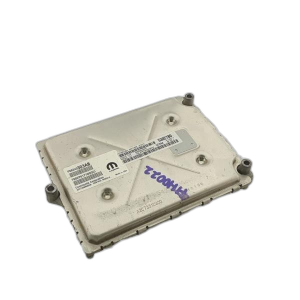
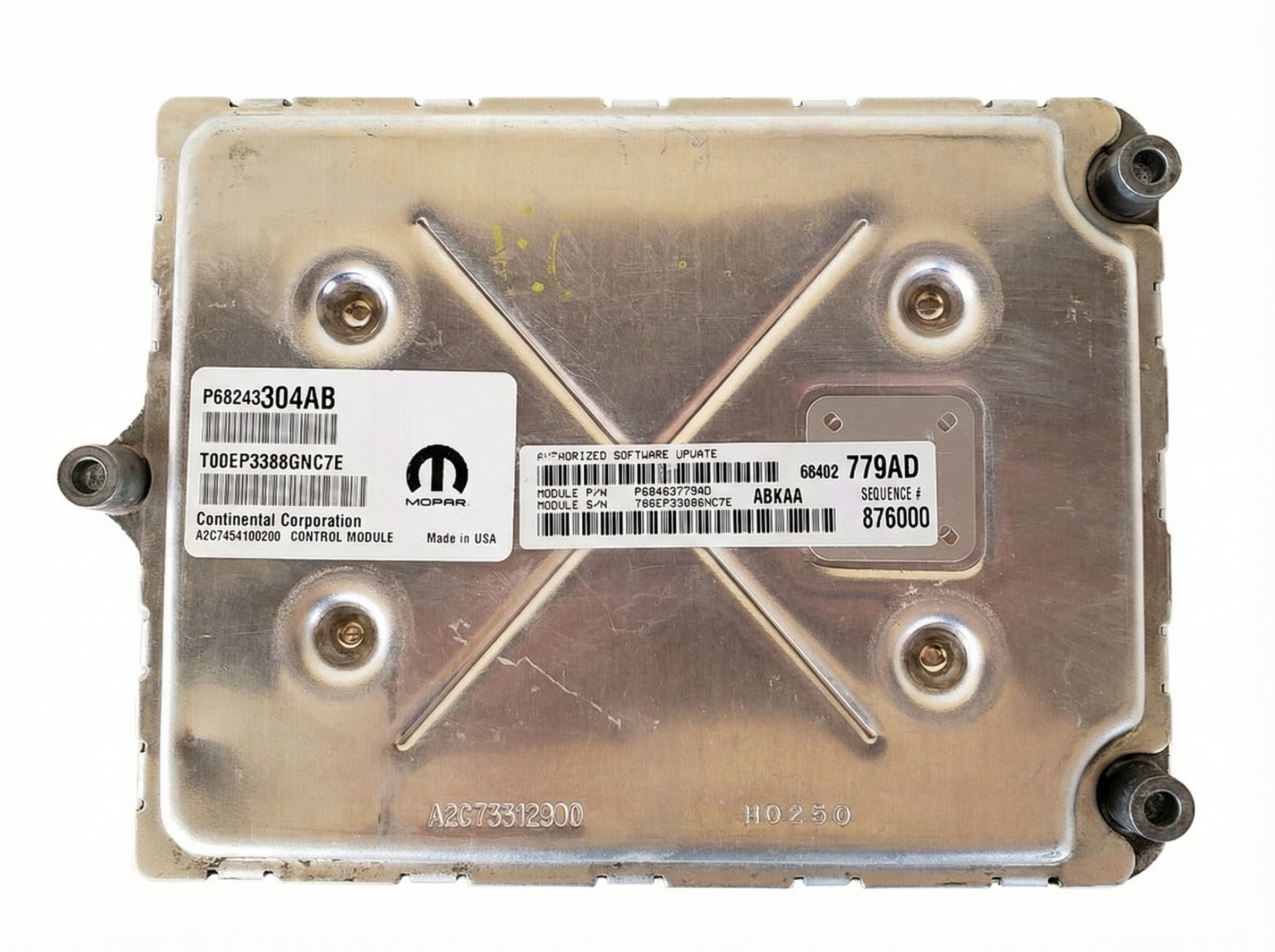
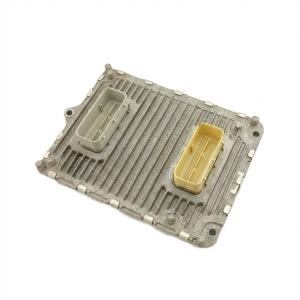
Est. part cost: $10-$50 - Faulty Control Module ⚪ Low Probability Any module on the network can theoretically fail and bring down the entire bus. The Hybrid Powertrain Control Module (HPCM) is a primary suspect if wiring and software are ruled out, as it is a key component on the dedicated D-PT bus.
How to confirm: This is a process of elimination. If the software is up to date and all wiring tests pass, the module itself is the likely culprit. A technician may use a scan tool to try and communicate with the module directly or isolate modules one by one to see if the fault clears.
Typical fix: Replacing the faulty control module (e.g., HPCM) and programming the new module to the vehicle. This must be done by a dealer or a qualified shop with programming capabilities.
Est. part cost: $400-$1200
Diagnosis Steps
- Connect a professional scan tool (like Stellantis's wiTECH) and check for all stored Diagnostic Trouble Codes (DTCs). Confirm U0074 is present and note any other codes, especially U1817, P0607, and P06EF.
- Check for applicable Technical Service Bulletins (TSBs). Specifically, check if TSB #18-070-22 has been performed on vehicles with the 3.6L eTorque engine. If not, updating the PCM software is the first and most likely repair.
- If software is up-to-date, perform a thorough visual inspection of the wiring harness between the PCM and the Hybrid Powertrain Control Module (HPCM). Look for any signs of chafing, melting, or corrosion. A known chafe point on a similar platform was against a firewall stud.
- Disconnect the battery. Using a multimeter, measure the resistance between the two CAN bus wires (CAN High and CAN Low) at the diagnostic port or at a module connector. A healthy network should read approximately 60 ohms. A reading of 120 ohms indicates an open circuit or a failed terminating resistor, 🎬 Watch: How a loose star connector can cause CAN bus failure. while a reading significantly below 60 ohms suggests a short between the wires.
- Check the CAN High and CAN Low wires for a short to ground or power by measuring resistance between each wire and a known good chassis ground.
- If wiring and resistance checks are good, the issue may be an intermittently failing module. This advanced diagnosis may require an oscilloscope to monitor the CAN bus signal waveform while flexing the harness to try and induce the fault.
- As a final step in diagnosis by elimination, if all other steps fail to find a fault, the problem is likely one of the control modules on the network, such as the HPCM or PCM.
Parts You'll Likely Need
- Hybrid Powertrain Control Module (HPCM) — If software and wiring are confirmed to be good, the HPCM is a primary module on the D-PT CAN bus and can fail, causing the network to go down. Replacement is a last resort after other diagnostics.
Trusted brands: Mopar
OEM price range: $600-$1200
Aftermarket price range: N/A
Related Codes That Often Appear With This One
- U1817 — This code means 'Lost Communication With Hybrid Powertrain Control Module On D-PT'. Since U0074 means the entire D-PT bus is down, it's logical that communication with the HPCM on that bus would also be lost. TSB #18-070-22 explicitly lists these two codes together.
- P0607 — 'ECU Internal Performance'. This can be set alongside network codes when communication failures cause the main engine computer to fail its internal self-tests. This code is also mentioned in the same TSB.
- P0456 — 'EVAP System Small Leak'. This code is also mentioned in TSB #18-070-22, indicating the software update addresses multiple potential issues, not just the CAN bus fault.
- P06EF — 'Engine Restart Performance'. Also listed in TSB #18-070-22, this code is directly related to the function of the eTorque start/stop system, which relies on the D-PT CAN bus for operation.
Technical Service Bulletins (TSBs) & Recalls
- 18-070-22: Dated April 2, 2022, this TSB addresses MIL illumination with DTC U0074, U1817, P0607, P0456, and others on 2019 Ram 1500s with the 3.6L eTorque engine. The fix is to reprogram the PCM with updated software. It applies to North American, APAC, EMEA, and LATAM markets.
Platform-Specific Known Issues
- A key issue for the 2019 Ram 1500 with the 3.6L eTorque engine is a known software problem that can cause U0074. This is addressed by FCA/Ram TSB #18-070-22, which involves reprogramming the PCM.
- The wiring harness routing on Stellantis platforms of this era can lead to chafing issues. A specific case on a Jeep JL with the same engine family found the CAN wires for the D-PT bus rubbing through on a firewall stud, leading to corrosion and failure.
Mechanic-Grade Diagnostic Values
- CAN Bus Terminating Resistance — expected: Approximately 60 Ω. Failure: 120 Ω indicates a missing terminating resistor or open circuit. Readings below 50 Ω can indicate a shorted module or extra resistor on the network.
- CAN High Voltage to Ground (Key On) — expected: 2.5V to 3.0V DC. Failure: Significant deviation from this range indicates a fault on the CAN High line.
- CAN Low Voltage to Ground (Key On) — expected: 2.0V to 2.5V DC. Failure: Significant deviation from this range indicates a fault on the CAN Low line.
- Resistance from CAN High or Low to Ground — expected: Megaohms (MΩ) or Open/Infinite. Failure: Low resistance indicates a short to ground in the wiring or a faulty module.
Scan Tool Commands That Help
- wiTECH: Network Topology / Bus Diagnostics — To visualize which modules are present and communicating on the D-PT CAN bus. A module that is not reporting or showing as 'lost communication' is a key area for investigation.
Wiring & Ground Locations
- Star Connector / CAN Bus Hub — On the 2019 Ram 1500 (DT), the main star connector block is located behind the headlight switch panel on the driver's side of the dashboard. The panel can be popped out without tools to gain access.. This is the central hub where different branches of the CAN bus meet. A technician can disconnect branches here to isolate a faulty module or wiring section that is bringing down the entire network, drastically speeding up diagnosis.
- D-PT CAN Bus Wires — These wires run between the Powertrain Control Module (PCM), the Hybrid Powertrain Control Module (HPCM), and the Star Connector. Based on general Chrysler wiring schemes, the circuit identifiers begin with 'D' for Diagnostic/Communication circuits.. These are the specific wires carrying the communication for the network that has failed. Knowing their identifiers (e.g., D440, D441 on a similar platform) and general location is critical for performing continuity, resistance, and short-to-ground tests.
- Ground G206 — Located on the right rear of the engine.. A bad ground for a control module can cause it to malfunction and disrupt network communication. While not a direct cause of a bus-off condition, verifying major powertrain grounds is a crucial step in diagnosing complex electrical issues.
Real Owner Repair Stories
- Diesel Technician Society Forum (Ford Power Stroke Diesel (similar CAN bus architecture)) — U0074 code, glow plug light not illuminating at KOEO (Key On, Engine Off).
❌ Tried (didn't work) Initial code clearing.
✅ What actually fixed it A faulty NOx sensor module (NOx11) was bringing down the entire communication bus. The technician diagnosed this by unplugging modules one by one. When the faulty NOx module was unplugged, other network functions (like the glow plug light) returned to normal. Replacing the NOx module resolved the U0074 code.
Helpful Videos
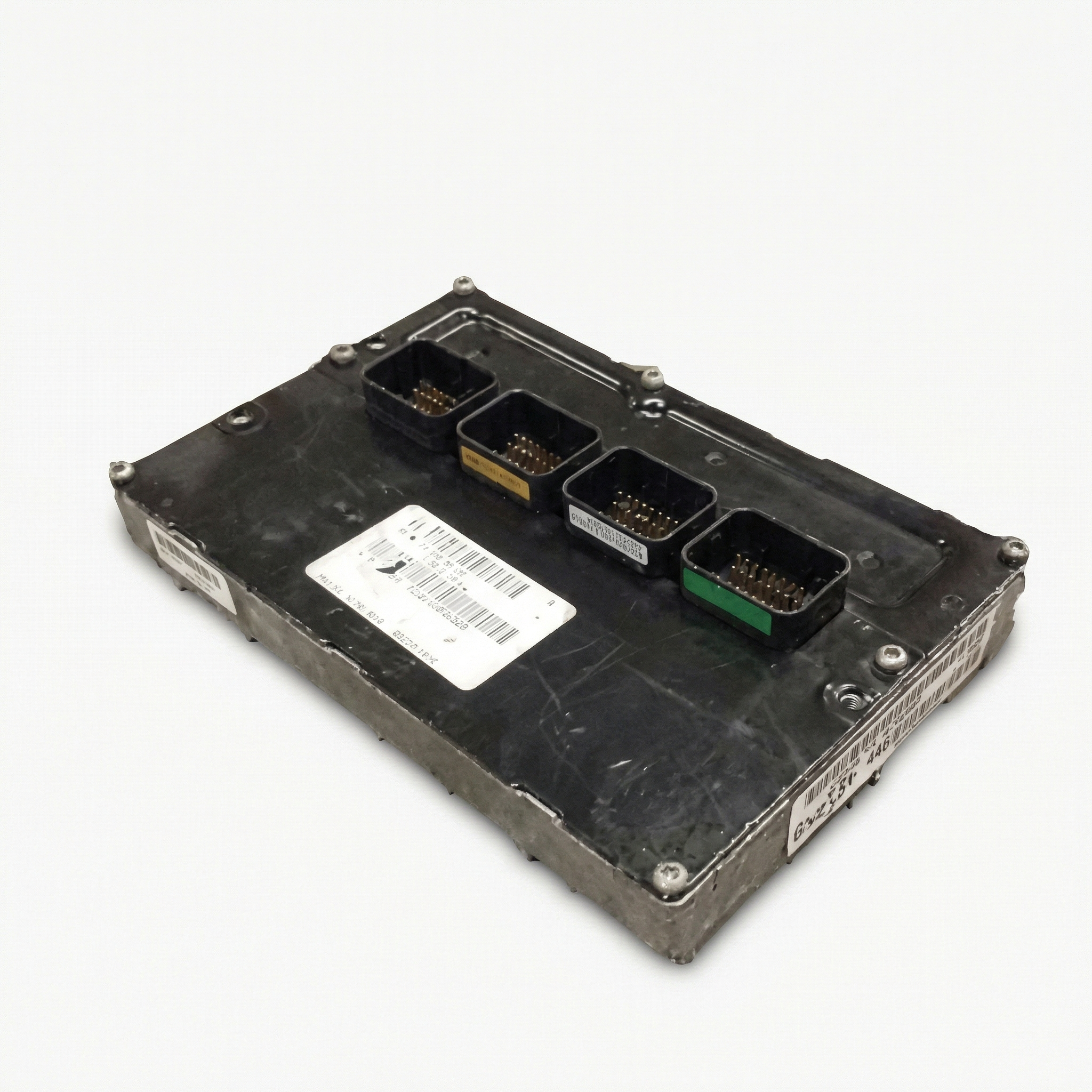
We Have This Part in Stock

The information in this article is provided for general reference and educational purposes only. Vehicle specifications, procedures, and part compatibility can vary by production date, trim level, and region. Always consult your vehicle's factory service manual and verify part numbers before purchasing or performing repairs. Safety-critical components such as airbags, seat belts, and braking systems should be installed by a qualified professional.
- Ram 1500:
- 🧭 Diagnostic Flowchart
- 🎬 Helpful Videos
- 🛍️ Shop This Part
- What's Unique About the 2019-2019 Ram 1500
- Symptoms You May Notice
- Most Likely Causes
- Diagnosis Steps
- Parts You'll Likely Need
- Related Codes That Often Appear With This One
- Technical Service Bulletins (TSBs) & Recalls
- Platform-Specific Known Issues
- Mechanic-Grade Diagnostic Values
- Scan Tool Commands That Help
- Wiring & Ground Locations
- Real Owner Repair Stories
- 🎟️ Get 5% Off