

OBD-II Code U0075: Control Module Communication Bus Off
What U0075 means, why it triggers, and how to fix it
- Code U0075 indicates a total failure of a specific Controller Area Network (CAN) bus, immediately disabling linked systems like power windows, door locks, and blind-spot monitoring.
- Inspect the rear bumper and door jamb wiring first; water intrusion in these areas causes over 50% of U0075 faults, especially on 2016-2018 GM vehicles.
- Test your 12V battery before replacing any modules, as a voltage drop below 9.6V during cranking frequently triggers false communication codes.
- Diagnosing this code requires a multimeter to verify the CAN bus resistance reads exactly 60 ohms; a reading of 120 ohms or 0 ohms confirms a hard physical wiring fault.
- Expect to pay between $250 and $850 for a professional repair, as fixing U0075 usually requires an advanced bidirectional scan tool to isolate the dead module and program its replacement.
What Does U0075 Mean?
Code U0075 means a specific communication network connecting your car's electronic modules has shut down. Think of it as the internet going out in a section of a 'smart home.' Modules on this network, such as the Body Control Module (BCM) or Active Safety Control Module, can no longer exchange data, instantly disabling the features they control.
Technical definition: The SAE/ISO definition for U0075 is "Control Module Communication Bus 'C' Off." The powertrain control module (PCM) or gateway module detects that a specific Controller Area Network (CAN) bus is inactive. This two-wire differential network (CAN High and CAN Low) requires proper 120-ohm termination to function. General Motors often designates this specific network as the 'Object Detection Bus'.
Can I Drive With U0075?
Yes, But With Caution. Driving is possible, but critical systems like power windows, door locks, and advanced safety features like blind-spot monitoring will not work. The vehicle often enters a reduced power 'limp mode' or stalls unexpectedly. Short-distance driving to a repair shop is feasible, but disabled safety systems make long trips dangerous. Ignoring the issue makes the vehicle electrically unreliable.
Common Causes
- Damaged or Corroded Wiring/Connectors (Very Common) — Wires routed through vulnerable areas like door jambs, bumpers, and under seats suffer moisture exposure or physical breaks, causing a total loss of communication.
- Failed Control Module (e.g., SBZA or BCM) (Common) — A primary module fails internally due to a cracked circuit board or water intrusion, taking the entire network offline. On GM vehicles, a water-damaged Side Blind Zone Alert (SBZA) module inside the rear bumper is the leading culprit.
- Poor Power or Ground Supply (Common) — Electronic modules require a stable 12-volt supply and solid chassis ground. A weak battery, failing alternator, or corroded ground strap drops system voltage below 9.6 volts during cranking, disabling module communication.
- Faulty Terminating Resistor (Less Common) — CAN bus networks require a 120-ohm resistor at each end to prevent signal reflections. If a module containing a terminating resistor fails, the entire network crashes.
- Improperly Installed Aftermarket Accessories (Less Common) — Adding remote starters or alarms without proper shielding introduces electrical noise or overloads the communication bus.
- Software Corruption (Rare) — A failed software update or programming glitch corrupts a module's ability to complete the digital 'handshake' with the network.
Symptoms
- Power Windows, Door Locks, or Interior Lights Inoperative — Convenience features controlled by the Body Control Module suddenly stop responding.
- Advanced Safety System Warnings — The dashboard displays 'Service Driver Assist' or 'Service Side Detection'; blind-spot monitoring and park assist disable.
- HVAC System Unresponsive — Buttons and knobs for the air conditioning and heating system do not work.
- Multiple Unrelated Warning Lights — Check Engine, ABS, and Airbag lights illuminate simultaneously because modules cannot report status to the instrument cluster.
- Scan Tool Cannot Communicate (scan-tool only — no driver-felt sign) — Diagnostic tools fail to establish a connection with any modules on the faulty bus.
Diagnostic Flowchart
Tap your situation to follow the diagnostic path that matches what you're seeing on this code.
Common Fixes & Costs
- Repairing Damaged Wiring or Connectors — Parts: $20-$100, Labor: $250-$1300, ~2.5 hr book time (Intermediate)
- Replacing a Failed Side Blind Zone Alert (SBZA) Module
— Parts: $250-$450, Labor: $200-$400, ~2.0 hr book time
(Professional)
Chevrolet Malibu / Buick LaCrosse (2016-2018): OEM GM 84440529 (Alt: Dorman (model-specific))
Chevrolet Volt (2017-2018): OEM GM 42625292 (Alt: N/A) - Replacing a Faulty Battery — Parts: $150-$300, Labor: $50-$100, ~0.5 hr book time (Beginner)
- Replacing a Failed Body Control Module (BCM)
— Parts: $400-$900, Labor: $200-$350, ~2.5 hr book time
(Professional)
Chevrolet Malibu (2016-2018): OEM GM 13514638 (Alt: Cardone, Dorman (Remanufactured)) - Reprogramming or Updating Module Software — Parts: $0, Labor: $120-$250, ~1.5 hr book time (Professional)
Used vs. New Parts: Buying Guide
When a used part is worth it: Buying used electronic modules is risky. It makes sense only for older, high-mileage vehicles where a new OEM part is prohibitively expensive.
Donor-vehicle mileage cap: roughly under 100000 miles for the part to have meaningful remaining life.
Donor quality checklist:
- Verify the donor vehicle was not scrapped due to flood or fire damage.
- Match the part number exactly.
- Buy from a reputable seller offering a 30-day warranty.
Decision logic:
- If The part requires programming (BCMs, SBZA modules) → Buy new OEM or remanufactured. Many used modules cannot be reprogrammed by dealers.
- If Vehicle is less than 10 years old and the part is under $500 → Buy new. The risk of repeat labor costs outweighs used part savings.
- If You are a DIYer without professional programming tools → Buy a pre-programmed remanufactured module. A used part will not work without programming.
Warranty tradeoff: Used parts carry a 30-90 day exchange warranty. Remanufactured parts offer 1-year warranties. New OEM parts carry a 1-2 year warranty.
Worst-case if a used part fails: $400-$1000. If a used module is defective, you pay installation labor twice plus the cost of a second part.
What Happens If You Wait — Timeline
- Immediately: Code sets. Power windows, locks, and advanced safety systems disable. Vehicle may enter 'limp mode'. (MPG impact: 0-5%% · Added cost: $0)
- 1-4 weeks: A failing module creates a parasitic battery drain, causing slow engine cranking or a dead battery after sitting overnight. (MPG impact: 0%% · Added cost: $200 (Cost for a new battery if damaged by deep discharge).)
- 1-3 months: Vehicle behavior becomes unpredictable. It stalls unexpectedly or fails to start. Disabled safety systems increase accident risk. (MPG impact: N/A% · Added cost: $400 (Battery cost plus towing).)
- 3+ months: Corrosion spreads from a single connector pin up the copper wire into the main harness. Diagnosis and repair require full harness replacement. (MPG impact: N/A% · Added cost: $1500+ (Wiring harness replacement).)
Cost of Not Fixing It
- Immediately: Loss of convenience features and critical safety systems like blind-spot monitoring, increasing accident risk. (Added cost: Potential for traffic citations or accidents.)
- 1-3 months: Vehicle unpredictably enters 'limp mode' or stalls. Parasitic battery drains lead to no-start conditions. (Added cost: $200 for a new battery and towing costs.)
- 3+ months: Moisture exposure corrodes entire connectors or wiring harnesses, requiring full harness replacement instead of a simple pigtail fix. (Added cost: $1500+)
Diagnosis Steps
- Check Battery and Fuses
Ensure the battery is fully charged (12.4+ volts engine off) and terminals are tight. A weak battery causes random communication codes. Inspect and replace blown fuses related to control modules (BCM, ASCM).
Tools: Multimeter, Fuse Puller (Beginner) - Read All Codes with an Advanced Scan Tool
Use a scanner capable of reading manufacturer-specific codes from all modules. Note all 'U' codes and unresponsive modules to identify the affected network.
Tools: Advanced OBD-II Scan Tool (Beginner) - Perform a Visual Inspection of Wiring
Inspect wiring harnesses in problem areas: the rubber boot between the driver's door and body, rear bumper wiring, and under seats. Look for chafing, pinching, or corrosion.
Tools: Flashlight (Intermediate) - Measure CAN Bus Resistance
With the battery disconnected, measure resistance between CAN High and CAN Low wires. A healthy network reads 60 ohms. 120 ohms indicates an open circuit; 0 ohms indicates a short.
Tools: Multimeter, Vehicle-Specific Wiring Diagram (Advanced) - Check for Power and Ground at the Non-Communicating Module
Unplug the unresponsive module's connector. Verify it receives battery voltage (12.2-12.8V) and has a solid ground (voltage drop under 0.1V). A module without power cannot communicate.
Tools: Multimeter, Vehicle-Specific Wiring Diagram (Advanced) - Isolate Modules on the Network
If bus resistance is incorrect, unplug modules on the network one at a time. When resistance returns to 60 ohms, the last module unplugged (or its connector) is the fault.
Tools: Multimeter, Vehicle-Specific Wiring Diagram, Trim Removal Tools (Advanced) - Pro Tip: Check CAN Bus Voltage with Key On
With ignition on, measure voltage of each CAN wire to ground. CAN High averages ~2.6V; CAN Low averages ~2.4V. Voltages stuck at 5V, 0V, or equal on both lines indicate a short.
Tools: Multimeter, Vehicle-Specific Wiring Diagram (Professional) - Pro Tip: Analyze Network with an Oscilloscope
Connect to CAN High and CAN Low to view square wave patterns. Look for distorted signals or missing data packets to pinpoint interference or weak module drivers.
Tools: 2-Channel Automotive Oscilloscope, Back-Probe Pins (Professional) - Advanced: Scan Tool Live Data Analysis
Monitor network status Parameter IDs (PIDs). A bus showing no activity or high error counts confirms the 'Bus Off' state. Identify which module sends corrupt data.
Tools: Advanced Bi-Directional Scan Tool (Advanced)
When This Code Triggers (Freeze-Frame Conditions)
- System Voltage: 10.5-11.8V (During engine crank / startup)
- Ignition Status: ON (Key-On, Engine-Off or Engine Running)
- Vehicle Speed: 0 mph (Often set at startup when modules fail to initialize)
- Module Status: No Communication (One or more modules on the affected bus are not responding)
Related Codes
- U0073 — Generic code for 'Control Module Communication Bus A Off.' Manufacturers use U0073 and U0075 interchangeably; a wiring diagram is required to identify the specific offline bus.
- U0074 — Refers to 'Control Module Communication Bus B Off.' Indicates a failure on a different physical network than U0075.
- U0140 — Means 'Lost Communication With Body Control Module.' If U0075 is present, the entire bus is down. If only U0140 is present, the fault isolates to the BCM itself.
- U026A / U026B — Indicates lost communication with left/right side object sensors. Seeing these with U0075 confirms a fault on the Object Detection Bus, usually at the rear bumper.
Climate & Environmental Factors
- High Humidity and Rain: Moisture seeps into exposed connectors (bumpers, door jambs), causing pin corrosion and short circuits that bring down the bus.
- Road Salt: Salty spray accelerates corrosion on underbody wiring, ground straps, and exposed connectors, causing rapid communication failures.
- Extreme Cold: Cold weather weakens batteries, lowering startup voltage. This prevents modules from initializing correctly, triggering transient U0075 codes.
How to Talk to a Mechanic About This Code
Say this: "I have a U0075 code and symptoms of a communication bus failure, like non-working windows and safety system warnings. Please start by checking the battery, grounds, and any known TSBs for my vehicle before quoting module replacement."
Signals you understand U0075 is a network problem. It guides the technician toward cost-effective diagnostics (checking simple things first) rather than immediately replacing expensive modules.
Avoid saying:
- 'My check engine light is on, can you just fix it?'
- 'I think the computer is bad.'
- 'Just do whatever it takes.'
Questions to ask before authorizing the repair:
- Can you show me the wiring diagram and explain which modules are on the failed bus?
- Did you find the fault in the wiring, a connector, or a specific module? Can you show me the test results?
- If a module needs replacement, does the price include programming and calibration?
- Will you provide a written estimate with a full breakdown of parts and labor costs?
- What is the warranty on the parts and labor for this specific repair?
Where to Take It: Dealer vs Independent vs Chain
- Dealer:
Recommended. U0075 involves manufacturer-specific TSBs and requires programming new modules, which dealers are best equipped to handle.
Best for: Vehicles under warranty., Vehicles with known manufacturer-specific issues or TSBs (like GM's SBZA module failures)., Complex repairs requiring proprietary software for programming.
Downsides: Highest labor rates., May default to replacing an entire module when a simpler wiring repair is possible. (Typical cost: +50% vs. baseline) - Independent Shop:
Good alternative. A reputable independent shop with strong electrical diagnostic skills is cost-effective. Confirm they have the tools to program modules for your specific brand.
Best for: Out-of-warranty vehicles where the cause is a bad battery or broken wire., Shops specializing in automotive electronics.
Downsides: May lack expensive scan tools needed for programming modules., Technician skill with complex network diagnostics varies widely. (Typical cost: +0% vs. baseline) - Chain Shop:
Avoid for diagnosis. The risk of an incorrect diagnosis or being sold unneeded parts is high.
Best for: Simple fixes like a battery replacement (if they perform the BMS reset).
Downsides: Technicians lack experience with complex electrical diagnostics., Not equipped for module programming or network analysis. (Typical cost: -10% vs. baseline)
When to Walk Away From the Repair
If the total estimated repair cost for the U0075 fault exceeds 50% of your car's private-party market value, consider selling or trading it in. Complex electrical issues on older cars lead to more problems.
- Car worth $5000, fix is $2200: Walk away. The repair cost is nearly half the car's value, and other electrical issues are likely to follow.
- Car worth $15000, fix is $800: Fix it. The repair cost is well below the threshold and restores critical safety features.
- Car worth $3000, fix is $1600: Walk away. The repair cost is over 50% of the vehicle's value.
What Scan Tool You Need for This Code
Minimum: A scanner that reads manufacturer-specific 'U' codes from all modules, not just generic powertrain codes.
A basic $20 code reader shows 'No Communication' or fails to connect entirely. Diagnosing U0075 requires seeing which specific modules are offline.
Budget: BlueDriver Pro (~$99) — Reads enhanced codes from ABS, Airbag, and BCM modules. Identifies which modules report errors, providing a starting point for diagnosis. Cannot perform bidirectional tests.
Mid-range: Foxwell NT510 Elite (~$180) — Provides OE-level diagnostics for a single car brand. Offers bidirectional controls to test components directly and sees which modules are offline.
Professional: Autel MaxiCOM MK808S (~$650) — Offers full bidirectional control, live data graphing, and network topology visualization. Higher-end models perform ECU programming required after replacing a module.
How to Clear the Code After You Fix It
- Reconnect the battery if it was disconnected for the repair.
- Use an OBD-II scan tool to perform a 'Clear All Codes' function.
- Start the vehicle and verify that warning messages are gone and the code does not immediately return.
Drive cycle (~20 minutes): Start the engine from cold and idle for 2-3 minutes. Drive in mixed city/highway conditions for 15-20 minutes, including steady-state cruising. Allow the vehicle to cool down completely.
Readiness monitors affected: Catalyst Monitor, Evaporative System Monitor, O2 Sensor Monitor, EGR System Monitor
Before emissions retest: drive at least 50 miles to fully set monitors.
Watch out for:
- Disconnecting the battery will not clear Permanent Diagnostic Trouble Codes (PDTCs) on vehicles 2010 and newer.
- The U0075 code returns instantly if the root physical or software fault is not corrected.
- Failing to perform a drive cycle after clearing codes results in an automatic emissions test failure.
Will This Fail Emissions / State Inspection?
Yes — this code typically fails an OBD-II emissions inspection.
- California: An active U0075 code illuminating the Check Engine Light is an automatic failure. All OBD readiness monitors must be set to 'Ready' after repair.
- New York: Any active diagnostic trouble code commanding the MIL on results in an inspection failure.
- Texas: In emissions-testing counties, an active U-code turning on the check engine light causes an OBD inspection failure.
Most Commonly Affected Vehicles
- Chevrolet Volt (2017-2018) — Prone to failures on the 'Object Detection Bus' caused by a faulty Active Safety Control Module or weak 12V battery. TSB #PIT5441C applies.
- Chevrolet Malibu (2016-2018) — Commonly affected by water intrusion at the side object detection module connectors in the rear bumper. Special Coverage N182188250 exists.
- Buick LaCrosse / Envision (2016-2018) — A faulty side blind spot radar sensor in the rear bumper is a common cause. Diagnostic scan tools can falsely induce this code.
- Cadillac XTS / CT6 (2013-2018) — CT6 models suffer from wiring harness screws piercing bus wires in the headliner. XTS models experience SBZA module water damage.
- Ford F-150 (2015-2020) — A cascade of U-codes traces back to a weak 12V battery. The Battery Management System (BMS) requires a scan tool reset after replacement.
- Honda Accord (2018-2019) — Wiring faults in the door jamb cause communication issues with the door control unit, disabling power windows and locks.
- BMW 2-Series (2015-2016) — A dead battery stores a persistent U0075 code. 'Battery registration' using an advanced scan tool is required after replacement.
- Dodge / Ram Ram 2500/3500 (6.7L Diesel) (2010-2012) — U0075 relates to intermittent disturbances on the J1939 data link connecting the PCM to the turbocharger, rather than body electronics.
Manufacturer-Specific Notes
- General Motors: GM refers to this network as the 'Object Detection Bus.' TSB #PIT5441C notes a faulty MDI diagnostic scan tool cable falsely triggers U0075.
- Dodge / Ram: On diesel trucks, U0075 defines an intermittent fault on the J1939 powertrain network connecting the turbocharger, not body electronics.
- Ford: A weak 12V battery causes a cascade of U-codes. The Battery Management System (BMS) requires a specific reset procedure after replacement.
- Alfa Romeo: U0075 sets without symptoms after a battery drain event. If it clears and does not return, it is a transient glitch.
Real Owner Stories
2017 Chevy Malibu at 75K miles - The GM Bumper Fix
Owner saw a 'Service Side Detection System' message and code U0075. Power windows and blind spot alerts stopped working intermittently after rain.
What they tried:
- Suspected a bad Body Control Module (BCM).
- Received a high quote for diagnostic wire tracing.
- Found GM Special Coverage N182188250 detailing water intrusion in Side Blind Zone Alert (SBZA) modules.
Outcome: The dealer confirmed a water-damaged SBZA module in the rear bumper. The module was replaced and programmed for free under the 6-year/80,000-mile special coverage. The code did not return.
Lesson: For GM vehicles with U0075 and side detection warnings, check the rear bumper SBZA modules first. Always verify TSBs or Special Coverage programs before authorizing diagnostics.
2018 Ford F-150 at 60K miles - The Battery Cascade
After sitting for a week, the truck cranked slowly. The dashboard lit up with U0075, ABS, and airbag faults. Electronics acted erratically.
What they tried:
- Charged the battery overnight, temporarily fixing the issue.
- Tested the battery at a parts store; it passed a voltage check but failed a load test.
Outcome: The 4-year-old battery failed under load. A new AGM battery was installed for $250. The shop performed a BMS Reset to calibrate the charging system. All codes cleared permanently.
Lesson: A weak battery causes a cascade of communication codes mimicking major failures. Always load-test the 12V battery before diagnosing U-codes.
2018 Honda Accord at 85K miles - The Door Jamb Break
The driver's side power window and door locks failed, storing code U0075. All other functions were normal.
What they tried:
- Replaced the driver's window switch with no change.
- Noticed wiggling the rubber wiring boot between the door and body temporarily restored function.
Outcome: A technician found a broken CAN bus wire inside the rubber boot caused by repetitive door movement. The wire was repaired with a butt connector and heat shrink for $200. The problem was resolved.
Lesson: If U0075 symptoms isolate to one area (like a single door), inspect high-movement wiring harnesses visually before replacing modules.
How to Prevent This Code From Triggering
- Apply Dielectric Grease to Vulnerable Connectors (During any related service or repair) — Non-conductive dielectric grease seals exposed connectors (bumpers, undercarriage) against moisture and road salt, preventing pin corrosion.
- Perform Regular Battery and Ground Strap Inspections (Every oil change) — Corroded grounds create resistance and voltage drops that trigger communication codes. Ensure the battery maintains at least 12.4V at rest.
- Avoid High-Pressure Spray on Bumpers (Every car wash) — Direct high-pressure water forces moisture past seals on GM Side Blind Zone Alert (SBZA) modules, a primary cause of U0075.
- Address Cabin Water Leaks Immediately (As needed) — Leaks from windshields or sunroof drains drip onto critical electronics like the BCM, causing irreversible corrosion.
Frequently Asked Questions
Can a weak battery cause code U0075?
Yes. Control modules require stable voltage (above 9.6V) to communicate. A dying battery drops voltage during startup, preventing modules from initializing and triggering communication codes.
What is a CAN bus terminating resistor?
A CAN bus requires a 120-ohm resistor at each physical end to prevent data signal reflections. Measuring resistance across the two CAN wires on a healthy network yields 60 ohms (two 120-ohm resistors in parallel).
Can my diagnostic tool cause the problem?
Yes. GM TSB PIT5441C states that a faulty diagnostic cable (MDI) fails to connect properly with the Object Detection Bus at the OBD-II port. This induces false U0075 codes during testing.
Can aftermarket accessories cause a U0075 code?
Yes. Improperly installed remote starters or alarms tapped into the data network introduce electrical interference. This disrupts module communication and triggers the code.
What is the difference between U0075 and U0140?
U0140 means only the Body Control Module (BCM) is offline. U0075 means the entire network housing the BCM has crashed. With U0075, you cannot communicate with the BCM or any other module on that specific bus.
Is it expensive to fix a U0075 code?
Repair costs range from $200 for a simple battery replacement to $1,300+ for complex wiring harness repairs. Replacing a common GM side object sensor costs $450-$850 including parts, labor, and programming.
Can I fix code U0075 myself?
Basic checks like testing the battery and inspecting door jamb wiring are DIY-friendly. However, diagnosing network failures requires advanced scan tools and multimeter testing. Module replacement mandates professional programming software, making full DIY repair impossible for most.
Will clearing the code make it go away?
No. U0075 indicates a hard physical or software fault in the communication network. The code returns immediately once the modules attempt to communicate again.
Key Takeaways
- Code U0075 indicates a total failure of a specific Controller Area Network (CAN) bus, immediately disabling linked systems like power windows, door locks, and blind-spot monitoring.
- Inspect the rear bumper and door jamb wiring first; water intrusion in these areas causes over 50% of U0075 faults, especially on 2016-2018 GM vehicles.
- Test your 12V battery before replacing any modules, as a voltage drop below 9.6V during cranking frequently triggers false communication codes.
- Diagnosing this code requires a multimeter to verify the CAN bus resistance reads exactly 60 ohms; a reading of 120 ohms or 0 ohms confirms a hard physical wiring fault.
- Expect to pay between $250 and $850 for a professional repair, as fixing U0075 usually requires an advanced bidirectional scan tool to isolate the dead module and program its replacement.
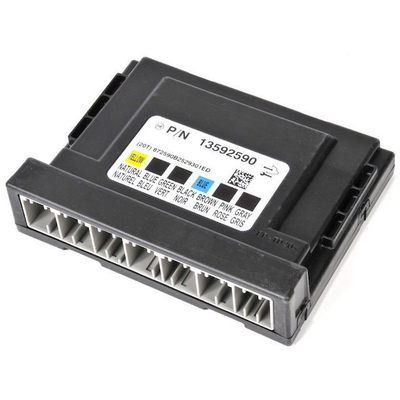
Shop the Parts Behind U0075
Below are the parts most often responsible for code U0075, ranked by how frequently each one is the actual culprit (per the diagnosis above). Tap any to see what we have for your vehicle.




The information in this article is provided for general reference and educational purposes only. Vehicle specifications, procedures, and part compatibility can vary by production date, trim level, and region. Always consult your vehicle's factory service manual and verify part numbers before purchasing or performing repairs. Safety-critical components such as airbags, seat belts, and braking systems should be installed by a qualified professional.
- 🧭 Diagnostic Flowchart
- 🛍️ Shop This Part
- What Does U0075 Mean?
- Can I Drive With U0075?
- Common Causes
- Symptoms
- Common Fixes & Costs
- Used vs. New Parts: Buying Guide
- What Happens If You Wait — Timeline
- Cost of Not Fixing It
- Diagnosis Steps
- When This Code Triggers (Freeze-Frame Conditions)
- Related Codes
- Climate & Environmental Factors
- How to Talk to a Mechanic About This Code
- Where to Take It: Dealer vs Independent vs Chain
- When to Walk Away From the Repair
- What Scan Tool You Need for This Code
- How to Clear the Code After You Fix It
- Will This Fail Emissions / State Inspection?
- Most Commonly Affected Vehicles
- Manufacturer-Specific Notes
- Real Owner Stories
- 2017 Chevy Malibu at 75K miles - The GM Bumper Fix
- 2018 Ford F-150 at 60K miles - The Battery Cascade
- 2018 Honda Accord at 85K miles - The Door Jamb Break
- How to Prevent This Code From Triggering
- Frequently Asked Questions
- Can a weak battery cause code U0075?
- What is a CAN bus terminating resistor?
- Can my diagnostic tool cause the problem?
- Can aftermarket accessories cause a U0075 code?
- What is the difference between U0075 and U0140?
- Is it expensive to fix a U0075 code?
- Can I fix code U0075 myself?
- Will clearing the code make it go away?
- Key Takeaways
- 🎟️ Get 5% Off