

U0077 on 2013-2015 Cadillac ATS: Chassis Bus Communication Failure Causes and Fixes
On a 2013-2015 Cadillac ATS, code U0077 indicates a communication failure on the chassis network, which is critical for safety systems. This often triggers ABS, StabiliTrak, and power steering warnings. The most common cause is a broken or corroded wire in the 'Communication Enable' circuit (5986), frequently found under the driver's side sill plate due to water intrusion or physical damage. A faulty control module can also be the culprit, but wiring should always be diagnosed first. Professiona
- U0077 on a 2013-2015 ATS is a critical network failure affecting safety systems like ABS and power steering.
- Do not drive the vehicle until this issue is repaired.
- The most common cause is a wiring problem, often in the harnesses running under the interior sill plates.
- A faulty Electronic Brake Control Module (EBCM) or Power Steering Control Module (PSCM) is the next most likely cause.
- Due to the complexity, diagnosis and repair should be performed by a qualified technician with experience in GM network issues.
What's Unique About the 2013-2015 Cadillac ATS
On the Cadillac ATS and related GM Alpha platforms, the U0077 code is specifically linked to the 'Chassis Bus' in manufacturer technical service bulletins. This network connects safety-critical systems, and failures often trace back to a specific wiring fault in the 'Communication Enable' circuit 5986. This circuit, often a Violet/Green wire, acts as a 12V 'wake-up' signal sent from the Body Control Module (BCM) to the chassis modules. Unlike generic codes, this points to a very specific electrical fault that can cause multiple, confusing warning lights to appear simultaneously.
Diagnostic Flowchart
Tap your situation to follow the diagnostic path that matches what you're seeing on this vehicle.
Symptoms You May Notice
- Service Power Steering message on the instrument cluster
- Service ABS / Traction Control / StabiliTrak warning lights
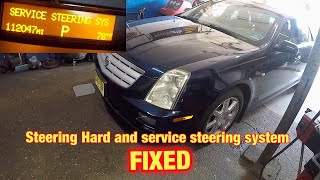
- Loss of power steering assist, making the wheel very hard to turn 🎬 Watch: How to fix hard steering and the service light.
- ABS and Traction Control systems are disabled
- Erratic behavior from gauges (less common)
- Vehicle may have trouble starting or lose power (less common)
- Replacing the Power Steering Control Module or Electronic Brake Control Module without first exhaustively testing the wiring harness. 🎬 See how to diagnose lost communication with the ABS module. The wiring, specifically circuit 5986, is a more common point of failure and a much cheaper fix.
Most Likely Causes
- Wiring Harness Open, Short, or High Resistance 🔴 High Probability GM Technical Service Bulletins, like PIT5457D, explicitly point to known issues with the 'Communication Enable circuit 5986' developing high resistance or an open. These issues are most often found in the wiring harness located under the driver's side sill plate and kick panel area due to potential corrosion from water intrusion, or physical damage from being pinched or chafed. Another known failure point is Splice J365, located under the passenger front sill plate.
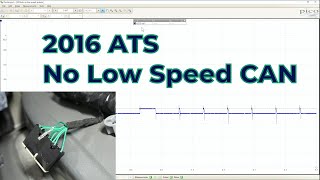
How to confirm: A technician will use a multimeter to check for approximately 12 volts on the Communication Enable circuit (5986) at the connector for an affected module like the EBCM or PSCM. An oscilloscope can also be used to view the data signal on the CAN bus 🎬 Watch: Troubleshooting GM low speed communication and network issues. to check for signal integrity. A visual inspection of the harness under the driver's sill plate is a primary step. A load test using a small bulb (like a 194) can confirm the circuit's ability to carry current, not just show voltage.
Typical fix: Locate the damaged section of the wiring harness (commonly under the driver's door sill), repair the broken or corroded wire (often Violet/Green), and protect the harness from future damage. This is a labor-intensive but often inexpensive parts-wise fix.
Est. part cost: $5-$50 - Faulty Control Module (EBCM or PSCM) 🟡 Medium Probability A module on the chassis bus can fail internally, causing it to either stop communicating or, in some cases, 'scream' on the network with bad data, bringing the entire bus down. The TSB for the ATS specifically mentions the Electronic Brake Control Module (EBCM) and Power Steering Control Module (PSCM) as potential areas of concern. Water intrusion in the cabin can also damage these modules directly.
How to confirm: If the wiring, power, and grounds to all modules are confirmed to be good, the next step is to isolate modules. A technician will disconnect one module at a time from the chassis bus and see if communication is restored among the remaining modules. If the network comes back online after disconnecting the PSCM, for example, the PSCM is the faulty component. This is often done using a professional scan tool to monitor network status.
Typical fix: Replace the failed control module. The new module will require programming to the vehicle's VIN with a professional scan tool.
Est. part cost: $400-$900 - Poor Battery Voltage or Bad Ground Connection ⚪ Low Probability → Shop Vehicle Battery Modern vehicles are highly sensitive to voltage. A weak or failing battery can cause unpredictable communication errors between modules during startup, when voltage is at its lowest. Specific to the 2013 ATS, TSB PI1097A notes that a poor engine ground at G104 can cause intermittent power steering messages due to excess glue or shrink wrap on the terminal.
How to confirm: Test the battery's state of charge and health. A simple voltage test should show ~12.6V with the engine off and 13.7-14.7V when running. Inspect and clean the main battery terminals and chassis ground points. For 2013 models, specifically remove, inspect, and clean engine ground G104.
Typical fix: Replace the vehicle's battery and clean all related ground connections.
Est. part cost: $150-$300
Rare But Worth Checking
- Water Intrusion from Clogged Sunroof Drains or Windshield Seal:
Diagnosis Steps
- Verify the battery is fully charged and the terminals are clean.
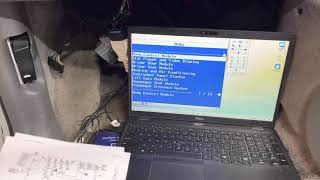
- Scan all vehicle modules with a professional scan tool and record all stored DTCs. Note which modules are not communicating.
- Check for related Technical Service Bulletins (TSBs). TSBs PIT5076E and PIT5457D are highly relevant.
- Inspect for signs of water intrusion. Pull back the carpet in the driver's footwell and remove the driver's side door sill plate to visually inspect the wiring harness for corrosion, pinching, or physical damage.
- Following TSB guidance, use a multimeter to check for approximately 12 volts on the Communication Enable circuit (Circuit 5986, typically a Violet/Green wire) at the connector for an affected module like the EBCM or PSCM. Perform a load test on this circuit with a small bulb (e.g., a 194 bulb) to ensure it can carry the necessary current.
- If voltage is low or absent, trace and repair the open or high resistance in the circuit. The break is most commonly found in the channel under the driver's sill plate or at splice J365 under the passenger sill plate.
- If the enable circuit is good, check the resistance between the two CAN bus wires (pins 6 and 14) at the OBD-II diagnostic port. It should be approximately 60 ohms. A reading of 120 ohms indicates a missing terminating resistor or a break in the bus.
- If wiring appears intact, begin disconnecting non-communicating modules one by one to see if communication is restored to the others. The last module disconnected before the network recovers is the likely culprit.
- If a faulty module is identified, replace it and perform the necessary programming and setup procedures using a factory-compatible scan tool.
Parts You'll Likely Need
- Electronic Brake Control Module (EBCM)
(OEM #23320967, 22994616)— This is one of the primary modules on the chassis bus. An internal failure can take down the network, and it's cited as a potential issue in TSBs. Part numbers vary by year and options like adaptive cruise control.
Trusted brands: ACDelco
OEM price range: $500-$800
Aftermarket price range: $350-$600 - Power Steering Control Module (PSCM)
(OEM #22914539, 84544953)— Like the EBCM, the PSCM is a critical node on the chassis bus. Its failure can cause the U0077 code and a loss of power steering. Part numbers may vary by year.
Trusted brands: ACDelco
OEM price range: $400-$700
Aftermarket price range: $300-$550
Related Codes That Often Appear With This One
- U0121 — Lost Communication With Electronic Brake Control Module (EBCM)
- U0131 — Lost Communication With Power Steering Control Module (PSCM)
- U0125 — Lost Communication With Yaw Rate Sensor Module
- U0126 — Lost Communication with Steering Angle Sensor (SAS) Module
- C0186 — Lateral Accelerometer Circuit Malfunction
- C0196 — Yaw Rate Circuit Malfunction
Technical Service Bulletins (TSBs) & Recalls
- PIT5076E: Notes that if U0077 is set and won't clear, the Chassis bus should be diagnosed. This TSB is specific to the 2013 ATS.
- PIT5457 (multiple revisions): Although for other GM models, it provides critical diagnostic information for U0077, pointing to the Communication Enable circuit (5986) as a common point of failure causing loss of communication with the EBCM and PSCM. It identifies the wire's location under the driver's sill plate as a primary inspection point.
Platform-Specific Known Issues
- Technical Service Bulletin PIT5076E specifically calls out code U0077 on the 2013-2015 ATS and instructs technicians to diagnose the Chassis bus if the code is present and won't clear, often in conjunction with symptoms in the brake or power steering systems.
- TSB PIT5457D, while for other GM models, is the key document for this fault. It details the recurring failure of the 'Communication Enable circuit 5986' in harnesses under the sill plates, a problem shared with the ATS due to its similar electrical design.
- A common real-world failure scenario involves water from a clogged sunroof drain or bad windshield seal leaking into the driver's footwell, corroding the circuit 5986 wire inside the main harness that runs along the sill plate.
Mechanic-Grade Diagnostic Values
- Communication Enable Circuit (5986) Voltage — expected: ~12 Volts (Battery Voltage) when ignition is in ACC, ON, or START.. Failure: Low or no voltage indicates an open or high resistance in the circuit.
- Communication Enable Circuit (5986) Load Test — expected: Should illuminate a small test bulb (e.g., a 194 bulb) and maintain at least 11 volts across the bulb.. Failure: Bulb does not light, or voltage drops significantly below 11V, indicating high resistance that can't carry the required current to wake up modules.
- Chassis CAN Bus Resistance (at DLC) — expected: ~60 Ohms between Pin 6 (CAN-H) and Pin 14 (CAN-L) with the battery disconnected.. Failure: A reading of ~120 Ohms suggests a break in the bus or a missing terminating resistor. A reading near 0 Ohms indicates a short between the two CAN wires.
- Engine Ground G104 (2013 MY only) — expected: Clean, tight connection with no excess glue or shrink wrap under the eyelet terminal.. Failure: Visible adhesive or shrink wrap preventing a solid metal-to-metal contact, causing intermittent power issues to modules like the PSCM.
Scan Tool Commands That Help
- GM GDS2: Vehicle Diagnosis > Vehicle Communication Diagnostics > Network Communication Status — This is a primary step to get a list of all modules on the vehicle and see which ones are actively communicating and which are not, helping to narrow down the fault domain.
- GM GDS2: Module Diagnostics > [Specific Module, e.g., BCM] > Control Functions — Used to perform bidirectional tests, such as commanding lights or other functions on and off, to verify that a specific control module is powered up and capable of executing commands.
- GM GDS2: Clear All DTCs — After a repair is performed, this function is used to clear codes from all modules simultaneously to verify the fix is complete and no new codes are set.
Wiring & Ground Locations
- Circuit 5986 — A wire (typically Violet/Green) running from the Body Control Module (BCM) in a harness under the driver's side and passenger's side front door sill plates.. This is the 'Communication Enable' circuit. An open or corrosion in this specific wire is the most common cause of U0077, as it prevents the BCM from 'waking up' the chassis modules (EBCM, PSCM, etc.).
- Splice J365 — A factory splice in the wiring harness located under the passenger front sill plate.. This splice is within Circuit 5986 and is a known weak point that can corrode from water intrusion, causing an open circuit and triggering U0077.
- G104 (2013 MY) — Engine ground. On early 2013 4-cylinder automatic models, it's at the front of the engine. On later models and 3.6L V6, it's at the rear of the engine.. A TSB specifically calls out this ground for the 2013 ATS as a source of intermittent power steering issues due to poor connection from the factory, which can contribute to communication faults.
- G302 — Located at the right kick panel.. This is a major body ground point. A poor connection here can affect multiple modules, including the HVAC Control Module and others that share the data bus.
- G303 / G304 — G303 is in the left rear passenger footwell; G304 is in the right rear passenger footwell.. These are key ground points for rear body components and modules. While less likely to be the primary cause for U0077, a fault here could cause erratic behavior on the network.
Real Owner Repair Stories
- General diagnosis pattern from multiple TSBs and related vehicle articles. (2013-2015 Cadillac ATS and other GM vehicles on similar platforms.) — Service Power Steering, Service Stabilitrak, ABS lights, loss of power steering assist.
❌ Tried (didn't work) Replacing the EBCM or PSCM without diagnosing the wiring., Clearing codes without finding the root cause, leading to immediate return of the fault.
✅ What actually fixed it Finding and repairing a broken or corroded violet wire (Circuit 5986, Communication Enable) in the wiring harness located in the channel under the driver's side door sill plate. The damage is often caused by water intrusion from clogged sunroof drains or a bad cowl seal, or from physical pinching/chafing of the harness.
OEM Part Supersession History
22994616→23320967— Standard part revision and update by the manufacturer.
Heads up: The newer part number (23320967) is the correct service replacement for the older one. Always verify the correct part number by VIN before ordering, as programming is required.
Model Year Variations Within This Range
- 2013 only: The location of engine ground G104 on 4-cylinder automatic transmission models changed mid-year from the front to the rear of the engine. This ground is cited in TSB PI1097A as a potential cause of intermittent power steering communication issues due to manufacturing defects (excess glue/shrink wrap).
Helpful Videos
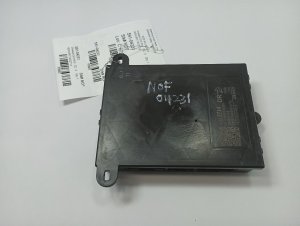
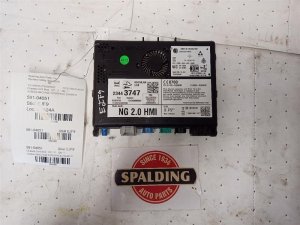
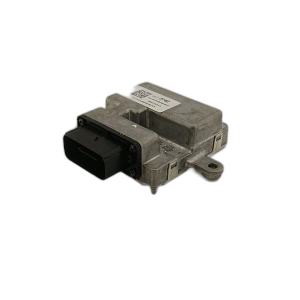
We Have This Part in Stock

The information in this article is provided for general reference and educational purposes only. Vehicle specifications, procedures, and part compatibility can vary by production date, trim level, and region. Always consult your vehicle's factory service manual and verify part numbers before purchasing or performing repairs. Safety-critical components such as airbags, seat belts, and braking systems should be installed by a qualified professional.
- Cadillac ATS:
- 🧭 Diagnostic Flowchart
- 🎬 Helpful Videos
- 🛍️ Shop This Part
- What's Unique About the 2013-2015 Cadillac ATS
- Symptoms You May Notice
- Most Likely Causes
- Rare But Worth Checking
- Diagnosis Steps
- Parts You'll Likely Need
- Related Codes That Often Appear With This One
- Technical Service Bulletins (TSBs) & Recalls
- Platform-Specific Known Issues
- Mechanic-Grade Diagnostic Values
- Scan Tool Commands That Help
- Wiring & Ground Locations
- Real Owner Repair Stories
- OEM Part Supersession History
- Model Year Variations Within This Range
- 🎟️ Get 5% Off