

U0077 on 2011-2015 Chevrolet Cruze: Chassis Communication Bus Failure Causes and Fixes
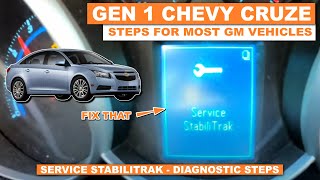
Code U0077 on a 2011-2015 Chevy Cruze means there's a communication failure on the chassis CAN bus. This often triggers 'Service StabiliTrak' and 'Service Power Steering' warnings. The most common causes are a faulty negative battery cable, corroded wiring/connectors, or a failed control module like the EBCM or PSCM. Before any complex diagnostics, inspect and consider replacing the negative battery cable, a known major failure point on this platform.
- U0077 indicates a serious communication failure on the network connecting your brakes, steering, and stability control systems.
- Before any complex diagnostics, inspect and preferably replace the negative battery cable, as it's a known, high-failure part on this car that causes these exact symptoms.
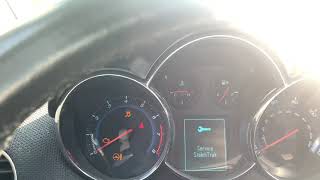
- Symptoms almost always include 'Service StabiliTrak' and 'Service Power Steering' warnings on the dash.
- Driving is not advised, as critical safety features like ABS and power steering will be offline.
- If a new battery cable doesn't fix the issue, the problem is likely in the CAN bus wiring or a failed module (EBCM/PSCM), which requires professional diagnosis.
What's Unique About the 2011-2015 Chevrolet CRUZE
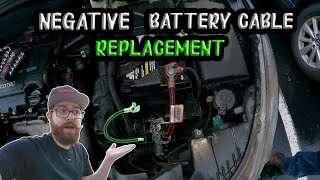
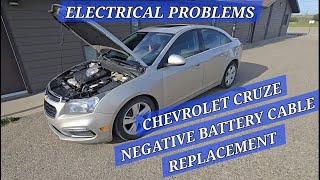
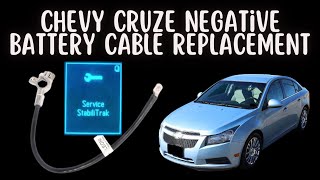
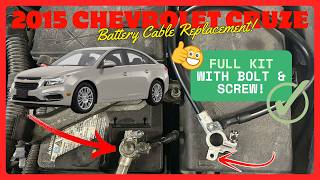
On the first-generation Cruze, electrical issues are a well-documented source of owner frustration. Many communication problems, including U0077, are often traced back to a known issue with the factory negative battery cable, which has poor internal crimps that lead to voltage instability and electrical noise. This issue was so prevalent that GM issued a special coverage adjustment (14311B) 🎬 Watch: Step-by-step guide to replacing the negative battery cable. for this specific part. Before diving into complex network diagnostics, checking or replacing this cable is a common and often effective first step for Cruze owners. This platform's sensitivity to voltage and ground issues means that what appears to be a major module failure can frequently be resolved by addressing the basics of the electrical system first.
Diagnostic Flowchart
Tap your situation to follow the diagnostic path that matches what you're seeing on this vehicle.
Symptoms You May Notice
- "Service StabiliTrak" message on the instrument cluster
- "Service Power Steering" message
- ABS and Traction Control warning lights are on
- Loss of power steering assist, making steering difficult
- Vehicle may be stuck in Park
- Engine may go into a reduced power "limp mode"
- Radio or infotainment screen may flicker, go blank, or reset.
- Vehicle may not start or have a slow/no-crank condition.
- Replacing the Power Steering Control Module or Electronic Brake Control Module without first thoroughly checking and replacing the negative battery cable. The fault is very often in the inexpensive cable or its ground connections, not the expensive module itself.
Most Likely Causes
- Faulty Negative Battery Cable or Poor Grounds 🔴 High Probability → Shop Vehicle Battery The factory negative battery cable on the Gen 1 Cruze is notorious for having poor quality internal crimps that fail over time, causing unstable voltage and numerous electrical faults. This is the most widely reported cause for these symptoms. GM acknowledged the issue with special coverage adjustment 14311B.
How to confirm: Check for corrosion on battery terminals and ground connection points. However, the cable can fail internally at the crimp even if it looks visually fine. Measuring voltage drop across the cable during engine cranking can reveal the issue. A simpler and more definitive test for many owners is to simply replace the cable, as it is inexpensive and a very likely culprit.
Typical fix: Replace the negative battery cable with a new OEM or high-quality aftermarket part. Clean all grounding points on the chassis and engine block with a wire brush to ensure a good connection. The torque spec for the battery terminal nut is 4 N·m (35 lb in). The updated OEM cable may require a new M6x1.0 bolt for the chassis ground connection, as the original used a stud.
Est. part cost: $20-$50 - Corroded or Damaged Wiring/Connectors 🟡 Medium Probability The chassis CAN bus wiring runs through parts of the vehicle exposed to moisture and vibration, which can lead to corrosion or physical damage over time. TSB #PIT5076E points to diagnosing the chassis bus itself for U0077. Another TSB, PIT5457, points to a potential open or high resistance in the 'Communication Enable' circuit (5986) which can prevent modules from waking up.
How to confirm: Visually inspect wiring harnesses and connectors, particularly those connected to the EBCM and PSCM. A technician would use a multimeter to check for 60 ohms of resistance across the CAN high and CAN low pins (e.g., Pins 12 and 13 at the OBD-II port) with the battery disconnected. An open or short will give a reading of 120 ohms or close to 0 ohms, respectively. A reading of 120 ohms points to a break in the circuit or a failed terminating resistor in a module.
Typical fix: Repair the damaged section of wire or clean/replace the corroded connector. This may involve soldering and protecting the repair with heat shrink tubing. If the issue is in the Communication Enable circuit, TSBs point to known problem areas under the driver's or passenger's front sill plates.
Est. part cost: $10-$100 - Failed Electronic Brake Control Module (EBCM) ⚪ Low Probability → Shop ABS Control Module The EBCM is a primary node on the chassis bus and contains one of the two 120-ohm terminating resistors. An internal failure can take down the entire network.
How to confirm: This is diagnosed by a process of elimination. If the battery system and wiring are confirmed to be good (including the 60-ohm resistance check), a technician will disconnect the EBCM. If communication is restored to other modules on the bus (and resistance jumps to 120 ohms), the EBCM is condemned.
Typical fix: Replace the Electronic Brake Control Module. This part must be programmed to the vehicle's VIN with a factory scan tool. The replacement cost can be significant.
Est. part cost: $250-$800
Rare But Worth Checking
- Failed Power Steering Control Module (PSCM): → Shop Power Steering Control Module Like the EBCM, the PSCM is another critical module on the chassis bus that contains a terminating resistor. An internal short can bring down the network, causing the U0077 code and a loss of power steering.
- Failed Body Control Module (BCM): → Shop Body Control Module The BCM acts as a gateway for many networks. While less common for this specific code, a BCM failure can sometimes cause widespread communication issues, including on the chassis bus. The BCM provides the 'wake-up' signal on the Communication Enable circuit, and a fault here can mimic a bus failure.
Diagnosis Steps
- Check the battery state of charge and perform a load test. Ensure system voltage is stable (12.6V+ with engine off, 13.7-14.7V running). Unstable voltage is a key symptom of a bad ground cable.
- CRITICAL STEP FOR CRUZE: Thoroughly inspect the negative battery cable, its terminal clamp, and all its connections for tightness and corrosion. Given the extremely high failure rate on this model, consider replacing it as a primary diagnostic step before proceeding.
- Using a scan tool, attempt to communicate with all modules on the chassis bus (EBCM, PSCM, etc.). Note which modules are not responding.
- Inspect all fuses related to the BCM, EBCM, and PSCM in both the under-hood and interior fuse panels.
- Disconnect the battery. Using a multimeter, measure the resistance between Pin 12 and Pin 13 of the OBD-II port. A healthy chassis bus should read approximately 60 Ohms. A reading of 120 Ohms indicates an open circuit or a missing terminating resistor (faulty module). A reading near 0 Ohms indicates a short between the CAN high and low wires.
- If resistance is incorrect, inspect the CAN bus wiring harness for visible damage, corrosion, or loose connectors, paying close attention to the wiring near the EBCM (at the ABS pump) and PSCM (on the steering rack).
- If wiring appears intact but resistance is still wrong, a technician will begin disconnecting modules one at a time from the chassis bus and re-measuring resistance to isolate the faulty component or wiring section.
- If wiring and resistance are good, but communication is still down, check the 'Communication Enable' circuit (Circuit 5986, typically a purple wire) for proper voltage as described in TSB PIT5457. A break in this wire, often found under the driver's sill plate, can prevent modules from powering on.
Parts You'll Likely Need
- Negative Battery Cable
(OEM #95970350 (older), 22754271 (updated))— This is the most common failure point for a wide range of electrical issues on the 2011-2015 Cruze, including communication codes. The factory crimps are known to fail internally.
Trusted brands: ACDelco (GM Genuine)
OEM price range: $30-$50
Aftermarket price range: $20-$40 - Electronic Brake Control Module (EBCM)
(OEM #Varies by year/options, e.g., 39039647, 39120669 for later models. Always verify with VIN.)— If wiring and the battery cable are confirmed good, an internal failure of the EBCM can take down the entire chassis network, as it is a key module on the bus. Requires programming upon replacement.
Trusted brands: ACDelco, Bosch
OEM price range: $400-$800
Aftermarket price range: $250-$500
Related Codes That Often Appear With This One
- U0121 — Lost Communication With Electronic Brake Control Module (EBCM)
- U0131 — Lost Communication With Power Steering Control Module (PSCM)
- C0561 — System Disabled Information Stored - This is a common code set by GM's StabiliTrak system when it is disabled due to a fault.
- U0140 — Lost Communication With Body Control Module (BCM)
Technical Service Bulletins (TSBs) & Recalls
- PIT5076E: Mentions U0077 as a code that points towards diagnosing the Chassis bus if it will not clear.
- PIT5457 (series): Details issues with the Communication Enable circuit (5986) causing loss of communication with modules like the EBCM and PSCM, resulting in code U0077.
- 14311B: This is a Special Coverage Adjustment, not a recall, for the negative battery cable. Owners could get it replaced at a dealer for free if their vehicle was within certain age/mileage limits.
Platform-Specific Known Issues
- TSB #PIT5076E mentions that if codes like U0077 are present and won't clear, and especially if symptom code 71 is set in the EBCM or PSCM, the chassis bus requires diagnosis.
Mechanic-Grade Diagnostic Values
- Chassis CAN Bus Resistance — expected: ~60 Ω (measured between Pin 12 and Pin 13 at the OBD-II port with battery disconnected). Failure: 120 Ω indicates an open circuit or a failed terminating resistor in a module. ~0 Ω indicates a short between the CAN high/low wires. ~40 Ω may indicate a third, unintended terminating resistor or a faulty module.
- Communication Enable Circuit (5986) Voltage — expected: Approx. 12V with ignition in ACC, ON, or START. Failure: Low or no voltage indicates an open or high resistance in the circuit, preventing modules from waking up. The BCM will shut down this circuit if it draws more than 0.88 amps.
- CAN Bus Active Voltage (measured to ground) — expected: CAN High: Fluctuating 2.5V - 3.5V (multimeter average ~2.6V). CAN Low: Fluctuating 2.5V - 1.5V (multimeter average ~2.4V).. Failure: Voltages stuck high, low, or at 0V indicate a short to power, ground, or an open circuit.
Hidden / Shadow Codes Worth Checking
- Symptom Code 71: A GM-specific code indicating a fault on the chassis bus. When this code is set in the Electronic Brake Control Module (EBCM) or Power Steering Control Module (PSCM) alongside a U0077, it strongly directs the technician to diagnose the chassis bus wiring and modules. (see via Requires a dealer-level scan tool like a GM GDS2 or Tech2.)
Scan Tool Commands That Help
- GM GDS2 / Tech2: Module Status / Communication Check — Use as the first step to see a list of all control modules on the network and identify which specific modules are not communicating. This helps narrow down the physical location of the fault.
- GM GDS2 / Tech2: Read Freeze Frame / Failure Records — Used to view vehicle data at the exact moment the U0077 code was set. This can provide clues about vehicle conditions (voltage, speed, etc.) that may have contributed to the failure.
Wiring & Ground Locations
- G103 — Located at the left rear of the engine compartment on the cowl, above the brake booster.. This is a major ground point that serves the Body Control Module (BCM), Instrument Panel Cluster (IPC), and the Data Link Connector (DLC). A poor connection here can cause widespread communication and electrical issues.
- Communication Enable Circuit (5986) — Known chafe/corrosion points are under the driver's and passenger's front door sill plates.. A break or high resistance in this wire (often purple) prevents modules on the chassis bus like the EBCM and PSCM from 'waking up' to communicate, directly causing a U0077 code.
- X110 Connector — A large body-to-engine harness connector located under the battery tray.. This is a critical junction for many circuits. While not the most common cause, corrosion or loose pins in this connector can interrupt communication between modules located in the engine bay and the rest of the car.
- EBCM Connector Pins — At the Electronic Brake Control Module, typically mounted to the ABS hydraulic unit.. The Chassis Expansion Bus wires (often Tan and Tan/Black) terminate here. Checking for corrosion, spread terminals, and proper voltage/resistance at this connector is key to diagnosing the EBCM's role in the fault.
Real Owner Repair Stories
- equinoxforum.net user (2011 Chevrolet Equinox (shares platform architecture with Cruze)) — Service Stabilitrak, Service Power Steering, hard steering, multiple communication codes including U0077.
❌ Tried (didn't work) Initial diagnosis pointed towards replacing a control module.
✅ What actually fixed it The problem was traced to corrosion inside the X411 connector located under the rear of the vehicle. Cleaning the corroded terminals and applying dielectric grease resolved all symptoms and codes. - CorvetteForum user (2017 Chevrolet Corvette (different vehicle, but same GM network principles)) — U0077 code appeared after fixing a battery ground issue.
❌ Tried (didn't work) Clearing the code with a standard scan tool.
✅ What actually fixed it A recommended, non-standard procedure was to disconnect the battery for 2-5 minutes and reconnect it, repeating this 2-3 times. This forces all modules to reboot and re-establish their communication handshake on the network, which can resolve timing or boot-up sequence errors after a power interruption.
OEM Part Supersession History
95970350→22754271— The original negative battery cable design was prone to internal failure at the crimps. The updated part is a more robust design to address this common failure point.
Heads up: The updated cable may use a different style of chassis ground connection (bolt instead of a stud). The new bolt (M6x1.0) may be required for installation if the original stud is removed.
Model Year Variations Within This Range
- 2011-2016: The first-generation Cruze received a cosmetic facelift for the 2015 model year. While the underlying Delta II platform and common causes for U0077 (like the battery cable) remained consistent, specific module part numbers (EBCM, BCM) may differ between early (2011-2014) and late (2015-2016) models. Always confirm part numbers with the vehicle's VIN.
Helpful Videos
![How To Test CAN BUS With A Multimeter [CAN Bus Resistance Check] Mechanic Mindset](https://img.youtube.com/vi/JPE42HSJxAk/mqdefault.jpg)
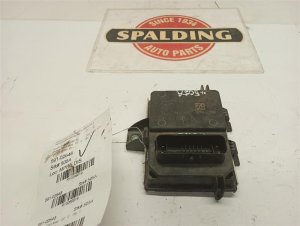
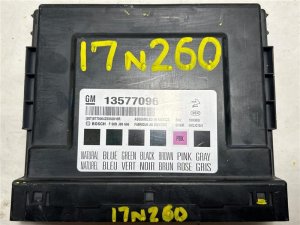
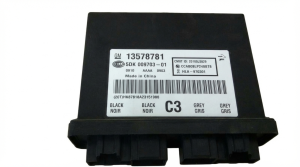
Used OEM Parts in Stock
New Aftermarket Parts Available



The information in this article is provided for general reference and educational purposes only. Vehicle specifications, procedures, and part compatibility can vary by production date, trim level, and region. Always consult your vehicle's factory service manual and verify part numbers before purchasing or performing repairs. Safety-critical components such as airbags, seat belts, and braking systems should be installed by a qualified professional.
- Chevrolet CRUZE:
- 🧭 Diagnostic Flowchart
- 🎬 Helpful Videos
- 🛍️ Shop This Part
- What's Unique About the 2011-2015 Chevrolet CRUZE
- Symptoms You May Notice
- Most Likely Causes
- Rare But Worth Checking
- Diagnosis Steps
- Parts You'll Likely Need
- Related Codes That Often Appear With This One
- Technical Service Bulletins (TSBs) & Recalls
- Platform-Specific Known Issues
- Mechanic-Grade Diagnostic Values
- Hidden / Shadow Codes Worth Checking
- Scan Tool Commands That Help
- Wiring & Ground Locations
- Real Owner Repair Stories
- OEM Part Supersession History
- Model Year Variations Within This Range
- 🎟️ Get 5% Off