

U0077 on 2010-2017 Chevrolet Equinox: Causes and Fixes for Communication Loss
Code U0077 on a 2010-2017 Equinox typically means there's a communication failure on the chassis network. The most common cause is corrosion in the X411 connector, located under the rear of the vehicle. Inspecting and cleaning or repairing this connector often resolves the issue.
- U0077 on a 2010-2017 Equinox means there is a communication problem on the chassis network.
- Before replacing any expensive modules, ALWAYS inspect the X411 connector under the rear of the vehicle for corrosion, as this is the most common fix.
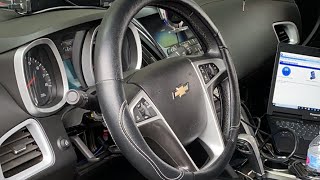
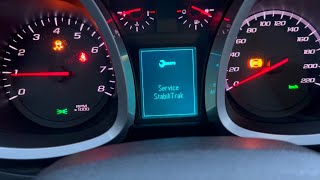
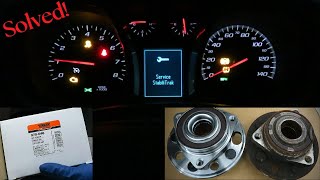
- Symptoms will include multiple warning lights on the dash, such as 'Service StabiliTrak' and 'Service Power Steering'.
- Due to the complexity of network diagnostics, this issue is best handled by a professional technician if the initial connector inspection doesn't reveal an obvious problem.
- Driving with this code is possible but not recommended, as key safety systems may be offline.
What's Unique About the 2010-2017 Chevrolet EQUINOX

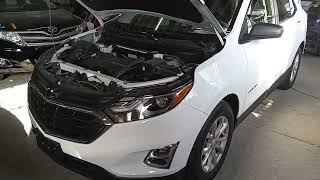
The second-generation Chevrolet Equinox and its platform mate, the GMC Terrain (2010-2017), are particularly susceptible to this code due to the location and vulnerability of a specific electrical connector. A GM Technical Service Bulletin (TSB #PIT5427B) points directly to the X411 connector, located under the rear of the vehicle 'behind and to the left of the fuel tank', as a common point of failure due to moisture and corrosion. This makes diagnosing U0077 on an Equinox more straightforward than on other vehicles, as the X411 connector is a well-documented starting point.
Diagnostic Flowchart

Tap your situation to follow the diagnostic path that matches what you're seeing on this vehicle.
Symptoms You May Notice
- Service StabiliTrak / Traction Control warning light
- ABS warning light
- Service Power Steering message
- Hard or difficult steering
- Check Engine Light (Malfunction Indicator Lamp)
- Service AWD message (if equipped)
- Service Suspension Control message
- Replacing the Power Steering Control Module or Electronic Brake Control Module without first inspecting the X411 connector and related wiring. The TSB strongly indicates the wiring/connector is the most likely point of failure.
Most Likely Causes

- Corrosion or Damage at Connector X411 🔴 High Probability As documented in GM TSB #PIT5427B, this 12-pin connector is located under the rear of the vehicle, to the left of the fuel tank, making it highly exposed to road salt, water, and debris. This exposure leads to water intrusion and corrosion, often appearing as a green or white crust on the pins and terminals, sometimes causing them to rot completely.
How to confirm: Visually inspect the pins and wiring of the X411 connector. Disconnect it and look for green/white corrosion, bent pins, or physical damage. An older TSB, #PIT5171B, also notes that wires can break internally within the insulation near the connector, so gently pulling on individual wires may reveal a hidden break.
Typical fix: Clean the connector and pins thoroughly with an electrical contact cleaner. If corrosion is severe, the connector terminals or the entire connector pigtail must be replaced. Apply dielectric grease upon reassembly to prevent future moisture intrusion.
Est. part cost: $15-$70 - Damaged Wiring Harness 🟡 Medium Probability Wiring for the chassis CAN bus runs along the length of the vehicle and can be susceptible to chafing against chassis components, rodent damage, or internal breaks near the X411 connector as noted in TSB #PIT5171B.
How to confirm: Perform a visual inspection of the harness leading to the EBCM, PSCM, and BCM. Check for continuity and resistance on the CAN bus wires using a multimeter. Resistance between the two CAN lines (Pins 12 and 13 at the OBD-II port for the chassis bus) should be approximately 60 ohms with the battery disconnected.
Typical fix: Repair the broken or shorted section of wire. This may involve soldering in a new piece of wire and protecting it with heat shrink tubing.
Est. part cost: $1-$20 - Failed Control Module ⚪ Low Probability While less common, any module on the network (EBCM, PSCM, BCM) can fail internally, causing it to stop communicating or flood the network with bad data. This is often misdiagnosed before the wiring is checked.
How to confirm: This is a process of elimination. If the wiring and connectors are confirmed to be good, a technician can use a scan tool to try and communicate with individual modules or disconnect them one by one to see if network communication is restored.
Typical fix: Replace the faulty module. Note that many modules, like the BCM or EBCM, require programming by a dealer or a properly equipped independent shop after installation.
Est. part cost: $250-$900 - Poor Ground Connection ⚪ Low Probability Chassis grounds can corrode over time, leading to intermittent and hard-to-diagnose electrical issues. A bad ground can cause voltage drops that disrupt module communication.
How to confirm: Locate the main ground points for the BCM and EBCM. Ensure they are clean, tight, and free of corrosion. Check for voltage drops between the ground point and the battery negative terminal.
Typical fix: Remove the ground connection, clean the contact surfaces to bare metal, and re-secure it tightly. Apply a protective coating.
Est. part cost: $0-$5
Rare But Worth Checking
- Bent Terminals at Power Steering Gear Connector: → Shop Steering Gear
- Cracked Magnetic Tone Ring on Wheel Hub Bearing:
Diagnosis Steps
- Scan all vehicle modules for stored trouble codes. Note all communication ('U') codes and any codes specific to the ABS, power steering, or chassis systems listed in TSB PIT5427B.
- Prioritize diagnosis based on GM Technical Service Bulletin #PIT5427B. Locate the X411 connector under the rear of the vehicle, 'behind and to the left of the fuel tank'.
- Disconnect the battery. Disconnect and thoroughly inspect the X411 connector for any signs of corrosion (green/white powder), moisture, or bent/damaged pins.
- If corrosion is found, clean the terminals carefully using electrical contact cleaner and a small brush. If damage is severe, replace the affected terminals or the connector pigtail itself.
- Per TSB #PIT5171B, inspect the wiring harness insulation within a few inches of the X411 connector. Gently tug on each wire to check for internal breaks that aren't visible from the outside.
- Apply dielectric grease to the connector pins before reconnecting to seal out moisture.
- If the X411 connector is in good condition, check the CAN bus termination resistance. With the battery still disconnected, measure the resistance between Pin 12 (Chassis CAN High) and Pin 13 (Chassis CAN Low) at the OBD-II diagnostic port. A healthy network should read approximately 60 Ohms.
- If wiring and connectors are confirmed good, the issue may be a faulty module. This requires advanced diagnostics, often by disconnecting modules one at a time to see if communication on the network is restored.
Parts You'll Likely Need
- Connector Pigtail (X411)
(OEM #ACDelco PT1101 (12-pin))— The terminals inside the X411 connector are the most common failure point due to corrosion, as identified in TSB #PIT5427B. Replacing the pigtail is often easier than replacing individual terminals.
Trusted brands: ACDelco, Dorman
OEM price range: $40-$70
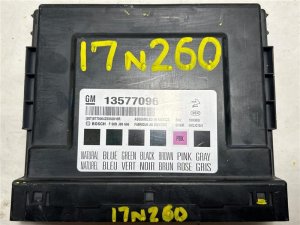
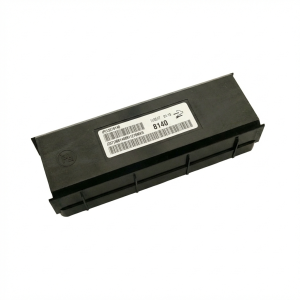
Aftermarket price range: $20-$50 - Body Control Module (BCM) — If wiring is confirmed to be intact, a faulty BCM can be the source of the communication failure. This part acts as a central hub for many vehicle functions and requires programming upon replacement.
Trusted brands: ACDelco
OEM price range: $250-$400
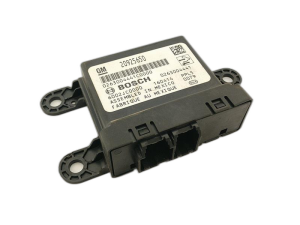
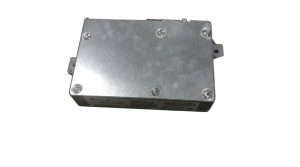
Aftermarket price range: $150-$300 - Electronic Brake Control Module (EBCM) — The EBCM is a critical node on the chassis CAN bus. An internal failure can bring down the network, causing the U0077 code and ABS/StabiliTrak warnings. This module often requires programming.
Trusted brands: ACDelco, Bosch
OEM price range: $400-$700
Aftermarket price range: $250-$500
Related Codes That Often Appear With This One
- U0100 — Lost Communication With Engine Control Module (ECM)
- U0101 — Lost Communication with Transmission Control Module (TCM)
- U0121 — Lost Communication With Anti-Lock Brake System (ABS) Control Module
- U0126 — Lost Communication With Steering Angle Sensor Module
- U0140 — Lost Communication With Body Control Module (BCM)
- C0045 — Left Rear Wheel Speed Sensor Circuit
- C0050 — Right Rear Wheel Speed Sensor Circuit
- C0710 — Steering Position Signal
Technical Service Bulletins (TSBs) & Recalls
- Bulletin #PIT5427B: Addresses multiple communication DTCs, including U0077, and points to corrosion in the X411 connector as the likely cause for 2010-2017 Equinox/Terrain.
- Bulletin #PIT5171B: An earlier bulletin for 2010-2012 models that also identifies wire harness issues and internal breaks near the X411 connector as a cause for chassis bus communication faults.
Platform-Specific Known Issues
- A known issue documented in TSB #PIT5427B points to corrosion in the X411 connector as a primary cause for a host of communication DTCs, including U0077, on the 2010-2017 Equinox and GMC Terrain.
- An earlier TSB, #PIT5171B, also highlights issues with the wiring harness near the X411 connector, including internal wire breaks within the insulation, for 2010-2012 models.
Mechanic-Grade Diagnostic Values
- Chassis Expansion CAN Bus Resistance — expected: Approximately 60 Ω. Failure: A reading of 120 Ω indicates a missing terminating resistor or a break in the circuit. A reading significantly less than 60 Ω suggests a short circuit.
- CAN High Voltage (Pin 12 at DLC to Ground) — expected: 2.5V to 3.5V (recessive state to dominant state). Failure: Voltage that is stuck high, low, or at 0V indicates a circuit fault.
- CAN Low Voltage (Pin 13 at DLC to Ground) — expected: 1.5V to 2.5V (dominant state to recessive state). Failure: Voltage that is stuck high, low, or at 0V indicates a circuit fault.
Scan Tool Commands That Help
- GM GDS2 (Global Diagnostic System 2): Vehicle DTC Information / Module Status — Use this function to poll all modules on the vehicle's networks. This helps create a list of which modules are communicating and which are not, which is the first step in diagnosing a 'U' code. For U0077, you would look for the EBCM, PSCM, and other chassis modules to be 'offline'.
- GM GDS2 (Global Diagnostic System 2): Output Controls / Bidirectional Tests — If you can communicate with a module (like the BCM), you can use bidirectional controls to command functions on and off (e.g., lights, locks). This helps verify the module itself is functioning, even if it has lost communication with other modules on a different network.
Wiring & Ground Locations

- X411 Connector — Under the rear of the vehicle, located behind and to the left of the fuel tank.. This is the most common failure point for U0077 on this platform, as documented in TSB #PIT5427B. It is a junction for the chassis expansion bus and is highly susceptible to corrosion.
- EBCM (Electronic Brake Control Module) — Under the hood in the driver's side rear corner of the engine compartment, near the brake master cylinder.. The EBCM is a primary module on the chassis expansion bus and contains one of the 120-ohm terminating resistors for the network. A failure of the EBCM or its wiring/ground can take the entire network down.
- G112 (Ground) — A primary engine/PCM ground point. On the 2.4L, this is located on the engine block.. While not directly for the chassis bus, a poor main PCM or engine ground can cause widespread electrical issues and communication codes. Verifying main grounds are clean and tight is a fundamental step.
- DLC (Data Link Connector) Pins 12 & 13 — The OBD-II port under the driver's side dashboard.. On these GM vehicles, the Chassis Expansion CAN bus communicates on Pins 12 (CAN High) and 13 (CAN Low). This is where a technician can directly measure the health of the network (resistance, voltage) without accessing individual modules.
Real Owner Repair Stories
- ScannerDanner Forum (2017 Chevy Equinox, post-accident repair) — Multiple warning lights (AWD, Service Steering), no power steering, multiple modules offline including PSCM and ABS. Codes U0121 and U1814 (Powertrain Wake Up Circuit short to ground) were present.
❌ Tried (didn't work) Visual inspection of wiring harness., Disconnecting modules on the wake-up circuit (FPCM, ABS, PCM, TCM) one by one did not clear the 1k Ohm resistance to ground reading.
✅ What actually fixed it The BCM was determined to be internally shorted. A bypass test was performed by sending voltage down the wake-up circuit using a test light connected to battery positive, which successfully woke up the offline modules. Replacing the BCM was the final fix.
Model Year Variations Within This Range
- 2016-2017: The 2016 model year introduced a mid-cycle refresh for the Equinox. Changes included a new front fascia, grille, headlights, and rear taillights. Interior changes involved updated fabrics, a standard 7-inch touchscreen on lower trims, and revised center stack controls. These changes were primarily cosmetic and electronic feature-related; the underlying chassis, powertrain, and network architecture related to code U0077 remained fundamentally the same as the 2010-2015 models.
Helpful Videos
We Have This Part in Stock

The information in this article is provided for general reference and educational purposes only. Vehicle specifications, procedures, and part compatibility can vary by production date, trim level, and region. Always consult your vehicle's factory service manual and verify part numbers before purchasing or performing repairs. Safety-critical components such as airbags, seat belts, and braking systems should be installed by a qualified professional.
- Chevrolet EQUINOX:
- 🧭 Diagnostic Flowchart
- 🎬 Helpful Videos
- 🛍️ Shop This Part
- What's Unique About the 2010-2017 Chevrolet EQUINOX
- Symptoms You May Notice
- Most Likely Causes
- Rare But Worth Checking
- Diagnosis Steps
- Parts You'll Likely Need
- Related Codes That Often Appear With This One
- Technical Service Bulletins (TSBs) & Recalls
- Platform-Specific Known Issues
- Mechanic-Grade Diagnostic Values
- Scan Tool Commands That Help
- Wiring & Ground Locations
- Real Owner Repair Stories
- Model Year Variations Within This Range
- 🎟️ Get 5% Off