

U0077 on 2013-2015 Chevrolet Malibu: Chassis Bus Communication Fault Causes & Fixes
This code indicates a communication failure on the chassis network, disabling critical systems like power steering and ABS. The most likely cause is a wiring issue in the 'Communication Enable Circuit 5986,' often under the driver's sill plate, as documented in GM service bulletins. This is a complex electrical fault and professional diagnosis is strongly recommended.
- U0077 on a 2013-2015 Malibu is a critical safety issue, indicating a loss of communication with the power steering and anti-lock brake modules.
- Do not immediately replace expensive modules. GM has identified a specific wiring circuit ('5986') as the most common point of failure.
- A thorough inspection of the wiring harness, especially under the driver's side door sill, is the first and most important diagnostic step.
- Due to the complexity of network diagnostics and the safety systems involved, this repair is best left to a professional technician with the proper tools and service information.
- Driving the vehicle with this code is not safe.
What's Unique About the 2013-2015 Chevrolet MALIBU
For GM vehicles of this era, including the Malibu, code U0077 is well-documented in technical service bulletins. Unlike a generic network code, GM has identified a common failure point: an open or high resistance in a specific wire known as 'Communication Enable circuit 5986'. This circuit, controlled by the Body Control Module (BCM), 'wakes up' the other modules on the chassis bus. TSBs guide technicians to check this specific circuit, often finding the fault in the wiring harness under the driver's side sill plate. A specific failure point noted in bulletins is Splice J365, located under the passenger front sill plate, which is prone to corrosion.
Diagnostic Flowchart
Tap your situation to follow the diagnostic path that matches what you're seeing on this vehicle.
Symptoms You May Notice
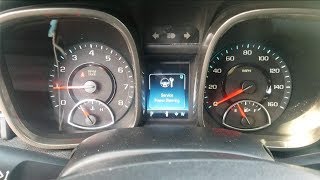
- "Service Power Steering" message on the instrument cluster
- "Service Stabilitrak," "Service ABS," or "Service Traction Control" warning lights
- Complete loss of power steering assist, making the wheel very difficult to turn
- ABS and Traction Control systems are disabled
- Check Engine Light may be illuminated
- Backup camera may be inoperative or lose guidance lines
- Replacing the Power Steering Control Module (PSCM) or Electronic Brake Control Module (EBCM) without first confirming the integrity of the communication wiring. The TSBs strongly suggest the fault is more likely in the wiring than the module itself.
- Mistaking the symptoms for a faulty wheel speed sensor. While a bad wheel speed sensor will trigger ABS and Stabilitrak lights, it typically sets 'C' codes (like C0045) and does not cause a loss of power steering or a U0077 network code.
Most Likely Causes
- Open or High Resistance in Communication Enable Circuit (5986) 🔴 High Probability This is a known issue documented by GM in multiple Technical Service Bulletins (PIT5457 series). The wiring harness, particularly under the driver's and passenger's sill plates, is susceptible to damage, corrosion, or chafing over time. Splice J365 under the passenger sill plate is a known point of corrosion.
How to confirm: A technician would follow TSB PIT5457D. With the ignition on, they would first check for voltage on circuit 5986 at the EBCM or PSCM connector. Crucially, the TSB recommends a load test: connect a small 194 bulb between circuit 5986 and a good ground. The bulb should light brightly. If it is dim or does not light, or if voltage measured across the lit bulb is under 11V, an open or high-resistance fault exists in the wire. A simple multimeter test without a load can be misleading.
Typical fix: Locate the break or corroded section of the wire (often yellow, but verify with a diagram) in the harness, typically found by removing the plastic door sill plates or kick panels. Perform a splice repair using a solder and heat shrink connector.
Est. part cost: $5-$20 - Faulty Control Module (EBCM, PSCM, BCM) 🟡 Medium Probability Any module on the network can fail internally, causing it to stop communicating or, in rare cases, flood the network with bad data, bringing it down. This is often misdiagnosed before the wiring is checked, as the symptoms point directly to the modules that have shut down.
How to confirm: This is a process of elimination. If the wiring (including Circuit 5986), connectors, and grounds are all confirmed to be good via load testing and inspection, a technician will use an advanced scan tool to try and isolate the faulty module, often by disconnecting modules one-by-one to see if communication is restored.
Typical fix: Replace the failed module. The EBCM, PSCM, and BCM all require programming by a dealer or a properly equipped independent shop after installation.
Est. part cost: $250-$700 - Poor Ground Connection ⚪ Low Probability Chassis grounds can loosen or corrode over time, creating intermittent electrical problems that disrupt module communication. GM has noted issues where dash insulation can get trapped under main ground lugs, such as G218 which is critical for the BCM, causing high resistance.
How to confirm: Visually inspect and test the main ground connections for the EBCM, PSCM, and BCM, especially ground G218 under the driver's A-pillar. A voltage drop test across the ground connection under load can confirm high resistance.
Typical fix: Remove, clean, and securely re-fasten the ground strap or cable to a clean metal surface on the chassis.
Est. part cost: $0-$5
Rare But Worth Checking
- Bent Terminals at Power Steering Gear Connector: → Shop Steering Gear GM issued a TSB (17-NA-268) for other models indicating that bent terminals on the main electrical connector for the steering gear can cause communication issues and similar symptoms. It's worth a visual inspection if other diagnostics fail.
- Weak or Failing Battery: → Shop Vehicle Battery A battery with low voltage or a bad cell can cause a cascade of communication errors across various modules at startup. Owners have reported seeing 'Service Power Steering' and 'Service Stabilitrak' messages that were ultimately resolved by replacing a weak battery. Before diving into complex wiring diagnostics, ensure the battery is fully charged and passes a load test. 🎬 Watch: How to test your battery for these specific errors
Diagnosis Steps
- Perform a full vehicle scan with a high-level scan tool capable of reading chassis and network codes. Document all codes present, especially U0121 and U0131 which are expected with U0077.
- Check the battery state of charge and health. A weak battery can cause numerous communication errors. Ensure voltage is stable (12.6V+ off, 13.7-14.7V running).
- Following GM TSB PIT5457D, locate the Communication Enable Circuit (5986) at the connector of an affected module like the EBCM or PSCM.
- With the ignition on, perform a load test on circuit 5986. Connect a 194 bulb between the circuit's pin and a known good ground. The bulb should illuminate brightly. If it does not, or if voltage across the lit bulb is below 11V, the circuit is faulty.
- If the load test fails, inspect the wiring harness under the driver's and passenger's side sill plates and kick panels for any signs of chafing, pinching, or corrosion. Pay special attention to Splice J365 under the passenger sill plate.
- If circuit 5986 has correct voltage under load, check the CAN bus termination resistance. Disconnect the battery. At the OBD-II port, measure the resistance between Pin 12 (Chassis Expansion Bus Low) and Pin 13 (Chassis Expansion Bus High). A healthy chassis bus should read approximately 60 ohms. A reading of 120 ohms suggests an open in the bus or a missing terminating resistor.
- If wiring, power, and grounds are all verified to be good, the fault may be an internal failure of a module. This requires advanced diagnostics, likely by a professional, to isolate the specific failed module.
Parts You'll Likely Need
- Electronic Brake Control Module (EBCM)
(OEM #84065250 (supersedes 13291991, 20997680, etc.), 84065240 (supersedes 13291987, etc.). Verify by VIN.)— If the module itself has failed internally, it can bring down the entire chassis network. This is a common misdiagnosis; wiring should always be checked first. Requires programming after installation.
Trusted brands: ACDelco, Bosch
OEM price range: $400-$700
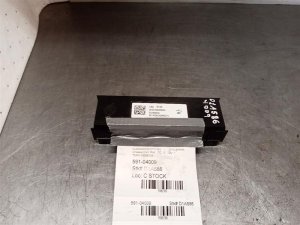
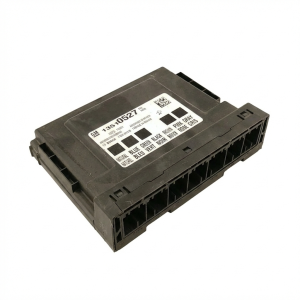
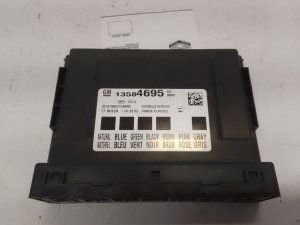
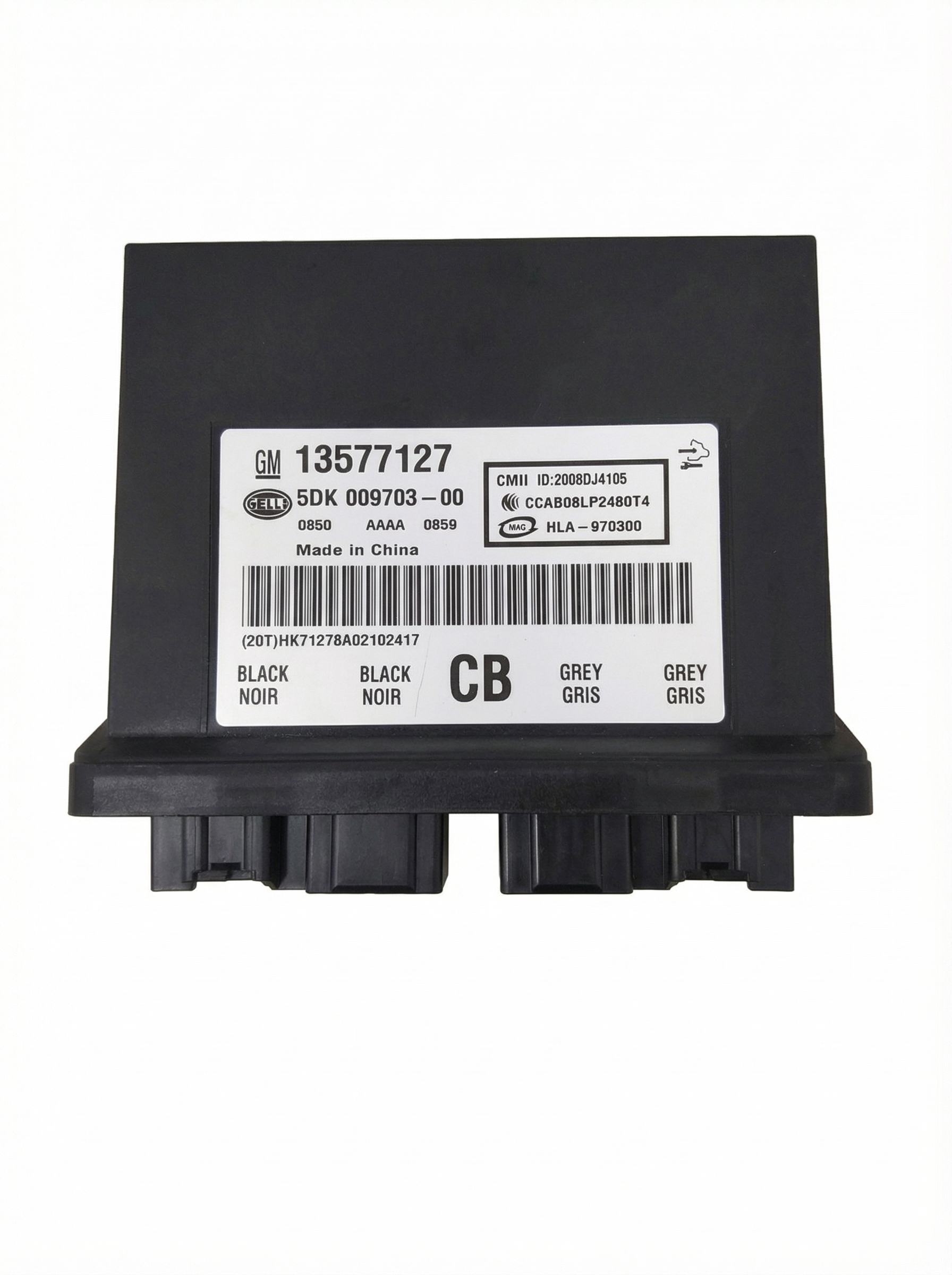
Aftermarket price range: $250-$500 - Body Control Module (BCM)
(OEM #13588446, 13586273, 13588447. Multiple versions exist, must be matched to vehicle.)— The BCM acts as the gateway and controls the wake-up signal for the chassis bus. A failure in the BCM's driver for circuit 5986 could cause this code. Requires programming after installation.
Trusted brands: ACDelco
OEM price range: $250-$400
Aftermarket price range: $150-$300
Related Codes That Often Appear With This One
- U0121 — Lost Communication With Electronic Brake Control Module (EBCM)
- U0131 — Lost Communication With Power Steering Control Module (PSCM)
- U0125 — Lost Communication With Yaw Rate Sensor Module
- U0126 — Lost Communication With Steering Angle Sensor (SAS) Module
Technical Service Bulletins (TSBs) & Recalls
- PIT5076E: Mentions U0077 in the context of diagnosing the Chassis bus.
- PIT5457A / PIT5457D: Details the primary cause as a fault in 'Communication Enable circuit 5986' and provides diagnostic guidance, including a specific load-test procedure using a 194 bulb.
- 17-NA-268: Notes that bent terminals at the power steering gear connector can cause similar communication issues, a useful check if wiring seems intact.
Platform-Specific Known Issues
- Real-World Repair Story: The Sill Plate Wire: Numerous owner accounts on forums describe a sudden event where the dash lights up with 'Service Power Steering' and 'Service Stabilitrak' warnings, and steering becomes very heavy. After much diagnosis, the common solution is finding a broken or corroded wire within the harness that runs under the driver's side plastic door sill plate. The repair involves pulling up the trim, unwrapping the harness tape, locating the single damaged wire (often yellow), and repairing it with a butt connector or solder. This simple wire repair resolves all symptoms and codes, saving hundreds over replacing modules.
- GM Technical Service Bulletin PIT5076E specifically lists U0077 as a potential code when diagnosing the chassis bus on these vehicles.
Mechanic-Grade Diagnostic Values
- Chassis Expansion CAN Bus Resistance — expected: ~60 Ohms (measured between Pins 12 & 13 of the OBD-II port with battery disconnected). Failure: A reading of ~120 Ohms indicates an open circuit or one terminating module is offline. A reading near 0 Ohms indicates a short between the two CAN wires.
- Communication Enable Circuit (5986) Load Test — expected: With a 194 bulb connected from the circuit to ground, the bulb should light brightly and voltage measured across the lit bulb must be at least 11.0 Volts.. Failure: Bulb does not light, is dim, or voltage is below 11.0V. This indicates high resistance in the wire from the BCM.
- CAN Bus Line Voltage (Oscilloscope) — expected: Both CAN High and Low lines should be at ~2.5V at rest. During communication, CAN High should rise to ~3.75V and CAN Low should drop to ~1.25V in a mirror image pattern.. Failure: A flat line on either wire, or a signal that does not mirror its counterpart, indicates a short or open.
- CAN Bus Wires to Ground Resistance — expected: Infinite resistance / Open circuit (OL) between Pin 12 and ground, and Pin 13 and ground.. Failure: Any continuity reading indicates a short to ground on that specific CAN line.
Hidden / Shadow Codes Worth Checking
- Symptom Byte (e.g., 71, 00, 31): A 2-digit code that accompanies the U-code (e.g., U0077 71) providing more specific detail about the fault type. For instance, symptom code 71 is explicitly mentioned in TSB PIT5076E for this fault. These can help differentiate between an open circuit, short to ground, or invalid data. (see via Requires a dealer-level scan tool like GM GDS2 (Global Diagnostic System 2) or a high-end professional scanner.)
Scan Tool Commands That Help
- GDS2 (GM Global Diagnostic System 2): Module Isolation / Data Bus Diagnostic Tool — When CAN bus resistance is incorrect (e.g., 120 or 0 ohms), this function allows a technician to systematically disconnect modules from the bus. When the faulty module is disconnected, the bus resistance will return to the correct 60-ohm reading, positively identifying the source of the failure.
- GDS2 (GM Global Diagnostic System 2): Module Status / DTC Display — This is the first step to see a comprehensive list of all modules on the network and which ones are reporting 'Lost Communication' codes. This confirms the scope of the network failure and which modules are affected.
Wiring & Ground Locations
- Splice J365 — In the main wiring harness located under the front passenger's door sill plate.. This is a known high-failure splice for the Communication Enable Circuit (5986). Corrosion or a break at this splice cuts the 'wake-up' signal to multiple chassis modules, directly causing a U0077 code.
- Ground G218 — Under the driver's side A-pillar trim, near the speaker, typically secured by a 10mm nut.. This is a critical ground point for the Body Control Module (BCM). TSBs note that the dash insulator mat can get trapped under the ground terminal, causing a poor, intermittent connection that can lead to various communication codes, including U0077, because the BCM cannot send a stable wake-up signal.
- Terminating Resistors (x2) — There are two 120-Ohm resistors. One is internal to the Electronic Brake Control Module (EBCM). The second is internal to the Inflatable Restraint Sensing and Diagnostic Module (SDM / Airbag Module).. The health of the entire bus depends on these two resistors being online, which creates the expected 60-Ohm total bus resistance. A 120-Ohm reading points to a failure in the wiring to one of these modules or an internal failure in one of them.
Real Owner Repair Stories
- Go-Parts.com analysis of TSBs and forum repairs (2015-2019 GMC Yukon (similar GM K2XX platform)) — Service Power Steering, Service Suspension System, multiple warning lights, and code U0077.
❌ Tried (didn't work) Clearing codes (they returned immediately), Checking fuses
✅ What actually fixed it The owner dropped the spare tire and inspected the wiring harness passing over the rear crossmember. A single dark green wire (Circuit 5986) had chafed through and was showing green powdery corrosion. Repairing this single wire by splicing in a new section with solder and heat shrink, then protecting the harness, permanently resolved all symptoms and codes.
"I Checked Everything" — The Actual Cause
- In cases where CAN bus wiring tests (resistance, continuity) all check out as good, the fault can be a loose pin inside a module connector, such as the EBCM connector. Standard harness testing will not find this, as the test probes make better contact than the loose pin does during normal operation. The fix is to carefully inspect and tighten the female terminals in the connector.
OEM Part Supersession History
13291991, 20940578, 20997680, 22757652→84065250— Part revision and consolidation for the Electronic Brake Control Module (EBCM).
Heads up: The new part requires programming to the vehicle's VIN after installation.13580696, 13583542, 13584692→13588446— Part revision for the Body Control Module (BCM).
Heads up: Replacement BCMs are not plug-and-play. The vehicle's original data must be cloned to the replacement unit, or it must be programmed by a dealer. Your original keys will not work without this step.
Helpful Videos
We Have This Part in Stock

The information in this article is provided for general reference and educational purposes only. Vehicle specifications, procedures, and part compatibility can vary by production date, trim level, and region. Always consult your vehicle's factory service manual and verify part numbers before purchasing or performing repairs. Safety-critical components such as airbags, seat belts, and braking systems should be installed by a qualified professional.
- Chevrolet MALIBU:
- 🧭 Diagnostic Flowchart
- 🎬 Helpful Videos
- 🛍️ Shop This Part
- What's Unique About the 2013-2015 Chevrolet MALIBU
- Symptoms You May Notice
- Most Likely Causes
- Rare But Worth Checking
- Diagnosis Steps
- Parts You'll Likely Need
- Related Codes That Often Appear With This One
- Technical Service Bulletins (TSBs) & Recalls
- Platform-Specific Known Issues
- Mechanic-Grade Diagnostic Values
- Hidden / Shadow Codes Worth Checking
- Scan Tool Commands That Help
- Wiring & Ground Locations
- Real Owner Repair Stories
- "I Checked Everything" — The Actual Cause
- OEM Part Supersession History
- 🎟️ Get 5% Off