

U0077 on 2015-2017 GMC Sierra: Causes and Fixes for Chassis Communication Failure
On a 2015-2017 GMC Sierra, code U0077 almost always points to a wiring problem, not a failed module. The most common cause is a chafed or corroded wire in the harness under the driver's or passenger's sill plate, as documented in GM TSBs. Another common failure point is a pinched harness behind the instrument panel near the parking brake pedal. The fix is typically a wire repair, which is inexpensive for parts but can take 2-4 hours of labor.
- U0077 on a 2015-2017 Sierra indicates a serious communication failure on the network that controls steering, brakes, and suspension.
- Do not drive the vehicle with this code active, as critical safety systems may be disabled.
- The problem is most likely a wiring issue, not a failed computer. Always inspect the wiring harnesses under the door sill plates and behind the driver's side dash before replacing any parts.
- Referencing GM Technical Service Bulletins PIT5457D and PIT5288E is the key to an efficient and accurate diagnosis.
- A simple wire repair is the most common and cost-effective solution for this code on this specific truck.
What's Unique About the 2015-2017 Gmc SIERRA

For this generation of GMC Sierra (K2XX platform), the U0077 code is very frequently caused by specific, well-documented wiring issues rather than module failure. General Motors has released multiple Technical Service Bulletins (TSBs) that pinpoint the exact locations where wire harnesses are known to chafe, corrode, or get pinched. This makes diagnosis more direct, as technicians know to inspect the wiring under the door sill plates (TSB #PIT5457D) and behind the instrument panel (TSB #PIT5288E) before suspecting more expensive components.
Diagnostic Flowchart

Tap your situation to follow the diagnostic path that matches what you're seeing on this vehicle.
Symptoms You May Notice

- "Service Power Steering System" message on the dash
- "Service Suspension System" message
- "Service ABS" or "Service Traction Control" / "Service Stabilitrak" lights
- Loss of power steering assist, making steering very difficult
- Backup camera may be inoperative or missing grid lines
- Multiple warning lights illuminating simultaneously
- Vehicle may have a dead battery or not start
- Radio and/or Driver Information Center (DIC) display may be blank
- Replacing the Electronic Brake Control Module (EBCM) without checking wiring first.
- Replacing the Power Steering Control Module (PSCM) without checking wiring first.
- Replacing the battery without confirming it is the root cause of the voltage drop.
Most Likely Causes

- Chafed/Corroded Wiring Under Door Sill Plates 🔴 High Probability This is a well-documented issue in GM Technical Service Bulletin #PIT5457D. The wiring harness, specifically the Communication Enable circuit (5986), is routed in a channel under the sill plates where it can be damaged by moisture, corrosion, or chafing from foot traffic. Splice J365, located under the passenger front sill plate, is a particularly known failure point for corrosion.
How to confirm: Remove the driver and passenger front door sill plates and peel back the carpet. Inspect the wiring harness within the channel for any signs of green or white corrosion, pinched wires, or broken insulation. A voltage check on circuit 5986 (often a tan wire) at a connected module (like the EBCM) will show low or no voltage if this circuit is open.
Typical fix: Repair the damaged section of the wire. This involves cutting out the corroded or broken part (especially at Splice J365), splicing in a new piece of wire with solder and heat-shrink connectors, and re-wrapping the harness with Tesa tape.
Est. part cost: $5-$20 - Pinched Wire Harness Behind Instrument Panel 🟡 Medium Probability As noted in GM TSB #PIT5288E, the instrument panel wire harness can get pinched between a metal mounting bracket and the body, just to the left of the steering column near the parking brake pedal assembly. The vibration from normal driving can cause the bracket to rub through the wire insulation, leading to a short or open circuit.
How to confirm: Visually inspect the wiring harness in the area to the left of the steering column, near the parking brake pedal assembly. It may be necessary to remove the I/P fuse block cover to get a better view. Check if the harness can move freely away from the bracket.
Typical fix: Loosen the instrument panel bracket bolts, free the harness, and inspect for damage. Repair any damaged wires by splicing and heat-shrinking. Reroute the harness and secure it with a zip tie to prevent it from being pinched again.
Est. part cost: $5-$20 - Faulty Control Module ⚪ Low Probability While less common than wiring issues, any module on the chassis CAN bus (EBCM, PSCM, SCM, Airbag Module, etc.) can fail internally and short out the entire network. The two terminating resistors for the Chassis bus are located in the EBCM and the Airbag Module (SDM), making them critical points.
How to confirm: This is a process of elimination. After confirming all wiring and connections are good, a technician can disconnect modules from the network one by one. If communication is restored (e.g., CAN bus resistance returns to 60 ohms) after unplugging a specific module, that module is the likely culprit.
Typical fix: Replace the failed module. The new module will require programming by a dealer or a qualified shop with GM-specific software (e.g., Techline Connect).
Est. part cost: $400-$900
Rare But Worth Checking
- Poor Ground Connection at G218: TSB #18-NA-161 and PIT5405C mention that a poor ground at location G218 (under the driver's side A-pillar trim) can cause a wide range of electrical issues, including communication codes like U0077. This ground is critical for the Body Control Module (BCM), which originates the wake-up signal for the chassis bus. The issue is often caused by the dash insulator mat getting trapped between the ground terminal and the body.
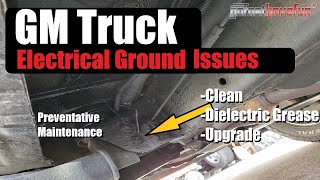
- Low Battery Voltage: → Shop Vehicle Battery A weak or failing battery can cause unpredictable communication errors between modules as they may not power on or respond within the expected timeframe. Before diving into complex wiring diagnostics, always ensure the battery is fully charged 🎬 Watch: Preventative maintenance for GM truck electrical ground issues and passes a load test.
Diagnosis Steps
- Verify the battery is fully charged (12.4-12.8V at rest) and the terminals are clean and tight.
- Scan all vehicle modules for DTCs and note which modules are not communicating. Focus on modules on the Chassis Expansion Bus (EBCM, PSCM, SCM, SDM).
- Check the CAN bus termination resistance at the OBD-II port. With the battery disconnected, measure resistance between Pin 12 (CAN Low) and Pin 13 (CAN High). A healthy network should read approximately 60 ohms. A reading of 120 ohms suggests a break in the circuit or a module offline; a reading near 0 ohms indicates a short between the two CAN wires.
- Following TSB #PIT5457D, remove the driver and passenger front door sill plates. Inspect the wire harness for corrosion, damage, or chafing, paying close attention to the Communication Enable circuit 5986 (often a tan wire) and Splice J365 under the passenger sill.
- Following TSB #PIT5288E, inspect the wire harness to the left of the steering column for signs of being pinched by an instrument panel bracket.
- If no visible damage is found, use a multimeter to check for approximately 12 volts on the Communication Enable circuit (5986) at one of the affected modules (e.g., the EBCM) with the key in the 'ON' position. TSB #PIT5457C recommends load testing this circuit with a small bulb (like a 194) to ensure it can carry the necessary current. The bulb should light and voltage across it should be at least 11V.
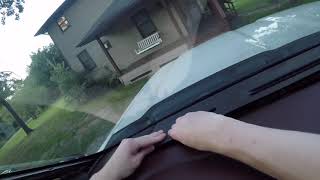
- Check ground G218 under the driver's A-pillar trim for tightness and corrosion. Per TSB #PIT5405C, ensure the dash insulator mat is not trapped under the ground terminal. 🎬 See how to fix the G218 ground connection
- If wiring, power, and grounds are confirmed good, suspect a faulty module. Disconnect modules one by one from the network to see if communication is restored, which would isolate the faulty component.
Parts You'll Likely Need
- Wire Repair Supplies — The most common fix is repairing a damaged wire in the harness under the sill plates or behind the dash.
Trusted brands: 3M, Tesa
OEM price range: $10-$30
Aftermarket price range: $5-$20 - Electronic Brake Control Module (EBCM)
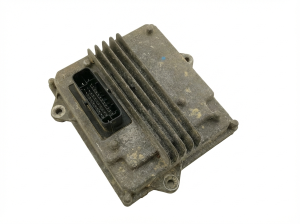
(OEM #23380704, 84256785)— If a module is confirmed to be the cause, the EBCM is one of the possibilities as it contains a terminating resistor. This should only be replaced after exhaustive wiring checks. Part number varies by specific options.
Trusted brands: ACDelco
OEM price range: $500-$700
Aftermarket price range: $300-$500 - Power Steering Control Module (PSCM) — Another module on the network that can fail and cause this code. This should only be replaced after exhaustive wiring checks.
Trusted brands: ACDelco
OEM price range: $400-$600
Aftermarket price range: $250-$450
Related Codes That Often Appear With This One
- U0121 — Lost Communication With Electronic Brake Control Module (EBCM)
- U0126 — Lost Communication With Steering Angle Sensor Module (SWPS)
- U0131 — Lost Communication With Power Steering Control Module (PSCM)
- U0415 — Invalid Data Received From Electronic Brake Control Module
- U0428 — Invalid Data Received From Steering Angle Sensor Module
Technical Service Bulletins (TSBs) & Recalls
- PIT5457D: Service ABS/TCS/Power Steering/Suspension Message, DTC U0077, related to open/high resistance in Communication Enable circuit 5986 under sill plates.
- PIT5288H: Addresses various electrical issues including U0077 caused by a pinched wire harness in the left instrument panel.
- 18-NA-161: Details how high resistance in battery cables or poor grounds (like G218) can cause loss of power steering and communication DTCs.
- PIT5076E: Confirms that U0077 relates specifically to the 'Chassis bus' and should be the focus of diagnosis.
Platform-Specific Known Issues
- GM Technical Service Bulletin #PIT5457D specifically calls out the wiring harness under the driver and passenger sill plates as a common location for an open or high resistance on Communication Enable Circuit 5986.
- GM Technical Service Bulletin #PIT5288H identifies a pinched harness between the left I/P dash mounting bracket and the body as a cause for U0077.
- GM Technical Service Bulletin #18-NA-161 notes that high resistance in battery cables or poor grounds (like G218) can lead to communication DTCs like U0077.
Mechanic-Grade Diagnostic Values
- Chassis Expansion CAN Bus Resistance — expected: 60 Ohms (± 5 Ohms). Failure: A reading of 120 Ohms indicates an open circuit or a missing terminating resistor. A reading near 0 Ohms indicates a short between the CAN High and Low wires.
- Communication Enable Circuit (5986) Voltage — expected: Approximately 12 Volts. Failure: Low or no voltage when the BCM should be active (Key in ACC or ON) indicates an open or short in the circuit.
- Communication Enable Circuit (5986) Load Test — expected: A connected 194 bulb lights up, and voltage across the bulb is at least 11 Volts.. Failure: If the bulb does not light or voltage is below 11V, it indicates high resistance in the circuit. The BCM will shut down this circuit if the current draw exceeds 0.88 amps.
- Chassis CAN Bus Pins to Ground Resistance — expected: Open circuit / infinite resistance. Failure: Any continuity to ground indicates a short circuit on either the CAN High or CAN Low wire.
Scan Tool Commands That Help
- GDS2 (GM Tech 2): Data Bus Diagnostic Tool — Starting in 2015, this function within GDS2 provides detailed information about the bus status and which modules are not communicating, aiding in diagnosing high-speed LAN issues.
- GDS2 / Professional Scan Tool: Module Isolation — When CAN bus resistance is incorrect (120 or 0 ohms), a technician can physically disconnect modules one-by-one (or command them offline via the scan tool) to see when the correct 60-ohm resistance returns. This isolates the module that is internally shorted or open.
Wiring & Ground Locations
- G218 — Under the driver's side A-pillar trim, near the speaker.. This is a critical ground for the Body Control Module (BCM). TSB #PIT5405C notes that the dash insulator mat often gets trapped between the ground eyelet and the body, causing a poor, intermittent connection that can lead to various communication codes, including U0077.
- Splice J365 — In the wiring harness under the passenger's front door sill plate.. This is a known high-failure splice for the Communication Enable Circuit (5986). Corrosion or a break at this splice cuts the 'wake-up' signal to multiple chassis modules, triggering U0077.
- Chassis Expansion Bus (DLC) — Pins 12 (CAN Low) and 13 (CAN High) on the OBD-II Diagnostic Link Connector (DLC).. These pins provide the primary access point for testing the overall health (resistance, voltage) of the entire Chassis Expansion Bus without having to access individual modules first.
- Terminating Resistors (120 Ohm) — One is internal to the Electronic Brake Control Module (EBCM). The other is internal to the Inflatable Restraint Sensing and Diagnostic Module (SDM / Airbag Module).. These two resistors are required for the network to function. If either module fails or is disconnected, the total bus resistance changes from 60 ohms to 120 ohms, causing communication to fail.
Real Owner Repair Stories
- Multiple YouTube videos and forum posts (2014-2018 Chevrolet Silverado / GMC Sierra) — Intermittent flickering of dash lights and headlights, random disabling of park assist, loss of power steering, and in some cases, the truck completely shutting off while driving at low speeds.
❌ Tried (didn't work) Testing the battery and alternator, which both tested as good.
✅ What actually fixed it The issue was a poor ground connection at G218, located under the driver's side A-pillar trim. Sound-deadening insulation material was trapped under the ground nut, preventing a solid connection. The fix was to remove the A-pillar and dash side trim, pull back or trim the insulation away from the ground stud, and securely tighten the 10mm ground nut.
OEM Part Supersession History
23154722→23380704— Standard part revision by the manufacturer.
Heads up: The replacement EBCM (23380704) requires programming and setup procedures using GM Service Information after installation to ensure proper operation.
Model Year Variations Within This Range
- 2016: The 2016 model year received a mid-cycle refresh including a new front fascia, LED lighting, and an updated MyLink infotainment system. While these changes added new electrical components, the underlying chassis CAN bus architecture and the common wiring failure points for U0077 remained consistent with the 2015 and 2017 models.
Helpful Videos


We Have This Part in Stock

The information in this article is provided for general reference and educational purposes only. Vehicle specifications, procedures, and part compatibility can vary by production date, trim level, and region. Always consult your vehicle's factory service manual and verify part numbers before purchasing or performing repairs. Safety-critical components such as airbags, seat belts, and braking systems should be installed by a qualified professional.
- Gmc SIERRA:
- 🧭 Diagnostic Flowchart
- 🎬 Helpful Videos
- 🛍️ Shop This Part
- What's Unique About the 2015-2017 Gmc SIERRA
- Symptoms You May Notice
- Most Likely Causes
- Rare But Worth Checking
- Diagnosis Steps
- Parts You'll Likely Need
- Related Codes That Often Appear With This One
- Technical Service Bulletins (TSBs) & Recalls
- Platform-Specific Known Issues
- Mechanic-Grade Diagnostic Values
- Scan Tool Commands That Help
- Wiring & Ground Locations
- Real Owner Repair Stories
- OEM Part Supersession History
- Model Year Variations Within This Range
- 🎟️ Get 5% Off